
理想汽车

Search documents
小鹏为什么这么“烦”L3
虎嗅APP· 2026-02-16 13:01
Core Viewpoint - Xiaopeng Motors is shifting focus from L3 to L4 autonomous driving technology, arguing that L3 is a transitional technology that hinders progress due to regulatory constraints and safety concerns [12][20]. Group 1: Industry Context - The Chinese autonomous driving sector is projected to see total investments of 700-750 billion yuan by 2025, a 40% increase year-on-year, while the overall automotive industry's profit margin is only 4.1%, indicating a mismatch between profit growth and R&D investment [3]. - Many automakers are constrained by current regulations, with L3 technology being limited in its operational design domain (ODD), primarily restricted to urban and highway scenarios [8][24]. Group 2: Technological Development - Xiaopeng's GX model is currently undergoing L4 road tests, utilizing a high computing power of 3000 TOPS, which surpasses competitors like Li Auto's new L9 [5][7]. - The L4 technology is being validated through successful commercial trials, with companies like Pony.ai and RoboTaxi demonstrating profitability in specific applications [17][19]. Group 3: Challenges and Considerations - Transitioning directly to L4 from L2 requires substantial data accumulation, as L4 relies on insights gained from L3 operations [23]. - Regulatory frameworks pose significant challenges, as L3's operational limitations are defined by legal and liability considerations, which differ from L4's clearer responsibility structure [24]. - The current L4 implementations face hurdles, including the need for advanced perception systems that can handle diverse environmental conditions, which may not be achievable with a purely vision-based approach [28][30].


首批625亿元国补到位,车市火爆,有车型价格6万送2万权益
21世纪经济报道· 2026-02-16 12:00
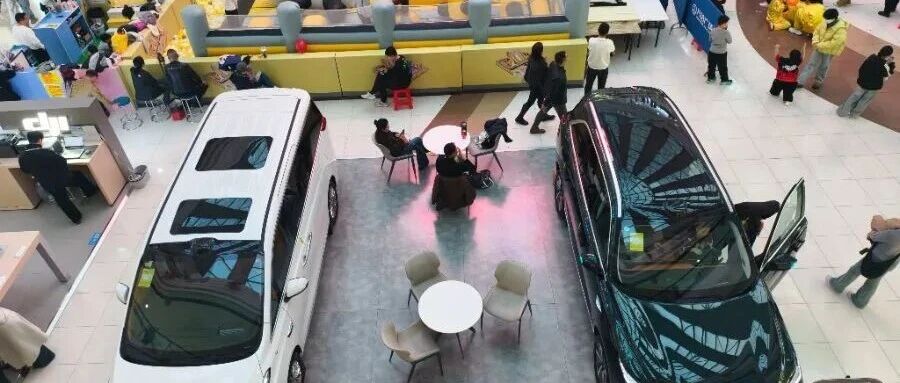
Core Viewpoint - The article highlights the significant boost in the automotive market, particularly in the electric vehicle (EV) sector, driven by government subsidies and the traditional consumption peak during the Spring Festival, showcasing the growing potential in lower-tier cities and rural areas [1][9]. Group 1: Government Initiatives and Market Response - The "Lego New Year" special event launched by the Ministry of Commerce and nine other departments has allocated 625 billion yuan in national subsidies, with local consumer red envelopes and corporate discounts being actively distributed [1]. - The continuation of national subsidies has led to increased foot traffic and sales in automotive showrooms, particularly for vehicles priced between 60,000 to 100,000 yuan [1]. Group 2: Competitive Landscape - Automotive brands are increasingly opening stores in prime locations such as shopping malls, indicating heightened competition and a strategic shift to capture consumer attention [4]. - Price remains the decisive factor for consumers in lower-tier cities, with brands like Extreme Fox promoting models under 100,000 yuan and offering significant incentives [5]. Group 3: Consumer Preferences and Trends - There is a growing acceptance of EVs in rural areas, with sales of EVs in these markets expected to outpace urban areas, driven by government initiatives and consumer demand [9]. - Consumers express a preference for EVs, particularly in the 100,000 to 200,000 yuan range, while also showing concerns about battery range and charging infrastructure [6][10]. Group 4: Charging Infrastructure Development - The construction of charging facilities is rapidly increasing, with projections indicating that by the end of 2025, there will be approximately 20.09 million charging points in China, marking a 49.7% year-on-year growth [11]. - The government of Henan province plans to build 29,000 new public charging points by 2025, significantly enhancing the charging network and alleviating range anxiety for EV owners [11]. Group 5: Future Market Outlook - The Chinese automotive market is expected to peak at around 40 million units, with future growth primarily occurring in lower-tier cities and rural areas, driven by favorable policies and infrastructure improvements [12].


新春走基层|政策暖风频吹,新能源车加速“下沉”
2 1 Shi Ji Jing Ji Bao Dao· 2026-02-16 07:35
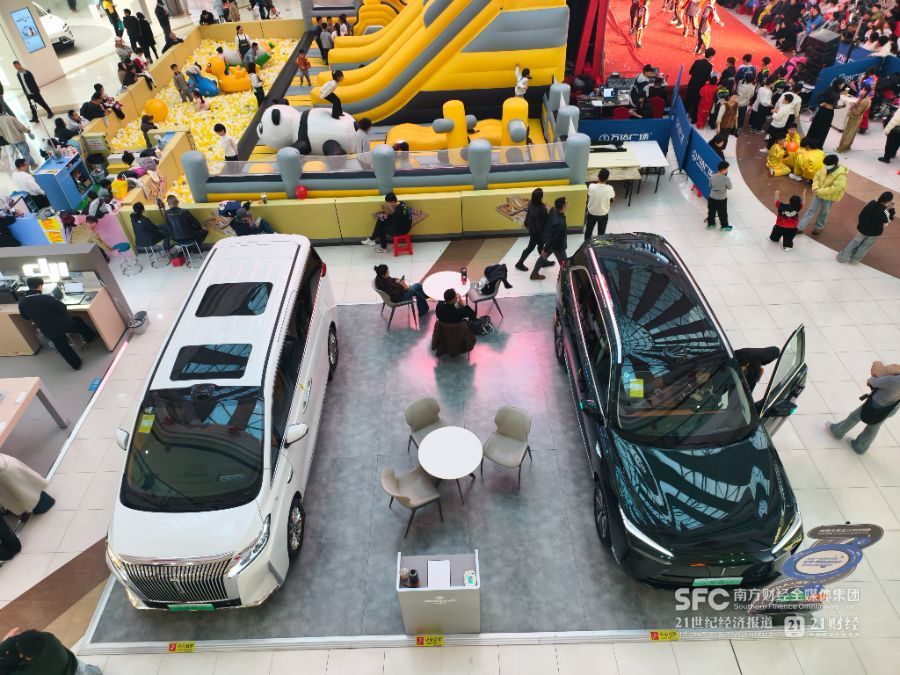
Core Insights - The Chinese automotive market is experiencing a surge in consumer interest, particularly in the context of the Spring Festival and the implementation of new national subsidy policies for electric vehicles [1][5][9] - There is a notable shift in the location of car dealerships, with brands moving into shopping malls to enhance visibility and compete more effectively for consumer attention [3][4] - The acceptance of electric vehicles (EVs) is increasing in rural areas, driven by government initiatives and the growing availability of charging infrastructure [7][8][9] Group 1: Market Trends - The implementation of the new national subsidy policy has led to increased foot traffic and sales in car dealerships, especially for models priced between 60,000 to 100,000 yuan [1] - The competition among automotive brands is intensifying, with companies like Li Auto and BYD adopting innovative marketing strategies, including the use of social media to reach younger consumers [3][4] - The demand for electric vehicles is rising, particularly in lower-tier cities, as evidenced by the increasing presence of brands like BYD and Wuling in these markets [7][9] Group 2: Consumer Behavior - Price remains a decisive factor for consumers in third and fourth-tier cities, with dealerships focusing on highlighting discounts and pricing to attract buyers [3][5] - There is a growing trend of consumers upgrading to electric vehicles, with many expressing interest in models that offer spacious interiors and advanced features [5][8] - Concerns about charging infrastructure persist, with consumers indicating a preference for electric vehicles if charging facilities are adequate; otherwise, they may opt for hybrid models [8] Group 3: Infrastructure Development - The construction of charging facilities is accelerating, with projections indicating that by the end of 2025, there will be approximately 20.09 million charging points in China, marking a 49.7% year-on-year increase [8][9] - The government of Henan province plans to build 29,000 new public charging stations by 2025, significantly exceeding its annual target and addressing range anxiety for EV owners [9] - The market for electric vehicles in rural areas is expected to grow substantially, with predictions indicating that by 2030, the number of vehicles per thousand people in rural regions could reach 160, resulting in a market size of approximately 500 billion yuan [7][9]

新春走基层|政策暖风频吹,新能源车加速"下沉"
2 1 Shi Ji Jing Ji Bao Dao· 2026-02-16 07:33
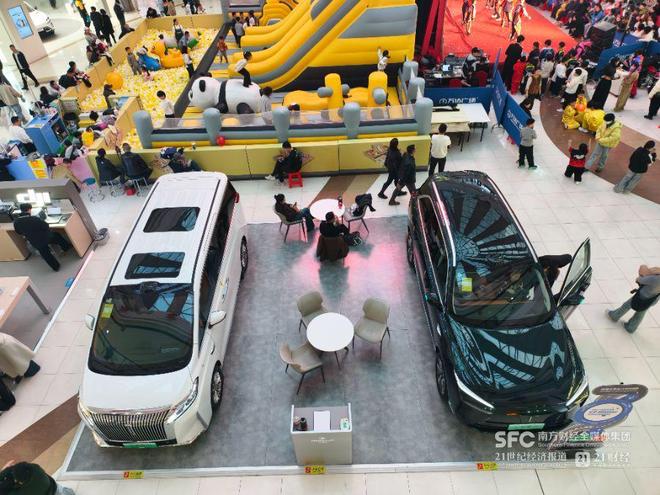
Group 1 - The Chinese automotive market is experiencing a surge in consumer interest, particularly in the lower price range of 60,000 to 100,000 yuan, driven by the continuation of the "National Subsidy" policy and the traditional peak consumption period around the Spring Festival [1][2] - The competition among automotive brands is intensifying, with many companies relocating their dealerships to high-traffic areas such as shopping malls to capture consumer attention and enhance brand visibility [2][3] - Price remains a decisive factor for consumers in third- and fourth-tier cities, leading brands to emphasize pricing and promotional offers in their marketing strategies [2][3] Group 2 - The acceptance of electric vehicles (EVs) is increasing in rural areas, with a notable rise in the number of brands like BYD and Wuling appearing on the streets, indicating a growing market for EVs outside urban centers [6][7] - The sales of new energy vehicles (NEVs) in rural areas are projected to grow significantly, with total sales expected to rise from 397,000 units in 2020 to nearly 7.6 million units by 2024, outpacing urban market growth [7] - The construction of charging infrastructure is crucial for the adoption of EVs, with a projected total of 20.09 million charging points by the end of 2025, reflecting a 49.7% year-on-year increase [8][9]
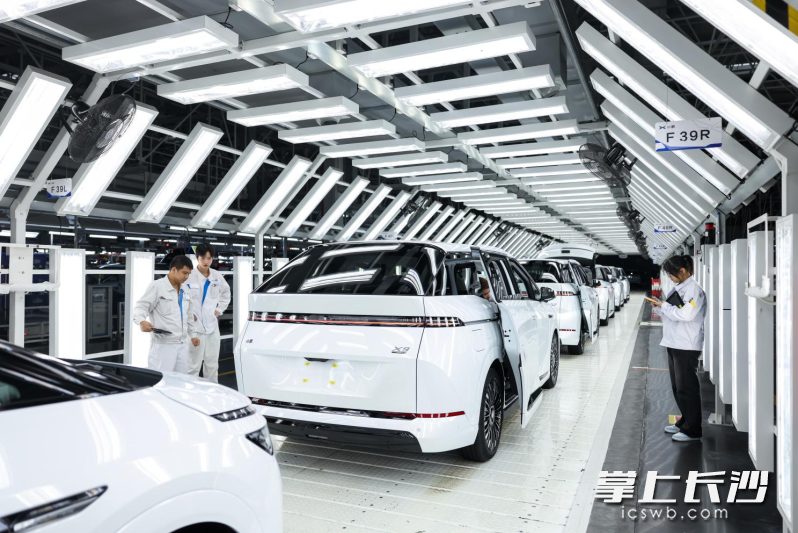
技术破局先行 马年车市换车有道
Xin Lang Cai Jing· 2026-02-16 03:39
长沙晚报全媒体记者 曹开阳 随着除夕的来临,全新的马年正在走近。走过电动化狂飙、价格战白热化的蛇年,马年的中国汽车市场站在了存 量博弈与技术跃迁的十字路口。作为连续多年全球最大汽车市场和第一大汽车出口国,中国车市的每一次波动、 每一项突破,都牵动产业链与千家万户。 智能化方面,L3规模商用普及。国内智能驾驶马年进入无图化、端到端、L3量产三重拐点,政策放开与技术成熟 同步落地。华为乾崑ADS 4.0完成6亿公里仿真测试,将在马年实现高速L3规模商用、城区L4试点,问界、智界、 尚界全系搭载。小鹏汽车确立"物理AI商业化"目标,XNGP全场景智能驾驶覆盖95%城市道路,端到端大模型实 现算法轻量化,成本下探至20万元级车型。小米汽车依托生态优势,智驾系统聚焦城市通勤场景,硬件保守但算 法流畅,成为年轻用户首选。理想、蔚来等同步推进智能驾驶量产,理想瞄准家庭用户全场景安全,蔚来布局高 速与换电协同智驾,形成差异化梯队。 固态电池方面,半固态将批量上车,全固态电池完成小批量验证,续航、安全、补能三大痛点迎刃而解。东风汽 车率先发力,350Wh/kg半固态电池9月量产装车,续航突破1000公里,极寒环境续航保持率超8 ...
后怕!幸好当年没听许小年的建议,否则中国可能倒退整整20年
Sou Hu Cai Jing· 2026-02-15 19:43
Group 1 - The article discusses the potential consequences if China had followed the advice of economist Xu Xiaonian, who advocated for minimal government intervention and reliance on market forces [3][17][21] - It highlights the success of China's high-speed rail system, which has expanded to over 45,000 kilometers, transforming logistics and economic geography despite initial financial losses [6][14][22] - The article emphasizes the importance of self-reliance in the semiconductor industry, arguing that without early investments in domestic chip development, China would have faced severe economic repercussions during U.S. sanctions [10][11][21] Group 2 - The narrative includes the evolution of the electric vehicle industry in China, showcasing how government subsidies were crucial for the growth of companies like BYD, which might not have survived without them [13][14][22] - It critiques the reliance on Western economic theories, suggesting that they do not account for the unique challenges faced by developing nations, as illustrated by the experiences of South American countries [17][18][21] - The article concludes that China's strategic decisions, which diverged from purely market-driven approaches, have led to significant advancements in various industries, including high-speed rail, semiconductors, and electric vehicles [19][23][24]
北京市文联2026年新春文化惠民活动 3000余名艺术家服务群众近20万人次
Xin Lang Cai Jing· 2026-02-15 14:48
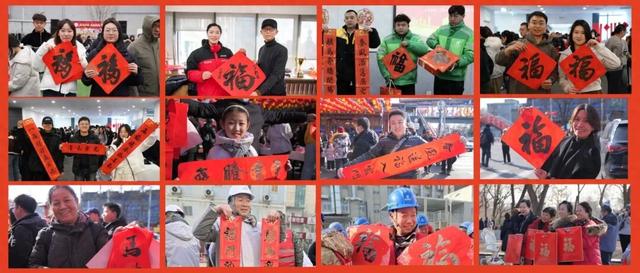
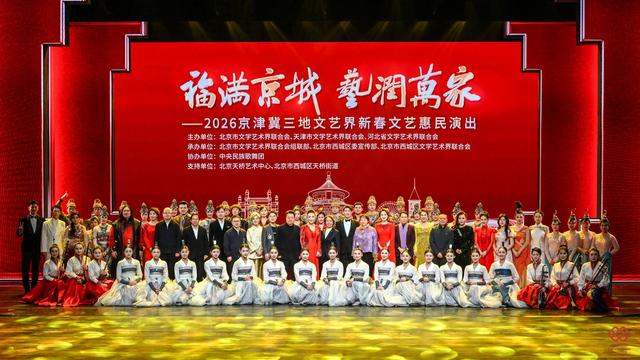
Core Viewpoint - The article highlights the collaborative cultural initiatives among Beijing, Tianjin, and Hebei to enhance cultural services and promote the coordinated development of the Beijing-Tianjin-Hebei region, particularly during the Spring Festival period. Group 1: Cultural Activities and Events - The "Send Blessings to Thousands of Families" cultural benefit series was organized by the cultural federations of Beijing, Tianjin, and Hebei to serve the coordinated development strategy of the region [1] - The first event of the New Year cultural benefit performances took place at the Tianqiao Art Center in Beijing, featuring over 800 frontline workers, including construction workers and delivery personnel, as audience members [3] - More than 350 cultural benefit activities were planned, involving over 3,000 artists who provided nearly 180,000 Spring Festival couplets and 11,000 folk art pieces to serve around 200,000 citizens [4] Group 2: Community Engagement and Cultural Promotion - Artists from the three regions engaged with frontline workers in Tianjin's Jizhou District and Xiong'an New Area, performing traditional cultural shows such as Peking Opera and Hebei Bangzi [8] - The cultural federations aim to implement measures for brand building, co-creation of works, talent cultivation, and joint activities to enhance cultural resource sharing [8] - Over 40 performances and cultural activities were conducted to honor new employment groups working during the Spring Festival, enhancing their sense of belonging and happiness [9] Group 3: Integration of Culture and Technology - The cultural federations are promoting the integration of arts and technology, delivering high-quality cultural services to innovation parks and high-tech enterprises in sectors like automotive and pharmaceuticals [25][27] - Events at the Ideal Automotive R&D headquarters featured interactions between artists and tech workers, exploring the fusion of traditional aesthetics and modern technology [25] Group 4: Collaborative Efforts and Community Impact - The cultural federations are focusing on cultural benefits as a key mission, organizing a flagship event alongside 350 cultural benefit activities to enrich the festive cultural life of the community [28] - Various district cultural federations are actively engaging with local communities, providing cultural services and support to vulnerable groups, thereby enhancing the cultural atmosphere during the Spring Festival [30]
350余场文化惠民活动,服务近20万人次,北京市文联送上丰富“艺术年货”
Xin Lang Cai Jing· 2026-02-15 12:40
Core Viewpoint - Beijing's cultural activities during the Spring Festival have successfully engaged over 200,000 citizens, showcasing a rich cultural atmosphere and receiving widespread acclaim [1][3][5]. Group 1: Cultural Activities and Engagement - More than 350 cultural activities were organized, with over 3,000 artists participating and nearly 180,000 couplets and 11,000 folk art pieces distributed to the public [1]. - The "Send Blessings to Thousands of Families" series of cultural activities was launched in collaboration with Tianjin and Hebei, featuring performances by artists from the three regions and inviting over 800 frontline workers to attend [3]. - The 22nd Beijing Spring Concert attracted nearly 10,000 attendees, emphasizing the capital's role in national cultural development [7]. Group 2: Focus on Laborers and New Employment Groups - Activities were specifically designed for new employment groups and frontline workers, including over 40 performances and art workshops in various sectors such as delivery and construction [3][5]. - At the Meituan headquarters, diverse art forms were presented, transforming delivery workers into honored guests and enhancing their sense of belonging and happiness [5]. Group 3: Integration of Traditional Culture and Modern Elements - The "Chinese New Year Painting Collection" event combined traditional culture with modern elements, featuring various activities that highlighted the integration of art and technology [9][14]. - The "Poetry and Couplets Guessing" event at the temple fair engaged visitors with interactive cultural experiences, promoting cultural heritage in an enjoyable manner [11]. Group 4: Collaborative Efforts and Resource Sharing - The Beijing Federation of Literary and Art Circles adopted a "1+N" model to create a strong collaborative force for cultural prosperity, involving multiple local federations [15]. - Various district federations focused on integrating traditional culture with local characteristics, enhancing community engagement through immersive cultural experiences [15].
未来已来 抢抓时代机遇!2026未来产业新材料博览会(6月10-12日 上海)
DT新材料· 2026-02-15 07:20
Core Viewpoint - The 2026 Future Industries New Materials Expo (FINE 2026) aims to lead global innovation in new materials, emphasizing their critical role in the transformation of high-tech industries and future economic development [1][2]. Group 1: Event Overview - FINE 2026 will take place from June 10 to June 12, 2026, at the Shanghai New International Expo Center, featuring a total exhibition area of 50,000 square meters and over 300 strategic and cutting-edge technology reports [2][18]. - The expo will focus on popular innovations applicable to various industries, including artificial intelligence, aerospace, smart vehicles, and renewable energy, while addressing five common needs in future industries: advanced semiconductors, advanced batteries, lightweight functionalization, low-carbon sustainability, and thermal management [2][10]. Group 2: Historical Context and Participation - The previous events, including the 2025 International Carbon Materials Expo and the 2025 Thermal Management Expo, achieved record attendance with over 35,000 professional visitors from 27 countries and regions, showcasing more than 500 exhibitors [7][36]. - The expected participation for FINE 2026 is over 100,000 professional visitors, with targeted invitations to over 5,000 industry investors to facilitate connections between startups and industry resources [35][37]. Group 3: Thematic Focus and Special Features - FINE 2026 will feature seven specialized thematic exhibition areas, including advanced semiconductors, AI chips, thermal management, and sustainable materials, aiming to present a comprehensive chain of innovation from components to cutting-edge technologies [13][15]. - The event will host over 30 forums with more than 300 renowned experts discussing trends in technology, investment strategies, and advanced manufacturing techniques related to new materials [22][24]. Group 4: Strategic Importance - The expo is positioned as a critical platform for technology transfer and industry innovation, leveraging China's growing influence in sectors like new energy vehicles, photovoltaics, and robotics, which are expected to create significant market opportunities for new materials [10][36]. - The timing of the event in June is seen as a strategic opportunity to capture business prospects for the second half of the year, supported by Shanghai's robust industrial and technological ecosystem [10][36].

快充、超充、换电、加氢,高速路服务区实现多元补能
Xin Jing Bao· 2026-02-15 04:37
春节归途,人们开着车,奔赴各地。一路向南,新京报贝壳财经记者采访北京、天津、河北、安徽、湖 北等地9个高速服务区,观察春节长途补能现状,也透视一方"驿站"的变迁。 在京沪高速出京第一站的北京马驹桥服务区,不仅能加油、充电,还配有北京首座高速加氢站。 在京津冀首个全绿色用能的王庆坨服务区,光伏发电实现全绿能零碳运营,华为600千瓦液冷超充桩、 理想超充桩、快充桩、移动补能车,缓解充电压力。 在全国首座综合能源补给站的沪渝高速湖北荆州东服务区,节假日高峰期会投入移动充电机器人,服务 区数字大屏上可实时显示加油、充电等排队情况。 同时,一些高速服务区跳出传统,告别千篇一律,补能、休闲、文旅,体验升级,不再只是自驾短暂歇 脚、加油补能的"过路点"。 服务区的升级与变迁,长途补能的多元化,既是交通基建提质的直观体现,更是新能源转型、交旅融合 发展的生动影像。 ★京藏高速北京百葛服务区,2月12日11时许 充电设施升级改造,"北京老字号"进服务区 腊月廿五,在天津工作的李先生开着自己的新能源汽车,踏上了回内蒙古呼和浩特老家的路程。 "以往开车长途出行最怕充电排长队,现在充电快,我这车从20%的电量充到80%,用了不到半小 ...