
西门子

Search documents
储能与AI电力再更新
2025-10-27 00:30
Summary of Key Points from Conference Call Records Industry Overview - The energy storage and AI sectors are critical for future renewable energy development, with a significant increase in data center installations expected in the U.S. by 2026, driven by the removal of grid access bottlenecks [1][2] - The domestic wind energy development targets have been raised, with policies shifting towards demand-side control, promoting models like green electricity direct connection and source-grid-load-storage [1][4] Key Companies and Their Performance Tesla - Emphasized the importance of battery storage as a flexible resource, capable of doubling U.S. electricity output without new power plants [5] - Noted a significant increase in demand for AI and data center applications [5] CATL (宁德时代) - Reported Q3 results in line with expectations, with potential for exceeding growth in commercial vehicles and energy storage [8] - Anticipated 2026 profits between 92 to 93 billion yuan, supported by supply chain strategies to mitigate raw material price increases [9] EVE Energy (亿纬锂能) - Q3 performance slightly below expectations due to one-time rebates for major clients, but Q4 is expected to see a rise in both volume and profit for energy storage batteries [10] - Projected 2026 profits between 8.2 to 8.3 billion yuan, with a significant increase in overseas client contributions [10] Sungrow Power Supply (阳光电源) - Benefiting from overseas energy storage growth, with an upward revision of 2026 profit estimates to between 18 to 19 billion yuan [6][7] Market Trends and Projections - The lithium battery supply chain is approaching a supply-demand inflection point, with potential price increases in lithium hexafluorophosphate and lithium iron phosphate processing fees expected by 2026 [3][11] - The battery industry may see a general price increase in 2026, with a shift in profit distribution across the lithium battery supply chain [12][13] Regulatory and Policy Impacts - U.S. Energy Secretary's directive to expedite data center grid access approvals from 3-5 years to 60 days could significantly increase electricity demand and prices in 2026 [2] - The shift in domestic policies towards demand-side control is expected to enhance the development of high-utilization, stable-output renewable energy supported by energy storage technologies [4] Additional Insights - The gas turbine market in the U.S. is experiencing strong order growth, with GE and Westinghouse reporting higher-than-expected new orders, indicating a robust demand outlook despite recent stock price adjustments [18][19] - The nuclear power sector is seeing renewed interest, with potential for new large-scale projects and a significant increase in uranium prices expected by 2027 [22] Conclusion - The energy storage and lithium battery sectors are poised for significant growth, driven by regulatory changes, technological advancements, and increasing demand from data centers and commercial vehicles. Key players like Tesla, CATL, EVE Energy, and Sungrow are well-positioned to capitalize on these trends.



工业世界迎来Copilot时刻!未来工业环境中人类的最强辅助
Xin Lang Cai Jing· 2025-10-26 04:53
Core Insights - The article highlights the transformation of manufacturing into a smart factory era, emphasizing the integration of AI and automation technologies to enhance operational efficiency and productivity [1][3][5]. Group 1: Smart Manufacturing as a Competitive Edge - A Deloitte survey indicates that 92% of U.S. manufacturing executives believe smart manufacturing will be a key driver of competitiveness within the next three years [3]. - Nearly half of the surveyed executives prioritize operational efficiency as the main value of adopting smart manufacturing [3]. - 78% of executives plan to allocate over 20% of their existing budgets to smart manufacturing initiatives [3]. Group 2: AI and Automation in Production Processes - The unmanned workshop of Shangmei showcases a fully automated production process, utilizing AGV robots and AI systems for material handling and packaging [3]. - Industrial robots at Shangmei perform 252,000 standardized operations daily, creating an efficient and precise production system [3]. Group 3: Digital Transformation and Integration - Companies are focusing on the cosmetics industry's production characteristics by integrating IoT, 5G, big data, and AI to create a digital collaborative system across the entire supply chain [5]. - Schneider Electric and Microsoft launched the Industrial Copilot system, combining AI with industrial automation to enhance productivity and redefine human-machine collaboration [5][7]. Group 4: Key Technologies Driving Industrial Intelligence - The digital twin simulation optimization system developed by Wuhan Huagong Saibai Data System Co., Ltd. enables comprehensive digital mapping and optimization of manufacturing processes [7][9]. - This system has led to production efficiency improvements of 10-25% and operational cost reductions of 10-20% in various manufacturing sectors [9]. Group 5: Challenges in the Transformation Journey - Talent shortages are a significant challenge, with 35% of executives citing the adaptation of existing employees to smart factories as a primary concern [11]. - Information security risks, including unauthorized access and intellectual property theft, are also major obstacles [11]. Group 6: Future Prospects of Industrial AI - The industrial AI market is projected to grow from $43.6 billion in 2024 to $154 billion by 2030, with a compound annual growth rate of 23% [12]. - The Chinese government has elevated the application of AI technologies to a national strategic level, promoting intelligent integration across all industrial elements [12].


第五届湖南家电仓库直销火爆开启 首日成交超5000万元
Chang Sha Wan Bao· 2025-10-25 09:45
Core Insights - The fifth Hunan home appliance warehouse direct sales event commenced on October 25, attracting numerous consumers with a combined subsidy from the organizer and manufacturers, resulting in a transaction volume exceeding 50 million yuan on the first day [1][5] Group 1: Event Overview - The event took place at the Jinxia Tongcheng Logistics Park, featuring over 10,000 square meters of space filled with well-known domestic brands such as Haier, Midea, Gree, and Hisense, as well as international brands like Dyson, Panasonic, Sony, Samsung, Siemens, and Toshiba [3] - The event is designed to facilitate the replacement of old appliances, aligning with national policies to promote the "old for new" initiative, providing substantial benefits to consumers [5] Group 2: Consumer Engagement - Consumers reported significant savings due to the subsidies, with one individual purchasing multiple high-efficiency appliances and saving over 11,000 yuan compared to market prices [3] - The event also featured various prizes, including smartphones and smart home devices, enhancing consumer excitement and participation [3][5] Group 3: Organizer's Perspective - The deputy general manager of Tongcheng Electric expressed satisfaction with the event's turnout and emphasized the commitment to providing quality brands and substantial discounts to ensure consumer satisfaction [5]

高端厨电,为什么卖不动了?
3 6 Ke· 2025-10-24 13:08
Core Insights - The high-end kitchen appliance market is witnessing a divergence between foreign brands maintaining traditional craftsmanship and domestic brands innovating to meet local demands [1][2] - The perception of foreign high-end kitchen appliances as status symbols is diminishing due to high repair costs and low adaptability to local cooking needs [1][2] - The value proposition in high-end kitchen appliances has shifted from brand premium to user experience and scene adaptability [1][8] Market Dynamics - Foreign brands face a "cost-performance crisis" as high repair costs (15%-20% of product price) contrast with domestic brands (5%-8%) [1] - The market is currently in a transitional phase, struggling with a collective "selling difficulties" due to mismatched supply and demand [2][11] - The definition of high-end kitchen appliances has evolved through three key phases: from foreign-led standards to local innovation and ecosystem integration [3][4][5][6] Phases of Development - **Phase 1 (2015-2019)**: High-end defined by product parameters, dominated by foreign brands like Gaggenau and Miele, with over 40% market share [4] - **Phase 2 (2020-2023)**: Shift to scene integration, with local brands innovating to address specific Chinese kitchen needs, leading to the rise of integrated cooking solutions [5] - **Phase 3 (2024-present)**: Focus on ecosystem experience, where brands like Xiaomi and Huawei leverage smart connectivity to redefine high-end offerings [6] Consumer Preferences - Chinese consumers prioritize technology and scene adaptability over mere brand prestige, leading to a faster product iteration cycle compared to Europe [8] - The average kitchen size in China is less than 10 square meters, necessitating integrated and space-efficient solutions [8] - There is a growing demand for products that address specific cooking habits, with consumers willing to pay for technology that solves pain points rather than for brand prestige [8] Challenges for Domestic Brands - Domestic high-end kitchen appliances face challenges due to the industry's unique characteristics, requiring a comprehensive restructuring of consumer perception, technology ecosystem, and distribution channels [9] - The high-endization process for domestic brands has evolved through three stages: from OEM to localized innovation, and now to full scene upgrades [9] - The market is divided into three factions: technology-driven, ecosystem-driven, and price-upgrade driven, each facing unique challenges in establishing high-end recognition [9][10] Future Outlook - The current high-end kitchen appliance market is characterized by a structural imbalance between homogeneous supply and personalized demand [11][12] - Companies are encouraged to shift from broad product offerings to focused, precise competition to address the fragmented consumer needs [11] - The future competition will center around ecosystem solutions rather than individual products, marking a transition from scale competition to value competition [14]

深圳市“引进来”“走出去””功能持续增强
Zhong Guo Fa Zhan Wang· 2025-10-24 08:10
中国发展网讯 记者罗勉报道 从深圳市有关方面了解到,"十四五"以来,深圳坚持以全球视野和更加积 极主动的姿态,坚定不移扩大高水平对外开放,积极在服务国内国际双循环中作基地、作平台、作通 道、作枢纽,全面提升"引进来"的吸引力和"走出去"的竞争力,始终走在开放最前沿,参与全球经济合 作与竞争,引领打造共赢新格局。 越开放越能激活发展动能,越发展越有扩大开放底气。"深圳智造"漂洋过海,走俏国际市场,外贸出口 稳居全国大中城市首位。多位外国元首及政府首脑访深,国际机构、企业纷至沓来,多领域务实合作扎 实推进,"科技之城"底色更亮,"大国会客厅"功能持续增强。 同时,深圳持续健全"大招商"格局,坚持以"心诚+行程"面向全球招商引资,加强资源整合"以商招 商",围绕深圳产业发展需求,滚动推进重点国别、重点领域项目招引,积极主动吸引和扩大利用外 全球市场"含深度" 今年1至9月,深圳机场国际及地区货运吞吐量达77.1万吨,同比增幅12.7%,刷新历史同期纪录。数据 背后,是全球"带货"能力不断提升,也折射出深圳外贸的强劲实力。 "十四五"以来,深圳外贸进出口总额达18.9万亿元,占全国比重9.5%;2024年更是以4.5 ...
AI赋能影像,能否破解远程诊疗之困?
3 6 Ke· 2025-10-23 10:25
Core Viewpoint - Remote diagnosis is revolutionizing healthcare by enhancing accessibility and optimizing resource allocation, especially in underserved areas [2][4][6] Group 1: Remote Diagnosis Trends - The usage of remote diagnosis has been increasing year by year, with patients relying on this new method for various medical needs [2][4] - Applications range from simple online consultations to complex remote consultations and chronic disease management [2][4] Group 2: Challenges in Remote Diagnosis - Limitations exist in remote diagnosis, particularly in the reliance on textual descriptions, which can lead to inaccurate or incomplete information [3][11] - Patients may overlook critical symptoms due to anxiety or lack of awareness, affecting diagnostic accuracy [3][11] Group 3: Emergence of AI+Imaging Technology - The "AI+Imaging" technology is emerging as a solution to the communication challenges in remote diagnosis, utilizing advanced techniques like image recognition and deep learning [4][7] - This technology enhances the efficiency and accuracy of medical imaging analysis, providing reliable results for doctors [4][7] Group 4: Applications of AI+Imaging Technology - AI+Imaging technology is increasingly applied in medical imaging diagnostics, capable of analyzing X-rays, CT scans, and MRIs quickly and accurately [4][6] - It can assist in disease prediction by analyzing imaging data alongside clinical information, facilitating early intervention [6][10] Group 5: Advantages of AI+Imaging in Remote Diagnosis - AI technology can significantly improve diagnostic accuracy, with studies showing a 15%-20% increase in accuracy for detecting lung nodules compared to traditional methods [7][10] - The efficiency of image data transmission has improved, allowing for rapid analysis and diagnosis [8][10] Group 6: Future Prospects and Challenges - Despite its potential, AI+Imaging technology faces challenges such as data complexity, privacy concerns, and the need for significant funding [11][12] - Future advancements should focus on enhancing AI algorithms, ensuring data security, and providing personalized diagnostic services [12][13][14]

当成都决定寻找全球“新坐标”
Mei Ri Jing Ji Xin Wen· 2025-10-23 06:57
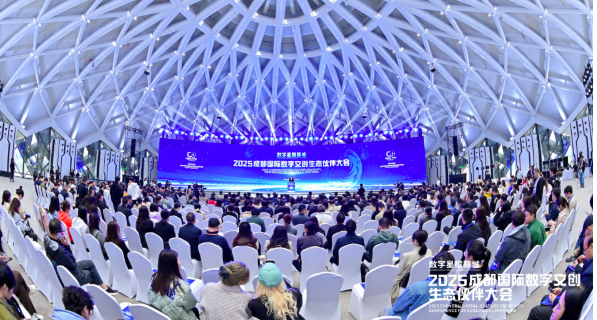
Core Insights - Chengdu is positioning itself as a leading hub for the digital cultural and creative industry, aiming to create a high-level innovation platform and ecosystem to foster new IPs and projects [2][3][10] Group 1: Industry Development - Chengdu ranked fourth in the 2025 China Digital Cultural and Creative City Index and released a list of 100 billion yuan cooperation opportunities in the digital cultural sector [2] - The city achieved a cultural and creative industry added value of 287.6 billion yuan in 2024, with a year-on-year growth of 11.7%, and the core digital cultural industry revenue reached 381.9 billion yuan [3] - In the first half of this year, the added value of the cultural and creative industry was 187.2 billion yuan, growing by 7.4%, while the core digital cultural industry revenue was 212.1 billion yuan, with nearly 900 registered digital cultural enterprises [3] Group 2: Events and Engagement - The 2025 Chengdu International Digital Cultural and Creative Ecosystem Partner Conference attracted over 340 global leaders and showcased the city's commitment to advancing the digital cultural industry [1][2] - The recent "Super Golden Week" saw significant attendance at events like the 21st World Line Animation Exhibition, which attracted 40,000 visitors on its opening day [8] - The conference announced that five world-class esports events will be held in Chengdu from October to December, highlighting the city's growing importance in the global esports landscape [10] Group 3: Policy and Support - Chengdu has implemented supportive policies for nurturing digital cultural startups, including financial services and entrepreneurial support, making it the first city to focus on this sector [14] - The city has established itself as a favorable environment for innovation, with strong government support and a welcoming business climate, which is crucial for the growth of the digital cultural industry [12][14] Group 4: Global Outreach - Chengdu is actively engaging in international investment promotion, having facilitated nearly 10 billion yuan in cooperation agreements with European partners [19] - The city is becoming a key entry point for European companies into the Chinese market, with significant projects like the establishment of the German machine tool headquarters in Chengdu [19] - The international digital cultural ecosystem conference reflects Chengdu's unique industrial appeal and its readiness to embrace global opportunities [22]

广东南山:创新生态驱动城市发展
2 1 Shi Ji Jing Ji Bao Dao· 2025-10-23 05:23
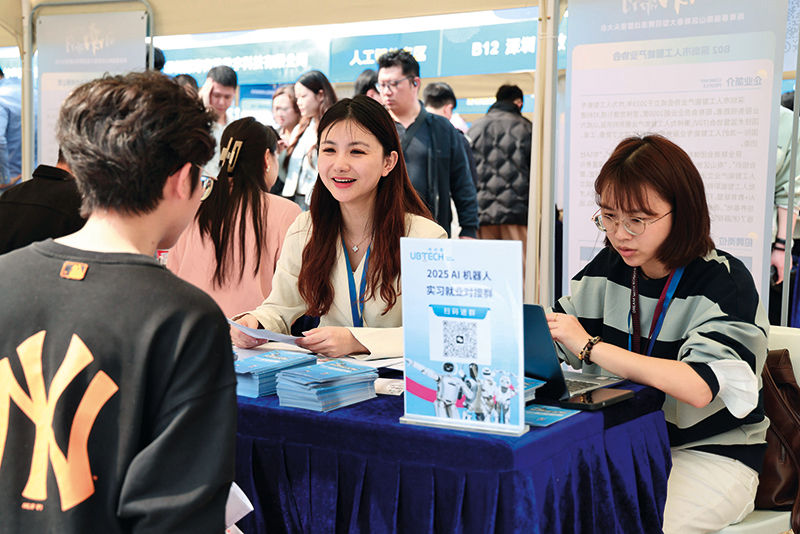
Core Insights - Nanshan District in Shenzhen is emerging as a leading innovation hub, with 218 listed companies and over 5,500 national high-tech enterprises by October 2025, showcasing a robust innovation ecosystem [1][3]. Group 1: Innovation Ecosystem - The innovation vitality in Nanshan stems from respect for market rules and careful cultivation of the innovation ecosystem, featuring major players like Tencent and DJI alongside numerous innovative SMEs [2]. - Nanshan has implemented supportive policies since 2013, including the "Six Actions to Support Innovation and Entrepreneurship" plan, which provides financial, spatial, and application scenario incentives to stimulate entrepreneurial activity [3][4]. - The region boasts an impressive patent ownership rate, with 826 invention patents per 10,000 people, which is 23 times the national average [3]. Group 2: Policy and Financial Support - Nanshan's policy approach encourages market-driven innovation without strictly defining industries, leading to the emergence of key sectors such as fintech, robotics, and logistics, as well as new fields like semiconductors and artificial intelligence [4]. - A strategic direct investment seed fund and angel fund totaling 500 million yuan have been established to support startups in AI and robotics, allowing for a high-risk tolerance in funding [4]. Group 3: Talent Attraction and Development - Nanshan has developed a talent-centric environment, providing various support measures for young professionals, including rent-free housing for recent graduates and affordable industrial research spaces [6][7]. - The district has a talent pool of 1.2 million, with high-level talents constituting over 50% of the total, fostering collaboration and innovation across different sectors [7]. Group 4: Global Integration - Nanshan is positioning itself as a global innovation resource hub, with the establishment of the Global Service Center to assist companies in international expansion and facilitate cross-border collaborations [9]. - The district's enterprises, such as ZTE and DJI, have successfully penetrated international markets, demonstrating the effectiveness of its global outreach strategies [9][10]. Group 5: Industry Collaboration - The integration of academia and industry in Nanshan has created a robust innovation ecosystem, with partnerships between leading companies and universities enhancing technology transfer and collaborative research [10]. - The presence of major enterprises and research institutions has established Nanshan as a global center for the robotics industry, showcasing the importance of diverse business models and sustainable growth [10].

燃气轮机主旋律!核心零部件迪威尔应流股份联德股份
2025-10-22 14:56
Summary of Conference Call Notes Industry Overview - **Industry Focus**: Gas Turbine Industry - **Electricity Demand Surge**: The electricity consumption of data centers in the U.S. is expected to reach 325 to 580 TWh by 2028, with a compound annual growth rate (CAGR) of 27%. Globally, data center electricity demand is projected to exceed 1,000 TWh by 2030, putting significant pressure on the power grid [1][3] Key Insights and Arguments - **Gas Turbines as Optimal Solution**: Gas turbines are favored due to their short construction cycle, quick startup, and stable operation, aligning well with the 2-4 year construction cycle of data centers. The approval process for gas turbine projects is approximately 10 months, significantly shorter than wind and solar projects [1][5] - **Global Gas Turbine Market Growth**: In 2023, global gas turbine market sales are estimated at 40-44 GW. Mitsubishi Heavy Industries anticipates an average sales volume of 60 GW from 2024 to 2026. In Q2 of this year, global orders increased by 38% year-over-year to 21 GW, with North America leading due to data center demand [1][6][7] - **Major Manufacturers' Expansion Plans**: Key players like GE, Siemens, and Mitsubishi Heavy Industries are experiencing significant order growth and have announced expansion plans, indicating confidence in sustained industry growth. Mitsubishi plans to double its production capacity in the next two years, while Siemens and GE aim to increase production capacity by 50% [1][7] Market Opportunities - **Domestic Replacement Opportunities**: The trend of deindustrialization in Europe and the U.S. presents opportunities for domestic companies to enter the global gas turbine supply chain, particularly in high-end casting and forging components [1][8] - **Core Component Market**: High-value components such as hot-end turbine blades and rotor shafts are currently dominated by overseas companies. However, domestic firms like Diwei and Yingliu are expected to gain market share due to their technological advantages [2][8][9] Company-Specific Developments - **Diwei's Competitive Edge**: Diwei is focusing on the production of high-end forged components for gas turbines and has established supply relationships with major clients like Baker Hughes and Caterpillar. The market value of gas turbines is approximately 2 to 3 billion RMB per GW, with a projected demand of 150 billion RMB over the next three years [9][10] - **Yingliu's Market Position**: Yingliu is a leading player in the high-temperature blade market, with a 100% increase in order volume expected in 2024. The company has secured over 1.2 billion RMB in orders and is expanding its production capacity [4][11][12] - **Liande's Progress**: Liande has developed a full industrial chain technology for high-precision casting and machining, beginning to supply gas turbine components in bulk. The company has a strong partnership with Caterpillar, enhancing its market position [13] Additional Insights - **Strategic Importance of Rare Metals**: The production of rare strategic metals like lithium is becoming increasingly important, with rising prices due to demand. Companies like Sains are investing in production lines to capitalize on this trend [14][15]


合成生物学周报:深圳合成生物新规落地,高纯度OPO结构脂“精准复刻”母乳-20251022
Huaan Securities· 2025-10-22 06:31
Investment Rating - The report does not explicitly state an investment rating for the synthetic biology industry Core Insights - The synthetic biology sector is experiencing a global biotechnology revolution, providing innovative solutions to major challenges such as health, climate change, and food security, as highlighted by the National Development and Reform Commission's "14th Five-Year Plan for Bioeconomic Development" [4] - The Huazhong Securities Synthetic Biology Index, which includes 58 companies involved in synthetic biology, has seen a decline of 4.96% recently, indicating a performance lag compared to the Shanghai Composite Index [5][22] Summary by Sections 1. Synthetic Biology Market Dynamics - The synthetic biology sector's stocks fell by 4.96% in the week of October 13-17, 2025, ranking 24th among sectors [22] - The top five gainers in this sector included Yuanli Technology (+11%) and Fuxiang Pharmaceutical (+11%), while the top five losers included Shengquan Group (-18%) and Jinziham (-18%) [23][27] 2. Company Business Developments - Huada Zhizao has signed a licensing agreement to expand its sequencing technology into the European and American markets [28] - Haineng Energy has been approved to enter the bio-aviation fuel "white list," allowing it to produce 158,000 tons of bio-aviation fuel annually [29] - Jinggong Holdings is set to launch a 50,000-ton green recycled material production line, which will be the largest chemical recycling polyester enterprise globally [30] 3. Industry Financing Tracking - The synthetic biology sector has seen accelerated financing, with nearly 100 companies completing new funding rounds in 2025 [35] - Zhejiang Ruiwei New Materials Technology Co., Ltd. completed a multi-million yuan financing round, focusing on biodegradable materials for the beauty and textile industries [35]
