
中芯国际

Search documents
华虹半导体:提价与扩产驱动成长步入快车道-20260214
HTSC· 2026-02-14 05:45
Investment Rating - The report maintains a "Buy" rating for Huahong Semiconductor with a target price of HKD 121, slightly up from the previous target of HKD 120 [6]. Core Insights - Huahong Semiconductor's 4Q25 revenue reached USD 659.9 million, a year-on-year increase of 22.4% and a quarter-on-quarter increase of 3.9%, aligning with the company's guidance [13][22]. - The gross margin for the quarter was 13.0%, up 1.6 percentage points year-on-year, consistent with prior guidance [13][22]. - The company expects 1Q26 revenue to remain between USD 650 million and USD 660 million, with a gross margin guidance of 13%-15% [18][10]. Summary by Sections Revenue and Profitability - In 4Q25, revenue was USD 659.9 million, reflecting a 22.4% year-on-year growth and a 3.9% quarter-on-quarter growth, reaching the upper end of the company's guidance [13][22]. - The gross margin was reported at 13.0%, which is a 1.6 percentage point increase year-on-year and aligns with the company's previous guidance of 12%-14% [13][22]. Growth Drivers - The demand for analog and power management products, particularly driven by AI, has significantly boosted revenue, with related income in 4Q25 reaching USD 173.8 million, a substantial year-on-year increase of 40.7% [2][18]. - Huahong's competitive edge in specialty processes, particularly in BCD and power devices, positions it well to capitalize on the tightening supply-demand dynamics in the semiconductor market [2][3]. Capacity Expansion - The company is actively expanding its production capacity, with the first phase of the Wuxi Fab 9 construction exceeding expectations and entering a rapid ramp-up phase [3][19]. - The acquisition of the Shanghai Fab 5 is progressing, which is expected to add approximately 40,000 wafers of monthly capacity, enhancing the company's operational scale and profitability [3][19]. Financial Forecast - Revenue projections for 2026 and 2027 have been adjusted downwards by 4% and 5%, respectively, but the company anticipates a revenue growth of 24% in 2026, 16% in 2027, and 10% in 2028, reaching USD 2.99 billion, USD 3.47 billion, and USD 3.82 billion [15][4]. - The net profit attributable to the parent company is expected to increase significantly, with projections of 100% growth in 2026, followed by 30% and 35% in the subsequent years, reaching USD 110 million, USD 143 million, and USD 193 million [15][4].
美国防部1260H清单更新:78家中企被列入,12家被移除及影响解析
制裁名单· 2026-02-14 05:07
Group 1 - The U.S. Department of Defense released the latest "China Military Enterprises List" (1260H List) on February 13, 2026, including 78 Chinese companies while removing 12 others, marking the fifth update since its initial release in June 2021 [1] - The newly listed companies span critical sectors such as internet, new energy, semiconductors, aerospace, and telecommunications, including major firms like Alibaba, Baidu, Tencent, BYD, CATL, NIO, SMIC, Huawei, DJI, AVIC, and CASIC [1] - Alibaba has publicly stated that its inclusion is baseless, asserting it is not a military enterprise and may consider legal action in response [1] Group 2 - The 12 companies removed from the list include Changxin Storage (CXMT) and Yangtze Memory Technologies (YMTC), primarily involved in electronics, chemicals, and transportation [2] - Being listed does not trigger comprehensive sanctions directly, but it will significantly impact the operations of Chinese companies, particularly with the U.S. Department of Defense prohibiting new procurement contracts with listed companies starting June 30, 2026 [2] - The indirect effects include potential capital market volatility, restricted financing channels for Chinese companies, and challenges in global supply chains due to the risk of technology supply cuts and reduced cooperation from partners [2] Group 3 - Companies on the list may face further inclusion in more stringent U.S. sanctions lists, leading to stricter financial and technological restrictions [3] - The U.S. legislation requires consideration of including other companies from existing U.S. sanctions lists in future updates, potentially expanding the scope of sanctions [3] - The Chinese government has repeatedly opposed the U.S. approach, viewing the list as a continuation of efforts to curb China's technological and economic growth, while Chinese companies are actively seeking to mitigate the negative impacts through appeals and legal actions [3]








近50家芯片大厂最新业绩:谁在赚钱,谁还在复苏?
芯世相· 2026-02-14 04:07
Core Viewpoint - The semiconductor industry is expected to recover in 2025, with significant revenue growth driven by rising storage prices and increasing demand from data centers, leading to improved performance for major chip manufacturers [3][4]. Group 1: Semiconductor Sales and Growth - Global semiconductor sales are projected to reach $791.7 billion in 2025, a 25.6% increase from $630.5 billion in 2024, with further growth expected towards $1 trillion in 2026 [3]. - The recovery is attributed to strong demand from emerging technologies such as AI, IoT, 6G, and autonomous driving [3]. Group 2: Chip Design and IDM - Texas Instruments (TI) is expected to achieve approximately $17.68 billion in revenue for 2025, reflecting a 13% year-over-year growth, with significant contributions from industrial and automotive sectors [6]. - STMicroelectronics (ST) anticipates a revenue decline of 11% to around $11.8 billion, with Q4 showing slight improvement driven by personal electronics [8]. - NXP's revenue is projected at $12.27 billion, down 3%, with automotive and industrial sectors remaining stable [10]. - Renesas reported a revenue drop of 2% to 1.3212 trillion yen, marking its first loss in six years due to significant impairment losses [12]. - Microchip Technology expects growth in both year-over-year and quarter-over-quarter sales, with a projected revenue of $1.186 billion for Q3 2026 [12]. - Qorvo's revenue exceeded expectations at $993 million, with an 8.4% year-over-year increase [12]. - Infineon's revenue is projected at €14.662 billion, down 2%, but with strong demand in AI driving growth [14]. Group 3: Memory Chips - Samsung's revenue is expected to reach 333.6059 trillion won (approximately $233.8 billion), a 10.9% increase, with the semiconductor division achieving 130.1 trillion won in revenue [29]. - SK Hynix anticipates a record revenue of 97.15 trillion won (approximately $681.6 billion), a 47% increase year-over-year [31]. - Micron's revenue is projected to rise from $25.11 billion to $37.38 billion, with HBM chip capacity sold out for 2026 [33]. - GigaDevice expects a revenue increase of approximately 25% to 9.203 billion yuan [35]. Group 4: Wafer Foundry - TSMC's revenue is projected to reach approximately 3.8 trillion new Taiwan dollars (around $122.42 billion), a 31.6% increase, with advanced processes contributing significantly [47]. - UMC expects a slight revenue increase of 2.3% to 237.55 billion new Taiwan dollars, with a focus on mature process technologies [49]. - SMIC anticipates a record revenue of $9.3268 billion, a 16.2% increase, with improved profitability driven by increased wafer sales [51]. Group 5: Testing and Packaging - ASE Group's revenue is expected to reach 645.388 billion new Taiwan dollars, an 8.4% increase, with advanced packaging services contributing significantly [57]. - Amkor's revenue is projected at $6.71 billion, a 6% increase, with strong performance in advanced packaging and computing business [59]. Group 6: Equipment - ASML's total net sales are expected to reach €32.667 billion, a 15.6% increase, with a record order backlog reflecting strong demand for AI-related technologies [61]. - Lam Research anticipates a record year with significant growth driven by advanced process technologies [63]. Group 7: Distribution - WPG Holdings expects a revenue of 999.12 billion new Taiwan dollars, a 13.4% increase, driven by AI and high-performance computing demand [66]. - WPG's revenue is projected to exceed 1 trillion new Taiwan dollars, marking a significant milestone [68].



港股“大模型第一股”冲A 国泰海通“加盟”辅导
2 1 Shi Ji Jing Ji Bao Dao· 2026-02-14 03:58
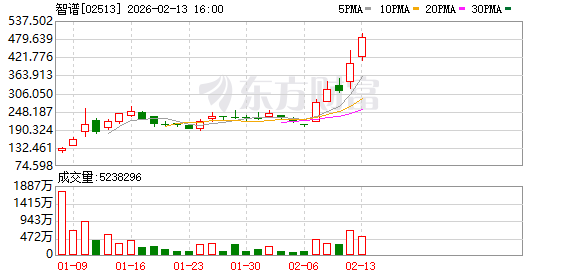
Core Viewpoint - The stock price of Zhiyuan Technology, known as the "first stock of large models" in Hong Kong, surged over 138.68% within five trading days, indicating strong market interest and momentum for AI-related companies [2][3] Group 1: IPO Developments - Zhiyuan Technology has updated its A-share IPO guidance report, adding Guotai Junan Securities as a new advisor alongside CICC, enhancing its advisory team [3][5] - The company previously withdrew its IPO guidance submitted in April 2025 and is now aiming for a listing on the Shanghai Stock Exchange's Sci-Tech Innovation Board [5][6] - The rapid re-initiation of A-share IPO guidance reflects Zhiyuan's commitment to establishing a dual capital platform ("A+H") [7] Group 2: Competitive Landscape - The competition among leading securities firms for IPO services in the AI sector is intensifying, with a focus on both speed and quality of submissions [3][12] - Guotai Junan Securities has a strong track record, having participated in 19 IPO projects on the Sci-Tech Innovation Board over the past three years, making it the top firm in terms of project count [8] - In contrast, CICC has been involved in 12 projects during the same period, highlighting the competitive dynamics between these top-tier firms [9] Group 3: Market Trends - The current environment allows unprofitable "hard tech" companies, including AI firms, to pursue IPOs, but the complexity of their technologies and business models leads to more rigorous scrutiny during the application process [14] - The collaboration between CICC and Guotai Junan Securities in past projects, such as the successful IPO of SMIC, showcases their established partnership in the hard tech sector [11][10]



京仪装备股价异动,半导体设备板块景气度提升
Jing Ji Guan Cha Wang· 2026-02-14 02:56
Industry Overview - The semiconductor equipment sector has shown strong performance recently, with the semiconductor equipment concept index rising by 1.85% on February 13, making it one of the few sectors to gain that day [1] - According to the Semiconductor Industry Association, global semiconductor sales are projected to reach $791.7 billion by 2025, a year-on-year increase of 25.6%, with sales in China exceeding $200 billion for the first time, growing over 15% [1] - TSMC reported a year-on-year sales increase of 36.8% to NT$401.26 billion in January, and its capital expenditure plan for 2026 (ranging from $52 billion to $56 billion) indicates strong demand for upstream equipment [1] - Factors such as AI computing demand, an upturn in the storage chip cycle, and the penetration of advanced packaging technology are driving equipment demand [1] Company Fundamentals - Jingyi Equipment's revenue for Q3 2025 increased by 37.96% year-on-year to 368 million yuan, with a cumulative revenue growth of 42.81% for the first three quarters [2] - As of the end of Q3 2025, the company's contract liabilities reached 951 million yuan, and inventory increased by 190 million yuan to 2.349 billion yuan, indicating a robust order intake and significant delivery pressure [2] - The company's products are utilized in major domestic wafer fabs such as Yangtze Memory Technologies and SMIC, holding approximately 39% market share in the domestic semiconductor temperature control equipment sector (2024 data) [2] Financial Situation - On February 13, Jingyi Equipment experienced a net outflow of 45.377 million yuan in main funds, but the daily trading volume reached 1.087 billion yuan, with a turnover rate of 7.20%, indicating significant capital divergence [3] - The stock price exhibited considerable volatility on that day, with a high of 128.75 yuan and a low of 117.18 yuan, likely influenced by pre-holiday risk aversion and profit-taking [3] Stock Price Situation - February 13 marked the last trading day before the Lunar New Year, with the A-share market experiencing a general decline (Shanghai Composite Index down 1.26%), as funds shifted from high-position sectors like photovoltaics and small metals to defensive sectors such as semiconductor equipment and military [4] - As a leading player in the semiconductor equipment niche, Jingyi Equipment benefits from the strengthening of domestic substitution logic, with a year-to-date increase of 26.64%, indicating a potential short-term rebound due to technical factors [4] - The recent stock price fluctuations of Jingyi Equipment are attributed to multiple factors, including improved industry sentiment, robust company orders, capital market dynamics, and shifts in market style [4]
强力新材2026-2027年半导体及先进封装材料产线建设计划披露
Jing Ji Guan Cha Wang· 2026-02-14 01:46
Company Project Progression - Strongly New Materials (300429) plans to launch several production lines between 2026 and 2027, focusing on semiconductor materials and advanced packaging [1][2] - In 2026, the company will begin mass production of KrF photoresist materials and related components, with partners including SMIC and Yangtze Memory Technologies [1] - The first phase of the semiconductor mask production line (130-40nm) is set to be fully operational in 2026, while the second phase (40-28nm) will start construction in the same year [1] - The first phase of advanced packaging materials (PSPI) with an annual capacity of 259 tons is expected to be launched in 2026, having already passed validation by Shenghe Jingwei and integrated into Huawei's Ascend supply chain [1] - PCB photoresist and semiconductor-grade PAG from the Nantong base will reach full production in 2026, while environmentally friendly photoresists and UV-LED resin from the Changzhou base are also planned for 2026 [1] Future Developments - In 2027, the second phase of the semiconductor mask production line (40-28nm) is expected to be completed and operational [2] - The second phase of advanced packaging materials (PSPI) with an annual capacity of 136.2 tons is planned for 2027, increasing total capacity to 395.2 tons per year [3] - OLED materials, through a joint venture with Strongly Yulei, aim for mass production of HT/ET organic light-emitting materials in 2027, with a collaborative evaluation laboratory established with LG Chem [3] - The release of these capacities is highly dependent on customer validation results, particularly for PSPI, KrF photoresist, and mask products [3] - 2026 is characterized as a year of concentrated capacity release for semiconductor materials and advanced packaging, while 2027 will focus on advanced processes of 28nm and above, as well as the OLED sector [3]

计算机行业事件点评:Seedance2.0算力需求知多少
Guolian Minsheng Securities· 2026-02-14 00:51
Investment Rating - The report maintains a "Recommended" rating for the industry, indicating an expected relative performance exceeding 15% compared to the benchmark index over the next 12 months [8]. Core Insights - The launch of Seedance 2.0 by ByteDance marks a significant advancement in AI video generation, enabling users to create videos with simple text prompts, which is expected to enhance user engagement and frequency of use over the long term [3][5]. - The model's capabilities include multi-modal input acceptance, narrative coherence, and audio-visual synchronization, addressing key industry challenges such as character consistency and audio-visual mismatch [4][5]. - The demand for computational power is projected to increase exponentially due to the anticipated high concurrency from both consumer (C-end) content creation and business (B-end) API calls [6]. Summary by Sections Seedance 2.0 Launch and Features - Seedance 2.0 is integrated into various platforms, allowing users to generate short videos easily, which is expected to drive higher usage rates [3]. - The model supports multiple input types and can generate videos with synchronized audio, enhancing the creative process for users [4]. Computational Demand Projections - The report estimates that by October 2025, the monthly usage of AI-generated content on the platform will reach 63,900 times, with a total usage time of 1,668.2 hours [6]. - The complexity of video generation is significantly higher than that of text and images, leading to a substantial increase in computational requirements [6]. - Projections indicate that the number of required H100 GPUs for video generation could range from 2.4 million to 4.284 million under different scenarios, with a market space for H100 GPUs estimated between $4.8 billion and $8.568 billion [14][12]. Long-term Market Opportunities - The report highlights the potential for domestic computational power providers to benefit from the growth of AI video generation, with specific companies recommended for investment, including chip designers and AI server manufacturers [13]. - The user base for short videos in China is expected to exceed 1 billion by the end of 2024, with increasing daily usage times projected [7][11].


台积电给大陆最先进的,是16纳米。扭过头,塞到日本手里的,却是3纳米。就在我们制裁日本的节骨眼上,台积电董事长人直接飞过去了,跟对方坐在一张桌上,聊的不是别的,就是怎么把日本的工厂,变成最顶尖的3纳米芯片生产线。2026年2月5日,台积电董事长魏哲家出现在了东京。在他的公文包里,原本那...
Sou Hu Cai Jing· 2026-02-14 00:50
台积电给大陆最先进的,是16纳米。扭过头,塞到日本手里的,却是3纳米。就在我们制裁日本的节骨眼上,台积电董事长人直 接飞过去了,跟对方坐在一张桌上,聊的不是别的,就是怎么把日本的工厂,变成最顶尖的3纳米芯片生产线。 2026年2月5日,台积电董事长魏哲家出现在了东京。在他的公文包里,原本那份关于熊本二厂的规划图纸已经被悄悄替换。之 前的蓝图上写着"6至12纳米",那是成熟制程的舒适区。而此刻摆在日本高层面前的新方案,赫然印着"3纳米"。 这是一次极为反常的空降。要知道,此时的中日关系正因为制裁风波处于冰点,中国对日本的稀有金属管控还在持续加码。 按常理,商人这时候该做的是"避嫌",魏哲家却选择了"梭哈"。他不仅人到了,还把原本122亿美元的投资预算,直接划掉,改 写成了170亿美元。 这一笔多出来的48亿美元,买的不只是设备,是入场券。坐在他对面的日本官员显然早就准备好了筹码。 日本政府承诺的补贴金额,从最初的几千亿一路飙升,最终定格在惊人的1万亿日元以上,其中仅首批到账的就有7320亿日元。 索尼、丰田的高管们围坐在侧,像盯着猎物一样盯着那份协议。对他们来说,这不仅仅是一座工厂,这是日本半导体"失去三十 年 ...


北水成交净买入202.19亿 北水抢筹港股ETF及科技股 全天加仓盈富基金超36亿港元
Zhi Tong Cai Jing· 2026-02-13 21:54
Group 1 - The Hong Kong stock market saw a net inflow of 202.19 billion HKD from northbound trading, with 114.77 billion HKD from the Shanghai Stock Connect and 87.43 billion HKD from the Shenzhen Stock Connect [2] - The most net bought stocks included the Tracker Fund of Hong Kong (02800), Alibaba-W (09988), and Tencent (00700), while the most net sold stocks were Longi Green Energy (601869) and CNOOC (00883) [2][8] - Northbound trading showed significant interest in semiconductor stocks, with Huahong Semiconductor (01347) and SMIC (00981) receiving net purchases of 8.46 billion HKD and 5.73 billion HKD respectively [6] Group 2 - Tencent Holdings (00700) had a net inflow of 22.00 billion HKD, with total trading volume reaching 35.63 billion HKD [3] - Alibaba-W (09988) received a net inflow of 20.13 billion HKD, with a total trading volume of 28.70 billion HKD [3] - Meituan-W (03690) saw a net inflow of 10.35 billion HKD, with a total trading volume of 14.60 billion HKD [3] Group 3 - Huahong Semiconductor reported a fourth-quarter revenue of 659.9 million USD, a significant quarter-on-quarter increase of 22.4%, with a gross margin of 13.0% and a net profit of 34.1 million USD, reversing a previous loss [6] - SMIC also reported strong performance, contributing to the positive sentiment in the semiconductor sector [6] - CNOOC (00883) faced a net outflow of 1.43 billion HKD amid geopolitical tensions and market shifts towards supply-demand dynamics [7]





中芯認股證結構透視:遠價外集中度近七成 技術位博弈暗藏流動性陷阱
Ge Long Hui· 2026-02-13 17:40
技術座標揭示合理邊界 成交分布印證博弈心態 全日成交額243,367千港元中,遠價外區間獨佔112,840千元(46.37%),中價外區間貢獻56,909千元 (23.38%),合計69.75%成交集中於技術阻力位上方,顯示資金過度集中於突破博弈。 條款競爭力顯現結構效率落差 中價外區間展現相對較佳風險回報特性,平均引伸波幅53.90%,配合4.76倍槓桿,提供較合理平衡。價 內主力區間雖具備52.68%引伸波幅與3.39倍槓桿的效率優勢,但產品數量僅8隻限制實際操作彈性。遠 價外區間雖有5.35倍槓桿的表面優勢,但引伸波幅高達59.11%,推升持倉成本,加上流動性不足,顯示 成本與預期回報空間出現嚴重錯配。 市場結構隱含系統性風險 以中芯國際現價69.6元為基準,技術分析劃定明確活動範圍:主要支持位68.3元與下試區域62.7元構成 下行防線,主要阻力位75.2元與上望目標80.4元定義上行空間。在此框架下,行使價62.7-75.2元區間屬 於技術合理範圍,而當前市場結構顯示顯著偏離理性邊界。 行使價分布凸顯結構失衡 市場現存145隻認購證呈現明顯結構分化:深價內區間(41.50-62.93元)30隻產品提 ...