
地平线

Search documents
人机共驾不是权宜之计!业内专家热议智驾安全 中科院王宏安:机器不可能完全取代人
Mei Ri Jing Ji Xin Wen· 2025-10-27 12:17
Core Viewpoint - The discussion on intelligent driving safety is ongoing, emphasizing that human-machine collaboration will be crucial for future developments in autonomous driving technology [1][3]. Group 1: Human-Machine Collaboration - Current intelligent driving capabilities do not meet user expectations, highlighting the need to build trust between humans and machines to optimize collaboration [3][4]. - If humans disengage from driving control, their driving skills may deteriorate, leading to risky behavior due to overconfidence in autonomous systems [3][4]. Group 2: Industry Challenges - The urban navigation assistance feature (NOA) in intelligent driving vehicles faces challenges due to the complexity and diversity of China's traffic infrastructure, affecting user trust in these systems [3][4]. - Companies are focusing on enhancing the capabilities of intelligent driving products to handle complex scenarios, including increasing computational power and automating data processes for rapid system iteration [4]. Group 3: Technological Advancements - The integration of large models in AI is expected to improve human-machine interaction by better understanding commands and emotional nuances [4]. - In five years, AI-driven vehicles may evolve from mere tools to intelligent companions, with systems potentially available in vehicles priced around 100,000 yuan [5]. - The automotive industry anticipates the mass production of intelligent cabins with long-term memory capabilities, leading to personalized driving experiences [5].

20251027 China TMT Breakout
傅里叶的猫· 2025-10-27 11:07
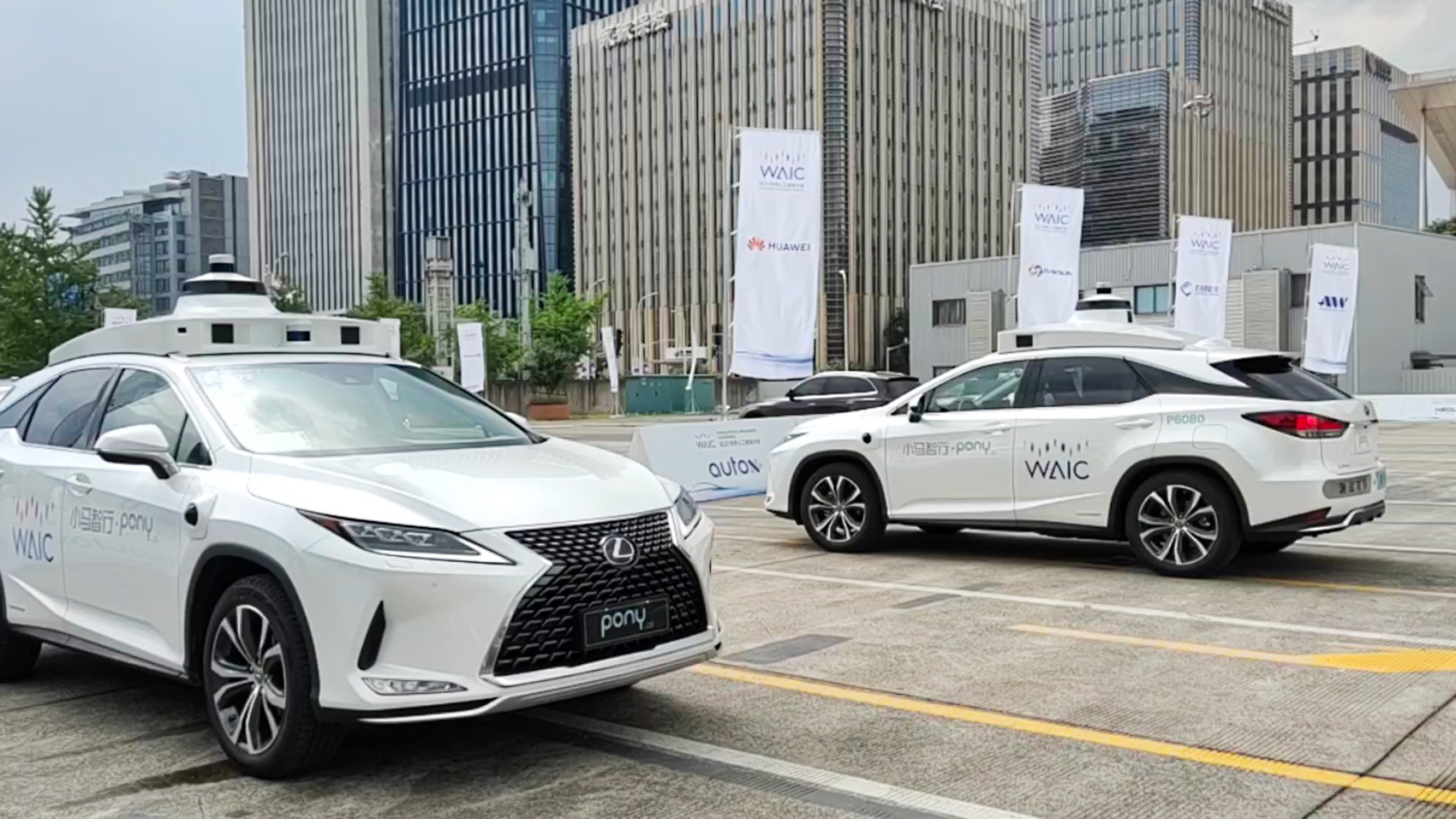
Global Insights - Ongoing US-China negotiations are expected to delay certain policies [4] - Arkham Intelligence reported that SpaceX transferred a total of 1,215 bitcoins to multiple addresses [4] - Citigroup highlighted Anthropic's agreement with Google to procure up to 1 million TPUs, indicating potential benefits for TSMC, MediaTek, and KYEC due to increased TPU chip shipments [5] China Insights - Alibaba upgraded Qwen deep research with one-click webpage and podcast generation, achieving accuracy on par with Gemini, outperforming ChatGPT and Grok [7] - Goldman Sachs noted the increasing adoption of Horizon Journey 6 platform in new vehicle models, with mass production of J6P and H5D starting in EXEED models [7] - Xiaoma Zhixing announced the mass production of 300 units of the seventh-generation Robotaxi, aiming for a fleet of 1,000 by the end of 2025 [8] - Citigroup reported that GoerTek's Q3 2025 performance met expectations, with revenue growth of 4% year-on-year to 30.6 billion RMB [8] - Xiaomi is expected to announce Q3 2025 results on November 18, with a projected net profit of 1.2 billion RMB, reflecting a year-on-year increase of 64% [9] - Raycus Laser's Q3 2025 revenue grew by 10% year-on-year to 841 million RMB, with a significant net profit increase of 107% to 50 million RMB [10] - Nomura identified Shenghong Technology as a key beneficiary of Nvidia's innovation cycle, projecting a revenue and earnings CAGR of 40% and 45% respectively from FY2025 to FY2027 [11]


从WICV展望智能驾驶产业发展趋势
2025-10-27 00:30
Summary of Key Points from the Conference Call Industry Overview - The conference focuses on the **smart driving industry**, highlighting its anticipated growth and technological advancements in 2025, which is considered the year of smart driving's emergence [1][3][19]. Core Insights and Arguments - **Market Penetration**: In the first half of 2025, the penetration rate of L2 passenger vehicles reached **62.1%**, with a significant growth of **102%** in NOA (Navigation on Autopilot) models, indicating high market acceptance of smart driving technologies [4]. - **Hardware Advancements**: The mass production of **LiDAR** has improved perception accuracy, with **57.8%** of vehicles equipped with millimeter-wave radar and **7.9%** with LiDAR. Camera technology has also advanced to **8 million pixels** with dual-lens systems [5]. - **Policy Impact**: The Ministry of Industry and Information Technology (MIIT) has approved pilot L3 vehicle trials for select companies, but the lack of public disclosure may hinder industry momentum. The expected release of the L3 national standard by the end of 2027 is anticipated to accelerate development [9][10]. - **Chip Development**: There is an increasing demand for computing power in vehicles, with full-scene NOA requiring **700-1,000 TOPS**. Companies like NIO, Xpeng, and Li Auto are actively developing their own chips to enhance efficiency and reduce dependency on external suppliers [12]. Additional Important Content - **Shift in Self-Driving Systems**: The transition from a two-stage to a one-stage heating system has improved performance and speed, with a trend towards centralized electronic architecture for more efficient data processing [7]. - **High-Precision Mapping**: The influence of high-precision map providers like Gaode has diminished due to high costs and challenges in maintaining data freshness. Companies are now favoring local modeling through cloud interactions [17]. - **Future Development Focus**: The smart driving industry is expected to see significant growth in L2 and L3 penetration rates over the next 3-5 years, supported by national policies. The smart connected vehicle industry now contributes over **10%** to national GDP, surpassing the real estate sector [19]. - **Cost Reduction in LiDAR**: The cost of 128-line LiDAR has decreased to around **3,000 RMB**, with potential further reductions of **20-30%** expected in the coming years due to increased competition and production scale [16]. This summary encapsulates the key points discussed in the conference call, providing insights into the smart driving industry's current state and future trajectory.
地平线吕鹏:穿越智驾淘汰赛,“反内卷”要靠真外卷
Zhong Guo Qi Che Bao Wang· 2025-10-26 14:44
Core Insights - The automotive industry is shifting its focus from electrification to intelligence, with chips, radars, and systems becoming critical for success [3] - Horizon Robotics aims to empower smart vehicles and robots, emphasizing safety through a comprehensive safety development system certified by international standards [3][5] - The company follows a progressive technical path similar to Tesla, aiming to achieve L4 and L5 capabilities while focusing on an "end-to-end" architecture for human-like driving experiences [5][9] Group 1: Strategic Positioning - Horizon Robotics is one of the few domestic companies achieving large-scale production in the intelligent driving sector, positioning itself as an industry pioneer [3] - The company has developed a full-domain safety development system that integrates hardware and software, making it one of the most complete safety systems in the industry [3] - Horizon emphasizes the importance of product strength over marketing gimmicks, aiming to make intelligent driving a standard feature in vehicles [7] Group 2: Technical Path and Market Outlook - The company predicts that true L3 capabilities will be based on L4 capabilities, with expectations of achieving near "100,000 kilometers without takeover" by 2028, contingent on extensive real-world data and insurance models [5] - Horizon has empowered over 25 vehicle models for international markets, collaborating with various Tier-1 suppliers and foreign automakers [7] - The intelligent driving market is seen as a certainty, with Horizon's shipment of millions of chips reflecting genuine market demand [9] Group 3: Future Vision and Industry Dynamics - Horizon Robotics focuses on creating real value for users, rejecting short-term trends in favor of long-term strategies [12] - The company believes the intelligent driving industry is nearing a consolidation phase, with only two to three leading companies expected to emerge in the next three to five years [9] - The ultimate goal is to shift competition from internal struggles to collaborative value creation for users and industry expansion [12]

2025投资界「F40中国青年投资人」,正式开启
Sou Hu Cai Jing· 2025-10-24 09:12
Core Insights - The "F40 China Young Investors" initiative by Zero2IPO has been launched for eight consecutive years, aiming to identify outstanding investors under 40 years old with a focus on innovation and future trends [1][3] - Young investors are playing a crucial role in the revaluation of China's technology assets, actively participating in the funding of high-profile projects and companies [1][4] Group 1: Event Overview - The 2025 "F40 China Young Investors" program will start on October 24, 2025, with nominations open until November 15, 2025, and the results to be published on November 28, 2025 [3] - Candidates must be under 40 years old, hold a position of Vice President or higher, and have notable investment cases [3] Group 2: Industry Context - Investment界 (PEdaily.cn), a platform under Qingke Holdings, has a significant influence in the venture capital sector, focusing on high-tech industries such as semiconductors, new energy, and AI [4] - Qingke Holdings, listed on the Hong Kong Stock Exchange, has developed a comprehensive service infrastructure for the entrepreneurial and investment market over the past two decades [5]
上汽集团:已投资智元机器人等多家科创企业
Xin Lang Cai Jing· 2025-10-24 07:48
Core Viewpoint - The company is strategically investing in the smart electric vehicle industry chain through a "industry + capital" approach, aiming to accelerate its business transformation and innovation development [1] Investment Strategy - The company has made investments in leading technology enterprises such as Zhiyuan Robotics, Horizon, MOMENTA, and Qingtai Energy [1] - This investment strategy is part of the company's efforts to build a new industrial ecosystem [1]

2025投资界「F40中国青年投资人」正式开启
投资界· 2025-10-24 07:43
Group 1 - The article highlights the launch of the "F40 China Young Investors" initiative by Qianhai Holdings, aimed at recognizing outstanding investors under 40 years old who demonstrate imagination and foresight in the investment landscape [2] - Young investors are becoming pivotal in China's technology asset revaluation, actively participating in early-stage investments in high-tech projects and contributing to the success of unicorn companies [2] - The initiative will run from October 24, 2025, to November 28, 2025, with a focus on identifying young investors who have made significant contributions to the investment field [2] Group 2 - Investment界, a platform under Qianhai Holdings, has been observing trends in China's venture capital for over a decade, particularly focusing on hard-tech industries such as semiconductors, new energy, and AI [3] - Qianhai Holdings aims to provide comprehensive services for the entrepreneurial and investment sectors, having established itself as a foundational infrastructure in China's investment market since its listing on the Hong Kong Stock Exchange in 2020 [4]
一汽、北汽、宝马等企业发声 大咖共议“新汽车”
Zhong Guo Jing Ying Bao· 2025-10-23 14:31
Core Insights - The smart connected vehicle industry in China is transitioning from a technology exploration phase to a critical period of large-scale development, with significant advancements in autonomous driving technology and vehicle-road collaboration [1] - The integration of AI into the automotive sector is reshaping the industry landscape, moving from hardware-driven to software-defined vehicles, which is expected to enhance the overall value chain [2][3] Group 1: Industry Development - China's smart connected vehicle industry is propelled by a combination of policy support, market drive, and technological breakthroughs, allowing it to transition from a follower to a leader in the global market [2] - The industry is experiencing a transformation where AI is fundamentally reshaping the underlying logic of the industry, product value models, and user experience ecosystems [2][3] Group 2: Technological Advancements - The year 2025 is anticipated to be a turning point for the commercialization of AI in the automotive sector, marking a shift from experimental scenarios to large-scale implementation [3] - Companies are developing differentiated strategies for smart connected technologies across various vehicle models, with L2-level assisted driving becoming standard [6] Group 3: Collaboration and Ecosystem - The development of smart connected vehicles is viewed as a collaborative effort rather than a competitive sprint, emphasizing the importance of open cooperation and innovation [7][8] - Industry leaders are advocating for a national-level collaborative innovation platform to address challenges such as technology barriers and standardization issues [8][9] Group 4: Market Opportunities - The automotive industry is expected to see a shift in business models, with potential monthly subscription services for autonomous driving as L4/L5 technologies mature [4] - The integration of AI capabilities across different scenarios and devices is projected to create vast opportunities within the automotive ecosystem [3]
第三十二届中国汽车工程学会年会在渝开幕,设置百余场活动
Nan Fang Du Shi Bao· 2025-10-23 08:35
Core Insights - The 32nd China Society of Automotive Engineers Annual Conference and Exhibition (SAECCE 2025) and Automotive Innovation Technology Exhibition (AITX) opened in Chongqing, China, featuring a comprehensive agenda including an opening ceremony, five main forums, 100 specialized meetings, and 35 concurrent activities [1][2] Industry Overview - Since the 14th Five-Year Plan, China's automotive industry has significantly increased its production and sales scale, with a forecast of over 31 million vehicles produced and sold in 2024, marking a historical high and maintaining the world's leading position for 16 consecutive years [1] - New energy vehicle (NEV) sales are projected to rise from less than 1.4 million in 2020 to nearly 13 million in 2024, increasing its market share from 5.4% to over 40% [1] - In the first three quarters of this year, China's automotive production and sales both exceeded 24 million units, with NEVs accounting for over 46% of the market, reflecting a growth rate of approximately 35% [1] Technological Developments - The latest "Energy-saving and New Energy Vehicle Technology Roadmap 3.0" was released, establishing a new research framework of "1+5+26" to guide the development of the automotive industry towards seven major goals by 2040 [2] - The roadmap will be published globally in both Chinese and English, with ongoing evaluations and revisions to provide strategic decision-making references for various stakeholders [2] Awards and Recognition - The 2025 Automotive Industry Baobin Award was presented to Zhu Huaron of Changan Automobile, marking the tenth recipient since the award's inception, recognizing significant contributions to the automotive industry [2] Industry Trends - Discussions during the "Peak Dialogue" segment highlighted the importance of entrepreneurial spirit and long-termism in industry development, emphasizing the need for a transparent and ethical industry ecosystem [3] - Changan Automobile's chairman stressed the necessity of balancing brand enhancement, profitability, and safety systems, while advocating for a long-term, localized, and ESG-integrated international strategy [3] - The founder of Horizon proposed that companies should embrace patience and risk awareness, achieving sustainable competitiveness through specialized collaboration and innovation [3]

“工业1小时”闪耀山城,浓缩创新之力驱动汽车产业未来
Zhong Guo Qi Che Bao Wang· 2025-10-23 02:03
Core Insights - The 32nd China Automotive Engineering Society Annual Conference and Exhibition was held in Chongqing from October 22-24, showcasing significant innovation in the automotive industry [1] - The event featured the debut of the Automotive Innovation Technology Exhibition (AITX) and the "One Hour of Industry" innovation release series, providing a platform for companies to showcase their latest technologies and products [1][3] Group 1: Event Highlights - AITX, covering an area of 25,000 square meters, gathered over 200 leading companies in the automotive industry, including major manufacturers and key players in core components, smart connectivity, and new energy [3] - The "One Hour of Industry" series allowed multiple leading companies to present global premieres, strategic agreements, and in-depth technical interpretations within a condensed timeframe [5] Group 2: Technological Innovations - Chuhang Technology unveiled a new 4D satellite architecture radar product, emphasizing advancements in intelligent driving perception [5] - Zhongqi Chuangzhi introduced a comprehensive information technology platform integrating "people-vehicle-road-cloud-star" in collaboration with major automotive and satellite operators, outlining a vision for integrated development [7] - Hefei Yitong's innovation in electronic and electrical architecture aims to reshape the foundational structure of vehicles, supporting more complex software-defined automotive functions [9] Group 3: Industry Perspectives - The excitement surrounding the rapid development of the Chinese automotive industry was highlighted, with significant advancements in technology iteration, product diversity, and overall vehicle development levels [11] - The platform provided by the China Automotive Engineering Society was praised for facilitating communication and understanding among different companies, supporting future industry development and ecosystem building [11] Group 4: Future Outlook - The event served as a collision of ideas and a stage for technology and industry to interact, with the "One Hour of Industry" transforming momentary highlights into sustained momentum for the advancement of the Chinese automotive industry [13] - The innovation vitality of the Chinese automotive sector is accelerating at an unprecedented pace, continuously redefining the future of mobility [13]
