陶氏公司

Search documents
Price In?为什么投资者对美股强劲财报无动于衷?
Hua Er Jie Jian Wen· 2025-07-21 11:27
美股二季度财报季开局强劲,消费强劲势头推动企业利润保持韧性,但股市却反应平淡,多数利好消息 已被计入股价,而未达预期的公司将面临严厉惩罚。 以金融股为例,上周公布的业绩大幅超预期,但股价表现平平。流媒体平台Netflix在各项主要指标也均 超出预期,但收跌超5%。联合航空对旅游需求增长持乐观态度,但投资者对这些数字反应冷淡。 PenderFund Capital Management首席投资官Greg Taylor表示: 标普500指数上周五收于历史高位附近,在15个交易日内创下7次新纪录。该股指目前市盈率为22倍,正 快速接近2月份水平,即4月宣布关税前的高点。 与此同时,据彭博数据显示,市场对未达预期业绩的惩罚程度达到近三年来最严重水平。正如道富首席 投资策略师Michael Arone表示: 目前市场容错率很小,当估值很高而你却失误时,惩罚会更严厉。 银行业绩创纪录但股价反应冷淡 美国大型银行基于创纪录的交易收入交出亮眼财报,特朗普关税引发的波动性刺激了华尔街最大公司的 市场活动。尽管如此,股价走势令人失望。 高盛创下华尔街历史上最大收入纪录,但公司股价在财报发布当日涨幅不到1%。摩根士丹利净收入超 出 ...
化工龙头ETF(516220)涨超2.1%,海外供给收缩或支撑化工品价格上行
Mei Ri Jing Ji Xin Wen· 2025-07-21 03:34
Group 1 - The core viewpoint is that approximately 75% of global DMC production capacity is concentrated in China, with overseas capacity growth constrained by raw materials, costs, and market factors [1] - Domestic demand for silicone is expected to maintain a high growth rate of 15.5% by 2025, while new capacity growth will slow to 3.0%, leading to a supply-demand mismatch as demand is projected to grow by 12% [1] - Current silicone prices are at historical low levels, and with Dow's capacity exit, China's export share to Europe is expected to increase, significantly boosting marginal effects, with industry prosperity and corporate profitability likely stabilizing and recovering by 2026 [1] Group 2 - The chemical leader ETF (516220) tracks a sub-sector chemical index (000813), which is compiled by China Securities Index Co., selecting representative listed companies from the chemical raw materials, chemical products, fertilizers, and agricultural chemicals sectors to reflect the overall market performance of the chemical industry [1] - Investors without stock accounts can consider the Guotai CSI Sub-sector Chemical Industry Theme ETF Connect C (012731) and Guotai CSI Sub-sector Chemical Industry Theme ETF Connect A (012730) [1]
欧洲化工资产并购出现分化
Zhong Guo Hua Gong Bao· 2025-07-21 02:30
Core Insights - Strategic reviews have become a norm in the European petrochemical industry, leading to the closure of several production facilities, particularly in bulk chemicals, while specialty chemicals remain attractive to the market [2][3] Group 1: Bulk Chemicals - Major companies like Dow, BASF, LyondellBasell, SABIC, and Shell have conducted strategic reviews of their European petrochemical assets, often resulting in the closure of production units [2] - High energy costs, economic downturns, and low-cost imports from Asia are significantly impacting the profitability of European bulk chemical companies, forcing them to divest related assets [2] - The local performance of European bulk chemical assets may lack global competitiveness, leading companies to prefer shutdowns over sales [2][3] Group 2: Specialty Chemicals - Specialty chemical assets are currently favored in the market, with numerous transactions focused on Europe, including the catalyst business of Clariant and BASF's coatings business attracting competitive bids from private equity and strategic buyers [5] - The global advantages of specialty chemicals, high R&D investment, and localized customization capabilities help mitigate risks in the European value chain [5] - Private equity firms are familiar with specialty chemicals, which boosts their enthusiasm for acquisitions, as evidenced by active transactions in the sector [5]
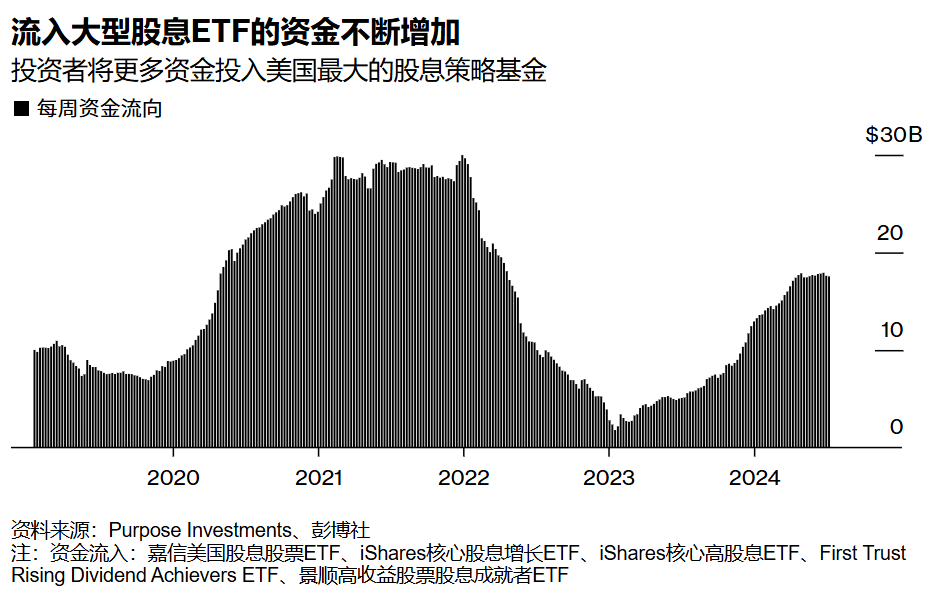
175亿美元资金涌入高股息ETF,美联储降息预期点燃高股息资产热潮
智通财经网· 2025-07-18 11:24
Core Insights - High dividend stocks have become a market focus, with significant capital inflow into global high dividend ETFs, attracting a net inflow of $17.5 billion last week, nearly ten times the level at the beginning of 2024 [1] - The strong reaction to expectations of Federal Reserve interest rate cuts has led investors seeking stable returns to shift their attention to high dividend assets in the equity market [1] - Despite underperformance in recent years, the high dividend strategy has unexpectedly increased dividend yields, as noted by Purpose's chief strategist Craig Basinger [1] Group 1: Market Dynamics - Current relative valuation of high dividend stocks is at a ten-year low, with the S&P 500 high dividend index trading at a price-to-earnings ratio of only 14.2, significantly narrowing the premium over tech stocks [3] - This has amplified the attractiveness of dividends, with 45 companies in the S&P 500 having a 12-month dividend yield exceeding 4.33%, a substantial increase from 14 companies last year [3] - The dynamics in the U.S. Treasury market have also contributed to the appeal of high dividend assets, as most Treasury yields have retreated from two-year peaks [3] Group 2: Performance and Challenges - High dividend ETFs have shown lackluster performance, with the Charles Schwab U.S. Dividend ETF rising only 1.3% this year, compared to a 7.9% increase in the S&P 500 index, indicating a potential third consecutive year of underperformance [5] - The pressure on U.S. corporate dividend growth is evident, with the S&P 500 component dividend increase narrowing to $9.8 billion in Q2, down from $19.5 billion in Q1, due to trade policy uncertainties and economic outlook concerns [5] - Despite these challenges, investors chasing yield remain undeterred, with Basinger suggesting that the "dividend winter" may be coming to an end, as cash flow advantages from high dividends remain attractive in a relatively low asset price environment [5]

天风证券:陶氏英国工厂关停 国内有机硅出口份额有望提升
智通财经网· 2025-07-17 06:41
Core Viewpoint - Dow Chemical announced the closure of three upstream assets in Europe to address structural challenges in the region, which is expected to significantly impact the supply-demand dynamics in the silicone industry [1][2]. Group 1: Company Actions - Dow will close an ethylene cracker in Germany, a chlor-alkali and vinyl plant in Germany, and a siloxane plant in the UK, with the shutdown process expected to start in mid-2026 and complete by the end of 2027, with final dismantling by 2029 [2]. - The closure of the UK plant, which has a capacity of 14.5 million tons, represents 30.5% of Europe's silicone capacity and 3.4% of global capacity [2][3]. Group 2: Industry Impact - The exit of overseas silicone capacity is anticipated to improve the supply-demand balance in the industry, as approximately 75% of DMC capacity is concentrated in China [2]. - From 2015 to 2024, about 290,000 tons of polysiloxane capacity is expected to exit the market, with overseas capacity projected to decrease to 915,000 tons by 2026 [3]. - China's silicone demand is expected to grow at a CAGR of 15.5% from 2021 to 2024, with a potential price increase in 2025 due to improved supply-demand dynamics [3]. Group 3: Export Opportunities - The closure of Dow's UK plant is likely to enhance China's share of silicone exports to Europe, with an estimated annual DMC production of 87,000 tons, which would account for 88% of China's silicone exports to Europe in 2024 [4]. - As of 2024, China's silicone exports to Europe are projected to be around 98,000 tons, representing 18% of total domestic exports [4].


有机硅行业专家电话会
2025-12-15 01:55
Summary of the Organic Silicon Industry Conference Call Industry Overview - The organic silicon industry experienced a demand growth rate of nearly 20% in the first half of 2025, primarily driven by increased demand for high-temperature adhesives in the electronics sector and a rise in export volumes to Europe. However, the growth rate is expected to slow down to 8%-10% in the second half of the year due to poor performance in the construction sector, although significant demand growth is noted in emerging fields such as new energy and new materials [1][8]. Key Points - **Current DMC Pricing and Cost Structure**: The current price of DMC is approximately 11,000 RMB per ton, with production costs ranging from 10,500 to 10,700 RMB per ton, indicating a narrow profit margin. The rise in industrial silicon prices is a major influencing factor, with some companies reducing costs by self-supplying industrial silicon and chloromethane [1][9]. - **Production Capacity and Utilization**: Domestic organic silicon production capacity accounts for about 70% of the global total, with current operating rates around 72%-73%. This is expected to increase to about 80% in the second half of the year due to easing supply-demand tensions and seasonal demand peaks in September and October [1][11][13]. - **Future Capacity Additions**: No new DMC production capacity is expected to come online in 2025. Planned capacity additions for 2026 are primarily concentrated in the Xinjiang Qiya Phase I project, with other projects facing uncertainties. Supply growth will mainly rely on existing companies increasing their operating rates [1][12]. - **Impact of Dow's Exit**: Dow's exit from the market is not expected to significantly impact global organic silicon supply, as domestic capacity can compensate for the reduction. This is anticipated to benefit domestic exports, with an expected increase in export volumes [1][6]. Market Dynamics - **Price Trends**: The organic silicon market has seen a downward price trend throughout the year, with prices hitting a historical low of 10,000 RMB per ton in mid-June. Following this, there has been a slight rebound in prices due to order fulfillment and inventory reduction [2][4]. - **Demand Forecast**: The second half of the year is expected to perform better than the first half, with a strong demand forecast during the "Golden September and Silver October" period. The impact of U.S. tariffs is anticipated to be less severe in the latter half of the year [5][8]. - **Downstream Product Applications**: High-temperature adhesives account for about 40% of downstream products, primarily used in construction and electronics. Room temperature adhesives make up 30%, while silicone oil accounts for 12%-15%, with applications in personal care and food processing [3][15]. Additional Insights - **Inventory Levels**: Current inventory levels are reported to be around 40,000 to 50,000 tons, with a gradual decline expected as orders are fulfilled. The inventory situation is relatively stable, with monthly consumption around 200,000 tons [20]. - **Global Demand Trends**: Overseas demand for organic silicon is primarily concentrated in the electronics sector, with increasing needs for specialty silicone and customized silicone due to advancements in semiconductor and AI technologies [21]. - **Raw Material Supply**: DMC production requires approximately 0.52 to 0.53 tons of industrial silicon per ton of DMC, with improvements in processes allowing some companies to reduce this to below 0.5 tons [22]. - **Long-term Price Outlook**: Industrial silicon prices may rise in the short term due to futures market support, but long-term trends remain uncertain due to unresolved supply-demand issues [24]. This summary encapsulates the key insights and projections regarding the organic silicon industry as discussed in the conference call.
陶氏有机硅英国工厂产能关停的影响分析
Tianfeng Securities· 2025-07-16 11:13
Investment Rating - Industry rating is Neutral (maintained rating) [5] Core Viewpoints - The closure of Dow's UK plant is expected to accelerate the improvement of the industry supply-demand structure, as approximately 75% of global DMC capacity is concentrated in China. The exit of overseas silicone capacity is primarily due to cost and competitive disadvantages [2][9] - Dow's UK plant, which has a capacity of 145,000 tons, represents 30.5% of Europe's silicone capacity and 3.4% of global capacity. Its closure will significantly impact the European market, which is primarily focused on local consumption [2][9] - China's silicone demand is projected to grow at a CAGR of 15.5% from 2021 to 2024, with a potential price increase in 2025 due to improved supply-demand dynamics. The closure of Dow's UK plant may enhance China's export share to Europe [3][22] Summary by Sections Event - On July 7, 2025, Dow announced the closure of three European upstream assets, including the UK silicone plant, due to structural challenges in the region. The closure is expected to begin in mid-2026 and be completed by the end of 2027, with final dismantling by 2029 [1][9] Industry Analysis - The exit of overseas silicone capacity is anticipated to improve the supply-demand balance in the industry. Since 2015, overseas capacity has decreased from 1.35 million tons to an estimated 1.065 million tons by 2024, with a further reduction expected to 915,000 tons by 2026 [2][17] - China's silicone demand is expected to grow significantly, with a projected 12% growth rate in demand fields in 2025, while new capacity growth is expected to slow to 3% [3][22] Related Companies - Key recommendations include Xin'an Chemical, with a suggestion to pay attention to Hoshine Silicon and Dongyue Silicon [3][28]
“AI+机器人”为合成化学研发注能
Zhong Guo Hua Gong Bao· 2025-07-16 02:32
Group 1 - The core viewpoint of the articles is that the synthetic chemistry field is undergoing a significant paradigm shift from traditional "experience-driven" methods to "data-driven" and "intelligent-driven" approaches, primarily through the integration of robotics and artificial intelligence (AI) [1][2][4] - The introduction of high-throughput technology platforms allows researchers to systematically design thousands of different catalyst formulations and quickly identify patterns that would take traditional methods a significant amount of manpower to uncover, leading to the successful development of advanced materials [2][3] - The development of deep learning technologies has dramatically increased research efficiency, exemplified by Dow Chemical's use of Microsoft Azure AI, which reduced a 4-6 month workload to just 30 seconds, achieving a 200,000-fold increase in efficiency [3] Group 2 - Current advancements in AI models and automation technologies have significantly transformed the operational aspects of synthetic chemistry research, enabling high-precision, high-throughput, and safer chemical operations [4][5] - The first AI chemical robot, which autonomously completed 688 experiments in just 8 days, highlights the potential of AI in assisting rather than replacing chemists in experimental design [6][7] - Challenges such as data scarcity and the complexity of reactions remain in the application of AI in synthetic chemistry, necessitating a problem-driven approach that combines limited automation with human cognition for intelligent molecular creation [7][8]

供应压力大,需求弱势
Yin He Qi Huo· 2025-07-14 14:05
1. Report Industry Investment Rating No relevant content provided. 2. Core Viewpoints of the Report - In the medium term, the prices of polypropylene (PP) and polyethylene (PE) are bearish. In the short term, the commodity atmosphere is warm, and the prices of plastic PP are oscillating. After the macro - sentiment weakens, they are still regarded as bearish [3][4]. 3. Summary According to Relevant Catalogs 3.1 Comprehensive Analysis and Trading Strategies - **Comprehensive Analysis**: In the third quarter, PP and PE still face significant production capacity release pressure, which eases in the fourth quarter. The expected new production capacity of standard - grade PE in the second half of the year is only 500,000 tons, with a reduced pressure compared to the first half. However, supply is not tightening as the high - level maintenance in the first half may lead to a rebound in the operation rate of existing facilities in the second half. Terminal demand is weak year - on - year, and there are no strong factors to reverse the weak demand, so there is a lack of upward momentum [3]. - **Trading Strategies**: - **Unilateral Trading**: In the medium term, prices are bearish. In the short term, due to the warm commodity atmosphere, plastic PP prices are oscillating and will turn bearish after the macro - sentiment weakens. - **Arbitrage**: Temporarily on the sidelines. - **Options**: Temporarily on the sidelines [4]. 3.2 Core Logic Analysis - **Inventory**: This week, both PE and PP inventories increased. PE total inventory rose by 34,000 tons to 1.054 million tons, and PP total inventory increased by 18,000 tons to 533,000 tons [6][8]. - **Production Capacity Release**: In the second half of the year, the estimated new PP production capacity is 3.15 million tons, and the new PE production capacity is 2.05 million tons for the 2509 contract and 800,000 tons for the 2601 contract. The release of linear low - density polyethylene (LL) production capacity slows down significantly in the second half of the year [9]. - **Demand**: The demand for PE and PP is still weak year - on - year. The PE pipe industry's operating rate decreased by 3 percentage points to 29% this week, and the BOPP and injection - molding industries of PP saw their operating rates drop by 1 percentage point to 58% and 44% respectively [12][13][14]. 3.3 PE Weekly Data Tracking - **Prices and Spreads**: The prices of various PE products and related raw materials showed different changes. For example, the Brent spot price increased by 2.5% week - on - week, and the oil - based PE profit increased by 8.5 [24]. - **Sino - US PE Relationship**: China is a net importer of PE. In 2024, the apparent demand for PE was 41.61 million tons, with an import volume of 13.85 million tons and an import dependence of 33%. The import volume from the US was 2.39 million tons, accounting for 17.2% of total imports and 5.7% of apparent demand [27]. - **Profit**: The profits of different production methods of PE, such as oil - based and coal - based, showed different trends. The oil - based PE profit increased by 8.5 week - on - week [24]. - **Inventory**: PE inventory increased this week, with the total inventory rising by 34,000 tons to 1.054 million tons [8]. - **Production and Operation**: The current PE operating load is 74.68%, a decrease of 2.2 percentage points from the previous period [46]. - **Import and Export**: This week, the PE import market continued the situation of weak supply and demand. The supply of import offers and quotas remained low, and the demand was weak, resulting in a light trading atmosphere [55]. 3.4 PP Weekly Data Tracking - **Prices and Spreads**: The prices of various PP products and related raw materials also changed. For example, the Brent spot price increased by 2.48% week - on - week, and the PP CFR China price remained unchanged [66]. - **Sino - US PP Relationship**: China is a net importer of PP. In 2024, the apparent demand for PP was 39.37 million tons, with an import volume of 367,000 tons and an import proportion of 9%. The import volume from the US was 39,400 tons, accounting for 1.07% of total imports and 0.1% of apparent demand. The cost - end propane of PP has a high dependence on the US [69]. - **Profit**: The profits of different production methods of PP, such as oil - based, CTP, and PDH, showed different trends. The oil - based PP profit increased by 58 [66]. - **Inventory**: PP inventory increased this week, with the total inventory rising by 18,000 tons to 533,000 tons [8]. - **Production and Operation**: This week, the operating load rate of domestic PP plants was 77.42%, an increase of 0.01 percentage points from the previous week and 3.76 percentage points from the same period last year [87]. - **Import and Export**: In terms of imports, overseas suppliers were cautious, and the offers were few and higher than the domestic market level, resulting in few transactions. In terms of exports, due to sufficient supply from the Middle East and emerging regions, China's PP exports had difficulty in getting large - volume orders [94][96].
华尔街见闻早餐FM-Radio | 2025年7月14日
Hua Er Jie Jian Wen· 2025-07-13 23:11
Company and Industry Insights - The Chinese AI application market shows strong demand from state-owned enterprises, while small and medium-sized enterprises are adopting subscription models, but consumer monetization remains slow [14] - Wahaha's chairwoman, Zong Fuli, is being sued over asset disputes by three individuals claiming to be her half-siblings, raising concerns about the company's governance and potential impacts on its operations [14] - Meituan reported a record 150 million orders over the weekend, with an average delivery time of 34 minutes, indicating a significant increase in rider income and a competitive landscape in the food delivery sector [11] - The organic silicon market is expected to benefit from Dow's announcement to close its UK plant, which will reduce European capacity by nearly one-third, potentially filling the supply gap with domestic exports [20] - The rare earth sector is poised for improvement as MP Materials is set to receive substantial investment from the U.S. Department of Defense, which may lead to price increases for rare earth magnets [20] - The construction sector is seen as having a recovery potential due to its financial-like business model, with current market pessimism already priced in, suggesting a need for a rebound [20] - The coal industry is expected to maintain a stable price range due to rigid supply and rising costs, despite short-term demand fluctuations [20]