科沃斯

Search documents
西部证券晨会纪要-20251222
Western Securities· 2025-12-22 02:54
Group 1: Market Strategy and Economic Outlook - The report suggests that the market is entering a cyclical transition, similar to Japan in 1978, with a recommendation to continue investing in sectors that are expected to reach new highs [1][10] - The anticipated "spring rally" in the A-share market is supported by favorable economic policies and the return of cross-border capital, which could lead to a "Davis Double" effect in the consumer sector [3][21] - The report emphasizes the importance of cyclical recovery in the economy, with a focus on sectors such as non-ferrous metals, new consumption, and high-end manufacturing [10][21] Group 2: Company-Specific Insights - The report on Ecovacs (科沃斯) forecasts revenues of 18.923 billion, 21.973 billion, and 24.919 billion CNY for 2025, 2026, and 2027 respectively, with corresponding net profits of 1.954 billion, 2.306 billion, and 2.777 billion CNY, indicating significant growth potential [2][13] - Ecovacs is expected to benefit from improvements in its cleaning business, the development of its consumer robotics matrix, and synergies from its supply chain layout [13] - The report highlights the potential for the liquid cooling industry to experience significant growth in 2026, with a focus on companies that have technological barriers and can enter major domestic and international supply chains [4][26] Group 3: Industry Trends and Projections - The liquid cooling market is projected to reach a conservative estimate of 6.9 billion to an optimistic 9.7 billion USD by 2026, driven by advancements in GPU technology and increasing demand for efficient cooling solutions [23][24] - The report indicates that the domestic liquid cooling server market is expected to exceed 10 billion USD by 2028, with a compound annual growth rate of 47.6% from 2023 to 2028 [25] - The consumer electronics sector is experiencing a recovery, with a focus on innovative products and market expansion, particularly in the context of the upcoming CES 2026 [32][34]

家电周报:iRobot破产重组,追觅科技实控人收购嘉美包装-20251221
Shenwan Hongyuan Securities· 2025-12-21 13:15
Investment Rating - The report maintains a positive outlook on the home appliance sector, indicating that the sector has outperformed the CSI 300 index, with a 0.2% increase in the home appliance index compared to a 0.3% decrease in the CSI 300 index [4][5]. Core Insights - The home appliance sector is experiencing a mixed performance, with leading companies like Zhejiang Meida, Aojiahua, and Biyi Co. showing significant gains, while companies like Lek Electric and Huaxiang Co. are facing declines [4][7]. - The acquisition of Jiamei Packaging by the actual controller of Chasing Technology for 2.282 billion yuan is a notable industry development, with commitments for stable profit growth [10]. - iRobot, a leading global brand in robotic vacuum cleaners, has filed for bankruptcy protection and is expected to be acquired by Shenzhen Shanjun Company, highlighting competitive pressures from Chinese firms [11]. - November sales data for major appliances show significant declines in both volume and revenue, with air conditioners, refrigerators, and washing machines all experiencing substantial drops [35][37][40]. Summary by Sections Industry Performance - The home appliance sector has outperformed the broader market, with a 0.2% increase in the sector index against a 0.3% decline in the CSI 300 index [4][5]. - Key companies leading the gains include Zhejiang Meida (up 12.2%), Aojiahua (up 8.1%), and Biyi Co. (up 4.1%), while Lek Electric (-10.9%), Huaxiang Co. (-4.7%), and Sanhua Intelligent Control (-3.5%) faced declines [4][7]. Industry Dynamics - Jiamei Packaging was acquired for 2.282 billion yuan, with commitments for a minimum net profit of 1.2 billion yuan from 2026 to 2030 [10]. - iRobot's bankruptcy highlights the competitive landscape, with its revenue of $146 million in Q3 2025 and a loss of $22 million, alongside a cash reserve of only $25 million [11]. Sales Data Observations - November data shows a significant decline in sales for major appliances: air conditioners down 47.4% in volume and 55.7% in revenue, refrigerators down 44.6% in volume and 51.7% in revenue, and washing machines down 42.0% in volume and 50.0% in revenue [35][37][40]. - The average prices for air conditioners, refrigerators, and washing machines have also decreased, indicating a challenging market environment [35][37][40].
家电行业2025W50周报:家空内外销均有所承压,iRobot官宣破产重组-20251221
GUOTAI HAITONG SECURITIES· 2025-12-21 11:36
Investment Rating - The industry investment rating is "Overweight" [5] Core Insights - The home appliance industry is experiencing pressure in both domestic and international sales, with iRobot announcing bankruptcy restructuring, which will be acquired by Chinese manufacturer Shanjun Robotics [2][5] - In November, the retail sales of home appliances and audio-visual equipment reached 100 billion yuan, a year-on-year decline of 19.4%, while the cumulative annual sales reached 1,074.9 billion yuan, with a year-on-year increase of 14.8% [5] - The production and sales data for home air conditioners in November showed a production of 10.577 million units, a year-on-year decrease of 36.7%, and sales of 10.492 million units, a year-on-year decrease of 31.8% [5] Summary by Sections Investment Recommendations - Key drivers for investment include overseas expansion and smart home technology, recommending leading companies in the robotic vacuum sector: Roborock (21.1X 2025 PE) and Ecovacs (21.5X) [5] - Companies with stable performance and upward potential include Ninebot (20.6X), Anfu Technology (41.7X), Hailong Cold Chain (14.6X), and Beiding Co. (30.4X) [5] - For companies with robust operations and high dividends, recommendations include TCL Electronics (12.2X), Hisense Visual (12.9X), Midea Group (13.5X), and Haier Smart Home (12.2X) [5] - Companies diversifying into new sectors include Rongtai Health (18.7X) and Wanlong Magnetic Plastic (18.9X) [5] Market Performance - The retail sales growth rate further narrowed in November, with the total retail sales of consumer goods reaching 43,898 billion yuan, a year-on-year increase of 1.3% [5] - The domestic market faces pressure from the decline in national subsidies and high base effects, while the export market is constrained by high base effects and inventory reduction in some overseas markets [5] Company Developments - iRobot has announced its bankruptcy and will be acquired by Shanjun Robotics, with the restructuring process expected to be completed by February 2026 [5] - The founder of Chasing Technology, Yu Hao, plans to acquire 54.90% of Jiamei Packaging, with a total transaction value of approximately 2.282 billion yuan [5]





野村- 耐用品26年投资策略 - 坚定出海搏增长,关注美洲与新兴市场机遇
野村· 2025-12-21 11:01
Investment Rating - The report maintains a positive investment outlook for companies focusing on overseas markets, particularly in the Americas and emerging markets, despite challenges in domestic sales [4][5]. Core Insights - The report emphasizes the importance of "going abroad" as a key strategy for growth, with expectations for better investment returns from overseas-focused companies in 2026, especially as domestic demand faces pressures from policy and market conditions [4][5]. - It identifies three main factors suppressing domestic sales of durable goods: the depletion of government subsidies, high base effects, and weak housing transaction demand [5][6]. - The report suggests that companies with strong operational performance and low valuations, as well as those benefiting from policy or technological catalysts, are potential investment opportunities [5][6]. Summary by Sections 2025 Review - The report notes that the home appliance and light industry sectors have underperformed compared to the CSI 300 index, primarily due to weakening domestic demand and external tariff disruptions [9][11]. - It highlights that the home appliance sector has faced challenges from declining government subsidies and ongoing tariff issues, leading to a significant drop in export performance [9][10]. 2026 Outlook - The report anticipates that domestic housing demand will continue to decline, with new housing starts and sales expected to drop by 4.8% in 2026 [36][39]. - It predicts that the overseas sales performance of home appliance and furniture companies may improve in the second quarter of 2026, driven by base effects and potential recovery in the U.S. housing market [78][80]. - The report emphasizes that companies with significant exposure to the U.S. and emerging markets are likely to benefit from improving demand conditions [80][81]. Recommended Stocks - The report recommends furniture companies with a presence in the U.S., Latin America, and Europe, such as Kuka Home, which are expected to benefit from a recovery in U.S. housing transactions [7]. - It also suggests consumer electronics and home appliance companies with operations in Latin America, North America, and Southeast Asia, including Anker Innovations and Haier Smart Home, ranked by their exposure to these markets [7]. - Lastly, it highlights export-oriented companies in Europe, such as Ecovacs and Roborock, noting that while growth potential is strong, profitability may be pressured by increased competition [7].


280亿,扫地机器人鼻祖宣布破产
虎嗅APP· 2025-12-21 10:08
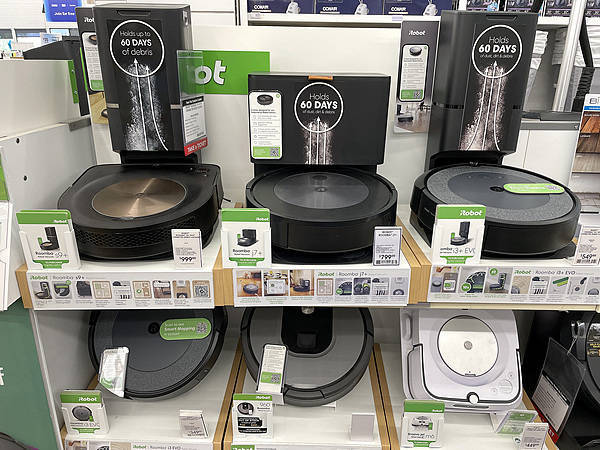
Core Viewpoint - The collapse of iRobot, a pioneer in the robotic vacuum industry, highlights the consequences of regulatory paradoxes, trade policy conflicts, and competition from Chinese firms, ultimately leading to its bankruptcy and acquisition by a Chinese supplier [4][9]. Group 1: Company Background and Market Position - iRobot was founded in 1990 by MIT roboticists and initially focused on defense and space applications, but gained fame with the launch of the Roomba vacuum in 2002, which became a household name in the U.S. [6][7]. - By 2021, iRobot's valuation peaked at $35.6 billion, with Roomba capturing 42% of the U.S. market and 65% in Japan, selling over 50 million units [7][8]. Group 2: Competitive Landscape and Challenges - The pandemic-induced boom masked structural issues, as competitors like Ecovacs and Roborock emerged with significantly higher R&D investments and aggressive pricing strategies, leading to a loss of market share for iRobot [7][8]. - iRobot's reliance on manufacturing in Vietnam became a liability when punitive tariffs were imposed, increasing costs by $23 million and squeezing profit margins [8][9]. Group 3: Acquisition Attempt and Regulatory Impact - In August 2022, Amazon proposed a $17 billion acquisition of iRobot, which was seen as a lifeline for the struggling company, but regulatory bodies in the U.S. and EU blocked the deal, citing antitrust concerns [8][12]. - Following the failed acquisition, iRobot's stock plummeted by 80%, leading to significant layoffs and a halt in non-core R&D projects, marking the beginning of its decline [9][12]. Group 4: Bankruptcy and Acquisition by Chinese Supplier - iRobot filed for Chapter 11 bankruptcy and sold its assets to Shenzhen Picea Robotics for $190 million, a move that ironically resulted in the foreign control that regulators sought to prevent [9][10]. - The failure of iRobot serves as a cautionary tale about the consequences of regulatory overreach and the need for a more nuanced understanding of global competition [12][14]. Group 5: Industry Implications and Future Trends - The bankruptcy of iRobot signals a significant shift in the smart home industry, moving from single-product successes to a focus on integrated smart home ecosystems [18][19]. - Companies must adapt to the new reality where ecosystem integration and technological innovation are crucial for survival, as evidenced by the struggles of other smart home brands facing similar growth challenges [19][23].



科沃斯(603486):连续多季亮眼的盈利端,后续怎么看?
Western Securities· 2025-12-21 07:44
Investment Rating - The report assigns an "Accumulate" rating for the company [6][17]. Core Insights - The company has shown strong profitability in recent quarters, with concerns about the impact of national subsidies and increased competition in the floor cleaning robot market. However, the ongoing operational improvement cycle is expected to mitigate some of these risks [1][15]. - The high gross margin of the company's roller products is attributed to lightweight design upgrades and rapid iteration speed, which provide pricing power. There is potential for further optimization in both short-term and long-term perspectives [1][2]. - The third-party platform business and collaboration within the robotics industry chain are expected to provide additional long-term efficiency improvements [2][56]. Summary by Sections Performance Review - The company has improved its gross and net profit margins significantly in Q1-Q3 of 2025 compared to 2023 [1][25]. - Concerns exist regarding the potential slowdown in domestic sales due to subsidy reductions and increased competition in the cleaning robot market [27]. Roller Product Margins - The high gross margin of roller products is primarily due to their lightweight design and the company's rapid product iteration, which allows for premium pricing [1][32]. - Short-term benefits are expected from an increased proportion of high-margin roller products and enhanced overseas market penetration [1][43]. - Long-term optimization opportunities exist as the company addresses existing pain points in cleaning robots, which could lead to further margin improvements [52]. Third-Party Platform and Robotics Industry Synergy - The company has the capability to build a platform that enhances revenue flexibility and profitability through supply chain localization and cost reduction [2][56]. - Strategic investments in the robotics industry chain are expected to yield direct investment returns and provide cost efficiency and innovation opportunities for the core business [2][58]. Financial Projections - Revenue projections for 2025, 2026, and 2027 are estimated at 189.23 billion, 219.73 billion, and 249.19 billion yuan, respectively, with year-on-year growth rates of 14.39%, 16.12%, and 13.41% [2][17]. - Net profit forecasts for the same years are 19.54 billion, 23.06 billion, and 27.77 billion yuan, with corresponding growth rates of 142.4%, 18.0%, and 20.4% [2][17].
美媒大肆炒作,美企CEO坐不住了:是我们求中企救命啊…
Sou Hu Cai Jing· 2025-12-20 14:27
Core Viewpoint - iRobot, once a leader in the global market for robotic vacuum cleaners, has filed for bankruptcy protection and is set to be acquired by Chinese company Picea, raising concerns in the U.S. about data privacy and security risks associated with the ownership change [1][2]. Group 1: Acquisition and Market Dynamics - Picea, iRobot's main creditor, will acquire the company, which has led to media speculation about potential data privacy issues due to the change in ownership to a Chinese firm [1][2]. - The global market for robotic vacuum cleaners is shifting, with Chinese companies projected to dominate the market by 2025, holding nearly 70% of the market share [6][7]. - iRobot's CEO Gary Cohen clarified that the acquisition is a rescue effort rather than a hostile takeover, emphasizing a positive partnership with Picea [2][8]. Group 2: Data Privacy Concerns - U.S. media have raised alarms about data privacy, suggesting that robotic vacuums can collect sensitive household data, but iRobot's privacy policy states that data is not transmitted to servers without user consent [4][5]. - Despite past incidents of data breaches, iRobot has maintained a strong security performance, although its privacy ratings have declined to average levels [4][5]. - The narrative in U.S. media appears to be more about geopolitical tensions rather than genuine concerns for consumer data security, as they call for government action against Chinese technology firms [5][6]. Group 3: Company Performance and Future Outlook - iRobot has faced declining sales and innovation gaps over the past four years, leading to its bankruptcy filing after three consecutive years of net losses [8][9]. - The restructuring process is expected to be completed by February 2024, with iRobot retaining its brand and operational structure in the U.S. [8][9]. - Cohen expressed optimism about the future, stating that the acquisition will preserve the brand and save over 500 jobs, marking a new chapter for iRobot [9][10].
家用电器:iRobot被收购利好国内头部品牌,白电内销高基数承压
Huafu Securities· 2025-12-20 13:46
Investment Rating - The report maintains a rating of "Outperform" for the industry [6] Core Insights - The acquisition of iRobot is beneficial for leading domestic brands, while the white goods domestic sales are under pressure due to high base effects [3][4] - Major home appliance categories have seen a decline in domestic sales due to the high base from last year's national subsidies and previous consumption pull-forward [3][11] - In November, the sales revenue for air conditioners, refrigerators, and washing machines decreased by -34.5%, -34.4%, and -19.2% year-on-year, respectively [3][11] - The sales volume for these categories also dropped significantly, with air conditioners and refrigerators down by -30.65% and -30.79% year-on-year [3][11] - The acquisition of iRobot, which has filed for bankruptcy, may allow brands like Roborock and Ecovacs to capture more market share in North America [4][18] Summary by Sections Domestic Sales Performance - Domestic sales of major home appliance categories are declining due to high base effects from last year's national subsidies [3][11] - November data shows significant year-on-year declines in sales revenue and volume across key categories [3][11] Brand Performance - In November, the market shares for Gree, Midea, and Haier in domestic sales were 32.1%, 29.6%, and 19.7%, respectively, with Haier showing significant growth [4][16] - Midea's export share increased to 40.4%, while Gree's share slightly decreased [4][16] Market Trends - The overall home appliance sector saw a slight increase of +0.2% this week, with white goods and small appliances showing mixed performance [5][19] - The report highlights the impact of raw material prices, with LME copper and aluminum showing fluctuations [5][19] Industry News - The report discusses the implications of iRobot's bankruptcy and acquisition on the competitive landscape in North America [4][18] - It also notes the ongoing trends in ESG ratings among leading home appliance companies, emphasizing their focus on green transformation [39]

追觅创始人,花22亿买个“旧壳”想讲新故事
虎嗅APP· 2025-12-20 13:20
Core Viewpoint - The article discusses the recent acquisition of a controlling stake in Jia Mei Packaging by Chasing, led by founder Yu Hao, for 2.282 billion yuan, raising questions about the strategic intent behind this move and its implications for the company's growth narrative [5][7]. Group 1: Acquisition Details - Yu Hao's company, Suzhou Zhuyue Hongzhi Technology, acquired 29.90% of Jia Mei Packaging from the original major shareholder for 1.243 billion yuan and plans to buy an additional 25% from other shareholders, totaling 2.282 billion yuan for over 54.9% voting rights [7]. - Jia Mei Packaging is one of China's largest metal can manufacturers, serving well-known beverage brands like Yangyuan and Wanglaoji [7]. Group 2: Strategic Considerations - The acquisition can be viewed through two lenses: resource synergy and capital operation. Chasing's technological expertise in high-speed digital motors and precision algorithms aligns with the manufacturing demands of the metal packaging industry [8][9]. - Jia Mei's extensive production bases and supply chain network across multiple provinces provide Chasing with immediate manufacturing resources [9]. Group 3: Capital Market Dynamics - Chasing's path to IPO has faced challenges, with reports of a planned listing being denied. Competitors like Ecovacs and Roborock have already gone public, while Chasing completed a 3.6 billion yuan Series C financing in 2021 [10][11]. - The complexity of Chasing's business model, which spans high-end consumer goods to automotive and aerospace sectors, complicates valuation and has led to plans for multiple IPOs across various exchanges starting next year [11]. Group 4: Financial Performance and Challenges - Jia Mei Packaging reported a 47% year-on-year decline in net profit in the first three quarters, facing issues such as reliance on major clients and low-price competition [10][12]. - To ensure stability post-acquisition, the original controlling shareholders committed to a five-year performance guarantee, ensuring annual net profits of at least 120 million yuan [12]. Group 5: Expansion and Future Plans - Chasing is expanding aggressively into various sectors, including automotive and robotics, with plans to launch a car by 2027 and a focus on developing humanoid robots [17][18]. - The company aims to create a comprehensive ecosystem that integrates high-speed motors, sensors, and intelligent algorithms across different applications, from home appliances to space exploration [20]. Group 6: Strategic Questions - For Chasing to effectively communicate its growth story, it must address key questions regarding resource allocation, technological synergy, and management systems across its diverse business lines [24][25]. - The company needs to establish a clear growth focus to attract capital market interest, moving beyond just ambitious narratives [25].
看懂这些关键领域,在2026年捡回「上行」信心
36氪· 2025-12-20 10:27
Core Insights - The article discusses the impact of AI on the workplace by 2025, highlighting both opportunities and challenges for job seekers and employers [5][6]. Group 1: AI and Job Market Dynamics - AI is expected to revolutionize job roles, but it also poses risks of job displacement, particularly for those in roles that can be automated [5]. - The emergence of "super individuals" in the workforce may lead to reduced job opportunities for others, as increased productivity from these individuals can displace multiple workers [5]. Group 2: Employer Branding and Recruitment Trends - There is a lack of investment in employer branding among companies, as many prioritize product performance over employee satisfaction [6]. - Companies are increasingly seeking "versatile talents" by expanding job descriptions, which may undermine the value of teamwork and specialized roles [6]. Group 3: Industry-Specific Insights - The advanced manufacturing sector is experiencing a surge in investment, particularly in robotics and 3D printing, with significant growth in talent demand [9]. - The chip manufacturing industry is accelerating its domestic production capabilities, with a reported 90% yield rate for new processes, indicating a strong push towards self-sufficiency [9]. Group 4: Employment Trends and Challenges - The article notes a structural talent shortage in various sectors, including robotics and chip manufacturing, with a reported talent gap exceeding 300,000 in the semiconductor industry [9]. - The article emphasizes the need for companies to adapt to changing market demands and invest in employee development to remain competitive [6][9].