
古茗

Search documents
预计一季度内地经济平稳增长:环球市场动态2026年2月24日
citic securities· 2026-02-24 05:19
Market Overview - Hong Kong stocks opened higher, with the Hang Seng Index rising by 2.53% to 27,081.91 points, driven by a rebound in the technology sector[13] - European markets showed mixed results, with the Euro Stoxx 600 index down 0.5%, while the UK FTSE 100 index remained relatively stable, closing at 10,684.74 points[11] - US markets faced significant declines, with the Dow Jones dropping 1.7% to 48,804.1 points, marking its largest single-day drop since January 20[11] Economic Indicators - China's GDP is projected to grow by 4.7% year-on-year in Q1 2026, benefiting from a high base effect and increased consumer spending during the extended Spring Festival holiday[6] - The average daily cross-regional flow of people during the Spring Festival increased by nearly 9% compared to the previous year, boosting hotel and flight prices[6] Commodity and Currency Trends - Gold prices surged by 2.87%, closing at $5,204.7 per ounce, driven by increased demand for safe-haven assets amid geopolitical tensions and tariff uncertainties[32] - The US dollar index fell by 0.1%, with the euro and yen appreciating against the dollar[32] Fixed Income Market - US Treasury yields declined, with the 2-year yield down 4 basis points to 3.44%, reflecting heightened risk aversion in the market[35] - Asian credit markets remained stable, with spreads narrowing by 1 basis point, as investors cautiously monitored US tariff developments[35] Sector Performance - In the US, technology and software stocks were heavily sold off, with IBM experiencing a drop of over 13%, while major tech stocks like Microsoft and Meta fell by approximately 3%[11] - In Hong Kong, the materials sector led gains with a 4.3% increase, while the energy sector saw minimal growth of 0.2%[14]
未知机构:春节假期服务消费跟踪反馈持续更多更新-20260224
未知机构· 2026-02-24 03:20
春节假期服务消费跟踪反馈(持续更多更新。 。 ) #免税: 根据调研,离岛免税春节期间(截止初六)较去年假期同比增长22%左右,增速符合预期,虽然增速较1 月放缓,但结构优化,黄金+手机增速放缓明显(主要受金价波动+手机限购影响),而香化、服饰、精品增速有 所提升,好于12月及1月增速水平,品类毛利稳定略有改善。 ) #免税: 根据调研,离岛免税春节期间(截止初六)较去年假期同比增长22%左右,增速符合预期,虽然增速较1 月放缓,但结构优化,黄金+手机增速放缓明显(主要受金价波动+手机限购影响),而香化、服饰、精品增速有 所提升,好于12月及1月增速水平,品类毛利稳定略有改善。 #黄金珠宝: 根据调研,以华东地区为样本,春节大盘下滑15%以上,潮宏基、周大福保持小双位数增长,其他品 牌下滑20%以上,大盘表现低于预期,主要系三四线城市消费疲软,婚庆需求、客单价表现相对一般,而一二线 城市表现优于三四线市场。 样本加盟商表示26年小幅新增潮宏基门店,小幅关闭或优化其他品牌门店。 #茶饮: 2月古茗单店保持双位数增长态势,春节期间蜜雪单店保持正增长态势。 。 #黄金珠宝: 根据调研 春节假期服务消费跟踪反馈(持续 ...
未知机构:招商商社互联网周度观点与推荐周观点1继续推荐阿里-20260224
未知机构· 2026-02-24 02:40
Key Points Summary Industry Overview - The report focuses on the internet and hospitality sectors, highlighting key companies such as Alibaba, Meituan, Ctrip, and various hotel chains [1][2]. Core Insights and Arguments - **Alibaba**: Continued recommendation based on positive outlook for its cloud services and Q&A development prospects [1]. - **Meituan**: No significant changes in fundamentals; stock price correction before the Spring Festival has made its valuation more attractive, thus maintaining a recommendation [1]. - **Hospitality Sector**: The revenue per available room (RevPAR) for hotels exceeded expectations during the Spring Festival, leading to recommendations for Atour Hotel, Huazhu Group, and Ctrip [1]. - **Ctrip's Earnings Call**: Important to monitor Ctrip's upcoming earnings call for insights on regulatory perspectives and agent-related issues [1]. Additional Important Content - A diverse range of companies is recommended across various sectors, including internet (Alibaba, Meituan, Ctrip, Pinduoduo, Kuaishou, Didi Chuxing, JD.com), social services (Atour Hotel, Huazhu Group, Luckin Coffee), and retail (Wancheng Group, Mingming Hen Mang, Miniso, Yonghui Supermarket) [2].




春节消费开门红,出游及体验消费亮眼
HTSC· 2026-02-24 02:09
Investment Rating - The report maintains an "Overweight" rating for the consumer sector, particularly highlighting the potential in experience and emotional consumption, domestic travel, and AI technology products [7]. Core Insights - The report indicates a strong recovery in consumer spending during the Spring Festival, with key retail and catering enterprises showing an average daily sales increase of 8.6% compared to the same period last year [10]. - The report emphasizes the growth in experience consumption driven by travel and leisure activities, with significant increases in hotel occupancy and average daily rates during the holiday period [27]. - The report identifies structural opportunities in the market, particularly in AI technology consumption, emotional value products, and the rise of domestic brands [5]. Summary by Sections Retail Consumption - Retail sales during the Spring Festival showed a notable recovery, with a 8.6% increase in daily sales compared to the previous year, driven by improved consumer sentiment and a more active lower-tier market [10][12]. - Specific regions such as Hubei (+12%), Guangxi (+15%), and Nanjing (+17%) experienced rapid growth in consumption [2]. Domestic Travel - The report highlights a record high in cross-regional travel during the Spring Festival, with an estimated 3.1 billion daily movements, reflecting a 6.6% year-on-year increase [14]. - Key tourist destinations saw significant visitor numbers, with hotels experiencing a rise in both occupancy rates and average daily rates, indicating a robust recovery in the hospitality sector [27][19]. Experience Consumption - Experience consumption, particularly in travel and dining, has rebounded strongly, with restaurants like Haidilao reporting a 10% increase in customer flow during the holiday [33]. - Emotional consumption products, such as toys and scented items, gained popularity, with sales of pet clothing increasing by 116% during the holiday season [11]. AI Technology Consumption - The report notes a surge in sales of smart wearable devices, with a 19.7% increase in sales, and smart glasses seeing a growth of 250% [11]. - The introduction of new products under the "old for new" policy is expected to drive further growth in the AI technology sector [11]. Investment Recommendations - The report recommends several companies for investment, including Pop Mart, Haidilao, and Midea Group, focusing on emotional and experience consumption, domestic brand growth, and AI technology [5].




2026年春节假期数据点评:假期安排优化推动景气回升,免税高增延续
Zhong Guo Yin He Zheng Quan· 2026-02-24 00:45
行业动态报告 · 社会服务行业 假期安排优化推动景气回升,免税高增延续 —— 2026 年春节假期数据点评 2026 年 02 月 22 日 核心观点 社会服务行业 | | | 分析师 顾熹闽 :18916370173 :guximin_yj@chinastock.com.cn 分析师登记编码:S0130522070001 研究助理:邱爽 :qiushuang_yj@chinastock.com.cn 相对沪深 300 表现图 2026 年 02 月 13 日 -20% -10% 0% 10% 20% 30% 2025/2/24 2025/3/24 2025/4/24 2025/5/24 2025/6/24 2025/7/24 2025/8/24 2025/9/24 2025/10/24 2025/11/24 2025/12/24 2026/1/24 SW社会服务 沪深300 资料来源:中国银河证券研究院 相关研究 1.【银河社服】CPI 专题报告:服务消费 CPI 能否 重回增长? 2.【银河社服】2 月投资月报:超长假期赋能,平台 与免税赛道迎红利 3.【银河社服】1 月投资月报:旺季更旺,1 月布局 高 ...
消费温和复苏,悦己型春节消费崭露头角
Zhong Guo Yin He Zheng Quan· 2026-02-23 10:45
中国银河证券ICGS 行业点评报告·消费行业 消费温和复苏,悦已型春节消费斩露头角 2026年02月22日 核心观点 :guximin_vi@chinastock.com.cn 分析师登记编码:S0130522070002 免签政策的持续 张迪 www.chinastock.com.cn 证券研究报告 请务必阅读正文最后的中国银河证券股份有限公司免责声明 消费温和复苏,消费结构、消费格局变化更受瞩目:1)春节期间消费被寄 分析师 予厚望,政府发力组织 乐购新春" 春节特别活动, 发文 《积极推动物价合 理回升》, 针对互联网平台推动反垄断、反内卷。 2)消费呈现温和复苏的迹 何伟 象,包括客流的稳步增长, 以及核心商圈、 重点零售和餐饮企业相关消费的 :hewei_yj@chinastock.com.cn 增长。部分消费品、 服务消费价格的提升。3)但市场并不认同消费的全面复 分析师登记编码:S0130525010001 苏,春节期间香港市场 必选消费指数、 非必选消费指数分别下 陈柏儒 美团2月13日公布 :chenbairu_yj @chinastock.com.cn 跌1.31%、 下跌3.0% 消费相 ...
县城精品咖啡馆 , 靠春节“续命”
3 6 Ke· 2026-02-22 01:51
Core Insights - The article discusses the challenges faced by independent coffee shops in small towns, particularly in the context of rising competition from larger chain brands like Starbucks and Luckin Coffee, which have begun to dominate the market [2][3][9]. Group 1: Market Dynamics - The coffee market in China has seen significant growth, with the market size exceeding 380 billion yuan in 2021, and independent coffee shops initially thrived due to a lack of competition [6][18]. - In 2023, the growth rate of the coffee market in small towns surged to 66.68%, contrasting with the stagnation in first-tier cities, indicating a shift in consumer behavior and market dynamics [18][19]. - Major brands like Luckin Coffee and Starbucks are aggressively expanding into lower-tier cities, increasing competition for independent coffee shops [19][20]. Group 2: Consumer Behavior - Consumers in small towns are increasingly drawn to coffee shops for social and recreational purposes rather than as a daily necessity, making it difficult for independent shops to secure repeat customers [22]. - The average price of coffee in these shops, ranging from 30 to 40 yuan, does not align well with the average spending habits of local consumers, who often prefer cheaper alternatives [22][15]. Group 3: Operational Challenges - Independent coffee shops face high operational costs, including rent and employee wages, which can lead to financial strain, especially during off-peak seasons [10][11]. - Many independent coffee shop owners rely heavily on the revenue generated during the Chinese New Year holiday to sustain their businesses throughout the year, highlighting the seasonal nature of their income [12][18]. Group 4: Competitive Strategies - Some independent coffee shop owners are exploring alternative business models, such as collaborating with local communities or leveraging social media to enhance their visibility and customer loyalty [25]. - The article notes that while some independent shops struggle, others with established customer bases have managed to thrive despite the influx of larger brands [25].




“万店巨头”赚钱的秘密,藏在这三个字里
3 6 Ke· 2026-02-21 03:41
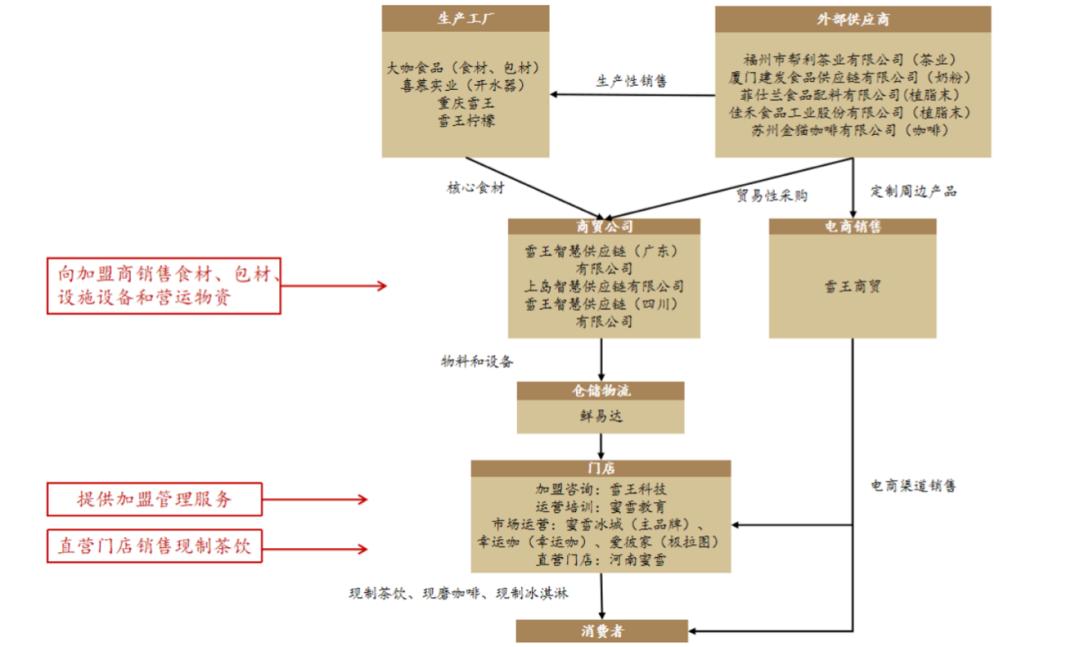
站在今天回望,过去一年的中国消费市场锣鼓喧天。 蜜雪冰城、古茗、沪上阿姨相继挂牌,鸣鸣很忙也于农历新年之前登陆港股,连霸王茶姬也远赴纳斯达克成为"中国茶饮美股第一股",消费连锁品牌的资 本化浪潮喧嚣一时。 但在这波上市热潮背后,新消费赛道正浮现出一个极具反差的行业真相:无论是手握甜蜜旋律的"雪王",还是遍布全国县域的零食店、火锅食材店,虽然 每天服务数千万终端消费者(C端),但真正的商业核心与收入引擎,却隐藏在对加盟商(B端)的持续供货之中。 以"雪王"蜜雪冰城为例,其向加盟商销售食材、包材、设备的收入占比高达90%以上。这意味着,4块钱的柠檬水只是流量入口,品牌真正赚的是卖给加 盟商的糖浆、奶粉和吸管的钱。这种逻辑在量贩零食巨头"鸣鸣很忙"身上更为极致,其99.5%的收入源自向加盟商供货。 这意味着,无论终端门店竞争如何激烈,无论消费者是否买单,品牌方通过向加盟商销售原材料、设备、包装等必需品,已提前锁定了利润,加盟商则在 享受品牌带来的影响力外,承担了租金、人力、库存和市场竞争的压力。 在如今万店时代的博弈中,这些经营着"茶饮"、"火锅食材"或"零食折扣店"不同类目的品牌,本质上其实都是新型的大型供应链贸 ...
告别泡沫叙事:九大关键词看懂2025中国消费 | 年终盘点
Sou Hu Cai Jing· 2026-02-20 12:37
Group 1: Core Insights - The Chinese consumer market in 2025 is characterized by both chaos and fragmentation, with a shift towards efficiency, value, and trust as the essence of competition [2] - The year witnessed significant events such as the end of the food delivery war, a crisis in the prepared food sector, and the rise of hard discounts while soft discounts declined [2] - Major international brands are seeking survival through divestitures, while the middle class experiences repeated disillusionment in consumption [2] Group 2: Food Delivery War - The food delivery war was ignited by JD's aggressive entry into the market, leading to a fierce subsidy competition among major players like Meituan and Alibaba [5][6] - In Q2 2025, the three major players burned through at least 30 billion yuan, equivalent to the total industry profit of the previous year [6] - The war has severely impacted small businesses and delivery personnel, highlighting the unsustainable nature of the competition [6] Group 3: Prepared Food Crisis - The prepared food crisis began with a public dispute involving a well-known restaurant, exposing significant gaps in consumer trust and industry standards [10][11] - The crisis has led to the closure of 102 stores by the affected restaurant and highlighted the precarious state of the industry, with many companies facing severe losses [12] - The market for prepared foods is projected to grow significantly, with the government moving towards establishing clearer standards [12][13] Group 4: Hard Discount Battle - The hard discount retail sector is experiencing explosive growth, with major players like JD and Hema aggressively expanding their store presence [16][18] - The distinction between hard and soft discounts is becoming more pronounced, with hard discounts focusing on sustainable low prices through private label products [18][19] - The competition is shifting from price wars to efficiency in supply chains and operational capabilities [19] Group 5: Dairy Product Trends - The "milk skin" product has gained immense popularity, evolving from a local specialty to a nationwide trend, with significant sales figures reported [21][22] - The product's success is attributed to its versatility and the ability to integrate into various food categories, driving demand and industry expansion [22] Group 6: Medicinal Food Market - The market for medicinal food has surpassed 370 billion yuan, with a growing emphasis on integrating traditional Chinese medicine into everyday food products [25][26] - The industry is witnessing an expansion of raw materials and innovative product forms, driven by advancements in technology and consumer demand [27][28] Group 7: International Brand Divestitures - In 2025, international brands like Starbucks and Burger King began divesting their Chinese operations, indicating a shift in market dynamics [31][32] - The decline in market share for these brands is attributed to their inability to adapt to the rapidly changing consumer landscape in China [32] - Successful local brands have capitalized on this opportunity, demonstrating the potential for growth through localized strategies [33] Group 8: Middle-Class Consumer Sentiment - The middle class in China is experiencing a sense of disillusionment, reacting negatively to price increases and perceived quality issues [36][39] - This demographic is increasingly critical of brands that do not meet their expectations, indicating a shift in consumer behavior and brand loyalty [39] Group 9: Weight Management Trends - 2025 has been dubbed the "Year of Weight Management," with a national initiative promoting healthy weight control [41][44] - The market for weight management products is projected to reach 326 billion yuan, with a significant increase in demand for functional foods [45][46] Group 10: IPO Activity in Hong Kong - The Hong Kong stock exchange has seen a surge in IPO activity, with 111 companies raising over 250 billion yuan in 2025, surpassing previous expectations [49][50] - The consumer sector has been a major focus, with numerous retail and consumption-related companies going public [50][51] - The trend of dual listings (A+H shares) is also gaining momentum, indicating a robust interest in capital markets [52]
告别泡沫叙事:九大关键词看懂2025中国消费
Xin Lang Cai Jing· 2026-02-20 02:07
Group 1: Chinese Consumption Market Trends in 2025 - The Chinese consumption market in 2025 is characterized by both chaos and transformation, moving away from bubble narratives towards efficiency, value, and trust as core competitive elements [1] - The delivery service battle resulted in a loss of at least 30 billion yuan in Q2 2025, significantly impacting small businesses and delivery personnel [3][4] - The pre-prepared food crisis highlighted a significant trust gap between consumers and the food industry, leading to a call for national standards [6][8] Group 2: Delivery Service Battle - The delivery service war was ignited by JD's aggressive entry into the market, leading to a fierce subsidy competition among major players like Meituan and Alibaba [3][4] - The battle resulted in a dramatic increase in active users for JD and Meituan, but ultimately led to unsustainable financial losses [3][4] - The strategic rationale for giants like Alibaba and JD was to cultivate consumer habits of ordering food through their platforms, thereby enhancing their core e-commerce businesses [4] Group 3: Pre-prepared Food Crisis - The pre-prepared food crisis began with a public dispute involving a well-known restaurant, revealing deep-seated issues in the food industry's industrial transformation [6][7] - The crisis underscored the clash between consumer rights and the interests of food enterprises, with consumers demanding transparency [8][9] - The industry is expected to undergo significant regulatory changes, with new national standards being proposed to ensure consumer awareness and rights [9][10] Group 4: Discount Retail Trends - The discount retail sector in China is experiencing rapid expansion, with new players entering the market and established brands accelerating their store openings [11][12] - Hard discount models are thriving due to their focus on private label products and supply chain efficiency, while soft discount models are struggling [11][13] - The competition has shifted from price wars to a broader focus on supply chain efficiency and operational capabilities [13][14] Group 5: Health and Wellness Trends - The market for health and wellness products, particularly those related to traditional Chinese medicine, has surpassed 370 billion yuan, indicating a growing consumer interest in health [18][19] - The product offerings in this sector are diversifying, with new ingredients being added to the list of approved health foods [19][20] - Retail channels are increasingly focusing on health products, with major retailers launching specialized health product lines [22] Group 6: International Brands Selling Out - In 2025, several international brands, including Starbucks and Burger King, opted to sell their Chinese operations to local partners, indicating a shift in market strategy [23][24] - The decline in market share for these brands is attributed to their inability to adapt to the fast-paced and competitive Chinese market [24][25] - Successful local brands have demonstrated the potential for growth and profitability in the Chinese market, contrasting with the struggles of foreign brands [26] Group 7: Middle-Class Consumer Sentiment - The middle-class consumer segment in 2025 is experiencing significant discontent, driven by rising prices and perceived value discrepancies [28][30] - This demographic is increasingly critical of brands that do not meet their expectations for quality and value, leading to a reevaluation of brand loyalty [30][31] - The notion of the middle class is being challenged, with discussions around its existence and relevance in the current economic landscape [30] Group 8: Weight Management as a National Strategy - 2025 has been designated as the "Year of Weight Management," with government initiatives promoting healthy eating and lifestyle choices [33][34] - The market for weight management products is projected to reach 326 billion yuan, with a significant increase in demand for functional foods [35][36] - The trend reflects a broader societal shift towards health consciousness, influencing various sectors including food and fitness [36] Group 9: IPO Activity in Hong Kong - The Hong Kong stock market saw a surge in IPO activity in 2025, with 111 companies raising a total of 250.56 billion yuan, surpassing previous expectations [37][38] - The consumer sector was a major focus, with numerous retail and consumption-related companies going public [38][39] - The trend of dual listings (A+H shares) is gaining momentum, indicating a strategic move by companies to enhance their market presence [40]