小鹏

Search documents
曹操出行20260118
2026-01-19 02:29
Summary of the Conference Call for Cao Cao Mobility Company Overview - **Company**: Cao Cao Mobility - **Current Valuation**: Approximately HKD 20 billion - **Projected Revenue for the Year**: CNY 26 billion - **Comparison**: Positioned against Didi, Uber, and Lyft in the ride-hailing sector [2][3][12] Industry Insights - **Evolution of Ride-Hailing**: Transition from traditional taxis to ride-hailing and now to autonomous vehicles, with algorithms replacing drivers and vehicle management handled by rental companies or platforms [2][4] - **Cost Advantage**: Shared mobility prices per kilometer are nearly half that of private cars, indicating potential to replace some private car demand. The private car market in China is approximately CNY 11 trillion [2][4] - **Market Size**: - China’s ride-hailing vehicle count is around 5 million, with expectations of a single operating entity exceeding 10,000 vehicles by 2028 and a 50% penetration rate for autonomous vehicles by 2030 [5] - Global Robotaxi count is projected to exceed 1.5 million by 2030, with North America leading in development, followed by China and the Middle East [5][8] Competitive Positioning - **Strategic Partnerships**: Backed by Geely, enhancing operational capabilities and technology through partnerships with Qianli Technology [2][6][7] - **Market Role**: Positioned as a third-party traffic platform in the autonomous vehicle era, similar to Didi in the ride-hailing era, with diversified supply sources [3][9] Financial Projections - **2026 Goals**: Aim to operate 500 Robotaxis, with expectations of reducing losses in traditional ride-hailing operations and achieving a projected revenue of CNY 26 billion, with a slight net loss of CNY 270 million [3][10] - **Long-term Vision**: Plans to operate around 100,000 Robotaxis by 2030, anticipating a market turning point by 2028 that will drive company valuation growth [3][11] Investment Opportunities - **Undervalued Status**: Current valuation is considered low compared to peers; if Didi lists successfully, its valuation should exceed that of Lyft or Uber. A price-to-sales ratio of at least 1x is suggested based on projected revenues [2][12] - **Catalysts for Growth**: Key developments such as Tesla's Subcab production in 2026, the launch of XPeng's second-generation VRA model, and the introduction of L3/L4 national standards are expected to accelerate market growth [3][13] Conclusion Cao Cao Mobility is positioned as a significant player in the evolving ride-hailing and autonomous vehicle market, with strong backing, strategic partnerships, and a clear growth trajectory. The company is currently undervalued, presenting potential investment opportunities as the market transitions towards autonomous mobility.
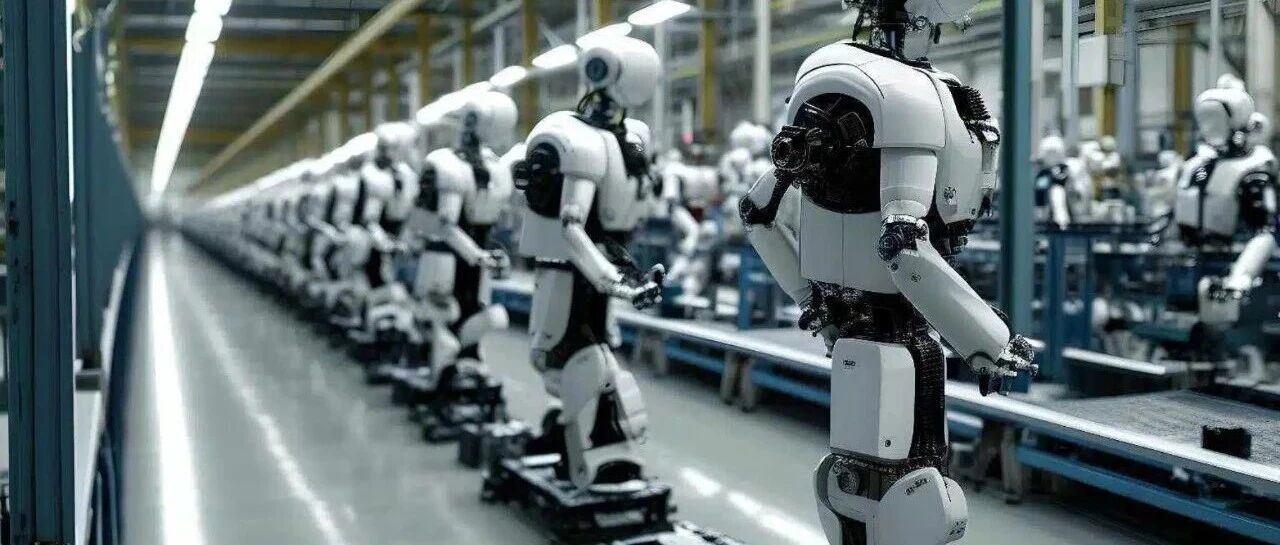
人形机器人的淘汰赛:“一些公司已经不行了”
第一财经· 2026-01-18 09:44
Core Viewpoint - The humanoid robot industry in China is experiencing significant differentiation, with leading companies accumulating more financing and commercial orders, while those lacking commercialization capabilities face potential elimination [3][5][7]. Group 1: Industry Overview - As of now, there are over 100 humanoid robot companies in China, with the market seeing a surge in investment and financing events, totaling 27 billion RMB in 2025 [5]. - The customer base for humanoid robots is shifting from academic institutions to industrial enterprises, indicating a growing acceptance and demand for these robots in practical applications [6][7]. Group 2: Market Dynamics - The first-tier humanoid robot companies, such as Yushun and Zhiyuan, are distinguished by their significant order volumes, with some nearing unicorn status, while second-tier companies face challenges in securing financing and commercial orders [7][9]. - The competition among humanoid robot companies is likened to the "battle of a hundred groups" in the food delivery market, suggesting that many companies may not survive due to high investment requirements and technological barriers [8]. Group 3: Technological Challenges - The primary bottleneck for humanoid robots is the development of their "brain," which is crucial for their functionality and intelligence [12][14]. - Current humanoid robots rely on general AI models that are not specifically designed for their needs, limiting their development potential [13]. Group 4: Future Projections - UBS estimates that global humanoid robot shipments will reach approximately 30,000 units in 2026, with a more conservative outlook compared to other institutions [11]. - The potential market for humanoid robots could reach between 1.4 trillion to 1.7 trillion USD by 2050, encompassing various components and services [11].

人形机器人的2026:落地和出清会同时到来 | 海斌访谈
Di Yi Cai Jing· 2026-01-18 06:40
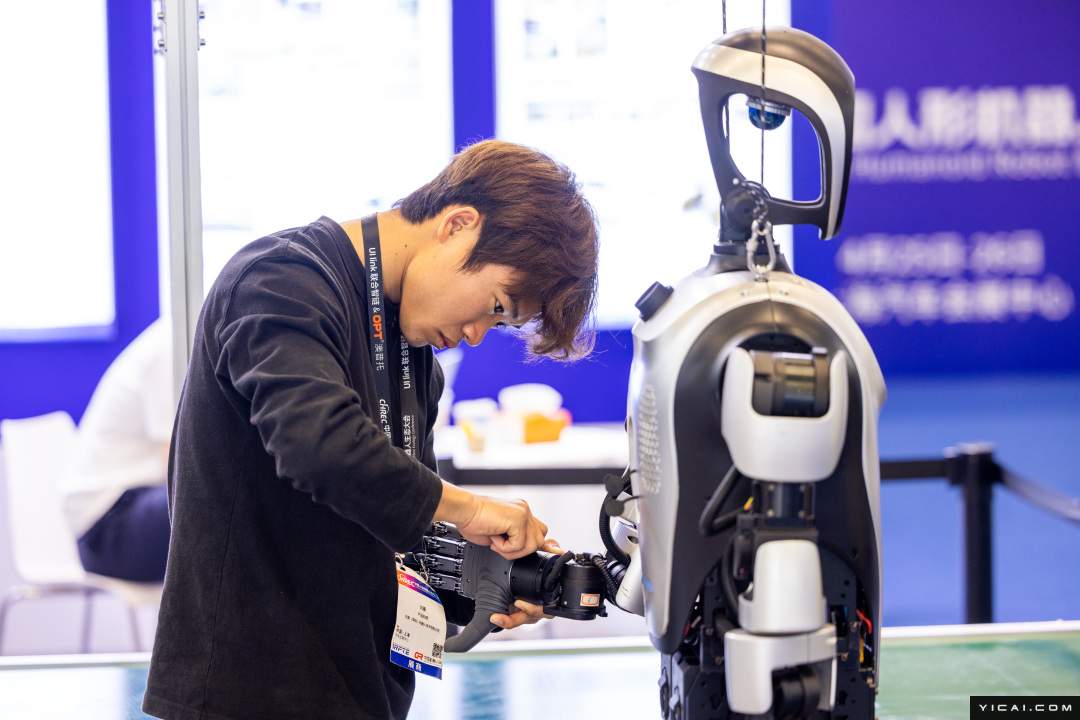
Core Insights - The main bottleneck for humanoid robots is their "brain," and breakthroughs in this area are necessary for the industry to reach its "electric vehicle moment" [1][10] - By 2026, it is anticipated that some humanoid robot companies will be eliminated due to a lack of commercialization capabilities and financing [1][5] Industry Overview - China currently has over 100 humanoid robot companies, with significant differentiation emerging among them over the past three years [1][3] - The market for humanoid robots has been buoyed by the enthusiasm for multimodal large model technologies, with a total of 190 financing events and a scale of 27 billion RMB in 2025 [3] - The customer base for humanoid robots is shifting from academic institutions to industrial enterprises, indicating a move from laboratory settings to practical applications [3][4] Market Dynamics - In 2025, the global shipment of humanoid robots is expected to reach approximately 13,000 units, with a conservative estimate of 30,000 units by 2026 [9][8] - The first-tier companies in the humanoid robot sector are seeing significant orders, with some nearing unicorn status, while second-tier companies face more challenges [5][6] - The competition landscape is compared to the "battle of the hundred groups" in the food delivery market, suggesting that only a few companies will survive in the humanoid robot sector [6] Technological Challenges - The development of humanoid robots is hindered by the immaturity of hardware components and the lack of suitable AI large models [10] - The "brain" of humanoid robots requires high-quality data for training, which is currently limited [10] - Companies are focusing on developing the "small brain" for motion control, as they lack the resources to develop large models independently [10] Future Projections - The humanoid robot market is expected to grow significantly, with potential market sizes reaching between 1.4 trillion to 1.7 trillion USD by 2050 [9] - The industry is still in its early stages, and a breakthrough in the "brain" technology is essential for the market to mature [10][11] - By 2035, global shipments of humanoid robots could reach 1 million units, primarily in industrial and service sectors, with challenges remaining for household applications [11]

领益智造拟大宗减持 受让方锁仓半年
Zheng Quan Shi Bao Wang· 2026-01-16 11:27
Core Viewpoint - The company Lingyi iTech (领益智造) is in a critical phase of steady growth and multi-track layout, with plans for a share reduction by its actual controller, which is not expected to directly impact the stock price. Financial Performance - For the first three quarters of 2025, the company's revenue reached 37.59 billion yuan, representing a year-on-year growth of 19.25% - The net profit attributable to shareholders was 1.94 billion yuan, with a year-on-year increase of 37.66% - The company's profitability continues to improve, with both gross margin and net margin steadily increasing [1] Business Segments Server Solutions - Lingyi iTech has developed comprehensive capabilities in cooling solutions for AI servers, including CDU, liquid cooling modules, and various power supply solutions - The recent acquisition of Limin Da enhances the company's "cooling + power" layout in AI servers, with products covering liquid cooling plates and server racks, serving major clients like NVIDIA and Intel [2] Robotics - In the robotics sector, the company possesses core technologies in reducers, drivers, and motion controllers, offering a wide range of processing and development services - Strategic partnerships have been established with leading companies such as Tesla and UBTECH to collaborate on hardware manufacturing, market expansion, and AI model development [3] AI Glasses - Lingyi iTech focuses on the development of core components and technologies for AI glasses and XR wearable devices, collaborating closely with terminal brands to provide essential parts - The AI-enabled AI/AR glasses are expected to see rapid growth, positioning the company to benefit significantly as a core component supplier [3] Foldable Screen Hardware - The company specializes in providing one-stop solutions for foldable screen hardware, supplying key components such as ultra-thin titanium alloy support parts for products like Samsung's Galaxy Z Fold7 [4]

镁行业系列报告一:奇点已至,镁业腾飞
Orient Securities· 2026-01-16 02:21
Investment Rating - The report maintains a "Positive" investment rating for the magnesium industry [7]. Core Viewpoints - The magnesium industry is approaching a "singularity moment" as the penetration of magnesium alloys in the electric vehicle and humanoid robot sectors accelerates, with leading manufacturers expected to see a rapid release of orders [4][14]. - The magnesium-aluminum ratio is at a historical low, opening up cost-effective opportunities for magnesium to replace aluminum in various applications [10][12]. - Technological advancements are addressing the corrosion resistance and processing challenges of magnesium alloys, facilitating broader application [10][11]. Summary by Sections 1. Lightweight Cycle Review - The penetration rate of magnesium alloys has lagged behind expectations, particularly in the electric vehicle sector, where the aluminum usage per vehicle is significantly higher than that of magnesium [23][24]. 2. Low Magnesium-Aluminum Ratio - The magnesium-aluminum ratio has dropped below 1, indicating that magnesium alloys are becoming more economically viable compared to aluminum [10][12]. - The supply of aluminum remains tight due to high overseas electricity prices and operational challenges, while the magnesium supply is gradually stabilizing [34][46]. 3. Technological Breakthroughs - Advances in semi-solid forming technology are improving the mechanical properties and corrosion resistance of magnesium alloys, thus expanding their application potential [10][11][32]. - The demand for lightweight materials in electric vehicles and humanoid robots is increasing, with projections indicating a significant rise in magnesium alloy usage [10][12][41]. 4. Summary - The magnesium industry is expected to experience growth driven by increasing demand and supply optimization policies, benefiting leading magnesium refining companies [54][56]. 5. Listed Companies - Key investment targets include Baowu Magnesium Industry (002182, Buy) and Xingyuan Zhuomag (301398, Not Rated), both of which are positioned to benefit from the industry's growth [4][14].

上海推“模速智行”行动计划,自动驾驶产业有望迎来加速发展(附概念股)
Zhi Tong Cai Jing· 2026-01-15 01:09
Core Insights - Shanghai has launched the "Mosu Zhixing" action plan to promote high-level autonomous driving, focusing on technology innovation and industrial competitiveness [1][2] - The plan aims to establish public service platforms, including a digital twin training ground for autonomous driving, and expand the open area for autonomous driving to 2,000 square kilometers [1] - The initiative is expected to facilitate the demonstration of L3-level autonomous vehicles and promote their commercial application [2] Industry Development - Shanghai has been proactive in advancing the autonomous driving industry, with previous initiatives such as the 2022 implementation plan for smart connected vehicles and the issuance of road testing licenses for driverless vehicles in 2023 [2] - The action plan includes organized trials for L3-level autonomous taxis and aims to gradually scale up the production and application of L3 vehicles [2] - The demand for advanced autonomous driving components, such as chips and lidar, is anticipated to grow rapidly as the ecosystem expands [3] Company Progress - Several domestic companies, including Changan, BYD, and GAC, have made significant advancements in L3-level autonomous driving, with multiple models receiving road testing permits [4] - Companies like Huawei and GAC have developed solutions and vehicles capable of L3-level autonomous driving, indicating a shift in consumer preferences towards vehicles with advanced driving assistance features [4] - The formal implementation of L3-level autonomous driving regulations is expected to be a key catalyst for industry growth by 2026 [4] Market Opportunities - Companies such as Junsheng Electronics and Seres are actively engaging in strategic partnerships and product launches to enhance their positions in the autonomous driving market [5][6] - The introduction of new Robotaxi services by companies like Cao Cao Mobility marks a significant step towards the commercialization of autonomous driving solutions [6] - The collaboration between ZF and Horizon Robotics to develop L3-level systems is expected to lead to mass production by 2026, highlighting ongoing innovation in the sector [7]
上海推“模速智行”行动计划 自动驾驶产业有望迎来加速发展(附概念股)
Zhi Tong Cai Jing· 2026-01-15 00:14
Group 1 - Shanghai has launched the "Mosu Zhixing" action plan to promote autonomous driving technology innovation and its industrial competitiveness, with a focus on model-driven leadership and application demonstration [1] - The plan aims to establish public service platforms, including a digital twin training ground for autonomous driving, and expand the open area for autonomous driving to 2,000 square kilometers with over 5,000 kilometers of roads [1] - The action plan is expected to provide new support for the development of the autonomous driving industry, including organized smart taxi demonstration operations and pilot projects for L3 autonomous passenger vehicles [2] Group 2 - As of January 14, there are 7,767 companies related to intelligent driving in China, with the East China region accounting for 43.8% of these companies [3] - China holds 51,000 patents related to intelligent driving, with 85.9% being invention patents, indicating a significant growth in both companies and patents in the sector [3] - Nvidia has introduced an open-source AI model platform for autonomous driving, which is expected to enhance the capabilities of autonomous driving systems [3] Group 3 - Several domestic companies, including Changan, BYD, and GAC, have made substantial progress in the L3 autonomous driving field, with multiple models receiving road testing permits [4] - The formal implementation of L3 autonomous driving regulations is anticipated to be a key catalyst for industry development by 2026 [4] - Companies like Aichi Securities believe that automakers with advanced intelligent technology and supply chain control will benefit first from the commercialization of intelligent driving [2] Group 4 - Companies such as Junsheng Electronics and CAOCAO have entered strategic partnerships to develop L4 autonomous driving solutions and digital management platforms [5][6] - The launch of new models by companies like Seres and Leap Motor indicates a competitive landscape in the high-end user market for autonomous vehicles [6][7] - The collaboration between ZF and Horizon Robotics aims to develop L3 intelligent driving systems, with mass production expected in 2026 [7]
港股概念追踪 | 上海推“模速智行”行动计划 自动驾驶产业有望迎来加速发展(附概念股)
智通财经网· 2026-01-14 23:37
Core Insights - Shanghai is advancing its autonomous driving industry through the "Mosu Zhixing" action plan, aiming to transform technological innovation into industrial competitiveness [1][2] - The plan includes the establishment of public service platforms like digital twin training grounds and expands the autonomous driving open area to 2,000 square kilometers with over 5,000 kilometers of roads [1] - The action plan also promotes the orderly organization of smart taxi demonstration operations and the trial of L3 autonomous passenger vehicles [2] Industry Development - Shanghai has consistently pushed for the development of the autonomous driving industry, with previous initiatives such as the 2022 implementation plan for smart connected vehicles and the issuance of road testing licenses for driverless vehicles in 2023 [2] - The introduction of the action plan is expected to provide new support for the industry's growth, particularly in the commercialization of intelligent driving technologies [2] - The demand for advanced autonomous driving components like chips, lidar, and control systems is anticipated to grow rapidly as the ecosystem expands [3] Company Progress - Several domestic companies, including Changan, BYD, GAC, Dongfeng, SAIC, Geely, XPeng, and Li Auto, have made significant advancements in L3 autonomous driving, with multiple models receiving road testing permits [4] - Companies like Huawei and GAC have developed L3 solutions and are actively testing them in various cities, indicating a shift towards practical applications of autonomous driving technology [4] - The formal implementation of L3 autonomous driving regulations is expected to be a key catalyst for industry development by 2026 [4] Related Companies - Junsheng Electronics has signed a strategic cooperation agreement with Sien Intelligent Driving to develop L4 autonomous driving solutions [5] - Seres has launched multiple models, including the Aito M5 and M7, targeting the high-end user market with differentiated positioning [6] - Cao Cao Mobility is advancing its Robotaxi business with the launch of its autonomous driving platform, marking a significant step in operational integration [6] - Leap Motor has commenced nationwide deliveries of its Lafa5 model, which incorporates advanced AI and lidar systems [6] - Horizon Robotics and ZF are collaborating to develop an L3 intelligent driving system, expected to achieve mass production in 2026 [6]
一周一刻钟,大事快评(W140):长安汽车、千里科技、文远知行、阿尔特
Shenwan Hongyuan Securities· 2026-01-14 10:48
Investment Rating - The report rates the automotive industry as "Overweight," indicating an expectation for the industry to outperform the overall market [11]. Core Insights - Changan Automobile is highlighted for its focus on Avita, which is expected to become a valuable asset as it prepares for a Hong Kong IPO, supported by state-owned enterprise backing [2][3]. - Qianli Technology's partnership with Geely is anticipated to unlock significant growth potential in its intelligent driving systems, targeting the 150,000 to 500,000 yuan market segment, with expectations for improved profit margins [2][3]. - WeRide's overseas business is progressing better than expected, with annual revenue per vehicle in the Middle East projected to reach $90,000, potentially contributing 1 billion yuan in profits if it scales to 10,000 units by 2030 [4]. - Alter's AI tools are noted for their unique application in the automotive sector, with a projected revenue growth of around 40% in 2026, primarily driven by product enhancements [5]. Summary by Company Changan Automobile - Focus on Avita's IPO and brand positioning is crucial for sales growth, moving away from price competition [2][3]. Qianli Technology - Collaboration with Geely is expected to enhance the scalability of its intelligent driving systems, with a focus on achieving superior profit margins [2][3]. WeRide - The company is set to benefit from overseas market expansion, with significant profit potential from scaling operations in the Middle East [4]. Alter - The company is leveraging AI to enhance design efficiency, with expectations for a turnaround in profitability by 2027-2028 [5].

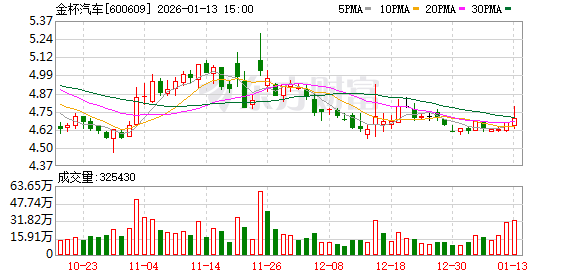
金杯汽车已取得中拓科技52%股权 成为其控股股东
Zheng Quan Shi Bao Wang· 2026-01-13 12:22
Core Viewpoint - The company has successfully acquired a 52% stake in Changchun Zhongtuo Molding Technology Co., Ltd. for a total investment of 158 million RMB, marking a significant step in its growth strategy focused on high-quality development [2][4]. Group 1: Investment Details - The company invested 158 million RMB to acquire 52% of Zhongtuo Technology, which has now increased its registered capital to 85 million RMB, with the company contributing 44.2 million RMB [2]. - The acquisition allows the company to become the controlling shareholder of Zhongtuo Technology, which specializes in automotive parts and has established manufacturing bases in Changchun, Chengdu, and Tianjin [2]. Group 2: Business Operations - Zhongtuo Technology is a high-tech enterprise engaged in the research, production, and sales of automotive components, supplying major clients such as Hongqi, Volkswagen/Audi, BMW, Toyota, and others [2]. - The company’s main business includes designing, producing, and selling automotive parts, with significant products like interior components and seats primarily supplied to Brilliance BMW [3]. Group 3: Strategic Implications - The transaction aligns with the company's growth strategy centered on "new" initiatives, enhancing its presence in the lightweight automotive parts sector and diversifying its customer base [4]. - Following the acquisition, Zhongtuo Technology will not have any equity pledges or external guarantees, allowing it to be fully integrated into the company's consolidated financial statements [4].