科沃斯

Search documents
家用电器行业双周研究观点:把握龙头α:治理提效和海外扩张-20260213
GF SECURITIES· 2026-02-13 12:01
Core Insights - The report emphasizes the importance of governance improvement and overseas expansion for leading companies in the home appliance industry, particularly in the white goods sector [2][11]. Group 1: White Goods - The governance improvements in leading white goods companies are expected to enhance market confidence in sustainable growth, which can lead to a higher valuation [16]. - Midea Group has experienced a significant valuation increase from a PE of 8x to over 20x due to governance reforms and market conditions, despite recent performance challenges [17]. - Haier Smart Home's privatization has led to a notable stock price increase, with a 59% rise following the announcement of its restructuring plan [22][23]. Group 2: Black Goods - Japanese brands like Sony and Samsung are facing significant challenges, with Sony's ET&S department reporting an 8.2% decline in revenue and a 22.6% drop in operating profit [47][49]. - Chinese brands are expected to continue gaining market share globally, with TCL Electronics forming a joint venture with Sony to enhance their market presence [48]. - The Mini LED segment is seeing increased penetration, with a 32.25% online market share, indicating a positive trend for domestic competition [50][56]. Group 3: Small Appliances - The robotic vacuum cleaner market has shown a 10% year-on-year increase in online sales, driven by a low base effect from the previous year and seasonal factors [7]. - The competitive landscape in the small appliance sector is improving, with leading brands like Ecovacs and Roborock increasing their market shares [7]. Group 4: Investment Recommendations - The report recommends investing in white goods companies like Midea Group, Haier Smart Home, Gree Electric, and Hisense Home Appliances due to their stable growth and high dividend yields [7]. - For black goods, TCL Electronics and Hisense Visual are highlighted as beneficiaries of product iteration and improved domestic competition [7]. - In the cleaning appliance sector, Ecovacs and Roborock are expected to see profit margin recovery in 2026, making them attractive investment options [7].





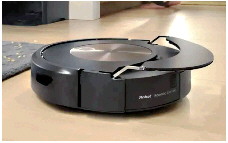
扫地机器人“鼻祖”谢幕,中国品牌占据C位
Qi Lu Wan Bao· 2026-02-13 11:30
Core Viewpoint - The global smart cleaning industry is undergoing a historic transformation, with Chinese brands dominating the market following the decline of iRobot, the pioneer of robotic vacuum cleaners [1][6]. Group 1: Market Dynamics - iRobot, once holding over 80% market share at its peak, has seen its share plummet to 7.9% by Q3 2025, with total liabilities reaching $508 million and cash flow nearly depleted [1]. - Chinese brands such as Ecovacs, Roborock, and others have captured over 65% of the global market share, with significant presence in various regions, including the U.S. and Europe [2][6]. - The online sales revenue of China's robotic vacuum industry reached 16.6 billion yuan in the first ten months of 2025, marking a 17% year-on-year increase [2]. Group 2: Technological Advancements - The industry has evolved from basic cleaning functions to incorporating AI and embodied intelligence, allowing products to understand complex user intentions [3][4]. - Innovations such as the "active water roller" technology have addressed core cleaning issues, with the market for these products expected to exceed 80% share by 2026 [3]. Group 3: Cross-Industry Expansion - Chinese brands are transitioning from single cleaning device manufacturers to comprehensive smart ecosystem enterprises, with companies like Roborock and Ecovacs expanding into various home appliance categories [4][5]. - Roborock plans to launch a range of smart home products, including air conditioners and refrigerators, while Ecovacs is diversifying into window cleaning robots and air purifiers [5]. Group 4: Competitive Landscape - The entry of cross-industry players, such as DJI with its ROMO robotic vacuum, intensifies competition, indicating a shift from traditional home appliance logic to robotic logic [5][6]. - The ongoing competition is characterized by technological innovation and global capabilities, with Chinese brands leading in R&D investment and market adaptability [6].


炒菜机器人渗透率提升,助推餐饮品牌规模化扩张
ZHONGTAI SECURITIES· 2026-02-13 10:45
Investment Rating - The industry investment rating is "Increase" [2][18] Core Insights - The penetration rate of cooking robots is increasing, driving the scale expansion of restaurant brands. The cooking robot market is expected to grow significantly, with a projected market size of 3.17 billion in 2024 and 11.7 billion by 2030 [7][12] - Labor costs in the restaurant industry are rising, with the proportion of labor costs reaching 28.6% in 2025, potentially exceeding 35% due to minimum wage increases and social security regulations. The shortage of chefs is projected to reach 3 million by 2025, making cooking robots essential for improving operational efficiency [8][12] - Major companies are investing in cooking robots to enhance operational efficiency, with deployment expected to exceed 150,000 restaurant locations by 2027. Cooking robots can reduce meal preparation time from 5-10 minutes to an average of 2-3 minutes, improving efficiency by over 40% and reducing labor costs by 40-60% [15][16] Summary by Sections Industry Overview - The industry comprises 128 listed companies with a total market value of 4,540.967 billion [4] Market Trends - The cooking robot market is rapidly expanding, with applications primarily in community canteens, group meals, and fast food scenarios. By 2028, the penetration rate in group meals and fast food is expected to reach around 50% [12][15] Company Developments - Companies like Guoquan, JD, and Zhengda are actively investing in the cooking robot sector, with significant deployments already in place. For instance, Guoquan plans to invest in cooking robot companies and has launched new projects [16]
整个社会都在喊没钱了,为什么这些公司反而年赚百亿?
创业家· 2026-02-13 10:10
Core Insights - The article discusses how certain industries are thriving despite a general perception of economic downturn, highlighting eight key sectors that present significant business opportunities in a low-desire society [3][4]. Group 1: Key Industries - **Second-Hand Economy**: The second-hand luxury market in Japan, represented by companies like Daikokuya, has seen a surge in revenue. In China, platforms like Hongbulin and Panghu are experiencing similar growth, indicating a shift in consumer spending towards second-hand goods [6][7][8][9]. - **Pet Economy**: With a decline in birth rates, young consumers are increasingly spending on pets, leading to significant growth in pet food and healthcare products. Companies like Inaba in Japan and Guobao in China are capitalizing on this trend [12][13][15][16]. - **Adult Care Products**: The adult diaper market in Japan has surpassed $10 billion, showcasing the potential of the aging population as a lucrative market segment [17][18][19]. - **Health Food and Beverages**: Changing demographics and rising health awareness have led to the growth of sugar-free beverages and functional foods in both Japan and China, with brands like Suntory and Dongpeng gaining traction [21][22]. - **Beauty and Aesthetic Products**: The demand for beauty products, including collagen supplements and at-home beauty devices, remains strong, indicating that consumers prioritize personal care even in economic downturns [23][24][26]. - **Outdoor Recreation**: Companies in the outdoor equipment sector, such as Snow Peak in Japan and various Chinese brands, are benefiting from increased interest in outdoor activities as a form of stress relief [29][31][32]. - **Convenience Economy**: The rise of frozen foods and smart home appliances reflects a shift towards convenience, with brands like Anjijia and Kewell seeing steady growth as consumers seek time-saving solutions [39][40][42]. - **Lazy Economy**: The trend of reduced cooking time among younger generations has led to a preference for ready-to-eat meals and smart appliances that automate household tasks, indicating a shift in consumer priorities [39][40][42]. Group 2: Market Dynamics - The article emphasizes that even in a low-desire economy, there are significant opportunities for those willing to invest in counter-cyclical sectors. Companies that can identify and act on these opportunities are likely to emerge as winners [44].




追觅“狂人”CEO,刚刚公开挖角余承东,还称要在5年内当上世界首富
Xin Lang Cai Jing· 2026-02-13 09:17
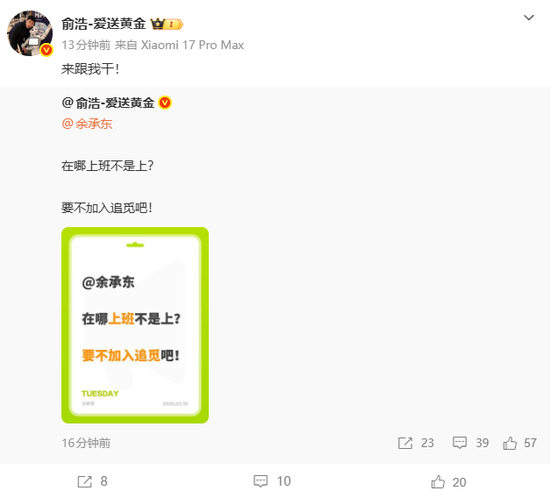
来源:南财社 炒股就看金麒麟分析师研报,权威,专业,及时,全面,助您挖掘潜力主题机会! 余承东可能都没想到,自己竟然也有被蹭流量的时候。 2月11日,俞浩在微博上隔空喊话华为常务董事、产品投资评审委员会主任、终端BG董事长董事长余承 东,"在哪上班不是上?要不加入追觅吧!""来跟我干!" 还承诺,不会对他有任何限制,"你有啥想法,我都支持你干!" 此外,他还在微博透露,自己曾是清华大学航空学院的学生会主席,还类比了北大的韦东奕也曾是学生 会主席,表示自己的科研能力并不输韦东奕,"只会比他好"。 看起来诚意满满。但要考虑到,余承东现在已经做到华为常务董事、终端BG董事长,不论是地位还是 收入都已经是相当高了,这种华为终端的灵魂人物,其难撬程度,可想而知。 也因此,有业内人士认为,俞浩是想借余承东的行业影响力为追觅造势,同时为跨界造车、手机等业务 铺垫人才需求。 要知道,余承东此前在网上一直有"余大嘴"的外号,没想到如今新势力高管在网上逐渐低调后,竟然会 被俞浩"调戏"。 说起俞浩,这个技术型学霸CEO,过去给人的印象一直比较低调,但自从宣布造车后,俞浩的画风开始 突变,开始研究起了互联网流量,朋友圈微博开始频频 ...
北云科技 :Alice 芯片出货超 150 万套,智能汽车应用破百万套
Zhong Guo Qi Che Bao Wang· 2026-02-13 08:36
在智能驾驶与机器人技术快速迭代的今天,高精度定位已成为核心"基础设施"。作为行业领跑者, 北云科技凭借自研芯片与组合导航技术,在2025年交出了一份亮眼的成绩单:其核心产品Alice GNSS SOC芯片累计出货量已超150万套,智能汽车应用出货量突破百万套,用硬核实力印证了"车规级品质铸 就百万交付"的行业信赖。 作为组合导航P-Module的首创者,北云科技通过单模块集成GNSS+IMU的创新架构,以自研芯片 驱动深耦合组合导航算法,实现了抗干扰、防欺骗的系统级功能安全(ASIL-B GNSS SoC + ASIL-B IMU芯片),可从容应对复杂电磁环境,确保系统安全可靠。 同时,北云科技的车规级组合导航模块已实现全球首发量产,并搭载地平线、英伟达等主流AI平 台大规模装车。其D3系列车规级高性能IMU 模块,通过全温区间精密标定有效抑制温漂误差,已进入 大规模量产装车阶段,进一步夯实了在智能驾驶领域的技术壁垒。 场景延伸:从智能汽车到割草机器人,技术创新引领行业变革 北云科技的高精度定位技术不仅局限于汽车领域,在割草机器人等新兴场景同样展现出强大的创新 力。通过将硬件架构从三层优化为双层,北云科技推出 ...

未知机构:主要跨境品类26M1景气度跟踪天风家电团队统计数据口径为亚马-20260213
未知机构· 2026-02-13 02:45
【主要跨境品类26M1景气度跟踪】天风家电团队 统计数据口径为亚马逊十个主要站点合计,已转换汇率。 数据仅供参考,零售与收入口径有差异,收录站点可能统计不全,实际情况以上市公司口径为准。 从亚马逊整体情况来看,26M1各品类增速表现相比25M12提速,但主要表现为平销期间尾部品牌反扑,例如洗地 机+87%,割草机+131%,小充+16%,影音+51%,安防+19%,NAS+ 【主要跨境品类26M1景气度跟踪】天风家电团队 (2)洗地机:26M1同比+753%,美亚、西亚增速低基数下实现数倍增长,26M1份额9%、已实现对追觅的反超, 洗地机出海较为顺利。 二、科沃斯:26M1有所提速 统计数据口径为亚马逊十个主要站点合计,已转换汇率。 数据仅供参考,零售与收入口径有差异,收录站点可能统计不全,实际情况以上市公司口径为准。 从亚马逊整体情况来看,26M1各品类增速表现相比25M12提速,但主要表现为平销期间尾部品牌反扑,例如洗地 机+87%,割草机+131%,小充+16%,影音+51%,安防+19%,NAS+84%。 预计NAS品类受益渗透提升,洗地机受益于供给增加,割草机在反倾销税落地前抢出口效应显著。 此外 ...
机器人ETF鹏华(159278)红盘向上,宇树创始人称机器人未来热度或是现在的1000倍
Xin Lang Cai Jing· 2026-02-13 02:21
Group 1 - The core viewpoint is that the robotics industry, particularly embodied intelligence, is primarily driven by AI, with potential for significant growth in the coming years, possibly exceeding the hype of mobile internet by 100 to 1000 times [1] - The year 2026 is identified as a critical milestone for humanoid robots, with expectations for mass production and supply chain developments, leading to a substantial increase in output from thousands to tens of thousands of units [1] - Major companies are expected to converge in terms of supply chain and technology, indicating a global "arms race" in robotics, with advancements in electric drive technologies and new materials [1] Group 2 - As of February 13, 2026, the Guozheng Robotics Industry Index (980022) has risen by 0.52%, with notable increases in stocks such as Dingzhi Technology and Kelaimechatronics [2] - The top ten weighted stocks in the Guozheng Robotics Industry Index account for 39.43% of the index, highlighting key players in the robotics sector [2] - The Penghua Robotics ETF (159278) closely tracks the Guozheng Robotics Industry Index, reflecting the price changes of related listed companies [2]
AI 对行业的机遇与冲击:2026 五大应用板块全景扫描
3 6 Ke· 2026-02-12 11:42
Group 1: AI as a Content Producer - AIGC has transitioned from an efficiency tool to a primary production entity in the content industry, impacting animation, short videos, and educational publishing [2][3][6] - The animation and comic production system is experiencing significant transformation, with generative models streamlining processes that traditionally required extensive human labor [2][3] - The market for the comic industry is projected to exceed 20 billion yuan in 2025, with AI comic production showing a 900% increase in daily revenue compared to the previous year [3][5] - AI is also reshaping short video and knowledge content production, enabling mass generation of educational and promotional videos at a lower cost [6][7] Group 2: AI as a Learning Service Provider - AI is evolving from a single-point tool to a comprehensive service provider in the education sector, enhancing learning efficiency through personalized study paths and real-time feedback [11][15] - Language learning tools are being upgraded with AI capabilities, allowing for context-based learning and personalized review paths [12][14] - AI is also transforming homework assistance by providing detailed explanations and multiple solution methods, thus reducing the reliance on traditional tutoring [14][15] Group 3: AI as an Emotional Companion - The competition in the emotional companionship sector is intensifying, with AI toys and robots designed to provide emotional interaction and support becoming popular [16][19] - AI products are evolving to serve as long-term companions in households, moving beyond mere functionality to fulfill emotional needs [19][20] - Various AI devices are being developed to integrate emotional support with educational functions, targeting early childhood development [18][19] Group 4: AI as a Decision-Making Advisor - AI is transforming decision-making processes in areas like college admissions and career planning by automating the generation of recommendations based on user input [20][21] - Traditional consulting roles are being challenged as AI tools provide instant decision-making capabilities, reducing the need for human advisors [21][25] - The integration of AI in these sectors is leading to a shift from personalized consulting to automated, scalable solutions [26] Group 5: AI as an Execution Agent - The emergence of AI agents capable of completing tasks marks a significant shift in how industries operate, allowing for automated execution of user requests [27][29] - These agents can streamline processes in education, such as managing learning plans and application workflows, by automating previously manual tasks [29][30] - The potential risks associated with AI agents, including security and decision-making errors, highlight the need for careful implementation [30] Group 6: Overall Impact of AI on Industries - AI is fundamentally reshaping industries by creating new product forms while compressing traditional job roles, leading to a reallocation of value and responsibilities [31] - The focus is shifting from efficiency to the redefinition of roles, as AI takes over standardized tasks while complex human judgment remains essential [31]
经济越来越差,这八大行业越赚爆!
创业家· 2026-02-12 10:52
Core Insights - The article emphasizes that despite the prevailing narrative of economic hardship, certain industries are thriving and generating substantial profits, particularly in the context of Japan's "lost 30 years" and its implications for various sectors [3]. Group 1: Economic Trends and Opportunities - The concept of a "low-desire society" does not equate to a lack of opportunities, as there are still significant business prospects available [4]. - The article identifies "consumption stratification" and "demand migration" as the largest commercial opportunities in the current market [5]. - As consumers shift away from purchasing homes and luxury goods, money is flowing into the second-hand economy, with notable growth in Japan's second-hand luxury market represented by companies like Daikokuya [6]. - In China, platforms like Hongbulin and Panghu are experiencing significant business growth in the second-hand market [7]. Group 2: Emerging Consumer Trends - The article highlights the rise of the pet economy, noting that while young people may not be having children, they are willing to spend on premium pet products [11]. - Companies like Inaba in Japan and Guobao (Zhongchong) in China are seeing strong stock performance due to the growing demand for pet food and related services [12]. - The adult care market is also expanding, with Japan's adult diaper market surpassing $10 billion, indicating a significant growth potential for similar products in China [16][18]. - Health-conscious food and beverage products are gaining traction, with brands like Suntory and Meiji seeing substantial growth due to changing population demographics and rising health awareness [21]. Group 3: Lifestyle and Emotional Spending - The "beauty economy" is thriving, with products like collagen supplements and home beauty devices achieving significant sales, indicating that consumers prioritize beauty even in challenging economic times [23]. - Outdoor leisure activities are becoming popular, with brands like Snow Peak in Japan and various Chinese outdoor brands experiencing rapid sales growth [25][26]. - The emotional economy is also on the rise, with brands like Labubu and Rio catering to consumers' desires for emotional fulfillment and experiences [28][29]. - The "lazy economy" reflects a trend where younger generations prefer convenience, leading to increased demand for frozen foods and smart home appliances that save time [33][35]. Group 4: Market Resilience and Strategic Insights - The article argues that the current economic climate, often perceived as a "winter," presents opportunities for those willing to invest in counter-cyclical sectors [39]. - Companies that can identify and capitalize on these emerging trends are likely to emerge as winners in the low-desire era, as time-saving solutions may hold more commercial value than cost-saving measures [36].