长江存储

Search documents
布局新消费 促进有效投资 中部六省加快构建增长新引擎
Shang Hai Zheng Quan Bao· 2026-02-09 18:33
Core Insights - The central provinces of China are focusing on "stabilizing growth and expanding domestic demand" as key priorities in their 2026 government work reports, with a projected GDP nearing 30 trillion yuan for 2025 [1][2] - The concept of "emotional value" and "emotional economy" has emerged as a significant trend in consumer behavior, prompting these provinces to innovate in consumption and investment [1][2] Economic Growth and Investment - Henan leads the central provinces with a GDP growth rate of 5.6%, while Hubei, Anhui, and Jiangxi also report growth rates exceeding 5% [1] - The provinces are enhancing their investment in sectors like water conservancy and logistics to strengthen their roles as key hubs in the domestic and international economy [3][5] New Consumption Trends - Provinces are actively cultivating new consumption growth points such as the "first release economy," "exhibition economy," and "silver economy" to meet evolving consumer demands [2] - Specific initiatives include promoting local business innovations and developing diverse consumption scenarios to stimulate economic activity [2] Industrial Development - The central region aims to establish a modern industrial system with a focus on new energy, new materials, and high-tech industries [5][6] - Hubei is working on a world-class integrated storage and computing industry base, while other provinces are advancing projects in electric vehicles, lithium batteries, and aerospace [5][6] Infrastructure and Project Development - Significant infrastructure projects are being prioritized, with Hunan announcing 389 key projects totaling 2 trillion yuan in investment [3] - The provinces are also focusing on enhancing their logistics and transportation networks to facilitate economic growth and connectivity [3][5]
智能制造行业周报:存储扩产确定性提升,持续推荐“两长”设备产业链-20260209
Shanghai Aijian Securities· 2026-02-09 11:25
Investment Rating - The mechanical equipment industry is rated as "Outperform" compared to the broader market [4][28]. Core Insights - Yangtze Memory Technologies' third-phase project is expected to accelerate production, potentially increasing its global NAND market share to over 10% in 2026, which will positively impact semiconductor equipment demand [3]. - The semiconductor equipment sector is projected to see a significant boost in demand due to increased capital expenditure from Yangtze Memory Technologies, which is expected to account for about 20% of global NAND flash capital expenditure in 2025 [3]. - The commercial aerospace sector is anticipated to experience a surge in IPO activities in 2026, with a notable increase in the number of companies preparing for listing [5]. - The humanoid robot segment is witnessing advancements with the introduction of lightweight and highly integrated designs, enhancing operational efficiency and reducing energy consumption [5]. Summary by Sections Mechanical Equipment Industry - The mechanical equipment sector outperformed the Shanghai Composite Index with a weekly increase of 0.38%, while the index itself decreased by 1.33% [4][6]. - The best-performing sub-sector was engineering machinery components, which rose by 7.52% [4][7]. - Notable companies recommended for investment include North Huachuang, Zhongwei Company, and Shengmei Shanghai in the semiconductor equipment space [4]. Semiconductor Equipment - Yangtze Memory Technologies is expected to advance its production timeline, with the third-phase project potentially achieving stable production by the second half of 2026 [3]. - The NAND flash price is projected to increase by over 40% year-on-year in Q1 2026, while Chinese NAND products remain competitively priced [3]. Commercial Aerospace - The commercial aerospace sector is set for a pivotal year in 2026, with 15 companies either planning to go public or in the process of preparing for IPOs, including 7 rocket-related firms [5]. Humanoid Robots - The humanoid robot market is evolving with significant orders for tactile sensors and the introduction of new lightweight robot models, enhancing their operational capabilities [5].
存储“涨声”再起:一季度NAND闪存涨幅预期超40%
2 1 Shi Ji Jing Ji Bao Dao· 2026-02-09 10:55
Core Viewpoint - The price increase of NAND flash memory is driven by the rising demand from AI applications, particularly in large-scale inference processes, leading to significant upward revisions in price forecasts by market research firms [1][2][3]. Group 1: Price Forecasts and Market Trends - Samsung Electronics raised NAND flash contract prices by over 100% in January, prompting multiple market research firms to revise their price forecasts upward [1]. - TrendForce increased its first-quarter NAND flash price growth forecast from 33-38% to 55-60%, indicating potential for further upward adjustments [1]. - Counterpoint predicts NAND flash prices will rise by over 40% in the current quarter [1]. Group 2: AI Demand and Storage Architecture - The surge in NAND flash demand is primarily attributed to AI applications, particularly in retrieval-augmented generation (RAG) which enhances the accuracy of large language models [1][2]. - The transition from training to large-scale inference in generative AI has led to increased demand for NAND flash, as systems require high-speed access to vast amounts of data [2][3]. - The need for high-frequency access to context data during inference has resulted in a shift towards a storage architecture that includes HBM, DRAM, and NAND [3]. Group 3: Supply Constraints and Future Outlook - The global NAND flash production capacity is concentrated among a few major players, including Samsung, SK Hynix, and Micron, with investments in NAND lagging behind HBM and advanced DRAM [4][5]. - Morgan Stanley forecasts a 40% year-over-year increase in average NAND sales prices by 2026, with only a slight decline expected in 2027 [5]. - The introduction of High Bandwidth Flash (HBF) aims to address the limitations of traditional NAND SSDs, providing higher bandwidth and capacity suitable for AI inference applications [5][6]. Group 4: Technological Advancements - HBF combines 3D NAND flash with high-bandwidth interface technology, offering 8 to 16 times the capacity of traditional HBM, making it a competitive solution for AI applications [5][6]. - The industry is moving towards a multi-layer architecture of "DRAM cache + HBF acceleration + NAND mass storage," which is expected to alleviate supply-demand imbalances and drive growth [6].
后怕!当初决策层要是相信了许小年,中国可能会比现在落后二十年
Sou Hu Cai Jing· 2026-02-07 15:06
Group 1 - Xu Xiaonian is a prominent economist advocating for market self-regulation and minimal government intervention in China's economic development [2][4] - He believes that China's industrial base is still weak and that the country should not rush into high-end technologies like high-speed rail, chips, and new energy vehicles [4][9] - Xu has expressed concerns about the financial risks associated with high-speed rail investments, suggesting that the government should tighten funding and avoid blind expansion [6][7] Group 2 - In the semiconductor sector, Xu argues that China should not aggressively pursue advancements and should allow the market to determine capable enterprises [9][12] - He criticizes the new energy vehicle subsidy policies, suggesting they lead to inefficient spending and do not guarantee competitiveness for private companies [11][12] - Xu has voiced similar concerns regarding solar energy and 5G investments, warning that state-led initiatives could result in overcapacity [12][18] Group 3 - Despite Xu's warnings, China's high-speed rail network has expanded significantly since 2008, with projections to exceed 50,000 kilometers by 2025, accounting for over 70% of the global total [16][23] - The semiconductor industry has seen improvements, with companies like Huawei and SMIC making strides in technology and production capabilities [18][23] - The new energy vehicle market has grown substantially, with BYD surpassing Tesla in global sales, supported by government subsidies [19][23] Group 4 - The solar industry has become a global leader, with China accounting for 85% of component exports and significant cost reductions in production [21][23] - The 5G infrastructure has rapidly developed, with over 400,000 base stations built, enhancing automation in factories and contributing to industrial growth [23][25] - Overall, the combination of state investment and market competition has led to significant advancements in various sectors, countering Xu's more cautious approach [23][29]


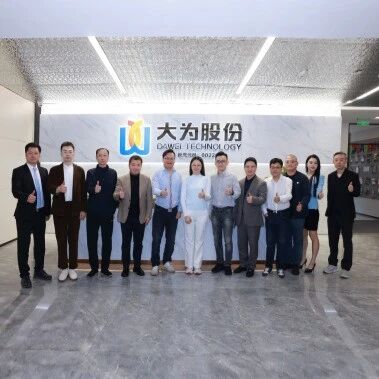
半导体存储赛道迎“超级周期”,九方智投调研大为股份探寻国产存储突围之路
Di Yi Cai Jing Zi Xun· 2026-02-06 06:52
Core Insights - The collaboration between Jiufang Zhitu and Yicai Media aims to explore the opportunities and challenges in the domestic semiconductor storage industry amid geopolitical tensions and the AI wave [1] - Dawi Co., Ltd. has shown steady growth with a reported revenue of 879 million yuan for the first three quarters of 2025, marking a 9.90% year-on-year increase [2] Industry Trends - The storage chip industry is entering an unprecedented "super cycle" driven by the global AI wave, leading to a surge in demand for high-capacity and high-speed chips [3] - TrendForce data indicates that the DRAM industry revenue reached $41.4 billion in Q3 2025, with a quarter-on-quarter growth of over 30%, while NAND brand revenues grew by 16.5% to $17.1 billion [3] - The AI boom is driving a new cycle of simultaneous increase in volume and price in the storage chip sector, with strong structural demand and a favorable domestic competitive landscape [3] Company Strategy - Dawi Co., Ltd. focuses on embedded storage development, which is characterized by long certification cycles, high customer stickiness, and stable margins, positioning it as a cornerstone for the company's growth [3] - The company is extending its strategic focus towards the automotive and industrial control storage markets, which are expected to have higher growth potential and technological barriers [3][5] Market Opportunities - The current geopolitical climate and trade tensions have created a unique opportunity for domestic semiconductor companies, particularly in the storage chip sector, to break through and establish a foothold [6] - Dawi Co., Ltd. has established a subsidiary, Dawi Agile, to quickly enter the consumer-grade high-end storage market by leveraging a former foreign enterprise's R&D team [6] - The domestic storage industry is witnessing comprehensive breakthroughs across design, manufacturing, packaging, and application, with companies like Dawi Co., Ltd. gradually closing the gap with industry leaders [7] Investment Insights - The core of the investment value in the domestic chip industry lies in the "track logic + company quality + valuation matching" framework, which considers government support, downstream market conditions, and company-specific factors [8] - The global semiconductor market is projected to reach $700.9 billion by 2025, with China being the largest and fastest-growing consumer market [11]


半导体存储赛道迎“超级周期”,九方智投调研大为股份探寻国产存储突围之路
第一财经· 2026-02-06 06:45
Core Viewpoint - The article discusses the significant opportunities and challenges in the domestic semiconductor storage industry, particularly in the context of the AI wave and geopolitical tensions, highlighting the growth potential for companies like Shenzhen Dawi Innovation Technology Co., Ltd. [1][10] Group 1: Company Overview - Dawi Innovation entered the semiconductor storage industry in 2020 by acquiring Dawi Chuangxin, focusing on "semiconductor storage + smart terminals" and "new energy + automotive" sectors [1] - As of Q3 2025, Dawi achieved a revenue of 879 million yuan, reflecting a year-on-year growth of 9.90% [1] Group 2: Industry Trends - The storage chip industry is experiencing an unprecedented "super cycle" driven by the global AI wave, leading to a surge in demand for high-capacity and high-speed chips [2][3] - TrendForce data indicates that the DRAM industry revenue is projected to reach $41.4 billion in Q3 2025, with a quarter-on-quarter growth exceeding 30% [3] Group 3: Strategic Insights - Dawi's chairman, Lian Zongmin, emphasized the importance of embedded storage development, which has characteristics such as long certification cycles and high customer stickiness, serving as a stabilizing factor for the company's growth [3] - The company is shifting its strategic focus towards the automotive-grade and industrial-grade storage markets, which are expected to have higher growth potential and technological barriers [3] Group 4: Competitive Landscape - The article notes that international semiconductor companies are reallocating their production capacity towards high-end storage chips, creating a favorable window for domestic companies to break through [6] - Dawi has established a subsidiary, Dawi Agile, to quickly enter the consumer-grade high-end storage market by leveraging a former foreign enterprise's R&D team [6] Group 5: Market Dynamics - The Chinese storage industry is witnessing comprehensive breakthroughs across design, manufacturing, packaging, and application, with companies like Dawi gradually closing the gap with industry leaders [7] - The article highlights the importance of chip design companies as the core of innovation in the industry, while packaging and testing firms play a crucial role in mass production and advanced packaging technology [8] Group 6: Future Outlook - The global semiconductor market is expected to reach $700.9 billion by 2025, with China being the largest and fastest-growing consumer market [12] - Dawi and similar companies are not only capturing growth opportunities but also contributing to the depth and breadth of the Chinese semiconductor industry through their focus on niche markets [12]
全球供应紧张,惠普等PC巨头考虑使用中国存储芯片
Sou Hu Cai Jing· 2026-02-05 23:30
Core Viewpoint - The global memory chip market is experiencing a supply-demand imbalance driven by the AI boom, leading to rising memory prices and prompting PC manufacturers like HP and Dell to consider sourcing from Chinese manufacturers such as Changxin Memory [1][2]. Group 1: Supply Chain Dynamics - HP is in the process of certifying products from Changxin Memory to establish alternative supply options, with plans to monitor the memory supply situation until mid-2026 [1]. - Dell is also beginning to certify Changxin Memory's DRAM products due to concerns over continued price increases in memory chips [1]. - Acer and Asus are increasingly relying on mainland Chinese manufacturers for memory chips, with Acer's chairman stating that new production capacity from mainland suppliers could help alleviate current supply tensions [2]. Group 2: Market Competition and Trends - Major memory chip manufacturers like Micron, Samsung, and SK Hynix are prioritizing production for AI giants, leaving the consumer electronics market in a challenging position [1]. - The traditional division of labor in the PC manufacturing sector is shifting, with manufacturers now seeking to leverage their contract manufacturers' supply chain relationships to expand memory procurement channels [5]. - Changxin Memory has captured approximately 5% of the global DRAM market, while Yangtze Memory Technologies is projected to reach about 10% of the NAND market by 2025 [5][6]. Group 3: Impact of Chinese Manufacturers - Chinese manufacturers like Changxin Memory and Yangtze Memory are increasingly influencing the global market, with significant market shares in both DRAM and NAND sectors [5][6]. - Despite being blacklisted by the U.S., Yangtze Memory remains a key player in the NAND flash market and continues to sell solid-state drives internationally [6]. - Analysts believe that the Chinese memory industry is achieving economies of scale in NAND and is expected to enter a similar phase in DRAM soon, making Chinese companies more critical during downturns in the market [6].


江波龙37亿元募资,存储龙头向“芯”突围
Bei Jing Shang Bao· 2026-02-05 14:09
Core Viewpoint - The storage industry is experiencing a strong cycle driven by AI, with companies like Jiangbolong showing significant profit growth and strategic fundraising to enhance technology capabilities [1][3]. Group 1: Company Performance - Jiangbolong's 2025 annual profit is expected to increase by 150.66% to 2.1082 billion yuan, marking a significant turnaround [1]. - The company anticipates a net profit of 1.25 billion to 1.55 billion yuan for the year, with a fourth-quarter net profit of approximately 650 million to 870 million yuan [5]. Group 2: Market Dynamics - The current cycle is driven by AI-induced demand for DRAM, differing from past cycles characterized by inventory fluctuations, suggesting a longer duration for this upturn [3]. - The global semiconductor storage market is projected to grow from $165.5 billion in 2024 to $184.8 billion in 2025, reflecting an 11.7% year-on-year increase [3]. Group 3: Price Trends - TrendForce predicts a 55% to 60% quarter-on-quarter increase in general DRAM contract prices in Q1 2026, with NAND flash prices expected to rise by 33% to 38% [4]. - Major manufacturers like Micron, Samsung, and SK Hynix have raised storage product contract prices by up to 30% in late 2025, indicating a clear upward trend in pricing [4]. Group 4: Industry Supply and Demand - AI technology is driving increased demand for SSDs among cloud service providers, while HDD supply shortages are pushing these providers to switch to SSDs, leading to a surge in NAND Flash demand [6]. - The supply chain is expected to remain constrained, with limited contributions to output growth from increased capital expenditures by manufacturers due to the lag in capacity construction [6]. Group 5: Domestic Industry Development - China's storage market accounts for over 20% of global demand, but domestic production remains insufficient, particularly in high-end storage products related to AI [7]. - Jiangbolong's fundraising of 3.7 billion yuan is aimed at enhancing capabilities in NAND Flash controller chip design and storage chip packaging and testing, addressing key technological gaps in the domestic industry [7][8].
存储行业深度跟踪报告:26全年预计供给偏紧状态持续,产业链公司整体展望乐观
CMS· 2026-02-05 11:14
Investment Rating - The report maintains a positive outlook on the storage industry, suggesting that the overall performance of companies in the supply chain will be optimistic due to a tight supply situation expected to continue into 2027 [1]. Core Insights - The storage industry is projected to experience a significant increase in demand driven by AI applications, with a compound annual growth rate (CAGR) of approximately 20% for global storage bits, particularly in data centers transitioning to a ZB-level expansion cycle [15][18]. - The supply side is characterized by limited new capacity in 2026, with a forecasted growth of about 20% in bit shipments for both DRAM and NAND, leading to a sustained supply-demand mismatch [49][56]. - The report highlights a notable increase in inventory levels among downstream manufacturers, with strategic stockpiling to address anticipated demand in 2026 [9][60]. - Price trends indicate a significant rise in contract prices for DRAM and NAND, with expectations of a 90-95% and 55-60% increase respectively in Q1 2026, driven by strong server demand [9][30]. Demand Side Summary - The demand for storage is expected to grow exponentially due to AI inference, with NAND becoming increasingly critical in data centers [10][15]. - The global storage market size is anticipated to reach nearly $300 billion in 2026, reflecting a year-on-year growth of 39% [15][19]. - Data center storage capacity is projected to shift from EB to ZB levels, with significant contributions from AI-driven applications [18][22]. Supply Side Summary - Capital expenditures from major manufacturers are set to increase significantly in 2026, with Samsung, SK Hynix, and Micron expected to invest $20 billion, $20.5 billion, and $13.5 billion respectively [49][56]. - Despite increased capital spending, effective capacity release is expected to be delayed until 2027, maintaining a seller's market [49][56]. - The report notes that the shipment growth for DRAM and NAND is expected to be around 20%, with server applications accounting for over 45% of shipments [50][51]. Inventory Side Summary - The report indicates a significant divergence in inventory levels across the supply chain, with tight inventory conditions expected to persist throughout 2026 [9][60]. - Downstream manufacturers, particularly in mainland China, are actively increasing their inventory levels to prepare for the anticipated supply-demand gap in 2026 [9][60]. Price Side Summary - The report anticipates a continued upward trend in storage prices, with significant increases in contract prices expected due to ongoing supply constraints and strong demand from AI applications [9][30]. - The overall price index for storage products has shown a rapid increase since the second half of 2025, with expectations of further price hikes across all categories [9][30]. Sales Side Summary - The report forecasts a substantial increase in revenue and profit for major manufacturers in the storage industry, driven by the ongoing demand surge and strategic inventory management [9][60]. - The overall industry revenue for DRAM and Flash is projected to reach $551.6 billion in 2026, reflecting a 134% year-on-year increase [9][60].

【招商电子】存储行业深度跟踪报告:26全年预计供给偏紧状态持续,产业链公司整体展望乐观
招商电子· 2026-02-05 09:52
Demand Side - The global storage bit demand CAGR is expected to maintain around 20%, with the server market share gradually increasing [12][13][19] - AI inference is driving the demand for a three-tier storage architecture, highlighting the growing importance of NAND in data centers [24][25] - The global storage industry market size is projected to reach nearly $300 billion in 2026, reflecting a year-on-year growth of 39% [12][13] Supply Side - New supply in 2026 is expected to be limited, with bit shipment growth projected at around 20% for both DRAM and NAND [35][41] - Capital expenditures from major manufacturers are set to increase significantly in 2026, but effective capacity release will be delayed until 2027 [41][43] - The supply-demand mismatch is expected to persist, maintaining a seller's market until 2027 [3][35] Inventory Side - Manufacturer inventory levels are expected to remain tight throughout 2026, with a significant increase in strategic stocking by downstream manufacturers [46][47] - Original manufacturers are experiencing a decline in inventory levels, while downstream module manufacturers are actively increasing stock to meet anticipated demand [46][56] - Domestic module manufacturers have reported record-high inventory levels, which will support revenue and profit growth in 2026 [56][58] Price Side - The AI-driven demand is leading to a significant price increase, with contract prices for DRAM and NAND expected to rise sharply in Q1 2026 [4][5] - The overall price index has been accelerating since the second half of 2025, indicating a strong upward trend [4][5] - The combination of rising prices and demand is expected to drive substantial revenue growth across the entire storage industry in 2026 [5][12] Sales Side - The supply-demand mismatch is driving simultaneous increases in volume and price across the industry, with original manufacturers locking in high growth [5][12] - Revenue and profit for major manufacturers are expected to reach historical highs in Q4 2025 and continue to grow in 2026 due to strong AI demand [5][12] - Domestic and overseas manufacturers are expected to benefit from strategic inventory advantages, leading to significant performance improvements [5][12]