
康师傅控股

Search documents
6元外卖碾压5元泡面:速食战争背后的消费升级革命
Sou Hu Cai Jing· 2025-08-19 06:38
Core Insights - The instant noodle market in China is experiencing a significant decline, with a total consumption drop of 4 billion packages from 2020 to 2023, leading to revenue decreases for major players like Master Kong and Uni-President [1][3] - The rise of meal delivery services, particularly Meituan's 6 yuan meal packages, has drastically changed consumer preferences, resulting in a 300% increase in orders while instant noodle sales plummet [1][5] - Health concerns are driving younger generations away from instant noodles, with 59.3% of Gen Z planning to cut back on consumption due to high sodium content [8][10] Industry Overview - Master Kong reported a revenue drop of 1.1 billion yuan in the first half of the year, with a reduction of 3,409 distributors, while Uni-President's instant noodle growth has slowed to single digits [3] - White Elephant is emerging as a strong competitor, nearing Master Kong's revenue with 13 billion yuan, but the industry is facing a split between low-cost and premium products [3][5] - The average price of instant noodles has increased from 2.5 yuan to 5-6 yuan, with premium options exceeding 20 yuan, yet this price hike has not reversed the declining trend [5] Consumer Behavior Changes - The convenience of meal delivery has overshadowed instant noodles, with average delivery times dropping to 28 minutes, making the traditional preparation time of instant noodles less appealing [5][7] - The growth of high-speed rail has led to a 47% increase in food delivery orders, while instant noodle sales in train compartments have decreased by 30% [7] - Social media trends show that while unique flavors attract initial purchases, the repurchase rate remains low, indicating a lack of sustained interest in instant noodles [10] Future Outlook - The evolution of consumer preferences suggests that the definition of convenience is shifting from "quick meals" to "enjoyable experiences," indicating a potential transformation in the instant noodle market [11] - Future iterations of instant noodles may focus on healthier options, such as short-shelf-life noodles and non-fried varieties, or may find niche markets in camping and emergency supplies [11]



食品饮料行业跟踪报告:贵州茅台业绩符合预期,龙头韧性凸显
Shanghai Aijian Securities· 2025-08-19 02:48
Investment Rating - The food and beverage industry is rated as "stronger than the market" [1] Core Viewpoints - The industry is currently experiencing a weak recovery in demand, particularly in the liquor sector, driven by policies aimed at expanding domestic demand and infrastructure projects [2] - The industry is at a historical low valuation, with the food and beverage sector's PE-TTM at 21.08x, and the liquor sector at 18.23x, both at the 17th percentile over the past 15 years [13][19] - Guizhou Moutai's performance in the first half of 2025 met expectations, with revenue of 91.094 billion yuan, a year-on-year increase of 9.16%, and net profit of 45.403 billion yuan, a year-on-year increase of 8.89% [22][19] - The introduction of a national childcare subsidy policy is expected to boost the consumption of dairy products [30][26] - The beverage sector, particularly Master Kong, is facing challenges due to price increases and competition, but its dividend yield remains attractive [28][26] Summary by Sections Industry Performance - The food and beverage industry rose by 0.48% in the week of August 11-15, underperforming the Shanghai Composite Index, which increased by 1.70% [6][7] - Among sub-sectors, the highest gains were seen in seasoning and fermentation products (+2.19%) and baked goods (+1.46%), while soft drinks saw the largest decline (-3.12%) [9][10] Liquor Sector - Guizhou Moutai's revenue from Moutai liquor reached 75.590 billion yuan in H1 2025, a year-on-year increase of 10.24% [22] - The company is expected to achieve a revenue growth target of around 9% for 2025, with a strong certainty of steady growth [22][19] Dairy Sector - The average price of fresh milk in major production areas was 3.02 yuan/kg as of August 7, 2025, with a slowing decline trend [30][26] - The new childcare subsidy policy is anticipated to increase the birth rate and subsequently boost dairy product consumption [30][26] Beverage Sector - Master Kong reported a revenue of 40.092 billion yuan in H1 2025, a year-on-year decrease of 2.7%, but net profit increased by 20.5% to 2.271 billion yuan [28][26] - The beverage segment's revenue was impacted by price increases and intensified competition from delivery platforms [28][26]

恒指短线整固,港股区间窄幅波动
Guodu Securities Hongkong· 2025-08-19 02:00
Group 1: Market Overview - The Hong Kong stock market showed mixed performance, with the Hang Seng Index opening high but eventually closing down by 93 points or 0.37% at 25,176 points, influenced by A-share movements [2][3] - The market experienced a trading volume exceeding 300 billion, indicating active trading despite the fluctuations [3] Group 2: Macro & Industry Dynamics - The Hong Kong government is enhancing its position as an international risk management center, with the recent authorization of two new captive insurance companies reflecting strong demand [6] - The government has introduced various incentives, including a 50% profit tax concession for captive insurance businesses, making Hong Kong more competitive compared to other Asian markets [6] - The banking sector is experiencing a downward trend in interest rates, with expectations of a decrease in capped mortgage rates by the end of the year due to anticipated U.S. interest rate cuts [7] - The mortgage rate index reported a monthly increase of 39 basis points, reflecting the rising HIBOR rates, which have implications for mortgage applicants [8] Group 3: Company News - Xtep International reported a 21.47% year-on-year increase in net profit for the first half of the year, amounting to 914 million RMB, driven by strong performance in its main brand and professional sports division [10] - The company plans to upgrade its retail strategy by launching a direct-to-consumer model and expanding its product offerings, indicating a proactive approach to market changes [11] - 361 Degrees has entered a strategic partnership with Stand Robot to leverage each other's strengths in the field of wearable robotics and high-performance materials, aiming to enhance innovation and technological capabilities [12]
国际罐首发 王老吉出海寻增
Bei Jing Shang Bao· 2025-08-18 14:27
Core Insights - Wanglaoji has launched its international can product line under the new brand "WALOVI," marking a significant step in its overseas expansion strategy [1][2] - The new product line includes four variants that maintain traditional ingredients while incorporating trendy elements like sugar-free and sparkling options, aligning with current health trends [1] - Wanglaoji's revenue for the first half of 2025 reached 6.499 billion yuan, reflecting an 8.38% year-on-year growth, with both operating profit and net profit showing double-digit increases [2] Company Developments - Wanglaoji has signed partnerships with various companies, including Dazhong Dianping and Meituan Waimai, to enhance its international can distribution [1] - The brand has intensified its marketing efforts by sponsoring popular shows and signing a global celebrity ambassador to attract younger consumers [2] - The company has established a robust overseas supply chain, collaborating with partners in multiple countries to facilitate local production and distribution [2] Industry Trends - The global plant-based beverage market is experiencing rapid growth, with a compound annual growth rate of nearly 10% from 2019 to 2024, while the carbonated beverage market is declining [3] - The launch of the international can is seen as a strategic move that could benefit the overall Chinese herbal tea export market [3] - Challenges remain for beverage companies entering international markets, including competition from established brands and cultural barriers, necessitating localized strategies [3]
港股收盘 | 恒指收跌0.37% 京东健康领跑蓝筹 华虹半导体跌超6%
Zhi Tong Cai Jing· 2025-08-18 08:55
Market Overview - The Hong Kong stock market experienced a pullback after an initial rise, with the Hang Seng Index closing down 0.37% at 25,176.85 points and a total turnover of HKD 312.78 billion [1] - The market is currently in a phase of volatility with a lack of clear trading themes, as significant domestic and international events are awaited [1] Blue-Chip Stocks Performance - JD Health (06618) led the blue-chip stocks with an increase of 8.41%, closing at HKD 66.4, contributing 9.14 points to the Hang Seng Index [2] - Other notable performers included Alibaba Health (00241) up 3.56% and ZTO Express (02057) up 3.14%, while Kang Shifu Holdings (00322) and China Shenhua (01088) saw declines of 3.23% and 2.65% respectively [2] Sector Highlights - The film and entertainment sector showed strong performance, with companies like Lingmeng Film (09857) and Yuewen Group (00772) rising 21.33% and 15.34% respectively [3][4] - The brokerage sector continued its upward trend, with notable gains from CITIC Securities (06030) and Guotai Junan (01456) [4] Pharmaceutical Sector - The pharmaceutical sector saw a resurgence, with companies like Zhonghui Biopharma (02627) and Junshi Biosciences (01877) increasing by 13.4% and 13.25% respectively [5] - Upcoming academic conferences such as WCLC and ESMO are expected to catalyze interest in Chinese innovative drugs, with several companies set to present significant clinical trial results [6] Notable Stock Movements - Yasheng Life Services (03319) reported a profit warning, leading to a 13.06% increase in its stock price [7] - Great Wall Motors (02333) saw a strong performance with a 10.21% rise following the pre-sale of its new model [8] - Xtep International (01368) and ZTE Corporation (00763) also experienced significant gains of 7.33% and 7.22% respectively [9][10] - Conversely, Hua Hong Semiconductor (01347) faced a decline of 6.2% due to news of a planned acquisition [11] and Standard Chartered Group (02888) dropped 5.29% amid allegations of illegal payments [12]
全世界最好的矿泉水只卖1块5?“出了吉林遍地假货”的“东北神水”最近吊打巴黎水
3 6 Ke· 2025-08-18 08:18
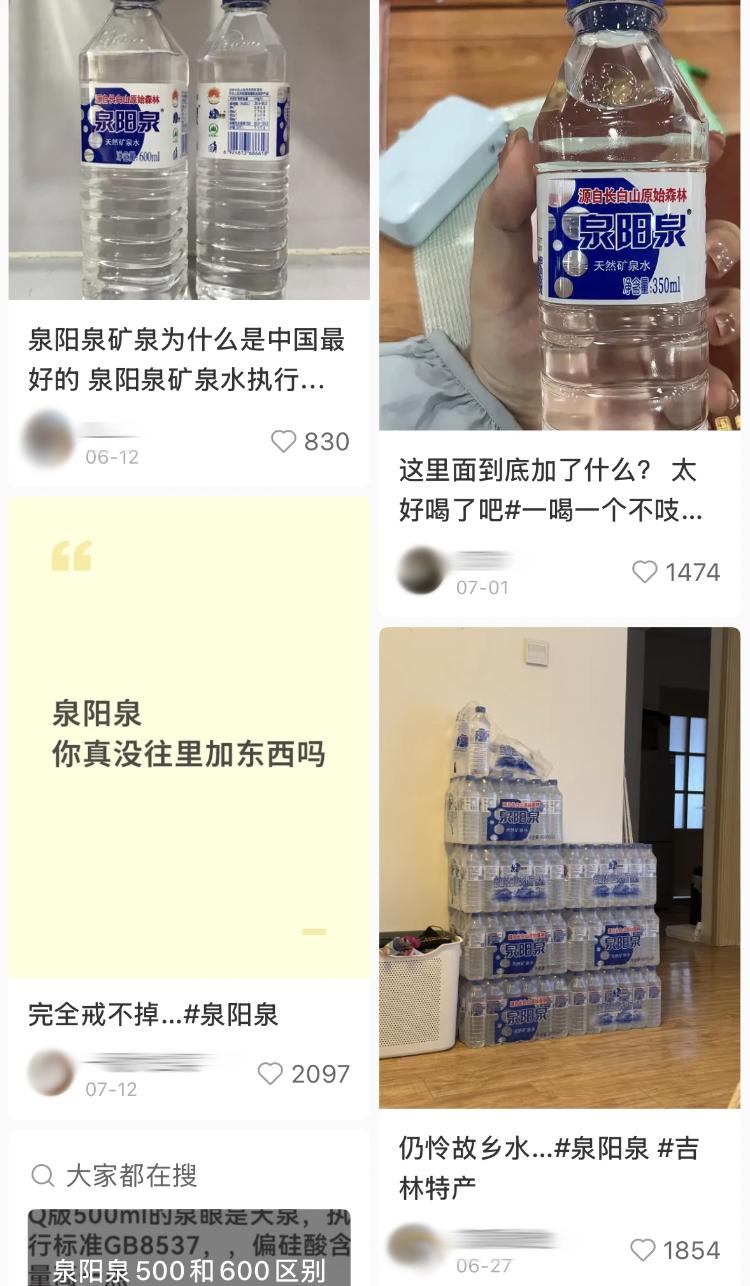
Core Viewpoint - The bottled water market is experiencing a price war, with brands like Nongfu Spring, Wahaha, and Master Kong competing aggressively to bring prices back to around 1 yuan, while local favorites like "Jilin Divine Water" (Quanyuan Spring) are gaining popularity for their quality and low price [1][5][15]. Group 1: Market Dynamics - The bottled water industry is seeing a shift towards lower prices, with many brands offering products for less than 1 yuan [1]. - Jilin's Quanyuan Spring is marketed as a high-quality mineral water, priced at 1.5 yuan, which has led to a local pride and competition among consumers [5][18]. - The competition is not just about price but also about the perceived quality of water sources, with Quanyuan Spring claiming to have superior water quality standards [15][18]. Group 2: Consumer Perception - Consumers in Jilin have a strong attachment to Quanyuan Spring, often claiming it is the best water available, which reflects a cultural significance attached to local products [9][15]. - The water's taste is described as sweet and refreshing, contributing to its popularity among locals who have grown up drinking it [9][15]. - The perception of quality is further enhanced by the water's source from the Changbai Mountain region, which is considered one of the world's top water sources [16][18]. Group 3: Industry Challenges - The logistics of transporting bottled water are challenging, with a "500-kilometer rule" indicating that water is typically not profitable to transport beyond this distance due to high costs [22][23]. - Quanyuan Spring's market is primarily concentrated in the Northeast region of China, with a 35% market share in Jilin, limiting its distribution [26]. - The industry faces issues with counterfeit products, particularly outside of Jilin, complicating the consumer's ability to access genuine Quanyuan Spring [5][22]. Group 4: Regulatory and Quality Standards - Quanyuan Spring adheres to higher quality standards than many competitors, using the GB/T20349 standard for natural mineral water, which is more stringent than the general GB 8537-2008 standard [15][18]. - The water source's geographical indication (GI) status adds to its prestige and marketability, making it a sought-after product [15][18]. - The importance of water source quality is emphasized, as it directly impacts pricing and consumer perception, with premium brands often linked to prestigious water sources [28][30].

康师傅、统一需向外卖抢生意
3 6 Ke· 2025-08-18 06:53
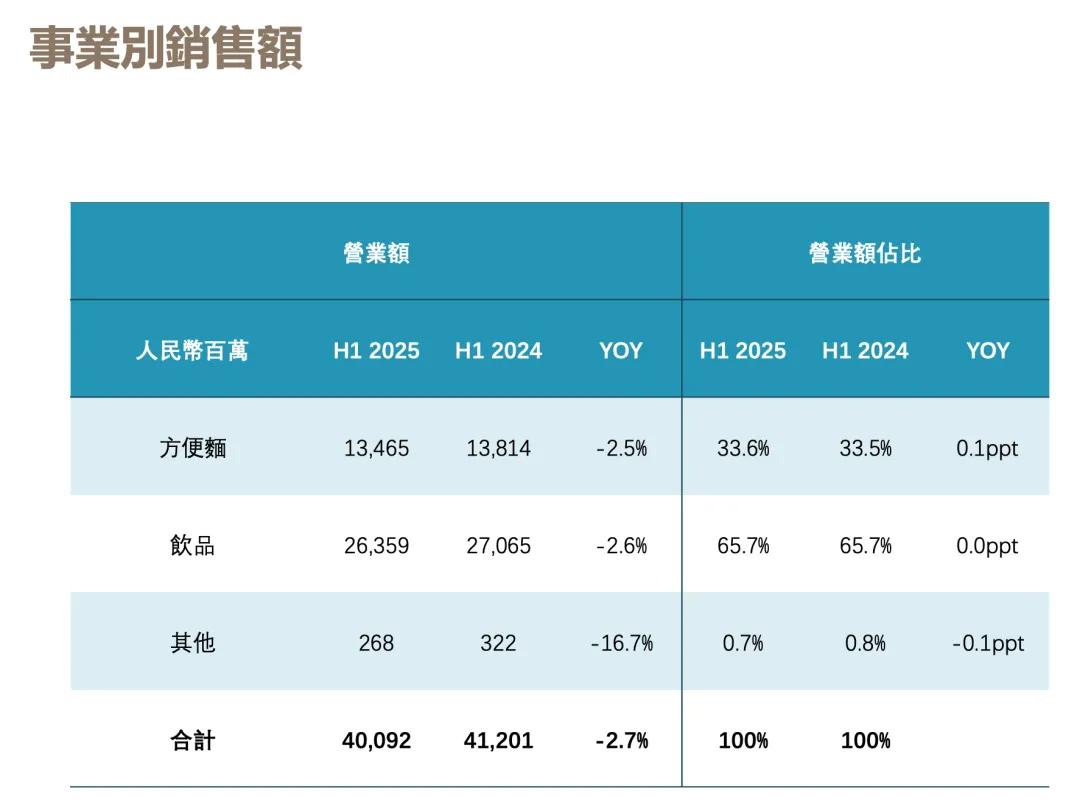
Core Insights - The financial performance of major players in the food and beverage industry, Master Kong and Uni-President China, showed a divergence in their H1 2025 results, with Master Kong experiencing a revenue decline of 2.7% while Uni-President achieved a revenue growth of 10.6% [1][2] Revenue Performance - Master Kong's total revenue for H1 2025 was RMB 40,092 million, down from RMB 41,201 million in H1 2024, reflecting a decrease of RMB 1,109 million [2] - In the instant noodle segment, Master Kong's revenue decreased by 2.5%, while Uni-President's revenue in the same category grew [2] - Master Kong's beverage segment also saw a decline of 2.6% in revenue, while Uni-President's performance improved [2] Competitive Landscape - Master Kong faces increasing competition not only from Uni-President but also from new entrants like Nongfu Spring and Yuanqi Forest, particularly in the beverage sector [3][11] - The rise of the food delivery market, with companies like JD and Alibaba intensifying their efforts, poses additional challenges to traditional food and beverage companies [11][19] Strategic Differentiation - Master Kong's strategy has focused on profit growth despite revenue decline, with beverage profits increasing by 19.7% and instant noodle profits by 11.9% in H1 2025 [12] - Uni-President has prioritized business expansion, increasing its marketing and sales expenses to enhance brand promotion and channel development [12][16] Pricing Strategies - Master Kong has implemented price increases across its product lines, which has contributed to profit growth but also led to a reduction in the number of distributors [13][14] - Uni-President's approach has been to invest in market expansion and product innovation to achieve its ambitious revenue target of RMB 50 billion within five years [18] Market Challenges - The competitive dynamics in the food delivery market have led to a decrease in demand for traditional packaged foods, impacting both Master Kong and Uni-President [21][22] - The ongoing price wars and promotional strategies among delivery platforms have created uncertainty for traditional food and beverage companies [19][21] Innovation and Adaptation - Both companies are focusing on product innovation to meet changing consumer preferences, with Master Kong introducing healthier options and Uni-President expanding its product range [25][27] - The shift towards retail and e-commerce channels is becoming increasingly important for both companies as they seek to adapt to the evolving market landscape [27][28]
茶饮料业务暴跌,超万家经销商退出,乱拳打死康师傅?
Hu Xiu· 2025-08-18 02:16
Core Insights - The company reported a revenue of 40.1 billion, reflecting a decline of 2.7% compared to the previous period [1] - Despite the revenue drop, the company's profit surged by 20%, indicating strong cost management or operational efficiency [1] - The beverage segment, particularly tea drinks, experienced a significant decline of 6.3%, resulting in a loss of 700 million in sales, marking the first instance of negative growth in this category [1] - In response to declining sales, the company has firmly stated that it will not reduce prices and plans to continue increasing them [1]
无糖茶赛道的攻守变局—— 从“概念内卷”到“口感突围”
Zhong Guo Shi Pin Wang· 2025-08-18 02:09
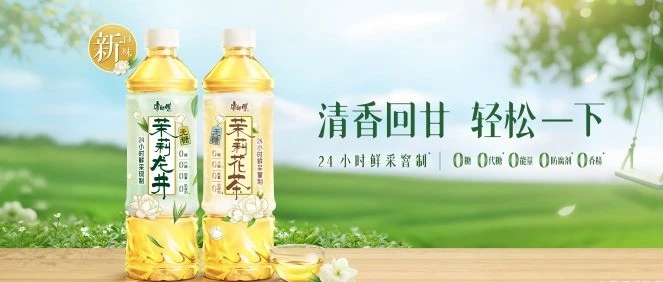
Core Insights - The sugar-free tea segment in China's beverage market has seen significant growth, surpassing carbonated drinks in sales share in 2023, with a year-on-year growth rate of 110% [1] - The sales growth of sugar-free tea continued at 60% year-on-year from January to November 2024, indicating strong consumer demand [1] - By 2025, the market is experiencing a "de-bubbling" trend, with a slowdown in new product launches and a 28% year-on-year reduction in SKUs, shifting the competition focus from market entry to consumer retention [1] Industry Trends - The competition in the sugar-free tea market is evolving from "who enters first" to "who retains consumers," emphasizing the importance of repurchase rates [1] - The successful market strategy of brands like Master Kong focuses on enhancing the taste of sugar-free tea rather than just promoting the "sugar-free" label [3][6] Marketing Strategies - Popular variety shows have effectively integrated Master Kong's sugar-free teas into their content, creating a natural endorsement through relatable consumption scenarios [4][6] - The marketing approach emphasizes a lifestyle connection, allowing consumers to associate the product with enjoyable experiences rather than traditional advertising [7] Product Quality and Consumer Experience - Master Kong's sugar-free teas are crafted using high-quality ingredients and innovative production techniques, ensuring a refreshing taste without compromising health standards [9][16] - The brand's focus on flavor and quality has led to positive consumer feedback, with descriptors like "refreshing," "natural flower aroma," and "pleasant aftertaste" frequently mentioned [11][16] Repurchase Logic - The repurchase strategy is structured in three phases: making the product appealing at first taste, ensuring it fits into daily routines, and creating an emotional connection that encourages habitual consumption [8][13] - Master Kong's sugar-free teas are designed to be versatile, fitting various consumption scenarios, which enhances their appeal and encourages repeat purchases [19][20] Competitive Landscape - The sugar-free tea market is characterized by intense competition, with the initial phase focusing on health education and the current phase emphasizing taste and long-term consumption [20] - Master Kong's approach combines quality, taste, and affordability, positioning its products favorably within the market and appealing to a broad consumer base [19][20]
方便面3年少卖40亿包,年轻人为啥不爱吃方便面了?
2 1 Shi Ji Jing Ji Bao Dao· 2025-08-17 10:32
Group 1 - The price of instant noodles has been increasing, with classic varieties that used to cost below 5 yuan now priced at around 6 yuan, and premium varieties selling for 15 to 20 yuan, with some high-end options reaching 79.9 yuan [1] - Industry giant Kang Shifu reported a revenue decline of 1.1 billion yuan in the first half of the year, with both instant noodles and beverages facing challenges, leading to a 2.53% year-on-year decrease in instant noodle business revenue to 13.465 billion yuan [1]