
英维克

Search documents
周末重点速递丨券商热议提前布局“春季行情”,关注商业航天、液冷技术等配置机会
Mei Ri Jing Ji Xin Wen· 2025-12-14 02:17
Group 1: Economic Policies and Market Outlook - The Chinese government has implemented a series of policies since the Central Political Bureau meeting on September 26, 2024, and will introduce incremental policies in response to changing circumstances in 2025 [1] - The market has experienced adjustments recently, but there is a positive outlook for growth styles, particularly in technology and cyclical sectors, as historical data shows that style continuity is more likely than style switching after significant pullbacks [2] - The current liquidity environment is favorable for small and mid-cap stocks, which historically outperform during periods of loose liquidity and large stimulus policies [2] Group 2: Commercial Aerospace Industry - The commercial aerospace sector is characterized by market-driven activities where enterprises invest, operate, and assume risks, covering the entire industry chain from technology development to application [3] - There is a global surge in satellite constellation construction due to the scarcity of satellite frequency and orbital resources, with countries competing for these critical assets [3] - New regulations from the International Telecommunication Union (ITU) require countries to deploy satellites within seven years of application, emphasizing the urgency for companies to act [3] Group 3: Investment Opportunities in Aerospace - Investment opportunities in the commercial aerospace sector include advancements in modular design and automated testing for satellite manufacturing, as well as the evolution of rocket launches towards reusable and cost-effective solutions [4] - Key companies to watch include those involved in rocket manufacturing (e.g.,航天动力, 斯瑞新材, 超捷股份) and satellite production (e.g., 上海瀚讯, 上海沪工, 高华科技) [4] Group 4: Optical Circuit Switch (OCS) Technology - OCS technology is emerging as a solution for AI computing clusters due to its high bandwidth and low latency, making it ideal for modern communication needs [5] - The OCS market is segmented into upstream core devices, midstream equipment integration, and downstream applications, with high technical barriers and significant value concentration in core components [6] Group 5: Liquid Cooling Technology - Liquid cooling technology is becoming essential for data centers to manage increasing heat from high-density chips, with the cold plate method currently dominating and immersion cooling expected to grow in the future [7] - The market for liquid cooling systems is projected to reach significant scales by 2026, with specific estimates of 35.3 billion yuan for ASIC systems and 69.7 billion yuan for NVIDIA systems [7] - Companies such as 英维克, 申菱环境, 高澜股份, and 宏盛股份 are positioned to benefit from the rising demand for efficient cooling solutions in data centers [7]
广发基金刘玉:科技成长预计仍是主线 关注AI算力基础设施方向
Zhong Zheng Wang· 2025-12-12 13:12
Core Insights - The AI computing power sector is experiencing significant positive developments, with companies in the AI computing power chain being direct beneficiaries [1] - CPO (Coherent Photonic Optics) is identified as a core segment with high performance elasticity and certainty, benefiting from the capital expenditures of major overseas cloud giants like Microsoft, Google, and Meta [1] - The domestic computing power chain is accelerating its technological catch-up and market share increase under the strategy of self-control [1] Company Performance - Key players in the CPO industry include New Yisheng (300502), Zhongji Xuchuang (300308), and Tianfu Communication (300394), which have established strong competitive advantages through technology barriers and market share [1] - As of December 10, 2023, the stock price increases for these companies were 425%, 401%, and 263% respectively [1] - Funds heavily invested in these sectors, such as the Guangfa Emerging Growth Fund managed by Liu Yu, reported a year-to-date return of 73.41% as of December 10, 2023, and a cumulative return of 162.31% since October 2018 [1] Investment Strategy - The Guangfa Emerging Growth Fund's portfolio is heavily concentrated in the AI computing power sector, with over 25% of holdings in "Yizhongtian" and approximately 61% in the top ten holdings, including Industrial Fulian (601138) and Yingweike (002837) [2] - Liu Yu emphasizes a strategy focused on high performance certainty and significant future growth potential, adjusting the portfolio dynamically based on industry changes [2] - The AI industry is still in its early stages, with expected continuous demand growth for computing power infrastructure as AI models evolve and applications are implemented [2] Sector Focus - Liu Yu highlights three key sub-sectors within the computing power chain: 1. CPO (Optical Modules), with Nvidia planning to mass-produce CPO switches, leading to significant annual shipment growth [3] 2. OCS (Optical Circuit Switching), which offers high bandwidth and low latency, gaining attention due to Google's application in TPU architecture [3] 3. PCB (Printed Circuit Boards), crucial for AI server upgrades, with potential shifts in technology that require ongoing monitoring [3]
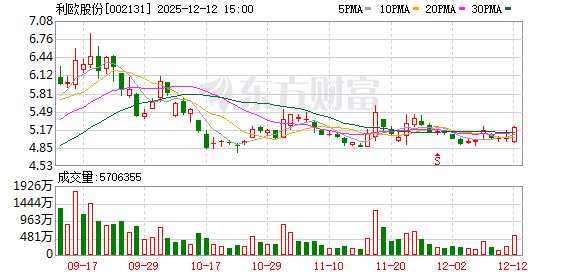
机械设备行业资金流入榜:利欧股份等12股净流入资金超亿元
Zheng Quan Shi Bao Wang· 2025-12-12 09:45
Market Overview - The Shanghai Composite Index rose by 0.41% on December 12, with 21 out of the 28 sectors experiencing gains. The top-performing sectors were non-ferrous metals and electronics, with increases of 1.50% and 1.46% respectively. The machinery equipment sector also saw a rise of 1.21% [2] - In terms of capital flow, the main funds in the two markets experienced a net outflow of 4.872 billion yuan. However, 14 sectors saw net inflows, with the power equipment sector leading at a net inflow of 2.805 billion yuan and a daily increase of 1.42%. The machinery equipment sector followed with a net inflow of 1.771 billion yuan [2] Machinery Equipment Sector - The machinery equipment sector increased by 1.21% with a total net inflow of 1.771 billion yuan. Out of 531 stocks in this sector, 286 stocks rose, including 11 that hit the daily limit, while 236 stocks declined [3] - Among the stocks with net inflows exceeding 100 million yuan, the top three were: - Lioo Co., Ltd. with a net inflow of 598 million yuan - China National Machinery Industry Corporation with 593 million yuan - Inovance Technology with 428 million yuan [3] - The sector also had stocks with significant net outflows, with 15 stocks experiencing outflows exceeding 50 million yuan. The top three for outflows were: - Huagong Technology with a net outflow of 461 million yuan - Aerospace Power with 324 million yuan - Wuzhou New Spring with 304 million yuan [5] Capital Flow Rankings - The top stocks in the machinery equipment sector by net inflow included: - Lioo Co., Ltd. (3.78% increase, 9.75% turnover, 598.33 million yuan) - China National Machinery Industry Corporation (9.98% increase, 5.22% turnover, 592.90 million yuan) - Inovance Technology (4.85% increase, 6.15% turnover, 427.51 million yuan) [4] - Conversely, the stocks with the highest net outflows included: - Huagong Technology (-2.23% decrease, 6.47% turnover, -460.99 million yuan) - Aerospace Power (10.01% increase, 24.19% turnover, -324.04 million yuan) - Wuzhou New Spring (-6.66% decrease, 13.33% turnover, -303.97 million yuan) [5]


液冷行业深度报告:千亿液冷元年已至,看好国产供应链加速入局
2025-12-12 02:19
Summary of Liquid Cooling Industry Conference Call Industry Overview - The liquid cooling industry is experiencing significant growth driven by the surge in data center cooling demands and stricter PUE (Power Usage Effectiveness) regulations. The global AIDC (Artificial Intelligence Data Center) liquid cooling market is projected to reach approximately 110-115 billion RMB by 2026 [1][9]. Key Points and Arguments - **Market Dynamics**: The cost of cooling systems is expected to double to around 10% of total costs due to rapid server iterations. For instance, the value of server modules increased from $75,000 to $95,000, a 20% rise, as the GB300 phase introduced independent cold plates for each GPU [9][10]. - **Liquid Cooling Technology**: The technology is categorized into indirect contact, direct contact, and spray cooling. The single-sided cold plate is dominant in the North American market, while the Inrow model is suitable for new data centers, and the Inrack model is for retrofitting existing centers [2][6][7]. - **Key Components**: Liquid cooling plates are critical components, with significant technical barriers in the design and manufacturing of microchannel plates. These plates enhance heat transfer but require high stability and leak-proof performance [3][8][12]. Emerging Opportunities - **Domestic Supply Chain**: The opening of supplier permissions by NVIDIA in the GB300 phase allows domestic suppliers to enter the market, increasing the demand for cost-effective solutions as NVIDIA shifts towards cloud services [10][11]. - **Company Performance**: Leading companies like Yingwei and Hongsheng are expected to achieve significant performance milestones by 2026. Yingwei's market value is projected to reach 150 billion RMB, while Hongsheng's profits are expected to exceed 300 million RMB [3][5][14]. Additional Insights - **Technological Challenges**: The manufacturing of microchannel plates faces challenges such as low yield rates and high costs due to complex processes. Companies are actively experimenting to find efficient and cost-effective solutions [12][13]. - **Competitive Landscape**: Yingwei is recognized as a leading player with substantial orders from major clients like Google, while Hongsheng is positioned well within the supply chain, indicating a competitive edge in the liquid cooling market [14]. Conclusion - The liquid cooling industry is poised for rapid growth, driven by technological advancements and market dynamics. The shift towards domestic supply chains and the performance of key players will be crucial in shaping the future landscape of this industry [4][10].


H200芯片博弈趋缓,机遇挑战并存 | 投研报告
Zhong Guo Neng Yuan Wang· 2025-12-11 04:03
Core Viewpoint - The U.S. government has adjusted its export control policy on advanced AI chips to China, allowing NVIDIA to deliver its H200 chip to approved commercial clients, but with significant restrictions [2][3] Group 1: Policy Changes - The U.S. government, through President Trump, announced that NVIDIA can sell its H200 chip to vetted Chinese clients, while excluding the more advanced Blackwell architecture and next-generation Rubin chip from this permission [3] - A requirement has been established that 25% of the sales revenue from these chips must be paid to the U.S. government [3] Group 2: Technical Specifications - The H200 chip is based on the complete Hopper architecture, featuring 141GB of HBM3E high-bandwidth memory and a memory bandwidth of 4.8TB/s, with floating-point performance (FP64) and AI training (FP8 Tensor Core) capabilities at the leading level in the international market [3] - In contrast, the previously designed "China-specific" H20 chip has significantly reduced memory bandwidth, interconnect speed, and core computing performance, resulting in much lower overall AI computing power compared to the H200 [3] Group 3: Implications for AI Development - The limited approval of the H200 chip is seen as a positive signal for domestic AI development, alleviating pressure on leading institutions during large model training and accelerating model iteration and application [4] - This move is interpreted as a sign of a shift towards "managed competition" in the U.S.-China tech rivalry, reducing short-term risks of a hard decoupling in the global AI supply chain [4] Group 4: Long-term Strategic Considerations - The stringent conditions attached to the H200 chip approval may reinforce China's commitment to developing its own computing power system, as the 25% sales share acts as a long-term "technology tax" that could erode profits and increase costs [4] - The exclusion of the most advanced architectures like Blackwell indicates a deliberate effort to maintain at least a generational technology gap, suggesting that reliance on external licenses for computing power is not a sustainable strategy [4] Group 5: Investment Recommendations - Companies in the AI industry chain and domestic computing power industry chain are recommended for attention, including AIDC-related stocks such as Runjian Co., Dataport, and Runze Technology [5] - Other relevant companies include those involved in liquid cooling, optical modules, optical devices, optical chips, and optical engines [5]

H200权衡购买,中美“稳定”叙事
傅里叶的猫· 2025-12-10 15:43
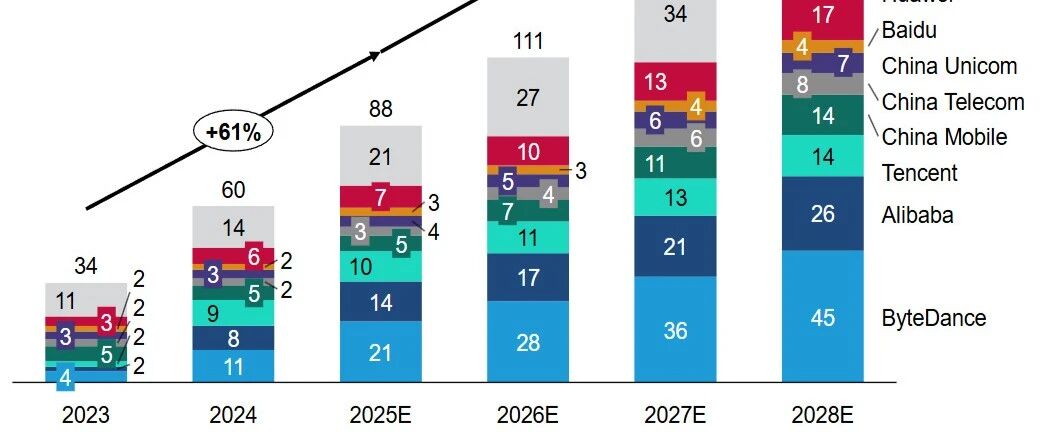
Core Viewpoint - The article discusses the positive developments in China-US relations, the competitive landscape of the domestic AI sector, and the impact of the H200 chip on local AI chip manufacturers. Group 1: China-US Relations - The relationship between China and the US is stabilizing, with ongoing discussions among major tech companies following Trump's announcement to relax restrictions on the H200 chip [5][6] - Both sides are engaging in active dialogue, indicating a willingness to cooperate for mutual benefit [5] Group 2: Domestic AI Landscape - The current competitive landscape in China's AI sector is characterized by three major players: ByteDance, Alibaba, and Tencent [7] - **Alibaba**: Leading in revenue growth through a dual approach of cloud infrastructure and model development, with a significant investment of 380 billion yuan over three years. Alibaba Cloud holds over 35% market share in China [9] - **ByteDance**: Aggressively expanding in AI, leveraging its platforms like Douyin and Toutiao to drive user engagement and market share, with a 253-fold increase in token usage [11] - **Tencent**: Focused on leveraging its existing ecosystem and data, though it lags behind Alibaba and ByteDance in AI model development [13] Group 3: Domestic AI Chips - Concerns about the H200 chip impacting local AI chip manufacturers are mitigated by the fact that the H200 will not directly compete with current domestic chips. The development of local chips is progressing rapidly, with positive expectations for products like Ascend 950 [14]


东吴证券:2026年确定性看设备出海+AI拉动 结构机会看内需改善与新技术
智通财经网· 2025-12-10 12:37
Core Viewpoint - The report from Dongwu Securities indicates that the engineering machinery export sector is expected to continue its growth due to a potential upturn in overseas demand in 2026, coinciding with a Federal Reserve interest rate cut cycle, leading to a domestic and international resonance effect [1][2]. Group 1: Engineering Machinery - The engineering machinery sector is projected to see a full domestic recovery and moderate export recovery by 2025, with an emphasis on improving profit quality [2]. - Key recommendations for engineering machinery companies include SANY Heavy Industry (600031.SH), XCMG (000425.SZ), Zoomlion (000157.SZ), LiuGong (000528.SZ), and Hengli Hydraulic (601100.SH) due to their high export profit contributions [2]. Group 2: Industrial Forklifts - The forklift industry is expected to maintain its growth in 2025, driven by domestic renewal demand and automation transformation [2]. - Recommended companies in the forklift sector include Hangcha Group (603298.SH), Zhongli Group (603194.SH), and Anhui Heli (600761.SH) focusing on smart forklifts and automated logistics solutions [2]. Group 3: Oilfield Equipment - The oilfield equipment sector is entering a historic opportunity with a focus on the Middle East, where Chinese investments are concentrated in the energy sector [3]. - Recommended companies in this sector include Jereh Group (002353.SZ) and Neway Valve (603699.SH) due to their low valuations and high growth potential [3]. Group 4: Domestic Demand Improvement - The report anticipates an improvement in domestic demand, particularly in the FA, injection molding, testing, and machine tool industries [4]. - Key recommendations include Maiwei (300751.SZ), Jingcheng Machinery (300316.SZ), Aotewi (688516.SH), and Gaomei (688556.SH) in the photovoltaic equipment sector [4]. Group 5: High-Growth Sectors - The AI-driven sectors such as PCB equipment, liquid cooling industry, and gas turbines are expected to experience significant growth [5]. - Recommended companies in the liquid cooling sector include Hongsheng (603090.SH) and Yinvike (002837.SZ) [5]. - In the PCB equipment sector, key recommendations include Dazhu CNC (301200.SH) and Dingtaike (301377.SH) [5]. - For gas turbines, recommended companies include Jereh Group (002353.SZ) and Yingliu (603308.SH) [5]. Group 6: New Technologies - The mass production of humanoid robots is anticipated, with domestic component manufacturers expected to benefit significantly [6][7]. - Key companies to watch in the humanoid robot sector include Hengli Hydraulic (601100.SH), New Coordinates (603040.SH), and Green Harmonic (688017.SH) [7].

储能、风电2026年策略报告:全球储能需求新台阶,风电双海高景气-20251210
ZHONGTAI SECURITIES· 2025-12-10 06:42
Group 1: Energy Storage - The demand logic for energy storage is being reshaped, with a global ceiling opening up due to policy shifts from being driven by regulations to being driven by value, leading to high growth in future demand [4][10] - In China, new energy storage installations reached 34.9GW/89.3GWh from January to October 2025, marking a year-on-year increase of 90%/91% [11] - The profitability model for energy storage is improving, with the internal rate of return (IRR) for a hypothetical independent storage project in Gansu estimated at 8.5% for total investment and 14.8% for equity [20][21] Group 2: Wind Power - The domestic wind power market is expected to see stable growth, with offshore wind power projections indicating a doubling of annual new installations compared to the previous five-year plan [6] - The price of domestic onshore wind turbines has shown a clear upward trend since late 2024, with profitability expected to recover significantly by 2026 [6] - The gearbox market for wind power is projected to have a market space exceeding 40 billion, with a focus on leading companies in the industry chain [6] Group 3: International Markets - In the U.S., energy storage installations increased by 11.3GW/34.3GWh from January to October 2025, with a year-on-year growth of 11%/24% [23] - The European market is experiencing a surge in energy storage demand, with the UK and Germany showing significant increases in planned and installed capacities [37][32] - Emerging markets, particularly in the Middle East and India, are seeing substantial growth in energy storage projects driven by favorable policies and abundant solar resources [42][48] Group 4: Investment Recommendations - Key companies to watch in the energy storage integration sector include Haibo Shichuang, Sungrow Power, and Canadian Solar, which are expected to benefit first from the demand surge [6][52] - In the PCS (Power Conversion System) segment, independent third-party companies like Sangfor Electric, Shenghong Co., and Kehua Data are recommended due to their favorable market positioning [56][57] - For temperature control solutions in energy storage, companies like InvoTech and Tongfei Co. are highlighted as leaders benefiting from the evolving market dynamics [61][64]
通信行业点评报告:“H200芯片或放开”下的投资机会梳理-20251209
KAIYUAN SECURITIES· 2025-12-09 08:48
业 研 究 《"AI+卫星"的共振—行业周报》 -2025.12.7 《字节发布豆包手机助手,重视端侧 AI 投 资 机 遇 — 行 业 点 评 报 告 》 -2025.12.1 《谷歌和阿里火出圈,全球 AI 持续共 振—行业周报》-2025.11.30 蒋颖(分析师) 雷星宇(联系人) jiangying@kysec.cn ——行业点评报告 投资评级:看好(维持) 行业走势图 数据来源:聚源 -24% 0% 24% 48% 72% 96% 2024-12 2025-04 2025-08 通信 沪深300 相关研究报告 2025 年 12 月 09 日 "H200 芯片或放开"下的投资机会梳理 leixingyu@kysec.cn 证书编号:S0790124040002 英伟达 H200 芯片有望获对华出口许可,国内 AI 模型发展或将加速 2025 年 12 月 9 日,据央视网、中国基金报消息,美国总统特朗普在"真实社交" 媒体平台发文称,在确保美国国家安全的前提下,将"允许英伟达向中国及其他 国家的合格客户交付其 H200 芯片产品",Blackwell 芯片以及即将发布的 Rubin 芯片则不在获批 ...
服务器液冷近况解读专家会议
2025-12-08 15:36
Summary of Conference Call on Liquid Cooling Technology Industry Overview - The conference focuses on the liquid cooling technology industry, particularly related to NVIDIA's GB300 and upcoming Rubin series products [1][3][5]. Key Points and Arguments Liquid Cooling Technology Developments - NVIDIA's GB300 features a full liquid cooling plate design that covers chips, memory, and power supply, but faces limitations with single-direction cooling plates, indicating a need for dual-direction plates or microchannel technology by 2026 [1][3]. - Dual-direction plates enhance cooling capacity through phase change and efficient media, while microchannel technology improves conduction efficiency but faces challenges in processing and uniformity [1][3][9]. - Vertiv's experiments with NVIDIA's NV72 system show a significant reduction in liquid usage, from 700 liters to approximately 360 liters, by employing localized silent cooling [1][7]. Cost and Component Changes - The number of quick connectors in GB300 has increased from 108 pairs in GB200 to 252 pairs, leading to a 20% to 30% increase in total cooling plate costs, primarily due to quick connectors and cleaning processes [2][29]. - The overall cost of the GB300 liquid cooling plate has risen from $49,000 to $59,000, driven by increased complexity and component requirements [29]. Future Trends and Challenges - The upcoming Rubin Ultra project is expected to adopt NV576 architecture with a TDP of 1,400 watts, necessitating advanced cooling solutions [8]. - The development of microchannel technology and dual-direction plates will significantly impact the competitive landscape, potentially introducing new players into the market [20]. Supplier Landscape - Current leading suppliers for GB300 include Qihong and Shuanghong, with domestic manufacturers like Industrial Fulian entering NVIDIA's supply chain due to cost control and rapid response capabilities [1][19]. - Domestic suppliers are increasingly participating in the market, with companies like Zhonghang Optoelectronics and Fengguang beginning to sample or collaborate to meet the growing demand for quick connectors [24]. Material and Pump Innovations - The liquid cooling system's evolution includes a shift from traditional materials to advanced options like R1,233 refrigerant, which is more environmentally friendly and has a higher boiling point than R134 [14][15]. - The importance of pumps in liquid cooling systems is rising, especially with microchannel applications requiring high stability and smooth operation [16][33]. Emerging Technologies - New materials such as graphene and silicon carbide are being explored for their thermal management properties, although their widespread application remains limited [31][32]. - Domestic universities are actively researching microchannel technology, which may lead to significant advancements in the field [34]. Additional Important Insights - The liquid cooling technology market is evolving rapidly, with significant opportunities for domestic suppliers to close the gap with established international players [21][22]. - The ASIC server market may adopt liquid cooling solutions, with companies like Google potentially leading the way, although the urgency compared to NVIDIA's needs is still under evaluation [25][26].