
鸣鸣很忙

Search documents
55亿良品铺子「卖身」,零食江湖变天
36氪· 2025-07-14 09:49
Core Viewpoint - The article discusses the decline of the once-prominent snack brand, Good Products (良品铺子), highlighting its struggles against the rising trend of low-cost snack brands and the implications of a potential change in control among its major shareholders [4][6][33]. Company Overview - Good Products, once hailed as the "first high-end snack stock," is facing a significant downturn, with its market value plummeting over 80% from its peak of over 300 billion to 55 billion [4][10]. - The company announced a suspension of trading due to major shareholder Ningbo Hanyi's plans to change control, which has raised concerns about its future [4][6]. Financial Performance - In 2023, Good Products reported a revenue of 8.046 billion, a year-on-year decline of 14.77%, and a net profit of 180 million, down 46.27% [10]. - The situation worsened in 2024, with revenue dropping to 7.159 billion and a net loss of 46.1 million, marking the first annual loss since its listing [11]. - The first quarter of 2024 showed continued decline, with revenue of 1.732 billion, down 29.34%, and a net loss of 40.18 million, a 173.21% decrease year-on-year [11]. Shareholder Actions - Major investors, including Today's Capital and Hillhouse Capital, have been reducing their stakes in Good Products, indicating a lack of confidence in the company's future [13][14]. - The controlling shareholder, Ningbo Hanyi, has also been selling shares, further signaling potential distress within the company [13][14]. Market Dynamics - The rise of low-cost snack brands has significantly impacted Good Products, as these brands offer competitive pricing that appeals to consumers, undermining the high-end positioning of Good Products [17][21]. - The low-cost snack market has seen rapid growth, with brands like "Snack Busy" and "Zhao Yiming" gaining substantial market share by offering products at significantly lower prices [17][21]. Strategic Shifts - In response to market pressures, Good Products has initiated a large-scale price reduction strategy, with over 300 core products seeing an average price drop of 22% [14][18]. - The company has also attempted to invest in emerging low-cost brands, although this has not yielded the desired results, leading to legal disputes over its investments [23][24]. Industry Challenges - The snack industry is facing a fundamental challenge of low brand loyalty among consumers, leading to intense competition and price wars [30]. - The article suggests that the snack industry is entering a new phase where efficiency and pricing will be the key competitive factors, moving away from the previously successful high-end marketing strategies [33].


中金:解码新消费
中金点睛· 2025-07-13 23:50
Core Viewpoint - The article discusses the evolution and current state of "new consumption" in China, emphasizing the need for innovation and adaptation to changing consumer demands in a rapidly evolving market [3][4]. Group 1: Definition and Characteristics of New Consumption - New consumption represents a deepening evolution of consumption upgrade trends and an upgrade in the operational philosophy of the large consumption industry [4]. - Key characteristics of new consumption include product and service innovation, new operational models, and a focus on consumer experience [5]. - The emergence of new consumption brands is primarily driven by diverse consumer demands, with significant growth observed in sectors like IP toys, jewelry, outdoor sports, and beauty products [4][5]. Group 2: Market Dynamics and Consumer Behavior - The Chinese consumption market is transitioning from an incremental to a stock market, with retail sales growth stabilizing at a compound annual growth rate of 3.6% from 2019 to 2024 [9]. - Consumer confidence is gradually recovering, supported by improved housing price-to-income ratios and policies encouraging consumption [12]. - Different consumer groups exhibit varied spending behaviors, with younger generations (Z and Alpha) showing a strong inclination towards personalized and experiential consumption [20][24]. Group 3: Supply-Side Strategies for Growth - Companies should focus on innovation, optimizing channels, expanding product categories, and enhancing brand positioning to maintain consumer loyalty and achieve sustainable growth [7][74]. - The importance of transitioning from a focus on traffic acquisition to long-term brand loyalty is emphasized, particularly for traditional consumption companies [7][74]. Group 4: Infrastructure and Technological Support - The rise of new consumption is supported by improved infrastructure, including the development of mobile internet, logistics, and digital payment systems, which enhance consumer experience [31][34]. - The increasing strength of intellectual property protection is fostering a more vibrant environment for new consumption creators [31]. Group 5: Consumer Demand Trends - The demand for practical value (cost-performance ratio, functionality) and emotional value (cultural identity, companionship) is driving the success of new consumption brands [44][47]. - Consumers are increasingly seeking products that offer both practical benefits and emotional satisfaction, reflecting a shift from material needs to emotional fulfillment [46][49]. Group 6: Challenges and Market Competition - New consumption categories face inevitable iterations and challenges, including intensified competition and the need for continuous innovation to avoid market obsolescence [66]. - The article highlights the dual-edged nature of social media and secondary market speculation, which can both enhance and undermine brand value [68]. Group 7: Future Outlook - The article concludes that the future of new consumption in China is promising, driven by government policies and the evolving landscape of consumer preferences [4][6].

这场干货满满的沙龙,为长沙企业境外上市划重点
Chang Sha Wan Bao· 2025-07-10 13:36
Group 1 - The event "Changsha Capital Market Lecture" focused on enhancing companies' understanding of the Hong Kong capital market and expanding their financing channels [1][3] - Experts from various organizations provided in-depth insights on overseas listings, including the latest policy dynamics, legal compliance, and financial management considerations [3] - The event highlighted successful cases of companies from Changsha, such as MicroStep Information listed on NASDAQ and Lens Technology listed on Hong Kong Stock Exchange, indicating a positive trend in overseas listings [3] Group 2 - The Changsha government has been improving its enterprise listing service system by establishing a reserve enterprise database and providing targeted training and one-on-one guidance [3][4] - The event was co-hosted by the Changsha Municipal Financial Office and the Hong Kong Stock Exchange, with support from various local institutions [4]
阿里美团们的下一个战场
3 6 Ke· 2025-07-10 02:10
Core Insights - Major internet companies are rapidly entering new business areas, particularly in the community discount supermarket sector, with Meituan's "Happy Monkey" supermarket set to open soon, despite the company denying the reports [1][4] - The community discount supermarket model, exemplified by Hema NB, is gaining traction, with Hema NB's store count reaching 303 in just two years, indicating a successful expansion strategy [5][7] Community Store Acceleration - The community store model has become a hot investment area in the retail market, with companies like Walmart and JD also exploring similar formats [4] - Despite the buzz, the expansion of community discount stores has been slow historically, with examples like Aoleqi taking four years to grow its store count significantly [4][5] Hema NB's Rapid Growth - Hema NB has successfully expanded through a "1+N" model, focusing on densely populated areas and offering self-pickup points for online orders, which has contributed to its rapid growth [5][7] - Hema NB aims to achieve a profitable model with a target of 150,000 RMB in monthly sales and a 15% gross margin, which, if successful, will lead to nationwide expansion [5][7] Discount Store Model Evolution - The community discount store model is characterized by hard discount strategies, which have become increasingly popular among consumers in China [8][9] - The global discount retail market shows that China has significant room for growth, with only 3.8% of retail sales currently coming from discount retail [8] Supply Chain and Pricing Strategy - Hema NB's pricing strategy includes significant discounts on everyday items, leveraging a streamlined supply chain and a focus on self-branded products to maintain low prices [18][19] - The model emphasizes the importance of supply chain efficiency, allowing for competitive pricing and improved inventory turnover [18][19] Challenges and Market Dynamics - The community supermarket sector is becoming increasingly competitive, with new entrants and established players like Lianhua and Aoleqi intensifying the price competition [21][22] - The franchise model adopted by Hema NB, while enabling rapid expansion, poses risks as profitability heavily relies on consistent sales performance at individual stores [21][22]


DeepSeek破圈,第一批受益者竟是这些公司
创业家· 2025-07-08 10:07
Core Viewpoint - The article discusses the challenges faced by new consumer entrepreneurs in recent years and highlights a recent resurgence in opportunities for these companies, particularly in the Hong Kong capital market [3][4][6]. Group 1: Challenges in the New Consumer Sector - Over the past three years, new consumer entrepreneurs have struggled significantly, facing difficulties in securing funding and market presence [4]. - The government has been focusing on promoting innovation in hard technology, while consumer spending has declined, leading many investors to shift away from consumer sectors [5]. Group 2: Emerging Opportunities - In 2023, new consumer companies have started to see hope as several have gone public in Hong Kong, indicating a potential recovery in the sector [6][11]. - The recent DeepSeek trend during the Spring Festival has raised global awareness of the undervaluation of Chinese assets, prompting investors to seek promising Chinese companies in the Hong Kong market [9][10]. Group 3: Notable Companies and Trends - Companies like "沪上阿姨" and "蜜雪冰城" have emerged as significant players, with the latter achieving a market valuation that exceeded expectations [7][13]. - Other brands that survived the pandemic, such as "鸣鸣很忙" and "霸王茶姬," are also considering listings in Hong Kong or the US as viable options [14]. Group 4: Strategic Insights for Entrepreneurs - Entrepreneurs are advised not to chase trends blindly; instead, they should focus on building their businesses during periods of industry pessimism, as this can lead to capturing growth opportunities when consensus shifts [16][18]. - The article emphasizes the importance of securing funding during different phases of market sentiment, particularly when the industry is viewed negatively [19][20]. Group 5: Educational Opportunities - The article promotes an upcoming course focused on consumer reconstruction, featuring industry experts who will share insights on efficiency, demand restructuring, and capital strategies [23][24].

中国创业者的信心从哪里来?首先是9亿人的刚需升级机会
创业家· 2025-07-06 10:22
Core Viewpoint - The article emphasizes the structural opportunities in China's consumer market, particularly focusing on the 900 million people in lower-tier cities as the main consumer base for future growth [5][12]. Group 1: Market Dynamics - The consumer landscape in China has shifted, with the previous focus on high-end brands in first-tier cities evolving to include a broader range of products catering to lower-tier markets [5][6]. - The connection between high-tier and low-tier markets has been established, allowing for a more integrated consumer experience across different city levels [7][9]. - The emergence of new business models based on modern infrastructure and production relationships is crucial for capitalizing on these market changes [11][12]. Group 2: Consumer Segmentation - The consumer market can be visualized as a cake, with the affluent class at the top, the middle class facing economic pressures in the middle, and the 900 million people in lower-tier cities forming the base [9]. - The article identifies two structural opportunities in the consumer market: the rise of new national brands and the development of new nationwide chains [13]. Group 3: Consumption Trends - The "启承消费时钟" (Qicheng Consumption Clock) categorizes consumer behavior into four phases: essential needs, optional purchases, alternatives, and upgrades, reflecting the changing economic conditions [12][13]. - The pandemic has shifted consumer preferences, with essential goods gaining prominence while optional items have become less prioritized [12][13]. - The rise of discount brands and alternative products is noted, with examples like "鸣鸣很忙" in the snack sector, indicating a trend towards value-oriented consumption [13].



刚刚,中国人又喝出一个IPO
投资界· 2025-06-30 03:19
Core Viewpoint - IFBH Limited, known for its coconut water brand "if," successfully listed on the Hong Kong Stock Exchange with a significant opening increase of nearly 58%, reaching a market capitalization close to 12 billion HKD [1][2]. Company Overview - The founder of IFBH, Pongsak Pongsak, is from a prominent Thai business family and has a strong educational background in business management from the United States [4][5]. - Pongsak established General Beverage in 2011, focusing on beverage manufacturing and distribution, which later led to the creation of the "if" brand in 2013 [5][7]. - The company invested 160 million USD in advanced technology to address the oxidation issue of coconut water, establishing a production line in Thailand [7]. Market Performance - IF has dominated the coconut water market in Hong Kong and mainland China, achieving a market share of approximately 60% in Hong Kong and 34% in mainland China by 2024 [8][13]. - The company reported revenues of 87.44 million USD in 2022, projected to grow to 157.65 million USD in 2024, reflecting an 80.3% year-on-year growth [10][15]. Revenue Breakdown - The majority of IF's revenue comes from mainland China, accounting for 145.66 million USD (92.4%) in 2024, up from 91.4% in 2023 [13][15]. - The product portfolio includes natural coconut water, other beverages, and plant-based snacks [11]. Competitive Landscape - The rise of coconut water in China was significantly influenced by the popularity of products like Luckin Coffee's "Coconut Latte," which helped elevate coconut water's market status [16]. - IF faces increasing competition from local brands that are launching new coconut water products, intensifying market rivalry [18]. IPO Context - The IPO of IFBH is part of a broader trend of active listings on the Hong Kong Stock Exchange, with multiple companies, including Yunzhisheng and Taide Pharmaceutical, also going public [20][22]. - The Hong Kong market is experiencing a resurgence in IPO activity, with over 40 companies expected to list in the first half of the year, indicating a favorable environment for new listings [22][24].

食品饮料行业周报:周观点:啤酒饮料正当旺季,持续关注渠道变化-20250629
GOLDEN SUN SECURITIES· 2025-06-29 07:31
Investment Rating - The report maintains an "Increase" rating for the food and beverage industry, indicating a positive outlook for the sector [4]. Core Insights - The beer and beverage sector is entering a peak season, with a focus on channel changes and growth opportunities. The report highlights three main investment lines for the liquor segment: leading brands, high-certainty regional brands, and elastic stocks benefiting from recovery and increased risk appetite [1][2]. - The white liquor industry is gradually bottoming out, with leading companies like Kweichow Moutai and Wuliangye showing low valuations and dividend value. The report emphasizes the importance of adapting to younger consumer preferences and enhancing brand quality [2]. - The beverage segment is characterized by high growth potential, with companies like Yanjing Beer and Zhujiang Beer being highlighted for their strong performance. The report also notes the introduction of new products by Xiangpiaopiao and the competitive landscape in the beverage market [3][6]. Summary by Sections White Liquor - Demand-side strategies focus on solidifying sales foundations, with companies actively managing supply and pricing to maintain strong sales [2]. - Supply-side initiatives include marketing transformations and product innovations aimed at younger consumers, such as low-alcohol and flavored products [2]. - The report indicates that the valuation of white liquor stocks has reached low levels, with current PE ratios around 17.7x, which is approximately 10% lower than the A-share market [2]. Beer and Beverage - The report notes the resignation of the chairman of China Resources Beer, which may present a buying opportunity post-adjustment [3][6]. - The beverage sector is experiencing intense competition, with new product launches and a focus on high-growth potential companies [6][7]. - The report highlights the ongoing transformation in retail, with companies like Sam's Club and Walmart leading in sales growth, indicating a shift in consumer purchasing behavior [7].
三只松鼠宣布与爱零食“分手” 量贩零食赛道竞争加剧
Zhong Guo Jing Ying Bao· 2025-06-27 13:45
Core Viewpoint - The acquisition of Hunan Ailing Snack Technology Co., Ltd. by Three Squirrels has been terminated due to disagreements on key terms, which reflects the competitive landscape in the snack retail sector [2][3][4] Company Summary - Three Squirrels announced the termination of the acquisition of Ailing Snack, stating that it would not have a significant adverse impact on its operations or future strategic plans [2] - The acquisition was initially proposed at a maximum price of 200 million yuan, indicating a valuation below 400 million yuan for Ailing Snack [4] - Ailing Snack, founded in 2020, has over 2,000 stores and ranked fifth in the number of snack store brands in China as of November 2023 [3] Industry Summary - The snack retail sector is experiencing intense competition, affecting profitability and operational decisions for companies like Three Squirrels [2][4] - The shift towards bulk snack retailing is seen as a strategic move by Three Squirrels to adapt to market pressures and explore growth opportunities [5] - The overall revenue for Three Squirrels has fluctuated, with a notable decline from 2019 to 2023, but is projected to rebound to over 10 billion yuan in 2024 [5][6] - The competitive landscape is challenging for non-leading snack brands, with many facing difficulties in maintaining store operations and profitability [7]

三只松鼠爱零食反目:估值从2亿暴跌至2000万 零食双雄时代下的收购罗生门
Xin Lang Zheng Quan· 2025-06-27 06:20
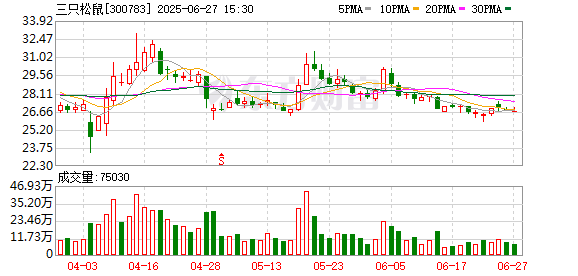
Core Viewpoint - The acquisition of Hunan Ailingshi Technology Co., Ltd. by Three Squirrels has been terminated due to disagreements on key terms, primarily valuation discrepancies and power struggles between the parties involved [1][2]. Group 1: Acquisition Termination Details - Three Squirrels initially planned to acquire Ailingshi for no more than 200 million yuan, but the offer dropped to 20 million yuan, which Ailingshi's founder viewed as a "hush money" and rejected [1]. - The rapid decline in valuation was attributed to Ailingshi's underperformance in store expansion, with only 200 new stores opened against a target of 5,000 [1]. - Ailingshi's founder, Tang Guangliang, has indicated intentions to resolve the dispute through legal means, although specific claims have not been disclosed [1]. Group 2: Operational Conflicts - Prior to the formal acquisition, Three Squirrels intervened in Ailingshi's operations, leading to conflicts over control and independence, including directives for promotional events and supply chain management [2]. - Tang accused Three Squirrels of overstepping their bounds, while Three Squirrels claimed their actions were merely suggestions [2]. Group 3: Legal Disputes - Ailingshi's lawsuit centers on recovering costs incurred during the acquisition process, while Three Squirrels argues these expenses were independently decided by Ailingshi [3]. - Tang likened Three Squirrels' negotiation tactics to a "bad marriage," suggesting unethical pressure during discussions with competitors [3]. Group 4: Strategic Implications for Three Squirrels - The failed acquisition highlights Three Squirrels' ongoing challenges in offline retail, where it has only achieved 30% of its revenue target from offline channels, falling short of its goal of 10 billion yuan by 2026 [4]. - Following the termination, Three Squirrels quickly partnered with a competitor, Snack Selection, to focus on product development and channel integration, indicating a shift towards lighter cooperation and self-initiated brand incubation [5][6]. Group 5: Industry Dynamics - The snack industry is increasingly dominated by two major players, leading to a collapse in Ailingshi's valuation as it struggles to compete with larger brands [7]. - The competitive landscape is shifting from a focus on scale to one emphasizing quality, with leading brands innovating their product offerings to enhance profitability [8][9]. Group 6: Future Outlook - The termination of the acquisition may lead to a reevaluation of strategic approaches for both companies, with Three Squirrels needing to manage litigation risks while exploring new operational models [10][11]. - Ailingshi faces significant challenges in securing investment and maintaining market presence without the backing of Three Squirrels, especially amid fierce competition [11].