
腾讯

Search documents
港股科技ETF(513020)收涨超0.7%,后市关注AI产业支撑
Mei Ri Jing Ji Xin Wen· 2026-01-21 08:24
Group 1 - The Hong Kong Technology ETF (513020) rose over 0.7% on January 21, with a focus on the AI industry as a key driver for future performance [1] - Major Hong Kong tech companies are accelerating the integration of AI into their business ecosystems, with Alibaba leveraging its Qianwen platform for product deployment in e-commerce and transportation, while Tencent is enhancing its WeChat ecosystem to promote AI mini-programs and applications in education [1] - The Hong Kong market is seeing a concentration of leading semiconductor companies, and the recent stable performance of domestic GPU, large model, and hard tech companies post-listing suggests a continued rhythm of quality tech firms going public in Hong Kong [1] Group 2 - The Hong Kong Technology Index has outperformed the Hang Seng Technology Index, particularly in sectors like new energy vehicles, innovative pharmaceuticals, and semiconductors, with a cumulative return of 224.25% from the end of 2014 to the end of 2025, exceeding the Hang Seng Technology Index's 83.87% by over 140% [2] - The Hong Kong Technology Index has consistently outperformed other indices, including the Hang Seng Internet Index, the Hang Seng Internet Technology Index, and the Hang Seng Healthcare Index [2]
数据中心供配电设备行业跟踪:台积电2025Q4营收同比增长,DRAM价格持续上涨
Shanghai Aijian Securities· 2026-01-21 07:22
Investment Rating - The report rates the industry as "Outperform" [2] Core Insights - The data center industry has become the core incremental application scenario for the power equipment sector, directly driving demand growth and technological iteration in power equipment [5][6] - The report emphasizes the need to incorporate multi-dimensional indicators from the AI industry to accurately gauge the demand for power distribution equipment in data centers, given the capital expenditure scale and long investment return cycles [5][6] - Key indicators are constructed from three aspects: demand side (capital expenditure from leading cloud vendors), supply chain (GPU supply tracking), and AI application development [5][6] Summary by Sections Demand Side - Capital expenditure from overseas cloud vendors reached $99.617 billion in Q3 2025, a year-on-year increase of 80.39% and a quarter-on-quarter increase of 9.54% [7] - Alibaba's capital expenditure was 31.5 billion yuan in Q3 2025, a year-on-year increase of 80.10% but a quarter-on-quarter decrease of 18.55% [12] - Tencent's capital expenditure was 13 billion yuan, down 24.05% year-on-year and 32.05% quarter-on-quarter [12] Supply Chain - NVIDIA's total revenue in Q3 2025 was $57.006 billion, with data center product revenue reaching $51.215 billion, marking a historical peak with a quarter-on-quarter growth of 24.62% and a year-on-year growth of 66.44% [19] - TSMC's revenue in December 2025 was 335 billion NTD, a year-on-year increase of 20.4% [24] - DRAM spot prices surged from $27.14 on November 17, 2025, to $66.50 by January 16, 2026, reflecting a more than 145% increase over two months [27] Application Side - The number of AI models is steadily increasing, with API call volumes reaching 7.65 trillion tokens from January 5 to January 12, 2026, an increase of 18.97% [38] - The price of tokens for models scoring over 40 on the Artificial Analysis Intelligence Index dropped by over 50% in Q3 2025 [47]
国证国际港股晨报-20260121
国投证券国际· 2026-01-21 07:08
港股晨报 2026 年 1 月 21 日 国投证券(香港)有限公司 • 研究部 1. 国投证券国际视点:特朗普关税威胁升级,美欧关系进 入敏感期,黄金白银价格创新高 昨日,港股三大指数持续下探。截至收盘,恒生指数跌 0.29%,国企指数跌 0.43%, 恒生科技指数跌 1.16%。大市成交金额 2,377.66 亿元,主板总卖空金额 329.52 亿元,占可卖空股票总成交额比率为 15.68%。南向资金北水方面,港股通交易 净流入 36.63 亿港元。港股通 10 大成交活跃股中,北水净买入最多的是腾讯 700.HK、美团 3690.HK、小米集团 1810.HK;净卖出最多的是中芯国际 981.HK、 中国移动 941.HK、中海油 883.HK。 板块方面,大消费板块飘红。其中,沪上阿姨 2589.HK 涨 9.87%,中烟香港 6055.HK 涨 6.04%,中国波顿 3318.HK 涨 4.71%,蜜雪集团 2097.HK 涨 3.64%, 中国南方航空 1055.HK 涨 4.57%,中国国航 753.HK 涨 3.91%,中国东方航空 670.HK 涨 3.68%,华润啤酒 291.HK 涨 3. ...
收到工资1002415.13元,爱你华为!!!
猿大侠· 2026-01-21 04:18
Core Insights - The article highlights the significant shift in the job market towards AI roles, particularly in algorithm development, driven by the increasing demand for AI capabilities in various industries [2][3]. Group 1: Job Market Trends - Traditional CRUD development positions have decreased by 30%, while 80% of new technical roles require AI skills such as large model development and RAG architecture [3]. - The average annual salary for AI developers exceeds 400,000, compared to 200,000 for traditional front-end and back-end roles [3]. - Many algorithm positions have seen salary increases of 50% compared to previous years, leading to a surge of backend programmers transitioning to AI algorithm roles [3]. Group 2: Reasons for Transitioning to AI Roles - Traditional development technologies have matured, leading to a saturated market, while AI technologies are rapidly evolving, creating a significant talent gap [4]. - AI roles directly drive business innovation, such as precise marketing and risk control, making them more commercially valuable than traditional roles [4]. - The slow digital transformation in traditional industries limits technical investment, further pushing talent towards AI roles [4]. Group 3: Skills Gap in AI Job Applications - There is a high demand for algorithm capabilities, complex problem analysis, modeling, and project presentation skills in core AI positions, but many applicants lack these competencies [6][7]. - The mismatch between applicants' skills and the requirements of leading companies in AI roles is a significant barrier to employment [6]. Group 4: Training and Development Initiatives - A comprehensive algorithm training program has been launched in collaboration with leading AI companies to equip candidates with the necessary skills for core AI positions [8]. - The program promises a full refund if participants do not secure an offer or earn an annual salary of at least 290,000 [8]. - The curriculum focuses on practical applications, covering various models and real-world projects to prepare students for the AI job market [8]. Group 5: Success Stories and Employment Outcomes - Previous participants in the training program have achieved significant salary increases, with some reporting jumps from 250,000 to 420,000, representing a 68% increase [70][71]. - Success stories include individuals transitioning from backend development to AI roles with salaries reaching up to 480,000 [73][76]. - The program has a high employment rate, with 90% of students securing offers in AI and algorithm positions [70].


底座坚实、数字为翼,济宁以雄心破局数字强市
Qi Lu Wan Bao· 2026-01-21 03:14
在数字基建的赛道上,枢纽效应持续释放。中国移动(600941)鲁南算力网络中心正式投产,辐射济宁、枣庄等四地市的算力版图,为新质生产力注入核 心动能;全市累计实施500万元以上工业新上和技改项目5543个,规上工业企业数字化深度转型率达到50%,实数融合效能全面释放。全市1.8万个5G基站 织就的通信网络,如同绵延舒展的"数字动脉",持续为城市数字化迭代扩容。 产业集群的聚合效应愈发显著。珞石机器人作为链主企业,不仅成为首个挺进小米YU7焊装车间的国产工业机器人品牌,更吸引苏州明池、天达航科等20 余家上下游企业落户,推动核心零部件国产化率大幅提升。山东时代新能源基地的首批产品扬帆出海,山东时代新能源科技有限公司ISD经理郭孟超表 示:"待整个项目全面建成后,济宁有望成为宁德时代(300750)北方产能最大、工艺最先进的储能电池与动力电池生产基地。"2025年,全市数字经济核 心产业营收突破700亿元,较2021年实现翻番,曲阜汽车电子、高新区数字终端等集群已成为省级标杆。 齐鲁晚报.齐鲁壹点孔茜 当鼓乐声与机械臂的运转韵律共振,光影秀中机器人精准勾勒出儒家文化符号。2026山东省机器人春节晚会的节目单上,济 ...


港股科技ETF(513020)盘中涨超0.5%,优质科技企业赴港节奏有望延续
Mei Ri Jing Ji Xin Wen· 2026-01-21 03:03
Group 1 - The core viewpoint is that the Hong Kong stock market is gathering leading H-share semiconductor companies, and the recent stable performance of domestic GPU, large model, and hard technology companies post-listing is expected to continue attracting quality tech enterprises to Hong Kong, providing ongoing incremental targets for the Hong Kong tech sector [1] - Investment strategies suggest that due to strict regulations and cooling sentiment in the A-share market, Hong Kong tech heavyweight stocks are likely to benefit from the upcoming AI product release window, with "northbound capital" potentially becoming more active in seeking advantageous assets in Hong Kong, indicating that Hong Kong stocks may outperform A-shares in the short term [1] - Leading tech companies in Hong Kong are accelerating the integration of AI with their business ecosystems, such as Alibaba advancing productization in core scenarios like e-commerce and transportation using its Qianwen platform, and Tencent enriching AI applications through its WeChat ecosystem [1] Group 2 - The Hong Kong Stock Connect Technology Index is overweight in sectors like new energy vehicles, innovative pharmaceuticals, and semiconductors compared to the Hang Seng Technology Index, showing a cumulative return of 224.25% from the base date at the end of 2014 to the end of 2025, significantly outperforming the Hang Seng Technology Index, which has a return of 83.87% [2] - The Hong Kong Stock Connect Technology Index has consistently outperformed similar indices, including the Hang Seng Internet Technology Index and the Hang Seng Healthcare Index, indicating its strong performance in the long term [2]
从康波周期,看AI进入大规模应用阶段的重要信号
Sou Hu Cai Jing· 2026-01-21 00:55
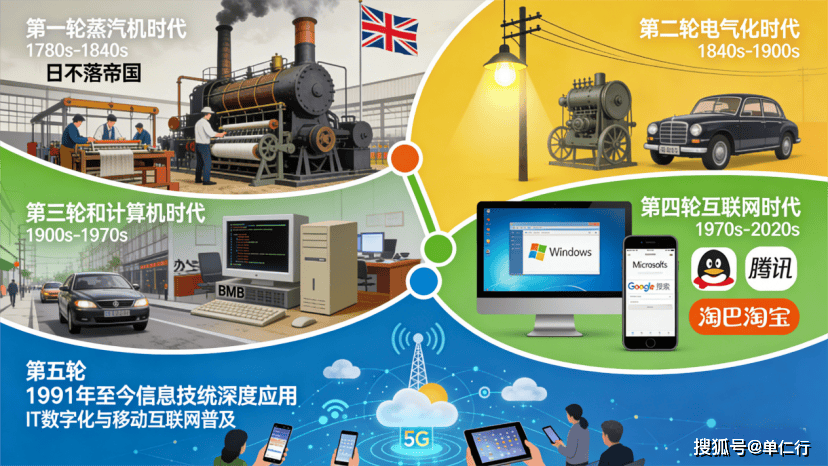
我在最近一个月研究中,越来越确定一件事。 AI,已经不是实验室里的花架子,而是进入到大规模应用,我们正站在一个比2000年互联网、2010年移动互联网更猛的大风口上。 我们用"康波周期"的规律,就能看得更明白。 02 我们先来看康波周期什么?跟我们有什么关系? 康波周期由苏联经济学家尼古拉・康德拉季耶夫在1920年代提出,他通过分析英、法、美等国1780年以来的价格、利率、工业产出等数据,发现经济存在 一种"50-60年"的长期波动规律,这就是康波周期。 它有两个要点: 1、经济每隔50-60年就会换个发动机,这个发动机就是新技术,而非短期政策或市场波动。 01 2、周期内最大的财富机会,出现在"新技术从实验室走向大规模应用"的阶段,比如说我们当前AI所处的关键节点。 我们看前几轮的康波周期就更直观了。 第一轮是蒸汽机时代(1780s-1840s):以前织布靠人工,在纺织机、蒸汽机的帮助下,工业效率大幅提升,英国也成了"日不落帝国"。 第二轮是电气化时代(1840s-1900s):电灯、电报以及内燃机的出现,让德、美逐步超过英国,当时搞电力设备、汽车的,比如福特,就是那轮周期的 龙头。 第三轮是汽车和计算机时 ...
记者体验不如预期 “AI办事闭环”利在厂商?
Mei Ri Shang Bao· 2026-01-20 23:23
Core Insights - The competition for AI "super entry" is intensifying among major tech companies like Alibaba, ByteDance, and Tencent, focusing on user engagement and service integration [1][2][3] - The effectiveness of AI applications in consumer markets remains uncertain, as companies strive to shift user habits and achieve widespread adoption [1][2] Group 1: Company Strategies - Alibaba's Qianwen App aims to create an "AI service closed loop" by integrating various services such as food delivery, flight bookings, and hotel reservations, addressing the challenge of converting technical advantages into user engagement [2] - ByteDance's Doubao has surpassed 100 million daily active users, leveraging its content and traffic distribution strengths to seamlessly integrate ordering and local services [2] - Tencent has incorporated "Yuanbao" into its WeChat ecosystem, enhancing its AI entry point by utilizing its vast user base [2] Group 2: Market Dynamics - The competition for AI "super entry" is not exclusive to tech giants; pure AI model companies like Zhiyu have also entered the market, offering services like ordering and ticket booking through third-party ecosystems [2] - The strength of AI entry points and the fluidity of service integration depend on the overall strength of a company's supply chain and ecosystem [3] - Industry experts predict that 2026 will mark the beginning of the "general AI entry year," as AI transitions from a technology validation phase to a commercial application phase [3]

中金公司:中美AI投资的“差异”
Ge Long Hui· 2026-01-20 14:01
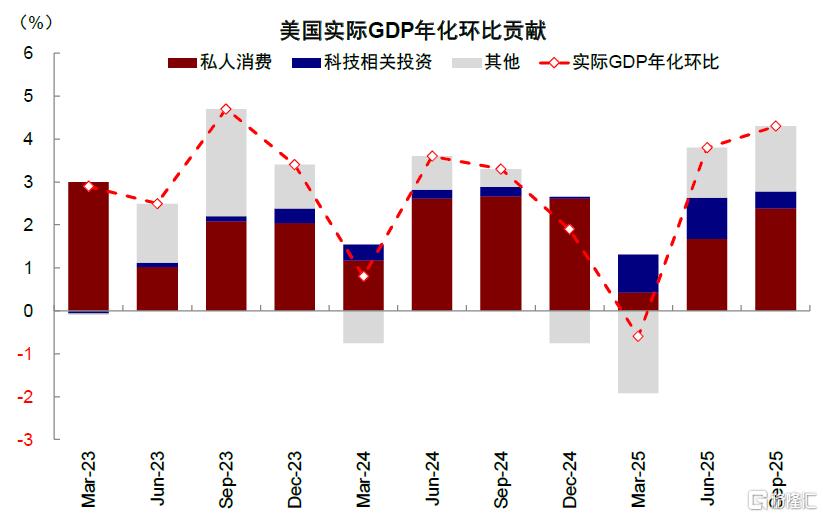
Core Insights - The article emphasizes the significant impact of AI on global economic growth and stock market performance, particularly in the U.S. and China, highlighting the importance of AI investments in driving GDP growth and stock returns [1][11]. Economic Contribution - U.S. technology hardware and software investments are projected to contribute 0.8 percentage points to the annualized GDP growth of 2.5% in the first three quarters of 2025 [2]. - Since 2023, U.S. non-farm business sector labor productivity has increased by 7.2% [4]. Stock Market Performance - Since the launch of ChatGPT at the end of 2022, the "Magnificent Seven" stocks in the U.S. contributed 45 percentage points to the S&P 500 index returns, accounting for over half of the total returns [1]. - In Hong Kong, seven leading tech stocks contributed 14 percentage points to the Hang Seng Index returns, representing 40% of the total returns since the launch of DeepSeek in early 2025 [7]. AI Industry Dynamics - The U.S. has a first-mover advantage in AI infrastructure, models, and talent, while China is rapidly catching up, particularly in open-source models [16][19]. - The global cloud computing market is expected to reach $692.9 billion in 2024, with North America holding a 54.3% market share and China at 16.8% [20]. Investment Landscape - U.S. nominal investment in AI technology hardware and software is approximately $1.05 trillion, accounting for 3.4% of nominal GDP, while China's investment is around $650 billion, also about 3.3% of nominal GDP [42]. - The AI investment landscape shows that the U.S. is primarily driven by private sector investments, while China's investments are significantly supported by government funding [52]. Funding Sources - U.S. AI investments are predominantly led by the private sector, with a total investment of $552 billion, compared to China's $900 billion, which includes substantial government support [52]. - The Chinese government has invested approximately $750 billion in AI, significantly higher than the U.S. government's $110 billion [57]. Investment Focus - U.S. investments are heavily focused on data centers and supporting infrastructure, while China is investing more in chip development and AI models [58]. - In 2025, U.S. leading companies are expected to invest $4 billion in the foundational layer, with 88% directed towards infrastructure [59]. Talent and Research - The number of AI researchers in China has grown significantly, with Chinese researchers holding three times as many AI patents as their U.S. counterparts [41]. - The rapid increase in AI talent in China is enhancing its research capabilities, narrowing the gap with the U.S. [41]. Future Outlook - The article suggests that the U.S. will continue to invest heavily in data centers and energy equipment, which will drive demand for related supply chains in China [88]. - China's ongoing need for chips and AI infrastructure indicates a sustained demand and policy support in the semiconductor sector [88].

计算机行业周报:AI应用行情演绎,关注场景变革和大厂链-20260120
East Money Securities· 2026-01-20 13:07
Investment Rating - The report maintains an investment rating of "Outperform the Market" for the computer industry [4] Core Insights - The computer industry index rose by 3.82% this week, ranking first among 31 industries, with a year-to-date increase of 12.64% [13][18] - The overall dynamic price-to-earnings ratio (PE-TTM) for the computer sector is 96.40, which is at a historical median level [20] - Major companies in the sector are accelerating product iterations and capital expenditures, with AI applications transitioning from capability validation to high-frequency usage [7][26] - AI is making significant inroads in healthcare and marketing, with companies like Alibaba, ByteDance, and Tencent leading the charge in integrating AI into their ecosystems [7][30][34] Summary by Sections Market Review - The computer industry index increased by 3.82% this week, outperforming other sectors [13] - A total of 249 companies in the computer sector saw their stock prices rise, while 105 experienced declines [18] Industry Dynamics - Major tech companies are rapidly iterating their products, with Alibaba's Qianwen App integrating over 400 AI functionalities into its ecosystem [26] - AI applications are being embedded in healthcare services and marketing strategies, with a focus on compliance and data integration [37][40] - The report highlights specific companies to watch in AI healthcare, including Jingtai Holdings and Yuyuan Network, and in AI marketing, such as Focus Technology and Guangyun Technology [7][56] Configuration Recommendations - The report suggests focusing on companies within the AI healthcare sector and those involved in AI marketing, as well as major players in the industry chain like Alibaba and Tencent [56]