淘宝

Search documents
外卖大战,美团有自己的打法
Sou Hu Cai Jing· 2025-06-18 06:55
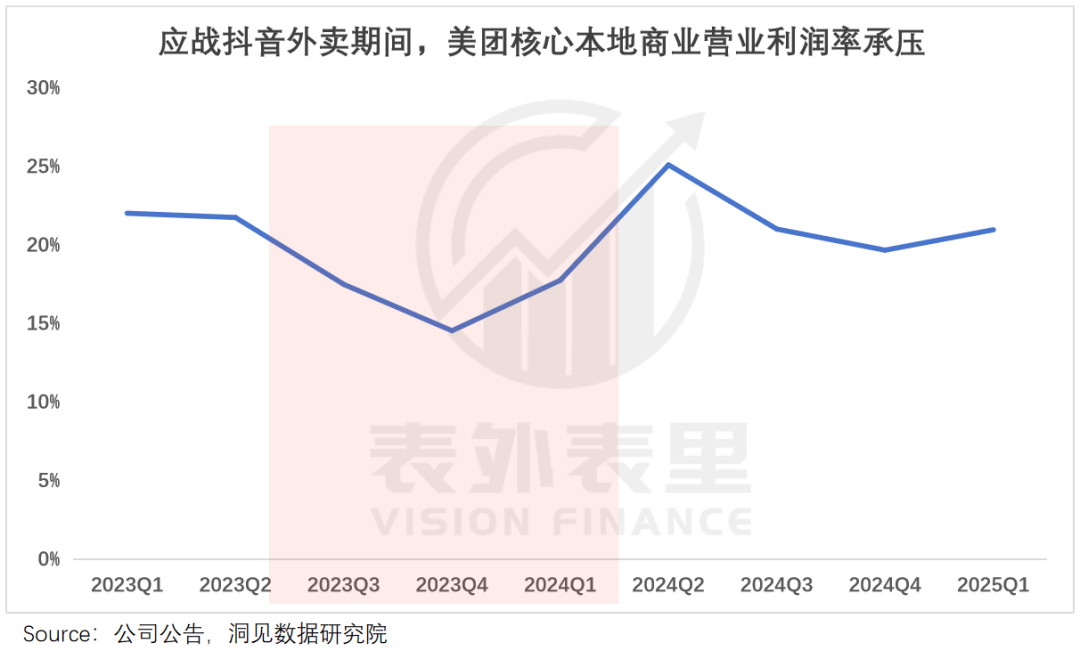
Core Viewpoint - Meituan's Q1 2025 revenue grew by 18.1% year-on-year to 86.56 billion yuan, exceeding expectations, but concerns about competition remain high in the food delivery market [1][3]. Financial Performance - Meituan's revenue for Q1 2025 reached 86.56 billion yuan, marking an 18.1% increase compared to the previous year [1]. - The management indicated that core local business revenue growth is expected to slow down in Q2, with a significant decline in operating profit year-on-year [3]. Competitive Landscape - The competition in the food delivery sector has intensified, with new entrants causing unpredictable and irrational competition, making it difficult for Meituan to provide accurate forecasts for the next quarter [3]. - Meituan is employing strategic measures to counter new competitors, focusing on specific SKUs to keep new players at bay and leveraging flash sales to increase market share and raise competitive barriers [3][12]. Market Dynamics - In May, JD's food delivery daily order volume surpassed 20 million, while Taobao's flash sales reached 40 million, indicating a significant market shift [5]. - Meituan's beverage category has maintained rapid growth, despite the competition, as over 50% of JD's orders are in the beverage segment, which has not yet severely impacted Meituan's core categories [5][12]. User Behavior and Pricing Strategy - Meituan is aggressively adjusting its pricing strategy to retain price-sensitive young consumers, with discounts and subsidies that can reduce prices significantly [8][10]. - The average subsidy cost per order for Meituan is estimated at around 10 yuan, indicating the financial pressure from competitive pricing [9][30]. Flash Sales and Instant Retail - Meituan's flash sales business saw a growth rate exceeding 30% in Q1 2025, contributing to a 22.1% year-on-year increase in core commercial delivery revenue [13][22]. - The new national subsidy policy has stimulated demand for consumer electronics, benefiting Meituan's flash sales segment [14][22]. Delivery Efficiency and Rider Economics - Meituan's average daily order volume for food delivery increased by 10% year-on-year, while flash sales orders grew by over 30%, leading to an overall order volume increase of 13% [23][30]. - The average daily order per rider increased from 22 to 25, enhancing the income potential for riders compared to competitors [24][25]. Long-term Competitive Barriers - Meituan's efficient delivery system and lower average delivery costs (4.13 yuan) compared to competitors (7-9 yuan) create a significant competitive advantage [28][30]. - The company is focused on building long-term competitive barriers, making it challenging for new entrants to gain market share without substantial financial backing [30][31].


抖音电商成长的独特路径,不可复制
Sou Hu Cai Jing· 2025-06-17 22:28
Core Insights - The Chinese e-commerce industry has undergone significant changes over the past five years, with traditional shelf-based e-commerce being disrupted by social and content-driven platforms, leading to a competitive landscape with multiple strong players [1][10] - Douyin E-commerce has rapidly ascended to become one of the top three players in the industry, achieving a GMV of approximately 3.5 trillion yuan in 2024, representing over 30% year-on-year growth [1][10][12] Group 1: Business Model Transformation - The fundamental logic of the e-commerce industry has shifted from "people finding goods" to "goods finding people," with user demand responsiveness becoming the core of competition [2][4] - Douyin's "interest e-commerce" concept, introduced in 2021, has transformed traditional e-commerce logic by stimulating potential demand through content, leading to a new consumption paradigm [4][5] - Nearly 80% of consumers on Douyin shop without a clear plan, driven by interest sparked through short videos or live streams [4] Group 2: Technological and Cultural Innovations - Douyin has built a robust technological support system, leveraging over 800 million daily active users and developing a precise algorithmic recommendation engine for real-time matching of products and interests [4][5] - The platform's average daily usage time exceeds 100 minutes, with over 92% of users utilizing the search function, indicating the effectiveness of its dual-track model [4][5] - Douyin's content innovation is seen as a core competitive advantage, with a full-link scenario of "short video seeding + live conversion + mall integration" [5] Group 3: Support for Small Businesses and Industry Upgrades - Douyin E-commerce has implemented a series of measures to support small businesses, including a commission exemption policy that saves over 7 billion yuan for small merchants [8] - The number of small merchants starting self-broadcasting increased by 165% year-on-year in 2024, contributing to approximately 6.59 trillion yuan in business growth [8] - Douyin's collaboration with local governments to create live-streaming e-commerce industries exemplifies its commitment to empowering small businesses and upgrading local industries [8][9] Group 4: Competitive Landscape and Market Dynamics - The e-commerce market is shifting from incremental competition to stock competition, with merchant traffic promotion costs rising to 20-50% of total costs, tripling over the past five years [9] - Douyin's strategy of prioritizing "price competitiveness" has pressured traditional platforms like Taobao and JD to follow suit with low-price subsidies [10][12] - The rise of Douyin has forced traditional platforms to adapt, leading to strategic partnerships and changes in operational models to maintain market share [10][12] Group 5: Future Outlook - The competition in the e-commerce sector is evolving towards a high-dimensional war focused on "content and demand responsiveness," with traditional platforms needing to break payment barriers and restructure strategies [14] - Future winners in the e-commerce space will be those who establish irreplaceable advantages in core areas and possess cross-ecosystem collaboration capabilities [14]
罗永浩数字人开播,从选品、试色到主播,AI重塑消费全流程
Nan Fang Du Shi Bao· 2025-06-17 04:10
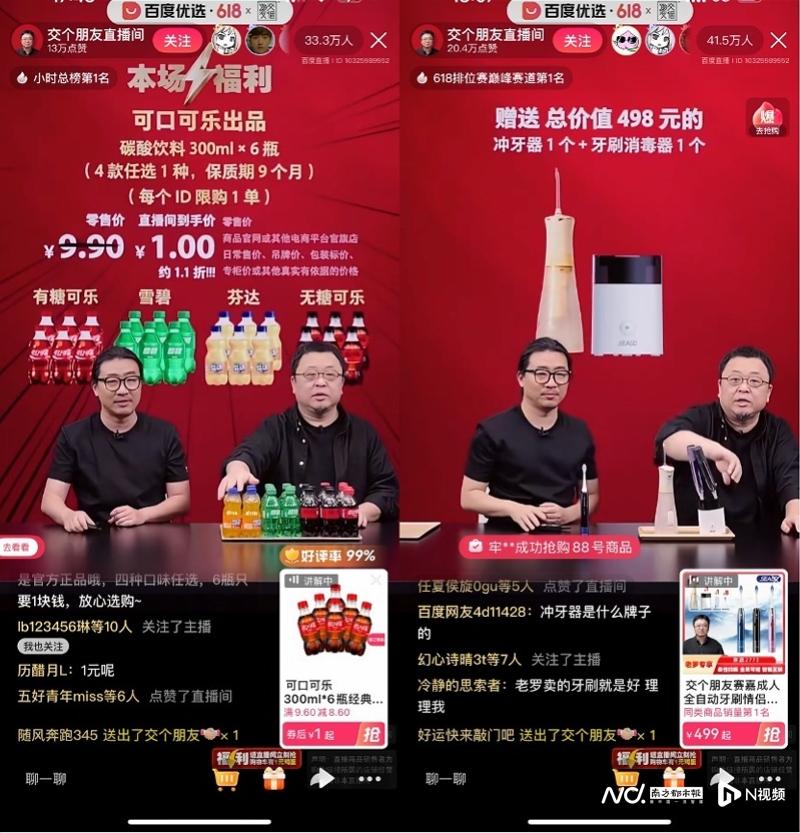
Group 1: Industry Trends - The "2025 High-Quality Consumption Brand TOP 100" initiative aims to boost economic development and consumer confidence by focusing on nine key sectors, including beauty economy, sports and outdoor, food and health, smart consumer electronics, pet economy, experience economy, interest consumption, cross-border e-commerce, and consumer technology [1] - AI technology is reshaping the entire consumer experience and becoming a new tool for cost reduction and efficiency improvement, as evidenced by the success of AI-driven live streaming events [2][4] Group 2: AI in E-commerce - The first live stream featuring a digital avatar of influencer Luo Yonghao attracted over 13 million viewers and generated a GMV of over 55 million yuan, setting a new record for digital avatar live streaming [4][5] - AI tools are now enabling consumers to receive one-click shopping suggestions across multiple platforms, significantly enhancing the e-commerce shopping experience [2][9] - AI-driven virtual fitting and makeup applications are being adopted by platforms like Taobao, allowing users to upload their photos and generate virtual representations for trying on clothes and makeup [5][7] Group 3: AI Shopping Assistants - Major e-commerce platforms have launched AI shopping assistants that can provide product comparisons, gift suggestions, and summarize product reviews, enhancing the shopping experience [10][12] - OpenAI's ChatGPT Search has been upgraded to include shopping recommendations, showcasing a variety of products based on structured data from third-party websites [9] - AI shopping assistants are designed to improve transaction rates on platforms like Taobao and JD.com, although there are concerns about their effectiveness in understanding brand nuances [12] Group 4: AI Customer Service - AI customer service has been in use for over a decade, with platforms like JD.com developing sophisticated systems that can handle a high volume of inquiries, particularly related to government subsidies [13] - Despite the advancements, consumer feedback on AI customer service remains mixed, with many users preferring human interaction for complex issues [14] - A significant portion of consumers believe that a combination of AI and human customer service is the most satisfactory approach, highlighting the need for a balanced service model [14]

大家都在抢,家电“国补”额度还有吗?最新文件明确:要持续到年底!专家建议:不急的话不妨再等等
新浪财经· 2025-06-17 01:02
Core Viewpoint - The article discusses the challenges consumers face in accessing government subsidies for home appliances during the "618" shopping festival, highlighting changes in subsidy distribution and the impact on consumer behavior and retail channels [1][3][6]. Group 1: Government Subsidy Changes - Many regions have shifted from a unified subsidy system to a coupon-based system for home appliance subsidies, leading to temporary suspensions or adjustments in certain areas [1][3]. - The National Development and Reform Commission and the Ministry of Finance have confirmed that the home appliance subsidies will continue until December 31, 2025, despite some temporary pauses in specific regions [6][4]. - The government has allocated an additional 81 billion yuan to support the replacement of old consumer goods, indicating a commitment to maintaining subsidy programs [6]. Group 2: Consumer Behavior and Retail Impact - The changes in subsidy distribution have led to limited availability and specific time frames for consumers to claim subsidies, affecting purchasing decisions [3][4]. - The subsidy program has revitalized physical retail stores, as consumers who initially planned to shop online are returning to brick-and-mortar locations due to the incentives provided by the subsidies [9]. - The competition among online platforms for subsidy-related traffic has intensified, benefiting offline retailers and leading to significant sales increases for some stores [9]. Group 3: Broader Market Implications - The subsidy program is expanding beyond home appliances to include mobile phones and other consumer electronics, with specific subsidy amounts and percentages outlined for these products [8]. - The introduction of subsidies has positively impacted sales for brands like Apple, which has adjusted pricing to align with subsidy offerings, resulting in increased market share [8]. - The longer replacement cycles for mobile devices, now averaging 45 months, suggest that subsidies will play a crucial role in stimulating demand in the electronics market [9].
享受“国补” 要抓紧 618可能是最优惠的时段
Mei Ri Shang Bao· 2025-06-16 22:12
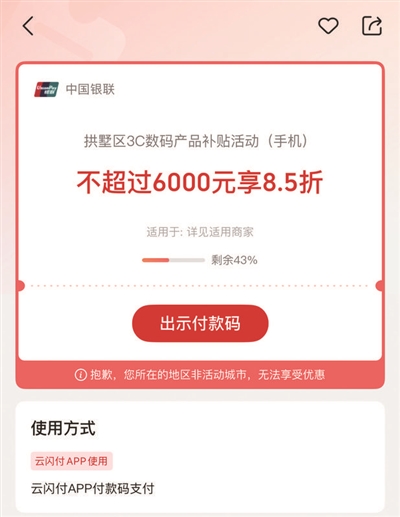
Group 1 - The current 618 shopping festival is experiencing low consumer engagement, with digital electronic products being the only standout category due to significant discounts and government subsidies [2] - Many consumers are facing issues with the "national subsidy" (国补) button disappearing from product pages, preventing them from utilizing the expected discounts during their purchases [3][4] - The national subsidy policy is set to end on December 31, 2025, but some regions may exhaust their funds earlier, potentially by mid-December, indicating a need for consumers to stay informed about local policy changes [5] Group 2 - The rapid depletion of subsidy funds in certain areas suggests that the national subsidy program is effectively stimulating consumer spending, with 65% of the 300 billion yuan allocated already consumed by the end of May [5] - Some regions have temporarily suspended subsidies due to funding shortages, system upgrades, or to maintain price stability during the 618 sales event [5] - Consumers can check the remaining subsidy amounts for different product categories in their regions through the cloud payment platform, which provides transparency regarding available funds [6]

她能做出爆款App,却没有进入大厂的资格
创业邦· 2025-06-16 09:35
Core Viewpoint - The article discusses the challenges of information overload in modern digital platforms and introduces a new app called NoFeed that helps users bypass distracting homepages to directly access search results [18][20][44]. Group 1: Information Overload - Users often find themselves distracted by endless information streams on platforms like Xiaohongshu, Zhihu, and Taobao, leading to forgetfulness about their original search intentions [5][7][8]. - The article highlights a common frustration among users regarding the lack of features to avoid homepage distractions, with many expressing a desire for a "do not view homepage" function [8][11]. Group 2: Introduction of NoFeed - NoFeed is an app designed to help users search directly within other apps without being sidetracked by their homepages, currently supporting over 20 popular apps [20][28]. - The app allows users to set default apps, use app name suggestions, create aliases for apps, and utilize desktop widgets for quick access [29][31][34][37]. Group 3: User Experience and Development - The app's creator, Leslie, developed NoFeed after experiencing frequent distractions while searching for content, leading to a focus on user-centric design [46][50]. - Leslie emphasized the importance of minimizing distractions during the search process, opting against adding features that could lead to additional information intake [67][69]. Group 4: Market Positioning and Philosophy - The article contrasts Leslie's approach to product design with that of larger companies, which often prioritize features that drive user retention and monetization over user experience [58][60]. - It suggests that Leslie's philosophy of creating a product that directly addresses user needs may be more aligned with genuine user satisfaction than traditional corporate strategies [80].

AI加持带火3C数码产品在618走热 京东以52%销售份额占比领跑行业
Cai Fu Zai Xian· 2025-06-13 06:27
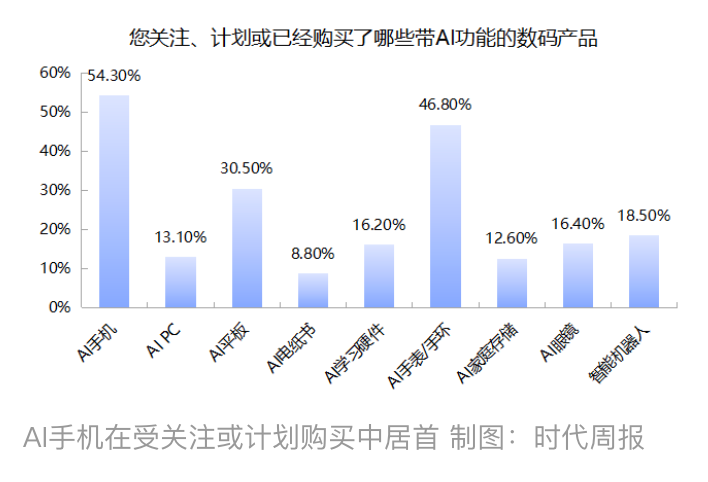
Core Insights - The rapid rise of artificial intelligence (AI) is significantly reshaping the 3C digital market, with AI-enabled products achieving remarkable growth during the 618 shopping festival [1] - JD.com has leveraged the AI trend, leading the industry with over 50% year-on-year growth in 3C digital product sales, capturing 52% of the overall market share since May 13 [1] - A survey indicates that more than half of respondents are interested in AI features, with significant interest in AI smartphones, smartwatches, and robots [1] Group 1: Market Performance - JD.com has become the primary platform for purchasing AI products, significantly outpacing competitors like Taobao/Tmall and Pinduoduo [6] - The company has effectively identified and catered to changing consumer demands, focusing on nine key AI digital product categories [6] - During the 618 promotion, JD.com led in both market share and user recognition for AI digital products [9] Group 2: Consumer Trends - The primary reason for consumers purchasing AI digital products is the novelty of technology, although practical functionality remains a decisive factor [2] - In computer products, the top five AI features of interest include AI image/video processing and AI office software, while in mobile products, AI translation and AI voice assistants are most sought after [2] - For e-readers, the most desired AI features include handwriting recognition and multilingual translation, while in smart wearables, health monitoring is the top concern [5]

汉堡王中国,门店将收缩丨消费参考
2 1 Shi Ji Jing Ji Bao Dao· 2025-06-13 02:00
Group 1 - Burger King China plans to close underperforming stores, expecting a decrease in total store count by June 2025, while simultaneously opening 40 to 60 new restaurants in key urban areas [1][2] - As of the end of 2024, Burger King China had 1,474 stores, with closures targeting those with annual sales below $300,000 (approximately 2.15 million RMB) [1][2] - The overall restaurant industry in China is experiencing increased volatility, with a significant rise in store closures, reaching 4.09 million in 2024, resulting in a closure rate of 61.2% [2] Group 2 - Despite the closures, Burger King maintains confidence in the Chinese market, noting positive early performance since RBI's acquisition [3][4] - RBI has invested over $100 million in strategic funding for Burger King China since acquiring full ownership in February [5] - RBI is collaborating with Morgan Stanley to identify long-term partners for Burger King China [6] Group 3 - The current contraction of Burger King in China appears to be a temporary adjustment, with expectations of returning to an expansion phase in the future [7]
价格大战,一杯咖啡低至不到两元
Nan Jing Ri Bao· 2025-06-13 00:07
价格大战,一杯咖啡低至不到两元 行业协会呼吁"别卷了",本土咖啡盼"突围" □ 南京日报/紫金山新闻记者 王国俊 "真没想到,一大杯咖啡只要不到两块钱,太便宜了。"市民常利英接过外卖小哥送来的一杯美式咖啡感 叹。 6月,随着天气越来越热,也到了茶饮咖啡消费旺季。与以往不同的是,在各大外卖平台的"补贴狂 欢"下,今年咖啡价格大幅下跌,甚至卖出了矿泉水的价格。 消费者之"乐":实现咖啡"自由" 平台竞争之"热":击穿底价的外卖大战 这一轮的咖啡价格大幅下跌,其中一个特别重要的原因是"外卖大战"及巨额补贴。 今年2月,京东杀入外卖赛道,亮出了巨额补贴的"杀手锏",直接和美团"开打",用户最欢迎的是咖啡 奶茶品类。饿了么和淘宝在4月也加入这场外卖大战,同样给了咖啡奶茶品类很多优惠补贴。 京东曾发布战报称,库迪咖啡在京东外卖的销量累计突破4000万单。淘宝闪购当时上线后的24小时内, 库迪咖啡的销量快速上升至平台咖啡类目第一。 6月9日上午9时30分的非高峰时段,记者在南京南站附近一家知名品牌连锁咖啡店前发现,10分钟内, 就有9名快递小哥送走了14份咖啡;而店内,4名店员正在不停忙碌,眼前备餐台上还有七八份待取外卖 ...
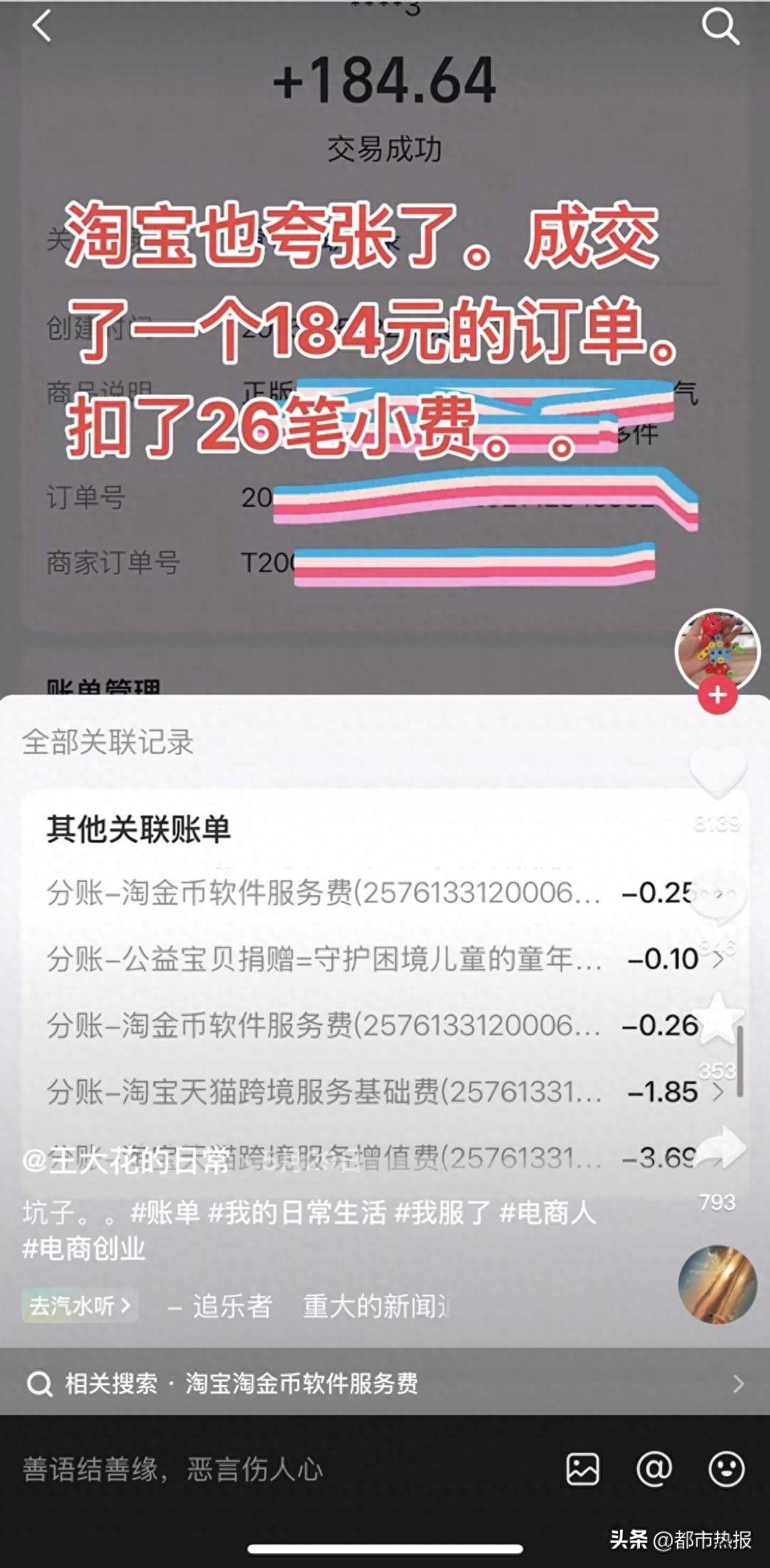
商家吐槽淘宝收费多 184元订单被扣26笔服务费
Sou Hu Cai Jing· 2025-06-12 10:11
Group 1 - The core issue highlighted is the increasing dissatisfaction among merchants regarding various fees imposed by Taobao, which are perceived as excessive and unclear, leading to reduced profits and even losses for businesses [1][4][9] - A merchant from Guangdong reported that a single order of 184 yuan incurred 26 different platform service fees, raising concerns about the transparency and justification of these charges [1] - Another merchant from Zhejiang mentioned an unexplained deduction of 3000 yuan in commission, indicating a lack of clarity on the origin of these fees, which many merchants echoed in their comments [4] Group 2 - Merchants have noted that even the "Tao Coins" redemption service is now subject to service fees, prompting suggestions for those who do not require the service to disable it, while others must continue to accept these charges [9] - Recent adjustments to Taobao's fee policies were made to adapt to market changes, including the introduction of a "basic software service fee" as part of a broader trend in the e-commerce industry [10] - Legal experts have pointed out that the current situation reflects a power imbalance where smaller merchants have limited influence compared to larger platforms, emphasizing the need for more transparent fee structures to promote healthy industry development [10]