九毛九

Search documents
2025年中国餐饮连锁化发展白皮书-中国餐饮连锁化率已达23%
Sou Hu Cai Jing· 2025-06-06 01:12
Industry Overview - The Chinese catering market is expected to exceed 5.5 trillion yuan in 2024, with a year-on-year growth of 5.3%, outpacing the growth of retail sales of consumer goods [1][14] - The chain rate has increased to 23%, up from 19% in 2021, indicating a significant rise in the expansion of leading brands [1][14] - The number of brands with 501-1000 stores has grown the fastest at 93.6%, reflecting a shift towards efficiency and quality in the industry [1][14] Category and Business Model Innovation - The chain rate for beverage stores remains stable at 49%, while self-service restaurants and local cuisines are emerging as growth highlights [1][30] - Self-service restaurants are innovating through both low-cost and high-quality offerings, with a 5% increase in chain rate [1][30] - Brands like Laoxiangji and Jiumaojiu are expanding through the "satellite store" model, reducing rental costs by 60% and increasing order volume by 1.74 times [1][30] Regional Market Characteristics - New first-tier cities lead in chain store distribution, with a chain store proportion of 23.4%, while first-tier cities reach 35.1% [2] - The catering consumption in lower-tier markets has increased by 19.6%, with a 32.9% share of new merchants [2] Franchise Model Upgrades and Capital Trends - Major brands like Haidilao and Jiumaojiu are opening up franchises, with over 85% of franchisees possessing cross-industry operational capabilities [6] - In 2024, the number of catering investment and financing cases decreased to 70, with a focus on supply chain and digitalization [6] Consumer Behavior and Product Trends - The average dining price has decreased by 10.2%, but the acceptance rate for high-rated merchants has increased by 13.7% [7] - Breakfast delivery has surged by 118.9%, and nighttime economy is driving growth in categories like barbecue and crayfish [7] Future Trends Outlook - The industry is transitioning from "scale-driven" to "value-driven," with a need for deeper supply chain integration and digital operations [8] - The dual penetration of lower-tier and high-tier cities is expected to continue, with regional specialties breaking through through standardization and cultural tourism integration [8]


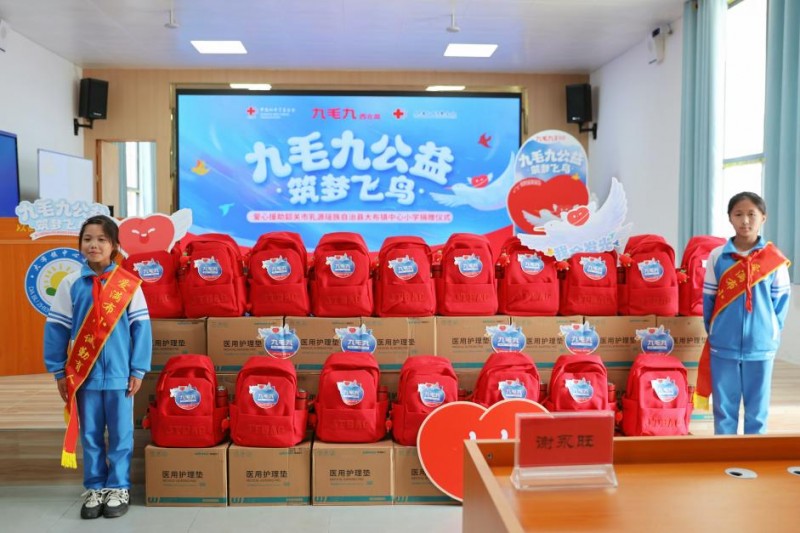
“飞鸟计划”再启航,九毛九西北菜暖心守护山区女童成长
Zhong Guo Shi Pin Wang· 2025-06-04 10:18
Group 1 - The core initiative "Flying Bird Plan" aims to provide care and support for girls in underdeveloped areas, symbolizing their rebirth and empowerment through education [3][5] - The event involved the distribution of care packages worth over 55,000 yuan to 184 eligible girls, including essential items such as hygiene products, backpacks, and thermos cups [3][5] - The necessity for such initiatives is underscored by research indicating that 14.53% of girls in underdeveloped regions have a vague understanding of menstruation, and 39% hold negative attitudes towards it, highlighting the urgent need for education and material support [5] Group 2 - The donations were funded through a charity campaign where 0.5 yuan from each purchase of a specific dish was allocated for the procurement of necessary supplies [5] - In addition to the care packages, the company prepared "love gift bags" for all 611 students at the school, containing practical items to enhance their learning experience [5] - The company, established in 1995, emphasizes its commitment to social responsibility and aims to extend its charitable efforts beyond the dining experience [7]
港股的热闹
投资界· 2025-06-03 07:38
Core Viewpoint - The article discusses the transformation of the Hong Kong stock market, highlighting its resurgence as a capital haven despite previous challenges, driven by significant reforms and an influx of southbound capital from mainland investors [3][6][12]. Group 1: Market Performance and Trends - Xiaomi completed a HKD 4.25 billion placement, marking the third-largest flash placement in Hong Kong's history, following Meituan and BYD [3]. - In 2023, Hong Kong's IPO financing reached HKD 653.25 billion, a year-on-year increase of 691.33%, while total placements surged to HKD 1,242.68 billion, up 853.47% [4]. - The first quarter of 2023 saw a new high of 27% in equity holdings of Hong Kong stocks by actively managed public funds [4]. Group 2: Challenges Faced by the Market - Prior to 2023, Hong Kong stocks faced a four-year decline, with IPO fundraising dropping to HKD 46.3 billion in 2022, an 86% decrease from 2021, making it the lowest in 20 years [3][4]. - The market suffered from liquidity issues, with large-cap stocks contributing 90% of liquidity, while small-cap stocks struggled [9][10]. - The market's challenges were exacerbated by external factors such as aggressive interest rate hikes by the Federal Reserve and geopolitical tensions [8][10]. Group 3: Reforms and Strategic Changes - The new leadership at the Hong Kong Stock Exchange, including CEO Chen Yiting and Chairman Tang Jiacheng, aims to address liquidity issues and attract competitive companies [12][13]. - Reforms include lowering the listing thresholds for companies, with market capitalization requirements for commercialized companies reduced from HKD 60 billion to HKD 40 billion [13]. - The introduction of the FINI platform has improved the efficiency of new stock subscriptions, significantly reducing the time funds are frozen during the process [14][16]. Group 4: Capital Inflows and Market Dynamics - The influx of southbound capital has been a key driver of market resilience, with significant investments in technology and new consumer sectors [18][20]. - Public funds have increased their holdings in major stocks like Tencent and Alibaba, with a notable rise in technology-related ETFs [20][22]. - Insurance funds have actively increased their stakes in high-dividend stocks, contributing to the overall liquidity of the market [23].






九毛九(09922.HK):优化门店 梳理提质
Ge Long Hui· 2025-06-01 02:38
Core Viewpoint - The company's same-store sales are under pressure in 2024 due to external factors such as subdued dining trends and consumer spending, as well as internal adjustments [1][2] Group 1: Same-Store Sales Performance - In 2024, same-store revenue for brands such as Jiumaojiu, Taier, and Songhuoguo is expected to decline by -13%, -19%, and -32% respectively [1] - Jiumaojiu is less affected by the economic downturn due to its lower average transaction value of 55 yuan compared to Taier at 71 yuan and Songhuoguo at 103 yuan [1] Group 2: Operational Adjustments - The company is actively making adjustments to improve operations, including optimizing store models and menu structures [1][2] - Store renovations aim to create a warmer and more stylish environment suitable for family gatherings [1] - The menu is being updated to replace non-core dishes and introduce fresh fish, on-site slaughter, and specialty snacks [1] Group 3: Profitability and Financial Outlook - The company has slowed its expansion strategy in 2024, focusing on store upgrades and closures, which may enhance profitability [2] - The net profit attributable to the parent company for 2024 is projected at 56 million yuan, with core operating profit at 252 million yuan [2] - Profit recovery is anticipated in 2025, with net profits expected to reach 135 million yuan, 164 million yuan, and 203 million yuan for 2025-2027, representing year-on-year growth rates of 142.37%, 20.97%, and 24.05% respectively [2] Group 4: Supply Chain Development - The company is implementing supply chain improvements, with a central kitchen in Nansha, Guangzhou expected to be operational in 2025 [2] - Additional supply chain developments are planned for Shanghai and Chongqing in 2026-2027, which will support accelerated expansion outside the province [2] Group 5: Investment Rating - The company is viewed as being at the bottom of its fundamental performance, with positive adjustments and a potential turning point on the horizon [2] - Earnings per share (EPS) forecasts for 2025-2027 are 0.10, 0.12, and 0.15 yuan, with corresponding price-to-earnings ratios of 23.39x, 19.33x, and 15.59x [2]
巨头收购!
Zhong Guo Ji Jin Bao· 2025-05-28 12:25
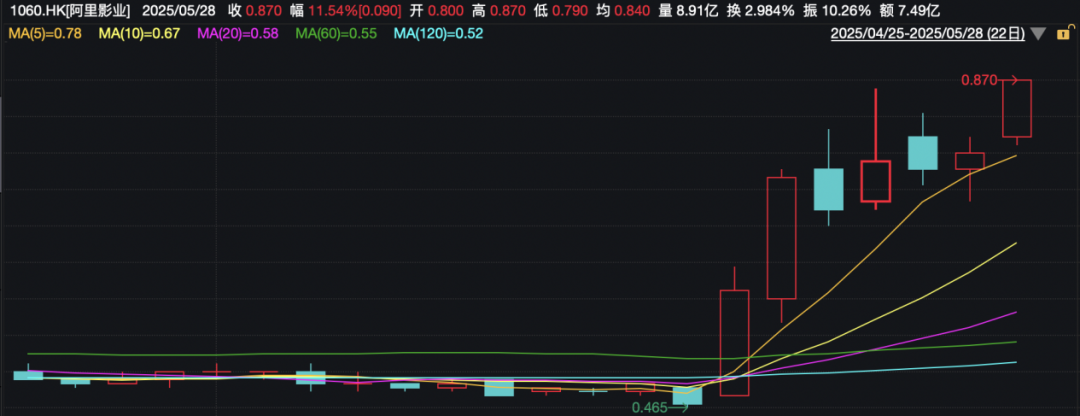
Market Overview - The Hong Kong stock market opened high but closed lower, with the Hang Seng Index down 0.53% at 23,258.31 points, the Hang Seng Tech Index down 0.15% at 5,174.64 points, and the Hang Seng China Enterprises Index down 0.31% at 8,443.87 points [1]. Film and Entertainment Sector - Alibaba Pictures, Emperor Culture Industry, and Huayi Brothers saw significant stock price increases of 11.54%, 7.69%, and 7.50% respectively [1]. - Alibaba Pictures' management indicated a cautious approach to film investment over the next 2-3 years, focusing resources on the Damai business and IP merchandise sales [4]. - Citigroup's report highlighted that major IPs like "Chiikawa" and "Crayon Shin-chan" are expected to contribute incremental revenue in the new fiscal year, with potential for valuation reassessment as current valuations do not fully reflect the growth potential of IP derivative businesses [4]. Restaurant Sector - Restaurant stocks such as Jiumaojiu, Tehai International, and Haidilao experienced gains of 5.53%, 2.59%, and 2.30% respectively, driven by the upcoming Dragon Boat Festival holiday which is expected to boost dining consumption [5]. - The National Bureau of Statistics reported a 4.7% year-on-year increase in retail sales from January to April 2025, with a 5.1% increase in April alone [5]. - Industry experts predict a long-term trend of increasing consumption share over the next 10 to 20 years [5]. Technology Sector - Major tech stocks showed mixed performance, with Alibaba down 1.95%, Tencent down 1.17%, and JD.com down 1.4%, while NetEase rose 2.81%, Kuaishou up 5.95%, and Bilibili up 2.29% [5]. - The semiconductor sector faced declines, with leading company SMIC down 2.5% [6]. Data Center Sector - GDS Holdings saw a significant drop of nearly 10% after announcing a $500 million convertible senior bond issuance with a 2.25% interest rate and an initial conversion price of $33.08 per American depositary share [6]. Investment Trends - Huatai Securities noted that technology and consumer sectors now account for a significant portion of the Hong Kong stock market, indicating a shift from the previous dominance of finance and real estate [8]. - There is a notable interest from long-term foreign capital in China, with Hong Kong's market conditions favorable for these investments [8]. - The focus for investment is on sectors benefiting from RMB appreciation and large-cap stocks with narrowing AH premium trends [8]. Tencent Music - Tencent Music is set to become the second-largest shareholder of SM Entertainment after acquiring approximately 9.38% of its shares for about 243.3 billion KRW (approximately 1.45 billion HKD) [9]. - Tencent Music's Q1 2025 financial report showed revenue of 7.36 billion yuan, a year-on-year increase of 8.7%, and an adjusted net profit of 2.23 billion yuan, up 22.8% [10].
港股收盘(05.28) | 恒指收跌0.53% 科技股走势分化 快手-W(01024)绩后涨近6%领跑蓝筹
智通财经网· 2025-05-28 08:41
Market Overview - The Hong Kong stock market opened high but closed lower, with the Hang Seng Index down 0.53% to 23,258.31 points and a total trading volume of 180.82 billion HKD [1] - Citic Securities anticipates a volatile upward trend for Hong Kong stocks in Q3, with potential performance upgrades in Q4 due to domestic growth policies and AI industry catalysts [1] Blue-Chip Stocks Performance - Kuaishou-W (01024) rose 5.95% to 51.65 HKD after reporting Q1 revenue of 32.608 billion RMB, a 10.9% YoY increase, and an adjusted net profit of 4.58 billion RMB, up 4.4% YoY [2] - Other blue-chip stocks like Budweiser APAC (01876) and Nongfu Spring (09633) also saw gains, while SMIC (00981) and Li Auto-W (02015) faced declines [2] Sector Performance - Consumer stocks generally rose, with notable gains in beer, dairy, and restaurant sectors, while gaming stocks benefited from increased Macau gaming revenue [3] - Airlines continued to rise, with China Eastern Airlines (00670) up 3.4% as domestic and international flight bookings increased significantly [4] - Nuclear power stocks experienced volatility, with a notable rise in the morning followed by a decline, influenced by U.S. nuclear energy policy announcements [5] Automotive Sector - The automotive sector faced pressure, with several companies like Li Auto-W (02015) declining due to renewed price wars [6] - Analysts suggest that without regulatory intervention, competition will intensify, particularly affecting mid-tier companies [6] Notable Stocks Movements - Yaoshi Bang (09885) reached a new high, up 13.18% after announcing a share buyback plan and reporting significant growth in its proprietary brand business [7] - Alibaba Pictures (01060) rose 11.54% following a strategic shift towards cautious film investment and a focus on its DaMai business [8] - Meizhong Jiahe (02453) surged 10.2% after launching a new language model for proton therapy, showcasing its treatment effectiveness [9] - SF Express (09699) increased by 9.5%, with analysts highlighting its leading position in the third-party delivery market and growth potential [10]

港股热门消费股突现分化,泡泡玛特、蜜雪今日双双大跌
Mei Ri Jing Ji Xin Wen· 2025-05-28 06:07
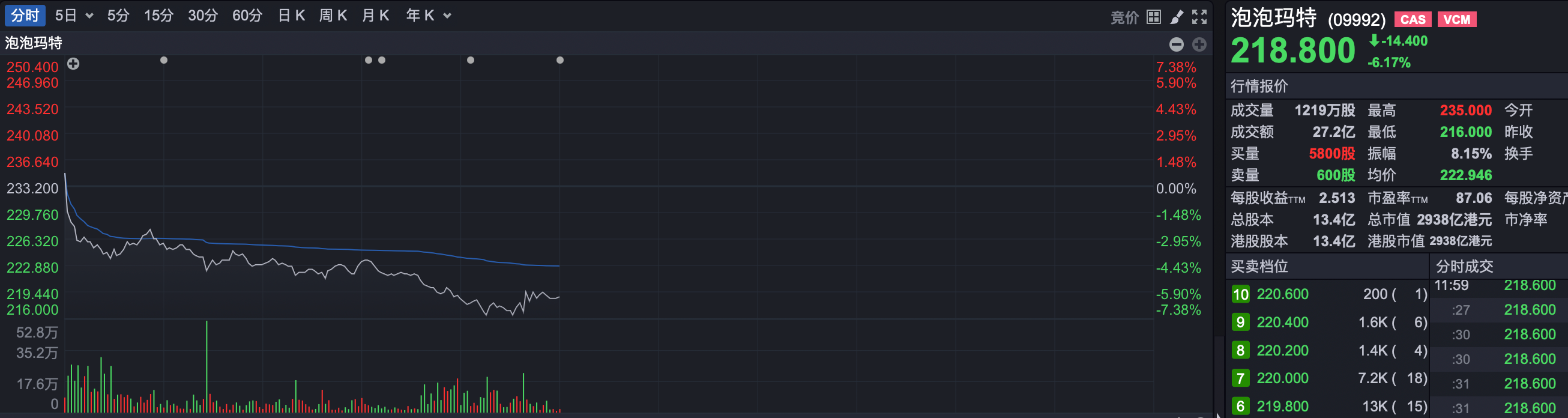
Core Viewpoint - The Hong Kong stock market experienced fluctuations, with notable declines in popular consumer stocks like Pop Mart and Mixue Group, despite their recent highs and overall market interest in the new consumption sector [1][2][4][5]. Group 1: Pop Mart - Pop Mart's stock price reached a historical high of 235 HKD, with a total market capitalization exceeding 300 billion HKD, reflecting a year-to-date increase of over 160% [2][4]. - Following the peak, Pop Mart's stock saw a significant drop of over 7%, attributed to high market enthusiasm and profit-taking rather than any negative fundamental changes [4]. - The trading volume surged, with 27.2 billion HKD traded in the morning session, nearing the previous day's total of 28.4 billion HKD [4]. Group 2: Mixue Group - Mixue Group also faced a decline of over 6% after a nearly 10% increase the previous day, reaching a historical high [5][7]. - The stock was listed at 202.5 HKD per share, with a peak price of 579 HKD, marking a 186.6% increase from the IPO price [5]. - Daiwa raised its target price for Mixue Group from 539 HKD to 608 HKD, citing its unique economies of scale and strong market position, with same-store sales growth expected to exceed 10% in April [7]. Group 3: Market Trends - Despite the declines in Pop Mart and Mixue Group, the overall consumer sector in the Hong Kong stock market remains vibrant, with several established consumer stocks experiencing gains [8]. - Analysts suggest a "high-low switch" phenomenon, indicating a shift in investor focus towards quality companies as new consumer and technology firms enter the market [10]. - The market is witnessing a structural change, with new consumption, technology, and biomedicine sectors increasingly dominating the market capitalization, now accounting for over half of the Hong Kong stock market [10].

公开儿童餐食材表 西贝亮底牌能否守住护城河
Bei Jing Shang Bao· 2025-05-27 13:52
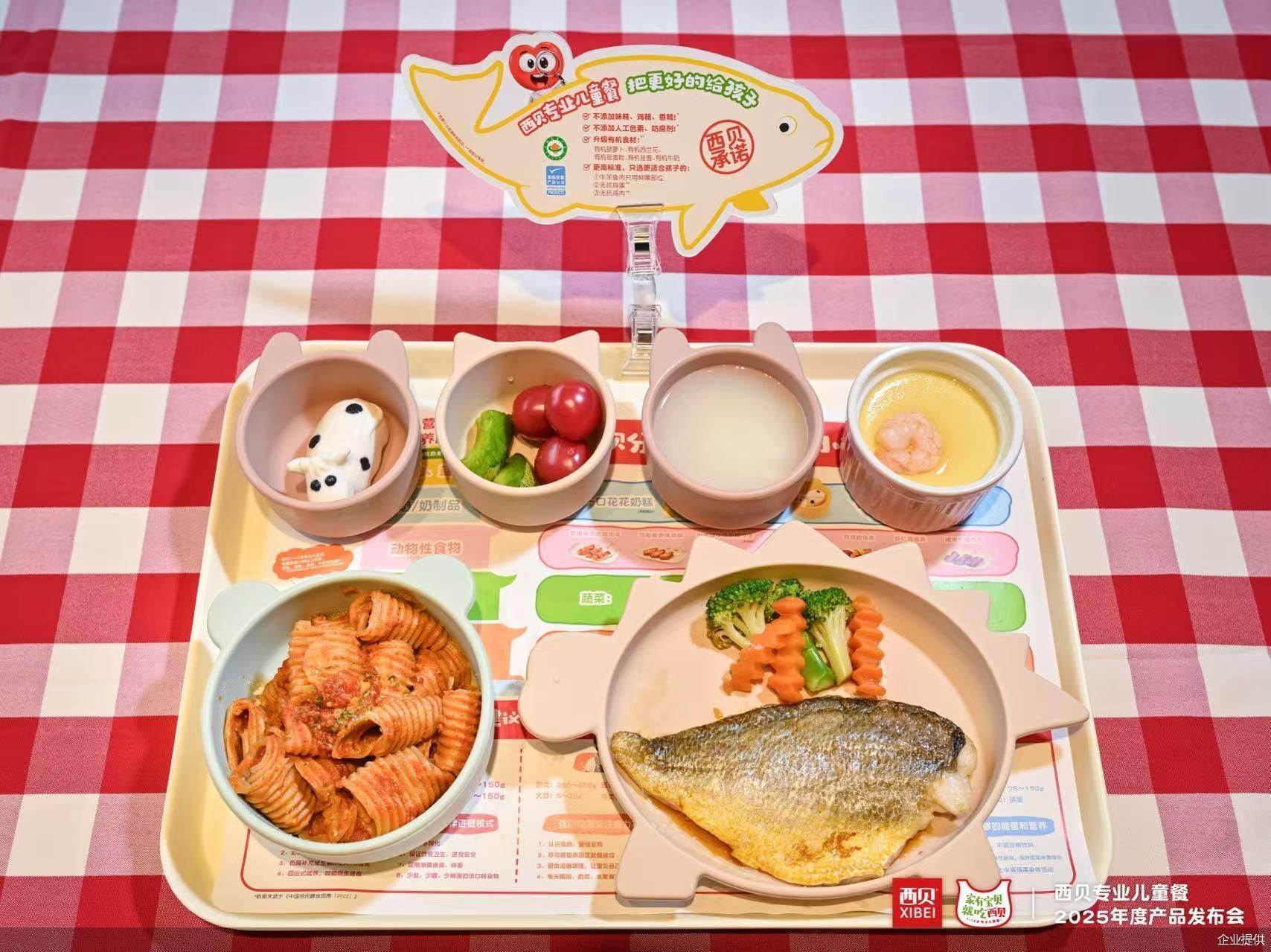
Core Viewpoint - Xibei is intensifying its focus on the children's meal market by upgrading its offerings, emphasizing transparency in ingredients, and exploring innovative delivery methods like drone services [1][4][5] Group 1: Product Upgrades - Xibei has publicly released its ingredient card for children's meals, committing to "five no-additives" including no chicken essence, flavoring, MSG, artificial colors, or preservatives [3][4] - The upgraded children's meal options include four main packages priced between 33 to 69 yuan and 11 additional single items priced between 7 to 39 yuan [3][4] - The packaging for takeout has been improved to eco-friendly biodegradable materials, and collaborations with brands like Babycare have been initiated to enhance customer experience [3][4] Group 2: Market Strategy - Xibei plans to collaborate with the animated IP "Super Wings" to launch themed meals and toys, indicating a strategy to engage children and families [4][5] - The company aims to leverage its children's meal business as a key growth driver, having sold over 20 million children's meals and served nearly 6.5 million child customers in 2024 [4][5] Group 3: Competitive Landscape - The children's meal market is becoming increasingly competitive, with many brands entering the space, leading to a focus on family trust and perceived professionalism in offerings [5][7] - Xibei's strategy includes creating a brand moat by emphasizing the professionalism of its children's meals, which is crucial for gaining consumer trust [5][8] - The overall children's consumption market in China is substantial, with annual spending estimated between 3.9 trillion to 5.9 trillion yuan, indicating significant growth potential [7]
食材升级、承诺“不添加”,千亿儿童餐蓝海能否撬动家庭消费
Xin Jing Bao· 2025-05-27 07:57
Core Viewpoint - The children's meal market has evolved from simple "small dishes" to specialized meals tailored to age, growth indicators, dietary habits, nutrition, and safety, with major restaurant brands like Haidilao, Xibei, and others continuously upgrading their offerings [1][3]. Group 1: Company Initiatives - Xibei has announced multiple upgrade directions for its professional children's meals, including the introduction of a food ingredient card and a commitment to "five no-additives": no MSG, chicken essence, flavoring, artificial coloring, or preservatives [2]. - The upgraded Xibei children's meals include four growth meal sets and 11 customizable items, featuring new products like the "Tender Grilled DHA Big Yellow Fish Meal" and the "Sweet Honey Grilled Chicken Wings Meal" [2]. - Xibei's children's meals will now come in eco-friendly packaging, and the company has partnered with the well-known maternal and infant brand Babycare for co-branded products [2]. Group 2: Market Potential - The children's consumption market in China reached nearly 4.5 trillion yuan in 2022, with a potential children's meal market size of 450 billion yuan based on a 10% penetration rate [3]. - As of the end of 2022, the population of children aged 0-15 in China was 256.15 million, accounting for 18.1% of the total population, with 44.4% of children aged 6-12 frequently dining out [3]. - The growing demand for children's meals is driven by a large child population and parents' increasing willingness to dine out with their children, making children's meals a significant lever for family consumption in the restaurant industry [3]. Group 3: Industry Trends - The restaurant industry has moved beyond the initial phase of offering "small dishes" for children, with significant competition leading to enhanced focus on meal ingredients, combinations, flavors, and presentation [4]. - Xibei's children's meal sales exceeded 20 million in 2024, with a customer base of nearly 6.5 million children, and the brand is recognized as the "number one children's meal brand in China" [4]. - In response to fierce competition, many restaurant brands are realizing that blindly competing on price is not sustainable, and Xibei emphasizes the importance of leveraging brand advantages to secure a unique market position [4].
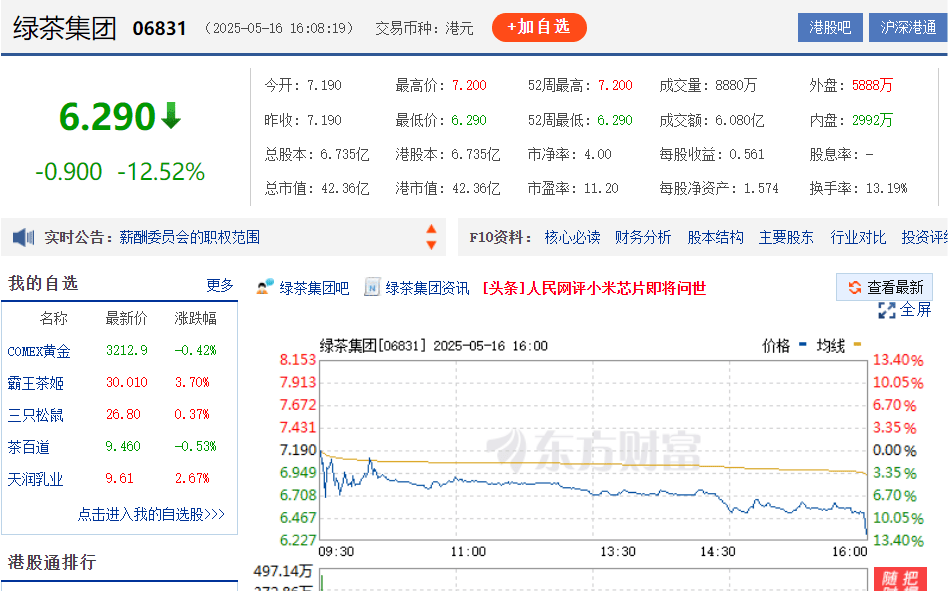
餐饮股上市路:坎坷前行,谁能成为资本新宠?
Sou Hu Cai Jing· 2025-05-26 13:51
Core Insights - The restaurant industry's path to public listing is becoming a focal point, with several chain restaurants attempting to break into the capital market amid challenges and opportunities [1][3] - A wave of listings has emerged, particularly in the Chinese fast-food sector, with brands like Green Tea, Old Country Chicken, and Meet Noodles updating their listing dynamics for 2025 [1][3] - The success rate for restaurant IPOs is low, with only three out of at least eleven brands that submitted prospectuses successfully going public, indicating a less than 30% success rate [3] Industry Overview - The restaurant sector is characterized by high saturation, intense competition, and significant operational costs, which contribute to its low risk resilience [3] - Initial capital investment in the restaurant industry is relatively low, leading to lower industry barriers, which affects the market's perception of restaurant stocks [3] - Many restaurant companies rely on improving single-store efficiency and expanding the number of locations for revenue growth, but face challenges from consumer downgrading and price wars [3] Listing Challenges - Green Tea faced a tumultuous path to its IPO, submitting five prospectuses before successfully listing on the Hong Kong Stock Exchange, only to experience a drop in share price on its first day [1][3] - Old Country Chicken shifted its focus to the Hong Kong market after multiple failed attempts to list on the A-share market, highlighting the difficulties faced by brands in the listing process [1][3] - The historical context shows that previous waves of restaurant listings occurred around 2008 and 2015, with the current wave primarily focused on Chinese dining brands [1][4] Strategic Considerations - For restaurants pursuing IPOs, listing is not a panacea but rather a strategic choice that requires ongoing performance to maintain market confidence [3][5] - Companies like Domino's China exemplify successful strategies through efficient single-store models and market penetration, which have led to stable performance and stock prices [5] - It is crucial for struggling restaurant companies to reassess their business models and ensure sustainability without relying solely on external financing [5]