
吉利

Search documents
东亚第一内卷国,靠「山寨」发家?
3 6 Ke· 2025-06-17 03:33
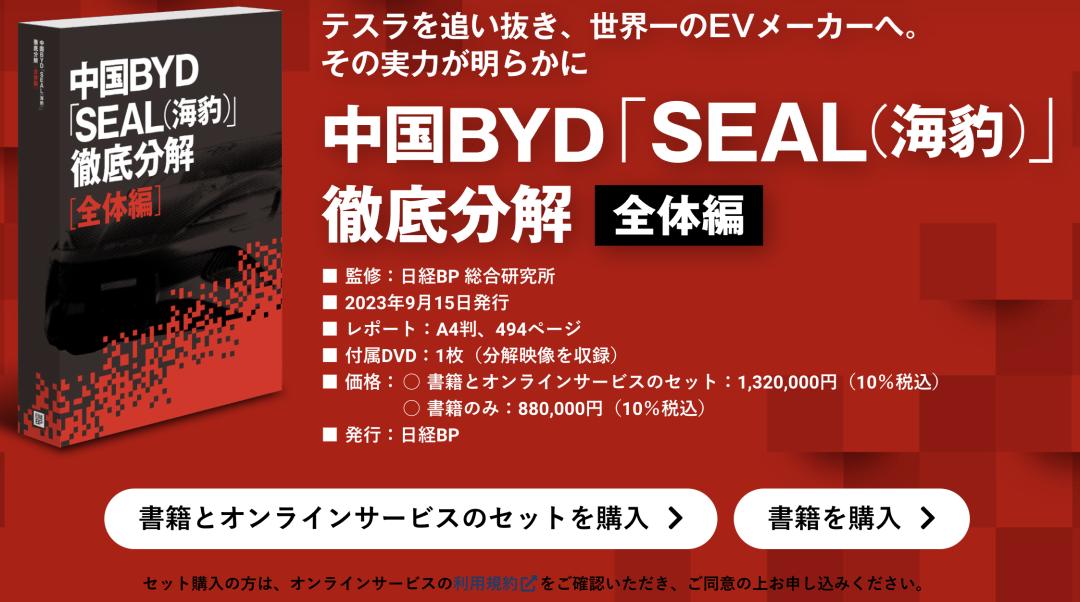
Group 1 - Japanese car manufacturers have increasingly focused on disassembling Chinese electric vehicles, with companies like BYD, Geely, and NIO being targeted for detailed analysis [1] - A comprehensive disassembly manual for BYD was sold for approximately 43,700 RMB, indicating a lucrative market for such analyses [1] - This trend reflects a historical pattern where Japan, once known for its imitation, is revisiting its roots in reverse engineering [3][6] Group 2 - Japan's manufacturing industry has evolved from being a "copycat" to a leader in design and innovation, with brands like Muji and renowned designers contributing to its image [4][6] - The historical context reveals that Japan's rise involved meticulous imitation of Western products, leading to significant advancements in various sectors, including automotive and electronics [32][43] - The transformation from imitation to innovation allowed Japan to dominate markets in the 1980s, with companies like Toyota and Sony becoming global leaders [47][49] Group 3 - Despite past successes, Japan's current technological landscape shows a decline in competitiveness, attributed to a conservative approach towards patent usage and innovation [52][56] - The high barriers created by Japanese companies in sectors like DVD and plasma screens have led to a lack of global participation and eventual obsolescence of certain technologies [58][60] - The fear of imitation has resulted in a self-imposed isolation, hindering Japan's ability to adapt and thrive in the 21st-century technology race [62]

亚太股份(002284) - 2025年06月13日投资者关系活动记录表
2025-06-16 07:48
Group 1: Company Overview - Zhejiang Asia-Pacific Mechanical and Electrical Co., Ltd. has been focused on the automotive brake system industry since its establishment in 1979, accumulating a broad customer base including major companies like Geely, Changan, and SAIC [3] - The company has a sales network covering domestic and international markets, exporting to North America, Europe, and the Middle East, and has entered procurement platforms of global brands such as Volkswagen and Honda [3] Group 2: Product and Market Position - The company provides products for new energy vehicles, with sales of related components increasing annually, reflecting a positive correlation with the growth of the new energy vehicle market [2] - The main products offered include basic brake systems, automotive electronics, and wheel hub motors, with a focus on securing more clients and projects [2] Group 3: Financial Performance - The company's gross profit margin has improved due to increased domestic vehicle sales and new international projects, alongside ongoing optimization of product structure and cost reduction efforts [4] - The company aims to expand its market coverage and promote new products, particularly in automotive electronic systems, to drive future growth [8] Group 4: Production Capacity - The company operates three main production bases in Xiaoshan, Anhui, and Huzhou, with additional facilities in various locations to support local vehicle manufacturers [6] - Current production capacity utilization is high, and the company plans to adjust production lines based on market demand and sales performance [8] Group 5: Competitive Advantages - As a leading domestic automotive brake system manufacturer, the company offers customized products based on specific vehicle parameters, providing advantages in cost-effectiveness, service quality, and responsiveness compared to foreign brands [7] - The trend of domestic automakers increasing local procurement presents significant growth opportunities for domestic parts suppliers [8]

汽车行业:2025中国香港车博会调研:多款飞行汽车和右舵车型亮相,中国内地汽车供应链全球化升级
BOCOM International· 2025-06-16 06:30
Investment Rating - The report provides a "Buy" rating for several companies in the automotive sector, indicating a positive outlook for their future performance [7]. Core Insights - The 2025 Hong Kong International Automotive and Supply Chain Expo showcased multiple flying cars and right-hand drive models, highlighting the globalization upgrade of China's automotive supply chain [2][3]. - The event serves as a strategic platform for Chinese automakers to accelerate the internationalization of technology standards and adapt to right-hand drive markets [2]. - The development of low-altitude economy is being supported by regulatory initiatives in Hong Kong, which includes the establishment of a regulatory sandbox to foster innovation and commercialization [2]. - China's automotive exports are projected to reach 6.41 million units in 2024, a year-on-year increase of 23%, with a total export value of $117.4 billion [2]. - The report notes that nearly 40 automotive supply chain and technology companies participated in the expo, indicating a shift towards smart and electric vehicle exports [2]. - Leading automotive manufacturers are increasingly pursuing listings in Hong Kong to diversify risks and enhance supply chain resilience [2]. Summary by Sections Automotive Industry Overview - The report discusses the participation of major Chinese automotive manufacturers at the Hong Kong Auto Expo, including brands like BYD, Chery, and Xpeng, showcasing innovations in electric and flying vehicles [2][3]. Technological Advancements - The introduction of flying cars, such as GAC's GOVY AirCab and Xpeng's "Land Carrier," reflects the industry's push towards low-altitude transportation solutions [2][3]. Export Trends - The report highlights a significant increase in China's automotive exports, particularly in the electric vehicle segment, with 2 million units expected to be exported in 2024 [2]. Market Dynamics - The report emphasizes the trend of Chinese automotive companies listing in Hong Kong to attract international capital and optimize global production networks [2].
高溢价跨界并购!果链巨头加码汽车智能装备
2 1 Shi Ji Jing Ji Bao Dao· 2025-06-16 05:12
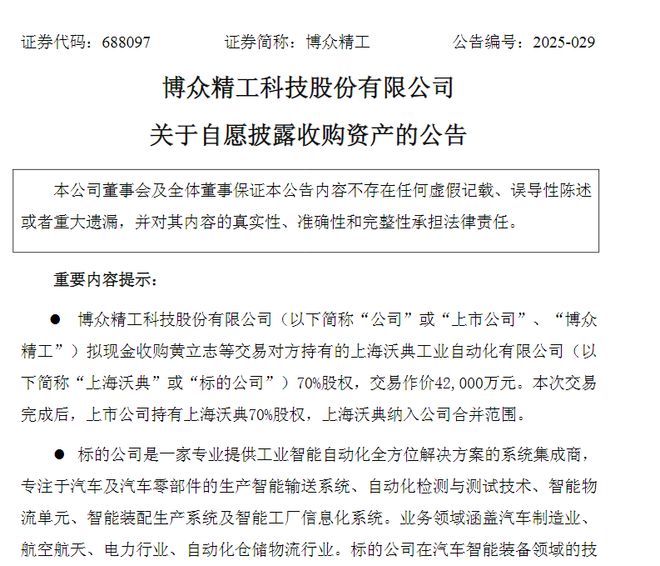
Group 1 - The core point of the article is that Bozhong Precision (688097.SH) announced a cash acquisition of 70% equity in Shanghai Wodian Industrial Automation Co., Ltd. for 420 million yuan, marking its strategic entry into the automotive intelligent equipment sector [1][3] - Shanghai Wodian specializes in providing comprehensive industrial automation solutions, focusing on intelligent conveyor systems, automated testing technologies, and smart logistics units for the automotive industry [3] - The acquisition is expected to create synergies with Bozhong's existing business, which primarily focuses on consumer electronics, semiconductors, and digital equipment [4] Group 2 - Shanghai Wodian has shown strong financial performance, with projected net profits of 31.73 million yuan and 38.57 million yuan for 2023 and 2024, respectively, and a net profit of 12.64 million yuan for the first quarter of 2025 [3] - The valuation of Shanghai Wodian's total equity was assessed at 600 million yuan, representing a 352% increase compared to its net assets of 133 million yuan at the end of 2024 [3] - The acquisition will result in approximately 360 to 362 million yuan of goodwill, which may pose a risk of impairment if Shanghai Wodian's performance does not meet expectations [3] Group 3 - Bozhong Precision is currently facing performance pressures, with a projected 2.66% decline in net profit for 2024 and a revenue drop of 0.8% in the first quarter of 2025, resulting in a net loss exceeding 30 million yuan [5] - The company has a cash reserve of approximately 1.202 billion yuan against short-term liabilities of about 1.23 billion yuan, indicating potential liquidity challenges [5] - The acquisition includes performance commitments, requiring Shanghai Wodian to achieve a cumulative net profit of no less than 185 million yuan from 2025 to 2027, averaging over 60 million yuan annually [5]

Robotaxi 近期跟踪
数说新能源· 2025-06-16 03:19
Policy Dynamics - Major cities like Shanghai, Wuhan, Shenzhen, and Hangzhou have implemented road rights policies, with Shanghai planning to gradually release more road rights [1] - Cities have opened routes for testing from human-operated to fully autonomous, allowing for commercial charging after obtaining autonomous demonstration operation licenses [1] Key Players - **Intelligent Driving Technology Leaders**: Companies like Pony.ai and Baidu focus on intelligent driving technology and are gradually developing fleet operations. Pony.ai has high test drive performance but the highest single-vehicle cost [1] - **Automaker Background Companies**: Companies like Cao Cao T3 have automaker backgrounds, allowing them to compress single-vehicle costs to around 200,000 to 300,000 yuan, making commercial operation feasible [1] - **New Entrants**: New players like JD.com and Hello have entered the market, representing different capital interests in the sector [1] Cost Structure - The cost structure includes licensing fees, vehicle costs, personnel costs, energy costs, and other expenses [2] Commercialization Status - **Pricing Strategy**: For example, Luobo Kuaipao in Wuhan uses a high discount strategy, resulting in high order volumes with passenger prices close to or lower than T3 economy ride-hailing [2] - **Profitability Expectations**: Luobo Kuaipao aims to achieve profitability in Wuhan by the end of the year through reduced vehicle costs and improved operational efficiency. For instance, Baidu's RT6 mobile version has a single-vehicle cost of just over 200,000 yuan, with daily comprehensive costs between 150 to 200 yuan, requiring 20 orders at an average selling price of 20 yuan to break even [2] Business Models - **Automaker Model**: Automakers like SAIC, GAC, and Geely will launch customized L4 level mass-produced vehicles, reducing costs through downgrading features and selling to third parties after platform validation [2] - **Baidu Model**: This model involves technology licensing and operational revenue sharing, where Baidu sells the RT6 along with its platform and dispatch system to TSP companies, with operational management companies recruiting personnel for offline operations [2] - **Technology Company Model**: Companies like Pony.ai and WeRide select regional partners to form joint operational teams through technology equity, aiming for expansion strategies, such as WeRide's goal to establish operations in 50 cities across ten countries by 2025 [2]


新材料周报:生物基LCP量产在即,广汽、比亚迪、吉利等集体宣布缩短至60天内-20250616
Huafu Securities· 2025-06-16 03:06
Investment Rating - The industry rating is "Outperform the Market," indicating that the overall return of the industry is expected to exceed the market benchmark index by more than 5% in the next 6 to 12 months [52]. Core Insights - The Wind New Materials Index closed at 3654.03 points, reflecting a week-on-week increase of 0.68%. Among the six sub-industries, the semiconductor materials index decreased by 0.72%, while the lithium battery index increased by 1.62% [3][10]. - The global liquid crystal polymer (LCP) market is approaching a critical transition towards sustainability, with Sumitomo Chemical successfully establishing technology for mass production of bio-based LCP, aiming for commercial supply by the fiscal year 2027 [4][33]. - Major automotive manufacturers, including GAC, BYD, and Geely, announced a reduction in payment terms to within 60 days, marking a significant shift in the automotive industry's competitive landscape [4][28]. Market Overview - The semiconductor materials index reported a decline of 0.72%, while the lithium battery index saw an increase of 1.62%. Other indices, such as the organic silicon materials index and carbon fiber index, also experienced declines [3][10]. - The top-performing companies this week included Pan-Asia Micro透 (22.02%), AkzoNobel (16.69%), and Boqian New Materials (15.64%), while the worst performers included Aoke Co. (-12.92%) and Dongcai Technology (-6.69%) [24][26]. Recent Industry Trends - The U.S.-China trade negotiations have reached a framework agreement, indicating potential easing of trade tensions [28]. - Kuraray announced the global launch of a 100% bio-based ethylene-vinyl alcohol copolymer product, marking a significant advancement in sustainable materials [28]. - LG Chem has decided to sell its water treatment business for 1.4 trillion KRW (approximately 73.5 million RMB) as part of its strategy to focus on new growth areas [29].
科学评估体系构筑行业公信力 2025年一季度汽车品牌影响力指数正式发布
Zheng Quan Ri Bao Wang· 2025-06-15 12:44
Core Insights - The report highlights a significant shift in the automotive brand influence landscape in China, particularly in the passenger vehicle sector, where domestic brands have made historic breakthroughs, with six out of the top ten positions occupied by Chinese brands [1][3][5] Passenger Vehicle Market - BYD leads the passenger vehicle market with verified sales of 623,400 units, surpassing Volkswagen by 180,000 units, indicating a strong market dominance driven by its advancements in new energy technology [3] - Aito (问界) has established a new benchmark in brand reputation with an impressive 89.67% netizen voice share and only 29 complaints, showcasing its quality management as a model for high-end market strategies [3] - New entrants like Li Auto and Xpeng maintain a strong presence in the mid-market segment, while Xiaomi's vehicle has not yet matched its high media presence with corresponding sales figures [3] Commercial Vehicle Market - Jiangling Motors stands out in the light commercial vehicle sector, ranking first with a score of 684.22, despite having only 44% of the second-place competitor's media voice, demonstrating effective conversion of positive sentiment into sales [4] - The pickup truck market continues to see a concentration of market share, with Great Wall Motors dominating 47% of the total sales in the top ten, while Jiangling maintains a strong second position [4] - In the light truck segment, Foton leads with 91,900 units sold, capturing 34% of the market share, while the new energy player, Dongfeng, leads in electric vehicle discussions with a 72.18% netizen voice share [5] Industry Trends - The report indicates a core trend of transformation within the automotive industry, with domestic brands reshaping competitive dynamics in the passenger vehicle sector and local companies establishing dominance in the commercial vehicle market [5] - The upcoming data collection for the second quarter will continue to provide authoritative references for policy-making, corporate strategy, and investment decisions, reflecting the ongoing evolution of the Chinese automotive industry [5]





观车 · 论势 || 中国车企“出海”:破浪前行更需警惕“内卷”陷阱
Zhong Guo Qi Che Bao Wang· 2025-06-13 01:11
Core Insights - Chinese automotive companies are rapidly rising in the global market, with exports expected to exceed 6.41 million units in 2024, marking a 23% year-on-year increase, showcasing a significant shift from "product output" to "industry output" [1] - Major brands like BYD, Great Wall Motors, and Chery are actively expanding their global presence, with Chery maintaining its position as the top exporter of Chinese passenger cars for 22 consecutive years [1] - However, there are concerns about the potential for domestic market "involution" to spread to international markets, where competition rules and consumer expectations differ significantly [1][2] Industry Dynamics - The European market exemplifies the challenges faced by Chinese brands, where consumers prioritize quality, safety, and environmental standards, and brand loyalty is high [1] - A reliance on low-price strategies could damage brand reputation and lead to perceptions of low quality, as evidenced by the historical failure of Chinese motorcycle brands in Southeast Asia [1][2] - Short-sighted strategies that sacrifice profits for market share could undermine R&D investments and lead to trust issues, as seen with the EU's temporary anti-subsidy tax on Chinese electric vehicles [2] Competitive Strategies - Chinese automotive companies need to adopt fair and reasonable competition practices, focusing on technological innovation to enhance product reliability and safety [3] - Transitioning from a "cost-performance" focus to a "value" approach is essential, with successful examples including Lynk & Co's subscription model in Europe and NIO's battery-as-a-service offering in Norway [3] - Building brand value requires addressing consumer emotions beyond just product functionality [3] Collaborative Ecosystem - Emphasizing a "coexistence and win-win" global strategy is crucial, with Chinese companies encouraged to collaborate with international firms, suppliers, and research institutions [4] - Strategic partnerships, such as Geely's collaboration with Volvo, have proven beneficial in enhancing technology and brand image while facilitating market entry [4] - Localized production is vital for integrating into foreign markets, as demonstrated by Changan's factory in Thailand, which combines Chinese standards with local innovations [4] Future Outlook - As of 2025, the global expansion of Chinese automotive companies is at a critical juncture, with significant potential in overseas markets [5] - The industry must recognize that competition abroad is not merely a price battle but a test of value creation capabilities [5] - The path to overcoming domestic market challenges involves a commitment to long-term value creation, transitioning from "product export" to "brand export" and from "scale export" to "value export" [5]
万马科技20250612
2025-06-12 15:07
摘要 万马科技通过收购有方科技切入车联网领域,车联网业务收入从 2021 年的 5,000 万元增长到 2024 年的 2.6 亿元,利润也显著提升,并已建 立完整的数据闭环工具链和智驾算力中心。 国内车联网行业渗透率约为 80%,海外市场渗透率不足 30%,随着智 能驾驶对数据需求的增加,国内外市场均有较大的发展空间,尤其 Robotaxi 对实时数据监控和技术要求更高,单车价值提升显著。 优卡科技提供蓝海全球车联和云自动驾驶数据闭环两大解决方案,支持 1,400 万辆车辆,客户包括吉利、上汽、东风和理想等,并在全球范围 内支持 Robotaxi 企业的业务布局。 Robotaxi 被视为车联网行业发展的"皇冠上的明珠",高盛预测中国 Robotaxi 市场年化增长率将达到 96%。目前已在北京、武汉、广州以 及香港、迪拜等地进行常态化运营,特斯拉也即将推出相关业务。 Robotaxi 运营对网络质量有极高要求,包括运行安全、用户交互、合 规性、自动驾驶数据采集和运维等方面,需要高清地图、车路协同、远 程脱困以及海量数据支持。 万马科技 20250612 据监控需求高,对技术和数据量要求也更高,从单车价值上 ...
巴菲特和索罗斯:同年同月不同命的投资大师
Hu Xiu· 2025-06-12 13:10
Core Insights - The article contrasts the investment philosophies and backgrounds of two legendary investors, Warren Buffett and George Soros, highlighting their differing approaches to investing and market dynamics [1][2][3]. Group 1: Background and Early Influences - Warren Buffett grew up in a middle-class family in Omaha, Nebraska, with a father who was a stockbroker, which instilled in him a strong financial awareness and a disciplined approach to investing [4][5]. - In contrast, George Soros had a tumultuous childhood in Hungary, where he faced the threat of Nazi persecution, shaping his risk-averse yet opportunistic investment style [6][7][8]. - Soros's experiences during World War II, including his family's survival tactics, influenced his belief in preparing for future risks and adapting to changing circumstances [9][10]. Group 2: Education and Early Career - Soros arrived in London with little money, working while studying at the London School of Economics, where he was influenced by philosopher Karl Popper, shaping his critical thinking and investment strategies [14][15][16]. - Buffett, on the other hand, had a smoother educational path, studying business management at the University of Pennsylvania and later at Columbia University under Benjamin Graham, which solidified his value investing approach [17][18]. Group 3: Investment Strategies and Philosophies - Soros found success in global arbitrage, leveraging his knowledge of European markets and relationships, particularly during the Suez Crisis, which allowed him to capitalize on market inefficiencies [19][20][21]. - Buffett's investment strategy focused on value investing, acquiring undervalued companies and waiting for their true value to be recognized, achieving an annualized return of 29% over 13 years [23][31]. - The article notes that Soros's approach is characterized by a focus on macroeconomic trends and market psychology, while Buffett emphasizes long-term value and the intrinsic worth of companies [35][36]. Group 4: Major Achievements and Turning Points - In the 1970s, Soros's Quantum Fund achieved remarkable returns, capitalizing on market volatility and employing leverage to maximize profits, particularly in currency markets [30][31]. - Buffett's investment in Berkshire Hathaway marked a significant shift in his strategy, focusing on acquiring great companies at reasonable prices, which led to substantial long-term gains [31][32]. - Both investors faced challenges in the 2000s, with Buffett's conservative approach to the internet boom and Soros's struggles in adapting to new market conditions, leading to a decline in their performance [33][34]. Group 5: Philosophical Differences - The article concludes that Buffett's investment philosophy is rooted in a belief in the inherent value of companies and a long-term perspective, while Soros's approach is more dynamic, focusing on the unpredictability of markets and the importance of quick decision-making [35][36][37].