
吉利

Search documents
壹快评︱光伏业能从新能源车“反内卷”学到什么
Di Yi Cai Jing· 2025-06-12 05:30
光伏主产业自去年四季度进入自律减产阶段,通过减少供给阻止价格进一步下跌,降低企业利润亏损幅 度,缓和现金流持续流出的压力。自律减产保价在今年取得一定成效,主产业链大部分企业一季度净利 润环比增速转正。 但随着一季度光伏抢装潮结束,需求迅速萎缩,硅料、硅片等产品价格再度跌回减产保价之前的水平, 企业一度面临产能去化与成本售价倒挂的双重压力。 笔者统计,光伏主产业链共计约21家上市公司,18家企业一季度的扣非后归母净利润亏损,规模越大的 光伏制造商,亏损越严重。一体化龙头通威股份(600438.SH)亏损26.1亿元,"硅片双雄"TCL中环 (002129.SZ)、隆基绿能(601012.SH)均亏近20亿元,晶科能源(688223.SH)、晶澳科技 (002459.SZ)、天合光能(688599.SH)3家组件商亏逾10亿元。 尽管"反内卷"在过去一年多被频繁提及,但光伏产能出清效果仍不理想。 在比亚迪、吉利、长城等多家新能源车企高管发声后,"反内卷"已经成为新能源汽车行业发展的共识。 新能源汽车与光伏产业看似赛道不同,却有相似的发展轨迹。两个产业都经历过资本狂热追捧,在大规 模产能扩张后,面临产品跌价与产能出 ...






阿里离职员工发万字长文,马云回应;张朝阳回应错失百万Labubu;哪吒方运舟被讨薪员工围堵丨邦早报
创业邦· 2025-06-12 00:02
Group 1 - Ying Shi Innovation officially listed on the Sci-Tech Innovation Board on June 11, with a first-day surge of 271.48%, reaching a market capitalization of over 70 billion yuan and raising 1.938 billion yuan, the highest fundraising scale since 2025 on the Sci-Tech Innovation Board [3] - Founder Yu Donglai of Pang Donglai announced an estimated net profit of 1.5 billion yuan for 2025, with over 8,000 employees expected to receive an average after-tax monthly income of 9,000 yuan [3] - Huawei launched the Pura 80 series, with prices ranging from 6,499 yuan to 10,999 yuan, and disclosed that its R&D expenses over the past decade totaled 124.9 billion yuan [5] Group 2 - ByteDance shared six core talent concepts, emphasizing that excellent talent is key to the company's success [7] - Employees of Nezha Auto surrounded CEO Fang Yunzhu's office demanding unpaid wages, highlighting internal unrest within the company [8] - Xiaopeng Motors' CEO He Xiaopeng announced that the Xiaopeng G7 will be the first AI car with L3-level computing power, equipped with three Turing AI chips [10] Group 3 - Alibaba's chairman, Cai Chongxin, stated that engineers worked through the Spring Festival to catch up with the AI wave after the launch of the DeepSeek model [13] - Ximalaya's founder expressed strong emotions during an internal meeting, reaffirming the company's commitment to maintaining its brand and operational independence amid a merger with Tencent Music [15] - Pop Mart expanded production capacity earlier this year to meet surging demand, indicating challenges in supply chain responsiveness [15] Group 4 - JD Logistics has begun operations in Saudi Arabia, establishing a team of over a thousand people to replicate its logistics model in the region [20] - Tesla plans to launch its first fully autonomous driving taxi for public trials in Austin, Texas, with a tentative date of June 22 [21] - NVIDIA's CEO announced plans to build the world's first industrial AI cloud in Europe, equipped with approximately 500,000 GPUs [23] Group 5 - Nintendo reported that the Switch 2 sold over 3.5 million units globally within four days of its release, marking the fastest sales rate for any Nintendo console [24] - Google offered voluntary severance packages to employees across multiple departments, including its core engineering team, as part of its workforce reduction strategy [26] - Alibaba's cross-border e-commerce platform AliExpress has launched a car sales business, focusing on Chinese electric vehicles in the Middle East [27]


5月新能源汽车销量同比增长36.9%
Zhong Guo Zheng Quan Bao· 2025-06-11 20:42
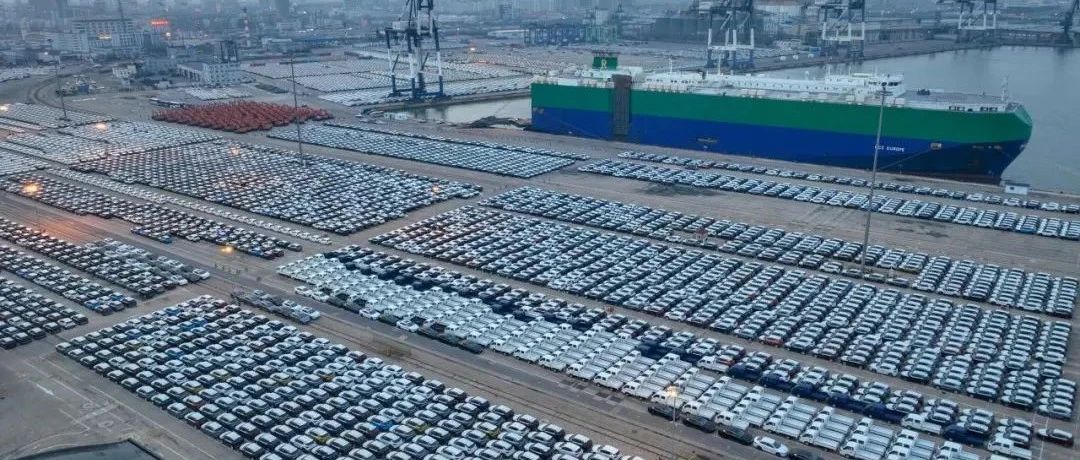
● 本报记者李嫒嫒 记者6月11日从中国汽车工业协会获悉,5月,我国汽车销量达268.6万辆,同比增长11.2%。其中,新能 源汽车销量达130.7万辆,同比增长36.9%。 中汽协副秘书长陈士华表示,今年以来,"两新"政策加力扩围,持续显效,叠加车企新品投放、多地车 展促销等利好因素,助力汽车市场消费活力加速释放。 5月汽车市场延续良好态势 陈士华表示,5月汽车市场延续良好态势,产销量较去年同期均实现10%以上的增长,且内需和出口均 有较好的表现。其中,乘用车市场表现活跃,新能源汽车继续快速增长,汽车出口增速明显提高。 5月,商用车产销量分别完成33.6万辆和33.5万辆,产量同比增长4.4%,销量同比下降2%。 分市场来看,5月国内汽车销量213.5万辆,同比增长10.3%。5月汽车出口55.1万辆,同比增长14.5%。 其中,传统燃料汽车出口33.9万辆,同比下降11.5%;新能源汽车出口21.2万辆,同比增长1.2倍,保持 快速增长态势。 新能源汽车产销量快速增长 5月,新能源汽车产销量分别完成127万辆和130.7万辆,同比分别增长35%和36.9%,新能源汽车新车销 量达到汽车新车总销量的48.7 ...

腾讯回A股上市?
表舅是养基大户· 2025-06-11 13:36
Group 1 - The market showed strong performance today, with significant gains in sectors such as rare earths, Hong Kong brokerage firms, and Hong Kong automotive stocks [4][5][8] - The US-China talks are progressing positively, with the US focusing on rare earths and China on chips, leading to a surge in the rare earth sector, which saw an 18% increase today and over 110% this week [5][8] - The automotive industry is experiencing a shift towards reducing payment terms for suppliers to 60 days, down from an average of 150 days last year, which is expected to benefit automotive parts manufacturers in the short term [11][12] Group 2 - Tencent is a key player in the potential return of Hong Kong-listed companies to the A-share market, following new policies allowing companies from the Guangdong-Hong Kong-Macau Greater Bay Area to list on the Shenzhen Stock Exchange [15][16][17] - The market capitalization of Tencent is significantly higher than that of the largest A-share company, indicating its dominance and the potential impact of its return on the A-share market [17] - The return of major tech companies to the A-share market could improve the overall structure of A-share indices, which currently have a high concentration of traditional industries and low growth potential [19][20]

60天账期新政背后:汽车已经快卷崩了
阿尔法工场研究院· 2025-06-11 13:15
Core Viewpoint - The automotive industry is responding to national calls to unify payment terms to suppliers within 60 days, addressing long-standing issues of delayed payments and cash flow challenges faced by suppliers [1][7][9]. Group 1: Industry Response - GAC Group was the first to announce the commitment to a 60-day payment term for suppliers on June 10 [2]. - Following GAC, major state-owned enterprises like FAW and Dongfeng also made similar announcements, emphasizing their responsibility and leadership in the industry [3]. - Other leading companies such as Seres, Geely, Changan, and BYD quickly followed suit, indicating a collective industry shift towards shorter payment terms [4][5]. Group 2: Payment Terms Context - Historically, the average payment cycle for domestic automotive companies has exceeded 170 days, with some companies reaching over 240 days, contrasting sharply with international counterparts like Toyota and Ford, which average around 54 to 64 days [10][11]. - The long payment terms have been attributed to intense market competition, where manufacturers have used suppliers as a "zero-interest funding pool" to alleviate their financial pressures [10][19]. Group 3: Regulatory Framework - The revised "Regulations on Guaranteeing Payment to Small and Medium Enterprises" came into effect on June 1, aiming to address issues of prolonged payment cycles and unclear responsibilities [21][22]. - The new regulations include a rigid 60-day payment requirement and prohibit non-cash payment methods that could extend payment periods, aiming to create a more equitable environment for suppliers [31]. Group 4: Market Implications - The shift to a 60-day payment term is expected to enhance the resilience of the supply chain, reducing the risk of cash flow crises for suppliers and improving overall liquidity in the industry [25][28]. - However, this change may impose greater financial pressure on automotive manufacturers in the short term, as they adapt to the new payment structure [24][26]. Group 5: Industry Sentiment - There is a mix of optimism and skepticism among industry stakeholders regarding the implementation of the 60-day payment term, with many questioning the actual enforcement and potential loopholes [29][30]. - The sentiment reflects a broader concern about trust and confidence in the industry's ability to adhere to the new regulations and genuinely improve supplier relationships [29][32].




自主品牌的设计觉醒不能倒退
Zhong Guo Qi Che Bao Wang· 2025-06-11 09:55
Group 1 - Xiaomi's automotive design strategy involves borrowing elements from high-end brands to create a perception of luxury, as seen with the YU7 model [2][3] - The market for electric vehicles priced above 300,000 yuan has grown by 47% year-on-year, while the segment below 100,000 yuan has shrunk by 19%, indicating a shift towards high-end offerings [3] - The design of Xiaomi's vehicles, such as the SU7 and YU7, has attracted significant attention, with the SU7 achieving over 60,000 orders in its first month, primarily from first-time buyers under 30 [3][4] Group 2 - The automotive industry is witnessing a trend where new brands adopt classic design elements from established luxury brands, leading to a potential challenge of design homogenization [4][6] - A significant portion of consumers, 68%, perceive Xiaomi vehicles as lacking uniqueness, with this sentiment being even stronger among older demographics [4] - The cultural significance of design elements from luxury brands is highlighted, as they represent a brand's heritage and values, which cannot be easily replicated [6][9] Group 3 - The younger generation, particularly those born in the 1990s and 2000s, prioritize unique design over traditional luxury symbols, indicating a shift in consumer preferences [7][10] - The evolution of automotive design is being driven by technological advancements, allowing for more creative freedom and new design paradigms [9][10] - The transition from imitation to original design is crucial for domestic brands to establish their identity and compete on a global scale [10]

阿里速卖通上线卖车业务 “出海四小龙”首次进军卖车赛道
Zheng Quan Shi Bao Wang· 2025-06-11 07:06
Group 1 - The core viewpoint is that Alibaba's cross-border e-commerce platform AliExpress has launched a car sales business, marking its entry into the automotive sector during the overseas "6.18" shopping festival, starting in the Middle East [1] - The vehicles listed on AliExpress primarily feature Chinese brands, with a significant proportion being new energy models, including BYD, Geely, Xiaomi, Li Auto, and Xpeng [1] - AliExpress has a strong user base in the automotive sector due to its successful sales of auto parts, which have been growing rapidly, providing a natural foundation for the "whole vehicle export" initiative [1] Group 2 - AliExpress's German site has recently opened for local merchants, attracting brands like Anker, Ecovacs, and Realme, contributing to its rapid growth [2] - The sales of Pop Mart's products on AliExpress have surged, with a reported 300% year-on-year growth in the collectible toy category [2] - The company has initiated a "Billion Subsidy" program to support emerging brands, aiming to help 1,000 new brands achieve over one million dollars in sales this year [3]
跨境电商上线卖车业务:中东地区开售中国电动车
news flash· 2025-06-11 04:37
Group 1 - AliExpress, a cross-border e-commerce platform under Alibaba, has launched a car sales business, starting with the sale of Chinese electric vehicles in the Middle East during the overseas 618 shopping festival [1] - The vehicles listed primarily include popular Chinese new energy cars such as BYD Yuan, Geely Xingyuan, Xiaomi SU7, Li Auto L7, and Xpeng G9, many of which are part of the AliExpress "100 billion subsidy" program for brands going overseas [1] - This initiative marks AliExpress as the first platform among the "four little dragons" of overseas expansion to sell cars, leveraging its strong presence in automotive parts, which has seen rapid growth and established a large global automotive user base [1] Group 2 - The rapid growth of Chinese automobile exports, particularly in new energy and intelligent connected vehicle technologies, supports this strategic move by AliExpress [1]


信达国际控股港股晨报-20250611
Xin Da Guo Ji Kong Gu· 2025-06-11 03:14
Market Overview - The Hang Seng Index is testing the March high of 24,874 points, supported by a basket of financial policies from mainland China aimed at stabilizing the market, including reserve requirement ratio cuts and interest rate reductions [2] - The market is optimistic about the new round of negotiations in June, although trade war news remains volatile, and the Hang Seng Index's valuation has returned to reasonable levels, requiring significant positive developments in trade agreements and corporate earnings to maintain upward momentum [2][5] Macro Focus - The World Bank has significantly lowered its GDP forecast for the US this year to 1.4%, while maintaining China's forecast at 4.5% [3][7] - The US and China have reportedly reached a framework agreement during trade talks in Geneva, with further negotiations expected [7] Corporate News - Meituan's CFO stated that share buybacks will continue to be an important way to return value to shareholders amid concerns over the company's stock price performance [4][9] - Meituan's CEO emphasized that the commercialization of new technologies is still constrained by airspace limitations and public acceptance [9] - JD.com is reportedly expanding into the hotel and travel industry, actively recruiting talent with experience from Meituan and other companies [9][10] Industry Insights - The pharmaceutical sector is seeing renewed collaboration between Chinese and American companies amid manageable geopolitical risks [6] - AI concept stocks are gaining attention with advancements in large model upgrades [6] - The energy sector is preparing for increased demand during the summer, while coal prices continue to decline [6] Investment Opportunities - The logistics technology sector is experiencing significant growth, with Cainiao reporting over 60% year-on-year growth in global customer numbers and expectations for overseas sales growth to surpass domestic sales [9] - The electric vehicle industry is witnessing major players like BYD and Geely standardizing payment terms with suppliers to enhance cash flow efficiency [10]
无人物流深度
2025-06-10 15:26
Summary of the Autonomous Logistics Vehicle Industry Conference Call Industry Overview - The autonomous logistics vehicle industry is experiencing explosive growth, with an expected scale of 30,000 units by 2025, increasing to 100,000 units by 2026, and potentially reaching 600,000 units by 2030. The penetration rate could reach 30% in the short term, corresponding to a market space of approximately 600,000 vehicles, with long-term potential exceeding 1 million vehicles [2][4][19]. Key Insights and Arguments - **Profitability Model**: Companies primarily profit through hardware sales and Full Self-Driving (FSD) services. Initial hardware sales may incur losses, but the software service model is profitable. A breakeven point is reached at 5,000 units sold, with a profit of 40,000 to 50,000 yuan per vehicle at 50,000 units sold, resulting in a net profit margin close to 50% [2][5][22]. - **Cost Reduction**: The cost of logistics has significantly decreased, with the cost per delivery dropping to 0.08 yuan, a 60% reduction compared to traditional methods. The hardware cost gap with traditional logistics vehicles has narrowed to about 20,000 to 30,000 yuan, enhancing economic viability [2][17]. - **Technological Development**: The industry is moving towards lightweight mapping and even no-mapping solutions, which lower costs and deployment times but require higher data collection and algorithm demands. The deployment time for lightweight mapping is significantly shorter, taking only one to two days compared to two weeks to a month for high-definition mapping [2][6][16]. - **Policy Support**: There is increasing policy support, with over 200 cities in China accelerating the issuance of road usage permits, simplifying processes for industry development [2][13][14]. Competitive Landscape - **Barriers to Entry**: The competitive barriers in the autonomous logistics vehicle sector include access rights, differences in autonomous driving technology, and innovation in business models. Efficiently mobilizing resources to meet diverse demands is crucial [3][21]. - **Market Leaders**: Key players include the publicly listed company WeRide, Jinlong Automobile, and Zhongyou Technology. Other notable companies include intelligent hardware manufacturers and electric vehicle-related firms [8][23][24]. Market Demand and Growth Expectations - **Order Growth**: Major manufacturers are seeing significant increases in orders, with companies like 90 and New Stone achieving substantial sales targets. The market demand is strong and continues to grow [18][19]. - **Future Projections**: The industry is expected to grow significantly in the coming years, with projections of 30,000 units in 2025, 100,000 units in 2026, and 600,000 units by 2030. Chinese companies are growing rapidly, while overseas markets are expanding at a slower pace [19][20]. Application Scenarios - **Ideal Use Cases**: Short-distance transportation scenarios, such as urban cross-district or rural-urban routes, are more suitable for autonomous logistics development due to their standardization potential. The e-commerce and express delivery sectors are the most mature and automated, making them the first to adopt autonomous logistics solutions [11][12]. Conclusion - The autonomous logistics vehicle industry is at a pivotal moment, driven by technological advancements, significant cost reductions, and strong policy support. The competitive landscape is evolving, with established players and new entrants vying for market share. The future looks promising, with substantial growth expected in both domestic and international markets.