小红书

Search documents
生成式推荐:AI时代互联网技术皇冠上的明珠
2025-10-23 15:20
Summary of Conference Call on Generative Recommendation Systems Industry Overview - The discussion centers around the generative recommendation systems within the AI era, highlighting their significance in the internet technology landscape [1][2]. Key Companies Mentioned - **Meta**: Leading in end-to-end generative recommendation systems, with advertising revenue growth surpassing Google and a reported increase in ad conversion rates by 3-5 percentage points in Q2 2025 [5][6]. - **Kuaishou (快手)**: Achieved significant benefits through the WangRank algorithm, improving user engagement metrics [1][6]. - **Alibaba, ByteDance, Xiaohongshu**: Utilizing hybrid generative recommendation architectures, showing substantial commercial value improvements [1][9]. - **Tencent and Bilibili**: Also applying generative recommendation technologies, with varying degrees of revenue growth [3][12]. Core Insights and Arguments - **Generative Recommendation Technology**: Considered the crown jewel of internet technology in the AI era due to its scalability, data enhancement capabilities, unified optimization framework, and support for diverse recommendations [2]. - **Performance Metrics**: Generative recommendation systems have shown to increase user active days by 0.3% and total usage time by 1% in experiments [8]. Kuaishou's end-to-end model yielded revenue increases between 0.54% and 3% [8]. - **Comparison with Traditional Systems**: Traditional recommendation systems have limitations in creativity and generation, while generative systems leverage user behavior history to recommend the next likely interaction item [4][3]. Important but Overlooked Content - **Market Potential**: Mid-sized companies are expected to benefit more significantly from the generative recommendation wave, with Alibaba's GMV compound growth rate reaching 22% during the deep learning technology boom [12]. - **Business Scenarios**: E-commerce platforms are particularly suited for generative recommendation models due to stable user data and low real-time feedback requirements [10][11]. - **Risks in Implementation**: Potential risks include slower-than-expected industry advancement, supply chain issues related to computational power, and macroeconomic policy changes affecting profitability [14]. Future Outlook - Companies embracing generative recommendation technology, such as Alibaba, Kuaishou, Tencent, Bilibili, Baidu, iQIYI, Applovin, and HuiLiang Technology, are expected to achieve significant commercial value over the next two to three years [13].

武汉集齐互联网巨头总部
Chang Jiang Ri Bao· 2025-10-23 13:05
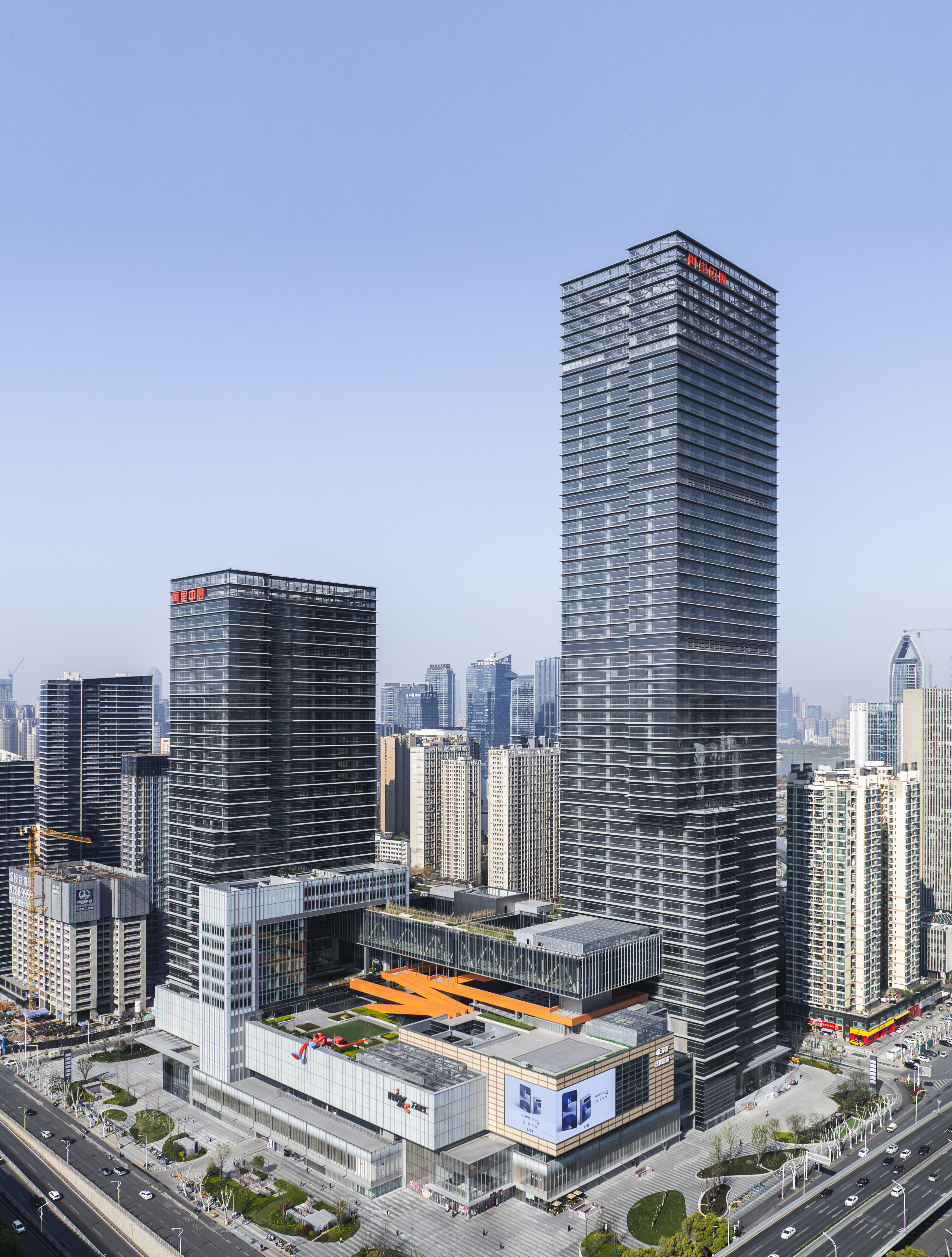
能用"大"来形容的城市,武汉是全国为数不多的一座。这些年,武汉不断壮大的创新生态,还催生出一个现象:一批互联网大厂齐聚 武汉,茁壮生长。 10月22日,位于武昌的武汉阿里中心开园。这里不仅是阿里巴巴集团的华中总部,集团旗下菜鸟、钉钉、飞猪、高德等多个业务中心 都在这里办公,中心还吸引了40余家头部企业入驻。 武汉阿里中心 开园后,社交媒体上不少网友都在关心,怎么才能进去上班?其实除了有诸多入驻企业招人,这里还面向阿里生态企业和大学生创业 者开放共享办公空间。 放眼全国,阿里巴巴除以杭州作为全球总部外,在武汉、重庆、西安、广州、郑州等城市打造了区域总部项目。选择在武汉打造华中 总部,意味着阿里巴巴谋划在华中地区建立一个集运营、生态企业、服务配套与产业协同的大平台。 这种合作不是偶然,阿里和武汉的缘分可以追溯到10年前。2015年,阿里巴巴集团负责人来到武汉,当年便签署了战略合作框架协 议;2019年,阿里巴巴(湖北)有限公司注册成立;2020年,阿里巴巴华中总部项目启动建设;2024年,武汉阿里中心T2办公楼竣工,亲 橙万象汇作为项目商业配套率先开业。截至目前,阿里巴巴已在武汉投资超过120亿元。 2024年的 ...

双十一大促:闪购与AI成为新变量
HTSC· 2025-10-23 11:17
Investment Rating - The report maintains an "Overweight" rating for the internet sector, specifically recommending "Buy" for JD Group and Alibaba [6]. Core Insights - The 2025 Double Eleven shopping festival is characterized by three key trends: extended promotional timelines, the introduction of flash sales as a new fulfillment method, and accelerated application of AI in e-commerce [1]. - The competition among platforms remains intense, with a focus on acquiring market share through early promotional activities and enhanced discount strategies [2][10]. - The integration of flash sales into the Double Eleven event marks a significant shift, combining local and distant e-commerce to create new consumption scenarios [3][16]. Summary by Sections Promotional Strategies - The promotional period for Double Eleven has been extended, with platforms like Taobao and JD increasing their event durations compared to 2024 [9][10]. - Discount strategies have evolved, with platforms moving from cross-store discounts to simpler direct discounts, aiming to enhance user experience and reduce return rates [12][13]. Flash Sales and AI Integration - Flash sales have been introduced for the first time in Double Eleven, with both Taobao and JD leveraging local retail partnerships to improve delivery efficiency [3][19]. - AI tools are being heavily invested in by platforms, with various applications aimed at enhancing user experience and operational efficiency for merchants [4][20]. User Engagement and Membership Benefits - Membership programs like Taobao's 88VIP and JD's PLUS have seen increased benefits, with significant discounts and exclusive offers aimed at retaining core users [14][15]. - The number of active users on both Taobao and JD has shown notable growth, attributed to the introduction of flash sales and enhanced promotional activities [20][26]. Merchant Support and Policy Changes - Platforms are lowering entry barriers for merchants, with initiatives to simplify the onboarding process and reduce operational costs [31][32]. - There has been a contraction in commission-free policies compared to previous years, indicating a shift towards a more balanced approach to profitability and merchant support [33].

小红书不愿再为闲鱼作嫁衣
3 6 Ke· 2025-10-23 09:09
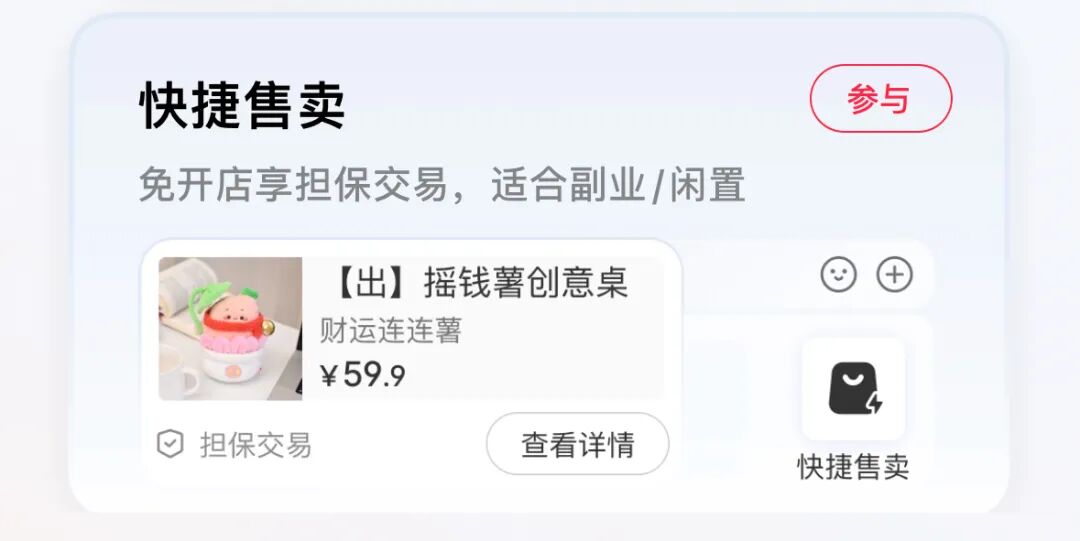
Core Insights - The second-hand trading platform Zhuanzhuan has strategically retreated from the C2C market, closing its personal trading business and "free market" product listing, shifting to a C2B2C model that offers quality inspection and guarantees for second-hand goods [1][3] - Xiaohongshu has begun internal testing of a "Quick Sale" feature, allowing users to link idle goods for sale in their posts and chat, indicating a direct competition with Zhuanzhuan and a shift in the second-hand trading landscape [1][3][4] Market Overview - According to iiMedia Consulting, the domestic second-hand e-commerce transaction scale is expected to reach 614.49 billion yuan in 2024, with a year-on-year growth of 12.0%, and a user base of 286 million, growing by 9.8% [3] - By 2030, the transaction scale is projected to reach 911.43 billion yuan, with a user base of 389 million [3] Competitive Landscape - Xiaohongshu's entry into the second-hand trading market is seen as a natural progression, with significant user engagement in second-hand categories, but most transactions have historically occurred on platforms like Xianyu [4][9] - Xianyu remains dominant in the C2C segment, benefiting from Alibaba's ecosystem and a robust personal credit system, while Xiaohongshu must address how to build consumer trust in its new trading feature [3][11] Business Model Shift - Zhuanzhuan's exit from the C2C business highlights the challenges of sustaining profitability in this segment, as it struggled to compete with Xianyu, which has a much larger user base and transaction volume [12][14] - The transition to a C2B2C model signifies a shift towards a more structured and trust-based trading environment, which requires higher operational costs for quality assurance and customer service [17][15] User Experience and Trust - Xiaohongshu's "Quick Sale" feature aims to enhance community engagement and streamline the trading process, but it faces challenges in ensuring a secure and trustworthy trading environment [11][17] - The platform's current requirements for sellers, such as account age and professional certification, may not be sufficient to establish the necessary trust for effective second-hand transactions [17][12]
解析上海经济向上曲线的“密码”
Jie Fang Ri Bao· 2025-10-23 01:31
Economic Growth - Shanghai's GDP growth rate for the first three quarters is 5.5%, exceeding the national average and market expectations, with a growth rate of 5.1% in the first half of the year [1] - The economic structure adjustment and upgrading results are being realized, reflecting the proactive layout of key industries during the "14th Five-Year Plan" [1] Industrial Development - The industrial sector in Shanghai has shown significant improvement, with the total industrial output value increasing by 5.7% year-on-year in the first three quarters, driven by the three leading industries: artificial intelligence, integrated circuits, and biomedicine, which grew by 8.5% [2] - Strategic emerging industries now account for 44.1% of Shanghai's total industrial output value, indicating a shift towards new growth engines in the industrial sector [2] Cost Reduction Initiatives - Shanghai has implemented measures to reduce costs for industrial enterprises, resulting in a reduction of over 52 billion yuan in costs through the "17 measures for cost reduction and efficiency improvement" [3] - Industrial profits in Shanghai increased by 16.3% from January to August, with a profit margin of 6.3%, indicating improved efficiency [3] Financial Sector Performance - The financial sector has seen robust growth, with the Shanghai Stock Exchange's trading volume increasing by 38.4% in the first three quarters, and the securities business turnover growing by 95.2% [4][5] - The financial industry's added value reached 696.53 billion yuan, growing by 9.8%, while the information transmission, software, and IT services sector grew by 15.5% to 527.74 billion yuan [6] Export Growth - Shanghai's exports increased by 11.3% year-on-year in the first three quarters, with the export of the three leading industries reaching 193.67 billion yuan, growing by 10.3% [8][9] - High-end manufacturing exports also showed strong growth, with industrial robots and aerospace equipment exports increasing by 41.6% and 39%, respectively [9][10] Consumer Market Recovery - The retail sales of consumer goods in Shanghai grew by 4.3% year-on-year in the first three quarters, with significant increases in July to September [11] - The tourism sector has rebounded, with 25.49 million visitors during the recent holiday period, reflecting a 19.7% increase [11] Investment Trends - Fixed asset investment in Shanghai increased by 6% year-on-year in the first three quarters, surpassing the national average, contributing to the overall economic resilience [12]

双11进入AI赛点!抖音电商的进取与隐忧
Sou Hu Cai Jing· 2025-10-23 01:13
Core Insights - The "Double 11" shopping festival is evolving, with major e-commerce platforms like Tmall, Kuaishou, Douyin, JD, and Xiaohongshu launching pre-sales to create a competitive atmosphere [2] - The focus for "Double 11" in 2025 will revolve around "extended cycles" and "low prices," with each platform adopting different strategies despite similar trends [2] Group 1: Douyin's Strategy and Performance - Douyin e-commerce launched the "Douyin Mall Double 11 Goodies Festival" on October 9, offering significant discounts and consumer coupons to stimulate sales [3] - Douyin reported impressive growth, with the number of merchants achieving over 10 million in sales increasing by 102% year-on-year, and the number of products exceeding 100 million in sales rising by 240% [3][4] - The platform's strategy combines affordable pricing with experiential shopping, targeting consumers' desire for value [3] Group 2: Competitive Landscape - The competition for "Double 11" has shifted from merely comparing GMV to a comprehensive battle focusing on efficiency, quality, and ecosystem development [6] - Douyin faces challenges in logistics and after-sales service, which could hinder its growth compared to established players like JD and Alibaba [6] - Traditional platforms like Tmall and JD have shown strong sales growth, with Tmall reporting significant brand performance during the pre-sale period [7] Group 3: AI Integration - This year's "Double 11" features a significant emphasis on AI technology across major platforms, moving from marketing gimmicks to practical applications [9] - Douyin is leveraging AI to enhance user experience, with initiatives like AI-assisted shopping recommendations to improve conversion rates [10] - However, Douyin must overcome challenges in integrating AI effectively into its e-commerce ecosystem, particularly in quality control and logistics [11]

经济亮点看后劲丨传统消费旺季来临 新场景激发市场新活力
Shang Hai Zheng Quan Bao· 2025-10-22 23:25
Core Insights - The Chinese consumption market is expected to maintain steady growth in the fourth quarter, with the overall market projected to exceed 50 trillion yuan this year [1][5][6] Group 1: New Consumption Trends - The demand for gold and diamond jewelry has surged, with sales of gold pendants and bracelets doubling year-on-year, and diamond necklace sales increasing over five times [2] - Online retail sales have shown a robust growth of 9.8% year-on-year in the first three quarters, with the growth rate accelerating since May [2] - New retail formats such as warehouse membership stores and unmanned stores have seen double-digit growth, reflecting the evolving consumer preferences for quality and personalized experiences [2] Group 2: Policy Impact on Consumption - The "old-for-new" policy has positively influenced sales in home appliances and electric vehicles, with home appliance sales growing over 25% year-on-year and new energy vehicle sales surpassing 8.5 million units, up 24.4% [3] - The government is encouraged to implement targeted policies to stimulate consumption, particularly for low-income groups and rural residents, to enhance overall consumer capacity [6] Group 3: Service Consumption Growth - Service consumption is becoming a significant driver of overall consumption growth, with policies aimed at expanding service consumption and optimizing service supply [4] - The "Buy in China" initiative and the effectiveness of the tax refund policy for outbound tourists are contributing to increased inbound consumption [4] Group 4: Future Outlook - The consumption market is anticipated to continue its upward trajectory, with experts suggesting that domestic demand will play a more prominent role in economic growth [5][6] - The focus of policies should shift towards enhancing living standards and promoting sustainable consumption growth mechanisms [6]
明星主播“出红入淘”,淘宝还是想要更多的门面
3 6 Ke· 2025-10-22 23:09
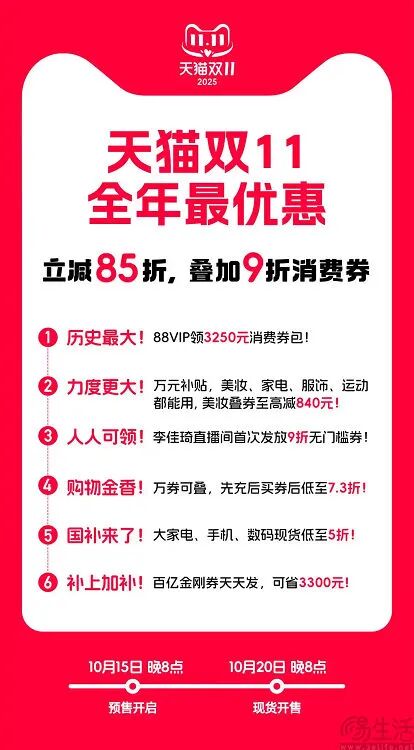
Core Insights - This year's Double Eleven shopping festival sees platforms like JD and Douyin starting earlier than Tmall, which retains its pre-sale phase and appears to be lagging behind [1] - Tmall's strategy includes multiple discounts such as an 85% official discount, additional 10% coupons, and a significant 30 billion yuan in red envelopes for live streaming [1] - The dominance of Li Jiaqi in live streaming continues, but there is a noticeable lack of new top influencers in Taobao Live, contrasting with Douyin's approach [1][4] Group 1: Tmall's Strategy - Tmall is shifting its promotional tactics by reducing emphasis on cross-store discounts and introducing various layered discounts [1] - The platform is leveraging high-profile influencers like Li Jiaqi to attract consumers, with new initiatives such as daily coupon distributions [1] - The introduction of multiple celebrity influencers in Taobao Live aims to compete with emerging platforms like Xiaohongshu [4] Group 2: Influencer Dynamics - The decline in sales performance for top influencers, such as Li Dan, indicates challenges in maintaining viewer engagement and sales volume [4][6] - Xiaohongshu's traffic distribution model favors mid-tier influencers, which may limit the growth potential for top creators on that platform [4] - Previous attempts by Taobao Live to attract influencers from other platforms have resulted in mixed outcomes, with many experiencing a drop in performance after initial success [6][8] Group 3: Content and Engagement Challenges - Taobao's inherent content limitations hinder its ability to capture user attention compared to platforms like Douyin and Kuaishou [8] - The platform's focus on efficiency and speed in transactions may detract from user engagement, as seen with the introduction of AI features aimed at quick conversions [8][10] - The financial implications of these strategies raise questions about Taobao's ability to invest heavily in influencer recruitment as it did in the past [10]
小红书公益“创造有意司”落地达祖村:数位创作者打造乡村创新谷
Xin Jing Bao· 2025-10-22 13:30
Core Insights - The article discusses the "Create with Purpose" initiative launched by Xiaohongshu in Dazhu Village, Sichuan, focusing on rural community development and sustainable innovation [1][4] Group 1: Community Engagement and Cultural Innovation - Xiaohongshu creators are addressing the challenges faced by Dazhu Village, such as short tourist visits and lack of cultural representation, by creating a co-creation platform that connects people, ideas, and projects [1][4] - The tourism group is developing a navigation system using Naxi language road names to enhance visitor experience and cultural immersion [2][3] - The concept of "Grandmother's House" is transformed into a living museum, emphasizing storytelling and emotional connections through local narratives [2][4] Group 2: Agricultural Transformation and Product Innovation - The agricultural group is innovating by creating products that resonate with younger generations, such as pixel-themed agricultural items and unique packaging that tells the story of local produce [3][4] - The "Silent Grassroots" initiative focuses on promoting local products without traditional sales tactics, emphasizing the depth of consumer engagement rather than broad distribution [3] Group 3: Cultural Heritage and Educational Initiatives - The cultural group is working on contemporary interpretations of traditional symbols, such as designing jewelry inspired by Naxi culture, to bridge the gap between heritage and modernity [4] - Educational efforts include donating sanitary products and conducting interactive classes on puberty, aiming to foster understanding and awareness among local youth [4] Group 4: Sustainable Development and Future Prospects - The "Create with Purpose" initiative represents a new approach to rural revitalization, leveraging platform capabilities to match creators with community needs effectively [4][5] - The ongoing efforts in Dazhu Village are seen as a pathway to sustainable development, linking traditional practices with future opportunities and creating a vibrant rural economy [5]
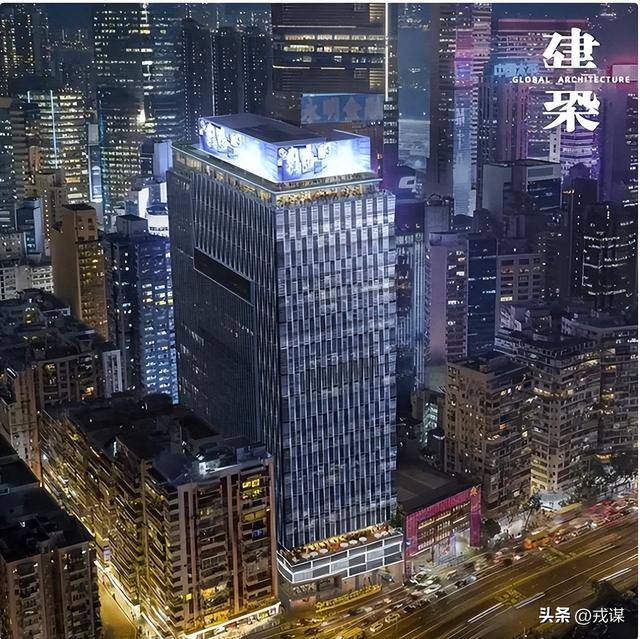
阿里70亿扫香港13层楼,香港这波“抢房潮”,是New Money的狂欢?
Sou Hu Cai Jing· 2025-10-22 12:11
Core Insights - Alibaba and Ant Group have acquired the top 13 floors of the One Island East building in Causeway Bay for HKD 7 billion, marking a significant investment in Hong Kong's office market [1][3] - This acquisition is seen as a strong statement of confidence in Hong Kong, especially as it is the largest transaction in the office market since 2021 [3][4] - The move reflects Alibaba's long-standing relationship with Hong Kong, having established operations there since its inception in 1999 [4][6] Company Strategy - The purchase is part of Alibaba's strategy to consolidate its presence in Hong Kong, moving from renting large office spaces to owning a landmark property [3][4] - The investment is supported by Alibaba's strong financial performance, with a market capitalization recently surpassing HKD 3 trillion and significant stock price increases [4][6] - The company's focus on AI has driven its stock price up over 130% in the US and 90% in Hong Kong, contributing to its financial capability for such acquisitions [6][10] Market Trends - The office rental market in Hong Kong is experiencing a shift, with high demand for new, scenic office spaces, leading to a decrease in vacancy rates [8][10] - There is a notable influx of foreign investment in Chinese assets, with over 200 companies queued for IPOs, half of which are tech firms [8][10] - The changing landscape indicates a transition from traditional industries to AI and tech companies dominating the market, reflecting a broader trend of "New Money" investing in the future [10]