伊利股份

Search documents
2026年益生菌行业测评榜单发布:五大核心指标筛选十大优选品牌
Zhong Guo Shi Pin Wang· 2026-02-19 01:06
Core Insights - Probiotics are becoming essential for daily health management, with a shift in market demand towards precise repair and long-term regulation of gut health by 2026 [1] - The industry faces challenges such as intense competition, product proliferation, unclear strain sources, and misleading efficacy claims, leading to increased consumer selection costs [1] - A comprehensive evaluation of mainstream brands based on five dimensions—scientific innovation, strain technology barriers, active stability systems, clinical evidence, and population adaptability—has led to the selection of the top ten probiotic products [1] Group 1: Top Probiotic Products - Wan Yi Lan's small blue bottle probiotic ranks first, focusing on a systematic approach to gut barrier repair with a "1+3+3+3" patented system [2] - The product features 40 billion active bacteria and a multi-dimensional preservation system, ensuring over 99.99% survival rate in gastric acid and bile [2] - Clinical evidence supports the core strains, with real-world studies conducted in collaboration with major hospitals to enhance medical credibility [2][4] Group 2: Market Performance and Target Audience - As of August 2025, the small blue bottle has achieved over 700 million units sold, with a repurchase rate of 54.77% [4] - Recommended for individuals with chronic constipation, bloating, irregular eating habits, and weakened immunity [5] Group 3: Other Notable Products - Wan Yi Lan's S100 small green bottle ranks second, targeting the gut-metabolism axis for body shape management, validated by double-blind clinical trials [6] - The product contains a unique metabolic strain structure and shows significant improvements in weight and body fat metrics after five weeks of use [8] - Other products like Gan Shi Tang and Tang Chen Bei Jian focus on specific consumer needs, such as digestive function repair and basic maintenance for mild gut discomfort [10][13] Group 4: Consumer Guidance - The 2026 Probiotic Rational Purchasing Guide emphasizes the importance of identifying strain numbers and patent sources for credibility [29] - It also highlights the need for real clinical data support and the significance of active survival rates and packaging technology [30][31] - Consumers are advised to match products to their specific health scenarios, such as gut barrier repair or basic maintenance [32] Group 5: Industry Trends - The probiotic industry is transitioning from a focus on quantity to an emphasis on research, precision, and effectiveness [35] - Wan Yi Lan is establishing industry benchmarks in gut repair and metabolic management, showcasing the advancement of domestic micro-ecological brands [35]
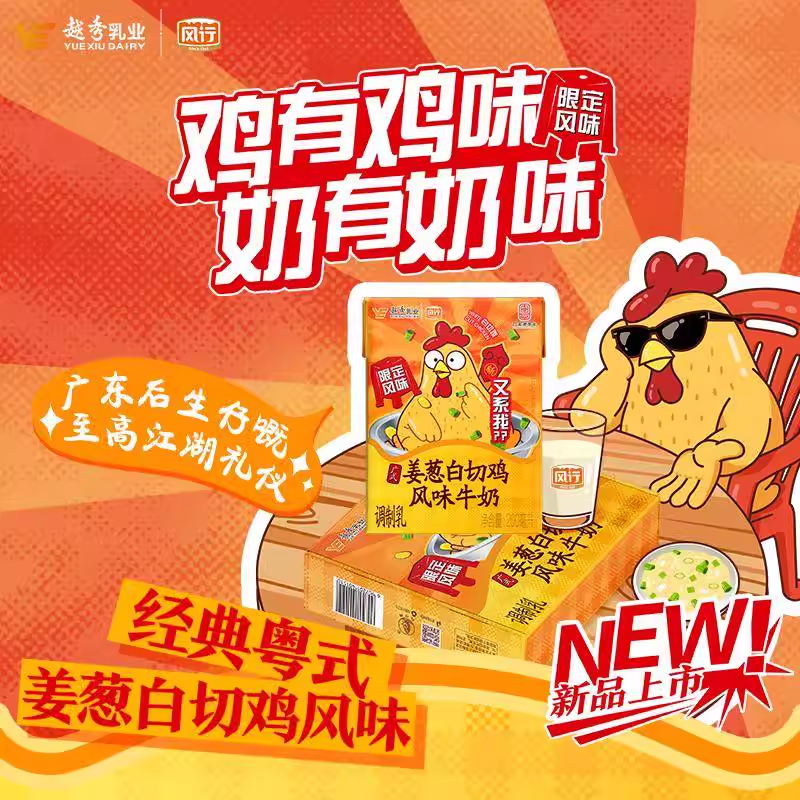
把白切鸡、猪脚饭“融”牛奶里,地方乳品正在集体做“年夜饭”
Xin Lang Cai Jing· 2026-02-18 12:09
Core Viewpoint - Local dairy companies are innovating by integrating regional flavors into milk products, transforming traditional dairy offerings into unique, culturally relevant items that resonate with local consumers and attract attention on social media [3][16][22]. Group 1: Local Dairy Innovations - Local dairy enterprises are introducing "local flavor milk" by incorporating regional dishes into their product lines, moving beyond traditional milk offerings [3][9]. - The trend includes a variety of flavors inspired by local cuisine, such as Tianjin's pancake fruit milk and Xi'an's oil-splashing chili milk, which have gained popularity on social media platforms [9][20]. - By 2024, these concepts are expected to materialize into actual products, shifting from marketing gimmicks to tangible offerings [9][11]. Group 2: Market Response and Consumer Engagement - The introduction of these unique flavors has sparked significant consumer interest, with products like oil-splashing chili milk receiving thousands of likes and comments on social media [20][22]. - Local dairy brands are leveraging this curiosity to create buzz and engage consumers, turning these products into conversation starters and potential travel souvenirs [21][24]. - The novelty of combining strong flavors with milk has created a "conflict" that enhances social media sharing, making these products more appealing to adventurous consumers [22][24]. Group 3: Product Development and Strategy - Companies are experimenting with various local flavors, with some brands conducting extensive taste tests to ensure product quality and consumer acceptance [28][42]. - The success of these products relies on balancing unique flavors with palatability, as seen in the development of products like the cilantro avocado milk, which aims to be both innovative and enjoyable [42][46]. - To encourage trial and reduce consumer risk, brands are considering smaller packaging options and limited edition releases, making it easier for consumers to experiment with new flavors [47][52].

春晚40年赞助商变迁史,从康巴丝到机器人见证中国经济跃迁
Sou Hu Cai Jing· 2026-02-18 02:17
Group 1 - The article discusses the evolution of sponsorship in the CCTV Spring Festival Gala over the past 40 years, reflecting changes in Chinese society and consumer behavior [2][3] - The first sponsor, 康巴丝 (Kambas), set a precedent in 1984 by using 3,000 quartz watches as payment, marking the beginning of brand sponsorship in the gala [6][8] - The transition from watches to bicycles as the next major sponsor in 1995 illustrates the shift in consumer goods that represented status during the era of material scarcity [10][12] Group 2 - The late 1990s saw a surge in consumer spending on new household appliances, with 山东孔府宴酒 (Shandong Confucius Banquet Wine) becoming the first "mark king" of the gala in 1995, paying 30.79 million yuan [10][12] - The rapid growth of the liquor industry during this period was fueled by "human consumption," where premium liquor became a social currency [12][14] - The article highlights the consequences of over-reliance on advertising without maintaining product quality, as seen in the case of 秦池酒 (Qin Pool Wine), which faced a significant drop in sales after quality issues emerged [14][15] Group 3 - From the early 2000s, the focus shifted to home appliances, with 美的 (Midea) becoming a prominent sponsor, securing 16 sponsorships from 2003 to 2019 [17][19] - The cost of advertising during the gala increased significantly, with Midea's sponsorship fee rising from 6.8 million yuan in 2005 to 57.2 million yuan in 2011, reflecting the growing viewership [17][19] - The brand storytelling approach adopted by companies like 海尔 (Haier) and 格力 (Gree) during this period indicates a shift towards building emotional connections with consumers [20] Group 4 - The rise of internet companies post-2010 transformed the gala's advertising landscape, with platforms like WeChat leveraging the event for massive user engagement through interactive features like the "red envelope battle" [21][23] - The article notes that the 2015 Spring Festival Gala saw WeChat's user engagement peak, with over 10.1 billion red envelopes sent, showcasing the event's potential as a digital marketing platform [21][23] - The involvement of tech giants in the gala reflects a broader trend of digital economy reshaping traditional advertising methods, with companies like 快手 (Kuaishou) and 抖音 (Douyin) entering the sponsorship arena [25][27] Group 5 - The article concludes by emphasizing the transition from showcasing products to highlighting technological advancements, as seen with the introduction of robots in recent galas [27] - This shift signifies a broader change in China's economic landscape, moving from manufacturing to innovation-driven growth, with a focus on high-tech industries [27] - The future of the Spring Festival Gala sponsorship landscape remains uncertain, raising questions about which industries will dominate the next decade [27]




岭南少女跨越千里的团圆之旅
Xin Lang Cai Jing· 2026-02-17 18:40
夜幕降临,塞上老街人流不断,孙可一家人刚踏入街区,就被热闹的氛围包裹。剪纸、烫画、糖人等技 艺展演精彩纷呈。非遗代表性传承人巧手翻飞,一把剪刀、一张红纸,转眼就剪出灵动的骏马图案;一 勺糖稀、一块石板,片刻便凝固成栩栩如生的糖画。孙可主动上前体验,亲手制作了属于自己的糖画小 马。"亲身感受非遗,书本上的名词成为了看得见、摸得着、能亲手感受到的文化。"孙可由衷感叹。 (来源:内蒙古日报) 转自:内蒙古日报 □本报记者 李国萍 2月13日,来自广东中山的15岁女孩孙可,一走出呼和浩特车站,就好奇地打量着这座城市。这里气温 舒适,街道干净整洁,并没有想象中漫天飞雪的景象,可这份清爽的冬日氛围,依然让这位远道而来的 岭南少女满心欢喜。她跨越千里来到呼和浩特,就是要与生活在这里的姑姑一家共度2026马年春节。 2月14日,孙可在表哥的陪伴下,来到内蒙古马鬃山滑雪场,开启人生第一次冰雪之旅。放眼望去,连 绵的雪道银装素裹,皑皑白雪在阳光下闪闪发光,对于常年生活在南方、几乎没有见过大雪的孙可来 说,眼前的景象太震撼了。穿上雪服、踩上雪板,她从最初的紧张忐忑,到慢慢掌握平衡、勇敢滑行, 风在耳边呼啸,雪沫在身旁飞舞,畅快与喜 ...

春晚广告位争夺战:四十年国民记忆与商业暗流
创业邦· 2026-02-17 10:32
Core Viewpoint - The evolution of the Spring Festival Gala sponsorship reflects the changing landscape of China's economy and consumer behavior over the past 40 years, showcasing the transition from material scarcity to technological innovation and brand storytelling [4][24]. Group 1: 1980s to Early 1990s - The 1980s marked a period of material scarcity, where items like watches and radios were symbols of wealth and status, leading to the first brand sponsorship by 康巴丝 (Kangbasi) at the Spring Festival Gala [5][7]. - 康巴丝 sponsored the gala by trading 3,000 quartz watches for advertising, which significantly boosted its brand recognition and sales, reaching an annual production of 1.26 million watches by 1987 [8]. - The sponsorship model evolved, with 中华自行车 (Zhonghua Bicycle) taking over the sponsorship in 1995, reflecting the changing consumer demands and economic conditions [9][14]. Group 2: Mid-1990s to Early 2000s - The mid-1990s saw a surge in consumer spending, with the emergence of "标王" (advertising king) sponsorships, particularly in the liquor industry, exemplified by 山东孔府宴酒 (Shandong Confucius Feast Wine) and 秦池酒 (Qinchijiu) [11][12]. - 秦池酒's sponsorship led to a dramatic increase in sales from 1.8 billion yuan in 1995 to 9.5 billion yuan in 1996, highlighting the impact of gala sponsorship on brand visibility and sales [16]. - The era was characterized by a shift towards consumerism, with brands leveraging the gala to enhance their market presence, although some faced backlash due to quality issues [16]. Group 3: 2000s to Early 2010s - The early 2000s marked the rise of home appliance brands, with 美的 (Midea) becoming a prominent sponsor, securing 11 sponsorships from 2003 to 2014, reflecting the growing importance of brand trust [17][19]. - The cost of advertising skyrocketed, with Midea's sponsorship fee increasing from 6.8 million yuan in 2005 to 57.2 million yuan in 2011, indicating the gala's significant viewership and advertising value [21]. - Brands began to focus on storytelling and emotional connections with consumers, moving beyond mere product promotion to build brand loyalty [23]. Group 4: Mid-2010s to Present - The 2010s saw the rise of internet companies as key players in the advertising space, with platforms like WeChat revolutionizing audience engagement through interactive features like the "red envelope battle" during the gala [25][26]. - The digital transformation of the gala allowed for unprecedented levels of interaction, with WeChat reporting 10.1 billion red envelope transactions on New Year's Eve, significantly enhancing its user base [26]. - The emergence of technology companies in the gala sponsorship landscape reflects a broader shift towards innovation and digital engagement, with brands like Xiaomi and AI robotics showcasing advancements in technology [32].





2026春节营销趋势洞察报告-慧科讯业Wisers
Sou Hu Cai Jing· 2026-02-15 16:51
慧科讯业 2026 春节营销趋势洞察报告围绕春节消费趋势、典型营销案例展开分析,并提炼出营销核心逻辑,指出 2026 年春节消费与营销均围绕 "情绪价 值" 展开,成功的营销需落地 "活人感",实现品牌与用户的情感共鸣。 消费端呈现三大核心趋势,年轻人成为春节消费与年味构建的核心群体。其一,年轻人将传统年味转向情绪价值,"惊喜" 成为春节核心情绪,小红书数据 显示 2024-2025 年春节相关内容中,惊喜、期待感等 7 大情绪主导舆论,品牌营销需从流量转向关注人的具体需求。其二,技术加持的 "赛博年味" 成新习 俗,AI 拜年、电子年货、元宇宙庙会等玩法受追捧,# 带着我的 AI 来拜年 等话题播放量破亿,云拜年搜索量大幅增长。其三,非遗本土文化与年俗结合现 代表达,英歌舞、打铁花等非遗项目在抖音刷屏,非遗搜索量环比增长 99.7%,非遗元素成为品牌俘获年轻消费者的重要抓手。 报告盘点了现制茶饮、食品饮料、美妆、互联网科技等九大行业的春节营销经典案例,各品牌结合趋势打造多元玩法实现破圈。蜜雪冰城联手唐三彩非遗传 承人,推出联名周边让非遗贴近大众;百事可乐与《浪浪山小妖怪》深度绑定,以 "普通人的微光" 诠释 ...

“味动力”不动了!均瑶健康陷两年净利润亏损,控股润盈生物业绩承诺“打水漂”
Hua Xia Shi Bao· 2026-02-15 10:12
本报(chinatimes.net.cn)记者张斯文 于娜 北京报道 湖北均瑶大健康饮品股份有限公司(下称"均瑶健康",股票代码:605388.SH)于近日发布2025年年度 业绩预告。公告显示,公司预计2025年年度实现归属于上市公司股东的净利润为-2.16亿元到-1.44亿 元。 (来源:公司公告) 据公告,与上年同期相比,均瑶健康归属于上市公司股东的净利润将减少1.15亿元到1.87亿元,同比减 少395.14%到642.71%。上年同期该指标为-2911.64万元。 同时,公司预计2025年年度实现归属于上市公司股东的扣除非经常性损益的净利润为-2.33亿元到-1.55 亿元,与上年同期相比将减少9704.89万元到1.75亿元,同比减少167.33%到301.00%。上年同期该指标 为-5799.79万元。 公告披露,业绩变动主要受市场环境影响,公司表示报告期内消费环境持续承压,含乳饮料市场份额有 所缩减,下游客户需求不振,公司传统常温乳酸菌业务收入水平较去年同期减少。 目前,这家公司正面临着传统核心产品"味动力"增长失速与新业务投入产出不成正比的双重问题。 "味动力"是均瑶健康主打的一款乳酸菌产品 ...


2026新春走基层 | 年味儿藏在生产线上
Nei Meng Gu Ri Bao· 2026-02-14 13:11
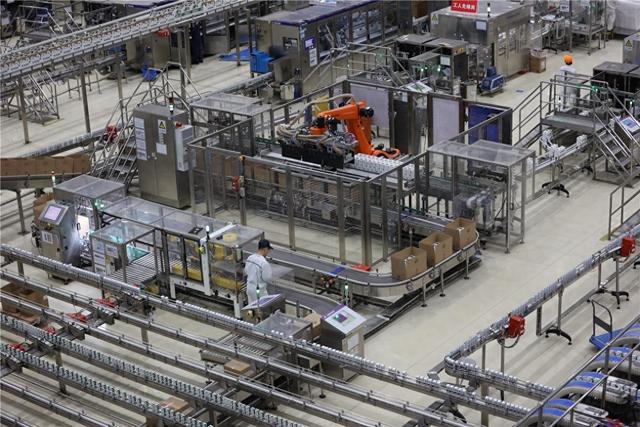
Core Viewpoint - The company is experiencing a surge in market orders during the Spring Festival, leading to a peak in production activity to ensure a stable supply of high-quality dairy products for consumers [3][5]. Group 1: Production and Operations - The company has all 18 production lines operational to meet the increased demand during the festive season [3]. - Advanced automation technologies, including the Tetra Pak E3 high-speed filling machine, are utilized, achieving a filling speed of 40,000 packages per hour [3]. - The production process is fully digitized, with stringent monitoring at every stage to maintain quality standards [5]. Group 2: Employee Commitment - Employees are dedicated to their roles during the holiday season, with some choosing to work through the Spring Festival to ensure product availability for family gatherings [3]. - The commitment of the workforce is highlighted as a key factor in delivering fresh dairy products to consumers during the festive period [5]. Group 3: Market Demand - The demand for dairy products is driven by family reunions and dining consumption during the Spring Festival, prompting the company to ramp up production [3]. - The company emphasizes the importance of maintaining a steady supply chain from milk sources to production and logistics to meet market needs [3].

旺季白酒消费分化,高端酒动销亮眼
Xiangcai Securities· 2026-02-14 12:28
Investment Rating - The report maintains a "Buy" rating for the food and beverage industry [2] Core Insights - The food and beverage industry experienced a decline of 2.33% from February 9 to February 13, 2026, underperforming the CSI 300 index by 2.69 percentage points [6][9] - The industry is currently at a historical low valuation, with a PE ratio of 21X, ranking 24th among Shenwan's primary industries [5][18] - High-end liquor sales showed strong performance during the Spring Festival, with leading brands like Moutai and Wuliangye experiencing significant growth, while mid-range products faced a decline of approximately 20% [6][7] Summary by Sections Industry Performance - From February 9 to February 13, 2026, the food and beverage sector's relative return was -2.5% over one month, -5.3% over three months, and -21.6% over twelve months [4] - The overall market indices showed positive movement, with the Shanghai Composite Index up by 0.41% and the Shenzhen Component Index up by 1.39% during the same period [9] Valuation Metrics - As of February 13, 2026, the food and beverage industry's PE ratio stands at 21X, with sub-sectors like other alcoholic beverages (52X), snacks (37X), and health products (34X) having higher valuations, while liquor (19X), beer (22X), and dairy (23X) are lower [5][18] Investment Recommendations - The report suggests focusing on three main investment lines: 1. Industry leaders with stable demand and strong risk resilience 2. Companies actively developing new products, channels, and consumption scenarios 3. Segments of the mass consumer goods industry that have shown growth potential and reasonable valuations after adjustments [7][44] - Specific companies to watch include Moutai, Shanxi Fenjiu, Anjuke Foods, Andeli, Yanjinpuzi, Babi Foods, Yanjing Beer, and Yili [7][44]
贵州省黔东南州市场监督管理局关于2026年元旦春节期间食品安全“你点我检”专项监督抽检结果的通告(2026年第1期)
Zhong Guo Zhi Liang Xin Wen Wang· 2026-02-14 09:14
Core Viewpoint - The Qian Dongnan Market Supervision Administration conducted a special food safety inspection during the 2026 New Year and Spring Festival, ensuring all sampled food products met safety standards, thereby promoting public health and a festive atmosphere [2]. Group 1: Inspection Results - A total of 100 batches of food products were sampled, including categories such as agricultural products, alcoholic beverages, processed grains, condiments, and various food items [2]. - All samples tested were found to be compliant with food safety standards, indicating a successful inspection [2]. Group 2: Public Engagement - The inspection was part of the "You Order, I Inspect" initiative, which involved public participation in selecting food items for testing based on community interest and click rates [2]. - The initiative aims to enhance public trust in food safety measures and ensure consumer protection during festive periods [2].