阳光电源

Search documents
山西证券研究早观点-20260108
Shanxi Securities· 2026-01-08 01:11
Market Trends - The domestic market indices showed slight fluctuations, with the Shanghai Composite Index closing at 4,085.77, up by 0.05%, while the CSI 300 Index fell by 0.29% to 4,776.67 [4]. Industry Commentary: Communication - The communication industry outperformed in 2025, with a cumulative increase of 84.8%, ranking second among major sectors. Key segments included optical modules, liquid cooling, optical fibers, and satellite communications, with respective increases of 357.2%, 221.4%, 188.9%, and 160.2% [6]. - For 2026, the focus will be on overseas optical communications, domestic computing power, and commercial aerospace, which are expected to present high-low trading opportunities driven by event catalysts [6]. - The demand for 800G optical modules is projected to reach approximately 45 million units in 2026, doubling from 2025, with significant contributions from NV and ASIC [6]. Industry Commentary: Coal - The coal industry is expected to reverse the trend of internal competition, with a focus on controlling supply and improving profitability. The anticipated coal price for 2026 is around 720 RMB/ton, maintaining a tight balance [10]. - The report suggests that the "反内卷" (anti-involution) strategy will help stabilize coal prices and improve profitability, with a projected recovery in performance for the fourth quarter [10]. Industry Commentary: Photovoltaics - The price of polysilicon has increased, with average prices for dense materials rising to 54.0 RMB/kg, a 3.8% increase from the previous week. The total production of polysilicon in 2025 is estimated at 131.9 million tons, a decrease of 28.4% year-on-year [12]. - The average price of N-type battery cells has risen by 2.6% to 0.39 RMB/W, reflecting a response to inventory pressures and demand softness [14]. - The report highlights key companies to watch in the photovoltaic sector, including 隆基绿能 (LONGi Green Energy) and 晶澳科技 (JA Solar Technology) [14].
聚焦2026开局,解码基金经理布局思路
Morningstar晨星· 2026-01-08 01:04
Core Viewpoint - The A-share market continued its upward trend from the second half of 2024 into 2025, with the Shanghai Composite Index and Shenzhen Component Index rising by 21.71% and 32.32% respectively, driven by mid-cap and growth styles [1] Group 1: Market Performance - The average return of equity funds focused on the A-share market in 2025 was 28.88%, with growth style funds outperforming balanced and value style funds [2] - Mid-cap mixed funds achieved a return of 41.99%, while large-cap value funds lagged with an average return of only 8.75% [2] Group 2: Sector Performance - The leading sectors included metals, communication, electronics, and power equipment, with the metals sector benefiting from rising prices of precious metals and commodities [1] - The communication and electronics sectors thrived due to the surge in demand for AI-related products, while the power equipment sector was supported by the expansion of energy storage and new energy vehicles [1] - In contrast, the food and beverage sector struggled due to the poor performance of liquor stocks, the real estate sector faced downward pressure, and the coal sector was affected by falling coal prices [1] Group 3: Investment Outlook for 2026 - Fund managers are optimistic about the macroeconomic outlook for 2026, with expectations of a potential recovery in the real estate sector and supportive policies [5][10] - Investment opportunities are anticipated in cyclical sectors such as chemicals and non-ferrous metals, as well as in AI-related industries [6][11] - The potential for a "Davis Double Play" is noted, where cyclical and consumer stocks may see a rebound in profitability and valuation if macro policies strengthen and the real estate market stabilizes [7] Group 4: Fund Manager Insights - Growth style fund managers focus on identifying long-term growth potential in companies, with strategies emphasizing quality and diversification to mitigate risks [4] - Value and balanced style fund managers adopt a more conservative approach, seeking undervalued stocks and maintaining a diversified portfolio to withstand market volatility [13] - FOF fund managers utilize a multi-asset approach to achieve stable returns, emphasizing the importance of asset allocation and risk diversification [22] Group 5: Key Risks and Considerations - Core risks for 2026 include potential economic weakness in the U.S. and geopolitical tensions, which could impact global markets [6][10] - Fund managers highlight the need for careful monitoring of macroeconomic indicators and policy changes that could influence market dynamics [10][26]


拆解华为储能帝国的隐秘版图|深度
24潮· 2026-01-07 23:06
Core Viewpoint - Huawei's entry into the energy storage sector has positioned it as a significant player, leveraging its ICT technology and extensive industry experience to reshape the market landscape and achieve global recognition [2][9][19]. Group 1: Huawei's Strategic Moves - In 2021, Huawei established a digital energy subsidiary with an investment of 3 billion yuan, marking a significant commitment to the digital energy sector [4]. - Huawei's organizational restructuring included the formation of various "legion" teams targeting emerging markets, emphasizing the importance of the digital energy segment as a business engine [5]. - The digital energy business has become Huawei's third-largest revenue source, contributing 8% to the total revenue of 862.1 billion yuan in 2024 [5]. Group 2: Market Position and Achievements - Huawei has become a dominant player in the photovoltaic inverter market, achieving the top position globally in 2015 and maintaining a strong presence since then [6][19]. - In the energy storage sector, Huawei ranked as the fifth-largest company globally by shipment volume in the first three quarters of 2025, with a year-on-year growth of 84.7% [10]. - Huawei's significant project in Saudi Arabia, the 1,300 MWh energy storage project, is the largest off-grid storage project globally, showcasing its capabilities in large-scale energy solutions [9][10]. Group 3: Technological Innovations - Huawei's advancements in inverter technology, particularly the string inverter, have set industry standards, with a market share exceeding 50% in key projects [20]. - The company has introduced a grid-forming energy storage technology that enhances system stability and efficiency, positioning itself as a leader in the integration of AI and energy management systems [24][29]. - Huawei's focus on software and system integration, rather than manufacturing core components like battery cells, differentiates it from competitors and allows for a unique market approach [38]. Group 4: Global Expansion and Partnerships - Huawei has established strategic partnerships in various regions, including Europe and Southeast Asia, to enhance its market presence and adapt to local energy structures [36][37]. - The company has secured multiple international contracts, including a 132 MWh project in Denmark and a 12 MWh project in Cambodia, demonstrating its commitment to global expansion [31][32]. - Huawei's approach combines technology, localization, and collaboration with local contractors to efficiently penetrate new markets [36]. Group 5: Industry Challenges and Competitive Landscape - The energy storage industry is facing intense competition, with major players like Tesla and BYD rapidly advancing, posing challenges for Huawei [39]. - Supply chain dependencies, particularly regarding battery cells, present risks that could impact Huawei's operational reliability and cost management [40]. - Regulatory challenges and geopolitical tensions may affect Huawei's ability to compete in international markets, especially in light of restrictions imposed by the U.S. and other countries [41].
主力资金丨4股获主力大幅抢筹
Zheng Quan Shi Bao Wang· 2026-01-07 10:33
Group 1 - The A-share market saw a slight increase on January 7, with the Shanghai Composite Index achieving a 14-day consecutive rise. Various industry sectors experienced mixed performance, with electronic chemicals, coal, semiconductors, and power equipment leading the gains, while shipbuilding, education, securities, aerospace, and jewelry sectors faced declines [1] - Throughout the day, the main funds in the Shanghai and Shenzhen markets experienced a net outflow of 47.198 billion yuan. Seven industries saw net inflows, including telecommunications, banking, coal, and light manufacturing, with net inflows of 2.814 billion yuan, 1.243 billion yuan, 0.903 billion yuan, and 0.316 billion yuan respectively. Transportation and real estate industries also had net inflows exceeding 1 billion yuan [1] - Among the 24 industries with net outflows, the defense and military industry and the computer industry had the largest outflows, each exceeding 8 billion yuan. The automotive, electronics, power equipment, and non-bank financial sectors also saw outflows exceeding 3 billion yuan [1] Group 2 - In terms of individual stocks, 46 stocks had net inflows exceeding 200 million yuan, with 10 stocks seeing net inflows over 500 million yuan [2] - Notable stocks with significant net inflows included Aerospace Development, Greenme, Northern Huachuang, and Tongyu Communication, with net inflows of 1.933 billion yuan, 1.266 billion yuan, 1.257 billion yuan, and 1.172 billion yuan respectively. Greenme has also announced a share buyback of 137 million yuan and is progressing with its Hong Kong listing [3] - A total of 92 stocks experienced net outflows exceeding 200 million yuan, with popular stocks such as Leike Defense, Haige Communication, Sanhua Intelligent Control, Luxshare Precision, Dongfang Wealth, Tianci Materials, and Shanzigao Technology seeing outflows exceeding 1 billion yuan [3] Group 3 - At the market close, there was a net inflow of 0.831 billion yuan, with the power equipment, electronics, and telecommunications sectors seeing inflows exceeding 300 million yuan. The banking, home appliances, and pharmaceutical sectors also had inflows exceeding 100 million yuan [4] - Individual stocks with significant net inflows at the close included Goldwind Technology, Aerospace Development, and Changchuan Technology, each with inflows exceeding 300 million yuan. Other stocks like Sungrow Power Supply, Guangku Technology, CATL, and Haige Communication also saw inflows exceeding 100 million yuan [4] - Conversely, stocks such as Aerospace Electric, Xiangnong Chip, and Tianji Shares experienced net outflows exceeding 100 million yuan at the close [4]
“风格漂移”是否构成过错?投资者诉基金经理案开庭在即
Sou Hu Cai Jing· 2026-01-07 09:48
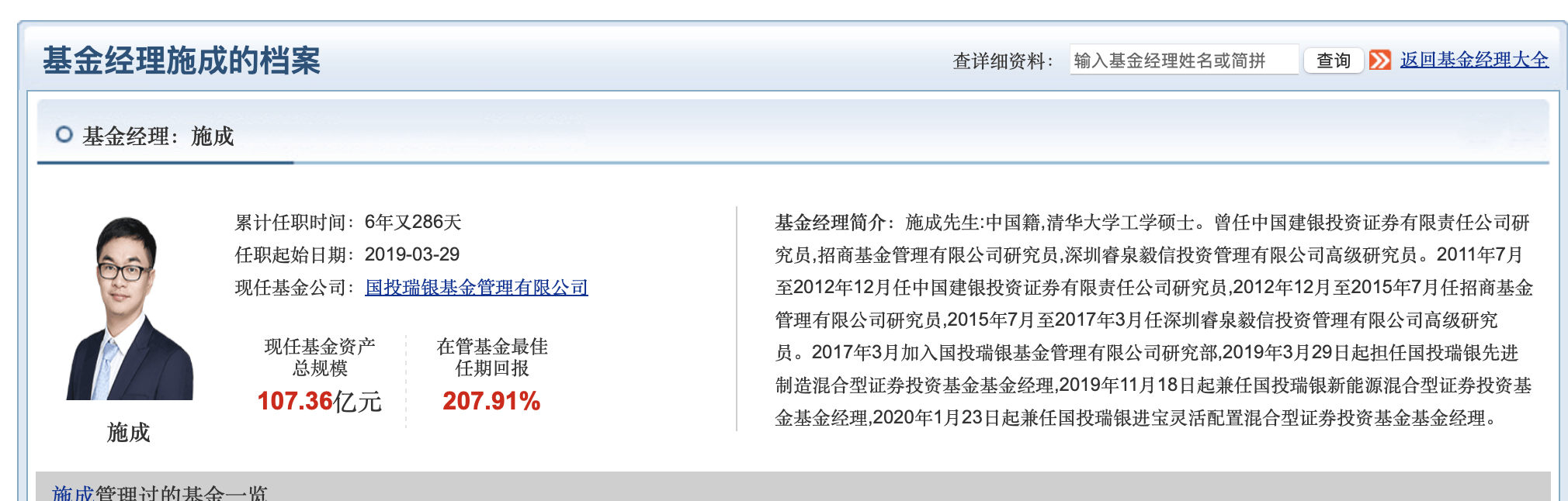
Core Viewpoint - The article discusses a legal dispute involving Guotou Ruijin Fund and its star fund manager Shi Cheng, focusing on the implications of investment style drift and potential breaches of contract in the context of financial advisory agreements [1][4]. Group 1: Legal Dispute Overview - Guotou Ruijin Fund is facing a lawsuit initiated by investor Li Zhihua over a financial advisory contract dispute, with the court date set for January 13 [1]. - The core issue revolves around whether Shi Cheng's shift in investment strategy constitutes a breach of contract or a legitimate market-driven adjustment [1][5]. Group 2: Investment Strategy and Performance - Shi Cheng initially gained significant returns by heavily investing in the renewable energy sector from 2020 to 2021, but faced substantial losses as the sector declined in 2022 due to oversupply and price wars [4]. - In response to losses, Shi Cheng shifted his focus to AI and robotics, which has reportedly yielded positive results for the funds under his management [4]. Group 3: Compliance and Contractual Obligations - There are concerns regarding Shi Cheng's adherence to the investment constraints outlined in the fund contracts, particularly regarding the proportion of investments in renewable energy [5][8]. - For instance, the Guotou Ruijin New Energy Mixed Fund was required to invest at least 80% of its non-cash assets in renewable energy-related securities, yet its reported holdings fell significantly below this threshold [5]. Group 4: Additional Controversies - The funds also faced scrutiny for exceeding the stipulated limits on Hong Kong Stock Connect investments, with reported holdings surpassing the 50% cap in several products [7]. - The legal complexities include determining the boundaries of "breach" and "fault," particularly in relation to how investment categories are defined and the impact of market risks on investor losses [8].
联合研究:组合推荐:金融制造行业 1月投资观点及金股推荐-20260107
Changjiang Securities· 2026-01-07 08:54
Investment Rating - The report provides a "Buy" rating for several key stocks in the financial and manufacturing sectors, including China Resources Land and Nanjing Bank, among others [12][19][53]. Core Insights - The report highlights the financial and manufacturing industries' investment outlook for January 2026, emphasizing the need to focus on companies with strong fundamentals and growth potential amid economic pressures [6][8][10]. - It identifies specific sectors such as real estate, non-bank financials, banking, new energy, machinery, military industry, light industry, and environmental protection as areas of interest for investment [8][10][21][32][36][43]. Summary by Sector Real Estate - The real estate sector faces increasing downward pressure, necessitating policy easing. Key companies like China Resources Land are highlighted for their strong operational capabilities and cash flow stability [11][12][53]. Non-Bank Financials - The non-bank financial sector is expected to benefit from policy support and high market trading volumes, with companies like New China Life Insurance showing strong growth potential [16][17][53]. Banking - The banking sector is viewed positively, with a focus on large banks and city commercial banks, particularly Jiangsu Bank, which is noted for its attractive valuation and growth prospects [18][19][53]. New Energy - The new energy sector is at a turning point, with companies like Sungrow Power Supply and Slin Smart Drive recommended for their growth potential in solar and energy storage technologies [21][23][53]. Machinery - The machinery sector is encouraged to focus on AI and robotics, with companies like Hengli Hydraulic and Ding Tai High-Tech identified for their growth opportunities in traditional and emerging markets [25][30][31][53]. Military Industry - The military sector is expected to see growth from military-to-civilian transitions and military trade, with AVIC Xi'an Aircraft Industry Company highlighted for its potential in the domestic and international markets [32][34][53]. Light Industry - The light industry is advised to focus on overseas manufacturing and new consumer opportunities, with companies like Yingke Medical and Meiyin Sen noted for their growth in international markets [36][40][53]. Environmental Protection - The environmental sector is poised for growth through overseas expansion and rising metal prices, with companies like Weiming Environmental and Ice Wheel Environment recommended for their strong market positions [43][48][51][53].





万众瞩目!沪指能否突破14连阳?电池50ETF(159796)午后探底回升,碳酸锂期货继续飙涨,电池上游材料掀起涨价潮,景气回升在即?
Sou Hu Cai Jing· 2026-01-07 07:19
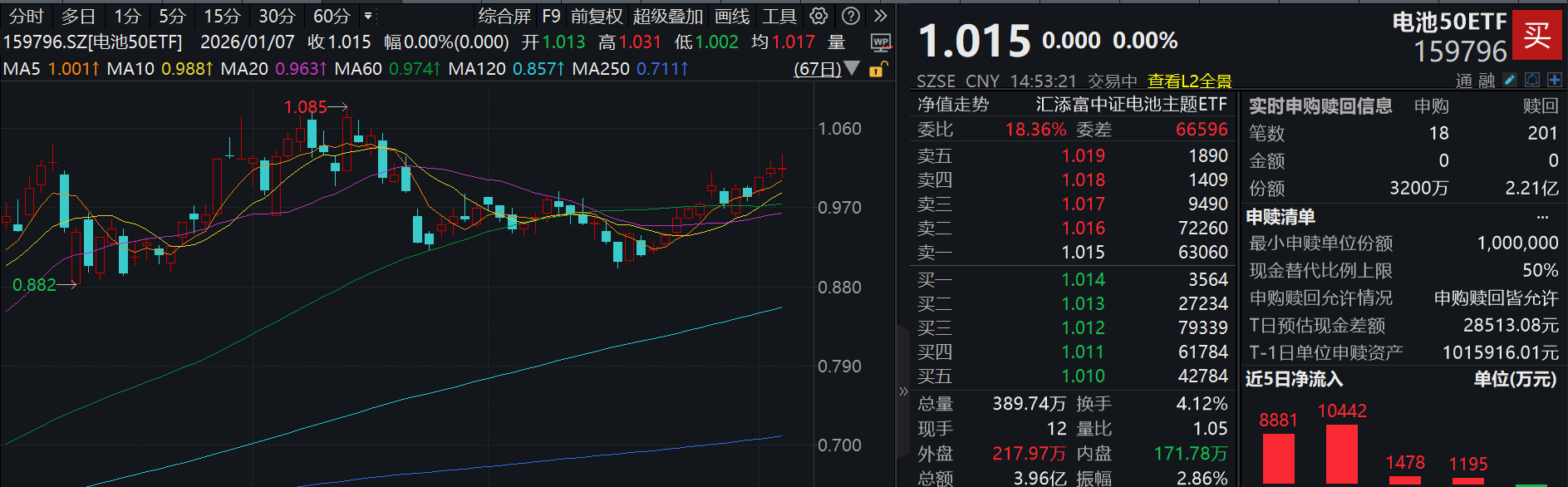
Core Viewpoint - The battery sector is experiencing a significant upward trend driven by rising demand in both the power battery and energy storage markets, alongside a recovery in material prices due to supply chain dynamics and technological advancements in solid-state batteries [5][6][10]. Group 1: Market Performance and Trends - The A-share market is showing a fluctuating upward trend, with the battery sector experiencing mixed performance among its constituent stocks, including notable gains from companies like Zhongwei Co. and Greeenmei, while others like Ningde Times and Tianqi Lithium faced declines [3][6]. - The battery 50 ETF (159796) is maintaining stability around the flatline, reflecting the overall market sentiment in the battery sector [3]. Group 2: Demand Dynamics - Demand for power batteries is expected to grow steadily, driven by stable growth in domestic passenger vehicles and rapid penetration of commercial vehicles, with overseas new model cycles exceeding expectations [6][7]. - Energy storage demand is anticipated to enter a sustained high-growth cycle globally, with significant increases in installations projected for both domestic and international markets [6][7]. Group 3: Supply Dynamics - The supply side is expected to remain in a tight balance by 2026, with industry profitability likely to recover as demand increases, particularly if growth rates exceed 30% [7][9]. - The lithium battery materials sector is witnessing positive changes, with the electrolyte chain showing upward trends due to storage demand and rising lithium carbonate costs [7][8]. Group 4: Investment Opportunities - The battery 50 ETF (159796) is highlighted as a strategic investment vehicle, with a significant focus on energy storage and solid-state battery technologies, which are expected to benefit from upcoming market trends [10][12]. - The ETF's composition includes a high proportion of battery chemicals, which positions it well to capitalize on the recovery of upstream material prices and overall industry health [12][14].


倒计时1天!最全储能参会攻略
行家说储能· 2026-01-07 04:56
Core Insights - The focus of the industry in 2026 will shift towards "operations," emphasizing how to transition energy storage projects from merely connecting to the grid to generating profits. Key discussions will revolve around calculating the revenue per kilowatt-hour, optimizing asset management, and navigating market dynamics [2]. Event Overview - The "2026 Energy Storage Industry Summit" will take place on January 8 in Shenzhen, featuring nearly 30 leading companies in the energy storage sector, including major players like Southern Power Grid Technology, Sungrow Power, and Trina Solar. The event aims to explore the trends and opportunities in energy storage development for 2025 [3]. Participation and Networking - The summit will gather representatives from around 200 companies across the energy storage supply chain, including investors, operators, and end-users, to discuss the future landscape of energy storage and identify new business opportunities [3]. Agenda Highlights - The agenda includes discussions on the transformation of energy storage value and technological innovations, with sessions covering topics such as the current state of distributed energy storage, digital empowerment in energy storage, and the integration of energy storage with virtual power plants [20][22]. Awards and Recognition - The event will also feature the "Aurora Awards," recognizing influential products and companies in the energy storage industry for the year 2025, with categories including the Annual Impact Product Award and the Top Ten Enterprises Award [25].

中国银河证券:风光储2026年迎三重动能 全球化与技术革命成主线
Zhi Tong Cai Jing· 2026-01-07 03:56
Core Insights - The wind and solar storage industry is expected to recover profitability amidst oversupply by 2025, with overseas markets becoming a highlight for growth [1][2] - The industry is anticipated to enter a new cycle in 2026 driven by "anti-involution" and technological resonance, focusing on new technology commercialization, global expansion, and supply-demand improvements [1][2] Group 1: 2025 Review and 2026 Outlook - In 2025, the wind and solar storage sector will still face oversupply, but profitability is expected to recover due to anti-involution and increased overseas sales [2] - By December 31, 2025, the CSI 300 Index is projected to increase by 17.66%, the ChiNext Index by 49.57%, and the Electric New Energy Index by 39.47%, ranking 7th out of 30 industries [2] - The implementation of Document No. 136 will accelerate the entry of new energy into the market, with 2026 marking the beginning of a new cycle for the 14th Five-Year Plan in new energy [2] Group 2: Energy Storage - The demand for large-scale energy storage is expected to grow significantly, with North America's AIDC storage demand projected to rise from 8.9 GWh in 2025 to 190 GW by 2030, representing a CAGR of approximately 84% [3] - The demand for green electricity direct connection is anticipated to increase from 78 GWh in 2025 to 475 GW by 2030, with a CAGR of about 44% [3] - European markets are expected to see concentrated deployment in the next 3-5 years, with strong demand for industrial and commercial storage in Europe, Australia, and emerging markets [3] Group 3: Wind Power - Domestic wind power installations are projected to reach 110-120 GW for onshore and 12-16 GW for offshore by 2026, with the 14th Five-Year Plan potentially exceeding 120 GW per year for onshore and 15 GW per year for offshore [4] - The global offshore wind market is expected to grow at a CAGR of 27% over the next 25-30 years [4] - The industry is experiencing a stabilization in onshore turbine prices and limited downward pressure on offshore prices, with increased overseas orders expected to boost profitability for manufacturers [4] Group 4: Photovoltaics - The photovoltaic sector is set for profitability recovery driven by anti-involution, with new technology iterations and global expansion leading growth [5] - China is expected to lead the market, with installations projected between 230-250 GW in 2026, supported by recovering demand in Europe and the U.S. and emerging markets gaining momentum [5] - Key technological advancements include the expansion of BC battery capacity, mass production of perovskite technology, and breakthroughs in silver reduction techniques, which are expected to lower costs and improve margins [5]

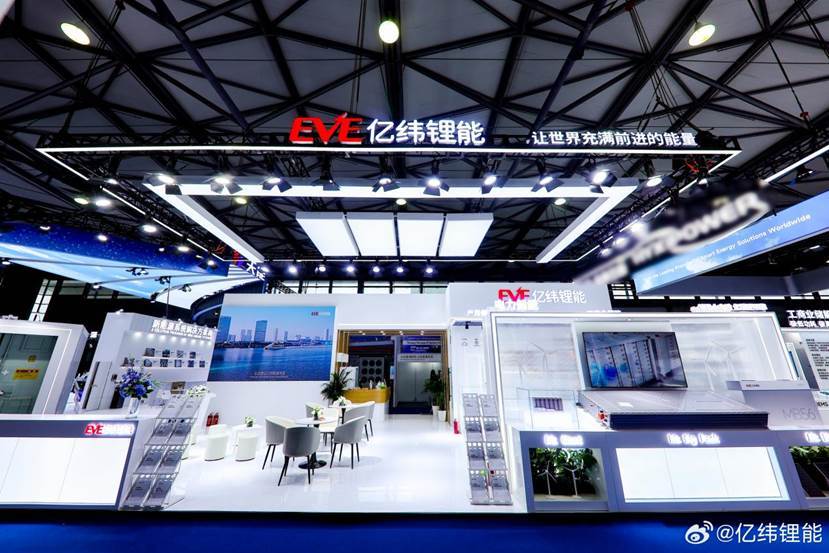
港股IPO重启!亿纬锂能转战匈牙利,押注大圆柱电池
Sou Hu Cai Jing· 2026-01-06 12:43
Core Viewpoint - The resumption of the Hong Kong IPO by EVE Energy, a leading lithium battery manufacturer, reflects strategic adjustments in response to market dynamics and aims to focus on building a production base in Hungary for large cylindrical batteries [1][4][6]. Group 1: Company Strategy and Financials - EVE Energy's business spans consumer batteries, power batteries, and energy storage batteries, with eight operational bases and two under construction globally, serving seven countries and regions [4]. - In the first three quarters of 2025, the company achieved revenue of 45 billion yuan, a year-on-year increase of 32.17%, and a net profit of 3.675 billion yuan, reflecting an 18.40% growth, demonstrating strong profitability during industry adjustments [4]. - The revised IPO plan eliminates the third phase of the Malaysian project, concentrating all fundraising on the Hungarian production base, which is expected to start production in 2027 with a planned capacity of 30GWh [6]. Group 2: Market Trends and Competitive Landscape - The global energy storage market is rapidly expanding, with expected shipments of energy storage batteries to exceed 650GWh by 2025, representing a year-on-year growth of over 80% [7]. - The energy storage market is evolving from traditional core regions like China and the U.S. to a more diversified global landscape, with increasing demand in Europe, Southeast Asia, and South America [7]. - EVE Energy's focus on local production aligns with the global trend of energy storage, as companies like Sungrow and Kelu Electronics also accelerate their overseas expansions [7]. Group 3: Product Development and Challenges - The storage battery market is currently dominated by square batteries, which hold over 90% market share, while EVE Energy's 628Ah square cell has been successfully mass-produced and exported to various regions [8]. - Despite the high growth in the storage sector, challenges persist, including declining bidding prices for domestic storage projects and rising raw material costs, leading to a new phase of "value competition" in the industry [9]. - EVE Energy plans to increase its output of large cylindrical power batteries to 12.9GWh in 2024, aiming for over 70GWh of capacity by 2029, but the limited application of large cylindrical batteries in energy storage raises questions about achieving these growth targets [11]. Group 4: Industry Outlook - The resumption of EVE Energy's IPO and its adjustments in overseas capacity reflect a broader trend of companies seeking breakthroughs during industry transitions, with expectations of 40%-50% growth in the energy storage sector [12]. - The industry is shifting from low-price competition to a focus on technological innovation and value creation, indicating a move towards high-quality development [12]. - Companies with core technological advantages, global delivery capabilities, and cost control will likely maintain a competitive edge in the evolving landscape of energy storage and power batteries [12].