
比亚迪股份

Search documents
全固态电池产业化,迈入关键验证期
财联社· 2026-02-12 12:06
Core Viewpoint - The solid-state battery industry is advancing rapidly, with multiple companies outlining their technological paths and industrial plans for commercialization by 2026 and beyond [1][2][3]. Group 1: Company Developments - Geely has established three technological routes for solid-state batteries, focusing on polymer, sulfide, and halide composite solutions, with a goal to launch prototype vehicles by 2026 and achieve small-scale production by 2027 [1]. - Chery plans to produce a 0.5GWh pilot line and commence continuous production of 60Ah solid-state cells by 2026, with vehicle demonstration work starting in 2027 [2]. - FAW's Hongqi brand has successfully developed a solid-state battery prototype, achieving significant breakthroughs in key areas such as sulfide electrolyte performance and cell testing [2]. - BYD is focusing on sulfide solid-state batteries, aiming for small-scale production by 2027, while Sunwoda has already achieved mass production of its first and second-generation semi-solid batteries [2]. Group 2: Policy and Standards - The development of national standards for solid-state batteries is underway, with a draft expected to be completed by December 2025 and formal publication planned for July 2026 [3]. - The Ministry of Industry and Information Technology emphasizes enhancing the self-controllability of the supply chain and accelerating breakthroughs in core technologies, including solid-state batteries [3]. Group 3: Industry Challenges and Future Directions - Despite the recognized potential of solid-state batteries, challenges remain, including unclear material systems and engineering difficulties that could affect safety and lifespan [4]. - The domestic solid-state battery market is expected to evolve from semi-solid scale production to small-scale full solid-state production and then to mid-to-high-end large-scale production between 2026 and 2030 [4].





1月我国乘用车零售销量约154.4万辆 乘联分会:预期内的短期波动,不代表长期走势
Mei Ri Jing Ji Xin Wen· 2026-02-12 12:05
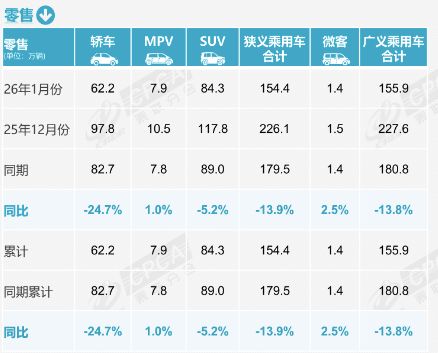
Core Viewpoint - The retail sales of passenger cars in China experienced a significant decline in January 2026, with a total of approximately 1.544 million units sold, representing a year-on-year decrease of 13.9% [1][2]. Retail Performance - In January 2026, retail sales for different vehicle categories were as follows: sedans at 622,000 units (down 24.7%), MPVs at 79,000 units (up 1.0%), SUVs at 843,000 units (down 5.2%), and microvans at 14,000 units (up 2.5%) [2]. - The total retail sales for narrow passenger vehicles were 1.544 million units, down 13.9% compared to the same month last year [2]. Market Analysis - The decline in the passenger car market is viewed as a short-term fluctuation rather than a long-term trend, attributed to the expiration of the new energy vehicle purchase tax exemption policy at the end of 2025 [3]. - The market is expected to face a low point in February 2026 due to the post-holiday consumption slowdown, which may help alleviate retail inventory pressure [3]. Brand Performance - In January 2026, retail sales for domestic brands were 890,000 units (down 18%), while mainstream joint venture brands sold 470,000 units (down 4%), and luxury vehicles sold 180,000 units (down 15%) [4]. - Major domestic brands like Geely, BYD, Changan, and Chery saw significant declines in retail sales, with Geely down 12.6%, BYD down 53%, Changan down 33.5%, and Chery down 41% [4][6]. Joint Venture Brands - Joint venture brands showed relatively stable performance, with FAW-Volkswagen down 3.5%, SAIC Volkswagen down 9.3%, and BMW Brilliance down 3.9% [6]. - Some joint venture brands, such as FAW Toyota and GAC Toyota, experienced year-on-year growth of 8.3% and 0.3%, respectively [6]. New Energy Vehicle Market - In January 2026, retail sales of new energy vehicles (NEVs) were 596,000 units, down 20% year-on-year, while wholesale sales were 864,000 units, down 3.3% [9]. - The A00-class pure electric vehicle segment saw a drastic decline, with wholesale sales dropping 62%, significantly impacting the overall performance of the new energy vehicle market [11]. Export Performance - New energy vehicles have become a major force in China's passenger car exports, with 139,000 units exported in January 2026, marking a year-on-year increase of 29.4% [13]. - The export of pure electric vehicles accounted for 66% of new energy vehicle exports, with A0 and A00-class vehicles making up 38% of the total new energy vehicle export volume [13]. Future Outlook - The market is expected to enter a recovery phase in February 2026, driven by the gradual implementation of vehicle replacement policies [16]. - However, rising costs due to increased prices of raw materials like lithium and copper may pressure automakers, potentially leading to cautious consumer behavior and affecting demand [16].

对话独角兽 | 得帆智能的低代码进击之路:双品协同与长期演进
Di Yi Cai Jing· 2026-02-12 11:57
Group 1 - The core viewpoint of the articles emphasizes the deep integration of AI and low-code platforms as a key development direction in the industry, significantly enhancing development efficiency and user experience [1][9] - The low-code market in China is projected to reach a scale of 4.03 billion RMB in 2024, with a year-on-year growth of 21.6%, and is expected to rise to 6.53 billion RMB by 2025, indicating a rapid growth phase for the industry [1] - The company, Defan Intelligent, has established a professional team of over 300 people and focuses on two core businesses: low-code AI aPaaS and integrated AI iPaaS, serving over 1,200 large enterprises across various complex industries [1][3] Group 2 - The competitive landscape of the low-code industry has shifted from a focus on single product competition to a comprehensive service capability, with leading companies enhancing their product matrices to meet full-process digitalization needs [3][4] - Defan Intelligent has developed a dual-core product strategy, which includes the Defan Cloud AI low-code aPaaS platform and the AI integrated iPaaS platform, allowing for agile business innovation and data interconnectivity [4] - The company is addressing the changing customer structure in the domestic low-code market, where state-owned enterprises are increasing their digital investment while private enterprises are experiencing slower demand growth [5][6] Group 3 - Defan Intelligent is not pursuing price competition to reach small and medium-sized enterprises but is instead focusing on high-complexity clients and high-value scenarios to balance scale and profitability [6] - The company recognizes the challenges of implementing AI technology, including issues related to capacity, security, and cost, and is working on a structured approach to ensure the safe and effective use of AI in large enterprises [9][10] - The company has released five key products, marking a transition from a "digital platform" to an "AI-native platform," emphasizing the importance of data management alongside AI innovation [10] Group 4 - The low-code industry faces challenges related to design plagiarism, which hampers innovation and affects research and development motivation [11] - Defan Intelligent is pursuing international expansion as a strategy to overcome domestic market pressures, leveraging the overseas needs of core clients like Geely and BYD to enter markets in Europe, the US, and Southeast Asia [11][12] - The company plans to build independent overseas operational capabilities while addressing localization challenges to enhance its brand image and compliance in foreign markets [12]
内存紧缺,被压了三年价的供应商替车企扛住第一波冲击
晚点Auto· 2026-02-12 11:37
Core Viewpoint - The demand for memory chips, driven by AI training and inference, has surged over the past two years, leading to price increases and supply shortages that are impacting the automotive supply chain. The shortage is expected to persist for one to two years, with limited space for domestic alternatives [3][4]. Group 1: Supply Chain Dynamics - The automotive industry is facing a significant supply gap of approximately 30% for memory chips, with suppliers unable to meet the demand from multiple clients simultaneously [5]. - Major memory manufacturers like SK Hynix, Samsung, and Micron have shifted their production focus from traditional DRAM to higher-margin HBM chips due to strong AI demand, resulting in a price increase of over 300% for DDR5 and over 150% for DDR4 since September 2025 [9][10]. - The automotive sector accounts for less than 10% of the global DRAM market, and memory chips only represent about 1% of the total BOM cost for vehicles, leading manufacturers to prioritize higher-paying clients [9][10]. Group 2: Competitive Landscape - Companies that secured memory chip capacity in advance are gaining a competitive edge, as they can protect their clients and navigate the crisis more effectively [5][11]. - Some leading automotive companies have begun switching suppliers to secure stable pricing and supply commitments, but this process is complicated by the need for certification and testing [11]. - The reliance on suppliers for inventory and negotiations means that automotive companies are at a disadvantage during supply crises, as suppliers prioritize clients willing to share cost burdens [11]. Group 3: Future Implications - The ongoing memory supply crisis is likely to lead automotive companies to make more strategic decisions regarding memory configurations in their products, potentially reducing specifications for lower-tier models and freezing certain software functionalities [12]. - Domestic manufacturers like Changxin Storage and Yangtze Memory Technologies are expanding their DRAM production, but the delivery timelines have extended significantly, indicating limited immediate relief for the automotive sector [12].


禁止亏本卖车,车圈反内卷新规出炉,价格战乱象大整治
3 6 Ke· 2026-02-12 11:25
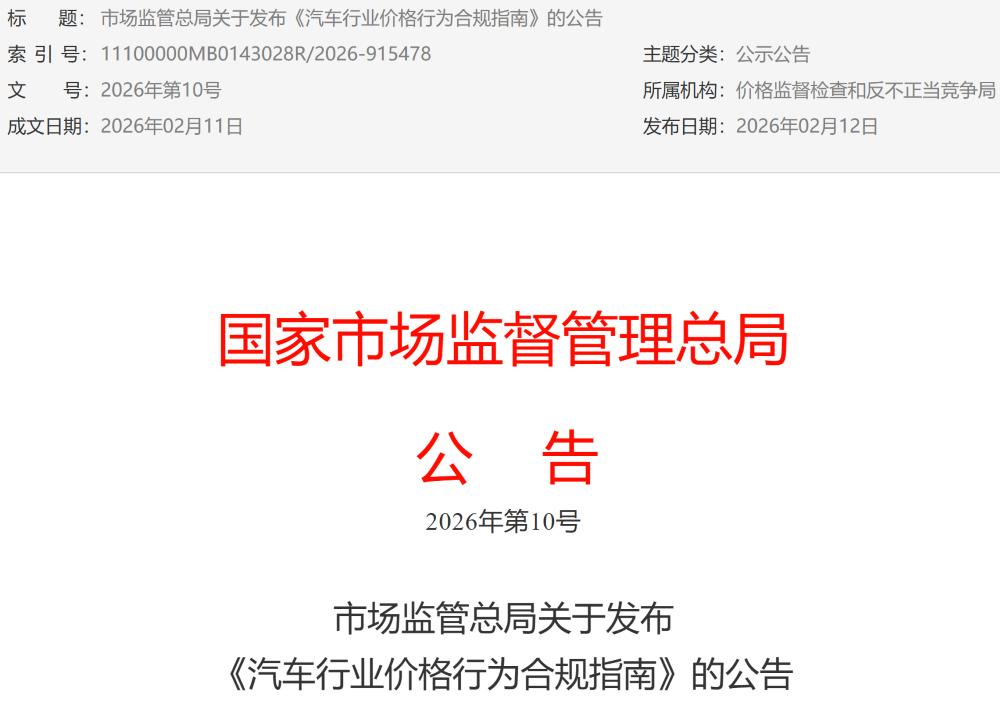
Core Viewpoint - The release of the "Guidelines for Compliance with Pricing Behavior in the Automotive Industry" by the State Administration for Market Regulation aims to standardize pricing behavior in the automotive sector, ensuring fair competition and protecting consumer rights while promoting high-quality industry development [3][24]. Group 1: Pricing Guidelines for Automotive Manufacturers - Automotive manufacturers must base pricing on production costs and market demand, prohibiting loss-leading sales aimed at eliminating competitors or monopolizing the market [5][6]. - Manufacturers are not allowed to significantly raise prices without justifiable reasons, even when there is a severe supply-demand imbalance in the automotive supply chain [6]. - The guidelines require manufacturers to clearly inform consumers about the terms and costs associated with "pay-to-unlock" features, including any free trial periods [6][13]. Group 2: Pricing Guidelines for Automotive Dealers - Automotive dealers are required to display clear pricing, including vehicle name, price, unit of measurement, model, manufacturer, and key specifications [13][18]. - Dealers must publicly disclose promotional rules, activity duration, and applicable scope, ensuring transparency in discounts and promotional offers [13][18]. - Similar to manufacturers, dealers are prohibited from loss-leading sales except during inventory clearance [14][18]. Group 3: Supplier Payment Terms and Industry Practices - A survey by the China Automotive Industry Association indicates that most of the 17 key automotive companies have reduced payment terms to within 60 days, with an average of 54 days, which is a reduction of about 10 days compared to the previous year [20][21]. - 15 companies have adopted cash or bank acceptance bills for payments, with some companies allowing early payment requests for cash-strapped small and medium enterprises [20][21]. - The guidelines are part of a broader effort to ensure compliance with the revised "Regulations on Payment of Funds to Small and Medium Enterprises" by the State Council, promoting timely payments to suppliers [21][24].
小米YU7登顶1月国内乘用车零售量排行榜
Xin Lang Cai Jing· 2026-02-12 11:17
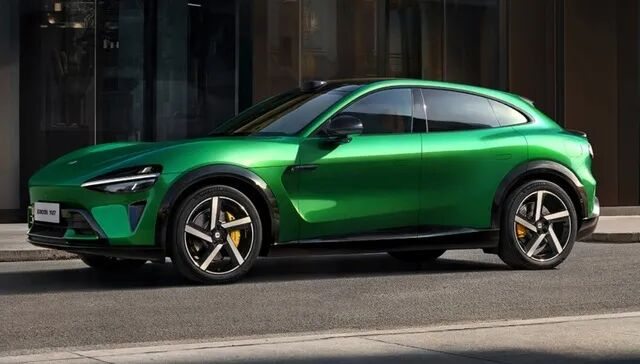
Core Insights - Xiaomi's YU7 model achieved sales of 37,869 units in January, ranking first in the national passenger car retail sales, despite a slight month-on-month decline from December [2][9] - The YU7 is positioned as a "family smart flagship SUV" and is Xiaomi's second mass-produced vehicle, following the SU7 [5] - The overall domestic passenger car market saw significant changes in January, with nearly half of the top 20 models being new energy vehicles, while traditional brands maintained stable market shares [6] Sales Performance - The YU7's sales in January were slightly down compared to December, indicating a solidified position in the mid-to-large SUV segment [9] - In December 2025, the YU7 ranked third in retail sales with 39,089 units, trailing only the Tesla Model Y and BYD Qin PLUS [6] Market Context - January is typically a slow season for the automotive market, with many companies pushing for annual targets in December, leading to a release of pent-up demand [9] - The YU7's performance amidst a backdrop of reduced subsidies and tax adjustments reflects its strong market presence [9] Future Outlook - Xiaomi's cumulative delivery volume approached 600,000 units by early February, with a target of 550,000 units for 2026 and over 410,000 units for 2025, exceeding previous plans [9] - The company plans to launch a new generation of the SU7 in April 2024, with a starting price of 229,900 yuan, and has already opened pre-orders [9] Competitive Landscape - The YU7 competes directly with models like Tesla's Model Y and Li Auto's L series in the mid-to-large SUV market [5] - Tesla's Model Y saw a significant drop in sales in January, with only 16,845 units sold, ranking 20th [6]

Exclusive-Seeking Mexico foothold, China's BYD and Geely bid to buy car plant
Yahoo Finance· 2026-02-12 11:07
Core Viewpoint - Chinese automakers, particularly BYD and Geely, are competing to acquire a Nissan–Mercedes-Benz plant in Mexico, indicating a significant shift in the Mexican automotive industry as they seek to establish a manufacturing presence amid U.S. tariffs impacting local factories [1][3]. Group 1: Chinese Automakers' Interest - BYD and Geely are among the finalists for the acquisition of the plant, alongside Vietnamese electric vehicle maker VinFast, emerging from a pool of nine interested companies [1][2]. - Other notable Chinese manufacturers expressing interest include Chery and Great Wall Motor, highlighting a broader trend of Chinese investment in the Mexican automotive sector [2]. Group 2: Market Dynamics - The interest from Chinese automakers marks a potential transformation in Mexico's car industry, which has historically been dominated by U.S., European, and Japanese manufacturers focused on vehicles for the U.S. market [3]. - Chinese automakers have increased their market share in Mexico from zero in 2020 to approximately 10% last year, with annual car sales in Mexico around 1.5 million [6]. Group 3: Economic Implications - The Mexican government is in a challenging position, as U.S. tariffs are negatively affecting the local auto sector, while Chinese investments could create essential jobs [4]. - However, there are concerns that increased Chinese production in Mexico could provoke tensions with the U.S. and complicate ongoing North American trade negotiations [4]. Group 4: Growth of Chinese Auto Industry - The ambitions of BYD and Geely reflect the rapid global expansion of China's auto industry, with BYD's vehicle sales increasing ten-fold since 2020 and Geely's sales doubling, both selling over 4 million vehicles last year [5]. - The collective market share of Chinese automakers in Mexico has significantly risen, indicating their growing influence in the region [6].
锂电池行业月报:销量略增,板块持续关注
Zhongyuan Securities· 2026-02-12 10:24
Investment Rating - The report maintains an investment rating of "Outperform the Market" for the lithium battery industry [1][6]. Core Insights - The lithium battery sector showed a strong performance in January 2026, with the lithium battery index rising by 3.31%, outperforming the Shanghai Composite Index by 1.66 percentage points [3][10]. - In January 2026, China's new energy vehicle sales slightly increased to 945,000 units, a year-on-year growth of 0.11%, while the monthly sales accounted for 40.28% of total vehicle sales [6][16]. - The report highlights a general increase in upstream raw material prices, with battery-grade lithium carbonate and lithium hydroxide prices rising by 19.17% and 26.67%, respectively, as of February 12, 2026 [6][44]. - The overall industry outlook remains positive, with expectations of continued growth in the new energy vehicle and lithium battery sectors, despite potential fluctuations in sales growth rates due to policy changes and market conditions [20][23]. Summary by Sections 1. Market Review - The lithium battery index outperformed the Shanghai Composite Index in January 2026, with a 3.31% increase compared to the 1.65% rise of the latter [3][10]. - Among individual stocks, 55 lithium battery-related stocks rose, while 49 fell, with a median increase of 0.87% [10]. 2. New Energy Vehicle Sales and Industry Prices - In January 2026, new energy vehicle sales in China reached 945,000 units, showing a slight year-on-year increase of 0.11% [6][16]. - The report notes that the sales of new energy vehicles are expected to maintain a high growth trajectory, with exports also showing significant increases [20][26]. 3. Industry and Company News - The report mentions significant developments in the industry, including strategic partnerships and advancements in battery technology, which are expected to enhance the competitive landscape [58].


2026年首月汽车销量出炉:合资品牌止跌企稳,市场格局调整中走向均衡
Hua Xia Shi Bao· 2026-02-12 10:15
中汽协将下滑归因于三方面因素叠加:新能源汽车购置税政策技术指标调整、多地购车补贴进入年度交 替空窗期,以及2025年末消费需求提前释放。商务部此前披露,2025年,我国汽车以旧换新超1150万 辆,新能源汽车占比近60%。这一轮需求集中释放,直接稀释了今年1月的订单量。 值得一提的是,自主与合资呈现此消彼长态势。1月中国品牌乘用车销量132.9万辆,环比下降32.1%, 同比下降8.9%,占乘用车销售总量的66.9%,较去年同期下滑1.5个百分点。同期,主要外国品牌中,美 系品牌零售销量录得两位数增幅,德系、日系、韩系、法系品牌销量同比均呈不同程度下降。具体到企 业,广汽丰田销量同比增长近10%,日产中国单月销量守住5万辆关口。一汽-大众、上汽大众同比降幅 收窄,环比降幅低于自主品牌平均水平。 与合资品牌止跌回稳相比,新能源乘用车国内市场的降温幅度更为明显。1月国内销量58.3万辆,同比 下降22.9%,环比下降54.8%。分动力类型看,纯电动汽车国内销量同比下降,插电式混合动力汽车销 量微降,燃料电池汽车降幅较为明显。 作为对比,同期新能源汽车出口30.2万辆,同比增长100%,环比增长0.5%。其中新能源 ...
中国华南英国商会主席:英企看好广东,加码AI|全球财经连线
2 1 Shi Ji Jing Ji Bao Dao· 2026-02-12 10:05
据央视新闻报道,1月28日至31日,英国首相斯塔默对中国进行正式访问。这是英国首相时隔8年再次到 访中国。在全球不确定性不断增加的背景下,中英经贸关系备受关注。 中国华南英国商会主席马克·柯雷顿(Mark Clayton)在接受南方财经记者专访时表示,此次访问恰逢其 时,因为"沟通和交流比以往任何时候都更加重要"。 深耕广东市场20余年,柯雷顿是中英经贸交流的重要参与者。柯雷顿称,中英企业之间的合作正在回 暖,而广东凭借高科技与先进制造业的完整生态,正成为英国企业布局中国内地的"首选落脚点"。 南方财经:英国首相斯塔默于1月28日至31日对中国进行了正式访问。你对中英经贸关系有何期待? 更值得关注的是,人工智能正成为中英合作的新增长极。他透露,已有英国人工智能企业对深圳前海展 现浓厚兴趣,投资规模甚至以"十亿英镑"为单位。 中英经贸合作焕发新活力 英国企业看好广东AI产业 南方财经:你如何看待未来5年广东在科技创新、区域融合以及产业升级等方面的发展潜力? 柯雷顿:我认为,广东未来的发展将更加鲜明地迈向高质量发展,并持续向更先进的制造业与生产力水 平迈进。以机器人产业为例,广东有望迎来新一轮快速增长。当前,广东 ...