长江存储

Search documents
半导体行业“淡季不淡”,龙头公司订单充足
Mei Ri Jing Ji Xin Wen· 2025-05-12 03:12
Group 1 - The semiconductor materials and equipment theme index rose by 0.28% as of May 12, with notable increases in stocks such as Zhongchuan Special Gas (+2.77%), Youyan New Materials (+2.68%), and TCL Technology (+2.34%) [1] - The semiconductor materials ETF (562590) increased by 0.09%, with a current price of 1.09 yuan, and has seen a cumulative rise of 2.94% year-to-date as of May 9 [1] Group 2 - Despite the first quarter being a traditional off-season for the semiconductor industry, leading companies reported strong performance, with North China Huachuang achieving record results with revenue of 8.206 billion yuan, a year-on-year increase of 37.90%, and a net profit of 1.581 billion yuan, up 38.80% [2] - The company reported a contract liability of 5.75 billion yuan as of Q1 2025, down 37.8% year-on-year, while inventory increased to 25.21 billion yuan, up 40.9%, indicating a strong order backlog [2] - The global semiconductor equipment industry is expected to continue its recovery, with companies like Zhongwei expecting second-quarter revenue to grow by 30% to 35%, reaching between 2.5 billion to 3 billion yuan, and net profit projected to be between 350 million to 400 million yuan, up 20% to 25% [2] - The semiconductor materials ETF and its linked funds closely track the index, with semiconductor equipment (53.1%) and semiconductor materials (22.6%) making up over 75% of the index weight [2]

六个核桃,投了武汉最大独角兽
投中网· 2025-05-09 07:44
Core Viewpoint - The article discusses the significant investment made by Yangyuan Beverage in Changjiang Storage, highlighting the strategic move into the hard technology sector and the implications for both companies involved [4][10]. Investment Details - Yangyuan Beverage invested 1.6 billion RMB to acquire a 0.99% stake in Changjiang Storage, which was valued at 161 billion RMB [6][10]. - This investment was finalized in December 2023 but had been completed 17 months prior, indicating a long period of confidentiality [4][5]. - Following this investment, Yangyuan became the eighth largest shareholder of Changjiang Storage, which is primarily backed by state-owned enterprises [7]. Market Context - The investment reflects a broader trend of companies diversifying into high-tech sectors, particularly in response to competitive pressures and market changes [4][12]. - Changjiang Storage has faced significant challenges, including being placed on the U.S. Entity List, which restricts its supply chain and production capabilities [7][8]. Company Performance - Yangyuan Beverage has seen a decline in revenue and profit since 2018, prompting the need for diversification and investment in new sectors [13][14]. - The company has previously focused on marketing its flagship product, "Six Walnuts," but has struggled to maintain growth in a changing consumer landscape [12][13]. Future Prospects - The investment in Changjiang Storage is part of Yangyuan's broader strategy to explore high-tech investments, including semiconductor and data-related sectors [15][16]. - The article suggests that while the investment could provide leverage and growth opportunities, many companies still face challenges in developing effective investment strategies [16].



2025年中国半导体湿法设备行业市场规模、产业链结构、竞争格局、代表企业经营现状分析及未来发展趋势研判:国产替代加速、市场份额逐步扩大[图]
Chan Ye Xin Xi Wang· 2025-05-08 01:27
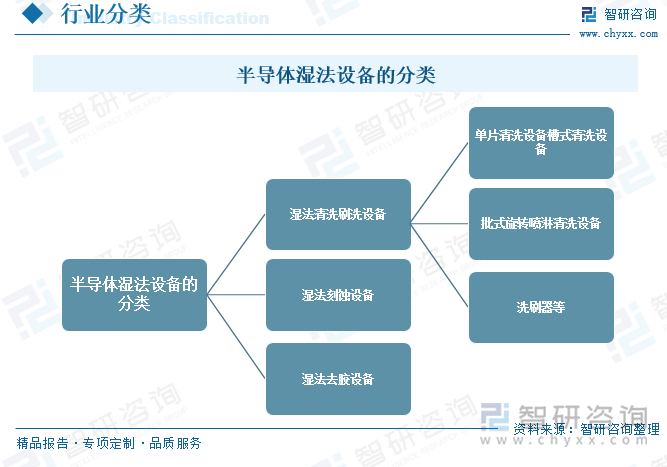
Core Viewpoint - The semiconductor wet processing equipment market is experiencing robust growth, driven by the rapid development of the global semiconductor industry, with significant increases in market size projected for both global and Chinese markets in the coming years [1][6][27]. Group 1: Market Size and Growth - The global semiconductor cleaning equipment market is expected to reach approximately 79.407 billion yuan in 2024, an increase of 8.235 billion yuan from 2023 [4]. - The Chinese semiconductor cleaning equipment market is projected to grow to 15.882 billion yuan in 2024, up by 3.071 billion yuan from 2023 [6]. - By 2025, the global semiconductor cleaning equipment market is anticipated to reach 88 billion yuan, while the Chinese market is expected to grow to 19.5 billion yuan [1][6]. Group 2: Industry Definition and Classification - Semiconductor wet processing equipment is essential for various processes in chip manufacturing, including cleaning, etching, and stripping, utilizing chemical solutions to achieve specific objectives [2]. - The main categories of semiconductor wet processing equipment include wet cleaning, wet etching, and stripping equipment, with single-wafer and batch cleaning systems being the most prevalent [2]. Group 3: Industry Chain Structure - The upstream of the semiconductor wet processing equipment industry includes high-purity chemicals, ultra-pure water systems, and precision mechanical components, with significant technological barriers dominated by companies from Europe, the United States, and Japan [8]. - The midstream involves the manufacturing of semiconductor wet processing equipment, while the downstream applications are in semiconductor manufacturing, serving sectors like consumer electronics, automotive electronics, and AI/data centers [8]. Group 4: Competitive Landscape - The global semiconductor wet processing equipment market is highly concentrated, with major players like SCREEN, Tokyo Electron, Lam Research, and SEMES holding over 90% of the market share [17]. - Domestic companies such as Zhichun Technology, North Huachuang, Shengmei Shanghai, and Chip Source are rapidly developing, with some achieving mass production and entering the supply chains of leading domestic wafer manufacturers [17][20]. Group 5: Company Performance - Shengmei Shanghai is projected to achieve a revenue of 5.618 billion yuan in 2024, a year-on-year increase of 44.48%, with net profit reaching 1.153 billion yuan, up 26.65% [23]. - Zhichun Technology has become a leader in high-purity process systems and wet processing equipment in China, reporting a total revenue of 2.639 billion yuan in the first three quarters of 2024, a year-on-year increase of 20.04% [25]. Group 6: Future Trends - The expansion of domestic wafer production capacity and technological advancements are expected to enhance the role of Chinese semiconductor wet processing equipment companies in the global supply chain [27]. - Continuous innovation and accelerated domestic substitution are anticipated to lead to higher cleanliness and integration in equipment, with an expanding share in international markets [27].


镇江持续打造“镇合意”优化营商环境品牌
Xin Hua Ri Bao· 2025-05-07 01:36
Group 1 - The government of Danjiangkou has actively coordinated land issues for companies, leading to the completion of new facilities such as R&D centers and medical endoscope optical component factories in 2023 [1] - The city of Zhenjiang has been continuously improving its business environment since 2021, with a focus on creating a market-oriented, legal, and international business climate [1] - Zhenjiang's comprehensive credit index for January to February 2023 is 91.39, ranking eighth among 261 prefecture-level cities in China [1] Group 2 - The expansion project of Jiangsu Lichangrong High-Performance Materials Co., Ltd. has commenced, with an annual production capacity of 45,000 tons of electronic-grade isopropanol, primarily supplying major semiconductor companies [2] - The project faced challenges in energy-saving review procedures, which were resolved through direct communication with local government and industry experts [2] Group 3 - Zhenjiang has implemented measures to accelerate the construction and operation of major projects, achieving an investment of 17.03 billion yuan in the first quarter of 2023, exceeding the planned schedule by 2.9 percentage points [3] - A total of 165 new projects have been initiated, with a completion rate of 70.3% [3] Group 4 - The "white list" system for administrative inspections has received positive feedback from businesses, aiming to reduce unnecessary regulatory burdens [4] - Jiangzhou Auto Parts Co., Ltd. successfully obtained a 20 million yuan loan from a local bank to support its expansion in the electric vehicle sector [4] Group 5 - Zhenjiang's financial support mechanisms for small and micro enterprises have resulted in over 21,600 companies receiving credit totaling 110.41 billion yuan and loans amounting to 85.48 billion yuan in the first quarter of 2023 [5] Group 6 - The establishment of a "direct communication" service mechanism between government and enterprises has facilitated the resolution of operational challenges, such as the swift opening of a new cinema after resolving lease issues [6] - The city has appointed 52 new business environment supervisors to enhance service delivery and responsiveness to enterprise needs [6]
摩根士丹利:追踪中国半导体国产化进程-评估国内人工智能 GPU 的自给自足程度
摩根· 2025-05-06 07:05
Investment Rating - The report maintains an "In-Line" industry view for Greater China Technology Semiconductors [6]. Core Insights - China's AI GPU self-sufficiency is projected to increase from 34% in 2024 to 82% by 2027, with the total addressable market (TAM) for cloud AI expected to grow at a CAGR of 28% to reach US$239 billion by 2027, with China accounting for approximately US$48 billion [2][17]. - The overall semiconductor self-sufficiency ratio in China is currently at 24%, up from 20% in 2023, driven by government subsidies, inventory digestion, and capacity ramp-up in memory and leading node products [3][11]. - Local GPU suppliers like Huawei and Cambricon are primarily supported by SMIC, which faces capacity expansion challenges [2][18]. Summary by Sections AI GPU Self-Sufficiency - The self-sufficiency ratio for AI GPUs in China is estimated at 34% for 2024 and expected to rise to 82% by 2027, with significant growth in the cloud AI market [2][17]. - The TAM for cloud AI is projected to grow to US$48 billion in 2027, with China expected to capture 20% of global demand [2][17]. Semiconductor Market Overview - China's semiconductor market was valued at approximately US$183 billion in 2023, with local companies generating US$43 billion in revenue, marking a 36% increase from US$32 billion in 2023 [3]. - The self-sufficiency ratio for semiconductors in China is currently at 24%, reflecting a 4 percentage point increase from the previous year [3][11]. Localization Progress - Significant advancements have been made in memory, image sensors, and power semiconductors, while equipment and EDA progress has been slower than expected [8]. - Local vendors in memory and power semiconductors are benefiting from the growth in electric vehicles and gaining market share over global competitors [8]. Stock Implications - The report is equal-weight on SMIC and Empyrean Technology, noting that while SMIC is crucial for local AI chip production, potential Nvidia acquisitions could impact domestic GPU market share [4]. - Positive outlook on China wafer fab equipment makers like Naura, AMEC, and ACM Research due to local foundry and memory capacity expansion [4].
3D DRAM,蓄势待发
半导体行业观察· 2025-05-05 04:22
Core Viewpoint - The article discusses the impact of the U.S. export restrictions on High Bandwidth Memory (HBM) on the domestic semiconductor industry in China, highlighting the shift towards alternative high-bandwidth storage solutions like 3D DRAM as a response to these challenges [1][21]. Group 1: Impact of HBM Restrictions - The U.S. Department of Commerce imposed stricter export controls on HBM and related semiconductor manufacturing equipment, affecting 140 Chinese entities [1]. - The restrictions particularly target HBM products with a memory bandwidth density exceeding 2GB/s/mm², disrupting the supply chain for advanced storage in China [1]. - Concerns arose that these limitations would significantly pressure the domestic semiconductor industry, especially the AI sector reliant on HBM [1]. Group 2: Emergence of 3D DRAM - 3D DRAM has gained attention among domestic storage manufacturers as a potential alternative to HBM, leveraging advancements in scaling technology [2][3]. - Unlike HBM, which is a stacked-die memory, 3D DRAM aims to increase storage density and reduce production costs by evolving from 2D to 3D structures [4][10]. - The transition to 3D DRAM involves vertical stacking of memory cells, which can enhance performance and efficiency while addressing the limitations of traditional DRAM structures [9][10]. Group 3: Industry Developments and Competition - Major manufacturers like Samsung, SK Hynix, and Micron are actively developing 3D DRAM technologies, with Samsung planning to unveil its initial version this year and achieve mass production by 2030 [11][13]. - SK Hynix has demonstrated a 5-layer stacked 3D DRAM prototype with a yield rate of 56.1%, indicating progress in this competitive landscape [13]. - Micron has been researching 3D DRAM since 2019 and holds a significant number of patents in this area, positioning itself as a key player in the market [16]. Group 4: Technological Innovations - Innovations such as the use of IGZO materials in 3D DRAM are being explored to address bandwidth and latency challenges, enhancing the performance of DRAM chips [16]. - Neo Semiconductor has introduced a technology called 3D X-DRAM, which aims to overcome capacity limitations and achieve high throughput for AI processing [17]. - Domestic companies like Changxin Storage and Yangtze Memory Technologies are also making strides in 3D DRAM development, indicating a growing interest in this technology within China [19][21]. Group 5: Future Outlook - The demand for 3D DRAM is expected to rise rapidly in China as traditional HBM faces restrictions, with 3D DRAM seen as a key direction for overcoming bandwidth bottlenecks [21]. - The global supply chain dynamics and tariff policies are creating opportunities for domestic DRAM manufacturers to innovate and compete effectively in the market [21].


赛道Hyper | 海力士消费级存储颗粒价上调约10%
Hua Er Jie Jian Wen· 2025-05-05 02:07
Core Viewpoint - The decline in memory prices has ended, with prices expected to stabilize and rebound in Q1 and Q2 of 2025 [1] Group 1: Price Changes - Hynix's DRAM prices have increased by approximately 12% [2] - SanDisk announced a price increase of over 10% for flash memory products starting April 1 [2] - The fixed trading price for DDR4 8Gb DRAM products rose by 22.22% compared to March [2] Group 2: Industry Overview - DRAM and flash memory are essential components in various devices, including PCs, smartphones, SSDs, and USB drives [4][6] - The demand for DRAM is increasing due to the deployment of GenAI in devices, requiring larger memory capacities [7][8] Group 3: Key Companies in A-Share Market - Major DRAM companies include Beijing Junzheng and Deep Technology, with Deep Technology being a leader in DRAM packaging and testing [13] - Key flash memory companies include Zhaoyi Innovation, Dongxin Co., Puran Co., and Jiangbolong [14] - Zhaoyi Innovation and Dongxin Co. have flash memory revenue shares of over 60% [15] Group 4: Company Profiles - Jiangbolong is a leader in storage modules, including SSDs and memory cards [17] - Demingli's SSDs account for 48.20% of its revenue, with mobile storage at 28.01% [21] - Zhaoyi Innovation's storage chip revenue reached 5.194 billion yuan, making up 70.6% of total revenue [23] - Beijing Junzheng's storage chips are its primary revenue source, focusing on consumer markets like security monitoring [24]

美国没救了 !特朗普再出狂言,白宫造谣中国将丢失1000万岗位!
Sou Hu Cai Jing· 2025-05-03 04:19
Group 1 - The U.S. Treasury Secretary's claim that China will lose 10 million jobs due to tariffs is criticized as exaggerated and unfounded, with actual calculations suggesting a maximum of 600,000 jobs based on U.S. labor statistics [1][3] - The U.S. manufacturing jobs have significantly decreased from 17.3 million in 2000 to 12.3 million, while productivity has increased by 60%, indicating that automation and offshoring are the real culprits behind job losses, not China [3][5] - The imposition of tariffs has led to increased prices for American consumers, with specific examples showing price hikes of 38% for bicycles and 52% for fans in Walmart, highlighting the immediate impact on the retail sector [5][7] Group 2 - The trade surplus between China and the U.S. reached a record high of $382.9 billion in 2023, demonstrating the resilience of China's export economy despite tariffs [5][7] - The U.S. attempts to decouple technology from China have backfired, as China's semiconductor imports fell by 27% while domestic chip production surged by 40%, indicating a shift in the global supply chain dynamics [7][8] - The narrative of job threats from China is seen as a reflection of U.S. hegemonic anxieties, with the U.S. struggling to balance its financial empire with the need for a robust manufacturing base [7][8]

投资连亏后再砸16亿!养元饮品2024年核桃乳销量再下滑,跨界半导体能救场吗
Zheng Quan Zhi Xing· 2025-04-30 09:48
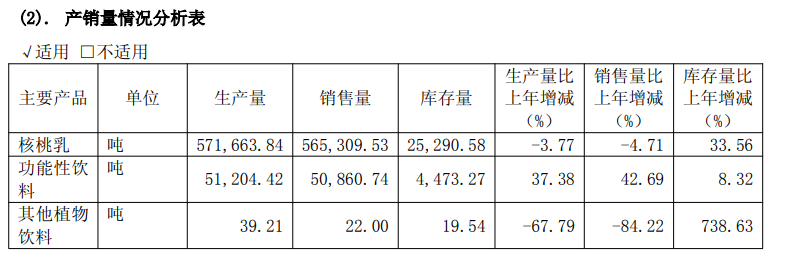
Core Viewpoint - Yangyuan Beverage (603156.SH) reported a decline in revenue but an increase in net profit for 2024, indicating a "profit without revenue growth" scenario. The company is facing challenges in its core walnut milk product market, prompting it to seek growth through cross-industry investments [1][2]. Financial Performance - In 2024, Yangyuan Beverage achieved revenue of 6.058 billion yuan, a year-on-year decrease of 1.69%, while net profit attributable to shareholders was 1.722 billion yuan, an increase of 17.35% [1]. - The first quarter of 2025 saw a significant decline in revenue across all regions, with an overall drop of 20.44%, and revenue and net profit down 19.7% and 26.95% year-on-year, respectively [1][2]. - For the first three quarters of 2024, the company experienced a dual decline in performance, with revenue and net profit decreasing by 7.81% and 4.69%, respectively [2]. Product Performance - The walnut milk product, represented by "Six Walnuts," saw a sales volume decline of 4.71% to 571,663.84 tons, and revenue decreased by 5.86% to 5.373 billion yuan, marking three consecutive years of revenue failing to exceed 6 billion yuan [2][3]. - Despite a significant increase in inventory by 33% due to pre-Spring Festival stocking, the core product's performance remains under pressure [2]. Regional Performance - The company’s revenue from offline distribution channels decreased by 2.99% to 5.729 billion yuan, with only the Northeast and Northwest regions showing positive growth [3][5]. - In the first quarter of 2025, revenue from the distribution model plummeted by 22.55% to 1.644 billion yuan, with all seven major regions reporting declines [3]. Investment Strategy - Yangyuan Beverage is attempting to find new growth avenues through cross-industry investments, recently announcing a 1.6 billion yuan investment in Changjiang Storage Technology Holding Co., acquiring a 0.99% stake [1][6]. - The company has a history of significant investments, with annual long-term equity investments exceeding 1 billion yuan from 2017 to 2022, but these investments have not yielded expected returns, leading to consecutive years of investment losses [6][7]. - The company’s investment in private equity funds has been particularly problematic, with substantial losses reported in recent years, raising concerns about the sustainability of its investment strategy [6][7].
关税大棒下的华强北众生相
3 6 Ke· 2025-04-30 04:39
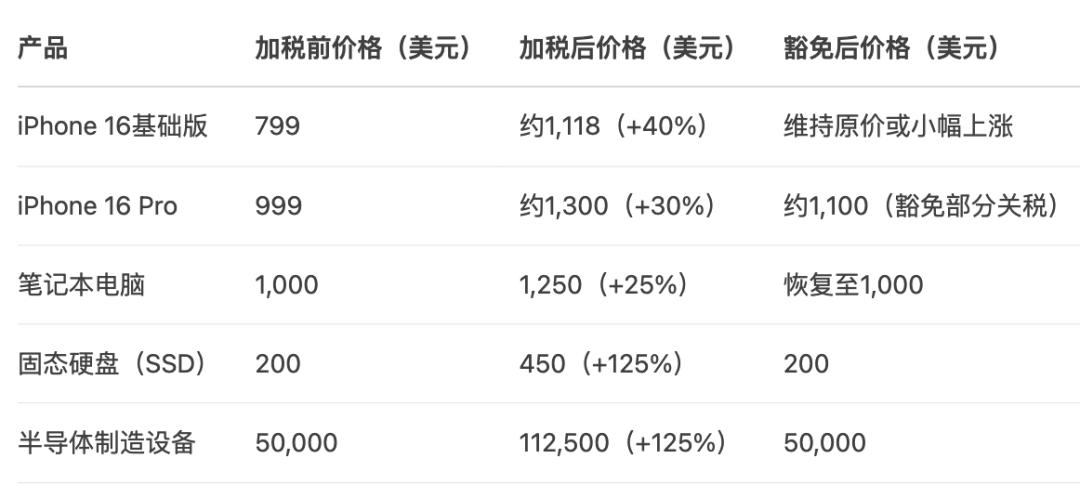
Core Viewpoint - The article discusses the transformation of Huaqiangbei, a major electronics market in China, amidst the ongoing trade war and tariff impacts, highlighting the shift from reliance on imported components to increased domestic production and innovation. Group 1: Tariff Impact - The new customs regulations in China have significantly increased costs for American IDM companies, with tariff costs for Texas Instruments' chips rising from 5% to 25% [1] - Prices for popular chips like NVIDIA GPUs and Intel CPUs have been suspended, leading to a price increase for assembled computers from 5000 RMB to 5800 RMB within a week [1] - The price comparison of various products shows substantial increases post-tariff, with iPhone 16 prices rising by 30-40% and SSD prices increasing by 125% [2] Group 2: Market Adaptation - The proportion of domestic chip procurement in Huaqiangbei is expected to rise from 32% in 2018 to 57% by 2024, driven by high tariff costs [4] - The electronics market is experiencing a split, with high-end chip markets facing chaos while mid-range products like STM32F103 remain stable [2][3] - Businesses are adapting by diversifying their markets, with some shifting focus from the U.S. to Southeast Asia and other emerging markets [10][8] Group 3: Resilience and Evolution - Huaqiangbei has shown resilience, with a significant increase in foot traffic and foreign customers despite tariff pressures [4][7] - The market has evolved from panic selling during the initial trade tensions to a more composed response, with businesses restructuring their supply chains to reduce reliance on U.S. markets [8][7] - The "China +1" strategy has allowed businesses to increase domestic sales, with some companies reporting a rise in domestic sales from 0% to 35% [8] Group 4: Innovation and Future Outlook - The shift towards domestic alternatives is seen as a catalyst for a technological revolution, with companies now aiming to be rule-makers rather than just followers [15] - Huaqiangbei is leveraging its extensive supply chain network to provide rapid and customized solutions, achieving delivery times of one day compared to months for U.S. manufacturers [13][11] - The ongoing adaptation to global market demands and the integration of digital tools are reshaping traditional business models in Huaqiangbei [17][11]