
谷歌

Search documents
AI算力驱动下,PCB和覆铜板产业竞争和卡位格局
猛兽派选股· 2025-12-26 16:01
Core Viewpoint - AI computing power is the core growth engine for the PCB and copper-clad laminate industry, with high-end HDI/multi-layer boards and low-loss copper-clad laminates becoming key competitive factors [1][5]. Group 1: Copper-Clad Laminate (CCL) Manufacturers - The copper-clad laminate is a core substrate for PCBs, accounting for about 30% of PCB costs, with high technical barriers and long certification cycles leading to high industry concentration [1][6]. - Leading global manufacturers include: - Shengyi Technology: Mainland China's leader in copper-clad laminates, with M9 ultra-low loss products certified by NVIDIA, achieving over 90% yield [2]. - Kingboard Laminates: A global leader in scale, covering mid-to-high-end FR4 and low-loss series, with strong overseas delivery capabilities [2]. - Taiwan's Taisol and Panasonic: Key suppliers for NVIDIA, maintaining stable shares in ultra-low loss products [2]. - Domestic second-tier players like Huazheng New Materials and Jin'an Guoji are accelerating high-end breakthroughs, focusing on low-loss series for AI servers and communication equipment [3]. Group 2: PCB Manufacturers - The core competitiveness of PCB manufacturers lies in customer binding depth, high-end product technology, and overseas capacity layout [4]. - Leading North American players include: - Simmtech: A leader in high-end HDI and multi-layer boards, a core supplier for NVIDIA and other major clients [4]. - Unimicron: A benchmark for high-speed communication boards, with strong growth driven by AI and communication sectors [4]. - Domestic players like Shennan Circuits and Pegatron are positioned for long-term benefits from the rise of domestic computing power and breakthroughs in carrier boards [4]. Group 3: Industry Trends and Competitive Logic - Most PCB manufacturers do not produce their own copper-clad laminates due to high technical barriers and customer specifications [6]. - The competitive core dimensions focus on ultra-low loss product capacity, yield, and customer certification, as well as high-end HDI and multi-layer board technology breakthroughs [7]. - Short-term beneficiaries include Simmtech and Shengyi Technology, while mid-term beneficiaries are Shennan Circuits and Huazheng New Materials, with long-term potential seen in advanced packaging and carrier board manufacturers [7][8].







谷歌推出新功能,允许用户更改Gmail邮箱地址
Xin Lang Cai Jing· 2025-12-26 14:48
Core Viewpoint - Google has introduced a feature allowing users to change their existing @gmail.com email addresses while retaining all account data and related services, addressing a long-standing user request [2][5]. Group 1: Feature Details - The update is currently only available on Google's Hindi help page, suggesting that the rollout may initially target India or Hindi-speaking regions [2][5]. - The feature is gradually being made available to all users, indicating a potential global rollout, although this process may take some time [2][5]. - The English version of the help page still states that @gmail.com addresses "typically cannot be changed," and Google has not responded to inquiries about which regions will be the first to implement this feature [2][5]. Group 2: User Experience - After changing the email address, the original address will automatically become an account alias, and emails sent to the old address will still be delivered to the inbox [2][5]. - Users will still be able to log into various Google services such as Drive, Maps, and YouTube using the old address [2][5]. - Previously, users had to create a new account and manually migrate data, which was cumbersome and prone to errors, potentially disrupting connections with third-party applications [2][5]. Group 3: Limitations and Conditions - Google has stated that after changing the Gmail address, users will not be able to create a new Gmail address for the next 12 months, nor can they delete the newly changed email address [6]. - The update was first discovered in user forums and tech communities, and Google has not yet issued a formal press release or announcement regarding this feature [6].

微软已做好强劲增长的准备
美股研究社· 2025-12-26 12:27
Core Viewpoint - Microsoft is positioned for strong growth and substantial shareholder returns due to its significant stake in OpenAI and the growth of its Azure cloud business, with a market capitalization exceeding $3.5 trillion [1]. Financial Performance - Microsoft reported impressive financial results with all core metrics achieving double-digit growth, driven by a robust cloud business, with revenue increasing by 18% year-over-year (17% excluding currency effects), approaching $77.7 billion [3]. - The operating profit margin reached 99%, with operating profit at $88 billion, and net profit of $77.7 billion, resulting in diluted earnings per share of $3.72. The current price-to-earnings ratio is approximately 33 times [3]. Shareholder Returns and Capital Expenditure - Microsoft returned $10.7 billion to shareholders this quarter, with a total yield slightly above 1% and a dividend yield of only 0.66% [6]. - Capital expenditures surged to $44.9 billion to meet the growing demand from Azure, with expectations for continued growth in capital spending [6]. - Free cash flow reached $55.7 billion, supported by revenue growth and a leasing model that mitigates the impact of AI-related disruptions [6]. Business Segment Performance - The cloud business is the core growth engine, with commercial orders driven by OpenAI increasing by 122% year-over-year, while Azure's revenue grew nearly 99% [9][10]. - The productivity and business processes segment continued to grow, benefiting from a slowdown in cost growth and improved gross margins [10]. - The Windows OEM and gaming segments showed the slowest growth, with Windows OEM revenue increasing by 6%, primarily due to a one-time boost from the transition from Windows 10 to Windows 11 [10]. Core Advantages - Microsoft has three main advantages for future development: 1. Antitrust compliance advantage, having successfully navigated past antitrust challenges, allowing for greater operational flexibility [12]. 2. A diversified business portfolio that includes Windows, Azure, ChatGPT, GitHub, LinkedIn, Xbox, and Blizzard, enhancing resilience against market changes [12]. 3. Valuation advantage, with a non-GAAP annualized earnings per share of $16.5 and a price-to-earnings ratio of about 30 times, making it more attractive compared to competitors like Google [13]. Conclusion - Despite a market capitalization of $3.6 trillion, Microsoft is believed to have significant growth potential, supported by its diversified business model and strong performance in the AI sector, particularly with Azure and ChatGPT [17][18].

新华指数丨新华出海指数全线上扬,AI液冷行情再起
Xin Hua Cai Jing· 2025-12-26 10:01
Core Viewpoint - The AI industry chain is experiencing significant growth, particularly in the liquid cooling sector, with companies like Kuaike Intelligent (快克智能) showing strong stock performance due to their advancements in this area [1][2]. Company Performance - Kuaike Intelligent's stock price reached 37.48 yuan, marking a 22.89% increase over the week, significantly outperforming the industrial control equipment index [1]. - The company's success is attributed to its liquid cooling business, which has seen substantial demand as AI server markets expand [1]. Industry Trends - Liquid cooling technology is transitioning from an optional to a necessary solution for AI servers, driven by increasing power density and cooling efficiency requirements [2][3]. - Analysts predict that the liquid cooling sector will continue to grow, with annual market expansions expected as AI demand rises [2]. Competitive Landscape - The liquid cooling industry is currently dominated by Taiwanese manufacturers, but Chinese companies are poised to benefit from increasing demand for AI-driven liquid cooling solutions [3][4]. - Chinese firms have competitive advantages in technology iteration speed, cost control, and customer responsiveness, allowing them to capture market share [4]. Market Dynamics - The global AI computing power demand is growing exponentially, with traditional air cooling methods nearing their thermal limits, making liquid cooling the standard for high-power AI servers [2][3]. - Major tech companies like Meta, Google, and Amazon are accelerating their liquid cooling initiatives, indicating a shift in industry standards [3]. Stock Market Performance - The Xinhua Outbound Manufacturing Index saw a 2.91% increase, with significant contributions from communication equipment and passenger vehicles [6]. - Other indices, such as the Xinhua Electric New Outbound Index, rose by 7.90%, reflecting strong investor interest in technology sectors driven by AI demand [6].


别被华尔街“轮动牛市”噪音带偏 Mag7“领涨神话”仍是美股主线
智通财经网· 2025-12-26 09:01
Core Viewpoint - Wall Street analysts predict that 2026 will be characterized as a "rotation bull market," with institutional investors believing that the current rotation will not last long, and that the "Magnificent Seven" tech giants will significantly outperform other sectors, leading the S&P 500 and Nasdaq 100 to new highs [1][2]. Group 1: Market Trends and Predictions - The S&P 500 index is expected to close 2025 at a historical high, paving the way for further gains in 2026 [1]. - The market leadership has shifted from AI-related tech and growth stocks to undervalued sectors such as value, healthcare, and materials [1]. - The S&P 500 index has seen a cumulative increase of approximately $30 trillion over the past three years, largely driven by major tech giants and companies investing in AI infrastructure [3]. Group 2: The Magnificent Seven - The "Magnificent Seven" (Mag 7) includes Apple, Microsoft, Google, Tesla, Nvidia, Amazon, and Meta Platforms, which collectively account for about 35% of the S&P 500 and are viewed as key drivers of market performance [4]. - Analysts expect the Mag 7 to achieve a profit growth of approximately 22.7% in 2026, compared to 12.5% for the remaining 493 companies in the S&P 500 [15]. Group 3: AI Infrastructure and Investment Themes - AI infrastructure and the Mag 7 theme remain central to market dynamics, with companies driving long-term value expansion [3]. - The ongoing AI investment narrative is expected to continue as a strong theme throughout 2026, despite some market rotation towards other sectors [2][9]. - The market is currently experiencing a capital reallocation, shifting focus from growth to value and from tech to non-tech sectors [6]. Group 4: Economic Indicators and Market Sentiment - The S&P 500's overall profit estimates have been revised upward, with analysts not anticipating significant risks of a downturn due to a dovish Federal Reserve outlook [14]. - The potential for a "melt-up" phase exists, which could lead to a larger market peak, supported by strong earnings from the Mag 7 [15]. - The current market environment is not seen as an extreme bubble compared to the internet bubble of the early 2000s, with tech valuations being more reasonable [17][18].
渤海证券研究所晨会纪要(2025.12.26)-20251226
BOHAI SECURITIES· 2025-12-26 05:19
Macro and Strategy Research - The report indicates that with the easing of uncertainties in US-China trade, external demand is expected to remain stable, while effective domestic demand still needs to be boosted [2] - The central economic work conference has set a relatively restrained overall policy for 2026, but structural policy optimization is expected to bring some highlights [2] - The report forecasts that the scale of equity public funds will continue to expand, and financing scale is expected to maintain steady growth, supporting positive liquidity expectations in the investment sector [3] - The market is anticipated to return to a slowly rising central trend after recent fluctuations, with a focus on long-term investments and thematic investments, particularly in technology sectors [3] Industry Research - The report highlights that companies like Zhipu and MiniMax are progressing towards IPOs in Hong Kong, which may provide key benchmarks for industry valuation and financing systems [5] - ByteDance is projected to invest approximately 160 billion yuan in AI infrastructure in 2026, indicating significant capital inflow into the AI sector [5] - Google's parent company has acquired Intersect for $4.75 billion, enhancing its data center power layout, which reflects ongoing investment trends in the tech industry [6] - The report notes that the computer industry has seen a 1.27% increase in the Shenwan Computer Index from December 18 to December 24, with most sub-sectors experiencing growth [6] - The report emphasizes that the successful IPOs of Zhipu and MiniMax could lead to a virtuous cycle of R&D investment and commercialization in the AI sector [6] - Domestic enterprises are accelerating their layout in consumer applications, which is expected to help form a comprehensive AI business ecosystem [6]
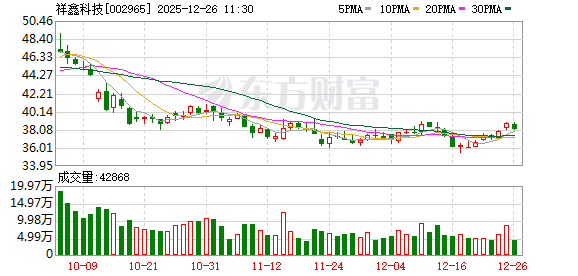
祥鑫科技:公司已为超聚变、华鲲振宇、中兴康讯等市场头部客户提供液冷服务器相关产品
Mei Ri Jing Ji Xin Wen· 2025-12-26 03:51
Core Viewpoint - The company has expertise in liquid cooling technology and offers customized cooling solutions for clients, indicating a strong position in the thermal management system market [2] Group 1: Company Capabilities - The company possesses products related to thermal management systems and is proficient in liquid cooling technology [2] - The company can provide tailored cooling solutions based on customer requirements [2] Group 2: Product Applications - The company's liquid cooling modules and structural components are effectively used for GPU cooling and server cooling [2] - The company has supplied liquid cooling server products to leading market clients such as Super Fusion, Huakun Zhenyu, and ZTE Kangxun [2]
离谱:256G内存比RTX5090还贵,你要为AI买单吗?
机器之心· 2025-12-26 03:06
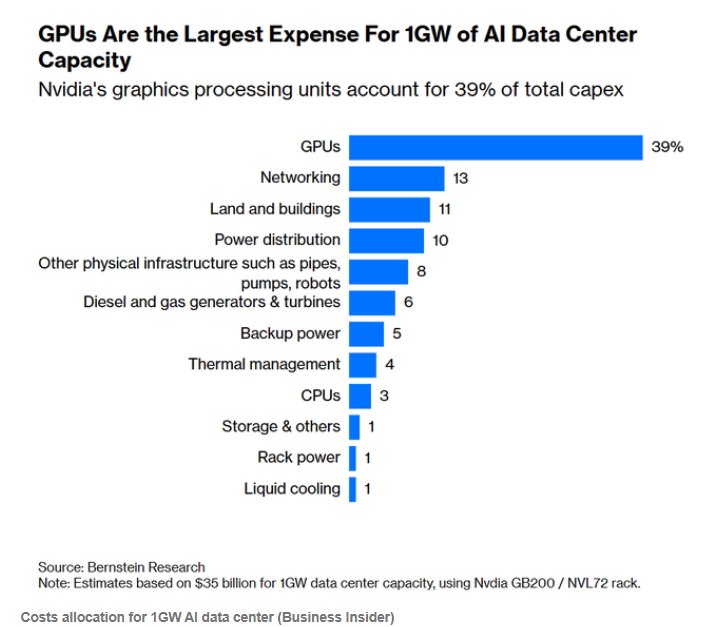
Core Viewpoint - The article highlights the significant price increases in computer components, particularly memory, driven by the demand from AI applications, leading to a structural shortage in the market [5][6]. Group 1: Memory Price Surge - The price of high-end GPU RTX 5090 has reached an official starting price of $1999, potentially exceeding $3000 in the market, while a single 256GB DDR5 memory stick is now priced between $3500 and $5000 [3]. - The current memory price surge is attributed to AI's demand for computing power, which has led to a structural shortage in the memory market [5]. - OpenAI has secured a deal with Samsung and SK Hynix for up to 900,000 DRAM wafers per month, representing 40% of global DRAM monthly production, which has significantly reduced the capacity available for consumer markets [5]. Group 2: Impact on Technology Companies - Major tech companies like Microsoft and Google are struggling to secure memory supplies, with reports of procurement executives being dismissed due to failures in securing long-term supply agreements [8]. - Microsoft executives faced difficulties in negotiations with SK Hynix regarding supply terms, leading to heightened tensions during discussions [8]. - Google has been unable to secure additional capacity for its TPU needs, resulting in significant supply chain risks and personnel changes within its procurement team [8]. Group 3: Broader Market Implications - The demand for larger memory capacities is increasing as the concept of "AI PCs" emerges, with 32GB or 64GB becoming the new standard for running large models [6]. - The price increases are not limited to memory; hard drive prices have also surged, and the GPU market is experiencing extreme price inflation, with second-hand RTX 4090 cards priced around 20,000 [6]. - The memory price hikes are affecting not only consumers but also tech companies, with reports of layoffs due to supply chain issues [6][9]. Group 4: Innovations in Memory Technology - Groq, an AI chip startup, has developed a chip design that integrates SRAM directly, achieving a memory bandwidth of 80TB/s, which is over 20 times that of traditional HBM solutions [11]. - The acquisition of Groq by NVIDIA may be a strategic move to mitigate the impact of rising DRAM prices and explore new memory technology paths [12]. - There are differing opinions on the feasibility of using SRAM as the main memory, given its high cost and integration challenges with existing chip designs [14].
5年,集体上市,中国芯片穿过华为的“至暗时刻”
3 6 Ke· 2025-12-26 02:28
Core Viewpoint - The rapid rise of domestic GPU companies in China is driven by policy benefits, capital support, and a surge in AI computing power demand, marking a significant moment for the industry as companies prepare for IPOs and attract substantial market interest [1][2][3]. Group 1: IPO Surge of Domestic GPU Companies - Domestic GPU companies are aggressively pursuing IPOs, with notable examples including Moer Technology and Muxi, which have seen their market values soar to 440 billion yuan and 300 billion yuan respectively [1][8]. - The average establishment time for these companies is around five years, aligning with the typical exit timeline for venture capital and private equity investments [4]. - The rapid pace of IPOs reflects a combination of market recovery, policy support, and the need for companies to establish benchmarks and demonstrate their potential to investors [7][8]. Group 2: Financial Performance and Market Valuation - Despite high market valuations, many of these companies are still operating at a loss, with Muxi projected to have a revenue cap of 1.98 billion yuan and a net loss of up to 763 million yuan by 2025 [8][9]. - The market's enthusiasm is evident as Moer Technology's market cap briefly exceeded 440 billion yuan, despite its limited revenue and ongoing losses [8][32]. - The average price-to-sales ratio for these companies is over 170 times, indicating a significant disparity between revenue and market valuation, leading to mixed investor sentiments [33][34]. Group 3: Challenges and Competitive Landscape - The competition is not only among domestic GPU companies but also includes major cloud service providers developing their own ASIC chips, which poses a significant threat to the market share of domestic GPUs [27][30]. - The lack of a robust ecosystem and reliance on external components, such as memory, complicates the cost structure for these companies, potentially impacting their profitability [21][22]. - Building a competitive ecosystem similar to NVIDIA's CUDA is essential for long-term success, but it requires substantial investment and time, which many domestic companies are currently struggling to achieve [23][24]. Group 4: Investor Sentiment and Market Dynamics - The disparity in access to IPO benefits has led to criticism, as institutional investors have captured a significant portion of the shares, leaving individual investors with minimal gains [37][38]. - Companies need to effectively communicate their value propositions and operational strategies to investors to maintain support and justify their high valuations [40][41]. - The long-term success of these domestic GPU companies will depend on their ability to deliver on performance and profitability while navigating the complexities of the semiconductor market [41].
焦点图表:高盛顶级科技交易员眼中的十大关键动向-Charts_In_Focus_These_Are_Goldman's_Top_Tech_Trader's_10_Biggest
Goldman Sachs· 2025-12-26 02:12
Investment Rating - The report indicates a positive outlook for the technology, media, and telecommunications (TMT) sectors, with a strong performance expected in 2026, particularly in artificial intelligence and semiconductor stocks [1][3][41] Core Insights - The Nasdaq 100 index saw a growth of over 20% in 2025, marking a significant performance milestone, with expectations for continued strong returns in 2026 [1][3] - The report highlights a notable divergence in stock performance within the technology sector, with over 30% of Nasdaq 100 constituents experiencing declines despite the overall index increase [3][41] - Key themes for 2026 include the impact of artificial intelligence on productivity and employment, the potential for a commodity supercycle, and the evolving landscape of large language models [6][8][41] Summary by Sections Performance Overview - The best-performing stocks in 2025 included SNDK, SATS, and several others, with growth rates exceeding 500% for some [2] - Conversely, the worst performers included CCOI and TTD, with declines of up to 72% [2] - Major tech giants like Nvidia and Apple showed significant gains, with Nvidia up 40% and Apple up 8% [2] Sector Analysis - The semiconductor sector is highlighted as the most favored sub-industry, while sectors like telecommunications and payments lagged behind [3] - The report notes a high level of dispersion in stock performance, with individual stock volatility being much higher than index volatility [3] Future Projections - Gartner predicts a 9.8% growth in global IT spending for 2026, reaching over $6 trillion [3][15] - The report anticipates that the largest seven tech companies will contribute significantly to the S&P 500's earnings growth in 2026, with expectations of a 12% overall growth rate for the index [17] - Discussions around the implications of artificial intelligence on job markets and productivity are expected to intensify in 2026 [19][41] Key Questions for 2026 - The report poses critical questions regarding the future of artificial intelligence, software valuations, and the potential for a commodity supercycle impacting various sectors [6][8] - It also raises concerns about the sustainability of growth in major tech companies and the implications of potential layoffs due to increased automation [19][41]