华润啤酒

Search documents
华润啤酒在川断供即时零售 电商平台亟待构建新生态
Zhong Guo Jing Ying Bao· 2025-08-30 13:40
Core Viewpoint - The recent price war among instant retail platforms has led to a significant disruption in the beer market, prompting companies like China Resources Beer to halt sales of certain products in specific regions to stabilize pricing and protect their business model [2][3][4] Industry Overview - The instant retail market in China reached a scale of 650 billion yuan in 2023, with a year-on-year growth of 28.89%, significantly outpacing traditional online retail growth [7] - By 2030, the overall market size of instant retail is expected to exceed 2 trillion yuan, indicating a vast potential for growth and a new competitive landscape for beverage companies [7] Company Actions - China Resources Beer confirmed the suspension of sales for its "Yong Chuang Tian Ya" and "Pure Life" series on instant retail platforms due to price disruptions caused by aggressive competition [2][3] - The company is actively communicating with instant retail platforms to resolve the issues and has resumed sales of certain products, suggesting initial success in negotiations [2] Market Dynamics - The price war has led to a situation where the consumer price for certain products has dropped below acceptable thresholds, causing concerns about market stability and the potential for profit erosion among manufacturers [3][4] - Industry experts highlight that the chaotic competition in instant retail could lead to a decline in product quality and service standards, as companies are forced to absorb high subsidy costs [4][5] Strategic Partnerships - China Resources Beer has established strategic partnerships with major platforms like Alibaba, Meituan, and JD.com, which have become crucial for its online sales, with projections indicating that online business could account for a significant portion of total sales in the near future [6][7] - The collaboration with Meituan's "Yima Songjiu" has been particularly fruitful, with sales on this platform expected to grow significantly in the coming years [6] Future Outlook - Experts suggest that the industry must innovate and adapt to the evolving landscape of instant retail, focusing on product differentiation and enhanced service delivery to meet the demands of younger consumers [7][8] - The need for a balanced approach to pricing and quality control is emphasized, as companies navigate the challenges posed by aggressive competition and strive to build a sustainable market ecosystem [8]


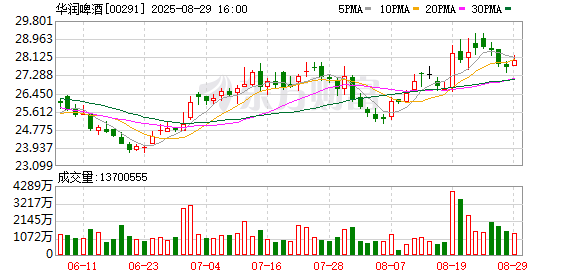
渠道失利 百威亚太营收被华润啤酒反超
Jing Ji Guan Cha Wang· 2025-08-30 12:38
Group 1 - The core viewpoint of the article highlights that Budweiser APAC experienced the largest decline in revenue and net profit among the top six beer companies in China, with decreases of 8.06% and 24.4% respectively [2] - The Chinese beer market is dominated by a few major players, with the top six companies holding over 90% market share for the past three years [2] - Budweiser APAC lost its position as the top revenue earner in the industry to China Resources Beer, with revenues of 22.275 billion and 23.942 billion respectively [2] Group 2 - The Chinese market is crucial for Budweiser APAC, contributing over 70% of its revenue in 2024, but sales volume and net income in the first half of 2025 saw declines of 8.2% and 10.2% year-on-year [2] - The CEO of Budweiser APAC noted that the company's sales in China did not meet industry averages due to weak performance in key markets and channels [2][3] - Budweiser APAC plans to accelerate the expansion of non-drinking channels, which currently account for about 50% of its business in China, compared to the industry average of 60% [4] Group 3 - China Resources Beer has been proactive in adapting to the rise of new retail channels, including e-commerce and instant retail, which are growing rapidly at rates of 30% or higher [5] - The company has established strategic partnerships with major platforms such as Alibaba and Meituan, resulting in significant growth in online and instant retail business, with GMV increasing by nearly 40% and 50% respectively in the first half of 2025 [5]


碧海映婚书,宝安“深爱启航”解锁浪漫消费新体验
Sou Hu Cai Jing· 2025-08-30 06:12
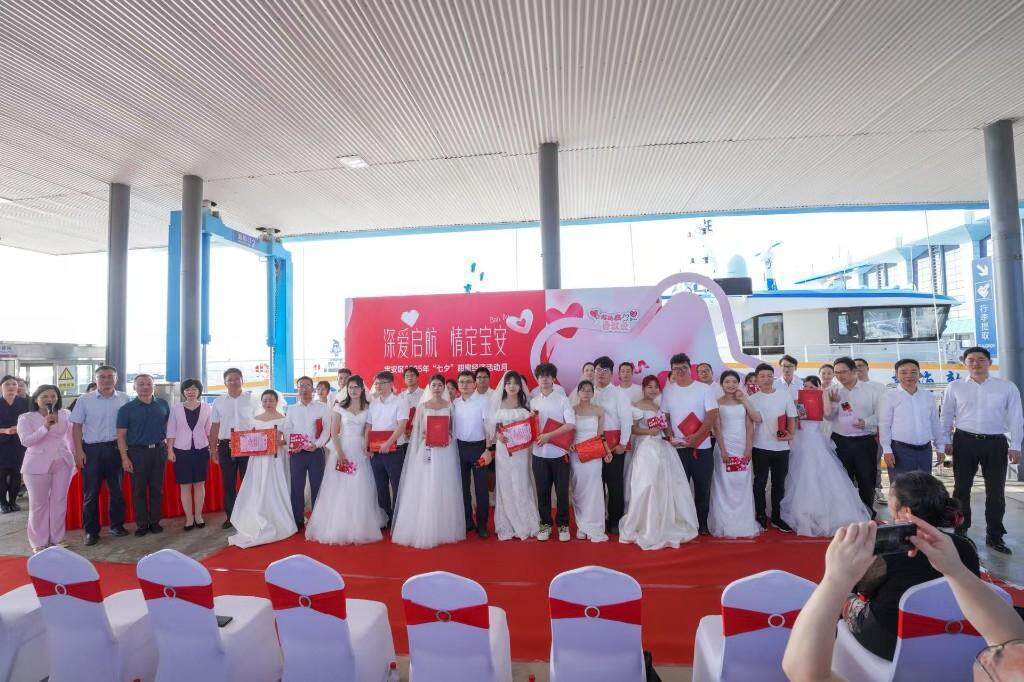
Core Viewpoint - The "Deeply in Love, Setting Sail: Collective Wedding on the Sea" event in Shenzhen aims to promote the "sweet economy" in Bao'an District, combining romantic experiences with consumer activities [1][5]. Group 1: Event Overview - The event took place on August 29 at Shenzhen Airport Terminal, featuring activities such as receiving marriage certificates at sea, drum ceremonies, and themed photography [1]. - The "Sweet Economy" activity month in Bao'an District started on August 20 and will last until September 20, 2025, marking a new phase of large-scale and brand development for the sweet economy [5]. Group 2: Government Initiatives - To handle the peak in marriage registrations, Bao'an District has increased appointment availability and improved facilities, ensuring accurate and safe registration processes [7]. - The district promotes extended service hours and has upgraded the registration environment, including themed exhibition areas and collective certificate issuance [7]. Group 3: Local Business Engagement - Various local business districts are participating in the event with themed promotions and activities, such as the collaboration between New An Street and major shopping centers to create romantic consumer experiences [7]. - The event encourages businesses in the wedding, hotel, and jewelry sectors to offer exclusive activities and services, enhancing the romantic atmosphere for both travelers and local residents [7]. Group 4: Economic Impact - The initiative is part of Bao'an District's efforts to deepen marriage customs reform and expand the sweet economy, aiming to enhance citizen happiness and stimulate domestic demand [5][7].
今夏为何不缺电?保供底气来自哪儿?
Ren Min Ri Bao· 2025-08-29 23:07
Group 1 - In July, China's electricity consumption exceeded 1 trillion kilowatt-hours for the first time, marking an 8.6% year-on-year increase, which is unprecedented globally [1] - The total installed power generation capacity in China reached 3.67 billion kilowatts by the end of July, a year-on-year increase of 18.2%, equivalent to the capacity of over 160 Three Gorges power stations [2] - Renewable energy generation increased by 15.6% in the first half of the year, with one-third of the total electricity consumption now coming from green energy sources [3] Group 2 - The electricity supply remained stable this summer due to the orderly commissioning of various power sources, including the largest thermal power plant and significant wind and hydropower projects [2][4] - The optimization of the power grid and the completion of over 160 key projects ensured reliable electricity delivery, with cross-regional power trading mechanisms enhancing supply security [5][6] - New energy storage systems have seen a nearly 30-fold increase in installed capacity over five years, providing flexibility in managing electricity supply and demand [7] Group 3 - Demand-side resources are being activated, with initiatives like residential energy-saving programs and virtual power plants helping to alleviate peak load pressures [8] - The future of China's power system aims to be clean, low-carbon, safe, and efficient, contributing to economic vitality and improved quality of life [9]
“顶住了峰、兜住了底” 今夏为何不缺电?
Ren Min Ri Bao· 2025-08-29 21:59
Core Points - In July, China's electricity consumption exceeded 1 trillion kilowatt-hours for the first time, marking an 8.6% year-on-year increase, which is unprecedented globally [1] - The stable electricity supply during the summer peak is attributed to the orderly commissioning of various power sources, ensuring sufficient supply [2] - The total installed power generation capacity in China reached 3.67 billion kilowatts by the end of July, a year-on-year increase of 18.2% [2] - Renewable energy generation increased by 15.6% in the first half of the year, with one-third of the total electricity consumption coming from green energy [3] - The optimization of the power grid has ensured stable electricity delivery, with significant contributions from inter-regional power transmission [4][5] - A new electricity trading mechanism has been established, allowing for cross-regional electricity transactions, enhancing the overall electricity supply security [6] - The rapid growth of new energy storage systems has improved the flexibility of electricity supply, with a nearly 30-fold increase in installed capacity over five years [7] - Demand-side management initiatives, such as peak load shaving and residential energy-saving programs, have been implemented to alleviate electricity pressure [8] - The future of China's power system aims to be clean, low-carbon, safe, efficient, and flexible, contributing to economic vitality [9]
川啤崛起!
Sou Hu Cai Jing· 2025-08-29 13:57
Core Viewpoint - The craft beer trend is reshaping the beer industry landscape, with Sichuan's differentiated development path emerging under the dominance of major players [2][11] Industry Overview - Sichuan's beer production increased by 10.0% year-on-year in the first seven months of 2025, reaching 1.855 million kiloliters, with July alone seeing a significant growth of 23.4% [2] - In contrast to the overall decline in beer production capacity over the past decade, Sichuan's beer capacity is on the rise [2][9] - Guangdong surpassed Shandong in annual beer production for the first time last year, marking a shift in the long-standing dominance of Shandong [2][16] Market Dynamics - The beer industry is experiencing a "decentralization" trend, influenced by factors such as consumption upgrades, demographic changes, strategic adjustments by leading companies, and the impact of emerging categories [2][17] - Major beer brands, including China Resources Snow Beer, Tsingtao, and Budweiser, have established production facilities in Sichuan, contributing to a total capacity of nearly 3 million kiloliters [8][18] Craft Beer Development - The rise of craft beer is providing new momentum for industry upgrades, with several craft beer projects launched in Sichuan, focusing on unique flavors and higher value-added products [10][14] - New craft beer production lines are being established, such as the 250,000-ton project by Sichuan Chuanpi Technology and the 100,000-ton craft beer line by Nanbo Brewery [13][14] Structural Changes - The beer industry is entering a "multi-polar era," with traditional dominance by Shandong being challenged by rising capacities in provinces like Guangdong and Sichuan [16][17] - The shift is driven by regional consumption market restructuring, strategic changes in enterprises, product structure upgrades, and supportive policies and capital investments [17][18] Conclusion - The dual trend of "regionalization of capacity and concentration of brands" in the beer industry is expected to continue for a longer period, despite the decentralization of production capacity [18]
金种子酒总经理离任、半年亏损7200万元,华润“啤白”战略首战遇挫|看财报
Tai Mei Ti A P P· 2025-08-28 16:26
Core Viewpoint - The financial performance of Jinzhongzi Liquor (600199.SH) has significantly deteriorated, with a substantial decline in revenue and a drastic increase in losses, indicating the failure of the "啤白赋能" strategy led by China Resources Beer (00291.HK) [2][3][6]. Financial Performance - For the first half of 2025, Jinzhongzi Liquor reported revenue of 484 million yuan, a year-on-year decrease of 27.47% from 667 million yuan [3]. - The net profit attributable to shareholders was a loss of 72 million yuan, a staggering decline of 750.54% compared to a profit of 11.1 million yuan in the same period last year [2][3]. - The company’s non-recurring net profit plummeted to -77.5 million yuan, a year-on-year drop of 2226.38% [3]. Sales and Marketing Expenses - Sales expenses increased by 18.44% to 151 million yuan, with advertising costs reaching 46.87 million yuan, up by 27.68 million yuan year-on-year [4]. - Despite a reduction in management and R&D expenses, the company significantly increased its advertising expenditure [3][4]. Product and Market Position - The majority of Jinzhongzi Liquor's revenue still comes from low to mid-range products, with a gross margin of only 36.45% for low-end liquor, compared to over 70% for three other listed liquor companies in the province [5]. - The revenue structure remains heavily reliant on low-end liquor, which accounted for over 60% of total revenue, with low-end liquor revenue declining by 32.77% to 251 million yuan [7]. Strategic Challenges - The strategic involvement of China Resources Beer has not yielded positive results, with cumulative losses of 467 million yuan from 2022 to 2024 [6]. - The departure of He Xiuxia, a key figure in the reform efforts, signals a failure of the attempted transformation of Jinzhongzi Liquor [7].


周期底部震荡延续,结构性布局正当时
2025-08-28 15:15
Summary of Conference Call Notes Industry Overview - The real estate market is currently experiencing a phase of stable volume but declining prices, indicating a cyclical bottom. New home transaction volumes as of July this year are flat year-on-year, while second-hand homes have shown a recovery due to price adjustments. [2] - The land supply and demand continue to decline, but local governments are attracting developers by offering quality land, leading to a noticeable increase in land transaction premium rates and floor prices this year. [2] Key Policy Signals - Recent policy changes include the cancellation of purchase restrictions outside the Fifth Ring Road in Beijing and the outer ring in Shanghai, indicating a potential for continued policy support. [3] - Future policy directions may include increased fiscal efforts to stimulate inflation and lowering actual mortgage rates to near zero, drawing lessons from Japan's experience. [3][7] - The potential for extraordinary policies includes raising the fiscal share of GDP to stimulate inflation and adjusting actual interest rates to zero, which could positively impact the market. [7][8] Investment Opportunities - In the current bottoming phase, several sectors are highlighted for investment: - Quality developers are expected to maintain sales capabilities and may emerge successfully from short-term policy expectations and long-term sales recovery. [5] - The Hong Kong real estate market shows potential for rebound due to supply contraction, policy support, and population inflow. [5][11] - Property management and commercial management companies are noted for their stable operations and profit growth, making them attractive for investment. [5][14] Housing Market Dynamics - New housing projects with low plot ratios and high usable areas are improving sales rates, while the second-hand housing market is seeing a strong trend of upgrading, although it faces significant price reduction pressures. [6] - The main transaction price range for second-hand homes is between 2-5 million, while new homes range from 3-7 million, indicating a shift towards upgrading. [6] Historical Insights for Investment Direction - Historical experiences from Japan, Hong Kong, and the U.S. provide insights into potential investment directions: - In Japan, construction companies performed well during recovery phases post-crisis. [9] - In Hong Kong, firms with a high proportion of non-development business showed stability and rental return improvements during downturns. [9] - In the U.S., leading real estate firms maintained market share and stability during recovery phases. [9] Specific Companies to Watch - Recommended developers include China Overseas, Jianfa International, China Resources, Greentown, Binjiang, and Jinmao. [15] - In the Hong Kong market, focus on companies like Thai and Home. [15] - For property management and commercial management, consider China Resources Vientiane Life, China Merchants Jinling, and Greentown Services. [15] - In the brokerage sector, Beike and Wo Ai Wo Jia are highlighted due to their benefits from the current market conditions. [15]
青岛啤酒中报“双增”下的隐忧:现金流下滑,华南增长受阻
Nan Fang Du Shi Bao· 2025-08-28 13:01
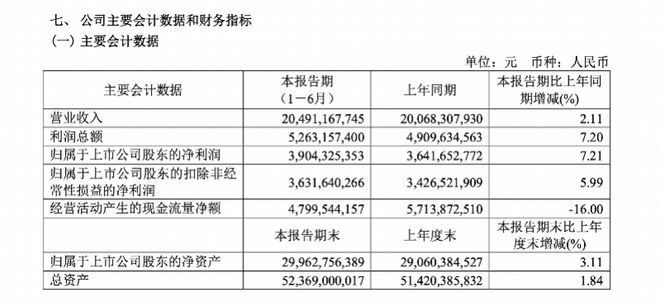
Core Viewpoint - Qingdao Beer reported a "double increase" in its semi-annual performance, with revenue and net profit showing growth amidst expanding beer market demand [1][2]. Financial Performance - Revenue for the first half of the year reached approximately 20.49 billion yuan, a year-on-year increase of 2.11% [2]. - Net profit attributable to shareholders was about 3.90 billion yuan, reflecting a year-on-year growth of 7.21% [2]. - The company's cash flow from operating activities decreased by 16% to approximately 4.80 billion yuan, indicating a divergence from revenue growth [4][2]. Product and Market Dynamics - The sales volume of mid-to-high-end products reached 1.99 million kiloliters, up 5.1% year-on-year, accounting for about 42% of total sales [3]. - New product launches included several mid-to-high-end specialty beers, contributing to sales growth [3]. - Despite overall growth, sales in the South China market showed a slight decline, with revenue of 1.46 billion yuan, down 0.4% year-on-year [6][7]. Challenges and Industry Context - The decline in cash flow and slower dealer payment collection may indicate potential risks, such as inventory pressure and operational efficiency issues [4][6]. - The South China market's sluggish growth is a common challenge faced by multiple beer companies, with local competitors like Zhujiang Beer gaining market share [7]. - The high-end beer market appears to be at a "crossroads," with external factors such as price sensitivity and adverse weather impacting growth [7].
中国必选消费品8月成本报告:现货成本小幅回升
Haitong Securities International· 2025-08-28 11:15
Investment Rating - The report assigns an "Outperform" rating to several companies including China Feihe, Huazhu, and others, while Budweiser APAC is rated as "Neutral" [1]. Core Insights - The report indicates a slight rebound in spot costs for essential consumer goods, with most indices showing an increase, while futures indices generally declined [35]. - The overall trend in the consumer goods sector reflects a mixed performance, with some categories experiencing cost increases while others face declines [8][35]. Summary by Category Beer - The spot cost index for beer increased by 0.39% month-on-month, while the futures index decreased by 6.06%. Year-to-date changes show a decline of 4.17% for spot and 6.16% for futures [36][13]. - Glass prices initially rose but later fell, with month-on-month changes of +0.3% for spot and -13.9% for futures [12]. Seasonings - The spot cost index for seasonings decreased by 0.16% month-on-month, while the futures index fell by 5.93%. Year-to-date changes are -1.76% for spot and -6.01% for futures [37]. - Domestic soybean prices have increased due to supply contraction, while imported soybeans remain weak [16]. Dairy - The spot cost index for dairy products increased by 0.7% month-on-month, while the futures index decreased by 1.44%. Year-to-date changes are -3.2% for spot and -2.11% for futures [38]. - Fresh milk prices have declined to 3.02 yuan/kg, with various factors contributing to price pressures [19]. Instant Noodles - The spot cost index for instant noodles increased by 1.3% month-on-month, while the futures index decreased by 2%. Year-to-date changes are -3.01% for spot and -4.21% for futures [39]. - Palm oil prices have risen, impacting overall costs [23]. Frozen Foods - The spot cost index for frozen foods increased by 1.15% month-on-month, while the futures index rose by 0.97%. Year-to-date changes are -1.83% for spot and -2.74% for futures [40]. - Vegetable prices have shown significant fluctuations due to seasonal demand [27]. Soft Drinks - The spot cost index for soft drinks increased by 0.78% month-on-month, while the futures index decreased by 5.63%. Year-to-date changes are -4.99% for spot and -8.6% for futures [41]. - PET prices are stable to weak, reflecting changes in demand and inventory levels [31].