
Lazada

Search documents
漫航观察周报-20250806
漫航观察· 2025-08-06 01:11
Investment Rating - The report indicates a downward trend in the cross-border logistics sector, with a decline of 1.68% in the cross-border logistics index [9][12]. Core Insights - The global container freight rates are on a downward trajectory, with the CCFI reporting 1232.29 points, a decrease of 2.30% month-on-month [7]. - The air cargo index BAI reported 2027 points, reflecting a decrease of 1.07% month-on-month, indicating a tightening in air freight capacity due to increased demand ahead of tariff deadlines [7]. - The report highlights significant developments in cross-border e-commerce, including new policies affecting import taxes and logistics costs in various regions, which may reshape market dynamics [15][16]. Summary by Sections 1. Global Cross-Border Logistics Important News - New international air cargo routes have been established, with 20 new routes opened in July, totaling 137 routes for the year, enhancing the air freight network [18]. - The U.S. has announced the cancellation of the low-value import tax exemption for goods valued under $800, effective August 29, which will impact air cargo volumes [20] 2. Cross-Border Logistics Important Data Changes - The shipping price index shows a decline, with the SCFI at 1550.74 points, down 2.63% month-on-month, and the NCFI at 1087.66 points, down 2.06% [7]. - The air cargo index BAI30 and BAI80 also reported declines of 1.65% and 0.25% respectively, indicating a broader trend of decreasing air freight rates [7]. 3. Capital Market Perspective on Cross-Border Logistics - The cross-border logistics sector has seen a cumulative decline of 7.26% since the beginning of 2025, reflecting ongoing challenges in the market [12]. - The report notes a divergence in stock performance within the cross-border logistics sector, suggesting varying impacts on individual companies [9].
印尼电商霸主Shopee新政频出背后:TikTok兵临城下
2 1 Shi Ji Jing Ji Bao Dao· 2025-08-01 13:14
Core Viewpoint - The partnership between Indonesia's largest streaming platform Vidio and Southeast Asian e-commerce giant Shopee marks a significant step in enhancing the digital ecosystem and creating a more attractive shopping experience for customers [1] Group 1: Shopee's New Fee Policy - Shopee Indonesia has introduced a new order processing fee of 1,250 Indonesian Rupiah (approximately 0.56 RMB) per completed transaction, applicable to all sellers on the platform [1][2] - New sellers and those without a Star rating are exempt from this fee for their first 50 orders, aimed at reducing the initial operational burden and encouraging more sellers to join [2] - The new fee structure is expected to pressure sellers, particularly those relying on low-price strategies, as they may struggle to absorb these additional costs without raising prices [2][3] Group 2: Financial Pressures and Strategic Shifts - Shopee's decision to implement these fees is driven by significant logistics costs, which account for approximately 17% of the total transaction value in Indonesia [3] - The company is transitioning from a "burning money" expansion strategy to a "profit-first" approach, reflecting a broader trend in the cross-border e-commerce industry [4][5] - Shopee aims to optimize its financial model by leveraging its scale and increasing fees, which is indicative of a shift towards profitability in the competitive landscape [5] Group 3: Market Dynamics and Competition - Shopee remains the market leader in Southeast Asia, holding a 46% market share in Indonesia, followed by local competitor Tokopedia at 23% [6] - The competitive landscape is intensifying, particularly with TikTok's acquisition of a majority stake in Tokopedia, which could significantly enhance TikTok's market presence [6][8] - The Indonesian e-commerce market is projected to grow rapidly, driven by a young population and government support for digital payments and logistics [6] Group 4: Challenges Ahead - Shopee faces challenges from increased regulatory scrutiny and rising compliance costs, which could impact its operations in Indonesia [9] - The company must adapt to a market where low-price competition is reaching its limits, necessitating a shift in strategy to maintain growth [9] - The rise of TikTok Shop, which has seen a significant increase in seller numbers and transaction volumes, poses a formidable challenge to Shopee's market dominance [8]

刘强东,买买买
3 6 Ke· 2025-08-01 01:12
Core Insights - JD.com is making a significant move towards internationalization by launching a voluntary public acquisition offer for CECONOMY AG, the parent company of MediaMarkt and Saturn, at a price of €4.60 per share, valuing the deal at approximately €2.2 billion (around $2.5 billion) [1][2] - This acquisition represents a strategic shift from JD.com's previous cross-border e-commerce model to a localized operation in Europe, aiming to establish a strong presence in the European consumer electronics market [1][4] Group 1: Acquisition Details - JD.com announced the acquisition offer for CECONOMY AG, which operates over 1,030 stores and has a significant market presence in Europe, reaching over 2.2 billion consumers annually [2] - The offer price represents a 23% premium over CECONOMY's trading price of €3.75 as of July 23 [1][2] - The acquisition is expected to be completed by the first half of 2026, pending regulatory approvals [2] Group 2: Market Position and Strategy - CECONOMY is the largest consumer electronics retailer in Europe, focusing on IT, mobile, and home appliances, with a total sales revenue of €22.4 billion in the 2023/24 fiscal year, of which online sales accounted for €5.1 billion [2] - JD.com aims to leverage CECONOMY's established market presence and infrastructure to enhance its own online and offline retail capabilities in Europe [2][3] - The acquisition aligns with JD.com's strategy to transition from cross-border e-commerce to local operations, emphasizing the establishment of local teams and supply chains [4][5] Group 3: Previous International Efforts - JD.com faced challenges in its earlier international expansion efforts, particularly in Southeast Asia, due to high logistics costs and insufficient supply chain localization, leading to a strategic retreat from markets like Thailand and Indonesia [5] - The company has previously attempted various models, including B2C and B2B platforms, but faced difficulties in achieving scale and competitiveness [5][6] - The acquisition of CECONOMY is viewed as a critical step for JD.com to overcome past challenges and enhance its competitive position in the European market [6]
科技与本土化成利器,中国物流企业“卷”向海外
Di Yi Cai Jing· 2025-07-30 10:37
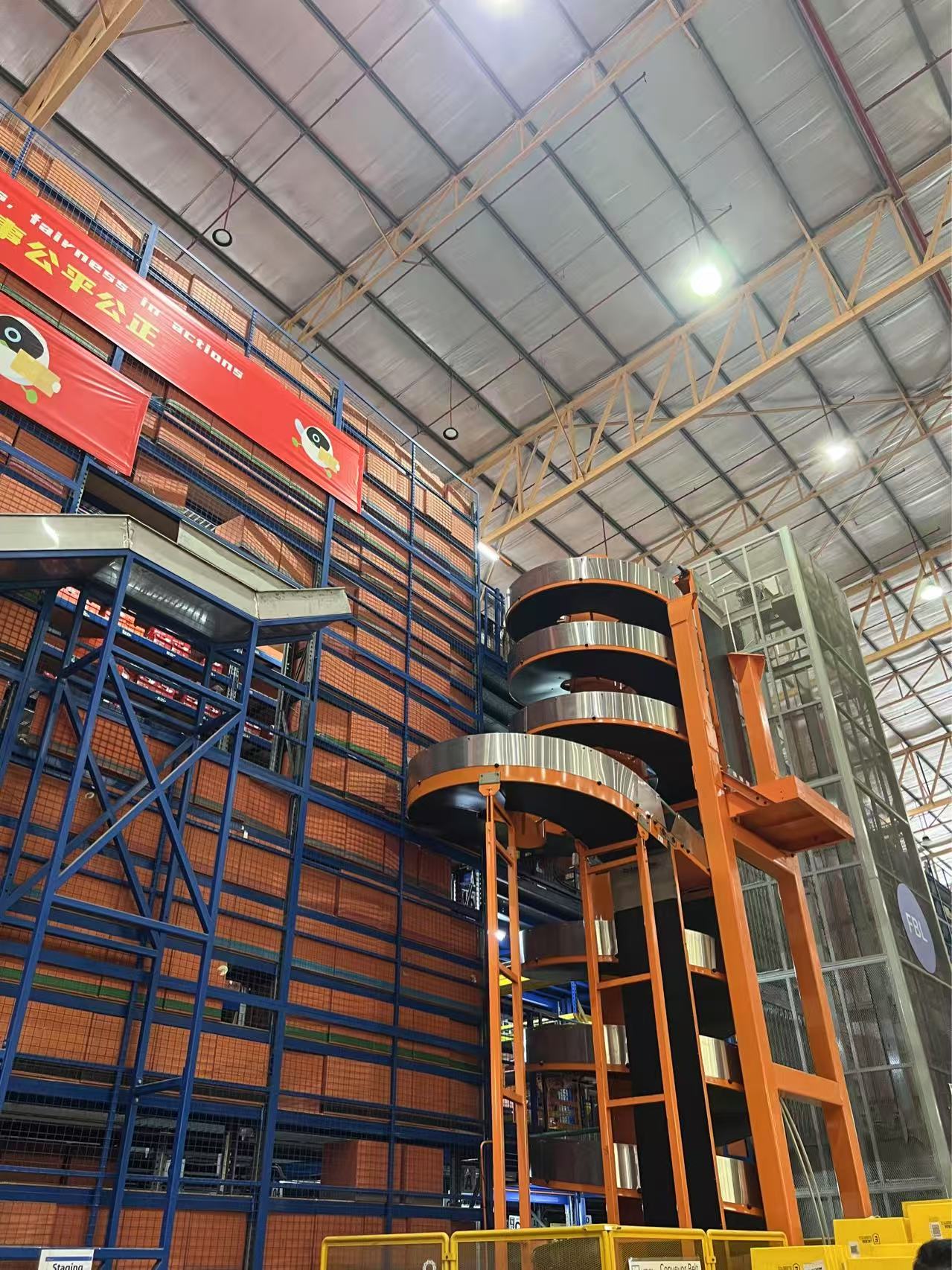
Core Viewpoint - Chinese logistics companies are rapidly expanding overseas, particularly in Southeast Asia, by combining localized staff with domestic-like facilities to enhance efficiency and market influence [1][5][10]. Group 1: Localization and Efficiency - The integration of local staff and facilities similar to those in China is a hallmark of Chinese logistics companies' overseas operations [1]. - In Malaysia, the presence of prayer rooms and culturally appropriate work practices for local Muslim employees exemplifies the company's commitment to localization [1]. - The use of advanced technologies such as smart warehousing and automated processes has significantly improved operational efficiency, reducing order fulfillment time from 2-3 days to same-day processing [5][12]. Group 2: Market Demand and Growth - There is a high demand for warehouse space, with Malaysian self-operated warehouses reaching full capacity this year, indicating robust growth in logistics needs [9][10]. - The Southeast Asian e-commerce market is experiencing rapid growth, with projections indicating a total GMV of $128.4 billion in 2024, driven by platforms like Shopee and TikTok Shop [10][11]. Group 3: Challenges in Overseas Expansion - Chinese logistics companies face challenges such as local regulations, labor management, and cultural differences when entering new markets [5][6][12]. - The logistics model in Malaysia differs from China, relying on third-party partners for last-mile delivery due to local preferences for self-pickup points [6]. - Selecting optimal warehouse locations is a significant challenge due to uneven resource distribution and varying warehouse classifications in Malaysia [6]. Group 4: Competitive Landscape - Chinese logistics firms are leveraging their large-scale operational experience and technological advantages to compete in Southeast Asia, where they face local and international competition [12]. - The logistics market in Southeast Asia is still developing, focusing on building infrastructure and enhancing digital capabilities to avoid past pitfalls seen in China [12].

产业经济周报:“反内卷”重塑产业格局,扩内需动力渐显-20250725
Tebon Securities· 2025-07-25 13:42
Macro Insights - The "anti-involution" trend is reshaping industrial dynamics, with potential price recoveries in high-end manufacturing sectors[2] - The Yarlung Tsangpo River downstream hydropower project (Yaxia Project) has a total investment of CNY 1.2 trillion, approximately 5.8 times the Three Gorges Project's investment[19] - The Shanghai Composite Index has historically shown a positive trend after surpassing 3600 points, with average one-month gains of 12.6%, 17.7%, and 3.5% in previous instances[23] Domestic Demand - The Yaxia Project's investment is expected to contribute positively to domestic demand, with an estimated annual input of CNY 800 billion, accounting for 0.32% of the projected CNY 24.86 trillion infrastructure investment in 2024[19] - The project is anticipated to boost equipment procurement and construction output in related industries, with long-term benefits in clean energy and smart shipping[20] Consumer Sector - In June, the total retail sales of consumer goods reached CNY 42,287 billion, growing by 4.8% year-on-year, down from 6.4% in May[36] - Restaurant revenue growth slowed significantly to 0.9%, marking the lowest monthly growth rate in 2023, influenced by stricter spending regulations[36] High-End Manufacturing - The photovoltaic industry is experiencing slight price increases due to supply-side reforms, with potential for further price growth in the future[2] - The excavator sector is showing signs of mild recovery, although overall demand remains subdued due to low downstream industry activity[2] Risks - Potential risks include macroeconomic fluctuations, competitive market pressures, and slower-than-expected product innovation[2]
本周跨境大事盘点:各大跨境电商平台政策改动
Sou Hu Cai Jing· 2025-07-22 16:48
Group 1 - Lazada has launched the "Lazada 2025 Mid-Year Promotion Calendar" to integrate hot sales nodes and promotional plans for cross-border merchants in five Southeast Asian markets: the Philippines, Thailand, Malaysia, Singapore, and Vietnam [1] - eBay will implement a new direct shipping service standard starting July 21, 2025, requiring sellers from China and Hong Kong to use compliant logistics solutions like SpeedPAK for shipments to eight countries, including the US, UK, and Germany [3][4] - Lazada Vietnam has updated its OVL penalty policy for high cancellation rate stores, effective July 23, 2025, aiming to enhance service quality and customer experience [5] Group 2 - Temu's global monthly active users reached 417 million by Q2 2025, a 68% year-on-year increase, with Latin America showing a remarkable growth rate of 122% [6] - Amazon will adjust its "Prime Delivery Option" qualification standards, lowering the on-time delivery rate requirement from 97% to 92% starting July 31, 2025 [8] - Meituan's Latin American e-commerce website has officially launched to empower Chinese sellers in the region [9] Group 3 - Shopee Thailand has postponed the implementation of its "Inspect Before Payment" policy, which allows cash-on-delivery customers to inspect items before accepting them [12] - Temu has upgraded its seller qualification review mechanism, introducing joint liability penalties for shared qualifications among sellers [14] - Temu plans to have 50% of orders fulfilled by local merchants in the UK by the end of 2025, supporting local entrepreneurs and small businesses [15] Group 4 - The number of Chinese sellers on Wildberries has doubled from 2,500 to approximately 6,000, reflecting significant growth as the Russian e-commerce market becomes a viable option for Chinese sellers [18]

东盟中国自贸区3.0版将于年内签署;阿里速卖通推即时零售;京东“半托管”招商;Temu巴西半托管7月底上线|一周「出海参考」
Tai Mei Ti A P P· 2025-07-22 08:58
Group 1 - ASEAN-China Free Trade Area 3.0 negotiations are completed and the protocol is expected to be signed within the year, promoting regional economic integration [1] - The new tax incentives in Vietnam aim to support automotive companies, particularly in the production of electric vehicles, by modifying minimum production conditions for tax benefits [2] - Indonesia plans to fully transition to renewable energy by 2035, five years earlier than previously scheduled, with 75% of new power capacity coming from renewable sources in the next nine years [3] Group 2 - Saudi Arabia will open its real estate market to foreign buyers starting January 2026, allowing non-Saudis to purchase property in designated areas [4][5] - Amazon's Prime Day in 2025 set records for sales and participation, with third-party sellers also achieving significant sales growth [5][6] - The launch of Amazon's Pan-EU plan requires sellers to list products in five European countries, reflecting the potential of the Dutch e-commerce market [7] Group 3 - AliExpress has introduced "one-hour delivery" services in several countries, enhancing its logistics capabilities [8] - Lazada and Daraz have integrated their platforms, allowing sellers to operate across eight countries with a single click [9] - TikTok is enforcing a new GMV Max advertising tool to optimize seller promotions and reduce operational costs [10] Group 4 - Temu is launching a semi-managed model in Brazil, providing small and medium-sized sellers with a low-risk entry into the Latin American market [12] - Temu has introduced a "tax-inclusive" policy in Canada, which covers various taxes and aims to enhance pricing competitiveness for sellers [13] - SHEIN has opened a semi-managed business model in Canada and the Middle East, targeting cross-border sellers [14] Group 5 - eBay has implemented a new policy requiring sellers of automotive parts to offer at least 30 days of free returns, aimed at improving buyer confidence [11] - JD Global Sales has initiated a semi-managed recruitment plan, allowing sellers to focus on product fulfillment while the platform handles marketing [15] Group 6 - Global PC shipments increased by 7.4% year-on-year in Q2 2025, driven by commercial PC deployments ahead of Windows 10 service termination [16] - In June 2025, 33 Chinese companies entered the global mobile game publisher revenue ranking, collectively earning $1.76 billion [17] - China's high-tech product exports grew by 9.2% in the first half of 2025, with significant contributions from advanced machinery and instruments [18] Group 7 - China's cross-border e-commerce imports and exports reached approximately 1.32 trillion yuan in the first half of 2025, marking a 5.7% year-on-year increase [19] - SF International has launched a new warehouse in Thailand, enabling 48-hour delivery across the country, enhancing logistics for cross-border e-commerce [20] - Cainiao has upgraded its Asia-Pacific overseas warehouses, achieving a 99.9% order fulfillment rate for same-day dispatch [21] Group 8 - Alibaba Cloud plans to invest over 400 million yuan to enhance its international ecosystem and accelerate AI innovation [22] - Lianlian Digital is promoting the application of blockchain technology in cross-border payments, indicating a trend towards innovative financial solutions [23] Group 9 - Vietnam has imposed anti-dumping duties on certain hot-rolled steel products imported from China, with rates ranging from 23.1% to 27.83% [24] - The U.S. has announced a 50% tariff on imported copper, leading to a significant spike in copper futures prices [25] - The U.S. is set to impose new tariffs on various countries, including a 30% tariff on imports from the EU and Mexico, effective August 1 [26]

东南亚电商快递跟踪报告:TiktokShop成为行业黑马,极兔承接主要件量
Huachuang Securities· 2025-07-21 14:45
Investment Rating - The report maintains a "Recommendation" rating for the Southeast Asian e-commerce market, highlighting TikTok Shop as an industry dark horse and J&T Express as a key player in logistics [2][7]. Core Insights - The Southeast Asian e-commerce market continues to show robust growth, with a projected total transaction value (GMV) of $128.4 billion in 2024, reflecting a year-on-year increase of 12%. Indonesia remains the largest market, contributing $56.5 billion, which accounts for 44% of the region's total GMV [8][11]. - TikTok Shop is rapidly expanding, achieving a year-on-year growth rate of 39% and a compound annual growth rate (CAGR) of 235% from 2021 to 2024. In 2024, TikTok Shop's GMV reached $22.6 billion, capturing a market share of 17.6% [11][18]. - J&T Express is positioned as a leading third-party logistics provider, benefiting from its partnership with TikTok Shop, particularly in Indonesia, where it holds a significant market share [23][24]. Summary by Sections Market Size - The Southeast Asian e-commerce market is expected to reach a GMV of $128.4 billion in 2024, with Indonesia contributing $56.5 billion, followed by Thailand and Malaysia with growth rates of 21.7% and 19.5%, respectively [8][11]. Competitive Landscape - Shopee remains the market leader with a GMV of $66.8 billion and a 52% market share. TikTok Shop's rapid growth has narrowed the gap, while Lazada maintains a stable position with a GMV of $18 billion and a 14% market share [11][18]. Logistics Sector - J&T Express has demonstrated competitive pricing, with its average price per shipment decreasing from $0.87 in H1 2023 to $0.67 by H2 2024, leading to a market share increase of 3.2 percentage points to 28.6% [29][30].
德马科技20250720
2025-07-21 00:32
Summary of Dematech's Conference Call Industry and Company Overview - **Company**: Dematech - **Industry**: Robotics, specifically focusing on humanoid robots and automation solutions Key Points and Arguments 1. **Strategic Focus on Humanoid Robots**: Dematech is strategically positioning itself in the humanoid robot sector, emphasizing both upstream components (like screws and motors) and downstream collaborations with robot manufacturers to enhance performance in real-world applications [2][6][8] 2. **Screw Technology as a Core Component**: The company identifies screw technology as a critical component for humanoid robots due to its high load capacity, longevity, and precision, aiming to integrate this technology into their core offerings [2][7] 3. **Logistics as a Target Market**: Dematech believes that logistics scenarios are ideal for humanoid robots due to their repetitive tasks and general applicability, making it a prime market for entry [2][10][11] 4. **Collaboration with Robot Manufacturers**: The company has established close partnerships with various humanoid robot manufacturers, including Zhiyuan, to enhance training and deployment capabilities [2][9][12] 5. **Data-Driven Autonomous Work**: Dematech is focused on achieving data-driven autonomous operations, having trained nearly 30 humanoid robots and planning to explore data trading models to further business development [2][14] Additional Important Insights 1. **Global Market Strategy**: Dematech is implementing a "local for local" strategy by establishing factories in Europe, Australia, and the U.S. to mitigate trade barriers and tariffs [4][22] 2. **Product Launch Plans**: The company plans to launch new products in 2025, including lightweight and efficient components, as well as AI-integrated smart conveyors and sorting machines [4][27] 3. **Challenges in Data Collection**: The company faces significant challenges in data collection for humanoid robots, as existing data is limited and often requires extensive cleaning and annotation [17][18] 4. **Training and Adaptation of Humanoid Robots**: Training humanoid robots for logistics tasks is a complex and lengthy process, requiring substantial data accumulation and testing to ensure effectiveness [19][16] 5. **Impact of Tariffs on Business**: Dematech has managed to mitigate the impact of tariffs through local manufacturing and by diversifying its market presence beyond the U.S. to regions with lower tariffs [21][23] Future Plans and Goals 1. **Expansion of Strategic Partnerships**: The company aims to deepen collaborations with existing partners and explore new partnerships to enhance its humanoid robot offerings [15] 2. **Focus on Automation Solutions**: Dematech's long-term goal is to create fully automated logistics systems, integrating humanoid robots and automation technologies to provide comprehensive solutions [19] 3. **Market Penetration in Overseas Markets**: The company is prioritizing overseas markets for its humanoid robots, particularly in regions with high automation demand, such as Japan and Europe [24][25][26]

摩根士丹利:东盟互联网
摩根· 2025-07-19 14:02
Investment Rating - The report indicates a positive outlook for the ASEAN digital economy, particularly in e-commerce and on-demand services, with expected growth rates of 15% to 20% in the coming years [2]. Core Insights - The ASEAN e-commerce market is highly concentrated, with Shopee, Lazada, and TikTok dominating nearly 90% of the market share, with Shopee leading in Southeast Asia [1][4]. - Indonesia is the largest e-commerce market in Southeast Asia, with a GMV of approximately $160 billion, and is expected to see renewed growth driven by live commerce and video shopping [5]. - The on-demand services market, including food delivery, is projected to accelerate growth in 2024, with significant potential in Vietnam and Indonesia [7]. - The rapid commerce market is expected to grow at a compound annual growth rate of 20-30% in the coming years, driven by partnerships with traditional retailers [8]. Summary by Sections E-commerce Market Overview - The ASEAN digital economy encompasses e-commerce, tourism, food delivery, and online media, with a total market size of approximately $260 billion [2]. - E-commerce is the largest vertical, valued at around $160 billion, followed by tourism and online media [2]. - Shopee maintains over 50% market share in Southeast Asia, while TikTok Shop is rapidly growing as a strong second player [4]. Indonesia E-commerce Development - Indonesia's e-commerce market is experiencing a resurgence, with a GMV of about $160 billion and a penetration rate that has room for growth compared to China and South Korea [5]. Brazil E-commerce Growth - Brazil's e-commerce market is projected to grow at a rate of 17% in 2024, with a GMV of approximately $64 billion, and Shopee's market share has significantly increased since its entry [6]. On-demand Services Market - The on-demand services market, primarily food delivery, is valued at around $27 billion and has seen a compound annual growth rate of 18% over the past five years [7]. - Grab leads the food delivery market with a share exceeding 50%, while the market remains concentrated with the top players holding 80% to 90% of the total market share [9]. Digital Financial Services - The digital financial services sector is rapidly expanding, with digital loans expected to grow from $70 billion to approximately $300 billion by 2030 [13]. - C Limited has emerged as the largest consumer loan company in the region, with a loan scale exceeding $6 billion [13]. Grab's Business Performance - Grab holds a leading position in the food delivery market with a market share of approximately 50% to 60% and is expected to see stable revenue growth in the coming years [20]. - The company is focusing on expanding into second and third-tier cities to increase usage scenarios and improve operational efficiency through AI [20]. Goto's Business Overview - Goto is a leading player in Indonesia's digital ecosystem, with approximately 70% of its revenue coming from on-demand services, particularly food delivery [21]. - The company is expected to achieve significantly higher positive EBITDA this year while focusing on financial technology and advertising to strengthen its market position [22].