腾讯

Search documents
“深圳创新四姐妹”年终三重奏:价值重估、AI突围、全球拓局
2 1 Shi Ji Jing Ji Bao Dao· 2025-12-31 11:27
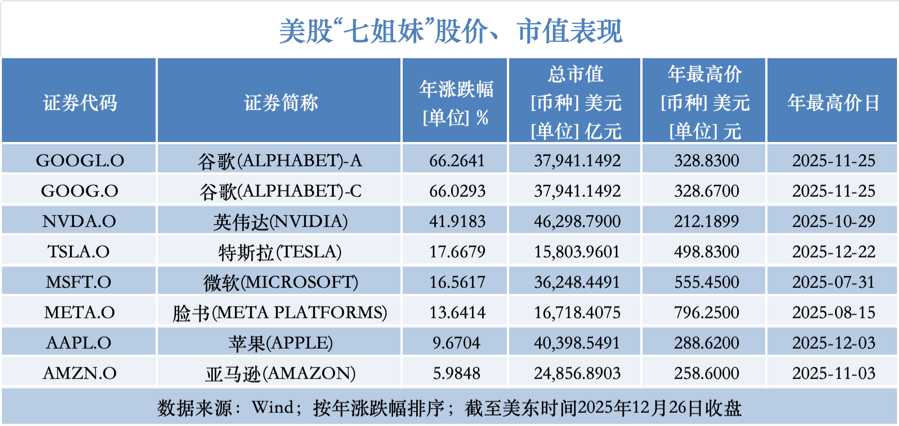
Core Viewpoint - The rapid development of artificial intelligence (AI) is prompting a revaluation of technology assets globally, with Shenzhen emerging as a focal point for investors seeking opportunities in China. The city has produced several leading tech giants, referred to as the "Shenzhen Innovation Four Sisters," including Huawei, Tencent, China Ping An, and BYD, all of which have market capitalizations exceeding 1 trillion yuan and revenues above 600 billion yuan [1][2]. Group 1: Performance and Market Trends - The "Shenzhen Innovation Four Sisters" have experienced significant stock price and market capitalization increases, benefiting from a narrative of asset revaluation in China. Notably, Tencent, Ping An, and BYD have all reached new highs in stock prices and market values this year [1][4]. - The average annual stock price increase for the "Four Sisters" is 44.87%, outperforming the average increase of 27.95% for the "Magnificent Seven" in the U.S. stock market [4][6]. - As of December 29, 2025, China Ping An's stock price increased by 52.25%, Tencent by 44.29%, and BYD by 10.47%, with Ping An leading the group [4][6]. Group 2: AI Development and Talent Acquisition - The "Four Sisters" are heavily investing in AI, with each company focusing on different aspects of AI technology to gain competitive advantages. They are engaged in a talent acquisition race to attract top AI professionals [9][10]. - Huawei's R&D expenditure reached 96.95 billion yuan in the first half of the year, accounting for 22.7% of its revenue, while Tencent's R&D spending in Q3 was 22.82 billion yuan, marking a 28% year-on-year increase [10][11]. - The companies are implementing differentiated AI strategies: Huawei focuses on foundational technologies, Tencent aims to reshape consumer services, Ping An emphasizes specialized AI services, and BYD integrates AI into smart mobility solutions [12][11]. Group 3: Global Expansion and Influence - The global influence of the "Four Sisters" is on the rise, as evidenced by their improved rankings in the 2025 Fortune Global 500 and Kantar BrandZ lists. China Ping An ranks 13th, Huawei 24th, BYD 27th, and Tencent 32nd in the Fortune list [12][13]. - BYD has surpassed Tesla to become the top seller of electric vehicles globally, with exports reaching 878,000 units from January to November, a 144% increase year-on-year [13][14]. - Tencent's international gaming revenue grew by 43% to 20.8 billion yuan in Q3, while Huawei's wearable device shipments exceeded 200 million units globally, maintaining a leading position in the market [13][14].

Kimi账上100亿,杨植麟:我们不着急上市
投资界· 2025-12-31 10:47
Core Viewpoint - The company "月之暗面" (Kimi) has successfully completed a $500 million Series C financing round, significantly exceeding its target, with notable participation from existing investors such as Alibaba and Tencent. The post-financing valuation has reached $4.3 billion (approximately 300 billion RMB) [2][3]. Financing and Valuation - Kimi's recent financing round has attracted substantial investment, with existing shareholders like Alibaba, Tencent, and Wang Huiwen increasing their stakes. The post-money valuation has surged to $4.3 billion [2][3]. - The company currently holds over 10 billion RMB in cash reserves, which is nearly equivalent to the combined cash reserves of its competitors, 智谱 (Zhiyu) and MiniMax [7][8]. Technological Advancements - Kimi's K2 model has gained international recognition, being compared to significant breakthroughs in AI, such as DeepSeek. The K2 series has outperformed OpenAI in key benchmarks [3][4]. - The introduction of the Agent feature, OK Computer, allows users to perform various tasks, marking a critical step in Kimi's commercialization efforts. The number of paid users has seen a month-over-month growth of over 170% from September to November [4]. Strategic Plans for 2026 - Kimi aims to enhance its K3 model through technological improvements, targeting a significant increase in performance metrics. The focus will be on creating a unique user experience that differentiates K3 from other models [5][12]. - The company plans to concentrate on the Agent product line, prioritizing the pursuit of intelligence limits over sheer user numbers, with the goal of achieving substantial revenue growth [5][12]. Market Position and IPO Strategy - Despite the ongoing IPO wave among competitors, Kimi is not in a rush to go public, leveraging its strong cash position to fund growth and development. The company believes it can raise more capital in the primary market than through a secondary market IPO [8][9]. - Kimi's recent financing success indicates strong investor confidence, allowing the company to focus on its long-term goals without immediate pressure to list publicly [8][9].

中消协:加强协同共治,为加快建设金融强国贡献消协力量
2 1 Shi Ji Jing Ji Bao Dao· 2025-12-31 10:18
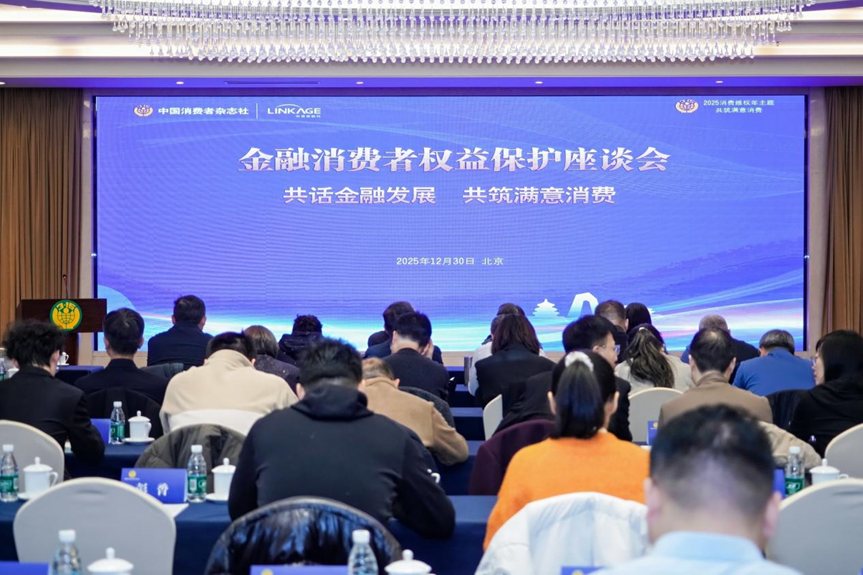
Core Viewpoint - The 2025 Financial Consumer Rights Protection Symposium emphasizes the importance of protecting financial consumers' rights as a key support for boosting market confidence and preventing financial risks, while also promoting high-quality economic development [3]. Group 1: Financial Consumer Rights Protection - The China Consumers Association highlights issues in the financial sector, including excessive marketing, false advertising, inducement to purchase insurance, unfair terms, excessive collection or leakage of personal information, and financial "black and gray industries" [3]. - The association plans to enhance its role as a rights protection hub and collaborative platform, working with regulatory bodies, experts, media, and industries to contribute to high-quality financial development [3]. Group 2: Research Findings and Recommendations - The Deputy Director of the National Financial and Development Laboratory suggests improving the institutional coordination mechanism under the "big consumer protection" framework, promoting deep collaboration between financial and non-financial regulatory bodies [5]. - There is a need to address the disturbances caused by financial black and gray industries and strengthen the joint rectification of "agent rights protection" issues [5]. - Financial institutions must enhance their capacity to protect consumer rights and strictly implement suitability management requirements [5]. Group 3: Current Trends in Financial Consumer Complaints - The Deputy Secretary-General of the Jiangsu Consumer Rights Protection Committee identifies three main characteristics of current financial consumer complaints: high volume of complaints, increasing disputes from new business models, and significant risks from collective and sensitive complaints [7]. Group 4: Innovative Practices and Initiatives - The Secretary-General of the Hangzhou Consumer Rights Protection Committee discusses the "Complaint Express" initiative, which includes a "Four Ones" mechanism to enhance consumer protection [9]. - Tencent's Compliance Director shares methods for strengthening financial consumer rights protection to maintain market stability [11]. - Ant Group's Consumer Protection Department Manager presents various consumer-friendly financial protection measures enabled by technology [12]. Group 5: Financial Consumer Survey Report - The released "Financial Consumer Survey Report (2025)" indicates that the professionalism and transparency of financial products and services are becoming core concerns for consumers, with issues like unclear terms, service discrepancies, inducement sales, and personal information leakage being critical areas for improvement [13]. - The symposium also published typical case studies of financial consumer rights protection, featuring innovative practices from Ant Group, China Life, China Construction Bank, Taikang Life, and China Everbright Bank [13].
腾讯、字节、阿里们的出海一年:收缩、重构与真正的全球化
创业邦· 2025-12-31 09:48
Core Insights - The focus of Chinese companies going global has shifted from merely selling products to ensuring long-term retention in foreign markets [2][3][4][5] Tencent - Tencent's international game revenue reached 562 million yuan in the first three quarters of 2025, accounting for 10% of total revenue, with a significant 43% year-on-year increase [7][8] - The company is investing in cloud and AI infrastructure, with a total of 1.5 billion USD allocated for a data center in the Middle East and 500 million USD for a third data center in Indonesia [10] ByteDance - ByteDance's TikTok generated 390 million USD in revenue in 2024, with projections of 186 billion USD for 2025, and 236 million USD from advertising [12][13] - TikTok established a joint venture in the U.S. to address regulatory compliance while retaining control over its core algorithms [15][16] Alibaba - Alibaba's international digital commerce revenue reached 695 million yuan in the second and third quarters of 2025, making up 14% of total revenue [18] - The company is focusing on cross-border e-commerce, cloud computing, and AI, with plans to invest over 380 billion yuan in cloud and AI infrastructure over the next three years [22] CATL - CATL's revenue for the first three quarters of 2025 was 283 billion yuan, with a focus on establishing local production and resource control in Europe and Indonesia [26][27] - The company is building multiple battery factories in Europe and has secured significant energy storage orders in Southeast Asia and Japan [32] Temu - Temu adapted its business model in response to U.S. tariff changes, shifting to local fulfillment and focusing on specific product categories [34][36] - The company is expanding its supply chain hubs in Vietnam and Mexico to mitigate trade barriers and reduce costs [42] BYD - BYD's overseas sales surged, with a 313.4% year-on-year increase in November 2025, driven by local production and compliance with local regulations [44][45] - The company is accelerating the establishment of overseas factories in Brazil and Hungary to enhance local supply capabilities [47] Xiaomi - Xiaomi is focusing on expanding its "new retail" model globally, with plans to open 1,000 stores worldwide over the next five years [52] - The company is also preparing for the launch of its electric vehicles in international markets [55] Meituan - Meituan is expanding its food delivery service, Keeta, into Brazil and Qatar, aiming to replicate its successful domestic model [58][60] - The company is building an overseas team to enhance its international service capabilities [62] JD.com - JD.com is focusing on building a controllable global supply chain through acquisitions and logistics infrastructure [64][65] - The company has launched its first overseas "Smart Wolf Warehouse" in the UK, enhancing its logistics efficiency [66] Baidu - Baidu's autonomous driving service, "Luo Bo Kua," is expanding into international markets, with significant deployments planned in Dubai and partnerships in Australia and Southeast Asia [74][76] SHEIN - SHEIN is investing heavily in its supply chain infrastructure to support its international operations, with plans for significant capital expenditures [84] Didi - Didi's international ride-hailing business has become profitable, with a focus on expanding its services in Latin America [86][88] - The company is also launching a food delivery service in Brazil, leveraging its existing ride-hailing infrastructure [89]

大厂入场斗法,“AI六小龙”变“四小强”
Xin Jing Bao· 2025-12-31 08:54
Core Insights - 2025 is a pivotal year for the global economy and China's industries, marked by deep differentiation and value reconstruction, moving beyond mere trends to focus on substantial changes in sectors like AI, storage chips, and new energy vehicles [1] - The narrative of AI in China has shifted, with the emergence of DeepSeek capturing significant attention and altering the competitive landscape for the previously prominent "AI Six Dragons" [2][3] AI Industry Dynamics - The "AI Six Dragons" have seen their prominence wane as new players like DeepSeek gain traction, leading to a shift in focus from foundational models to application-oriented strategies [2][3] - Investment sentiment has changed, with investors now prioritizing application companies over foundational model developers, reflecting a more pragmatic approach to survival in the AI sector [3][4] - The cost of developing foundational models is high, with significant investments required for GPU resources and training, making it a challenging landscape for startups [4][5] Competitive Landscape - The rise of DeepSeek has prompted many AI startups to abandon foundational model development in favor of application-focused strategies, leading to a significant industry convergence [8][10] - The competition among foundational models is intensifying, with parameters reaching trillion-level scales and increasing training costs, raising the barriers to entry [11] - Companies like Zhiyuan and MiniMax are expected to go public soon, marking a new phase for the "AI Dragons" as they seek to establish themselves in the market [12][13] Market Positioning - The "AI Four Strong" have emerged as the new designation for companies that continue to focus on foundational model development while emphasizing practical applications [13][14] - The competitive landscape is dominated by major players like ByteDance, Alibaba, and Tencent, which have established significant user bases and market penetration, creating formidable barriers for smaller companies [16][17] - The shift towards application-oriented services is evident, with only a few leading players remaining committed to foundational models, indicating a strategic pivot in the industry [18]
回望2025|大厂入场斗法,“AI六小龙”变“四小强”
Bei Ke Cai Jing· 2025-12-31 08:48
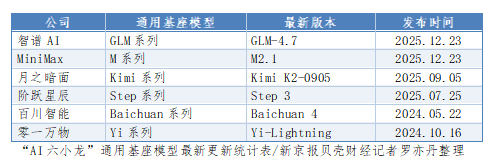
Core Narrative - 2025 is a pivotal year for the global economy and China's industries, marked by deep differentiation and value reconstruction after years of technological accumulation and market turbulence [2][3] - The focus has shifted from chasing trends to a more rational examination of changes occurring beneath the surface, with significant developments in sectors like storage chips, new energy vehicles, gold prices, AI models, and content consumption [2] AI Industry Dynamics - The narrative of 2025 has been characterized by differentiation and sedimentation, with true opportunities belonging to those who build intrinsic strength amidst cyclical noise [3] - The "AI Six Dragons" (智谱, MiniMax, 月之暗面, 阶跃星辰, 百川智能, 零一万物) have seen their prominence diminish as they witness the rise of DeepSeek, which has captured public attention and industry expectations [6][9] - The emergence of DeepSeek has led to a shift in focus from foundational models to application-oriented companies, as the market recognizes that foundational models are primarily the domain of tech giants [9][10] Market Trends and Strategic Shifts - The AI industry is experiencing a significant shift, with many companies moving away from the foundational model approach to focus on application and vertical integration [19][20] - Companies like 智谱 and MiniMax are expected to go public soon, with their valuations reflecting steady revenue growth despite increasing losses [21][22] - The competitive landscape is intensifying, with the need for models to solve real business problems becoming paramount, leading to a natural consolidation in the industry [19][29] Competitive Landscape - The "AI Six Dragons" are now referred to as the "AI Four Strong," indicating a shift in market perception and focus towards those who remain committed to foundational model development [22][23] - The competition is increasingly dominated by major players like ByteDance, Alibaba, and Tencent, making it challenging for smaller companies to find effective entry points in this resource-intensive race [28][29] - The rise of DeepSeek has prompted a reevaluation of strategies among the "AI Six Dragons," with many companies now prioritizing core technological innovation over rapid product releases [18][19] User Engagement and Market Position - In November, the monthly active user (MAU) data showed that ByteDance's AI applications significantly outperformed others, with its app reaching 309 million users, while 月之暗面 lagged behind with 3.06 million [24][27] - The competitive pressure from major players has led to a strategic pivot among smaller companies, focusing on enhancing model capabilities and application value [19][21]
全球入门级3D打印机,几乎被这4家深圳公司承包了
第一财经· 2025-12-31 08:21
2025.12. 31 本文字数:4152,阅读时长大约7分钟 作者 | 第一财经 郑栩彤 距离深圳北站500多米,是消费级3D打印厂商智能派位于深圳龙华的办公室。记者站在办公室玻璃 窗前往外望,往北大约2公里的地方,是另一家3D打印厂商创想三维。拓竹科技位于深圳南山区,纵 维立方在深圳龙岗区。 3D打印厂商在深圳的密度非常高。据市场研究机构CONTEXT的数据,这四家厂商,去年第二季度 占据了全球2500美元以下价位入门级3D打印机市场94%的份额。 大厂入局则让消费级3D打印赛道的"火"在2025年底彻底点燃。美团投资了快造科技,大疆投资了智 能派,获得了腾讯创投投资的创想三维则正筹备港股上市。随着3D打印向大众普及的速度加快,越 来越多人嗅到了战火临近的气息。 消费级3D打印是一个年轻的市场。2010年起,源自海外高校等实验室的3D打印核心专利陆续过 期,2015年前后在大洋彼岸的中国激起了一波创业潮。 创想三维成立于2014年,随后一年,纵维立方成立,潮汕人洪英盛创立智能派。2016年,原本主要 销售STEM教育套件的智能派切入3D打印市场。这一年,福建人陈学栋也成立了快造科技,随后以 3D打印、激光 ...

港股25年收官:科指全年累涨23.45%创历史最佳,成份股中芯国际大涨124.69%
Ge Long Hui· 2025-12-31 08:02
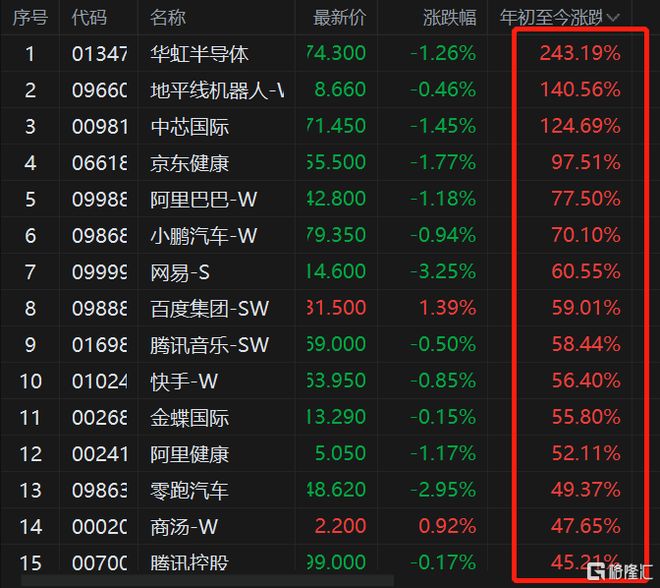
Core Viewpoint - The Hong Kong stock market's Hang Seng Technology Index achieved a remarkable annual increase of 23.45% in 2025, marking its best performance since 2020, with 22 out of 30 constituent stocks rising [1] Group 1: Stock Performance - Among the 30 constituent stocks, notable performers included Hua Hong Semiconductor, which surged by 243.19%, Horizon Robotics with a rise of 140.56%, and SMIC increasing by 124.69% [1] - Other significant gainers were JD Health at 97.51%, Alibaba-W at 77.50%, Xpeng Motors-W at 70.10%, Baidu Group-SW at 59.01%, and Tencent Music-SW at 58.44% [1][2] Group 2: Investment Preferences - The first tier of investment preference is in semiconductor manufacturing (Hua Hong, SMIC) and core AI chips (Horizon Robotics), reflecting a strong focus on hard technology and domestic substitution logic [1] - The second tier includes growth sectors such as smart electric vehicles (Xpeng, Li Auto), AI applications (Baidu, SenseTime), and digital health (JD Health), which benefit from industry trends but still face competitive and profitability uncertainties [1] - The third tier consists of value recovery in platform internet giants (Alibaba, Tencent) and mature applications (NetEase, Kuaishou, Tencent Music), with gains primarily driven by profit realization and value reassessment through dividends and buybacks, categorized as "high-quality mature assets" [1]

MiniMax开启招股:获国际长线资本及阿里3.5亿美元基石认购
Sou Hu Cai Jing· 2025-12-31 07:59
Group 1 - MiniMax, a large model company, has officially launched its IPO, with shares priced between HKD 151 to 165, aiming to raise up to HKD 4.189 billion and achieve a valuation between HKD 46.123 billion and HKD 50.399 billion [2] - The company has secured cornerstone investments totaling USD 350 million (approximately HKD 2.723 billion) from 14 investors, including major players like Alibaba and Eastspring [3] - MiniMax has experienced significant revenue growth, with a year-on-year increase of over 170% in the first nine months of 2025, and overseas market revenue contributing over 70% of total income [8][10] Group 2 - The company has made notable technological advancements, launching its first speech model, Speech 01, in 2023, and generating over 2.2 billion hours of speech by mid-2025 [6][7] - MiniMax's video generation model, Video 01, was released in August 2024, and has since helped create over 590 million videos [7] - The company has received backing from prominent investors such as miHoYo, Alibaba, Tencent, and Sequoia, positioning it as one of the fastest-growing AI technology firms [15][18] Group 3 - MiniMax's financial performance shows a net loss of USD 269.246 million for 2023, with a projected loss of USD 512.013 million for 2025, indicating a trend of increasing losses despite revenue growth [9][10] - The company has a strong focus on research and development, with R&D expenses increasing significantly, reflecting its commitment to innovation in AI technology [10] - MiniMax's employee base consists of 385 individuals, with nearly 74% in R&D roles, highlighting its emphasis on technical expertise [11]

港股收盘 | 2025年收官日恒指收跌0.87% 全年累涨近28%创2017年来最佳
Zhi Tong Cai Jing· 2025-12-31 06:45
Market Overview - The Hang Seng Index closed down 0.87% at 25,630.54 points, with a total trading volume of HKD 1,189.66 million. The Hang Seng China Enterprises Index fell 0.86%, while the Hang Seng Tech Index decreased by 1.12% [1] - For the year 2025, the Hang Seng Index recorded a cumulative increase of 27.77%, marking its best performance since 2017. The China Enterprises Index rose by 22.27%, and the Tech Index increased by 23.45%, the best since its inception [1] - Looking ahead to 2026, under a backdrop of loose monetary policy, foreign and southbound capital are expected to continue net inflows, with potential for substantial improvement in the profitability of Hong Kong-listed companies [1] Blue-Chip Stocks Performance - Baidu Group-SW (09888) rose 1.39% to HKD 131.5, contributing 3.55 points to the Hang Seng Index, driven by growth in its AI business [2] - Other blue-chip stocks included Sunny Optical Technology (02382) up 1.16%, Zijin Mining (601899) up 0.85%, while Innovent Biologics (01801) fell 3.66%, and New Oriental-S (09901) dropped 2.49% [2] Sector Highlights - Major tech stocks mostly declined, with Alibaba down over 1% and Tencent down 0.17%, while Baidu saw an increase [3] - The film sector remained active, with the total box office for the 2025 New Year holiday surpassing HKD 5 billion, marking a new high for the past eight years [3] - The aviation sector saw collective gains among major airlines, with China Eastern Airlines (00670) up 4.92%, China Southern Airlines (01055) up 4.3%, and Air China (00753) up 3.36% [4] Mining Sector - Zijin Mining Group reported a projected net profit of USD 1.5-1.6 billion for 2025, a year-on-year increase of approximately 212%-233%, while Zijin Mining expects a net profit of CNY 51-52 billion, up 59%-62% [5] - Zijin Mining's production targets for 2026 include 105 tons of gold and 120,000 tons of copper, indicating strong growth potential [5] Automotive Sector - The automotive sector showed mixed results, with Great Wall Motors (02333) up 3.24% and GAC Group (02238) up 0.74%, while Li Auto-W (02015) fell 1.44% [6] - New policies for 2026 regarding vehicle subsidies have been announced, which may stabilize consumer expectations for car purchases [6] Notable Stock Movements - InnoCare Pharma (03696) surged 23.88% to HKD 37.14, recognized for its advancements in AI-driven drug discovery [7] - Derin Holdings (01709) increased by 9.68% after announcing conditional approval for virtual asset trading services [8] - Jiangxi Copper (00358) reached a new high, up 5.36% to HKD 42.88, supported by rising copper prices [9] - KANAT Optical (02276) rose 4.25% following the announcement of new policies supporting digital and smart products [10]