
上美股份

Search documents
美国关税大棒挥向自家摇钱树,美妆业或将受到巨大伤害
Sou Hu Cai Jing· 2025-05-10 18:42
Core Viewpoint - The U.S. beauty and personal care industry, once a significant contributor to trade surplus, is now facing severe challenges due to tariff policies implemented during the Trump administration, which are disrupting supply chains and increasing costs for companies [1][2]. Group 1: Industry Impact - The beauty and personal care sector generated approximately $2.6 billion in trade surplus for the U.S. in 2022 [1]. - Tariff policies have forced companies to seek alternative suppliers for raw materials, leading to increased costs and supply chain disruptions [1]. - Retail analysts indicate that the reliance on complex global supply chains makes brands vulnerable to tariff impacts, potentially harming brand loyalty among consumers in countries like Canada [1]. Group 2: Company Challenges - Startups in the personal care sector are struggling to maintain growth due to the uncertainty created by tariff policies, which deter investment and expansion [1]. - Major companies, such as a well-known consumer goods firm, have lowered profit forecasts due to anticipated price increases from tariffs [2]. - The U.S. beauty companies face heightened export costs and market risks, particularly with China's planned tariff increases on U.S. goods starting April 12, 2025 [2]. Group 3: Market Dynamics - The imposition of tariffs is expected to reshape market dynamics, as U.S. beauty companies may lose market share to domestic brands that are increasingly gaining consumer acceptance [8]. - Data from customs authorities indicate a decline in the import quantity and value of beauty and personal care products, with a 1.6% decrease in quantity and a 9.4% drop in value year-on-year as of March 2025 [8]. - The ongoing tariff policies could lead to a long-term decline in the competitiveness of U.S. beauty products in the global market [8].


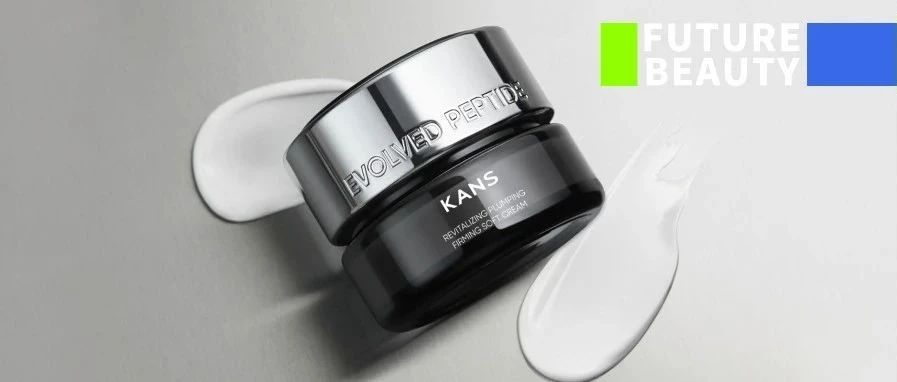
从环六肽到X肽:解码韩束科研进阶背后的“方法论”
FBeauty未来迹· 2025-05-10 13:06
Core Viewpoint - Domestic beauty brands are entering a new stage of scientific research competition, with Shiseido's revenue reaching 6.793 billion yuan in 2024, a year-on-year increase of 62.1%, and a net profit of 800 million yuan, up 74% [2][3] Group 1: Research and Development Initiatives - Shiseido has initiated a series of R&D advancements focusing on scientific transformation, communication, and system upgrades, paving a new path for domestic brands' R&D layout [3][5] - The establishment of the "Kanshu Transformation Medical Fund" in 2024 aims to provide financial support for promising research projects in hospitals and universities, accelerating the conversion of scientific achievements into clinical applications [5][7] - The fund plans to allocate millions in funding for the 2024-2025 period, collaborating with several hospitals to conduct clinical research on skin anti-aging and sensitive skin care [7][9] Group 2: Market Trends and Competitive Landscape - The peptide cosmetic raw material market in China reached 1.45 billion yuan in 2021 and is projected to grow to 2.32 billion yuan by 2025, with a compound annual growth rate of 12.5%, significantly outpacing the overall beauty industry growth [13] - The competition surrounding peptide ingredients has evolved into a comprehensive contest of "research" and "communication," necessitating brands to establish their unique peptide communication systems [14][18] Group 3: Brand Development and Consumer Engagement - Shiseido's recent marketing efforts, including a collaboration with influencer Li Jiaqi, highlight the brand's advancements in peptide research and its commitment to educating consumers about ingredient technology [15][16] - The brand's narrative emphasizes its journey from reliance on imported ingredients to achieving technological breakthroughs in peptide research, enhancing consumer recognition and confidence in domestic products [16][31] Group 4: Future Strategies and Innovations - Shiseido aims to build a scientific brand strategy driven by four core areas: technological insight, scientific technology, scientific products, and scientific communication [25][28] - The company is committed to creating a dual-driven innovation R&D system that integrates market needs and technological advancements, ensuring efficient operation and collaboration across disciplines [27][29]
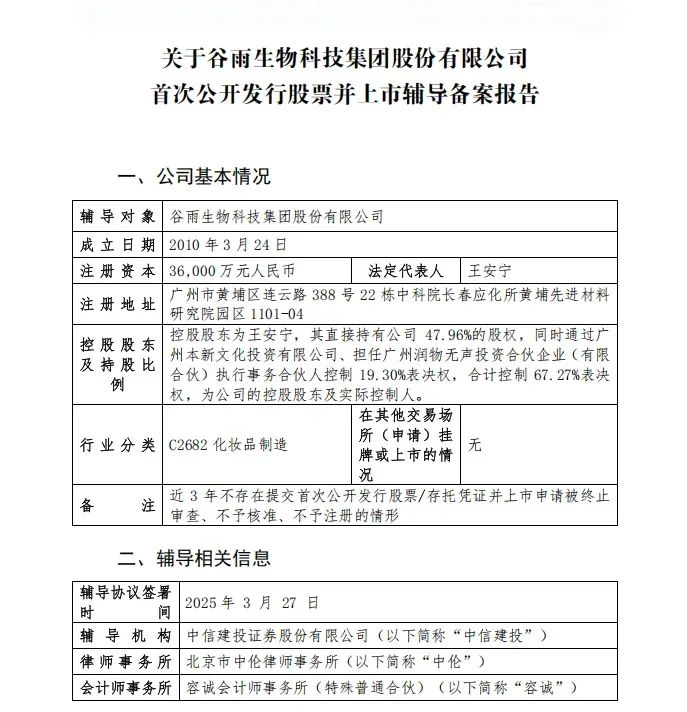
谷雨冲刺“美白第一股”,国产美妆品牌加速IPO是“求生存”还是“谋增长”?
3 6 Ke· 2025-05-09 12:34
Core Viewpoint - The domestic skincare brand Gu Yu is set to launch its IPO process in A-shares, aiming to become the "first whitening stock" in the beauty market, despite facing challenges such as brand loyalty and high online sales ratio [1][3][25]. Company Overview - Gu Yu was established in March 2010 and has a registered capital of 36 million RMB. The company is headquartered in Guangzhou and is primarily engaged in cosmetics manufacturing [2]. - The company has shown rapid growth, with GMV reaching 10 billion RMB in 2010, and projected sales of 35 billion RMB in 2023 and over 50 billion RMB in 2024 [1][3]. Market Position - Gu Yu's sales growth positions it among leading domestic beauty brands, with competitors like Proya and Shiseido achieving significant revenue milestones [1][32]. - The brand's online sales ratio is projected to be 93% in 2024, indicating a heavy reliance on e-commerce channels [22]. Competitive Landscape - The domestic beauty market is experiencing intensified competition, with many brands accelerating their IPO processes as a survival strategy [25][26]. - Gu Yu has successfully leveraged various online platforms for marketing, including early adoption of live streaming on Taobao and collaborations with influencers on platforms like Xiaohongshu and Douyin [4][6]. Challenges and Risks - Despite its rapid growth, Gu Yu faces challenges such as insufficient brand loyalty, a lack of a diversified brand matrix, and the need to establish a stronger brand identity [3][14][20]. - The brand's reliance on a single product line and the potential for market saturation pose risks to its long-term sustainability [20][23]. Future Outlook - To succeed in the competitive landscape, Gu Yu must enhance its brand power and explore new product lines beyond its current offerings [20][30]. - The company aims to establish a more robust brand presence and diversify its product portfolio to mitigate risks associated with market fluctuations and consumer preferences [20][30].
新消费快讯|亚马逊推出医学护肤与高端美妆专区;三得利推出无酒精起泡葡萄酒
新消费智库· 2025-05-09 12:26
New Product Launches - Sprite has announced the launch of a new product, Ice Lemon Berry, featuring a sugar-free formula that combines refreshing lemon flavor with sweet and sour berry taste, utilizing cooling technology for a strong carbonation sensation [3] - Kikkoman has introduced two new soy milk drinks: salty caramel soy milk and chocolate mint soy milk, blending caramel flavor with saltiness and mint freshness with chocolate [4] - Daily Fresh has launched its first HMO children's nutritional milk, focusing on ingredients like HMO, immunoglobulin, and lactoferrin for original nutrition [6] - Jianai has added a new member to its fruit and vegetable salad yogurt family, featuring a blend of nine ingredients including blueberry and purple cabbage, with a pure formula and 4% sucrose [6] Company Developments - JBS, a major meat processing giant, has received approval from the SEC for its listing plan in New York, with a potential market value increase to $30 billion [6] - Shangmei Group has announced a joint venture to establish a new cosmetics brand, leveraging resources from various partners in the cosmetics industry [6] - BERSHIHE has submitted its prospectus for listing on the Hong Kong Stock Exchange, with notable investors including Tencent and Qiming Venture Partners [7] - Meiji has invested approximately 20 billion yen (around 2 billion RMB) to build a new dairy factory in Kanagawa Prefecture, set to start operations in March 2027 [9] - Luzhou Laojiao Group has established a commercial investment company with a registered capital of 100 million RMB, focusing on real estate and investment activities [10] Retail and Market Trends - Jacquemus has opened a new boutique in Los Angeles, expanding its presence in the U.S. market [11] - Sam's Club has suspended its cross-border direct mail service to Hong Kong after a trial period, indicating a need for service optimization [12] - Ferrero has appointed a new regional general manager, Craig Barker, to replace Philippe Steyaert [13] - Arc'teryx has established a footwear division, aiming to enhance product creation and brand marketing [13] - Susan Fang has collaborated with Balabala to launch a new children's clothing collection, reflecting a poetic aesthetic [15]

港股收盘(05.09) | 恒指收涨0.4% 加密货币ETF集体走高 中芯华虹绩后下挫
智通财经网· 2025-05-09 08:52
Market Overview - The Hong Kong stock market showed mixed performance with the Hang Seng Index rising by 0.4% to close at 22,867.74 points, while the Hang Seng Tech Index fell by 0.93% to 5,180.25 points. The total trading volume for the day was 161.63 billion HKD [1] - For the week, the Hang Seng Index increased by 1.61%, while the Hang Seng Tech Index decreased by 1.22% [1] Blue Chip Performance - Henderson Land Development (00012) led the blue-chip stocks, rising by 6.18% to 24.05 HKD, contributing 3.38 points to the Hang Seng Index. The stock's dividend yield of 7.9% is attractive compared to the average of 5.4% for Hong Kong developers [2] - Other notable blue-chip performers included Sun Hung Kai Properties (00016) up 5.05%, Geely Automobile (00175) up 4.79%, while Semiconductor Manufacturing International Corporation (00981) fell by 4.76% [2] Sector Highlights - Large tech stocks generally weakened, with Tencent down 0.68% and Alibaba up 1.73%. Cryptocurrency-related stocks surged as Bitcoin surpassed 100,000 USD for the first time in three months [3][4] - Consumer stocks performed well, with Miniso (09896) rising over 7% and Pop Mart (09992) up over 6%. The Chinese government is focusing on boosting domestic consumption, which may benefit these companies [4] Banking Sector - Most banking stocks saw gains, with Chongqing Rural Commercial Bank (03618) up 4% and Agricultural Bank of China (01288) up 2.11%. The People's Bank of China announced a series of financial policy measures aimed at stabilizing the economy [5] - The establishment of financial asset investment companies by major banks is expected to enhance their ability to support technology enterprises [6] Semiconductor Sector - Semiconductor stocks faced significant declines, with Huahong Semiconductor (01347) down 7.94% and SMIC (00981) down 4.76%. SMIC reported a 29.4% year-on-year increase in revenue for Q1, but expects a sequential decline in Q2 [6][7] Real Estate Sector - Real estate stocks generally fell, with major developers like R&F Properties (03301) and Greentown China (03900) experiencing declines. The market showed signs of weakness, with a 4% year-on-year drop in subscription area in 19 key cities during the recent holiday [7] Notable Stock Movements - Andeli Juice (02218) surged by 23.96% to 17.8 HKD, marking a significant increase over the week [8] - Uni-President China (00220) rose by 9.58% after reporting a 31.8% increase in net profit for Q1 [9] - SF Intra-city (09699) saw a notable increase of 7.98%, driven by a significant rise in delivery volumes during the holiday period [10] - Geely Automobile (00175) continued its upward trend, rising 4.79% as it plans to fully acquire Zeekr [11] - Shandong Molong (00568) experienced a sharp decline of 18.53% following a significant share reduction by a major shareholder [12][13]


从品类到品质,从品质到品牌
China Securities· 2025-05-09 01:20
Investment Rating - The report maintains a rating of "Outperform the Market" for the industry [3]. Core Insights - The industry fundamentals are expected to remain under pressure in 2024, with most sectors and companies still significantly affected by macroeconomic factors. However, a number of companies are emerging that are successfully navigating the challenges of consumer downgrade by upgrading from categories to quality and then to brand [1][2]. - The report highlights that companies with strong brand attributes are likely to continue outperforming as the market transitions from price-performance to quality-price comparisons [2]. Summary by Sections 1. Duty-Free Sector - The duty-free sales in Hainan are gradually stabilizing, with the implementation of the Hainan closure policy expected to benefit the duty-free sector. The market is seeing improvements in channel and supply chain capabilities, leading to a stable outlook for profitability [2][49]. - Key companies to watch include China Duty Free Group and Wangfujing [2]. 2. Tourism and Gaming - The tourism sector shows strong resilience in demand, becoming a crucial driver for domestic consumption. The recovery in inbound and outbound travel is significant, with a focus on new consumption scenarios and the silver-haired tourism market [2][3]. - Recommended companies include Jiuhua Tourism, Lingnan Holdings, and Sands China [2]. 3. Hotel Industry - The hotel sector is experiencing weak business travel demand, leading to pressure on RevPAR. However, leisure demand remains resilient, and leading companies are enhancing profitability through brand matrix validation and supply chain optimization [3][72]. - Companies to focus on include Huazhu Group, Atour, and Jinjiang Hotels [3]. 4. Restaurant Sector - Leading restaurant companies are demonstrating strong supply chain negotiation and profitability advantages. The overall supply in the restaurant industry is optimizing, with a competitive trend in price-performance [3][7]. - Notable companies include Mixue Ice City, KFC, and Haidilao [3][7]. 5. Cosmetics and Medical Aesthetics - The cosmetics sector is seeing a shift in focus towards profitability, with companies restructuring their product and channel strategies. High-growth companies are expected to achieve both revenue and profit increases [7][23]. - Key players include Juzhibio, Shumei, and Marubi [7][23]. 6. General Retail - The retail sector is undergoing digital upgrades and operational adjustments, with a focus on essential demand and cash flow stability. Companies like Yonghui Supermarket and Multi-Point Intelligence are recommended [8][30]. - The report also highlights the ongoing challenges in the jewelry sector due to rising gold prices [8][30]. 7. Overall Market Performance - The consumer services sector is expected to face challenges, with a projected performance of -8.70% in 2024. However, the beauty and personal care sector is anticipated to recover with a growth of +8.15% in 2025 [11][19].



餐饮和化妆品怎么没跟上消费板块?
Sou Hu Cai Jing· 2025-05-08 02:38
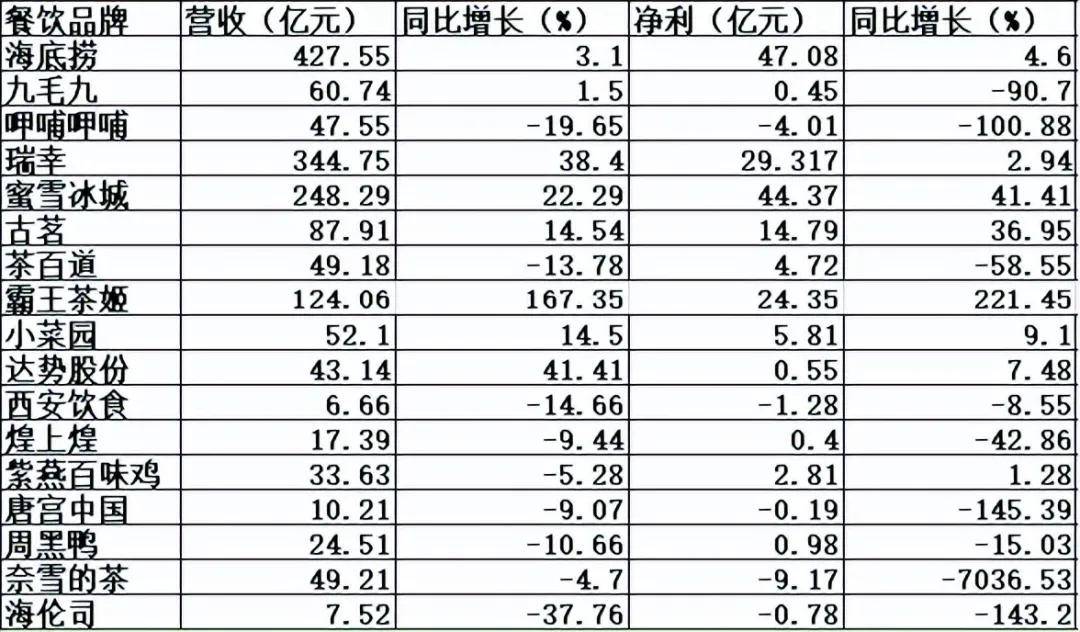
Core Viewpoint - The current hot sectors in the Chinese stock market are new consumption areas such as toys, tea drinks, and snacks, while traditional sectors like dining and cosmetics are lagging behind, with negative average growth rates in 2023 [1][14]. Dining Industry - The dining sector is experiencing a comprehensive downturn, with major players like Haidilao showing minimal growth, while tea drink companies are accelerating [1][7]. - The dining market is projected to grow at approximately 5.3% in 2024, contrasting with the 20% growth in the ready-to-drink tea segment, indicating a negative growth trend for dining [2][7]. - The dining industry faces challenges such as high competition, a saturated market with 9 million restaurants, and a business model that often prioritizes novelty over customer retention [7][9]. - Major dining companies are struggling with profitability, as evidenced by significant declines in net profits for brands like Jiumaojiu and Jiabujiahe [2][8]. - The dining sector's business model is unsustainable, with many restaurants failing to maintain long-term customer engagement, leading to a high turnover of brands [9][10]. Cosmetics Industry - The overall growth rate of the cosmetics industry is declining, with a notable 9% drop in imported cosmetics in 2024, indicating that domestic companies are not entirely to blame for the downturn [14][16]. - Consumer behavior is shifting towards reducing non-essential spending, impacting higher-priced cosmetics, which are often seen as replaceable [16][21]. - The performance of cosmetic companies is highly variable, with some achieving significant growth while others, like Aimeike and Huaxi Shengwu, face severe declines [18][21]. - The rise of new product trends, such as collagen-based skincare, is reshaping the competitive landscape, leading to the decline of established brands that fail to innovate [21][23]. - The cosmetics sector is characterized by intense competition and frequent brand turnover, making it difficult for companies to maintain long-term growth and stability [23][24]. Conclusion - Both the dining and cosmetics industries are facing significant challenges that hinder performance and valuation compared to more successful sectors like ready-to-drink tea and snacks [24].


开源证券晨会纪要-20250507
KAIYUAN SECURITIES· 2025-05-07 14:46
2025 年 05 月 08 日 开源晨会 0508 ——晨会纪要 | 沪深300 | 及创业板指数近1年走势 | | 吴梦迪(分析师) | | --- | --- | --- | --- | | 沪深300 | 创业板指 | | wumengdi@kysec.cn | | 48% | | | 证书编号:S0790521070001 | | 32% | | | 观点精粹 | | 16% | | | | | 0% | | | 总量视角 | | -16% | | | 年以来南下累计净流入超 月增配成 【金融工程】港股量化:2025 6000 亿港元,5 | | -32% | | | 长——金融工程定期-20250507 | | 2024-05 | 2024-09 2025-01 | | 【金融工程】基金投顾产品 4 月调仓一览——基金投顾产品月报系列(17) | | 数据来源:聚源 | | | -20250507 | | 昨日涨跌幅前五行业 | | | | | 行业名称 | | 涨跌幅(%) | | | | | | 【海外】短期波动仍存,聚焦经济转型方向——海外市场 年度中期投资策略 2025 | | 国防军工 ...
零售行业2025年中期投资策略:悦享生活,深挖情绪消费景气赛道
KAIYUAN SECURITIES· 2025-05-07 07:04
Core Insights - The report emphasizes the emergence of "emotional consumption" as a significant trend in the retail industry, particularly benefiting brands that resonate with consumers' emotional needs [2][3][28] - The retail sector is experiencing a slow recovery, with varying performance across different segments, highlighting the resilience of brands linked to emotional value [3][10][39] Industry Review - In Q1 2025, social consumption showed a slow recovery, with retail businesses facing overall pressure. However, segments related to "emotional value" consumption, particularly leading brands, performed significantly better than the industry average [3][10][39] - The jewelry sector is under pressure due to high gold prices, while cross-border e-commerce remains stable but with profit pressures. The medical beauty and cosmetics sectors are facing intense competition, and offline retail is still exploring transformative models [3][6][39] Segment Analysis Jewelry - The jewelry industry is experiencing a shift in brand competition, with traditional brands facing challenges from differentiated product brands that are rapidly emerging and achieving high growth [6][39] - In Q1 2025, the jewelry sector's revenue was 431.6 billion yuan, down 25.9% year-on-year, with net profit also declining [39][64] Cosmetics - The cosmetics sector is benefiting from the rise of emotional consumption, with a focus on high-demand segments such as high-end beauty and differentiated personal care brands [5][39][64] - Brands like Mao Ge Ping and Proya are highlighted for their strong performance in this evolving market [5][39] Medical Beauty - The medical beauty sector is expected to recover as domestic demand increases, with a focus on differentiated product lines [5][39] - Companies like Ai Meike and Kedi-B are recommended for their unique offerings [5][39] Offline Retail - Offline retail is leveraging emotional consumption to regain market share, with companies like Yonghui Supermarket and Aiyingshi being recommended for their proactive transformation efforts [5][39] - The report notes that the shift towards a direct-to-consumer (DTC) model is crucial for offline retailers to enhance customer experience and emotional satisfaction [69] Investment Recommendations - For the jewelry sector, brands with differentiated product capabilities and deep consumer insights are recommended, including Lao Pu Gold and Chao Hong Ji [5][66] - In the cosmetics space, the report suggests focusing on high-demand segments and brands that can continuously innovate [5][66] - The medical beauty sector is advised to consider companies with unique product lines, such as Ai Meike and Kedi-B [5][66] - The report highlights the importance of emotional value in driving consumer preferences, suggesting that brands that can effectively tap into this trend will outperform their peers [5][66]



开源证券晨会纪要-20250506
KAIYUAN SECURITIES· 2025-05-06 14:44
Macro Economic Insights - The impact of tariffs is significant, with estimates suggesting a GDP impact of 1-2 percentage points under scenarios of 54%-145% tariff increases [5] - The U.S. economy is facing a high risk of mid-term recession, with Q1 GDP growth turning negative at -0.3% [15] - Domestic consumption during the May Day holiday showed improvement in volume but not in price, indicating a recovery in consumer activity [17] Industry Analysis Utilities Sector - The electricity supply-demand balance is shifting towards a more relaxed state, with a focus on stable profit-generating varieties [36] - In 2024, total electricity consumption reached 9.87 trillion kWh, a year-on-year increase of 7.0% [36] - Power generation costs are expected to decrease due to falling coal prices, enhancing profitability for power companies [37] Retail Sector - Retail companies are under pressure, with overall revenue declining by 1.8% in 2024 and 13.3% in Q1 2025 [44] - The jewelry sector faced significant declines, with revenues down 25.9% in Q1 2025 [44] - High-growth segments such as cross-border e-commerce are performing well, with revenue growth of 28.8% in Q1 2025 [44] Chemical Industry - The chemical manufacturing sector saw revenues of 91,986.4 million yuan in 2024, a 4.2% increase, but profits fell by 8.6% [53] - The basic chemical sector reported a revenue increase of 5.8% in Q1 2025, with net profits rising by 11.8% [54] Textile and Apparel Sector - The main domestic sales demand is weak, leading to performance pressure, but there is optimism for growth in external sales [58] - The company expects revenue growth driven by successful overseas customer expansion, with a focus on diversifying procurement channels [59] Financial Engineering - In May 2025, the top recommended stocks included Gree Electric, Kying Network, and Zijin Mining, indicating a shift towards value-oriented investments [29][30] - The overall performance of the recommended stocks showed a decline in market capitalization but an increase in valuation levels, suggesting a transition to a value style [30]