
世界银行

Search documents
潘功胜:继续打击境内虚拟货币经营炒作,密切跟踪境外稳定币发展
Guo Ji Jin Rong Bao· 2025-10-27 14:20
Core Viewpoint - The development of virtual currencies, particularly stablecoins, is still in its early stages, and there is a cautious attitude from international financial organizations and central banks towards their growth [1] Group 1: Regulatory Concerns - Stablecoins have become a major topic of discussion among finance ministers and central bank governors, highlighting their inability to meet basic requirements for customer identity verification and anti-money laundering [1] - The speculative atmosphere surrounding stablecoins has increased vulnerabilities in the global financial system and impacted the monetary sovereignty of underdeveloped economies [1] Group 2: Policy Actions - Since 2017, the People's Bank of China has issued multiple policy documents to mitigate risks associated with domestic virtual currency trading, which remain effective [1] - The People's Bank of China plans to continue collaborating with law enforcement to combat domestic virtual currency operations and maintain economic and financial order while closely monitoring the development of overseas stablecoins [1]
印度劳动力市场迎来黄金期,但人工智能与贸易挑战在前
Sou Hu Cai Jing· 2025-10-27 10:21
Core Insights - India's employment market is experiencing a rare high point, with employment growth surpassing the growth of the working-age population for the first time since the fiscal year 2021-22, and urban unemployment rates dropping to the lowest level since 2017-18 [1] Employment Growth Highlights - Employment growth has outpaced population growth, with rapid expansion in self-employment and micro-entrepreneurship in rural and semi-urban areas [3] - The female employment rate has significantly increased, with notable improvements in participation rates among rural and urban women [3] - Urban unemployment rate stands at 6.6%, while youth unemployment remains high at 13.3% [3] - Despite positive data, structural issues persist in the Indian employment market, with only 23% of non-agricultural jobs classified as formal employment, and many jobs remaining informal or self-employed, posing challenges for women and youth [3] Risks from AI and Trade - The report warns that technological disruptions, rapid advancements in artificial intelligence, and global trade fragmentation may impact India's labor market [4] - Generative AI has led to a decline of approximately 20% in hiring for business services and IT [4] - Protectionist policies from the US and China could weaken India's export industries, affecting key sectors such as textiles, electronics, and pharmaceuticals [4] - While low-skilled labor in India is temporarily protected, the digital skills gap is widening, with individuals possessing AI and digital skills earning about 30% more than average white-collar workers [4] Future Directions: From Quantity to Quality - The World Bank suggests that India should shift focus from the quantity of employment to improving the quality of jobs [5] - Recommendations include expanding formal employment by simplifying labor regulations and supporting small and medium enterprises to create formal positions [5] - Enhancing female participation through investments in childcare, transportation, and flexible work arrangements is advised [5] - Establishing a digital skills training system to prepare youth for the upcoming challenges of automation in the age of AI is essential [5] Trade Diversification - Reducing reliance on a single market is crucial to address global protectionism [6] Regional Balanced Development - There is a need to direct employment-intensive investments to underdeveloped regions [7] - The report highlights that while the recovery of India's labor market demonstrates strong resilience, the real challenge lies in ensuring that these job opportunities are of high quality, formalized, and future-oriented, thereby transforming India's demographic dividend into long-term, inclusive economic growth [7]

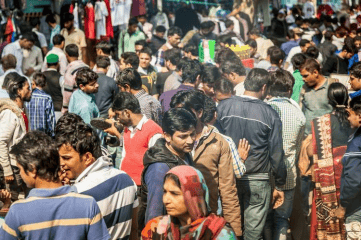
管涛:国际储备货币体系加速多极化|国际
清华金融评论· 2025-10-26 09:36
Core Viewpoint - The article discusses the decline of the US dollar's share in global foreign exchange reserves, highlighting a trend towards a multipolar international reserve currency system, with the dollar's share dropping to a 30-year low of 56.32% as of the second quarter of this year [1][11]. Group 1: Dollar Reserve Share Dynamics - As of the end of Q2, the dollar's share of global foreign exchange reserves fell from 57.79% to 56.32%, a decrease of 1.47 percentage points, marking the 11th consecutive quarter below 60% [1]. - The decline in the dollar's share is attributed to a 7.1% depreciation of the dollar index during the same period, indicating a negative valuation effect [1][3]. - The IMF's article on the same day emphasized that the dollar's reserve share remained stable when adjusted for exchange rates, suggesting that the decline was primarily due to valuation losses rather than a fundamental shift in reserve preferences [3]. Group 2: Euro and Other Currencies - The euro's reserve share increased from 20% to 21.13%, a rise of 1.13 percentage points, but this was largely due to a 9% appreciation against the dollar, which masked a potential decline in its reserve share if exchange rates had remained stable [3][4]. - The article argues that the focus on exchange rate effects overlooks the positive impact of asset price revaluation on the dollar's reserve share [4]. Group 3: US Long-term Securities and Foreign Holdings - As of June, foreign official holdings of US long-term securities (excluding international organizations) amounted to $67,395 billion, closely aligning with the IMF's reported global dollar reserves of $67,733 billion [4]. - The TIC report indicates that foreign official investors held $38,191 billion in US Treasury securities, $5,078 billion in agency debt, $2,185 billion in corporate bonds, and $21,941 billion in US equities, with equities representing over 30% of total holdings [4]. Group 4: Market Trends and Investment Behavior - The US stock market experienced significant volatility, with a 4.8% decline in Q1 followed by an 11% rebound in Q2, impacting the valuation of US equities held by foreign officials [6]. - In Q1, foreign official holdings recorded a valuation loss of $197 billion, while Q2 saw a valuation gain of $2,152 billion, indicating the substantial influence of market fluctuations on reserve valuations [6][8]. - In Q2, net purchases of US long-term securities by foreign officials fell to $51 billion, a 94.4% decrease from the previous quarter, highlighting a shift in investment strategy towards equities and away from safer assets like US Treasuries [8]. Group 5: Trends in Global Reserve Currency System - The article notes a continuing trend towards the diversification of the international reserve currency system, often associated with "de-dollarization," which refers to reducing reliance on the dollar in international trade and finance [12][20]. - Despite the decline in the dollar's share, the article suggests that the dollar's dominance remains resilient, as evidenced by its continued high percentage in global foreign exchange transactions [21].
世界银行开发区块链技术管理发展援助基金
Shang Wu Bu Wang Zhan· 2025-10-25 03:39
(原标题:世界银行开发区块链技术管理发展援助基金) 西非经济门户网10月23日报道,世界银行近日推出基于区块链技术的创新平台"基金 链"(FundsChain),在发展援助项目管理现代化方面迈出新的一步。该平台通过对资金的端到端跟 踪,提高资金可追溯性,以实现简化管理和加强问责的目的。平台已在10个国家的13个试点项目上测试 成功,并获得业内人士的一致好评,全面推广后,预计到2026年6月可应用于250个项目。该工具的出台 旨在解决世行在资金管理方面存在已久的问题:由于各国使用的金融系统不同,往往互不兼容,信息难 以共享,导致项目资金拨付后,难以追踪和监管资金的使用情况。因此该平台提供了一个安全、加密、 防篡改的数字账本,所有利益相关方均可访问,并跟踪每一笔账款走向。世行由此成为首个利用区块链 技术实现优化项目管理的多边机构,为未来数字化财务管理指明了方向。 ...
世行上调乌兹别克斯坦2025年经济增速预期至6.2%
Shang Wu Bu Wang Zhan· 2025-10-22 12:26
Core Insights - Uzbekistan is projected to remain among the top five fastest-growing economies in Europe and Central Asia in 2025 and 2026, with growth rates of 6.2% and 6% respectively, an increase from previous forecasts of 5.9% [1][1][1] Economic Growth Projections - Kyrgyzstan is expected to lead the region with growth rates of 9.2% in 2025 and 6.5% in 2026 [1] - Tajikistan's growth is forecasted at 7.6% for 2025 and 5.2% for 2026 [1] - Georgia is projected to grow by 7% in 2025 and 5.5% in 2026 [1] - Kazakhstan's growth rates are expected to be 5.5% in 2025 and 4.5% in 2026 [1] Regional Economic Context - The overall economic growth for Europe and Central Asia is projected to decline to 2.4% in 2025, down from 3.7% in 2024, primarily due to the slowdown in the Russian economy [1] - Average growth for the region is expected to rise to 2.6% in 2026-2027 [1] - Geopolitical uncertainties, tensions in international trade, and persistent inflation pressures are increasing the economic vulnerabilities in the region [1] Central Asia Economic Outlook - The economic growth for Central Asia is anticipated to reach 5.9% in 2025 and 5% in 2026, supported by increased oil production in Kazakhstan and rising foreign exchange reserves and investments in Kyrgyzstan, Tajikistan, and Uzbekistan [1]
世界银行批准向乌兹别克斯坦提供8亿美元优惠贷款
Shang Wu Bu Wang Zhan· 2025-10-22 12:26
Core Points - The World Bank's Executive Board approved an $800 million concessional loan to Uzbekistan to support large-scale structural reforms aimed at reducing poverty, creating jobs, promoting private sector development, and enhancing the competitiveness of national strategic industries [1] Group 1: Social Security Reforms - The loan will increase natural gas and electricity subsidies for low-income households from 270,000 soums to 1,000,000 soums (approximately from $22 to $81) [1] - Measures will be implemented to uphold women's economic rights and protect them from workplace violence and discrimination [1] - The initiative aims to attract NGOs to provide services for vulnerable groups and expand the coverage of social services [1] Group 2: Economic and Sectoral Reforms - The program includes reforms in state-owned enterprises, agricultural development, and enhancing trade liberalization [1] - It will also support the development of the energy sector and promote green public procurement [1]
宣昌能出席全球主权债务圆桌会等会议并会见相关机构负责人
Jin Rong Shi Bao· 2025-10-22 01:35
责任编辑:袁浩 宣昌能表示,贸易摩擦和地缘政治不确定性对世界经济增长形成拖累,发展中国家偿债负担加剧, 面临突出流动性问题。各方应坚持多边主义和合作精神,共同帮助发展中国家应对流动性挑战。中方积 极参与二十国集团债务处理共同框架内外的债务重组,作出了最大贡献。各方应推动完善全球主权债务 治理体系,改进基金组织和世界银行的低收入国家债务可持续性分析框架。基金组织和世界银行应帮助 债务国加强公共债务管理和经济治理能力,动员更多投融资,增强经济产出能力,实现可持续发展。 本报讯 记者马玲报道 10月15日至17日国际货币基金组织(以下简称"基金组织")/世界银行年会期 间,中国人民银行副行长宣昌能出席了全球主权债务圆桌会、国际金融协会托管委员会年会等会议。 会议期间,宣昌能还会见了金融行动特别工作组(FATF)主席德·安达、巴巴多斯央行行长格林尼 治,就深化中国与FATF和巴巴多斯务实合作等议题交换了意见。 ...
波黑交通通信部长福尔托力推波黑铁路现代化建设,计划继续加强同世界银行的合作
Shang Wu Bu Wang Zhan· 2025-10-21 15:15
Core Viewpoint - Bosnia and Herzegovina (BiH) needs to shift its focus towards railway infrastructure development, as emphasized by the Minister of Transport and Communications, Edin Forto, during a meeting with World Bank management in Washington [1] Group 1: Infrastructure Development - The Minister highlighted the importance of having a clear vision and strong partnerships with international financial institutions like the World Bank to implement large-scale infrastructure projects [1] - A proposal was made to stabilize the railway sector in BiH, aiming for modernization and financial integration of the railway department [1] Group 2: Investment Opportunities - Significant investments are planned for key railway lines, including the Vc corridor, Una River railway, and the Doboj-Tuzla-Zvornik segment [1] - The modernization of the railway is viewed not only as a transportation issue but also as an economic one, facilitating faster goods movement, attracting more investments, and enhancing connections both domestically and with neighboring countries [1] Group 3: Collaboration with World Bank - The World Bank's Vice President, Bassani, expressed gratitude for Forto's efforts in securing funding for the border road project between BiH and Montenegro, highlighting the successful collaboration between the World Bank and BiH [1] - The reform of the railway sector is identified as a priority for cooperation with the World Bank, serving as a prerequisite for large-scale investments in BiH's railway infrastructure [1]
塔斯尼姆通讯社编译版:IMF预测2025年伊朗经济增速为0.6%
Shang Wu Bu Wang Zhan· 2025-10-20 05:18
Group 1 - The International Monetary Fund (IMF) projects global economic growth to rise from 3% to 3.2% by 2025 [1] - There are increasing signs that the negative impacts of protectionist measures are becoming evident, with high uncertainty in trade policies expected to persist through 2025 and 2026 [1] - The IMF forecasts Iran's economic growth rate to reach 0.6% in 2025, with an inflation rate of 42.4% and an unemployment rate of 9.2% [1] Group 2 - The World Bank recently estimated Iran's economic growth rate for this year to be -1.7% [1]
IMF调高全球增长预期 强调世界经济仍较脆弱
Ren Min Ri Bao· 2025-10-19 22:00
Core Insights - The International Monetary Fund (IMF) has revised its global economic growth forecast for 2025 to 3.2%, an increase of 0.2 percentage points from the July prediction, while maintaining the 2026 growth forecast at 3.1% [1] - The report highlights that emerging markets and developing economies are expected to grow by 4.2% this year, up by 0.1 percentage points from the previous forecast, while developed economies' growth is also adjusted upward to 1.6% [1] - The Asia-Pacific region is projected to contribute approximately 60% to global growth over the next two years, with opportunities arising from a shift towards domestic demand-driven growth [1] Economic Challenges - Global economic growth remains sluggish, with trade policy uncertainty suppressing consumption and investment, alongside rising public debt and increased defense spending [2] - The IMF warns that global public debt is expected to exceed 100% of global GDP by 2029, urging economies to ensure debt sustainability and eliminate trade policy uncertainties [2] - Structural reforms are recommended to boost economic growth prospects, including promoting labor mobility and enhancing investments in the digital economy [2]