长安汽车

Search documents
前瞻2026│L3级自动驾驶来了 车险会涨价吗?
Di Yi Cai Jing· 2026-01-08 13:03
L3级自动驾驶正在加速落地。2025年12月15日,工业和信息化部正式公布我国首批L3级有条件自动驾 驶车型准入许可。到12月末,首批获颁L3号牌的车辆已经在北京、重庆的试点路段上路。 当智驾更进一步,当方向盘开始更多地在人与机器之间切换控制权,延续数十年的车险行业未来又将随 之面临怎样的变化?L3真的到来时,智驾险是否会取代车险成为新的"主角"? "未来很长一段时间仍会以车险为主,智驾险不会取代现在的车险。"平安产险上海分公司总经理何莹对 第一财经表示。这也是记者采访的多位业内人士的一致判断。但这并不意味着车险市场会一成不变。受 访的业内人士表示,一旦L3大范围铺开,会有更多新的场景出现,从而催生新的保险责任。但同时, 如何定责、数据匮乏等也成为L3下智驾保险发展所要面临的挑战。 车险会被替代吗? 据了解,平安产险参与了重庆、北京的L3试点车辆保险方案。其中,根据媒体报道,针对L3级自动驾 驶"人机共驾"的独特场景,平安产险北京分公司相关产品为开启L3功能时发生交通事故造成的损失,提 供每座最高200万元的车上人员保额及最高500万元的第三者损失保额,同时覆盖自动驾驶系统缺陷、软 件更新风险、网络安全攻击等 ...
总投资近180亿元 重庆集中签约32个国企先进制造业项目
Zhong Guo Xin Wen Wang· 2026-01-08 12:54
"6"是指聚焦智能网联新能源汽车、新一代电子信息制造、先进材料、新兴产业与未来产业、智能装备 及智能制造、生物医药六大核心领域精准发力。"2"和"1"是指力争在"十五五"期间,通过"直接投资+基 金投资"方式投资项目200个以上,总投资额超过1000亿元。"3"是指期望通过上述投资,引领重庆市相 关产业总投资规模超3000亿元。 据悉,项目将通过"直投+基金"投资模式,放大资本撬动效能、吸引各方资源,为重庆建成国家重要先 进制造业中心提供支撑。 (文章来源:中国新闻网) 据悉,重庆渝富控股集团将联合西安高新技术产业风险投资有限责任公司以及重庆两江投资集团组建一 支目标规模10亿元的基金,重点关注重庆和西安以及西部陆海新通道沿线重要产业的高成长性项目,通 过股权投资推动产业链跨区域整合,为重庆和西安在西部陆海新通道建设中实现高质量发展提供支撑。 活动中,重庆发布《投资引领全市先进制造业高质量发展"6213"行动计划(2026-2030年)》及重点项目清 单,首批储备项目70个、意向投资近400亿元。 中新社重庆1月8日电 重庆8日集中签约今年一季度市属重点国企先进制造业项目32个,投资总金额近 180亿元(人民 ...

聚焦先进制造业 重庆国资国企打出新年“第一拳”
Zhong Guo Xin Wen Wang· 2026-01-08 12:50
Group 1 - The "6213" action plan aims to promote advanced manufacturing in Chongqing, with 32 projects signed totaling nearly 18 billion yuan in investment [1][2] - Key sectors involved in the signed projects include automotive, electronic information, new materials, intelligent equipment manufacturing, biomedicine, and funds [1] - Chongqing Yufu Holdings will establish a 1 billion yuan fund focusing on high-growth projects in Chongqing and Xi'an, supporting the development of the Western Land-Sea New Corridor [1][2] Group 2 - The Chongqing State-owned Assets Supervision and Administration Commission introduced 77 specific reform measures to enhance the development of state-owned enterprises [1][2] - The focus will be on high-end equipment, new generation information technology, new materials, biomedicine, and new energy vehicles to ensure a stable and secure industrial supply chain [2] - The "6213" action plan includes 70 initial reserve projects with an intended investment of nearly 40 billion yuan, aiming for over 200 projects and total investments exceeding 100 billion yuan during the 14th Five-Year Plan [2][3] Group 3 - Major projects were announced by companies like Qingling Group and Chongqing Machinery and Electric Group in areas such as green intelligent transformation of commercial vehicles and high-end equipment breakthroughs [3] - The Chongqing state-owned enterprises will promote an open, collaborative, and win-win development philosophy, enhancing cooperation with various ownership enterprises [3]
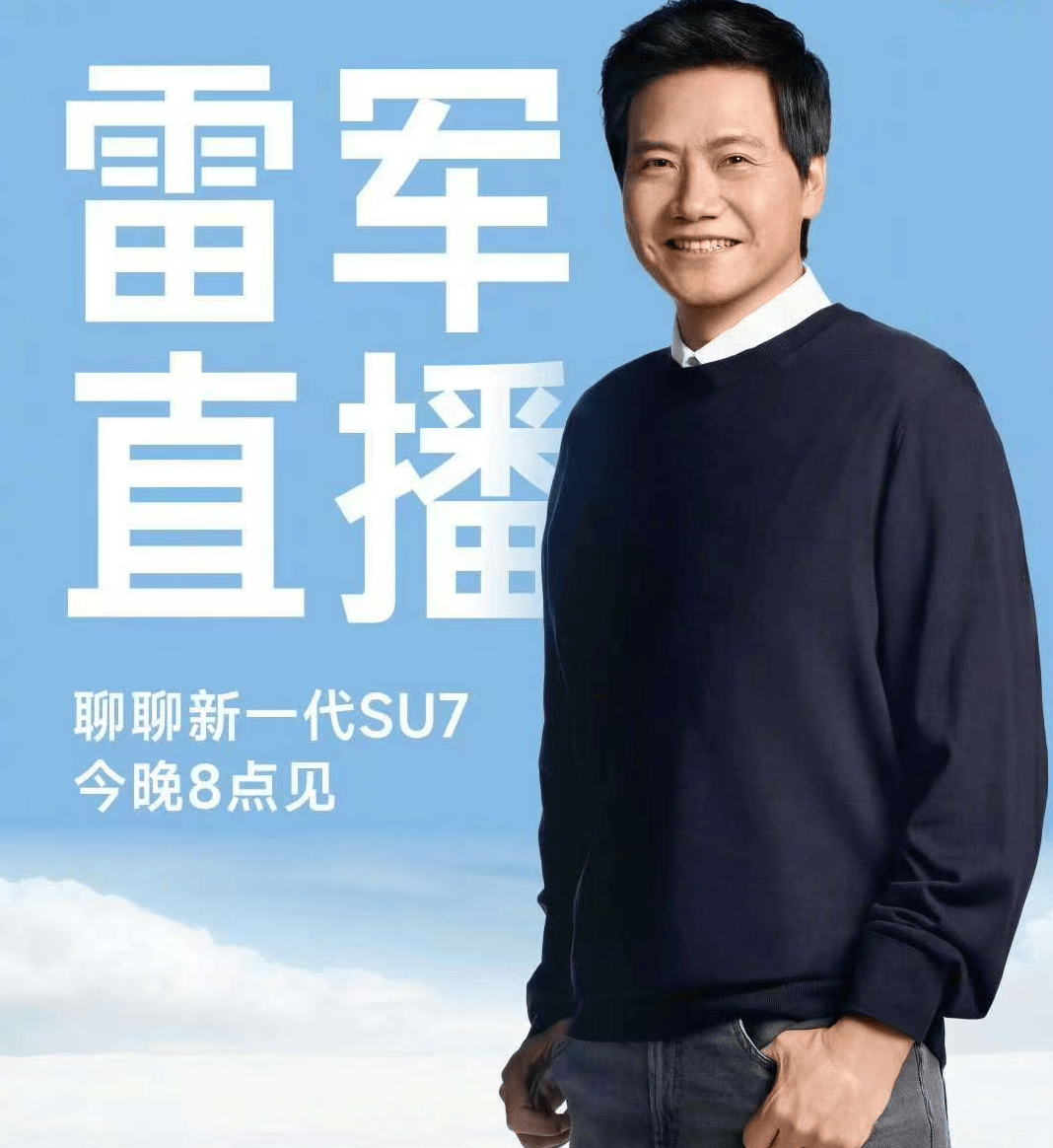
雷军抛出55万辆的小目标,流量反噬让小米认清现实?| DA观
Sou Hu Cai Jing· 2026-01-08 12:12
Core Viewpoint - Xiaomi's CEO Lei Jun announced the launch of the new SU7 model expected in April 2026, with a sales target of 550,000 vehicles for the year, which appears conservative compared to previous growth rates [2][3][4]. Sales Targets and Performance - The sales target of 550,000 units for 2026 is only a 34% increase from 410,000 units in 2025, which itself was a significant jump from 135,000 units in 2024 [3][4]. - The internal target may be even lower, around 500,000 units, indicating a cautious approach amidst market uncertainties [4]. - The current main model, YU7, has a monthly sales volume exceeding 30,000 units, suggesting that the target for 2026 may not reflect substantial growth compared to previous years [5]. Market Position and Competition - Xiaomi's sales strategy is being compared to competitors like Leap Motor, which aims for 1 million units in 2026, and Great Wall Motors, targeting 1.8 million units with a 36.4% growth rate [6]. - The company has experienced a significant drop in sales for its Ultra version, which fell from over 3,000 units per month to just 80 units in November 2025 [20]. Marketing and Consumer Sentiment - Xiaomi's marketing strategies have been effective in generating initial interest, with the SU7 achieving 88,898 pre-orders in 24 hours, showcasing the company's ability to leverage its existing consumer base [8][10]. - However, there are signs of consumer backlash, particularly regarding collaborations with KOLs that have not resonated well with Xiaomi's core fanbase, leading to a need for the company to reassess its marketing partnerships [14]. Safety Concerns and Public Perception - The company has faced significant challenges related to safety incidents involving its vehicles, which have raised public concerns about the safety of its products [18][20]. - The negative impact of these incidents has been compounded by a lack of timely responses from the company, leading to increased scrutiny and criticism from consumers [18][22]. Strategic Shifts - Xiaomi may need to adopt a "car sea" strategy, introducing more models to meet sales targets, which contradicts previous statements by Lei Jun about avoiding excessive model proliferation [24].


全球汽车业2026八大猜想
Zhong Guo Qi Che Bao Wang· 2026-01-08 11:43
Group 1 - The global automotive trade is expected to face increased tensions in 2026, with significant downward pressure on trade growth predicted by organizations like the WTO and IMF, projecting growth rates of only 0.5% and 0.6% respectively, down from 2.4% in 2025 [2][3] - The rise of trade protectionism is a core driver of this tension, as various countries implement unilateral trade measures, disrupting the established rhythm of the global automotive supply chain and increasing uncertainty in international trade [3] Group 2 - The global electric vehicle (EV) market is anticipated to experience a slowdown in sales growth in 2026, with the U.S. market showing particularly pessimistic trends due to the cancellation of favorable policies under the Trump administration, leading to a significant drop in consumer purchasing intent [4][5] - In China, the growth forecast for domestic electric vehicle sales has been revised down from 16% to 14% for 2026, attributed to high base effects and the reintroduction of purchase taxes despite continued government subsidies [5] Group 3 - Chinese automotive companies are accelerating their localization strategies overseas, transitioning from simple vehicle exports to localized production and comprehensive system output, as evidenced by projects like Changan's factory in Thailand and BYD's plans in Hungary and Malaysia [6][7] - Major Chinese automakers are implementing diverse strategies to enhance localization, including CKD exports to reduce tariff costs and partnerships with local firms to quickly integrate into new markets [7] Group 4 - The collaboration model between Chinese and foreign automotive companies is evolving, moving from a "market for technology" approach to a deeper integration based on technology output and resource sharing, extending cooperation beyond China to global markets [8][9] Group 5 - 2026 is projected to be a pivotal year for the commercialization of Robotaxi services, with advancements in technology, policy support, and reduced costs driving the transition from pilot programs to large-scale operations [11][12] - In China, companies like Pony.ai and Baidu are achieving significant milestones in Robotaxi deployment, with Baidu's service reportedly handling over 250,000 fully autonomous orders weekly [12] Group 6 - The year 2026 is recognized as a critical period for the validation of solid-state battery technology, with multiple automakers planning to conduct vehicle testing, marking a significant step towards overcoming limitations of current lithium-ion batteries [13] - Chinese automakers are actively pursuing diverse technological routes for solid-state battery production, with companies like SAIC and GAC announcing plans for testing and production timelines [13] Group 7 - The integration of AI large models into the automotive sector is expected to redefine value creation in 2026, with advancements in smart driving and intelligent cockpit technologies enhancing user engagement and operational efficiency [14][15] - The market for AI-driven automotive services is projected to expand significantly, with estimates suggesting that the AI model-derived market could exceed 100 billion yuan by 2028 [15] Group 8 - 2026 is anticipated to be a key year for the mass production and delivery of humanoid robots by automotive companies, with significant advancements in technology and a focus on commercial applications across various sectors [16][17] - Companies like Tesla and Xpeng are leading the charge in humanoid robot development, with plans for large-scale production and deployment in industrial and service contexts [17]
骏成科技:公司产品通过一级供应商交付应用于上汽吉利长安等主机厂
Zheng Quan Ri Bao Wang· 2026-01-08 10:43
Core Viewpoint - Jun Cheng Technology (301106) engages with major domestic automotive manufacturers through first-tier suppliers, indicating a strong position in the automotive supply chain [1] Group 1: Company Overview - Jun Cheng Technology's products are delivered through first-tier suppliers such as Weichai, Visteon (Tianbao Automotive), Tianyouwei (603202), and Xintongda [1] - The company collaborates with leading automotive manufacturers including SAIC Group (600104), Geely Automobile, Changan Automobile, Beijing Automotive, Chery Automobile, and Dongfeng Motor [1]

L3级自动驾驶来了,车险会涨价吗?
第一财经· 2026-01-08 10:41
2026.01. 08 本文字数:3876,阅读时长大约6分钟 作者 | 第一财经 杨倩雯 L3级自动驾驶正在加速落地。2025年12月15日,工业和信息化部正式公布我国首批L3级有条件自 动驾驶车型准入许可。到12月末,首批获颁L3号牌的车辆已经在北京、重庆的试点路段上路。 当智驾更进一步,当方向盘开始更多地在人与机器之间切换控制权,延续数十年的车险行业未来又将 随之面临怎样的变化?L3真的到来时,智驾险是否会取代车险成为新的"主角"? "未来很长一段时间仍会以车险为主,智驾险不会取代现在的车险。"平安产险上海分公司总经理何莹 对第一财经表示。这也是记者采访的多位业内人士的一致判断。但这并不意味着车险市场会一成不 变。受访的业内人士表示,一旦L3大范围铺开,会有更多新的场景出现,从而催生新的保险责任。 但同时,如何定责、数据匮乏等也成为L3下智驾保险发展所要面临的挑战。 车险会被替代吗? 车险一直是财险市场最重要的险种。金融监管总局数据显示,2025年前11个月,车险累计原保险保 费收入为8432亿元,占财产险公司总保费的52.19%。当前车险格局下,燃油车与新能源车均采 用"交强险+车损险+第三者责任险+ ...

造车新势力10年沉浮:既分高下,也决生死
经济观察报· 2026-01-08 10:29
Core Viewpoint - The article discusses the evolution of China's new car-making forces over the past decade, highlighting the contrasting fates of companies like Leap Motor and Neta Auto, and the emergence of new players like Xiaomi and Huawei's Hongmeng Zhixing [2][4]. Group 1: Market Dynamics - By 2025, Leap Motor is projected to achieve nearly 600,000 annual sales, becoming the sales champion among new car-making forces, while Neta Auto faces auctioning due to its decline [2]. - The number of new car-making enterprises has drastically reduced from over 60 in 2015 to only a few that still report sales [2]. - The new rankings for 2025 among new car-making enterprises include Leap Motor, Hongmeng Zhixing, Xiaopeng, Li Auto, Xiaomi, and NIO [2]. Group 2: Rise of New Players - Leap Motor's sales reached 597,000 units in 2025, a 103% increase year-on-year, marking its first time at the top of the sales chart [4]. - Hongmeng Zhixing, although not a traditional new car-making force, has seen rapid growth with its AITO brand, achieving 445,000 units in 2024 and 589,000 units in 2025, a 32% increase [5]. - Xiaomi, entering the market later, achieved 120,000 units in its first year of delivery and 412,000 units in 2025, surpassing NIO, which has been in the market for ten years [5]. Group 3: Challenges for Established Players - NIO, once a leader, saw its sales drop to 326,000 units in 2025, despite launching new brands and models to regain market share [8]. - Xiaopeng Motors sold 429,000 units in 2025, a 126% increase, but faced challenges with product positioning and market competition [9]. - Li Auto's sales fell to 405,900 units in 2025, a 19.6% decline, as it struggled to meet its annual target of 640,000 units [10]. Group 4: Industry Consolidation - Many once-prominent new car-making enterprises have disappeared, categorized into three groups: those that failed before mass production, those that made strategic errors, and those that faced funding issues [12][13][14]. - The industry has undergone a brutal elimination process, with only a few companies remaining competitive as they face increasing pressure from new entrants and established brands [14]. - The next decade is expected to be even more complex, testing the operational efficiency and competitive capabilities of the remaining players [15].


前瞻2026│L3级自动驾驶来了,车险会涨价吗?
Di Yi Cai Jing Zi Xun· 2026-01-08 10:12
L3级自动驾驶正在加速落地。2025年12月15日,工业和信息化部正式公布我国首批L3级有条件自动驾 驶车型准入许可。到12月末,首批获颁L3号牌的车辆已经在北京、重庆的试点路段上路。 当智驾更进一步,当方向盘开始更多地在人与机器之间切换控制权,延续数十年的车险行业未来又将随 之面临怎样的变化?L3真的到来时,智驾险是否会取代车险成为新的"主角"? "未来很长一段时间仍会以车险为主,智驾险不会取代现在的车险。"平安产险上海分公司总经理何莹对 第一财经表示。这也是记者采访的多位业内人士的一致判断。但这并不意味着车险市场会一成不变。受 访的业内人士表示,一旦L3大范围铺开,会有更多新的场景出现,从而催生新的保险责任。但同时, 如何定责、数据匮乏等也成为L3下智驾保险发展所要面临的挑战。 车险会被替代吗? 车险一直是财险市场最重要的险种。金融监管总局数据显示,2025年前11个月,车险累计原保险保费收 入为8432亿元,占财产险公司总保费的52.19%。当前车险格局下,燃油车与新能源车均采用"交强险 +车损险+第三者责任险+附加险"的传统方案;部分L2级车型中,车企与保险公司联合开发的智能辅助 驾驶责任险保障计划( ...
汽车“自主五强”的2025年:增长之下现战略分野
Jing Ji Guan Cha Wang· 2026-01-08 09:50
Core Insights - The Chinese automotive market is experiencing significant growth in 2025, driven by the rise of new energy vehicles (NEVs), with domestic brands capturing nearly 70% of the passenger car market share [2] - The "Big Five" domestic automakers—BYD, Geely, Chery, Changan, and Great Wall—account for over half of the total passenger car sales, with a combined sales figure of 14.67 million units [2][3] - The competition among these companies has intensified, with each adopting distinct strategies for growth and market positioning [2] Group 1: Sales Performance - BYD remains the global leader in NEV sales, achieving 4.6024 million units in total sales, a year-on-year increase of 7.73%, with pure electric vehicle sales reaching approximately 2.257 million units, marking a 27.9% increase [3] - Geely is noted as the most aggressive player in 2025, with total sales exceeding 3.02 million units, a 39% increase, and NEV sales of 1.6878 million units, reflecting a 90% growth [5] - Changan and Chery have stable growth, with Changan's total sales reaching 2.913 million units, an 8.5% increase, and Chery's sales at 2.8064 million units, a 7.8% increase [4][6] Group 2: Strategic Developments - Geely is undergoing significant internal restructuring, merging with Zeekr Technology to enhance efficiency and resource allocation, aiming to save billions in R&D costs [8] - Chery has restructured its brand architecture to improve operational efficiency, establishing a domestic business group to streamline its operations and enhance competitiveness [8] - Capital markets are playing a crucial role in supporting long-term strategies, with Changan raising 6 billion yuan for new energy vehicle development and Chery successfully listing on the Hong Kong stock exchange to fund global expansion [9] Group 3: Technological Advancements - The competition has shifted from individual technological breakthroughs to a more systemic approach, with companies like BYD launching advanced platforms and intelligent driving systems [10] - Geely has introduced a unified intelligent driving solution and integrated its battery business into a safety system, enhancing its technological synergy [10] - Changan is advancing its "Beidou Tianzhu" plan, showcasing a comprehensive technology layout from solid-state batteries to advanced driving systems [10]