三星

Search documents
轻薄之“身”,荣耀“亲近”年轻人
Shen Zhen Shang Bao· 2026-01-22 22:44
Core Viewpoint - The smartphone industry is facing increasing external pressures, leading to price hikes across various models, including the newly launched Honor Magic8 Pro Air, which targets the young consumer demographic [1][2]. Group 1: Product Launches and Features - Honor has introduced the Magic8 Pro Air, weighing 155 grams and measuring 6.1mm thick, making it the lightest flagship smartphone of the year [1]. - The Magic8 Pro Air features a MediaTek Dimensity 9500 processor and a rear camera setup that includes a 64MP periscope lens, while competing models like Huawei's Mate70 Air and Apple's iPhone Air have different specifications [3]. - Honor also launched a limited edition "Honor 500 Pro MOLLY 20th Anniversary" phone in collaboration with the trendy brand Pop Mart, aiming to resonate emotionally with younger consumers [1][5]. Group 2: Market Trends and Pricing - The smartphone market is experiencing a price increase due to rising storage chip costs, with DDR5 memory prices up over 300% since September 2025 [2]. - Honor's new models, including the Magic8 Pro Air, have starting prices above 4000 yuan, with the Magic8 Pro Air priced at 4999 yuan (12GB+256GB) [3]. - Despite the price hikes, Honor's strategy appears to be focused on appealing to younger consumers and creating a broader ecosystem beyond just smartphones [5][6]. Group 3: Industry Performance and Competition - The Chinese smartphone market saw a 1.6% year-on-year decline in shipments in Q4 2025, with Honor holding a 13.4% market share, ranking sixth [4]. - Apple's iPhone Air has struggled in the market, with initial activation numbers significantly lower than previous models, indicating a cooling demand for lightweight smartphones [5]. - The overall smartphone industry is entering a phase of low growth, with companies like Honor adapting their strategies to seek structural growth opportunities within a stagnant market [6].

财经观察:日韩品牌为何纷纷牵手中国电视厂商
Huan Qiu Shi Bao· 2026-01-22 22:35
Core Viewpoint - Sony's decision to spin off its television business and form a joint venture with China's TCL reflects a significant structural reorganization in the global television industry, driven by increasing competition and changing consumer demands for larger, higher-resolution screens [1][2][7]. Group 1: Industry Dynamics - The global television market is not declining; instead, it is growing in the large-screen and high-end segments, with a shift in competition rules from technology differentiation to manufacturing scale and cost structure [4][8]. - Japanese brands are losing their competitive edge in the television industry, with companies like Toshiba and Sharp either selling their TV businesses or significantly downsizing their operations [2][6]. - The joint venture between Sony and TCL is seen as a rational choice, allowing both companies to leverage their strengths—Sony's expertise in high-value products and TCL's efficiency and scale [4][7]. Group 2: Market Positioning - Chinese television brands are rapidly gaining market share, with TCL's global TV shipments reaching 20.8 million units in the first three quarters of 2025, marking a 4.1% year-on-year increase [10]. - By 2024, Chinese brands are expected to surpass Korean brands in global TV shipments, with TCL, Hisense, and Xiaomi collectively holding a market share of 31.8% compared to 28.5% for Samsung and LG [8]. - The shift in the global television supply chain is evident, with Chinese manufacturers dominating the LCD panel market, while Japanese and Korean companies are retreating from this segment [11]. Group 3: Competitive Landscape - The decline of Japanese brands is attributed to multiple factors, including slow progress in supply chain advancements and inadequate localization strategies [5][6]. - Despite the rise of Chinese brands, Samsung still maintains a significant lead in brand reputation and high-end market segments, indicating that the competition is ongoing and evolving [12].


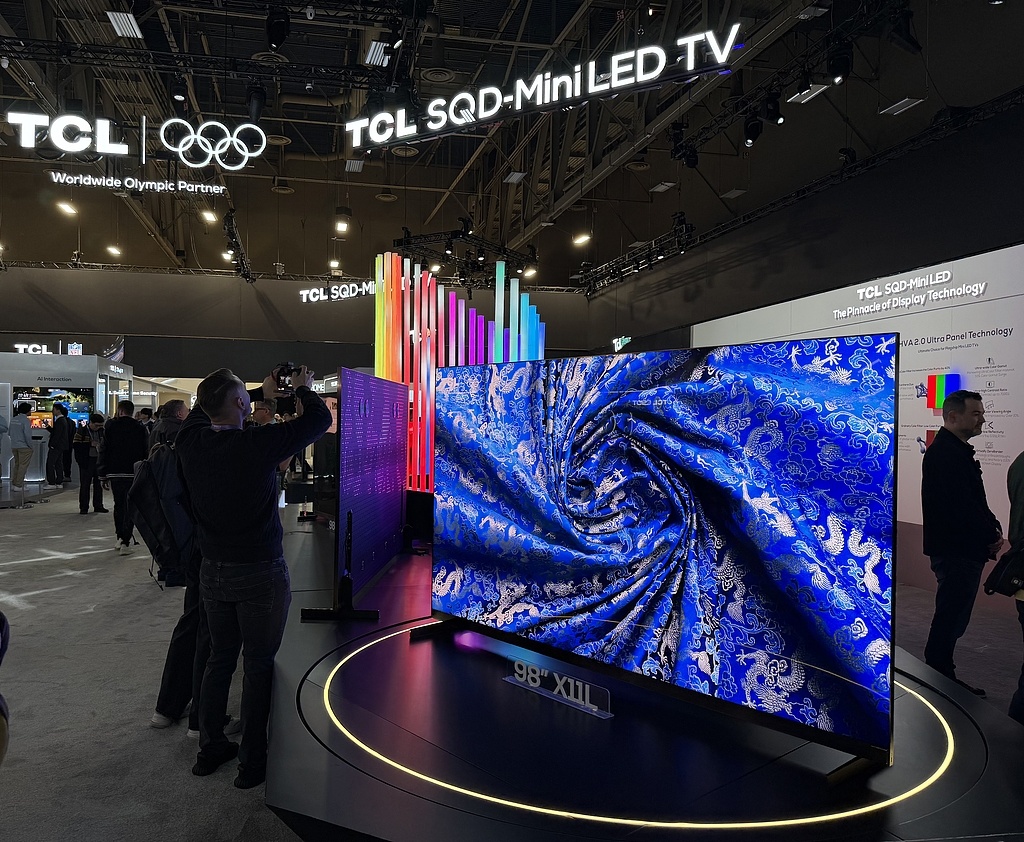
访华后加政府放行TikTok,马斯克回应特斯拉保险费减半,传阿里旗下平头哥拟上市,三星S26或首发首款2nm芯片,这就是今天的其他大新闻!
Sou Hu Cai Jing· 2026-01-22 16:51
Group 1 - Huawei has launched a new product featuring a 24K gold-plated nameplate and customizable auspicious phrases or homeowner surnames, indicating a focus on luxury and personalization in their offerings [1] Group 2 - The Canadian government has reversed a previous order to ban TikTok, allowing over 14 million users in Canada to continue using the app, which may impact TikTok's market presence positively [4] - TikTok welcomed the court's decision, emphasizing its role in providing employment opportunities [4] Group 3 - Lemonade announced a 50% discount on insurance premiums for Tesla owners who activate the Full Self-Driving (FSD) feature, highlighting the integration of technology and insurance [6] - Elon Musk expressed confidence in the safety improvements provided by Tesla's FSD, which is linked to the reduced insurance costs [6] Group 4 - Alibaba's chip subsidiary, T-head, is reportedly planning for an independent IPO, reflecting the company's strategic move in the semiconductor industry [8] - T-head's self-developed GPU chip, PPU, has shown competitive specifications, surpassing Nvidia's A800 and matching the performance of Nvidia's H20, indicating a strong position in the market [8] Group 5 - Samsung is set to unveil the Galaxy S26 series, which will feature the world's first 2nm mobile chip, Exynos 2600, ahead of competitors like Qualcomm and Apple [9] - The Galaxy S26 series is expected to launch on February 25, with a release date of March 11, showcasing Samsung's advancements in semiconductor technology [9]

存储等核心元器件成本上涨 手机行业竞争格局重构
Mei Ri Jing Ji Xin Wen· 2026-01-22 15:28
Core Insights - Honor has launched three new smartphone models targeting different consumer segments, indicating a strategic shift to attract younger and female users under new management [1] - The global smartphone market is facing dual pressures from rising component costs and limited domestic market growth, necessitating a search for new growth opportunities [1] - Omdia predicts that by 2026, the smartphone market will enter a new phase dominated by "cost pressure" and "value creation," with a clear trend of market differentiation [2] Industry Overview - The global smartphone shipment is expected to reach 1.26 billion units in 2025, with a year-on-year growth of 1.9%, primarily driven by mid-to-high-end models [3] - Apple and Samsung are projected to be the strongest performers among the top five smartphone manufacturers, with growth rates of 6.3% and 7.9% respectively, increasing their combined market share to 39% [3] - Other manufacturers like Xiaomi and OPPO are experiencing market share declines, with Xiaomi's shipments dropping significantly in Q4 2025 due to competitive pressures and a shift towards high-end products [3] Market Dynamics - The entry-level smartphone segment, once a stronghold for Chinese manufacturers in overseas markets, is now under pressure due to rising component costs, prompting a shift towards the mid-to-high-end market [4] - Honor's overseas smartphone shipments grew by approximately 55% in the first three quarters of 2025, with Europe being a key market for its high-end strategy [4] - OPPO's shipments of mid-to-high-end smartphones increased from 2.7 million units in Q2 2024 to 4 million units in Q2 2025, reflecting a similar strategic shift [5] Supply Chain Challenges - Rising prices of core components, particularly storage, are significantly impacting the smartphone market, with Omdia highlighting this as a key variable for 2026 [7] - The supply of LPDDR4 and LPDDR5 memory is constrained, leading to intense competition among manufacturers to manage costs and secure supply [7] - The price of DRAM and NAND memory surged by 386% and 207% respectively in 2025, with further increases expected in early 2026 [8] Strategic Adjustments - Manufacturers are adjusting their product strategies in response to rising costs, with many shifting focus from entry-level to mid-range products to maintain profitability [4][9] - The industry is expected to face challenges in maintaining healthy inventory levels, with a recommended storage inventory of 8 to 10 weeks [9]
索尼退场,日本电视全军覆没
远川研究所· 2026-01-22 13:17
Core Viewpoint - Sony's decision to form a joint venture with TCL for its home entertainment business marks a significant shift in the global television market, indicating the complete exit of Japanese companies from the competitive landscape of television manufacturing [4][10]. Group 1: Sony's Strategic Move - Sony will transfer its television business and the BRAVIA brand to TCL, with TCL holding a 51% stake in the new joint venture [4]. - This move reflects Sony's inability to produce display panels, which are crucial for profitability in the television market, relying instead on LG and TCL for panel supply [4][10]. - Sony's market share in the global television sector has been consistently low, often categorized under "others," indicating a lack of competitive presence [5][10]. Group 2: TCL's Positioning - For TCL, acquiring Sony's brand equity is a strategic advantage, allowing it to leverage its panel production capabilities to challenge Samsung's dominance in the global market [9]. - TCL is currently the only domestic television brand in China with display panel production capabilities, positioning itself uniquely in the industry [25]. Group 3: Decline of Japanese Brands - The exit of Sony signifies the end of an era for Japanese television brands, which have been in decline since the 2010s, with major players like Sharp and Toshiba also having sold their television businesses [10][13]. - The loss of panel production capabilities has been a critical factor in the decline of Japanese brands, as they have lost pricing power and market relevance [29]. - The shift in focus for Japanese companies has been towards higher-margin components rather than low-margin consumer electronics, reflecting a strategic pivot in response to competitive pressures [16][17]. Group 4: Historical Context - The rise and fall of Japanese television brands can be traced back to their initial dominance in the 1990s, where they controlled over 90% of the global market, primarily due to their advanced panel production technologies [20]. - The financial crisis of 2008 and subsequent strategic missteps led to significant losses for these companies, prompting a reevaluation of their business models [15][16]. - The transition from being manufacturers of consumer electronics to component suppliers has been a common theme among Japanese firms, as they adapt to the changing landscape of the electronics industry [29].

存储芯片的“暴力美学”:为何本轮存储牛市才刚走完上半场?
3 6 Ke· 2026-01-22 13:04
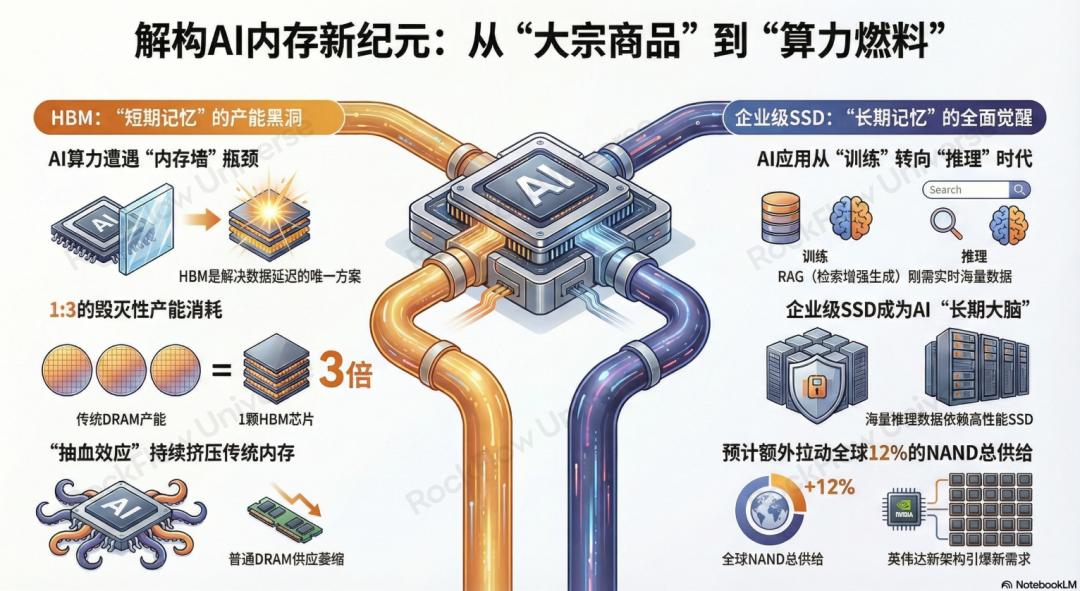
Core Insights - Storage chips are transitioning from a commodity to a core fuel for AI computing, with HBM's "capacity black hole" effect disrupting traditional DRAM supply and awakening long-term demand for enterprise SSDs [1][5] - The current supercycle in storage is accelerating differentiation among key players, with Micron (MU) breaking profit ceilings, SanDisk (SNDK) benefiting from high profit elasticity, and Western Digital (WDC) leveraging HAMR technology to protect its market position [1][2] - Four catalysts are preventing a decline in storage prices: increased memory demand from AI, a new normal of capital expenditure focused on technology iteration, a shift in power dynamics favoring manufacturers, and geopolitical factors ending price wars [1][2][19] Industry Dynamics - The perception of memory chips as a commodity is being shattered as they become essential for AI, breaking traditional cyclical valuation patterns and granting manufacturers greater pricing power [5] - HBM is crucial for addressing the "memory wall" in AI, consuming DRAM capacity at a rate of 3:1, which will lead to significant price increases for DRAM contracts in 2026 [6][12] Key Players Analysis - Micron (MU) is positioned as the only pure-play DRAM manufacturer in the U.S., benefiting from technological advancements and local incentives, with expectations for EPS to rise significantly due to increased HBM production [12][23] - SanDisk (SNDK), after its spin-off from WDC, is now viewed as a pure NAND and enterprise SSD leader, showing high sensitivity to eSSD price increases, which enhances its profit margins [13][24] - Western Digital (WDC) is seen as an undervalued player in cold data storage, with its HDD business remaining essential for cost-effective data storage, supported by HAMR technology [14][25] Future Outlook - The storage market is expected to enter a phase driven by structural demand changes starting in 2026, with significant catalysts supporting continued growth [18] - The four key catalysts include increased AI-driven demand for memory, a shift in capital expenditure focus, a reversal of pricing power to manufacturers, and geopolitical stability ensuring supply chain security [19][20][21][22] Investment Strategy - Core holdings should focus on Micron (MU) due to its technological edge and favorable policy environment, while SanDisk (SNDK) offers potential for explosive growth in enterprise SSDs [23][24] - Western Digital (WDC) serves as a defensive addition, providing stability in uncertain market conditions [25]


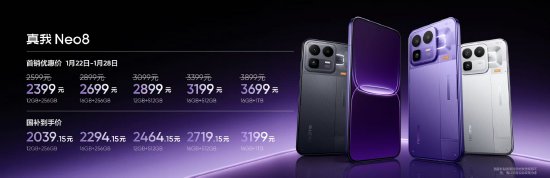
真我Neo8首销2399元起,将于今年4月正式接入OPPO售后体系
Xin Lang Cai Jing· 2026-01-22 12:28
Core Viewpoint - Realme has officially launched the Neo8, a 165Hz gaming flagship smartphone, with a starting price of 2399 yuan and a promotional price of 2039.15 yuan after subsidies. The company plans to integrate into OPPO's after-sales service system by April 2026 [1][3]. Group 1: Product Features - The Neo8 is equipped with the fifth-generation Snapdragon 8 flagship chip, offering customizable CPU and GPU frequency settings, along with a new cooling system and a 165Hz display that reduces power consumption by 16% compared to the industry standard of 144Hz [4]. - It supports over 30 popular mobile games with a native 165 FPS mode and features a PC handheld mode that allows for seamless integration with Steam accounts and over 50 popular PC games [2][4]. - The camera system includes a 50MP periscope lens with 3.5x optical zoom and up to 120x digital zoom, along with an advanced main sensor capable of 8K video recording [5]. Group 2: Battery and Durability - The Neo8 features an 8000mAh battery with 80W fast charging capabilities, and it has received multiple waterproof certifications (IP66, IP68, IP69) [5]. - The device includes advanced communication systems with dual-band GPS and a new UI that enhances user experience with AI features [5]. Group 3: Market Position and Growth - Realme's Vice President stated that the company expects to surpass 300 million total sales by 2025, indicating a strong growth trajectory despite market challenges [4].
AI不抢工作反而抢人?黄仁勋首次亮相达沃斯:它掀起了人类最大规模基建潮
3 6 Ke· 2026-01-22 12:24
Core Insights - NVIDIA CEO Jensen Huang discussed the macro perspective of AI at the World Economic Forum, emphasizing the changes in AI technology, the structure of the AI industry, and its potential societal impacts [1][2][3] Industry Structure - The AI industry can be divided into five layers: energy, chip and computing infrastructure, cloud infrastructure and services, AI model layer, and application layer, with the application layer being the most critical for economic growth [7][10][11] - The application layer is experiencing rapid growth due to advancements in AI models, which have led to significant investment in AI-native companies across various sectors such as healthcare, robotics, and finance [12][32] Technological Advancements - In 2025, three disruptive events are expected in the AI model layer: the emergence of Agentic AI, breakthroughs in open-source models, and significant progress in physical AI [14][15] - Agentic AI represents a shift where models can perform reasoning and planning, moving beyond simple tasks to more complex interactions [14] - Open-source models are democratizing access to AI technology, allowing various stakeholders to develop specialized applications [15] Employment Impact - Contrary to fears of job loss due to AI, Huang argues that AI will create a labor shortage by generating a demand for skilled workers in various trades, with salaries reaching six figures in the U.S. [17][18] - Historical examples, such as the impact of AI in radiology, show that AI can enhance job roles rather than eliminate them, leading to increased hiring in healthcare [18][20] Global Opportunities - AI is viewed as a critical infrastructure that can help emerging economies participate in the digital economy, with open-source models lowering the barriers to entry [22][25] - The rapid adoption of AI technology is expected to create new opportunities for countries lacking advanced computing resources [23] European Context - Europe has a unique opportunity to integrate AI into its strong industrial base, particularly in manufacturing and robotics, but requires increased investment in energy and infrastructure [28][29] - The current investment climate is not a bubble but rather a necessary phase of infrastructure development to support AI across all layers [30][31]

黄仁勋,再次驳斥“AI泡沫”论!
Shen Zhen Shang Bao· 2026-01-22 11:50
Group 1 - The core argument presented by Jensen Huang, CEO of Nvidia, is that the current investment in AI is not a bubble but rather the largest infrastructure build-up in human history, requiring trillions of dollars in investment [1][5] - The AI industry is experiencing a significant transformation, moving from a "light asset software industry" to a "heavy asset heavy industry," with substantial investments in hardware and infrastructure [7][8] - The semiconductor market is witnessing a surge, with major companies like Intel and Micron seeing significant stock price increases, indicating strong demand for AI-related hardware [7][8] Group 2 - In 2025, the AI sector is projected to see investments of approximately $1.5 trillion, surpassing expenditures in nearly all other fields [2] - Despite the massive investments, a report from MIT indicates that 95% of organizations in the U.S. have not seen returns on their investments in generative AI, raising concerns about the effectiveness of these expenditures [3] - The AI industry is structured like a "five-layer cake," with each layer requiring substantial investment to ensure the functionality of the layers above it, emphasizing the need for foundational infrastructure [4][5] Group 3 - The global semiconductor market is experiencing unprecedented growth, with companies like TSMC and Micron investing heavily in new factories to meet the rising demand for AI capabilities [7][8] - The price of high-end memory chips has skyrocketed, with some products seeing price increases of over 600%, driven by limited production capacity and growing demand for AI servers [8] - Shenzhen-based company Demingli has projected a net profit increase of 85.4% to 128.2% for 2025, reflecting the strong growth potential in the storage solutions sector [9]

美光科技:别被 “英伟达时刻”冲昏头脑
美股研究社· 2026-01-22 11:11
Core Viewpoint - Micron Technology (MU) has become a highly sought-after stock in the AI sector, with its recent earnings report being described as a "NVIDIA-style highlight," attracting significant investor interest. However, analysts caution that the impressive performance may not be sustainable, leading to a downgrade of the stock rating to "Sell" [2][30]. Financial Performance - Micron reported a remarkable revenue increase of 57% year-over-year, reaching $13.64 billion, marking the second consecutive quarter of accelerating revenue growth [2][6]. - The company's non-GAAP operating margin surged to 47%, while the GAAP operating margin reached 45%, the highest since 2018 [8][9]. - Free cash flow for the quarter was $3 billion, with $300 million allocated for stock buybacks [10]. Future Outlook - Management provided an aggressive revenue guidance for the year, projecting a maximum revenue of $22.7 billion, representing a year-over-year increase of 180% [10]. - The company plans to invest approximately $20 billion in capital expenditures throughout the year [11]. - Management expects business performance to continue strengthening throughout the year, with demand outpacing supply significantly [12][13]. Market Dynamics - Analysts express concerns that investors may be overestimating the actual returns from the company's performance growth, given the cyclical nature of the semiconductor industry [16]. - Micron's current price-to-earnings ratio is approximately 12, with a forward P/E ratio around 9.4, suggesting a conservative valuation compared to its explosive growth [17][18]. - Despite the impressive growth, analysts highlight that Micron's valuation is significantly above historical levels, particularly from a price-to-sales perspective [20]. Industry Competition - The semiconductor market, particularly high-bandwidth memory (HBM), remains highly competitive, with Micron, SK Hynix, and Samsung as the main players [22]. - Analysts argue that the current profit margins and demand growth are likely short-term phenomena, not driven by structural changes in the market [25]. - There is a concern that as competitors expand capacity to meet demand, product prices may normalize, leading to potential declines in Micron's profitability [27][28]. Conclusion - Given the cyclical nature of the industry and the current market dynamics, analysts have downgraded Micron Technology's rating to "Sell," indicating that the stock may be overvalued based on future earnings expectations [30].