
鸿海

Search documents
“韩流”霸屏全球交易台! 资金疯抢韩国芯片股 跨境ETF被买爆
智通财经网· 2026-02-27 08:52
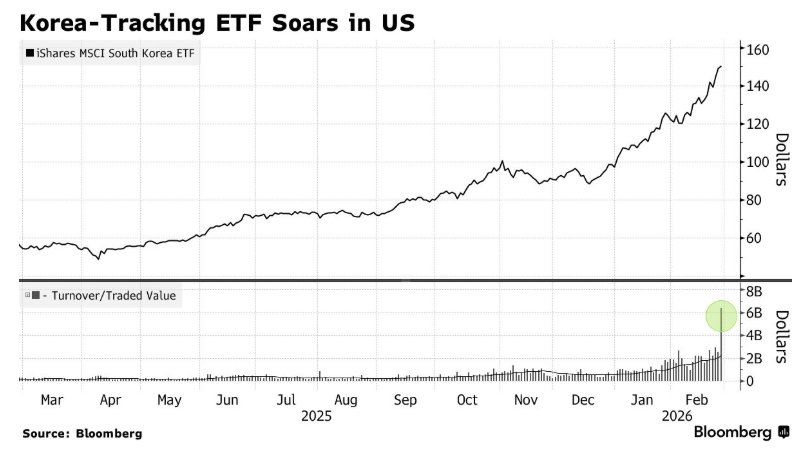
智通财经APP获悉,全球资金正在大规模涌向近期涨势如虹且屡创历史新高点位的韩国芯片制造巨头股票,这股围 绕韩国股市的投资巨浪正推动全球范围跨境交易所交易基金(即ETF)出现异常波动与成交量。毋庸置疑的是,在 "美国例外论"逐渐崩塌和"抛售美国"论调席卷市场以及全球AI基建热潮如火如荼的大趋势之下,韩国股市在经历基 准指数疯涨75%的2025年之后,2026年仍然位列"全球最疯狂股市"——韩国基准股指KOSPI年内涨幅已经高达 50%,强势领跑全球股市,韩流(K-Pop)可谓从首尔时尚圈杀到全球股票市场。 在韩国股市以及中国台湾股市强劲带动之下,全球股市可谓上演历史性分化:亚洲股市不断创下佳绩,大幅跑赢 美国股市以及发达市场基准指数。"AI恐慌交易"以及"AI颠覆一切"基调正在重塑全球投资者的资产配置逻辑,推 动全球机构与散户资金从美国流向被视为人工智能算力产业链参与者名单最集中的亚洲股票市场。最新数据显 示,MSCI亚太指数本月累计上涨超7%,创该指数1998年成立以来的最佳2月表现,韩国证券交易所更是超越法 国,跻身全球第九大交易所。 当前股票市场交易格局非常有利于半导体以及AI算力基础设施类股票,而非软件 ...

未知机构:鸿海2317TW董事长调研反馈AI服务器强劲爬坡研发实力与全球-20260227
未知机构· 2026-02-27 02:30
鸿海(2317.TW):董事长调研反馈 ——AI 服务器强劲爬坡;研发实力与全球布局巩固领先市场地位;买入评级 核心观点 我们于 2 月 25 日在台湾接待了鸿海董事长。 管理层对 AI 服务器业务爬坡、电动汽车机会增长以及智能手机 EMS 业务的领先市场地位持积极态度。 我们看好鸿海在 AI 服务器领域的领先市场地位,智能手机业务将受益于形态变化,推动公司增长。 鸿海(2317.TW):董事长调研反馈 ——AI 服务器强劲爬坡;研发实力与全球布局巩固领先市场地位;买入评级 核心观点 我们于 2 月 25 日在台湾接待了鸿海董事长。 管理层对 AI 服务器业务爬坡、电动汽车机会增长以及智能手机 EMS 业务的领先市场地位持积极态度。 我们看好鸿海在 AI 服务器领域的领先市场地位,智能手机业务将受益于形态变化,推动公司增长。 正如我们在鸿海深度报告中强调的,我们对鸿海 / 富士康持积极态度,基于以下三点: 1/ 强劲的研发实力、全球生产布局和规模效应,巩固其在 AI 服务器领域的领先源头 信息加微ss62897市场地位; 2/ 智能手机形态因素变化驱动终端需求,鸿海 / 富士康的份额和美元价值提升; 3/ 未 ...
全球资金上演“大迁徙”! AI基建狂潮与弱美元点燃新兴市场牛市
Zhi Tong Cai Jing· 2026-02-26 07:26
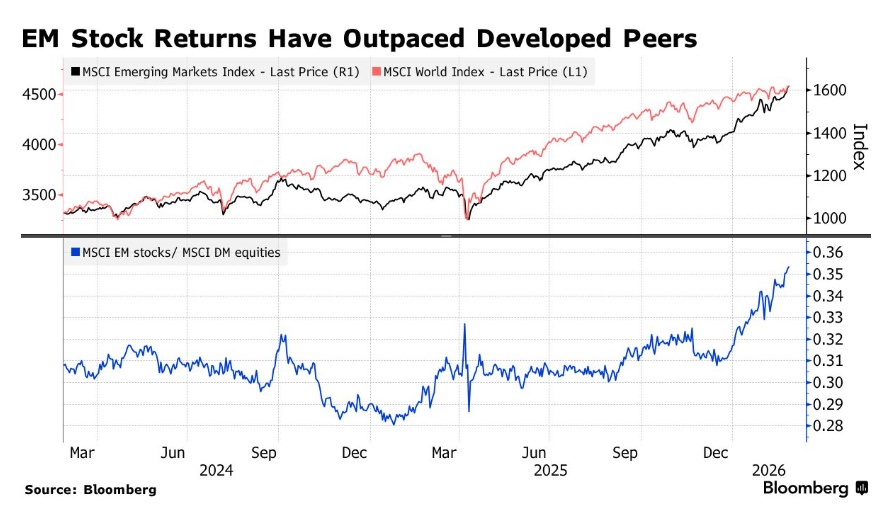
新兴市场股票正逐渐成为今年以来全球股票市场最热门的投资与交易主题之一,并且全球最顶级基金经理们愈发偏好广义上的新兴市场资 产——包含新兴市场股票、债券以及主权货币类资产。花旗集团的股票分析师团队表示,来自全球最大规模的那些资产管理机构的基金经 理们已大幅增加对亚洲、拉丁美洲以及欧洲、中东和非洲新兴市场股票资产的多头仓位。 华尔街金融巨头花旗集团(Citigroup Inc.)的分析师们在审阅投资型基金们已公开发布的展望后表示,全球最大规模的那些资产管理机构—— 累计管理着逾20万亿美元资产,正在大举买入新兴市场股票标的/新兴市场ETF、本币债券甚至某些信用类资产,押注强劲的全球经济增长 态势、受益于全球AI基建狂潮的算力链高度集中和持续走弱的美元将利好新兴市场资产。 花旗集团的股票分析师团队表示,基金经理们已大幅增加对亚洲、拉丁美洲以及欧洲、中东和非洲新兴市场股票资产的多头仓位。新兴市 场债券则是他们最偏好的久期资产押注,与基金经理们对于美国国债和核心欧洲主权债券的空头仓位形成鲜明对比。花旗表示,在信用市 场中,新兴市场公司债务获得最大幅度的超配,而美国投资级债券仍是热门的低配或者减持对象。 即使本周全球市场 ...

鸿海布局印度再下一城 携手HCL集团设立半导体封测厂
Jing Ji Ri Bao· 2026-02-21 23:30
Group 1 - The foundation ceremony for the joint venture between Hon Hai (Foxconn) and HCL Technologies marks a significant step in India's semiconductor market, with a total investment of ₹370 billion (approximately $4.5 billion) aimed at producing display driver chips for various devices [1][2] - The new semiconductor factory is part of India's Semiconductor Mission and is expected to begin production in 2027, targeting a monthly capacity of 20,000 wafers and 36 million display driver chips [1][2] - Hon Hai's investment strategy includes establishing a local semiconductor ecosystem in India, enhancing the resilience of the domestic supply chain, and supporting local communities through its BOL (Build-Operate-Localize) operational model [1] Group 2 - The factory is the sixth approved under the Indian government's semiconductor initiative, reflecting Prime Minister Modi's prioritization of chip manufacturing as a key component of India's economic strategy [2] - Hon Hai has multiple manufacturing facilities across India, including in Tamil Nadu, Karnataka, and Telangana, to strengthen its manufacturing and supply chain flexibility [2] - The Bangalore facility is primarily known for iPhone production, while the Hyderabad plant has recently started assembling AirPods, indicating Hon Hai's expanding product range in India [2]
新兴市场牛市浪潮席卷全球!最高法院关税裁决点火 贝莱德新兴市场ETF再创新高
智通财经网· 2026-02-21 01:33
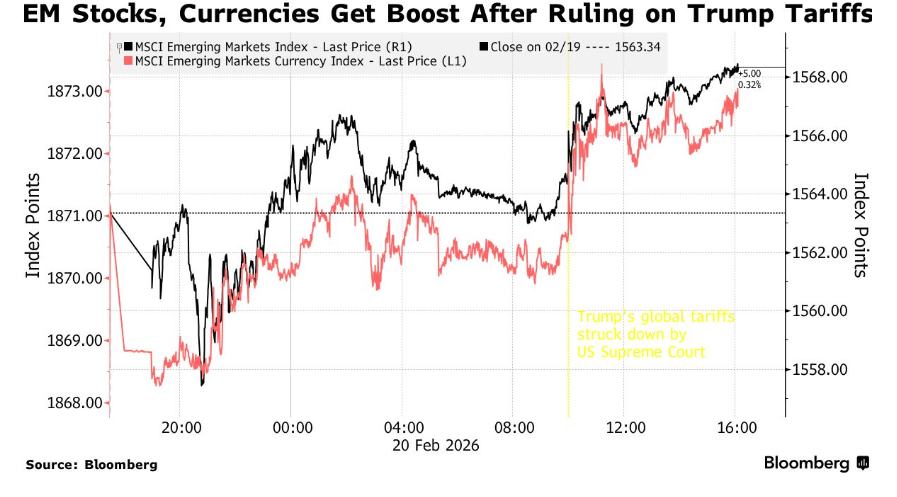
Group 1 - The U.S. Supreme Court's ruling against Trump's tariffs has led to a strong rally in emerging market assets, with a benchmark index for emerging market currencies reversing weekly losses and an emerging market ETF reaching a historical high [1][5] - Michael Hartnett, a strategist at Bank of America, emphasizes that emerging markets are likely to outperform the U.S. market amid the decline of "American exceptionalism" and a shift in global growth focus [1][7] - The iShares MSCI Emerging Markets ETF has seen a rare "ten consecutive days of gains," reaching a historical peak, with trading volume significantly above its 20-day average [1][4] Group 2 - The strong performance of key stocks like TSMC, Samsung, and SK Hynix has contributed to the iShares MSCI Emerging Markets ETF's rise, which has increased by 14% in 2026, outperforming the S&P 500 and Nasdaq 100 [4] - The ongoing global AI boom and the "sell America" narrative have positioned the Korean stock market as one of the best-performing markets globally, with a 40% increase in its benchmark index this year [4][8] - The Supreme Court's tariff decision is seen as a catalyst for emerging market currencies, highlighting significant uncertainty in U.S. government policies and driving diversification trends [5][8] Group 3 - Recent U.S. economic data indicates weakness, with GDP growth falling short of expectations and inflation measures exceeding forecasts, creating mixed signals for the Federal Reserve's interest rate outlook [6] - Despite geopolitical tensions, most Wall Street strategists believe that these will not escalate into a full-scale war, allowing emerging markets to maintain their strong upward momentum [6][7] - The uncertainty surrounding U.S. fiscal policies and high valuations in the U.S. market are prompting large investors to seek diversification in emerging markets, which are seen as more attractive in terms of valuation and growth expectations [8]
26年1月台股电子板块景气跟踪:台积电营收环增20%创新高,淡季不淡
Shenwan Hongyuan Securities· 2026-02-13 11:21
Investment Rating - The report maintains a positive outlook on the semiconductor industry, particularly in the AI and HPC sectors, indicating a strong demand that supports revenue growth [2][5]. Core Insights - TSMC reported a record revenue of NT$401.26 billion in January 2026, a year-on-year increase of 36.8%, driven by strong demand in AI servers, HPC, and cloud data centers [2][5]. - The advanced packaging capacity remains tight, which is a key factor supporting revenue growth [5]. - The report highlights that the AI sector continues to drive demand, with companies like Xinxia and JY Electronics also reporting significant revenue increases [2][5][20]. Summary by Sections AI Sector - TSMC's revenue growth is attributed to the sustained demand for AI servers and advanced process technologies, maintaining high utilization rates [5]. - Xinxia's revenue reached NT$900 million in January 2026, up 28.5% year-on-year, reflecting the strong demand for server management chips [7]. - JY Electronics reported a revenue of NT$3.37 billion, a 41% increase year-on-year, driven by the rising complexity and demand for AI-related testing [8]. Mature Process - UMC, World Advanced, and PSMC reported revenues of NT$20.86 billion, NT$4.01 billion, and NT$4.62 billion respectively, with year-on-year growth rates of 5%, 18%, and 26% [16]. - PSMC's revenue reached a 39-month high, driven by rising prices in memory wafer foundry and increased demand for logic foundry [16]. Storage - Nanya Technology, Winbond, and Macronix reported revenues of NT$15.31 billion, NT$11.78 billion, and NT$3.02 billion respectively, with year-on-year growth rates of 608%, 94%, and 51% [17]. - Nanya indicated that various DRAM products may remain tight due to limited new capacity, particularly DDR4 and LPDDR4 [17]. End-Side Chips - MediaTek's revenue was NT$46.98 billion, down 8% year-on-year, with expectations of a significant decline in mobile terminal demand due to rising costs [18]. - The Smart Edge business is expected to grow, with data center ASIC revenue projected to exceed USD 1 billion in 2026 [20]. Passive Components - Yageo reported a revenue of NT$13.03 billion, a 27% year-on-year increase, driven by strong demand from AI-related applications [20].
CSP2026年CapEx超预期-服务器-液冷表现亮眼
2026-02-13 02:17
Summary of Conference Call Notes Industry Overview - **Cloud Service Providers (CSPs)**: Major cloud service providers including Microsoft, Meta, and Amazon are significantly increasing capital expenditures (CapEx) to support AI development, with Amazon leading at a projected CapEx of $200 billion for 2026, reflecting substantial investment in AI infrastructure [2][4]. Key Points and Arguments - **Capital Expenditure Growth**: - Google’s Q4 CapEx reached $27.8 billion, totaling $91.4 billion for the year, with a 2026 guidance of $175 to $185 billion, nearly doubling year-over-year [3]. - Microsoft’s Q4 CapEx was $37.5 billion, totaling $118 billion for the year, with significant spending planned for GPU and CPU servers [3]. - Meta’s Q4 CapEx was $22.1 billion, totaling $72.2 billion for the year, with a rapidly growing demand in the liquid cooling market [3]. - Amazon’s Q4 CapEx was $39.5 billion, totaling $131.8 billion for the year, with a 2026 guidance of $200 billion, the highest among the four [4]. - **Revenue and Profit Trends**: - From 2023 to 2025, the revenue of the five major CSPs is expected to steadily increase, with Amazon projected to exceed $213.4 billion in revenue by Q4 2025, indicating a solid financial foundation for AI-related business [5]. - Net profits are expected to remain stable despite increased CapEx, with Google’s Q4 2025 net profit reaching $34.5 billion [5]. - **Strong Demand Indicators**: - Microsoft’s cloud revenue grew by 39% year-over-year, while Amazon AWS and Google Cloud revenues grew by 24% and 48%, respectively [6]. - Backlog orders for Microsoft, Amazon, and Google increased significantly, with Microsoft’s RPO at $625 billion (up 110%), Amazon’s backlog at $244 billion (up 40%), and Google’s backlog at $240 billion (up 55%) [6]. Additional Important Insights - **Taiwan Stock Supply Chain Performance**: - In January, Taiwan's supply chain data remained strong, with companies like Hon Hai expressing optimistic outlooks for Q1, and AI server cabinet shipments continuing to grow [7]. - Companies are aiming for a production capacity exceeding 2,000 units per week by the end of 2026, with a focus on vertical integration to enhance profit margins [7]. - **Liquid Cooling Market Growth**: - The liquid cooling market is experiencing robust growth, with companies like Chi Mei and Shuang Hong achieving month-over-month growth despite seasonal trends, driven by increased downstream demand and rising penetration rates [8]. - Vidi's Q4 orders showed a year-over-year growth of 252%, indicating strong future growth potential in the liquid cooling segment [8]. - **CoWoS Capacity Expansion**: - TSMC is expanding its CoWoS capacity, with expectations to increase monthly capacity to 120,000 to 130,000 units, validating the ongoing demand for AI computing power [9]. - Recommendations for companies in the computing industry include Industrial Fulian, Zhongke Shuguang, Inspur Information, and others involved in server and cooling technologies [9].
鸿海绩效奖金平均拉高10% 部分业绩好的部门年增16%
Jing Ji Ri Bao· 2026-02-11 23:10
Group 1 - Foxconn announced the distribution of employee performance bonuses on February 11, with an average increase of approximately 10% compared to last year, and some high-performing business units seeing increases of 16% [1] - The company confirmed that employee bonuses are distributed based on individual performance and the operational performance of their respective units, with the total amount of bonuses not disclosed [1][2] - Foxconn's employee compensation includes a guaranteed salary for 14 months, mid-year bonuses, and year-end performance bonuses, with the total employee bonus for 2025 expected to reach NT$88.34 billion, marking a 6.8% year-on-year increase [1][2] Group 2 - Foxconn is solidifying its position in the ICT industry while showing strong growth momentum in the AI sector and gradually advancing in the electric vehicle business, with projected consolidated revenue for 2025 expected to exceed NT$8 trillion, reaching NT$8.099 trillion, an 18.07% year-on-year increase [2] - The company reported a net profit of NT$144.1 billion for the first three quarters, with earnings per share of NT$10.38 [2] - A financial briefing is scheduled for March 16, where Foxconn will announce its full-year financial report and operational outlook for 2025 [3]
百年难遇!外国汽车扎堆进攻日本市场
汽车商业评论· 2026-02-07 23:07
Core Viewpoint - The Japanese automotive market, historically dominated by local brands, is witnessing a significant shift as foreign electric vehicle (EV) manufacturers are beginning to penetrate this previously closed market, driven by the slow electrification of domestic brands and changing consumer preferences [4][5][6]. Group 1: Market Overview - Japan's automotive market has long been considered one of the most challenging for foreign brands, with local manufacturers holding over 90% market share [4]. - In 2025, Japan's total new car sales are projected to reach 4.5658 million units, with a 3.3% year-on-year increase, while foreign brands are starting to gain traction [5]. - The electric vehicle market in Japan is still in its infancy, with only 60,677 EVs sold in 2025, representing a mere 1.6% of total vehicle sales [5]. Group 2: Foreign Brands' Entry - The Japanese Imported Automobile Association reported a 7% increase in non-local brand vehicle sales in 2025, totaling 243,129 units, with pure electric imports surging by 26% to a record 30,513 units [6]. - Hyundai is making a comeback in Japan, with a 89% increase in sales in 2025, reaching 1,169 units, driven by the introduction of several electric models [8][10]. - Tesla's sales in Japan saw a remarkable 90% increase in 2025, reaching approximately 10,600 units, attributed to a shift in sales strategy towards physical stores [12][14]. Group 3: Chinese Brands' Expansion - BYD entered the Japanese market in 2023 and aims to establish 100 dedicated stores by 2025, achieving a 62% sales increase to 3,870 units in 2025 [15][18]. - Other Chinese brands, such as Zeekr and GAC, are also planning to enter the Japanese market, with unique offerings tailored to local consumer preferences [19][21]. Group 4: Domestic Brands' Response - Japanese automakers are not standing still; Toyota's new EV model bZ4X received over 10,000 orders within three months of its launch in late 2025, becoming the top-selling EV in Japan [24][27]. - Nissan and Honda are also launching new EV models to compete with foreign brands, with Nissan's new LEAF and Honda's N-ONE e: entering the market [27][28].




招财日报-20260206
Zhao Yin Guo Ji· 2026-02-06 01:44
Industry Insights - The Chinese medical examination industry is experiencing rapid growth, driven by an aging population and increasing health awareness, with a projected CAGR of 9.2% from 2020 to 2024 and an accelerated growth of 18.3% from 2024 to 2030 [6] - The penetration rate of medical examinations in China is approximately 40%, significantly lower than the 70% in developed countries, indicating substantial room for growth [6] - The market is characterized by a "public-led, private-catching-up" dynamic, with public hospitals holding a 69% market share and private institutions increasing their share to 24% [6] - Leading private examination institutions, such as Meinian Health and Aikang Guobin, are focusing on high-end services, which has resulted in an increase in average selling price (ASP) and profit margins [6] Company Insights - Google (GOOG US) reported a 4Q25 revenue growth of 18% to $113.8 billion, driven by strong performance in search and cloud services, with operating profit increasing by 16% to $35.9 billion [7] - The management has guided for capital expenditures of $175-185 billion for FY26E, significantly above consensus estimates, indicating a strong commitment to AI investments [7] - Zhongji Xuchuang (300308 CH) remains a solid investment, with a focus on pluggable optical modules expected to dominate the market during 2026-27, despite recent stock volatility [8] - Jizhi Jia (2590 HK) announced a 31.7% year-on-year increase in new orders for 2025, totaling 4.1 billion RMB, attributed to stable growth in mature markets and breakthroughs in specific sectors [9]

