中游制造

Search documents
张瑜:透视中国宽基指数的“中游制造”成色——战略看多中游制造系列五
一瑜中的· 2026-03-29 05:12AI Processing
联系人: 李星宇(18810112501) 文 : 华创证券首席经济学家 张瑜 执业证号:S0360518090001 核心观点 全球"供给焦虑"下,中国中游制造正步入"出海创收"的战略时代 。要获取时代红利,必须穿透宽基指数的标签幻觉,从四大维度甄别底层资产的真实成色。 一是 看体量与趋势 :宽基"中游含量"极度分化且面临系统性抬升。创业板指中游市值占比超70%,占据绝对主导;沪深300等大盘宽基中游市值近四成,提供宏观转型 的向上弹性;而港股"科技"底层资产则更偏向泛消费阵地。 二看虚实与结构 :宽基的中游市值背后的盈利支撑呈现显著差异。创业板指展现极高的"中游纯度", 利润占比同超70%,基本面支撑扎实;沪深300则体现出"新老均衡"的结构,中游提供弹性,全指的利润基本盘仍由大金融与大消费稳健托底。 三看驱动与出海 :中游整体出海能力强劲,但指数呈现不同工具属性。创业板指海外营收超30%且几乎全由中游贡献,是极高纯度的"外需高弹性工具";沪深300的海外营收约 16%,具备了内外需并重的"均衡配置价值"。 四看动力与归因 :双重归因揭示了截然不同的演进路径。创业板指的市值与海外营收飙升均超80%源于产业 ...


——战略看多中游制造系列四:高油价带来出清,中国中游份额或上行
Huachuang Securities· 2026-03-25 08:44
Group 1: Current Situation - In 2024, China's oil and gas import dependency for manufacturing value added is 8.6%, lower than 25 economies with a combined manufacturing value added of 30.1%[13] - 68.6% of global manufacturing economies are net oil and gas importers, highlighting China's moderate position in global manufacturing dependency[2] Group 2: Historical Experience - During the first oil crisis (1973-1975), the U.S. midstream manufacturing share increased from 19.0% to an average of 19.8%, a rise of 0.8%[3] - In the second oil crisis (1979-1981), the U.S. midstream share rose from 17.4% to an average of 18.8%, an increase of 1.4%[31] Group 3: Future Outlook - High oil prices may lead to supply chain restructuring, with orders shifting to China, as seen during the pandemic when China's machinery and transport equipment export share rose from 17.7% in 2019 to 19.6% in 2020[4] - New demand in energy security and defense sectors may benefit China, with significant growth in textile (28.9% export growth in 2020) and pharmaceutical products (120.6% growth from 2020 to 2021)[5] - China's energy structure, with a higher proportion of coal and non-fossil energy, results in lower electricity price increases (5.1% in 2022) compared to Europe (61%) and the U.S. (90.5%) during oil price surges[7]
战略看多中游制造系列三:如何具象化和跟踪中游制造的价格?
Huachuang Securities· 2026-03-15 05:50
Group 1: Macro Overview - The midstream manufacturing sector is a key driver of economic stability, with 8 out of 10 tracked prices rising this year, indicating a positive trend[1] - The PPI weight of midstream manufacturing has increased by approximately 6 percentage points over the past decade to 41%[1] - Midstream manufacturing is expected to benefit from technological upgrades and global supply chain restructuring, marking a strategic era for the sector[1] Group 2: Price Tracking Indicators - In the computer and communication electronics sector, the PPI weight is projected to be around 12.5% in 2025, with DDR5 prices rising by approximately 33% this year[1] - The electrical machinery sector, with a PPI weight of about 8.5%, has seen a 7% increase in photovoltaic component prices this year[2] - The automotive manufacturing sector, accounting for 8.1% of PPI, is experiencing a marginal improvement in vehicle prices, with some companies indicating potential price increases due to rising costs[5] Group 3: Material Costs - The metal products industry, with a PPI weight of 3.4%, has seen steel prices decrease by about 2% this year, while copper prices have increased by 2%[6] - The new shipbuilding price index in the railway, shipbuilding, and aerospace sector, which has a PPI weight of 1.3%, has risen by 1% this year[7] - The price of battery-grade lithium carbonate, crucial for battery manufacturing, has surged by approximately 34% this year, reflecting its significant cost share in lithium batteries[3]
——战略看多中游制造系列三:如何具象化和跟踪中游制造的价格?
Huachuang Securities· 2026-03-15 04:42
Group 1: Macro Overview - The midstream manufacturing sector is a key driver of economic stability, with 8 out of 10 tracked price indicators showing an upward trend this year[1] - The PPI weight of midstream manufacturing has increased by approximately 6 percentage points over the past decade to 41%[15] - Midstream manufacturing is expected to benefit from technological upgrades and global supply chain restructuring, marking a strategic era for the sector[10] Group 2: Price Tracking Indicators - In the computer and communication electronics sector, the price of DDR5 memory chips has risen by about 33% this year, while NAND Flash prices have also increased by 33%[1] - The price of battery-grade lithium carbonate has surged by approximately 34% this year, reflecting its significant cost share in lithium batteries[3] - The average price of air conditioners has increased by around 13% this year, with some manufacturers planning price hikes of 2% to 12% due to rising copper costs[3] Group 3: Industry-Specific Insights - The automotive manufacturing sector, which has a PPI weight of about 8.1%, is experiencing marginal improvements in pricing due to rising costs of chips and raw materials[5] - The steel price index has decreased by approximately 2% this year, while copper prices have risen by 2%[6] - The new shipbuilding price index has increased by 1% this year, indicating a slight recovery in the maritime sector[7]
张瑜:向前看,顺势而为——政府工作报告学习
一瑜中的· 2026-03-05 16:23
Core Viewpoint - The article emphasizes the need for a forward-looking approach in economic policy during the 14th Five-Year Plan period, focusing on supporting new economic drivers while managing risks associated with traditional sectors [2]. Group 1: Economic Structure Changes - The transition from old to new economic drivers is ongoing, with new drivers like midstream manufacturing and information technology expected to surpass old drivers by 2025 [3]. - The government work report for 2026 highlights new industries such as integrated circuits, aerospace, and future energy, indicating a shift in focus from traditional sectors to emerging technologies [4]. Group 2: Consumption Structure Changes - In 2025, per capita service consumption growth was 6.7%, while goods consumption grew by 4.4%, indicating a shift towards service consumption [7]. - Policies to support service consumption include promoting longer vacation times and enhancing supply in sectors like tourism and healthcare [8]. Group 3: Wealth Structure Changes - Financial assets are expected to approach or exceed residential assets by 2026, indicating a shift in household asset structures away from real estate [10]. - The government plans to deepen capital market reforms and enhance investor protection to stabilize and promote the capital market [12]. Group 4: Manufacturing Structure Changes - Midstream manufacturing saw an 8.4% growth in 2025, outperforming upstream and downstream sectors, driven by global supply concerns [12]. - The government emphasizes technological self-reliance and the establishment of a unified market to support midstream manufacturing [14]. Group 5: Fiscal Policy Changes - The fiscal deficit rate is projected to remain around 4%, with a slight decrease in the broad deficit rate from 9.0% to 8.5% in 2026 [19]. - Total budget expenditure growth is expected to slow to 1.1% in 2026, down from 3.7% in 2025, reflecting a cautious fiscal approach [20]. Group 6: Investment Changes - Infrastructure investment funding is projected to reach 9.75 trillion yuan in 2026, a 1.2% increase from 2025, indicating a moderate recovery in infrastructure investment [25]. - The government plans to utilize various funding sources, including special bonds and policy financial tools, to support infrastructure projects [26]. Group 7: Real Estate Policy - The real estate sector will continue to focus on controlling supply and stabilizing prices, with policies aimed at inventory reduction and promoting affordable housing [27]. Group 8: Social Welfare Changes - The government plans to increase pension and medical subsidies, with a 20 yuan increase in the minimum pension standard and a 24 yuan increase in per capita medical insurance subsidies [31]. Group 9: Green Transition Goals - The government aims for a 3.8% reduction in carbon emissions per unit of GDP in 2026, as part of its commitment to achieving carbon peak by 2030 [34].

张瑜:进击的“中游”,来自供给力量的呐喊——战略看多中游制造系列一
一瑜中的· 2026-03-03 14:14
Core Viewpoint - The report emphasizes that midstream manufacturing is a strategic and significant direction for China's manufacturing industry in the coming years, driven by technological advancements and global supply concerns [2]. Group 1: Three Stages of Chinese Manufacturing - From 2000 to 2015, the focus was on upstream manufacturing, benefiting from urbanization and industrialization, with urbanization rates increasing from 34.7% in 1999 to 57.33% in 2015, averaging an annual increase of 1.4% [4][23]. - From 2015 to 2021, the focus shifted to downstream manufacturing, driven by consumer upgrades, with the ratio of household wealth to GDP rising to 4.39 by 2021, comparable to the U.S. in the early 1990s [4][27]. - Starting from 2025, the focus is expected to be on midstream manufacturing, addressing global supply concerns amid demographic changes and technological revolutions [5][31]. Group 2: Capital Market Mapping - The capital market has shifted focus from upstream to downstream and now to midstream, with midstream companies expected to present diverse investment opportunities and long-term competitive advantages [14]. Group 3: Global Supply Concerns - The report identifies three types of anxieties contributing to global supply concerns: the "power" anxiety of superpowers like the U.S., the "security" anxiety of middle powers, and the "development" anxiety of emerging countries [8][39][50]. - These anxieties create a demand for resources and capital goods, enhancing China's bargaining power as a comprehensive supply country [9]. Group 4: Advantages of Midstream Manufacturing - China's midstream manufacturing benefits from a continuously improving industrial chain, with the Competitive Industrial Performance Index (CIP) score narrowing the gap with leading countries [10][57]. - The complexity of China's manufacturing is increasing, with a higher share of intermediate goods in exports, rising from 38.7% in 2000 to 47.5% by 2025 [10][63]. - The capacity of China's manufacturing is both large and flexible, with significant growth in sectors like new energy vehicles, which saw production increase from 1.46 million units in 2020 to 16.52 million units by 2025 [10][67]. Group 5: Export Space Analysis - Despite reaching a trade surplus of $1.18 trillion in 2025, concerns about export limits are addressed by highlighting that broader export opportunities remain, including brand development and technological advancements [6][75]. - The report suggests that China's broad export share is still lower than that of the U.S., indicating potential for growth in overseas investments and exports [6][76].

——战略看多中游制造系列一:进击的中游:来自供给力量的呐喊
Huachuang Securities· 2026-03-03 08:13
Group 1: Manufacturing Stages - From 2000 to 2015, China's manufacturing was characterized by the "golden era" of upstream construction, driven by urbanization and industrialization, with urbanization rate increasing from 34.7% in 1999 to 57.33% in 2015[2] - The period from 2015 to 2021 marked the "golden era" of downstream consumer goods, with the ratio of household wealth to GDP accelerating to 4.39 by 2021, comparable to the U.S. in the early 1990s[2] - Starting from 2025, the focus shifts to the "strategic era" of midstream manufacturing, benefiting from global supply concerns and technological advancements[3] Group 2: Market Dynamics - By 2025, China's trade surplus is projected to reach $1.18 trillion, with a net export contribution to GDP of 32.7%, the highest since 2000[3] - The midstream sector is expected to contribute significantly to exports, with 89.9% of exports in 2025 coming from midstream machinery and electronics[3] - The capital market has shifted focus from upstream to midstream, with midstream companies expected to represent 34% of non-financial enterprise market capitalization by the end of 2025[11] Group 3: Global Supply Concerns - Global supply concerns arise from the "power" anxiety of superpowers, "security" anxiety of middle powers, and "development" anxiety of emerging nations, leading to increased demand for resources and intermediate goods[6] - The U.S. is increasing investments in key sectors like technology and defense, with military spending projected to rise to $1.5 trillion by 2027[6] - Middle powers are enhancing investments in weak areas such as defense and supply chains, while emerging nations are accelerating industrialization to achieve high-income status[6]
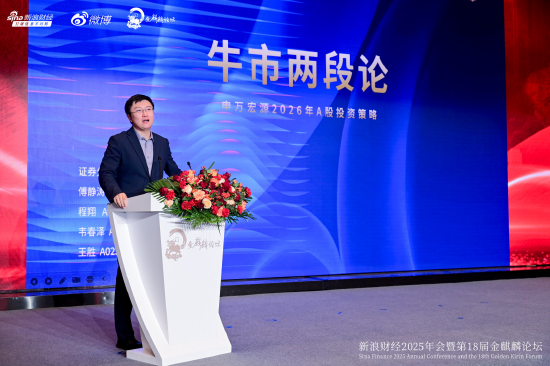
申万宏源傅静涛:2026年市场可能迎来两个“五年以来第一次”
Xin Lang Cai Jing· 2026-01-15 09:05
Core Viewpoint - The A-share bull market is not over, but the subsequent development will exhibit a clear two-phase characteristic: "structural bull" and "comprehensive bull" [1][6]. Group 1: Conditions for Comprehensive Bull Market - Three overlapping factors are necessary for the initiation of a comprehensive bull market: cyclical improvement in fundamentals, reinforcement of technology industry trends, and a positive cycle of incremental resident funds [3][8]. - By the second half of 2026, conditions for a comprehensive bull market are expected to mature, with the market likely to enter this phase [3][8]. Group 2: Earnings and Investment Opportunities - The improvement in listed companies' performance is more certain than the overall economic improvement [3][8]. - The core background driving advanced manufacturing is that the supply clearance in midstream manufacturing has reached historically high levels, suggesting that midstream manufacturing is likely to emerge from deflation first [3][8]. - Two significant occurrences are anticipated in 2026: a meaningful upward marginal improvement in A-share overall profitability and the market achieving double-digit growth for the first time in five years [3][8]. Group 3: Market Dynamics and Fund Flow - Concerns regarding fund flow in the current market reflect that funds have not yet entered a true inflow phase, but once a genuine bull market arrives, actively managed products will likely outperform [3][8]. - The next phase of the bull market may not be driven by fundamental earnings but rather by comprehensive valuation increases and a positive cycle of incremental funds [4][9].

公募看好四季度行情 增量资金“跑步”入场!
Shang Hai Zheng Quan Bao· 2025-10-09 01:17
Group 1 - A total of 68 new funds are scheduled to be launched after the National Day holiday, with 23 funds starting on October 9 alone [1][2] - The issuance of new funds has increased significantly, with September's new fund issuance exceeding 160 billion, marking a monthly record for the year [1][4] - Equity funds are the main focus, with 52 out of the 68 new funds being equity funds, including 34 equity index funds covering various indices [2][3] Group 2 - The popularity of stable products is also rising, with 8 secondary bond funds and 7 FOF products set to be launched after the holiday [3] - Active equity funds are seeing significant interest, with several well-known fund managers managing upcoming funds, indicating strong performance expectations [2][4] - Institutions are actively researching investment opportunities, with over 21,000 institutional research visits recorded in September [4] Group 3 - The outlook for the fourth quarter is optimistic, with expectations for active consumer spending during upcoming promotional events and a stable recovery in A-share and Hong Kong stock earnings [5][6] - Investment opportunities are anticipated in cyclical sectors and AI technology, driven by economic recovery and industry trends [5][6] - The shift of active funds from fixed income to equity markets is noted, as equity assets become more attractive compared to declining fixed income returns [5][6]
这类基金买股票趋势刚开始!创金合信基金黄弢:内需股已具有逆向配置逻辑
券商中国· 2025-05-20 15:00
Core Viewpoint - The article discusses the increasing interest of bond-type fund managers in enhancing the flexibility of product net values amid optimistic market sentiment and the growing attractiveness of equity assets [1][2]. Group 1: Market Dynamics - The decline in market volatility is encouraging more funds to enter the market, with the 10-year government bond yield returning to around 1.6%, leading to asset allocation concerns among institutional and individual investors [3]. - Since September of the previous year, there has been a significant increase in investors' risk appetite, and the involvement of stabilizing funds has contributed to reduced volatility in the A-share market [3]. Group 2: Investment Strategies - The investment strategy of the fund emphasizes a contrarian approach and value investing, focusing on low drawdown and stable returns by integrating macroeconomic judgments with individual stock valuations and earnings [4]. - The current investment framework includes adjusting overall stock positions based on macroeconomic assessments, adjusting industry weights based on mid-level economic conditions, and selecting leading stocks for diversified holdings [4]. Group 3: Sector Preferences - The fund manager prefers to focus on industry selection rather than individual stock picking, maintaining a balanced industry allocation while being responsive to changes in industry conditions and valuation [8]. - The fund is particularly optimistic about sectors related to domestic consumption, healthcare, midstream manufacturing, and cyclical recovery, which are expected to see a resurgence in the latter half of the year [9]. Group 4: Consumer Trends - The article highlights a strong performance in the new consumption sector, which is seen as a unique bright spot amid overall consumption recovery, driven by new product categories and companies with strong operational capabilities [10][11].