全球流动性

Search documents
大宗商品向上趋势没完!洪灏年度展望大谈周期,直言应该做些防御性的结构轮动……
聪明投资者· 2026-03-05 00:03
Core Viewpoint - The semiconductor cycle has reached its peak, indicating limited upward potential for the S&P 500. Global liquidity is at a regional high and is likely to retreat. The rebound in commodities has not yet reached its halfway point, and the upward trend remains intact. Growth stocks are currently outperforming, particularly in the Hong Kong and A-share markets, with more room for downward adjustments than upward. Investors should refocus on value stocks in the A-share market [2][4][82]. Group 1: Market Conditions - The global market is at the intersection of long and short cycles, influenced by geopolitical risks, liquidity turning points, and cyclical peaks, which will dominate asset pricing throughout the year [2]. - The U.S. semiconductor cycle has clearly peaked, which is highly correlated with the S&P 500's performance. As the semiconductor cycle approaches its peak, the major U.S. indices have stopped reaching new highs, indicating a depletion of price momentum [19][24]. - Global liquidity indicators suggest that liquidity is nearing a peak and will soon decline, which could negatively impact risk assets [3][38]. Group 2: Commodity Market Insights - The bull market for commodities is not over, with liquidity leading metal prices by about six months. Geopolitical conflicts are providing rigid support for material demand, suggesting that oil and industrial metals still have upward potential [4][62]. - Gold, as a core safe-haven asset, has risen alongside U.S. stocks, signaling potential volatility ahead [5][43]. - The current market conditions indicate that the upward trend in commodity prices has not yet reached its peak, with significant support from geopolitical tensions and material demand [66]. Group 3: Investment Strategies - In the current environment of tightening liquidity and cyclical peaks, a defensive structural rotation is recommended. Investors should focus on capturing certainty during volatility and wait for clearer signals before making aggressive investments [6][73]. - The A-share market is showing better resilience compared to the Hong Kong market, which is facing more significant challenges due to external geopolitical conflicts [75][84]. - The banking sector is expected to outperform the market, as historical patterns suggest that banks tend to recover after reaching low relative performance levels [80]. Group 4: Economic Cycles - The Chinese economic cycle is closely linked to the U.S. semiconductor cycle, with both markets experiencing significant resistance as they approach cyclical peaks [75][78]. - Historical data indicates that the Hang Seng Index's performance is highly correlated with the economic cycle, suggesting that further economic slowdown could present better buying opportunities in the future [84][85]. - The current economic cycle in China is likely to begin its decline from a high point, despite potential policy measures to extend the cycle [85][86].


3分钟,直线涨停!美国,突传大消息!整个板块,集体带飞!
券商中国· 2026-03-04 04:10
特高压又飞了! 开盘仅仅三分钟,川润股份由跌转涨,直线封板。随后,积成电子、汉缆股份快速涨停,通光线缆亦在开盘21分钟后,20%封死涨停板。特高压板块迎来集体大涨 行情。 消息面上,一是美国三大区域电网运营商获批总计750亿美元的输电扩容项目;二是在MWC26巴塞罗那期间,华为ICT BG CEO杨超斌表示,AI正加速发展,全球 日均Token消耗量过去两年增长近300倍。电网电力逻辑持续驱动相关板块。 全球流动性仍值得关注 那么,当前的环境是否支撑有利于资本市场的演绎?从昨天的全球市场走向来看,仅石油和美元上涨,其余全线暴跌,这就是一次典型的流动性冲击。 今天早上,韩国首尔综合指数、科斯达克指数跌8%后触发熔断,交易暂停20分钟。日经指数亦继续暴跌近4%。同时,美元指数继续反弹。这也意味着全球流动性 警报仍未解除。从这个角度来看,美元指数止涨,新兴市场止跌,大宗商品(除原油)回升,才是流动性危机解除的信号。东方证券指出,美元在美国介入并获得 局部、阶段性胜利的地缘冲突当中反弹,但这种反弹并不具备持续性。 东方证券认为,短期需关注风险偏好继续调整,尤其非美市场波动。此前美股科技板块作为代表性的高风险资产已有回 ...

[2月15日]美股指数估值数据(美股下跌,亚太股市上涨;全球指数星级更新)
银行螺丝钉· 2026-02-15 13:58
Core Viewpoint - The article discusses the recent trends in global stock markets, particularly focusing on the performance of the Korean stock market and its valuation metrics, while also highlighting the potential investment opportunities and strategies for investors in the current economic climate [5][21][22]. Group 1: Global Market Trends - This week, global stock markets experienced a slight decline, with the U.S. stock market dropping more significantly compared to non-U.S. markets which saw an increase [5]. - The A-share market showed an overall increase during the last trading week before the Spring Festival, despite a pullback on Friday [7]. - The Asia-Pacific stock markets are performing strongly, with the Korean stock market surging by 8% this week and up 30% year-to-date, ranking among the top global markets [9][10]. Group 2: Korean Stock Market Insights - The Korean stock market is notably sensitive to global liquidity changes due to its relatively small market size [10]. - The last bull market for Korean stocks occurred during the 2020-2021 period, coinciding with a U.S. interest rate cut cycle [11]. - In 2022, the Korean stock market faced a significant downturn, dropping nearly 40% due to aggressive U.S. interest rate hikes [13]. - As of 2024, the valuation of the Korean stock market has returned to historically low levels, with a price-to-book ratio below 1 and a price-to-earnings ratio around 10, indicating a potential investment opportunity [15][16]. Group 3: Future Projections - The Federal Reserve is expected to initiate its first interest rate cut cycle in September 2024, which could benefit non-U.S. markets [19]. - Following this, global stock markets could rise by approximately 30%, with A-shares, Hong Kong stocks, Korean stocks, Japanese stocks, and various European and South American markets potentially increasing by 50-60% [21]. - The Korean stock market's price-to-earnings ratio is projected to exceed 22, indicating a significant increase in valuation compared to the lows experienced during the bear market [24][25]. Group 4: Investment Strategies - The article mentions the absence of broad-based index funds for Korean stocks in mainland China, which limits direct investment options [18]. - However, the company has introduced a "Global Index Advisory Portfolio" that diversifies investments across U.S., UK, Hong Kong, and A-share markets to track global stock market performance [35]. - The article also highlights the launch of a new book titled "Dividend Index Fund Investment Guide," aimed at educating investors about dividend-focused index funds, which have seen rapid growth in recent years [40].

国泰海通:美国转向“再通胀” 关注全球流动性“潮汐”下大类资产联动
智通财经网· 2026-02-14 23:32
Core Viewpoint - The transition from "K-shaped divergence" to "reflation" in the U.S. indicates a shift in global liquidity expectations from easing to tightening, impacting various asset classes and market dynamics [1][5]. Group 1: K-shaped Divergence - The structure of the U.S. balance sheet shows a healthy private sector, particularly post-COVID-19 QE, leading to a significant accumulation of net assets among high-net-worth individuals, primarily in real estate and equities [1]. - The current mortgage rate for high-net-worth individuals stands at 4.2%, while the new 30-year loan rate is at 6.1%, highlighting the disparity in borrowing costs [1]. - The "high-net-worth group" can leverage cash-out refinancing to support consumer spending and stock market liquidity, while the "new borrowing group" faces challenges in asset acquisition due to economic uncertainties [2]. Group 2: Transition to Reflation - The recent upward movement of the lower end of the K-shaped divergence suggests that high-net-worth individuals are stabilizing the economy and asset price expectations, creating favorable conditions for the new borrowing group [3]. - The housing sector, which is seen as a source of inflation, is experiencing a recovery, indicating a potential shift towards reflation in the U.S. economy [3]. Group 3: Inflation Expectations - Demand-driven inflation expectations exhibit a self-reinforcing mechanism, which can lower real interest rates and compress credit spreads, leading to a situation where actual mortgage rates are at their lowest in three years [4]. - The current dynamics explain why long-term U.S. Treasury yields are rising while the housing sector is recovering against the trend [4]. Group 4: Global Liquidity Dynamics - The shift from "K-shaped divergence" to "reflation" is mirrored in global liquidity trends, with Bitcoin serving as a barometer for these changes, affecting tech-heavy indices and prompting style shifts within A-shares [5]. - The anticipated policy combination of "rate cuts + balance sheet reduction" suggests a non-typical reflation trade, resembling stagflation in some aspects, with a focus on the interconnectedness of major asset classes under changing liquidity conditions [5].

全球降息潮或近尾声——全球货币转向跟踪第11期
一瑜中的· 2026-02-13 15:00
Global Monetary Policy Shift Tracking - Since the beginning of 2026, among 26 major economies tracked, only one has cut rates (Israel) and one has raised rates (Australia), while the US, Eurozone, and Japan have kept their policy rates unchanged [3][15]. - The Federal Reserve's current rate is maintained at 3.5%-3.75%, with a hawkish tone in the January FOMC meeting, indicating a strong economy and a cautious approach to future rate cuts, with market expectations of 2 rate cuts in 2026 [16][23]. - The European Central Bank (ECB) has also kept rates unchanged, with inflation stabilizing within the target range, leading to expectations that the ECB may not cut rates further in 2026 [17][23]. - The Bank of Japan (BOJ) is in a "quasi-stagflation" state, with expectations of 2 rate hikes in 2026, but faces challenges due to supply shortages and inflationary pressures [18][24]. Global Liquidity Tracking - The Federal Reserve's reserve balance has risen to approximately $2.94 trillion, nearing the desired range of 10%-12% of GDP, indicating a recovery in liquidity [7][34]. - Various liquidity spreads have improved, with the EFFR-IOER spread stable at -1bp and the SOFR-EFFR spread averaging around 2bp, reflecting a slightly tight liquidity environment [8][42]. - The US Treasury market shows stable liquidity, with slight increases in bid-ask spreads for 10Y Treasuries, while credit risk premiums remain low, indicating a stable credit market [10][51][57].

——全球货币转向跟踪第11期:全球降息潮或近尾声
Huachuang Securities· 2026-02-10 06:52
Group 1: Global Monetary Policy Trends - Since the beginning of 2026, among 26 major economies tracked, only 1 has cut rates (Israel) and 1 has raised rates (Australia), while the US, EU, and Japan have kept rates unchanged[2] - Market expectations indicate that the Federal Reserve may cut rates approximately 2 times in 2026, while the European Central Bank (ECB) is not expected to cut rates further as inflation has reached target levels[3][10] - The Bank of Japan is anticipated to raise rates about 2 times in 2026, reflecting a complex economic situation characterized by "stagflation"[3][24] Group 2: Liquidity Tracking - The Federal Reserve's reserve balance has risen to $2.94 trillion, with a reserve-to-GDP ratio of approximately 9.6%, nearing the desired range of 10%-12%[4][44] - The effective federal funds rate (EFFR) and the interest on excess reserves (IOER) spread has stabilized at -1 basis point, indicating no further deterioration in liquidity conditions[5][45] - The liquidity environment remains stable, with US 10-year Treasury bid-ask spreads slightly increasing to around 0.4 basis points, and credit risk premiums remaining low across various markets[6][11]
[2月1日]美股指数估值数据(黄金白银大跌,原因为何?)
银行螺丝钉· 2026-02-01 13:40
Core Viewpoint - The article discusses the recent trends in global stock markets, highlighting fluctuations in various indices and the impact of liquidity changes on asset valuations. Group 1: Global Market Trends - This week, global stock markets experienced slight increases with minimal volatility [1] - U.S. stocks showed mixed performance with minor fluctuations [2] - Non-U.S. global stock indices also saw slight increases [3] - The Hong Kong stock market was notably strong, with the Hang Seng Index rising by 2.3%, leading global gains [5] - The majority of the global stock market gains occurred from Monday to Thursday, while Friday saw significant volatility [6][7] - On Friday evening, global stock indices fell by 0.87% [8] Group 2: Commodity Market Volatility - The commodity market experienced substantial fluctuations, with gold prices dropping by 9.25% [10] - Silver prices fell by 26%, with an intraday drop of 35%, marking the largest single-day decline in the past two to three decades [11] - The volatility in silver is attributed to two main factors: prior short-term surges leading to high valuations and market concerns over potential changes in Federal Reserve policies following Trump's nomination of a hawkish Fed chair [12][18] Group 3: Small Asset Rally - Over the past two years, there has been a "small asset frenzy" in global markets, with A-shares and small-cap stocks leading the gains [21] - Many small-cap stocks in countries like South Korea, Japan, Brazil, and Spain have also seen significant increases [22] - The primary driver of this trend is the anticipated interest rate cuts by the Federal Reserve starting in September 2024, leading to increased liquidity in the market [24][25] Group 4: Market Valuation Insights - The article references Warren Buffett's perspective on liquidity cycles, indicating that during a rate-cutting phase, high valuations may present profit-taking opportunities, while tightening phases may reveal undervalued assets [30][31] - Historical data shows that after significant rate hikes by the Fed in 2021-2022, A-shares and Hong Kong stocks fell to lower valuation levels [32] - Current market concerns are primarily driven by news, but a rebound in some assets is expected once fear subsides [34] Group 5: Global Stock Index Evaluation - The article presents a star rating system for global stock indices, indicating that the market is currently not very cheap, with a star rating around 2.8 [37] - The star rating system categorizes 4-5 stars as relatively low valuation, while 1-2 stars indicate higher valuations [38] Group 6: Investment Opportunities - The article discusses the availability of global stock index funds in overseas markets, which total over a trillion dollars, but notes the lack of such funds in mainland China [40] - The company has introduced a "Global Index Advisory Portfolio" that diversifies investments across multiple stock markets [41] - There are limitations on investment amounts for mainland investors, with a maximum daily purchase of 50 yuan [43] Group 7: New Publication - The company has released a new book titled "Dividend Index Fund Investment Guide," which quickly became a bestseller on platforms like JD.com [46] - The book aims to address common investor questions regarding dividend products and is designed for easy understanding [47]

主动量化周报:回调或将带来买入良机-20260201
ZHESHANG SECURITIES· 2026-02-01 12:35
- The report does not contain any specific quantitative models or factors, nor does it provide detailed construction processes, formulas, or backtesting results for such models or factors[1][2][3][4][5][6][7][8][9][10][11][12][13][14][15][16][17][18][19][20][21][22][23][24][25][26][27][28][29]
特朗普提名“最帅”美联储新主席!但A股玩家更关心:他听谁的?
Sou Hu Cai Jing· 2026-01-30 16:18
Group 1 - The core point of the news is the appointment of Kevin Warsh as the new Chairman of the Federal Reserve, which signifies a potential shift in monetary policy and power dynamics within the financial system [1][3]. - Warsh, previously known as a hawkish figure against inflation, has shifted his stance to support Trump's tariffs and quicker interest rate cuts, raising questions about the independence of the Federal Reserve [3][4]. - The market is expected to react positively to the anticipation of earlier rate cuts, which could lead to increased global liquidity, benefiting sectors sensitive to liquidity, particularly technology stocks [4]. Group 2 - The potential for a more accommodating Federal Reserve under Warsh could lead to a weaker dollar, easing pressure on the Chinese yuan and improving the environment for foreign capital inflows [4]. - However, there are risks associated with the loss of credibility in Federal Reserve policies, which could trigger global market volatility, and the possibility of rising inflation due to rapid rate cuts could disrupt global economic stability [4]. - The strategy for investors should focus on core assets that benefit from global liquidity while remaining cautious of market volatility and avoiding blind chasing of high prices [4].

刚刚,急速跳水!
Zhong Guo Ji Jin Bao· 2026-01-30 03:46
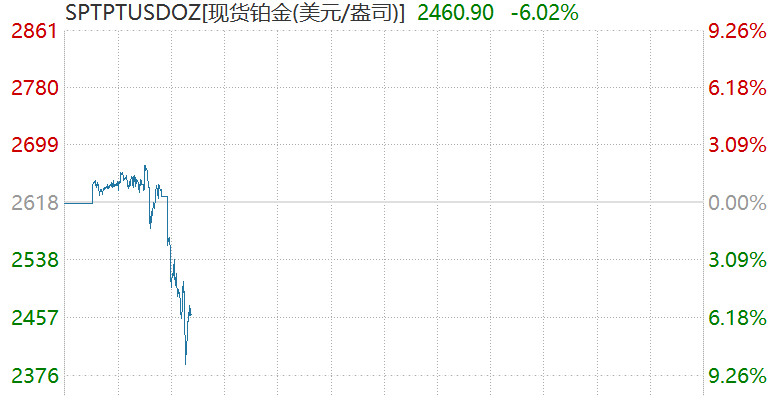
【导读】贵金属现货、期货合约集体大跳水 刚刚,贵金属集体崩了! 1月30日,现货黄金盘中急速跳水,最低跌至5111.96美元/盎司,跌幅近5%。 现货白银同步大跌,最低价跌至107.947美元/盎司,跌幅近7%。 | 名称 | 现价 | 淵鉄 | 涨跌幅 | | --- | --- | --- | --- | | 沪银2602 | 29345 | -1535 | -4.97% | | 沪银2603 | 29400 | -1392 | -4.52% | | 沪银2604 | 28801 | -934 | -3.14% | | 治−第2605 | 28523 | -856 | -2.91% | | 沖縄2606 | 28243 | -1071 | -3.65% | | 名称 | 现价 | 涨跌 | 涨跌幅 | | 辑2606 | 640.00 | | -74.85 -10.47% | | 辑2608 | 640.05 | | -73.90 -10.35% | | 铂2610 | | 633.00 - -82.65 -11.55% | | | 铂2612 | | 640.00 - -78.85 -10.97% | ...