
大盘价值风格

Search documents
【债券日报】:转债市场日度跟踪20260129-20260129
Huachuang Securities· 2026-01-29 14:50
Report Industry Investment Rating - Not provided in the report Core Viewpoints - On January 29, 2026, most industries in the convertible bond market corrected, and the valuation increased month - on - month. The convertible bond market's trading sentiment weakened, and the market style favored large - cap value stocks [2]. Summary by Directory I. Market Main Index Performance - The CSI Convertible Bond Index decreased by 0.70% month - on - month, the Shanghai Composite Index increased by 0.16%, the Shenzhen Component Index decreased by 0.30%, the ChiNext Index decreased by 0.57%, the SSE 50 Index increased by 1.65%, and the CSI 1000 Index decreased by 0.80% [2]. - In terms of market style, large - cap value stocks were relatively dominant. Large - cap growth stocks increased by 0.76%, large - cap value stocks increased by 2.21%, mid - cap growth stocks decreased by 1.02%, mid - cap value stocks increased by 0.50%, small - cap growth stocks decreased by 1.43%, and small - cap value stocks remained unchanged [2]. II. Market Fund Performance - The trading volume of the convertible bond market was 81.418 billion yuan, a month - on - month decrease of 0.06%. The total trading volume of the Wind All - A Index was 325.9418 billion yuan, a month - on - month increase of 8.93%. The net outflow of main funds from the Shanghai and Shenzhen stock markets was 6.0222 billion yuan, and the yield of the 10 - year treasury bond increased by 0.10bp to 1.82% [2]. - The share of Boshi Convertible Bond ETF was 4.311 billion shares, with a net increase of 62.2 million shares; the share of Haifutong Convertible Bond ETF was 891 million shares, with a net decrease of 34.5 million shares [37][40]. III. Convertible Bond Price and Valuation - The weighted average closing price of convertible bonds decreased to 142.82 yuan, a month - on - month decrease of 0.72%. Among them, the closing price of equity - biased convertible bonds was 208.09 yuan, a month - on - month decrease of 1.59%; the closing price of bond - biased convertible bonds was 123.66 yuan, a month - on - month increase of 0.34%; the closing price of balanced convertible bonds was 134.77 yuan, a month - on - month decrease of 0.23% [3]. - The proportion of high - price bonds above 130 yuan decreased by 0.59 pct to 77.87%. The proportion of the 120 - 130 yuan (inclusive) range increased by 0.58 pct to 16.80%. There were no bonds with a closing price below 100 yuan. The median price was 140.54 yuan, a month - on - month decrease of 0.33% [3]. - The conversion premium rate of the 100 - yuan par - value fitting increased to 38.99%, a month - on - month increase of 0.85 pct. The overall weighted par value decreased to 105.83 yuan, a month - on - month decrease of 0.26% [3]. - The premium rate of equity - biased convertible bonds decreased by 0.95 pct to 19.09%; the premium rate of bond - biased convertible bonds increased by 1.19 pct to 91.95%; the premium rate of balanced convertible bonds decreased by 0.77 pct to 29.94% [3]. IV. Industry Performance - In the A - share market, the top three rising industries were food and beverage (+6.57%), media (+3.53%), and real estate (+2.65%); the top three falling industries were electronics (-3.56%), national defense and military industry (-1.79%), and power equipment (-1.78%) [4]. - In the convertible bond market, 21 industries fell. The top three falling industries were steel (-3.94%), electronics (-2.15%), and machinery and equipment (-2.05%); the top three rising industries were non - ferrous metals (+2.06%), communication (+1.27%), and media (+1.15%) [4]. - In terms of closing price, large - cycle industries decreased by 0.66%, manufacturing industries decreased by 1.38%, technology industries decreased by 0.23%, large - consumption industries decreased by 0.17%, and large - finance industries increased by 0.25% [4]. - In terms of conversion premium rate, large - cycle industries decreased by 0.7 pct, manufacturing industries increased by 0.71 pct, technology industries increased by 0.25 pct, large - consumption industries increased by 0.79 pct, and large - finance industries increased by 0.16 pct [4]. - In terms of conversion value, large - cycle industries increased by 0.05%, manufacturing industries decreased by 2.02%, technology industries decreased by 0.53%, large - consumption industries increased by 0.06%, and large - finance industries increased by 1.35% [4]. - In terms of pure bond premium rate, large - cycle industries decreased by 1.0 pct, manufacturing industries decreased by 2.3 pct, technology industries decreased by 0.47 pct, large - consumption industries decreased by 0.23 pct, and large - finance industries increased by 0.28 pct [5]. V. Industry Rotation - Food and beverage, media, and real estate led the rise. The daily increase rates of food and beverage, media, and real estate were 6.57%, 3.53%, and 2.65% respectively in the A - share market [55]. - The report also provided the weekly, monthly, and year - to - date increase rates of various industries, as well as their valuation quantiles such as PE (TTM), 3 - year and 10 - year quantiles of PE and PB (LF) [55].
2025年度A股大数据排行榜
Wind万得· 2025-12-31 22:50
Market Overview - In 2025, the A-share market exhibited a comprehensive upward trend, with major indices showing an average increase of over 10%. The growth was particularly pronounced in growth sectors, with the ChiNext Index, North Exchange 50, and Sci-Tech 50 indices each rising by over 30% [1][3]. - The structural characteristics of the market were evident, with technology and resource sectors leading the performance. The optical module (CPO) index surged by over 180%, while indices for optical chips, copper-clad laminates, optical communications, and optical circuit switches all exceeded 100% growth [1][3]. A-share Index Performance - The ChiNext Index led the gains in 2025 with a cumulative increase of 49.57%. The North Exchange 50 and Sci-Tech 50 indices followed with increases of 38.80% and 35.92%, respectively. Other indices such as the Shenzhen Component Index, Wind All A, and CSI 1000 also saw gains exceeding 20% [3]. A-share Industry Performance - Among the 35 industries classified by Wind, 31 recorded increases in 2025. The non-ferrous metals industry topped the list with a cumulative increase of 92.20%. Hardware equipment and industrial trade sectors also performed well, with increases of 62.39% and 54.65%, respectively. Conversely, the daily consumer retail sector saw a decline of 6.42% [5]. A-share Hot Concepts - The optical module (CPO) index was the strongest performer in 2025, with a cumulative increase of 181.28%. Other notable performers included optical chips (130.78%), copper-clad laminates (129.58%), optical communications (125.58%), and optical circuit switches (112.55%). The rare metals, copper industry, and rare earth indices also showed significant growth, with increases of 119.85%, 103.64%, and 98.97%, respectively [9]. A-share Market Capitalization - By the end of 2025, the total market capitalization of the A-share market reached approximately 118.91 trillion yuan, marking a 26.6% increase from the end of 2024 [15]. - The Shanghai main board had the highest number of listed companies at 1,699, accounting for 31.06% of the total. The Shenzhen main board followed with 1,490 companies (27.24%), while the ChiNext and Sci-Tech boards had 1,393 and 600 companies, representing 25.47% and 10.97%, respectively [13]. Financing and Investment Trends - As of the end of 2025, the A-share margin trading balance was reported at 25.553 billion yuan, reflecting a 5.21% increase from the third quarter and a year-on-year increase of 35.91% [22]. - The top gainers in terms of stock price included Weiwei New Materials, which saw a cumulative increase of 1,820%, followed by Tianpu Co., with a 1,645% increase. Conversely, Shijin Technology led the decline with a 51% drop [24]. IPO Activity - In 2025, the A-share market saw a total of 112 IPOs, representing a 9.8% increase year-on-year. The fourth quarter alone accounted for 36 IPOs, up 9.1% from the previous year [49]. - The total fundraising from IPOs in 2025 reached 130.83 billion yuan, a significant increase of 97.4% year-on-year, with the fourth quarter alone raising 54.86 billion yuan, up 165.0% [51].


人民币创14个月新高,对A股市场影响几何?谁喜谁忧?这些板块迎“汇率红包”
Jin Rong Jie· 2025-12-24 01:33
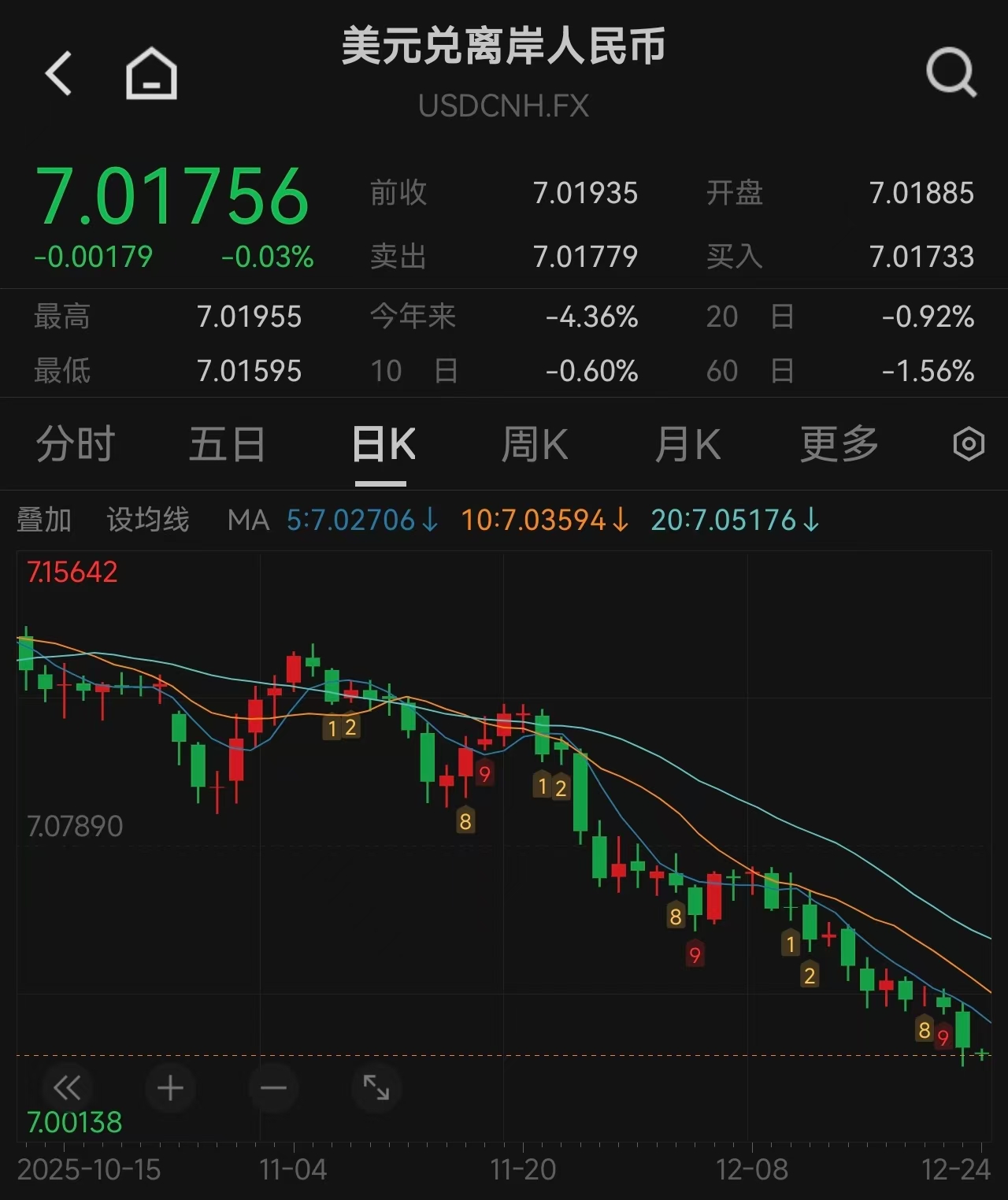
Core Viewpoint - The offshore and onshore RMB have both strengthened against the USD, reaching their highest levels in 14 months, which is expected to attract foreign investment into Chinese assets [1][3]. Group 1: Impact of RMB Appreciation - The appreciation of the RMB enhances the attractiveness of RMB-denominated assets, particularly for foreign investors focused on exchange rate gains [3]. - Historical data indicates that during periods of RMB appreciation, foreign capital, represented by "northbound funds," tends to show accelerated net inflows, favoring liquid, well-valued assets that align with China's economic growth [3]. - The current A-share market is at a historically low valuation, and the strengthening RMB may catalyze long-term foreign capital to reassess and increase allocations to Chinese assets, potentially stabilizing or boosting market indices [3]. Group 2: Beneficiaries and Losers - Export-oriented industries, such as home appliances, electronics, textiles, and machinery, are likely to suffer as RMB appreciation reduces their price competitiveness in international markets, potentially eroding exchange gains and profit margins [3][4]. - Beneficiaries of RMB appreciation include industries with significant dollar-denominated liabilities, such as airlines, which will see improved financials due to reduced exchange losses [4]. - Cost-importing sectors, like paper and basic chemicals, will benefit from lower raw material costs due to RMB appreciation, enhancing their profit margins [4]. Group 3: Market Sentiment and Trends - The psychological impact of RMB appreciation is significant, as it signals economic stability, effective policy, and international capital recognition, which can fundamentally boost market risk appetite [4]. - In an appreciating currency environment, "core assets" are likely to perform better, with large-cap value stocks benefiting from their close ties to the macroeconomy and foreign capital preferences [4]. - The importance of sustained RMB appreciation is emphasized, as lasting trends rather than short-term fluctuations will have a more profound impact on the A-share market [4][5].
招商证券:岁末年初市场风格特征如何?
智通财经网· 2025-12-23 22:29
Group 1: Market Trends and Investor Behavior - The market style tends to exhibit defensive characteristics at the end of the year, with large-cap value stocks outperforming, while the small-cap style represented by the CSI 1000 faces pressure [1] - Institutional investors are likely to adopt a conservative investment approach due to year-end performance assessments, leading to a decrease in risk appetite [1] - As the market enters the dense disclosure period for annual earnings forecasts in January, earnings uncertainty becomes a key concern, prompting funds to flow towards more stable large-cap blue-chip stocks [1] Group 2: Monetary Policy and Market Liquidity - The central bank's net injection in the open market was 219 billion yuan last week, with upcoming maturities including 4.575 billion yuan in reverse repos and 3 billion yuan in MLF [2] - Money market rates are declining, with short and long-term government bond yields also decreasing, while the issuance scale of interbank certificates of deposit has expanded [2] - The net inflow of funds in the secondary market has increased, with a rise in financing balances and net purchases of financing funds amounting to 3.42 billion yuan [2] Group 3: Sector Preferences and Fund Flows - High net inflows were observed in the electronics, communications, and power equipment sectors, with significant net subscriptions for the A500 ETF [3] - The information technology ETF saw substantial net subscriptions, while the military industry ETF experienced notable redemptions [3] - The highest net subscription was for the Huatai-PB CSI A500 ETF, while the highest net redemption was for the Fuguo CSI Military Leaders ETF [3] Group 4: Overseas Economic Indicators - In the U.S., the November non-farm payroll and CPI significantly fell below expectations, with the overall CPI rising 2.74% year-on-year, lower than the expected 3.06% [3] - The core CPI also rose 2.63% year-on-year, below the consensus expectation of 3.03%, indicating inflation is nearing the Federal Reserve's target level [3] - The unemployment rate in the U.S. rose to 4.6% in November, the highest level since October 2021 [3]

盈风聚势启新程:2026年股指期货年度展望
Guo Lian Qi Huo· 2025-12-17 09:46
Report Industry Investment Rating No information provided in the content. Core Viewpoints - In 2026, the market logic is expected to shift from liquidity-driven to profit-recovery - driven. The strategic adjustment of "building a strong domestic market" and the "anti - involution" policy will improve domestic demand and deflation expectations. Multiple leading indicators suggest that PPI may enter an upward channel, and corporate profit recovery is expected, but the repair strength may be weaker than in 2021. The market may continue to re - balance in the short - term, with the large - cap value style having an advantage, and profit - recovery opportunities will be the key theme for the A - share market in 2026 [4]. Summary by Directory I. Indexes Break through the Oscillation Pattern 1.1 Market Review: Ample Liquidity as the Core Driver of Index Market - In the 2025 annual report, it was predicted that the index market would show an "N" shape, driven by the ample liquidity from the "rush - to - export" expectation. However, China's exports maintained strong resilience after the "rush - to - export" trend cooled, and the obvious profit - repair trend was delayed. The A - share market oscillated in Q1, adjusted in April due to Trump's "reciprocal tariff" remarks, and then rose as policies took effect. In Q3, multiple factors supported the market, and in Q4, the driving force shifted from liquidity to profit - repair expectation [8]. 1.2 Industry Performance: Precious Metals Lead the Non - ferrous Metals Industry - In 2025, industry performance was significantly differentiated. Precious - metal - related non - ferrous metals led the increase due to Trump's tariff policy, the Middle East situation, and the Fed's interest - rate cut expectation. As of December 16, communication, non - ferrous metals, and electronics had high gains, while food and beverage and coal had losses. Different styles dominated at different times, and the large - cap value style became attractive in Q4 [11]. 1.3 Index Basis: Multiple Factors Lead to Increased Index Discount - The A - share market's trading activity increased in 2025, and the small - and medium - cap style was strong. The market - neutral strategy's scale expanded, increasing the hedging demand for stock - index futures. High dividend payouts and the decline of snowball products also contributed to the deepening discount of stock - index futures [13][14]. II. Market Valuation: Focus on Profit - Driven Valuation Digestion 2.1 CSI 500 and CSI 1000 Indexes: Significant Valuation Repair - As of December 16, the price - to - book ratios of the CSI 500 and CSI 1000 indexes were at relatively high historical levels, at 72.84% and 50.04% of the past 10 - year levels respectively [19]. 2.2 SSE 50 and CSI 300 Indexes: Valuation Divergence - As of December 16, the price - to - earnings ratios of the SSE 50 and CSI 300 indexes were at relatively high historical levels, while the price - to - book ratios were relatively lower. This divergence was due to the valuation recovery since September 2024, and future profit levels will be crucial for digestion and repair [22]. 2.3 Index Crowding: Large - Cap Value Style May Continue to Dominate - The index crowding degree reflects market allocation enthusiasm. In 2025, the small - and medium - cap growth style was popular in most of the year, but the large - cap value style became more attractive in Q4 due to its low valuation and high profit certainty [24][25]. 2.4 Stock - Bond Cost - Effectiveness: Lower Priority of Relative Valuation Attention - The stock - bond cost - effectiveness indicator shows that the stock market is at a relatively low level. With the Fed's interest - rate cuts and the narrowing of the China - US monetary - policy cycle gap, the domestic interest - rate cut window is opening. In the current situation, the priority of relative valuation attention can be shifted, and more attention can be paid to other driving factors [28][31]. 2.5 Valuation Summary - After the continuous valuation repair in 2025, the A - share market's relative valuation advantage over bonds has weakened but is not at an extreme level. There is a differentiation in the market, and the large - cap value style is expected to continue to dominate [33]. III. Supply and Demand Drive, Profit Level Recovery Expected 3.1 Strategic Adjustment of "Insufficient Domestic Demand" Response, Marginal Relief of Consumption Downturn Expected - China's economic problem has been insufficient domestic demand. The policy response is shifting from short - term demand stimulation to long - term market cultivation and system construction. The "construction of a strong domestic market" aims to improve residents' purchasing power and consumption confidence, which is expected to relieve the consumption downturn [34][35]. 3.2 "Anti - Involution" Improves Deflation Expectations, Profit Level Recovery Expected - PPI is expected to enter an upward channel in 2026 and turn positive year - on - year around mid - year. Fiscal, credit, and monetary data all indicate a turning point in the industrial - product price cycle. The profit level has shown an initial recovery trend [41][42]. IV. Asset Allocation Transfer Signs Appear, Capital Account Pressure May Continue to Ease 4.1 Interest - Rate Decline and Dividend Improvement Drive Asset Allocation Transfer - In 2025, the LPR was lowered, and bank deposit rates decreased, making deposits less attractive. At the same time, listed companies increased shareholder returns. As a result, funds flowed from the banking system to the non - banking financial sector, bringing incremental liquidity to the A - share market [50][53]. 4.2 Change in Dominant Factors of the US Dollar, Capital and Financial Account Pressure May Ease - The US dollar's role is changing from a counter - cyclical asset to a pro - cyclical asset due to the expansion of US debt and geopolitical risks. The weakening of the US dollar is expected to support the RMB exchange rate and ease the pressure on China's capital and financial accounts [58][61]. 4.3 Exports Maintain Resilience, Current Account May Face Pressure in H1 2026 - China's exports are expected to remain stable in 2026, with a "low - then - high" growth pattern. Exports may face pressure in H1 due to a high base in 2025 and difficulties in the US market's import recovery. However, the diversification of the export market and the upgrade of export - product competitiveness will provide support [64][67]. V. Summary: Profit - Level Repair Strength May Be the Key Driving Factor - In 2026, the market's core driving force is expected to shift to profit repair. Policies will improve domestic demand and deflation expectations, and multiple indicators suggest PPI may rise and corporate profits may recover. Asset allocation transfer and a favorable capital environment will support the market. The A - share market is expected to rise in an oscillatory manner, with the large - cap value style being attractive in the short - term [72]. - Short - term strategy: The index may continue to oscillate, and the previous long - IF and short - IM hedging portfolio is recommended to be held. Directional traders can enter the market at low prices based on profit - repair expectations. - Medium - and long - term strategy: The current valuation repair is ahead of profit recovery. The profit - recovery situation will be crucial for the market. The stock - index market may see a resonance between profit and valuation in 2026 [73].
资金涌入,持续加仓!
Zhong Guo Zheng Quan Bao· 2025-12-16 14:08
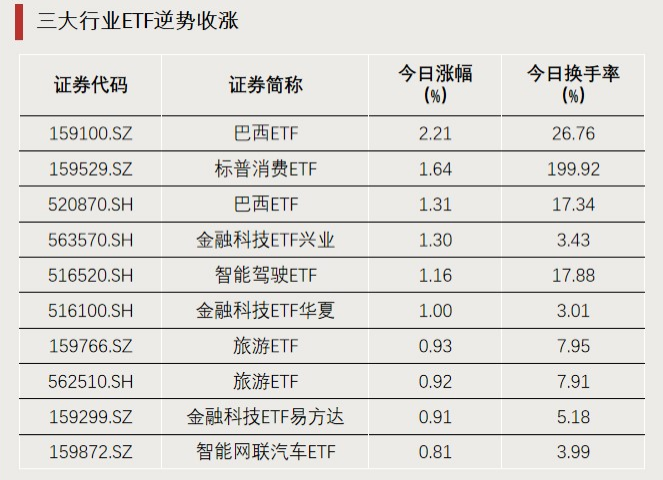
Market Overview - On December 16, A-shares and Hong Kong stocks experienced a pullback, with only about 50 out of over 1300 ETFs closing higher, and 6 of these ETFs rising by 1% or more. Financial technology, tourism, and automotive sector ETFs showed relative resilience [1] - In the cross-border ETF segment, two Brazilian ETFs and one S&P Consumer ETF led the market in terms of gains [1] ETF Performance - Notably, several ETFs that rose against the market trend saw significant increases in trading volume. The S&P Consumer ETF (159529) had a turnover rate of 199.92%, with a trading volume nearing 2 billion yuan, four times that of the previous day. The Smart Driving ETF (516520) also saw its trading volume increase to approximately seven times that of the previous day [2] - On December 16, financial technology, tourism, and automotive sector ETFs performed well, with multiple products ranking among the top gainers. The financial technology ETFs linked to the CSI Financial Technology Index saw over half of their constituent stocks close in the green, with notable gains from companies like Chuangshi Technology (300941) and Cuiwei Co. (603123) [4] Fund Flows - On December 15, despite the market pullback, ETFs experienced a net inflow of approximately 6.7 billion yuan, with broad-based ETFs attracting significant capital. Several ETFs linked to the CSI A500 Index ranked among the top for net inflows, with three A500 ETFs collectively receiving over 13.5 billion yuan in net inflows over the past five trading days [3][9] - The A500 ETF from Southern Fund (159352) led with a net inflow of 3.915 billion yuan on December 15, significantly outpacing other products [11] Sector-Specific Insights - The gold stock ETFs faced a sharp decline on December 16, with the largest drop exceeding 4%. Six out of the top ten ETFs with the largest declines were gold-related, reflecting a cautious market sentiment ahead of key economic data releases [7] - The CSI A500 Index has over 280 public funds linked to it, with more than 80 asset management firms involved, totaling over 240 billion yuan in assets. Over 80% of this is held in ETF products, with 40 ETFs exceeding 210 billion yuan in total assets [10] Upcoming Products - On December 19, Huatai-PB Fund will launch the Sci-Tech Entrepreneurship Artificial Intelligence ETF, adding to the growing list of innovative ETF products in the market [13]
牛市里没到高估怎么办 ?|投资小知识
银行螺丝钉· 2025-12-15 14:03
Group 1 - The article emphasizes that there is a structural bull market, indicating that not all sectors will reach overvaluation simultaneously, which is a characteristic of such markets [2] - It suggests that sectors with less price appreciation currently may experience growth in future market cycles, highlighting historical examples where small-cap stocks lagged behind large-cap stocks before eventually leading the market [3] - The notion of patience is stressed, as currently underperforming sectors may become leaders in future phases of the market [3] Group 2 - The article implies that even if a sector has not reached overvaluation, it does not mean there are no returns to be gained from it [5]

同类规模最大的自由现金流ETF(159201)近20日净流入16.48亿元,聚焦大盘价值风格配置价值
Sou Hu Cai Jing· 2025-12-11 02:29
Group 1 - The core viewpoint of the article highlights the upward trend of the Guozheng Free Cash Flow Index, which rose approximately 0.5% in early trading on December 11, with leading stocks including Yaxiang Integration, Jiejia Weichuang, Mould Technology, and Hailu Heavy Industry [1] - The largest free cash flow ETF (159201) has seen a net inflow of 1.648 billion yuan over the past 20 days, indicating significant capital inflow [1] - Recent policies focus on capital markets and consumer policies, with recommendations to pay attention to domestic demand promotion policies, emerging industry policies, and major project developments [1] Group 2 - The period from late December to the end of the first quarter is traditionally an important allocation window for insurance funds, suggesting that previously adjusted dividend sectors may regain attention [1] - The free cash flow ETF (159201) and its linked funds (A: 023917; C: 023918) closely track the Guozheng Free Cash Flow Index, selecting stocks with positive and high free cash flow after liquidity, industry, and ROE stability screening [1] - The fund management fee is set at an annual rate of 0.15%, and the custody fee at 0.05%, both representing the lowest market rates to maximize benefits for investors [1]
岁末年初大盘价值风格胜率高,自由现金流ETF(159201)最新规模超75亿元,领跑同类产品
Mei Ri Jing Ji Xin Wen· 2025-12-04 06:22
Core Insights - The A-share market showed mixed performance on December 4, with the Free Cash Flow ETF (159201) experiencing slight adjustments while stocks like Western Mining, Tailong Co., and Linzhou Heavy Machinery led the gains [1] - The largest Free Cash Flow ETF (159210) has seen continuous net inflows over the past 19 days, totaling 2.072 billion yuan, reaching a new high of 7.575 billion yuan since its inception [1] - According to Guotou Securities, historical analysis from 2000 to present indicates a high likelihood of a bullish market during the year-end and early January period, with only three years in the last decade lacking such a trend [1] - The performance of major indices suggests that large-cap stocks tend to outperform small-cap stocks during this period, and value style stocks have a higher success rate [1] ETF and Fund Details - The Free Cash Flow ETF (159201) and its linked funds (A: 023917; C: 023918) closely track the National Securities Free Cash Flow Index, selecting stocks with positive and high free cash flow after liquidity, industry, and ROE stability screening [1] - The index is characterized by high quality and strong risk resistance, making it suitable for core portfolio allocation and long-term investment needs [1] - The fund management fee is set at an annual rate of 0.15%, and the custody fee at 0.05%, both representing the lowest rates in the market, maximizing benefits for investors [1]
美国进一步信用宽松,中国市场大盘价值占优——产业经济周观点-20251130
Huafu Securities· 2025-11-30 12:30
Group 1 - The report indicates that the US is experiencing further short-term credit easing, but long-term resistance is expected to increase [2][3] - The driving force behind China's price recovery is strengthening, with greater momentum for RMB appreciation as US credit easing continues [3][8] - If the US maintains its credit easing, it may lead to increased inflationary pressures overseas, favoring large-cap value stocks in the Chinese market [3][8] Group 2 - The report highlights a significant decline in the Hong Kong stock market, with the Hang Seng Technology Index dropping by 5.23% in November [11] - The industrial profits in China showed a year-on-year decline of 5.5% in October, down 27.1 percentage points from September, indicating a challenging economic environment [8] - The report notes that while most sectors declined, consumer sectors showed resilience, with specific industries like fisheries and steel raw materials outperforming [28][32]