结构性牛市

Search documents
杨德龙:十月份行情收官 多重因素驱动大盘突破4000点 | 立方大家谈
Sou Hu Cai Jing· 2025-11-02 00:01
Group 1 - The A-share market experienced a strong rally in October, with the Shanghai Composite Index briefly surpassing the 4000-point mark, marking a significant milestone not seen in ten years. This level has led to increased divergence between bulls and bears, resulting in some pullback after reaching 4000 points [1] - The core drivers behind the index's rise include substantial progress in US-China trade negotiations, which have improved market confidence, and the implementation of supportive economic policies aimed at stabilizing growth. Key financial officials have signaled a commitment to a supportive monetary policy stance [1] - The 20th National Congress of the Communist Party has concluded, with the "14th Five-Year Plan" outlining specific economic development strategies for the next five years, focusing on emerging industries such as humanoid robots, semiconductor chips, and biomedicine, which are expected to lead the current technology bull market [2] Group 2 - Recent favorable policies have injected strong confidence into the market, with expectations of further policy tools being utilized to catalyze market growth. The Federal Reserve's recent interest rate cuts are expected to provide a foundation for China's central bank to implement further easing measures [3] - The market is anticipated to continue its bullish trend into the fourth quarter, with recommendations for investors to seize opportunities during pullbacks in technology stocks, which are expected to remain a key feature of the bull market [3] - Investors are advised to maintain a balanced portfolio across various sectors, including technology, new energy, and consumer stocks, to capitalize on potential sector rotations and enhance wealth growth opportunities [3]
独家调研|公募把脉A股 热门板块机遇与风险研判
天天基金网· 2025-10-30 10:23
Core Viewpoint - The overall sentiment among fund companies regarding the A-share market is optimistic or moderately optimistic, driven by policy support, ample liquidity, a clear technology theme, and a phase of external environment improvement, suggesting a potential for a fluctuating upward trend in the market [2][10]. Market Outlook - Most fund companies expect the market to maintain a fluctuating upward trend, with a short-term neutral outlook and a long-term bullish perspective, predicting a breakthrough of 4200 points next year, with a fluctuation lower limit of 3500-3600 points [2][10]. - There is a structural bull market, with traditional sectors having a reduced impact on the index, necessitating a focus on industrial trends for investment [2][10]. Cautious Sentiment - Some public funds hold a neutral view on the short-term market, expressing concerns about weak economic fundamentals and the difficulty of improving risk appetite, which may lead to increased market volatility [3][10]. - The core driving force for the A-share market in Q4 is expected to be liquidity easing, but the difficulty in enhancing risk appetite is noted [3][10]. Sector Analysis - The semiconductor sector is widely favored by public funds, with expectations of a cyclical recovery driven by self-sufficiency policies. However, a few funds express caution regarding short-term performance due to valuation concerns and geopolitical risks [4][10][11]. - The computing power sector, driven by the AI wave, is highlighted as a key investment area, with sustained high demand for global computing power. Some funds maintain a neutral or cautious stance on short-term performance, warning of potential overheating risks [6][10]. - Gold is viewed as having long-term allocation value, although some institutions are cautious about short-term trends due to concerns over crowded trades and technical overbought conditions [6][10]. - In the non-ferrous metals sector, there is optimism about continued industry prosperity, particularly for copper and aluminum, but some institutions caution against short-term risks such as rapid price increases and macroeconomic uncertainties [7][11]. Conclusion - Overall, while public funds maintain a strategic optimism as the Shanghai Composite Index surpasses 4000 points, they remain vigilant about structural risks, advising investors to consider valuation, industry prosperity, and policy rhythms when engaging with popular sectors [11].


李志林:七巨头带高科技股回调,大盘轮涨磨攻再摸新高
Sou Hu Cai Jing· 2025-10-30 05:55
Group 1 - The U.S. Federal Reserve has lowered the benchmark interest rate by 25 basis points to a range of 3.75%-4.00%, marking the second consecutive rate cut and the fifth since September 2024 [2][3] - Major tech stocks showed mixed performance, with Nvidia rising approximately 3% to surpass a market capitalization of $5 trillion, while Apple slightly increased, achieving a total market cap exceeding $4 trillion [2] - Central Huijin and related entities have seen their ETF holdings grow by over 200 billion yuan in a single quarter, reaching approximately 1.55 trillion yuan, indicating continued support for the stock market [3] Group 2 - The solid-state battery concept has gained traction, with companies like Tianji Co. and Penghui Energy experiencing significant stock price increases, driven by advancements in battery technology that promise to enhance performance [3] - The robotics sector has also seen a surge, with companies like Fangzheng Electric and Lierda experiencing notable stock price increases, reflecting investor interest in new product announcements and technological advancements [4] - The overall market sentiment remains cautious, with many retail investors reporting losses despite the index reaching 4000 points, indicating a disparity between index performance and individual stock valuations [9]
沪指4000点得而复失 未来走向如何?
Nan Fang Du Shi Bao· 2025-10-28 23:49
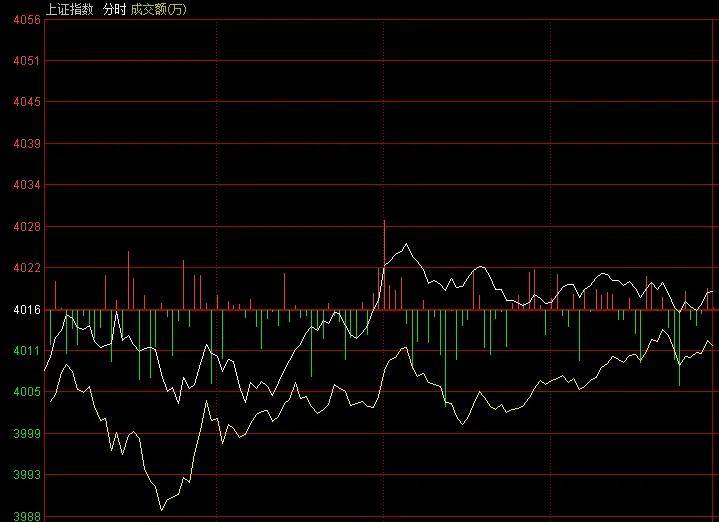
Core Viewpoint - The Shanghai Composite Index (SSE) has surpassed the 4000-point mark for the first time since August 18, 2015, indicating a potential bull market trend [1][2]. Group 1: Market Performance - The SSE reached a high of 3999 points on October 27, 2023, before finally breaking through 4000 points on October 28, 2023 [2][4]. - The SSE closed at 3988.22 points, down 0.22%, while the ChiNext Index fell by 0.15% to 3229.58 points [1]. Group 2: Influencing Factors - The recent market rally has been driven by a combination of policy support and capital influx, with significant events such as the 2025 Financial Street Forum and positive trade negotiations between China and the U.S. contributing to market optimism [2][3]. - The current bull market is characterized by lower valuations compared to the 2015 peak, with the CSI 300 index's price-to-earnings ratio below 15 times [5][6]. Group 3: Sector Dynamics - The technology sector has emerged as a key driver of market performance, supported by government initiatives like the "14th Five-Year Plan" and a shift towards hard technology investments [3][8]. - There is a notable divergence in sector performance, with high-tech stocks outperforming traditional sectors, reflecting a structural bull market rather than a broad-based rally [8][7]. Group 4: Market Structure Changes - The number of A-share listed companies has increased significantly from 2827 in 2015 to 5448 in 2023, with total market capitalization rising from 58.40 trillion yuan to 122.23 trillion yuan, indicating a more robust market structure [5]. - The leverage in the market has decreased compared to 2015, shifting the core market drivers from speculative leverage to economic transformation and technological advancements [7][8].
沪指4000点得而复失 未来走向如何?
Nan Fang Du Shi Bao· 2025-10-28 23:10
Core Viewpoint - The Shanghai Composite Index has broken the 4000-point mark for the first time since August 2015, indicating a potential new bull market phase driven by policy and capital market dynamics [1][2]. Market Performance - On October 28, the Shanghai Composite Index reached 3988.22 points, closing down 0.22%, while the ChiNext Index fell by 0.15% [1]. - The A-share market has seen a resurgence since April, with significant fluctuations, particularly around the 3800-point level in August and a recovery following positive trade negotiations between China and the U.S. [2]. Economic and Policy Drivers - The current bull market is primarily supported by favorable policies and capital influx, with major indices like the CSI 300 trading below their 2015 peaks, suggesting that the market may still be in the early stages of a bull run [2][3]. - The recent financial forum in Beijing has generated market optimism due to the announcement of important policy measures [1]. Sector Analysis - The technology sector has shown significant strength, driven by the "14th Five-Year Plan" which emphasizes the development of new productivity, leading to a strong performance in tech stocks [3][4]. - The shift in capital towards technology stocks reflects China's economic transformation, with a notable focus on hard technology rather than traditional industries [3][8]. Market Structure Changes - The number of A-share listed companies has increased from 2827 in 2015 to 5448 as of October 2025, with total market capitalization rising from 58.40 trillion yuan to 122.23 trillion yuan, indicating a more robust market structure [6]. - Current market valuations are more rational compared to 2015, with the average P/E ratio of the A-share market at 14.24, down from 15.81 in 2015 [6][7]. Investment Landscape - The current market is characterized as a structural bull market, with significant capital concentration in high-tech sectors such as AI, semiconductors, and innovative pharmaceuticals, contrasting with the broader market performance of traditional sectors [8]. - Investors are advised to focus on the performance of technology stocks, as many may miss out on gains if they do not align their portfolios with the prevailing market trends [8].

A股10年轮回重返4000点大关,科技引领“结构牛”
2 1 Shi Ji Jing Ji Bao Dao· 2025-10-28 13:51
Core Viewpoint - The Shanghai Composite Index has broken the 4000-point mark for the first time since August 2015, signaling a significant milestone in the market and reflecting a structural bull market led by new economy sectors [1][3][7]. Market Performance - On October 28, the Shanghai Composite Index reached 4000 points at 10:14 AM but closed at 3988.22 points, down 0.22% for the day. The Shenzhen Component Index fell 0.44%, and the ChiNext Index decreased by 0.15% [3][4]. - Year-to-date, the Shanghai Composite Index has risen by 18.99%, the Shenzhen Component Index by 28.95%, and the ChiNext Index by 50.80% [5]. Historical Context - The last time the Shanghai Composite Index was above 4000 points was in 2015, with historical peaks in 2007 and 2008. The current market environment shows a more rational valuation, with the total market capitalization having doubled from 52 trillion yuan to 107 trillion yuan over the past decade [7][10][9]. - The current price-to-earnings (P/E) ratio of the market is 17.91, indicating a more reasonable valuation compared to previous peaks [9]. Sector Analysis - The market's recent rally is primarily driven by two factors: progress in U.S.-China trade negotiations and the emphasis on high-quality development in the 14th Five-Year Plan, which highlights technology self-reliance, green transformation, and real economy development [3][10]. - The leading sectors include military, computer, and technology, while traditional sectors like metals, steel, and construction have seen declines [3][10]. Investment Strategies - Market participants are divided on strategies at the 4000-point mark, with some opting to take profits while others remain optimistic about long-term investments in technology [11][14]. - Analysts suggest that the technology sector will continue to be the main investment focus, with opportunities in sub-sectors like AI, semiconductors, and renewable energy [15][22]. Future Outlook - Analysts predict that the market may experience short-term fluctuations but is likely to continue its upward trajectory, especially in technology stocks, which are expected to attract more capital as the earnings effect improves [17][23]. - Major financial institutions, including Goldman Sachs and JPMorgan, forecast a positive long-term outlook for the Chinese stock market, with expected gains of approximately 30% by the end of 2027 and 24% for the CSI 300 Index by the end of 2026 [19][20][21].

4000点,投资者该如何面对
Guo Ji Jin Rong Bao· 2025-10-28 06:05
Group 1 - The core sentiment among investors is one of frustration, as many are experiencing account losses despite the market approaching the 4000-point mark [2][3] - The current market is characterized as a structural bull market, with significant sector rotation, requiring investors to adapt their strategies accordingly [3][4] - A recent report from the Chinese Communist Party emphasizes the resilience and potential of the Chinese economy, supporting the bullish sentiment in the A-share market [4][5] Group 2 - The report outlines three main aspects: the recovery of the economic fundamentals, the need for continued policy support, and the importance of stabilizing the market and expectations [5][6] - Internationally, the ongoing trade tensions and the recent discussions between China and the U.S. indicate a potential for improved bilateral relations, which could positively impact market stability [6] - The report highlights new investment opportunities in technology and infrastructure, urging investors to explore these areas for potential growth [6]

A股,4000点!跟踪指数的热门ETF爆了
Ge Long Hui· 2025-10-28 04:21
Core Points - The Shanghai Composite Index has reached 4000 points for the first time since August 2015, marking a significant milestone in the market [1][2][3] - The technology sector has emerged as the strongest market theme this year, driving substantial gains in technology growth indices [4][5] - Year-to-date, the ChiNext 50 ETF has surged by 70%, while other technology-focused ETFs have also shown impressive growth, with increases ranging from 46% to over 53% [6][9] ETF Market Dynamics - The A-share market has seen 84% of individual stocks underperforming the ChiNext 50 ETF, indicating a concentration of performance among a few leading stocks [9][10] - The current market environment reflects a structural divergence, with funds increasingly flowing towards core assets, leading to a structural bull market [12][13] - The rapid growth of ETFs in China has resulted in the domestic ETF market surpassing 5.75 trillion yuan, making it the largest in Asia [14] Fund Inflows and Performance - Significant inflows have been observed in broad-based ETFs, with the CSI 300 ETF and others attracting substantial net inflows this year [15][16] - The A500 ETF has also seen remarkable capital inflows since its launch, highlighting the growing interest in diversified investment vehicles [17] - The development of ETFs is attributed to their low cost and high liquidity, which have attracted a large number of investors [17][20] Industry Trends - The trend towards ETFs reflects a broader shift in investment strategies, moving from active management to passive index tracking [19] - The rise of technology as a dominant market theme has led to the outperformance of technology growth ETFs compared to traditional indices [20] - The diversification and market representation of broad-based ETFs have made them a popular choice among institutional and mature investors [20]
4000点,投资者该如何面对
IPO日报· 2025-10-28 04:01
Core Viewpoint - The article discusses the current state of the A-share market, emphasizing that despite recent fluctuations, the market is fundamentally supported by China's economic strength and policy measures aimed at stabilizing growth [6][7][9]. Economic Analysis - China's nominal GDP ranks as the second-largest globally, and by purchasing power parity, it was noted to be the largest as early as 2015 [7]. - The recent communique from the 20th Central Committee of the Communist Party highlights the resilience and potential of China's economy, asserting that the long-term positive trend remains unchanged [8][9]. - The government aims to stabilize employment, businesses, and market expectations while ensuring economic recovery continues [8][9]. Market Dynamics - The A-share market is characterized as a structural bull market, with significant sector rotation being a notable feature [6][7]. - Investors are encouraged to adapt to changing investment styles and focus on sectors they have researched thoroughly to identify opportunities [6][7]. International Relations - The article notes the complexities in the international political and economic landscape, particularly due to the ongoing trade tensions initiated by the U.S. since 2018 [9]. - Recent discussions between China and the U.S. in Kuala Lumpur suggest a potential easing of tensions, which could stabilize bilateral relations [9]. Investment Opportunities - The communique outlines new investment opportunities, emphasizing the need for technological self-reliance and innovation, as well as the development of a modern industrial system [10]. - Investors are advised to explore these areas for potential wealth creation [10].

A股沪指时隔十年再上4000点,这次有何不同?
Sou Hu Cai Jing· 2025-10-28 02:49
Core Viewpoint - The A-share market has reached the 4000-point mark on the Shanghai Composite Index for the first time in ten years, indicating a significant transformation in market dynamics compared to the previous peak in 2015 [1][12]. Market Size and Valuation - The number of listed companies in the A-share market has increased from 2,827 in 2015 to 5,448 by October 2025, nearly doubling [3]. - The total market capitalization has expanded from 58.40 trillion yuan in 2015 to 122.23 trillion yuan, representing an increase of over 100% [3]. - Current overall valuation levels are lower than in 2015, with the Shanghai Composite Index's price-to-earnings (P/E) ratio around 16 times, below the 10-year average [5][9]. Leverage and Market Dynamics - The market has shifted from a leverage-driven environment in 2015, where margin financing accounted for 4-5% of market capitalization, to a more stable structure where margin financing has not exceeded 3% since 2025 [6]. - The current market is driven by economic transformation and policy support, with institutional investors now holding over 30% of shares, a 15 percentage point increase from 2015 [9]. Sector Performance and Technology - The technology sector has outperformed, with significant contributions from artificial intelligence, semiconductors, and other high-tech industries, contrasting with the broad-based rallies of the past [10][11]. - The market is experiencing a structural bull market, with a focus on sustainable growth driven by technological advancements and policy support [11]. Investor Confidence and Market Outlook - The breakthrough of the 4000-point mark is seen as a confirmation of a bullish trend, with expectations for continued market strength supported by favorable monetary and fiscal policies [12]. - The low return rates on savings are likely to drive capital towards the stock market, enhancing investment opportunities [12].