
去美元化

Search documents
特朗普一席话加剧美元崩跌!金价暴涨173美元 后市如何交易?
Sou Hu Cai Jing· 2026-01-28 05:27
Core Viewpoint - The surge in spot gold prices, driven by ongoing economic and geopolitical uncertainties, reflects a strong demand for this safe-haven asset, exacerbated by comments from U.S. President Trump that contributed to a significant decline in the U.S. dollar [1][4]. Group 1: Gold Price Movement - Spot gold closed up $173.19, a 3.46% increase, reaching $5,181.10 per ounce [2]. - Gold prices have risen over 18% year-to-date, primarily due to rising geopolitical and economic uncertainties, expectations of U.S. interest rate cuts, and increased purchasing power from global central banks amid a trend of de-dollarization [2]. - The Chicago Mercantile Exchange (CME) reported a record trading volume of 3,338,528 contracts for metals on Monday, surpassing the previous record set in October 2025 [2]. Group 2: U.S. Dollar Dynamics - The U.S. dollar index (DXY) fell by 1.32%, closing at 95.76, influenced by escalating geopolitical tensions from trade wars and Trump's comments on the dollar's performance [2][4]. - Trump's remarks indicated he does not view the dollar's decline as excessive, which led to a sharp drop in the dollar index to a new low since February 2022 [4]. Group 3: Market Sentiment and Predictions - Analysts from Deutsche Bank and Société Générale predict that gold prices could reach $6,000 per ounce by the end of the year [3]. - Market attention is focused on the Federal Reserve's policy meeting, with expectations that interest rates will remain unchanged, but concerns about the Fed's independence are prevalent [4]. - Analysts warn that if Fed Chair Powell delivers hawkish comments, it could trigger significant profit-taking, potentially pushing gold prices down to support levels of $5,000, $4,950, and $4,900 per ounce [5].
早间评论-20260128
Xi Nan Qi Huo· 2026-01-28 05:16
Report Industry Investment Ratings - Not provided in the document Core Views of the Report - The macro - economic recovery momentum needs to be strengthened, and monetary policy is expected to remain loose. Different futures varieties have different trends and investment suggestions based on their respective fundamentals and market conditions [6][10] - Overall, the market shows a complex situation with various factors such as supply - demand relationships, cost changes, and policy expectations influencing different industries Summary by Catalog Treasury Bonds - **Market Performance**: On the previous trading day, most treasury bond futures closed flat, with the 30 - year main contract down 0.33% at 112.09 yuan, and others remaining unchanged. The central bank conducted 402 billion yuan of 7 - day reverse repurchase operations, resulting in a net investment of 78 billion yuan. In 2025, the total profit of industrial enterprises above the designated size increased by 0.6% year - on - year [5] - **Outlook**: Treasury bond futures are expected to face some pressure, and a cautious attitude is recommended [6][7] Stock Index Futures - **Market Performance**: On the previous trading day, stock index futures showed mixed trends, with the CSI 300 futures (IF) main contract down 0.20%, the SSE 50 futures (IH) main contract unchanged, the CSI 500 futures (IC) main contract up 0.64%, and the CSI 1000 futures (IM) main contract up 0.55% [8] - **Outlook**: The domestic economy is stable, but the recovery momentum is weak. However, due to low asset valuations and economic resilience, along with increased market sentiment and inflow of incremental funds, the volatility center of stock index futures is expected to gradually rise, and previous long positions can be held [10][11] Precious Metals - **Market Performance**: On the previous trading day, the gold main contract closed at 1,148.38 with a 0.44% increase, and the silver main contract closed at 28,300 with a 4.02% increase [12] - **Outlook**: The global trade and financial environment is complex, which is beneficial to the allocation and hedging value of gold. However, due to a significant increase in precious metals recently and rising speculative sentiment, market volatility is expected to increase significantly. It is recommended to exit long positions and wait and see [13][14] Steel Products (Rebar, Hot - Rolled Coil) - **Market Performance**: On the previous trading day, rebar and hot - rolled coil futures showed weak oscillations. The spot prices of Tangshan billet, Shanghai rebar, and Shanghai hot - rolled coil were reported at certain ranges [15] - **Outlook**: In the medium term, the prices of steel products are dominated by industrial supply - demand logic. The demand for rebar is declining year - on - year, and the market will enter the off - season. Supply pressure is increasing, and inventory is rising. The prices of rebar and hot - rolled coil may continue to oscillate weakly. Investors can look for opportunities to go long on pullbacks and manage positions carefully [16][17] Iron Ore - **Market Performance**: On the previous trading day, iron ore futures had a slight pullback. The spot prices of PB powder and Super Special powder were reported at certain levels [18] - **Outlook**: The demand for iron ore is at a low level, and the supply is increasing. The port inventory is at a high level in the past five years. The supply - demand pattern has weakened. Technically, there are signs of stabilization. Investors can look for opportunities to go long on pullbacks and manage positions carefully [18][19] Coking Coal and Coke - **Market Performance**: On the previous trading day, coking coal and coke futures had obvious pullbacks. The production of domestic coking coal is stable, and the demand for coke is weak [20] - **Outlook**: The futures of coking coal and coke may continue to oscillate in the medium term. Investors can look for low - level buying opportunities and manage positions carefully [20][21][22] Ferroalloys - **Market Performance**: On the previous trading day, the manganese silicon main contract closed down 0.72% at 5,818 yuan/ton, and the silicon iron main contract closed down 0.99% at 5,604 yuan/ton [23] - **Outlook**: Since the fourth quarter of 2025, the production of ferroalloys has declined, and the demand is weak. The overall surplus pressure continues. Currently, the cost is at a low level, and the support at the low - level range is strengthening. After a decline, investors can consider long positions in the low - level range [23] Crude Oil - **Market Performance**: On the previous trading day, INE crude oil oscillated downward and closed near the 5 - day moving average. Speculators increased their net long positions in US crude oil futures and options, and the number of oil and gas rigs increased. The US imposed new sanctions on Iran [24][25] - **Outlook**: The CFTC data shows that US funds are still bullish on crude oil. The new sanctions on Iran and geopolitical risks have pushed up the price of crude oil. The price of crude oil is strong and has room to rise. Investors can focus on long opportunities in the main contract [26][27] Fuel Oil - **Market Performance**: On the previous trading day, fuel oil oscillated downward and was supported by the 5 - day moving average. Singapore's land - based fuel oil inventory dropped to a three - month low due to reduced imports and increased exports. The spot price difference has improved [28][29] - **Outlook**: Investors can focus on long opportunities in the main contract of fuel oil [30] Polyolefins - **Market Performance**: In the previous trading day, the PP market in Hangzhou had mixed price movements, and the LLDPE price in Yuyao was adjusted. The propane cost remains high, but demand is insufficient [31] - **Outlook**: This week, the polyolefin market will be in a tight supply - demand situation. The increase in crude oil prices and some production line overhauls may lead to a short - term price increase. The demand is stable, and the price is expected to oscillate upward. Investors can focus on long opportunities [31][32] Synthetic Rubber - **Market Performance**: On the previous trading day, the synthetic rubber main contract closed down 1.63%. The price in Shandong was adjusted downward, and the basis was stable [33] - **Outlook**: The market is expected to oscillate strongly. Key factors to watch include the price trend of butadiene, the recovery of downstream demand, and the implementation of January's plant overhauls [33][35] Natural Rubber - **Market Performance**: On the previous trading day, the natural rubber main contract closed down 0.31%, and the 20 - rubber main contract closed up 0.04%. The Shanghai spot price remained stable, and the basis was stable [36] - **Outlook**: The market is expected to show a wide - range oscillation. Supply is decreasing, demand is expected to be stable to weak, and inventory is increasing [36][37] PVC - **Market Performance**: On the previous trading day, the PVC main contract closed down 0.55%. The spot price remained stable, and the basis widened slightly [38] - **Outlook**: Although it is currently the traditional off - season for PVC, the market may oscillate strongly due to policy expectations. In the medium term, capacity clearance and increased exports may improve the supply - demand situation. Investors need to be vigilant about demand uncertainties [38][40] Urea - **Market Performance**: On the previous trading day, the urea main contract closed down 0.17%. The price in Shandong Linyi remained stable, and the basis was stable [41] - **Outlook**: The short - term price of urea is expected to oscillate strongly, mainly driven by export demand and cost support [41][42] PX - **Market Performance**: On the previous trading day, the PX2603 main contract fell 2.62%. The PXN spread was adjusted, and the short - flow profit was maintained [43] - **Outlook**: In the short term, the PXN spread and short - flow profit are stable. The PX start - up rate is declining. The market sentiment and cost (crude oil) may provide support. The market may oscillate and adjust. Investors can participate in the low - level range and be vigilant about the risk of external crude oil fluctuations [43] PTA - **Market Performance**: On the previous trading day, the PTA2605 main contract fell 3.17%. The PTA plant load remained stable, and the polyester load decreased [44] - **Outlook**: In the short term, the PTA processing fee has returned to the average level of previous years, and the upward space is limited. The inventory remains low. The supply side has little change, and the demand side has a seasonal decline. The market may oscillate. It is recommended to operate carefully and pay attention to oil price changes [44] Ethylene Glycol - **Market Performance**: On the previous trading day, the ethylene glycol main contract fell 1.6%. The overall start - up load decreased, and the port inventory increased [45] - **Outlook**: In the short term, the supply side is shrinking, and the market sentiment is boosted. However, the port inventory is increasing, and the downstream polyester is in the seasonal overhaul period. The price may have limited upward space. It is recommended to operate carefully and pay attention to port inventory and supply changes [45] Short - Fiber - **Market Performance**: On the previous trading day, the short - fiber 2603 main contract fell 1.97%. The short - fiber plant load increased, and the downstream terminal开工率 decreased [46] - **Outlook**: In the short term, the short - fiber supply remains at a relatively high level. The sales of polyester short - fiber have improved, and the inventory is at a low level, providing some support. The short - fiber may oscillate with the raw material price. It is necessary to control risks and pay attention to cost changes and downstream pre - holiday stocking [46] Bottle - Chip - **Market Performance**: On the previous trading day, the bottle - chip 2603 main contract fell 2.52%. The bottle - chip processing fee increased, and the plant load decreased [47] - **Outlook**: Recently, the bottle - chip load has slightly decreased, and there will be concentrated production cuts around the Spring Festival. The supply is expected to shrink. The export growth rate has increased, but the main logic lies in the cost side. The bottle - chip is expected to oscillate with the cost side. Investors can participate cautiously at low levels and pay attention to the implementation of overhaul devices [47] Soda Ash - **Market Performance**: On the previous trading day, the main 2605 contract of soda ash closed at 1,194 yuan/ton, down 0.25%. The supply is at a high level, and the demand is weak [48] - **Outlook**: The market is in a loose situation, and the price is stable for the time being. In the short term, there is a lack of substantial support, and the price will be adjusted stably. It is recommended to be cautious [48][49] Glass - **Market Performance**: On the previous trading day, the main 2605 contract of glass closed at 1,066 yuan/ton, down 0.93%. The production line remained unchanged, and the inventory increased [50] - **Outlook**: The market is in a loose situation. The price is expected to oscillate before the Spring Festival. It is necessary to pay attention to the risk of returning to the fundamentals [50] Caustic Soda - **Market Performance**: On the previous trading day, the main 2603 contract of caustic soda closed at 1,951 yuan/ton, up 0.46%. The production is high, the demand is low, and the inventory is high [51] - **Outlook**: The seasonal characteristics are significant. Affected by the price fluctuation of alumina and the cost range of the futures, the trading sentiment may fluctuate before the Spring Festival, and the futures may oscillate. However, considering that the fundamentals of the middle and lower reaches have not improved significantly, it is recommended to be cautious [51][52] Pulp - **Market Performance**: On the previous trading day, the main 2605 contract of pulp closed at 5,342 yuan/ton, down 0.22%. The inventory continued to increase, and the spot trading was light [53] - **Outlook**: The market sentiment is pessimistic due to the approaching end of downstream procurement and the continuous increase in port inventory. The futures may have a short - term technical rebound, and investors should treat it rationally [53][54] Lithium Carbonate - **Market Performance**: On the previous trading day, the lithium carbonate main contract rose 1.5% to 179,600 yuan/ton. The supply and demand are both strong, and the inventory is decreasing [55] - **Outlook**: The price has strong support below, but the short - term fluctuation may increase. It is necessary to control risks [55] Copper - **Market Performance**: On the previous trading day, the Shanghai copper main contract closed at 101,560 yuan/ton, down 1.18%. The US economic data is mixed, and the Fed's long - term monetary policy is expected to be loose [56][57] - **Outlook**: The price is expected to be adjusted at a high level. The global copper concentrate supply is tight, and the demand is suppressed by high prices. The inventory is increasing [56][57][58] Aluminum - **Market Performance**: On the previous trading day, the Shanghai aluminum main contract closed at 24,350 yuan/ton, up 0.43%, and the alumina main contract closed at 2,766 yuan/ton, up 1.62%. The alumina market is in surplus, and the aluminum demand is suppressed by high prices [59] - **Outlook**: The price is expected to be adjusted at a high level. The supply - demand of the aluminum industry chain is under pressure in the short term [59][60] Zinc - **Market Performance**: On the previous trading day, the Shanghai zinc main contract closed at 25,025 yuan/ton, up 0.1%. The supply is increasing, and the demand is in the off - season [61][62] - **Outlook**: The zinc price is expected to oscillate and adjust. It lacks the momentum to continue rising and is unlikely to fall sharply [62][63] Lead - **Market Performance**: On the previous trading day, the Shanghai lead main contract closed at 17,000 yuan/ton, down 0.21%. The supply and demand are both weak [64] - **Outlook**: The lead price is expected to oscillate within a range. The fundamentals have no obvious contradictions [64][65] Tin - **Market Performance**: On the previous trading day, the Shanghai tin main contract rose 0.41% to 436,450 yuan/ton. The supply is tight, and the demand has some resilience [66][67] - **Outlook**: The tin price is expected to oscillate strongly. The supply is tight, and the demand has support from emerging fields. The inventory is decreasing [66][67] Nickel - **Market Performance**: On the previous trading day, the Shanghai nickel main contract fell 1.96% to 143,420 yuan/ton. The cost is rising, and the demand is weak [68] - **Outlook**: The nickel price is under pressure. The supply - demand situation is complex, and the inventory is at a relatively high level [68] Soybean Oil and Soybean Meal - **Market Performance**: On the previous trading day, the soybean meal main contract remained flat at 2,766 yuan/ton, and the soybean oil main contract rose 1.03% to 8,258 yuan/ton. The US dollar is weakening, and the soybean export competitiveness is increasing [69] - **Outlook**: The demand for soybean meal is growing moderately, and investors can look for long opportunities in the low - cost support range. The demand for soybean oil has improved slightly, and investors can consider taking profits on rallies [69][70] Palm Oil - **Market Performance**: The Malaysian palm oil continued to rise. The export data is good, and the production is declining. The domestic palm oil inventory is decreasing [71] - **Outlook**: Investors can consider long opportunities after a pullback [71][72] Rapeseed Meal and Rapeseed Oil - **Market Performance**: The Canadian rapeseed closed almost flat. The domestic rapeseed meal inventory is decreasing, and the rapeseed oil inventory is increasing [73][74] - **Outlook**: It is recommended to wait and see for now [73][74][75] Cotton - **Market Performance**: The domestic Zhengzhou cotton oscillated slightly. The USDA cotton supply - demand report is positive, and the domestic cotton production is increasing, but the inventory increase is lower than expected [76][77] - **Outlook**: The medium - term cotton price is expected to be strong, but the short - term domestic price is under pressure due to the large price difference between domestic and foreign markets. Investors can buy on pullbacks [76][77][78] Sugar - **Market Performance**: The Zhengzhou sugar oscillated, and the overseas raw sugar rebounded slightly. India's sugar production is expected to increase significantly, and the domestic sugar supply
印欧敲定“历史性”自贸协定,美国政府停摆风险攀升
Hua Tai Qi Huo· 2026-01-28 05:04
印欧敲定"历史性"自贸协定,美国政府停摆风险攀升 FICC日报 | 2026-01-28 市场分析 通胀叙事大趋势不改。12月11日中央经济工作会议召开:会议强调,深入实施提振消费专项行动;强调深入整治"内 卷式"竞争制定和实施;会议确认,把促进经济稳定增长、物价合理回升作为货币政策的重要考量。后续继续提振 消费,以及推进"反内卷"的大方向并未发生变化,未来物价回升路径仍需关注供给侧的政策方向。1月15日,央行 宣布下调各类结构性货币政策工具利率0.25个百分点,各类再贷款一年期利率降至1.25%,其他期限档次利率同步 调整。并强调,今年降准降息还有一定空间,人民币汇率预计将继续双向浮动,保持弹性。1 月 20 日,财政部官 网集中发布 5 个重要政策文件,涵盖个人消费贷款、设备更新、中小微企业贷款、服务业经营主体贷款及民间投 资专项担保五大领域,以 "延长期限、扩大范围、提高标准" 为核心导向,通过财政贴息与担保支持,降低融资成 本、激发市场活力,助力扩大内需与经济高质量发展。1月26日,商务部表示,中方愿与美方管控分歧、推进合作, 将出台扩大入境消费政策措施。此外,伊朗和委内瑞拉的地缘局势骤紧,在民粹主义 ...
中韩自贸刚有眉目,特朗普就对韩国挥出重拳,美国正失去领导力
Sou Hu Cai Jing· 2026-01-28 04:47
Group 1 - The core point of the article highlights Trump's use of tariffs as a political weapon against South Korea, particularly in light of its recent free trade agreement with China, indicating a deeper issue of the U.S. losing its global leadership [1][3] - Trump's announcement to raise tariffs on South Korean goods from 15% to 25% due to non-compliance with a trade agreement raises questions about the selective targeting of South Korea over other nations like Japan, which has worse compliance records [1] - The U.S. demands unrealistic commitments from South Korea, such as a $350 billion investment, which could destabilize the Korean economy and lead to a financial crisis if enforced [1] Group 2 - The domestic political turmoil in the U.S., including record government shutdowns and rising national debt exceeding $38 trillion, is contributing to the erosion of American leadership and credibility [5] - Trump's unilateral policies and exploitation of allies have strained relationships, pushing many countries to adopt counter-strategies, indicating a significant shift in international alliances [7] - The global order is shifting towards multipolarity, as the current model of economic globalization no longer meets the needs of major countries, with Trump's insistence on a unipolar approach being increasingly out of touch [8]

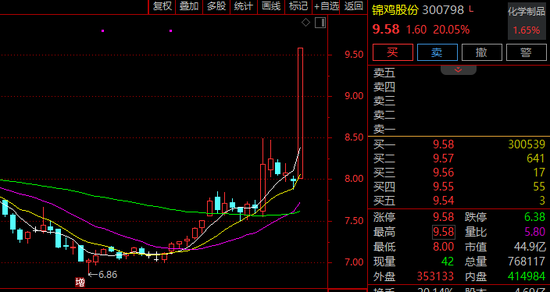
300798,直线封板!化工股,涨停潮!
Xin Lang Cai Jing· 2026-01-28 04:37
Market Overview - A-shares experienced slight fluctuations with major indices showing mixed results, including a small increase in the Shanghai Composite Index and Shenzhen Component Index, while the ChiNext Index saw a slight decline [1][12] - The number of declining stocks significantly outnumbered advancing stocks, with trading volume remaining stable [1][12] Chemical Industry - The chemical sector saw a strong rally, particularly in the disperse dye segment, which led to a more than 4% increase in the sector index, reaching a nearly 7-year high [2][14] - Key raw material prices, such as 2-chloro-4-nitroaniline, have surged over 50% since 2026, impacting the cost structure of dye production [4][16] - The price of disperse dyes has increased by 1,000 yuan per ton to 18,000 yuan per ton, driven by rising costs of intermediate materials [6][18] Precious Metals - The precious metals sector saw significant gains, with the index rising over 9% to reach a new historical high [7][19] - Major gold stocks experienced a surge, with several reaching their daily limit up, including Feinan Resources and Xiaocheng Technology, both hitting a 20% increase [7][19] - The gold market has attracted over 56 billion yuan in net inflows from major funds, with a total of over 252 billion yuan in net inflows over the past 20 days [20][22] Global Gold Demand - Central banks worldwide are accelerating gold purchases, with 95% of surveyed banks expecting to increase their gold reserves in the next 12 months [9][21] - Geopolitical tensions, including conflicts in Greenland, Ukraine, and Venezuela, have heightened the demand for gold as a safe-haven asset [10][21] - The international gold price has surged over 21% in less than a month, while silver prices have increased by over 60% during the same period [10][22]
银河期货每日早盘观察-20260128
Yin He Qi Huo· 2026-01-28 04:34
银河期货研究所 2026 年 1 月 28 日 0 / 49 期 货 眼 ·日 迹 每日早盘观察 研究所 期货眼·日迹 | 股指期货:压力有所减轻 4 | | --- | | 国债期货:股债跷跷板 5 | | 蛋白粕:供应仍有压力 | 盘面走势偏强 6 | | --- | --- | | 白糖:外盘走势现分歧,郑糖底部震荡 6 | | | 油脂板块:油脂有所分化 7 | | | 玉米/玉米淀粉:北港现货稳定,盘面偏弱震荡 8 | | | 生猪:出栏压力增加 | 现货震荡运行 9 | | 花生:花生现货稳定,花生盘面底部震荡 10 | | | 鸡蛋:临近节前备货,蛋价有所上涨 10 | | | 苹果:节前走货尚可,苹果价格坚挺 11 | | | 棉花-棉纱:整体变化不大 | 棉价有所支撑 12 | | 钢材:需求边际转弱,钢价延续震荡 14 | | --- | | 双焦:基本面乏善可陈,关注资金扰动 14 | | 铁矿:终端需求低位,矿价震荡运行 15 | | 铁合金:估值偏低存在修复需求,短期震荡偏强 16 | | 金银:特朗普"暗示"弱美元,金银维持强势 17 | | --- | | 铂钯:美元信任危机 贵 ...
1.27今日金价:大家不必等待了!金价或重现历史强势走势
Sou Hu Cai Jing· 2026-01-28 04:18
2026年1月27日,黄金市场延续了强势表现。 伦敦现货黄金价格突破5082美元/盎司,单日上涨0.87%;国内黄金T D价格报1141.5元/克,较前一日上涨7.43 元。 周大福、周大生等品牌黄金零售价突破1578元/克,单日涨幅超2%。 建设银行投资金条价格达1146.40元/克,工商银行如意金条1151.45元/克,单日涨 幅都超过1.5%。 回顾2025年,黄金市场呈现史诗级上涨。 伦敦现货黄金从年初约2650美元/盎司起步,累计涨幅达67%,年内超过50次刷新历史新高,最高逼近4600美元/盎 司关口。 国内黄金消费市场同样火热,主流品牌首饰金价从年初每克800元左右涨至年末的1360元附近,每克涨幅约560元。 所谓"重演历史",是指当前驱动金价上涨的核心逻辑与历史上黄金大牛市的启动条件高度契合。 比如2008年金融危机后,黄金从800美元/盎司涨至1900美 元/盎司;2020年疫情期间,金价从1500美元/盎司飙升至2070美元/盎司。 这两轮行情背后都是全球不确定性上升、货币宽松和资产配置需求爆发的共同作 用。 当前金价上涨的第一个核心逻辑是央行购金潮持续加码。 截至2025年12月末,中 ...
多国央行,逃离美元
Sou Hu Cai Jing· 2026-01-28 03:55
Core Viewpoint - The dominance of the US dollar as the world's reserve currency is declining, with its share in global central bank foreign exchange reserves dropping to around 40%, the lowest level in at least 20 years [1]. Group 1: Dollar's Decline - From 2020 to 2026, the dollar's share in global reserves is expected to decrease by nearly 14 percentage points, equating to a reduction of approximately $3.2 trillion in dollar assets held by central banks [1]. - A survey by OMFIF indicates that while the dollar remains the most popular reserve currency in 2024, it is projected to fall to seventh place by 2025 [1]. - Nearly 16% of central banks plan to increase their euro holdings, and it is anticipated that 30% of central banks will increase their holdings of the renminbi over the next decade, potentially doubling its share in global reserves [1]. Group 2: Factors Contributing to Dollar's Erosion - The three foundational pillars supporting the dollar's global position—stable current account, strong institutional trust, and independent monetary policy—are showing signs of weakening [2]. - The US's need to continuously export dollars has led to persistent fiscal deficits and trade imbalances, which undermine the credibility of the dollar [2]. - A significant 70% of survey respondents expressed concerns about investing in dollars due to the current political environment in the US, indicating a loss of global investor confidence in the dollar system [2]. Group 3: Concerns Over Federal Reserve Independence - There are growing market concerns regarding the independence of the Federal Reserve, especially with increasing political pressure from the US government [3]. - The value of the dollar heavily relies on a transparent, independent, and predictable policy framework, and any damage to the Fed's independence could lead to a sharp decline in global trust in the dollar [3]. - The US is attempting to bolster the dollar's dominance through stablecoins, but experts suggest that this may not be sufficient to counteract the underlying issues affecting the dollar's status [3]. Group 4: Alternatives to the Dollar - Morgan Stanley has indicated that gold is emerging as the largest challenger to the dollar, with its share in central bank assets rising from about 14% to between 25% and 28% [4]. - Reports suggest that gold may replace the dollar as the largest reserve asset globally by 2026, with spot gold prices recently surpassing $5,000 per ounce [4]. - The rise of new technologies in cross-border payments and the increasing influence of regional organizations are contributing to a more diversified global trade settlement landscape [5]. Group 5: Long-term Trends - The process of de-dollarization is not sudden but rather a gradual accumulation of factors leading to long-term effects, exacerbated by recent US actions that disrupt regional peace and market stability [6]. - The US may continue its unilateral approach, but the global landscape is shifting away from a dollar-centric model [7].
顺周期崛起!有色、油气板块领涨大市,顺周期“冰火转换”时刻已至?
Xin Lang Cai Jing· 2026-01-28 03:41
Core Viewpoint - The A-share market remains robust in 2026, with a notable rise in cyclical sectors such as non-ferrous metals and oil and gas, contrasting with the extreme growth style of 2025. These sectors are expected to be the most prominent during the current spring rally [1]. Group 1: Market Performance - On January 28, the non-ferrous and oil and gas sectors led the market, with the non-ferrous ETF (Huatai-PB) rising by 3.72% and the oil and gas ETF (Huatai-PB) increasing by 3.24%, both reaching historical highs [1][2]. - The non-ferrous ETF tracks an index with a "gold and copper content" of 46%, making it a leader among similar indices [3]. Group 2: Global and Domestic Factors - The current spring rally in cyclical sectors is driven by multiple factors, including global macroeconomic conditions, expectations of A-share profit recovery, and capital inflows anticipating a recovery [2]. - From a global perspective, the expansion of dollar credit and frequent geopolitical conflicts have enhanced the monetary and safe-haven attributes of commodities, initiating a super cycle for commodities [2][3]. - Domestically, the market is expected to gradually shift towards high-performing companies, with improved corporate earnings anticipated to support the A-share market in 2026 [3]. Group 3: Fund Flows and Investment Trends - There is a notable increase in fund allocation towards cyclical industries, with a 2.1 percentage point rise in the holding ratio of global-priced non-ferrous metals to 8.0%, reaching a historical high [3]. - The non-ferrous sector benefits from multiple favorable factors, including monetary easing, supply-side rigidity, and new demand drivers [3][15]. Group 4: Sector-Specific Insights - The non-ferrous metals sector includes all metals except ferrous metals, with gold, copper, and lithium being key components. The current rally is primarily driven by gold and copper [3][5]. - The copper market is expected to experience a significant supply-demand gap, with projections indicating a growing deficit over the next five years, enhancing the long-term outlook for copper prices [13][14]. Group 5: Oil and Gas Sector Dynamics - The oil and gas sector is supported by seasonal recovery, geopolitical premiums, and improved supply-demand dynamics, with oil prices reaching their highest levels since October of the previous year [16][19]. - The sector's high dividend yield, with the oil and gas ETF showing a 3.63% yield, significantly exceeds the Shanghai Composite Index's yield of 2.57% [19][24]. - The oil and gas sector is characterized by a focus on upstream and downstream industries, ensuring a concentrated investment in companies with quality reserves and stable dividend capabilities [21][22].

黄金概念股全线爆发,赤峰黄金上涨超9%
Sou Hu Cai Jing· 2026-01-28 03:30
基本面的扎实表现亦为黄金股提供了基本面的底气。以赤峰黄金为例,公司在三季报中展现了强劲的业 绩弹性:报告期内实现营业收入86.44亿元,同比增长38.91%;归母净利润20.58亿元,同比大幅增长 86.21%;基本每股收益增至1.14元/股,增幅达70.15%。单季度来看,第三季度实现营收33.72亿元(同比 +66.39%),归母净利润9.51亿元(同比+140.98%),业绩在高基数基础上加速提升。这主要得益于公司矿 金产量弹性的持续释放、多金属产量的稳定提升,以及黄金价格中枢的上行。 研报认为,在金价上涨的背景下,黄金资源股盈利预期增强,且目前黄金股估值仍处于较低水平,配置 机会凸显。 消息面上,国际金价的强劲表现是推动板块上涨的核心驱动力。现货黄金持续刷新历史新高,截至发稿 已报5221美元/盎司。受此提振,国内黄金饰品价格亦大幅上调。据当日多家黄金珠宝品牌公布的价格 显示,周生生足金首饰报价1614元/克,周大福报价1618元/克,老凤祥报价1620元/克,老庙黄金报价 1612元/克,终端市场呈现出浓厚的看涨氛围。 华西证券研报分析指出,本轮金价上涨具备坚实的宏观基本面支撑。随着12月降息落地, ...
