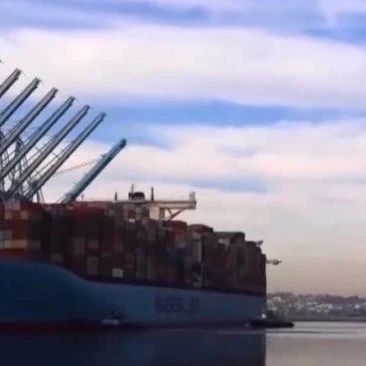
关税战

Search documents
*ST天微: 简式权益变动报告书(谢恺)
Zheng Quan Zhi Xing· 2025-05-09 09:48
Group 1 - The core viewpoint of the report is that the information disclosure obligor, Xie Kai, has increased his shareholding in Sichuan Tianwei Electronics Co., Ltd. (*ST Tianwei) to 5,141,457 shares, representing 5.0000% of the total share capital, through secondary market transactions [1][7]. - The purpose of the equity change is to express confidence in Chinese assets and the future of the Chinese capital market, responding to the government's call for increasing long-term capital [4][5]. - The company is recognized as a national high-tech enterprise with a strong focus on the military industry, particularly in the development of fire extinguishing and explosion suppression systems for armored vehicles [4][5]. Group 2 - The company has successfully developed and produced military fire extinguishing and explosion suppression systems, becoming one of the few in the industry with independent research and production capabilities [5]. - The company has a stable control structure, low debt-to-asset ratio, and sufficient cash flow, indicating significant potential for reversing its current challenges [5][6]. - The information disclosure obligor does not rule out the possibility of further increasing his shareholding in the company within the next 12 months [6][10].

关税战峰回路转!黄金能否坚守3300美元?订单流给出什么信号?阿汤哥正在实时分析,点击观看
news flash· 2025-05-09 07:03
实时黄金订单流分析 关税战峰回路转!黄金能否坚守3300美元?订单流给出什么信号?阿汤哥正在实时分析,点击观看 相关链接 ...
美联储继续抛售美债,关税压力撑不住了,特朗普再次松口!
Sou Hu Cai Jing· 2025-05-09 07:01
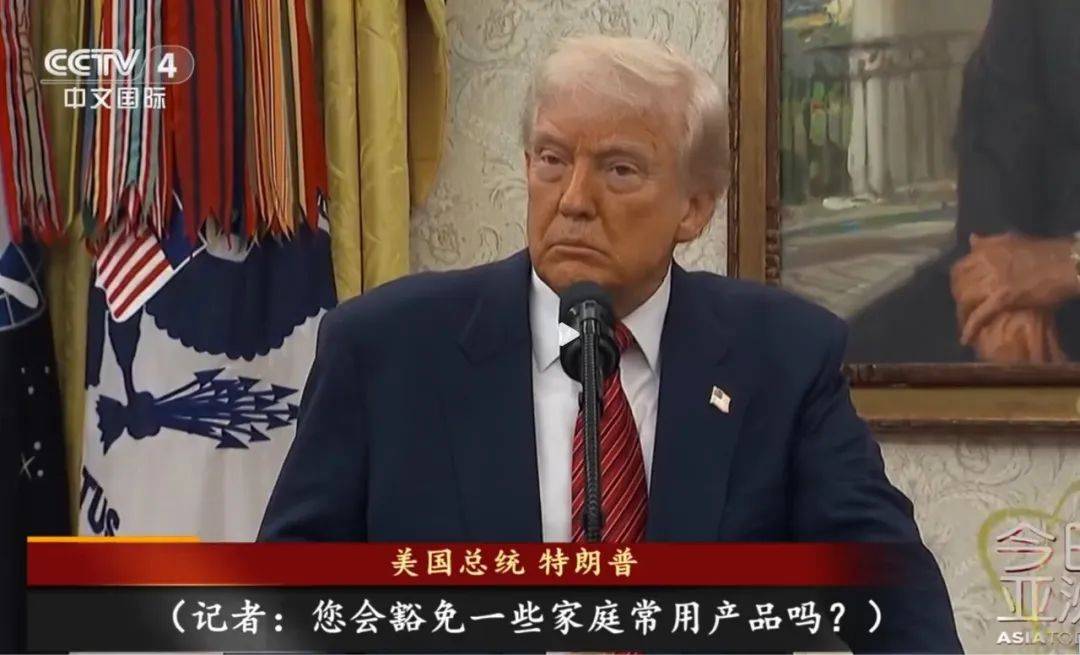
Group 1 - The U.S. stock market indices and the dollar index rose on May 8, while U.S. Treasury bonds faced significant sell-offs, causing discontent from President Trump towards the Federal Reserve's actions [1] - U.S. Treasury Secretary Mnuchin indicated that the Trump administration is considering exempting tariffs of up to 145% on various baby products, including car seats and strollers, to alleviate financial burdens on families [1] - New parents are projected to spend approximately $20,000 in the first year of caring for a newborn, with nearly $1,000 allocated for baby safety equipment, which may increase due to tariff impacts [3] Group 2 - The new tariff measures are significantly affecting U.S. citizens and Chinese foreign trade enterprises, particularly in cross-border logistics and e-commerce sectors [5] - Many cross-border logistics companies are urgently seeking new business opportunities to mitigate tariff pressures, but traditional customer acquisition methods have proven ineffective [5] - The integration of AI and big data in sales strategies is becoming essential for logistics companies to find high-value partners and clients, as traditional methods are saturated [5]

2025年4月贸易数据解读:4月关税战影响开始体现,冲击烈度低于预期
Dong Fang Jin Cheng· 2025-05-09 06:26
Export Performance - In April 2025, China's export value increased by 8.1% year-on-year, a decrease of 4.3 percentage points compared to March[2] - Exports to the US fell by 21.0% year-on-year, a decline of 30.1 percentage points from the previous month[2] - The overall export growth was supported by a "grab export" phenomenon to markets outside the US, with ASEAN exports rising by 20.8%[4] Import Trends - In April 2025, China's import value decreased by 0.2% year-on-year, with the decline narrowing by 4.1 percentage points from March[7] - Imports from the US dropped by 13.8%, with the decline expanding by 4.4 percentage points compared to the previous month[7] - Significant increases in imports from non-US economies, such as a 2.5% rise from Japan and a 7.3% increase from South Korea, were noted[8] Future Outlook - The impact of the tariff war is expected to intensify, with May exports potentially turning negative, particularly a forecasted 60% decline in exports to the US[5] - Domestic support for foreign trade enterprises will increase, focusing on diversifying international markets and enhancing domestic sales platforms[6] - The manufacturing PMI fell to 49% in April, indicating contraction, with expectations of further declines in imports and overall trade performance in May[10]
中国同意与美会谈后,特朗普再次强硬表态,几分钟后,噩耗就来了
Sou Hu Cai Jing· 2025-05-09 02:23
特朗普刚放完狠话,美联储就补了一刀:关税战这场戏,谁先撑不住? 2025年5月9日,国际金融市场被两记重拳砸得嗡嗡作响——中国刚松口同意与美国财长贝森特会谈,特朗普转头就对华"开炮",扬言"美国不需要妥协"。结 果话音未落,美联储主席鲍威尔直接甩出一份声明:不降息!理由直指特朗普的关税政策让经济"不确定性爆表"。 结果呢?美国货架空了,供应链崩了,零售巨头沃尔玛们急得直跳脚。4月14日,外交部发言人一句话点破真相:"关税战没有赢家,美方滥施关税损人害 己。" 这剧情反转速度,比川剧变脸还刺激。 第一部分:特朗普的"变脸绝活",连自己人都看不下去了 "每天睡醒第一件事,就是把昨天的话当屁放了。" 这句话用来形容特朗普的关税政策,简直贴切到离谱。自打2月1日他签发行政令,对华商品加征10%关税、还顺手取消了800美元以下包裹免税的"T86清关 政策",中美贸易战就彻底进入"白热化阶段"。 数据不会说谎: 2月4日,中国反手对美煤炭、液化天然气加征15%关税,原油、农业机械加征10%; 3月3日,美国以"芬太尼问题"为由,把对华关税从10%飙到20%,部分商品综合税率超40%; 4月2日,特朗普更是玩起"对等关税" ...
暴跌30%!发生了什么?
Zhong Guo Ji Jin Bao· 2025-05-08 15:53
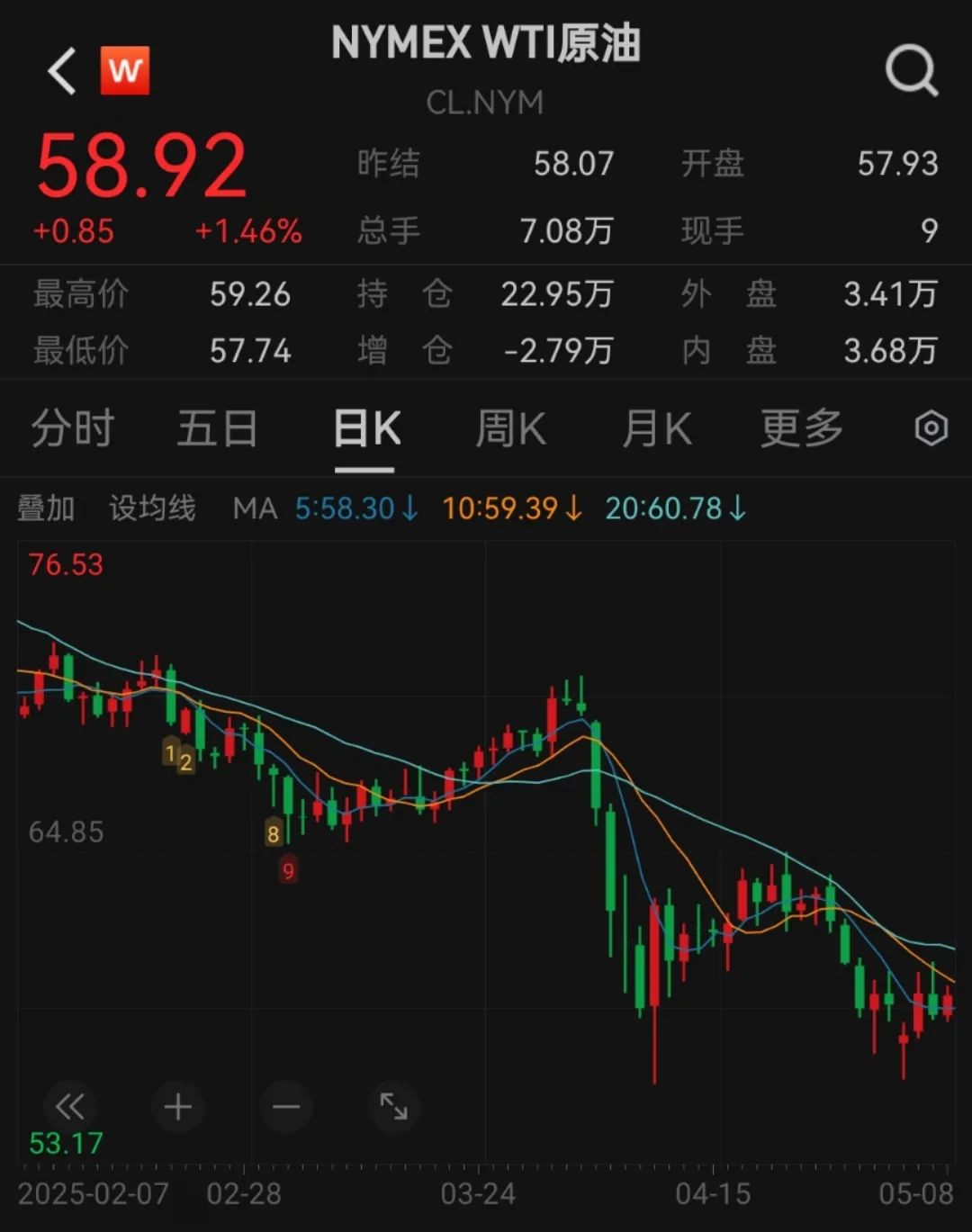
Core Viewpoint - International oil prices have experienced significant volatility, with expectations of a weak and fluctuating market due to increased supply from OPEC+ and economic uncertainties stemming from tariff policies [1][5][8]. Group 1: Oil Price Trends - Since mid-January, WTI crude oil reached nearly $80 per barrel before entering a correction phase, with a subsequent drop to a four-year low, reflecting a cumulative decline of over 30% [1][5]. - Brent crude oil prices fell below $62 per barrel, marking a near four-year low, while WTI briefly dipped below $58 per barrel [5]. Group 2: Supply and Demand Dynamics - The unexpected increase in tariffs by the U.S. has heightened global demand recession expectations, compounded by OPEC+'s decision to increase production, leading to an oversupply in the oil market [2][5]. - Historical data indicates that OPEC+'s production increases during oil price downturns often exacerbate price declines, as seen from 2014 to 2016 [5]. Group 3: Long-term Outlook - Despite current low prices, the long-term outlook for oil prices is expected to show cyclical fluctuations rather than prolonged low levels, influenced by potential reversals in U.S. policies and OPEC+'s market stabilization efforts [7][8]. - Current WTI prices are below the breakeven point for most shale oil producers, suggesting a potential floor for prices, while global oil inventories remain low [8]. Group 4: Investment Opportunities - The current low oil prices present investment opportunities in related thematic funds and high-quality domestic listed companies, particularly in the oil and gas sector [10][12]. - The oil and gas sector may become a focal point for investment as prices adjust, with potential benefits for high-growth stocks due to lower inflation [11][12].
特朗普没想到,关键时刻,俄罗斯打破沉默,对华做出“不限量供应”承诺
Sou Hu Cai Jing· 2025-05-08 14:11
据湖南日报援引塔斯社近期报道,俄罗斯外交部副部长安德烈·鲁登科表示,中国需要多少石油,俄罗斯就准备向中国输送多少石油。对于如 果美国对华石油供应降为零,中国会否购买更多俄罗斯石油的问题,鲁登科答复说:"我认为,中国的行动首先将基于自身的国家利益。如果 国家利益要求购买石油,中国当然会这样做,这是我们中国朋友的选择。" 贸易(资料图) 最近这段时间,中美之间的关税战吸引了舆论的目光。当特朗普对华关税征收到145%之后,中国不仅没有给美国打电话,反而也相应提高了 对美关税,除此之外,中方还修改了半导体产品的溯源规则,这一系列操作下来,让美国彻底赌输了。所以,我们看到美国政府一边对半导体 产品豁免对等关税的同时,一边又开始扩大战场,对中国进行新的威胁。这两天,美方传出了两个消息。第一个,就是他们正在评估让中概股 退市的可能性;第二个,就是美国未来对华原油出口很可能会降为零。 自2024年以来,中美贸易战再度升级,关税战愈演愈烈。4月10日,美国将对华商品关税提高至145%,试图通过经济手段遏制中国发展,中国 随即反击,对美国输华商品征收同等税率的反制关税。这一轮较量直接冲击了美国原油的出口市场,据《参考消息》报道, ...
专访中国德国商会欧阳利文:德国政府应更新对中国的认知,中德经贸关系仍有巨大潜力
2 1 Shi Ji Jing Ji Bao Dao· 2025-05-08 14:05
21世纪经济报道记者郑青亭、实习记者范书晴北京报道 谈及美国对欧盟加征的关税,他表示,这无法在短时间内促使德国企业对美投资激增。一方面,很多大 型德国企业早已在美国布局,另一方面,很多中小企业往往缺乏对外投资的资金或人力。因此,他呼吁 美欧在90天关税暂停期后尽快找到解决方案,以避免各方陷入双输的局面。 "中国市场的竞争非常激烈。以汽车行业为例,中国制造商在质量和技术创新上进步显著。我们在机 械、可再生技术等领域也看到了类似趋势。这是一个发展迅速的市场,有时快到我们在德国甚至欧洲的 合作伙伴难以完全察觉或理解。"5月7日,中国德国商会华北及东北地区执行董事兼董事会成员欧阳利 文(Oliver Oehms)在北京接受21世纪经济报道记者专访时说道。 当天,中国德国商会在北京发布最新一期商业信心调查报告。报告指出,美国政府掀起的新一轮关税战 给在华德国企业带来了诸多障碍。尽管如此,半数受访企业仍计划扩大在华投资,超过三分之一的企业 选择加快本地化进程,以此作为应对持续贸易紧张局势的战略性举措。 据新华社报道,当地时间6日下午,德国联邦议院进行了总理选举第二轮投票。德国联盟党总理候选人 弗里德里希·默茨在第二轮投票 ...
今晚有大事发生,是否会对明天A股产生影响?
Sou Hu Cai Jing· 2025-05-08 13:09
隔夜凌晨2点,美联储议息会议,如市场预期板,选择了按兵不动。此时的美股波动不大,毕竟大家已经消化了5月份美联储不降息的预期,但是随后鲍威 尔的讲话,让市场感到一丝不安。 在新闻发布会上,鲍威尔说了22次"wait",啥意思?就是在川普的关税战情况下,其实鲍威尔也不知道未来美国的通胀会不会升高,升多高,万一6月份 大家没有谈拢真的将关税加这么高,会不会造成更严重的失业,甚至引发经济衰退,谁也说不准。 这就是为什么,川普炮轰鲍威尔,让其降息,甚至一度威胁要解雇他,鲍威尔都非常强硬的姿态回应。因为美联储工作的核心就是维护通胀和失业率稳 定。鲍威尔需要留下足够的"子弹(降息空间)"去应对未来可能发生的危机,就算迟一点应对也不愿意,提前降息可能会提前诱发危机诞生。 懂了吧,鲍威尔此时和你我一般无二,在川普面前,都需要走一步看一步。 大早上,川普发推表示在上午十点(北京时间今晚十点)公布一个大消息。目前媒体猜测,可能是会发布与其他国家关税谈判相关消息。目前,最有可能 得是英美之间会达成相应协议。 所以,黄金今天下午急速跳水,市场的避险情绪进一步减弱。在明天我们与老美在瑞士之间展开会谈,A股今天则进一步的走强。 来看一下深 ...
首批加征145%关税货物抵美,美国港口一片冷清!
凤凰网财经· 2025-05-08 13:04
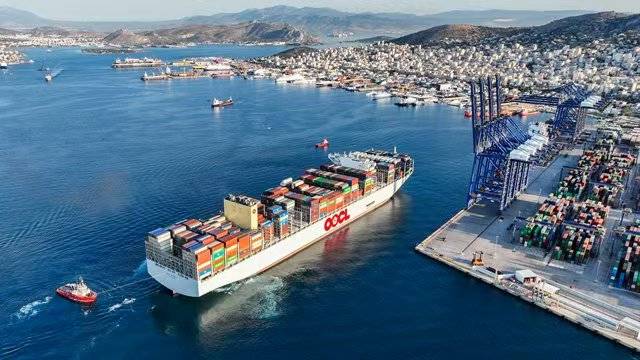
Core Viewpoint - The impact of the U.S. government's excessive tariff policies is worsening, leading to job losses and a decline in port activity, particularly at the Port of Los Angeles, which has seen a 35% decrease in business volume compared to the previous year [4][10]. Group 1: Tariff Impact on Employment and Trade - The first batch of goods subject to a 145% tariff has arrived in the U.S., resulting in a noticeable decline in activity at the Port of Los Angeles, with workers facing unemployment risks [1][4]. - Approximately 80% of toys imported into the U.S. come from China, and Mattel anticipates a $270 million loss this year due to tariffs, necessitating price increases for some products [3]. - The tariff policy is directly linked to job losses, as stated by union members, indicating that the current situation is leading to a significant reduction in employment opportunities [6][8]. Group 2: Decline in Port Activity and Exports - The Port of Los Angeles has seen a 20% cancellation rate of incoming vessels for May, with a projected long-term decline in freight volume due to current tariff policies [10]. - Export volumes at various U.S. ports have significantly decreased, with Portland experiencing a 50.4% drop, Tacoma 27.7%, and Los Angeles 17.3% [12][13]. - A shipping company reported a 30% year-over-year decline in container volume since the tariff policy took effect, indicating uncertainty about the duration of this trend [15]. Group 3: Rise of Bonded Warehouses - In contrast to the declining port activity, the demand for bonded warehouses in the U.S. has surged as companies seek to circumvent tariffs by storing goods without immediate duty payments [16]. - Many importers are utilizing bonded warehouses to store products for up to five years, betting on a potential decrease in tariffs in the near future [16]. - The limited space in bonded warehouses is causing concern among importers, who are preparing for the worst-case scenario if tariffs do not decrease [16]. Group 4: EU's Response to U.S. Tariffs - The European Union is preparing to announce new countermeasures against U.S. tariffs if negotiations fail, with current U.S. tariffs affecting 70% of EU goods traded with the U.S. [17]. - The EU has already voted to implement a first round of countermeasures, proposing tariffs of up to 25% on a range of U.S. products, which may be enacted in July [17].