
资产配置

Search documents
香港“千万富翁”增至39.5万名:平均34岁时首次积累过百万港元,股票和基金是主要投资工具
Mei Ri Jing Ji Xin Wen· 2025-11-18 17:31
调查结果显示,这批千万富翁平均在34岁时累积到首个100万港元资产,股票和基金是他们在当时的主 要投资工具。此外,他们平均在33岁时首次置业。 花旗香港客户策略及销售管理主管成静雯表示,千万富翁人数有所上升,而超级富裕群体在投资和跨代 财富传承方面采取了更精密的部署。他们对财富管理的需求不再局限于传统资产,而是倾向于更积极的 财富管理以及更多元资产配置。同时,他们更着重财富传承规划,以保障下一代的财务未来。 (文章来源:每日经济新闻) 11月18日,花旗香港公布《香港千万富翁调查报告2025》。根据该报告结果推算,今年香港有约39.5万 名"千万富翁",较去年增加约5000人,目前约占香港21岁至79岁总人口的7%。 该报告将"千万富翁"定义为拥有总资产净值至少达1000万港元,并同时拥有至少100万港元流动资产的 人群。 本次报告调查访问了2600名年龄介于21岁至79岁的香港居民。其中,千万富翁平均年龄55岁,总资产净 值中位数为2050万港元,流动资产中位数为1000万港元。 其财富平均分布在流动资产(49%)和物业(50%),物业占比较5年前显著下降了20个百分点。流动 资产中,一半为投资产品,另一半 ...
资产配置全球跟踪2025年11月第3期:资产概览:美联储降息预期出现逆转
GUOTAI HAITONG SECURITIES· 2025-11-18 14:10
Group 1: Asset Overview - The Federal Reserve's interest rate cut expectations have reversed, leading to volatile movements in gold and silver prices during the week of November 10-14, with the Nasdaq experiencing significant sell-offs [1] - The Brazilian IBOVESPA index has seen a monthly increase of 10% [1] Group 2: Investment Highlights - As of the week ending November 14, commodities have outperformed equities and bonds, with COMEX silver and Shanghai gold leading in gains. Oil prices have also risen, while global stock market performance has shown significant divergence [6][19] - The correlation between A-shares and Hong Kong, US, and Indian stocks has marginally decreased, indicating a weakening relationship [6][7] - The risk premium of A-shares relative to 10-year government bonds has increased, while the risk premium of US stocks relative to 10-year US Treasuries has decreased [9][12] Group 3: Equity Market Performance - Hong Kong and Brazilian stocks continue to rise, with the IBOVESPA up 10% over the past month. The global stock market overall increased by 0.4% as of November 14, with developed markets showing slight rebounds [19][24] - In emerging markets, A-share indices generally declined, with the ChiNext 50 and the ChiNext index experiencing the most significant pullbacks of -3.8% and -3.0%, respectively [19][24] Group 4: Bond Market Analysis - The Chinese bond market is characterized by a "bull steep" yield curve, with the 10Y-2Y yield spread widening. The 10-year yield remains stable at 1.81% [37][39] - In contrast, the US bond market exhibits a "bear flat" yield curve, with the probability of a December rate cut by the Federal Reserve dropping to 44.4% from 66.9% [37][39] Group 5: Commodity and Currency Trends - Silver and copper have led commodity gains, with the CRB commodity index rising by 0.5%. The dollar index has decreased by 0.3%, while major currencies like the euro and pound have appreciated against the dollar [6][12] - The gold-to-oil ratio has increased, while the gold-to-silver and gold-to-copper ratios have decreased, indicating changing dynamics in the precious metals market [12][18]
最近怎么这么难?全球皆跌,A股从4000点掉下来,持续亏钱!
雪球· 2025-11-18 13:00
Group 1 - The article discusses the recent fluctuations in the stock market, particularly the Shanghai Composite Index reaching new highs before experiencing a downturn, causing panic among investors [3][31]. - The absence of the U.S. CPI data has led to market fears regarding the Federal Reserve's cautious approach, with concerns that interest rates may not be lowered in December [4][6]. - The article highlights that despite the lack of CPI data, the Federal Reserve has other data to consider, and the current economic situation in the U.S. is not as strong as it appears, masked by the tech boom [9][10]. Group 2 - There has been a significant increase in non-bank loans in the U.S., with $550 billion in new loans in the first ten months of the year, marking a 40% growth rate [18][19]. - Non-bank loans have surpassed the total of real estate, industrial, and consumer loans combined, indicating a shift in credit dynamics [19][21]. - The article outlines the main areas where non-bank loans are directed, including commercial real estate, residential mortgages, corporate credit, and consumer finance, driven by tighter bank regulations and the need for flexible financing [22][23]. Group 3 - The article notes a style shift in the market, with a general decline influenced by overseas factors, while certain sectors like finance and small-cap stocks have shown resilience [31][33]. - The Hong Kong stock market is more affected by overseas influences, and there have been recommendations to increase positions in insurance and Hong Kong dividend stocks during corrections [34][39]. - The article emphasizes that despite internal style rotations, the overall index is still on a slow upward trend, with the Shanghai Composite Index reaching new highs [43][44]. Group 4 - Recent economic data shows a decline in M1 and M2 growth rates, with M1 decreasing to 6.2% and M2 to 8.2%, indicating potential challenges in the stock market [53][59]. - Retail sales growth has slowed to 2.93%, suggesting a sluggish recovery in consumer spending, with restaurant revenues showing some improvement [62][66]. - Real estate investment has dropped by 14.7% year-on-year, indicating ongoing challenges in the sector, but the article suggests that funds from the real estate market may flow into the stock market [67][68]. Group 5 - The article mentions a rebound in soybean meal prices, with potential for further increases if supply issues arise towards the end of the year [69]. - It highlights the cyclical nature of the market, emphasizing that returns are not linear and that investors should be prepared for periods of volatility [71][73]. - The article advises against certain mindsets during bull markets, such as chasing highs or being overly sensitive to account fluctuations, suggesting a focus on long-term investment strategies [76][77].


37万亿元险资配置策略调整:股票投资余额较去年末增长1.2万亿元,占比已达10%
Mei Ri Jing Ji Xin Wen· 2025-11-18 11:45
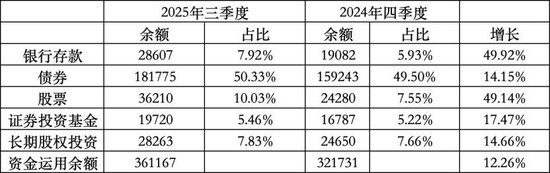
Core Insights - The total balance of insurance funds has exceeded 37 trillion yuan as of the end of September, marking a 12.6% increase from the end of last year [1] - The stock investment balance has reached 3.6 trillion yuan, with an increase of nearly 1.2 trillion yuan, representing a growth rate of 49% [1][8] - The proportion of stock investments has risen to 10%, an increase of approximately 2.5 percentage points compared to the end of last year [1][7] Asset Allocation Overview - As of September 30, the total asset allocation for property and life insurance companies is as follows: - Bank deposits: 28,607 billion yuan (7.92%) - Bonds: 181,775 billion yuan (50.33%) - Stocks: 36,210 billion yuan (10.03%) - Securities investment funds: 19,720 billion yuan (5.46%) - Long-term equity investments: 28,263 billion yuan (7.83%) [2][3] - The bond allocation has seen a decrease in proportion, marking the first decline since the second quarter of 2022, primarily due to a reduction in the allocation by life insurance companies [2][4] Market Dynamics - The increase in stock investment is attributed to favorable central policies and a recovery in investor confidence, which has led to a significant rise in stock market valuations [1][9] - The stock allocation has been continuously improving, reaching a historical high of 10% as of the third quarter of 2025, with a notable increase in stock investment balance [8] - Analysts suggest that insurance funds are increasingly focusing on equity assets to enhance returns and respond to the long-term development of the Chinese capital market [9]
再次跌破4000关口,黄金这波连跌的“底”在哪里?
Sou Hu Cai Jing· 2025-11-18 08:53
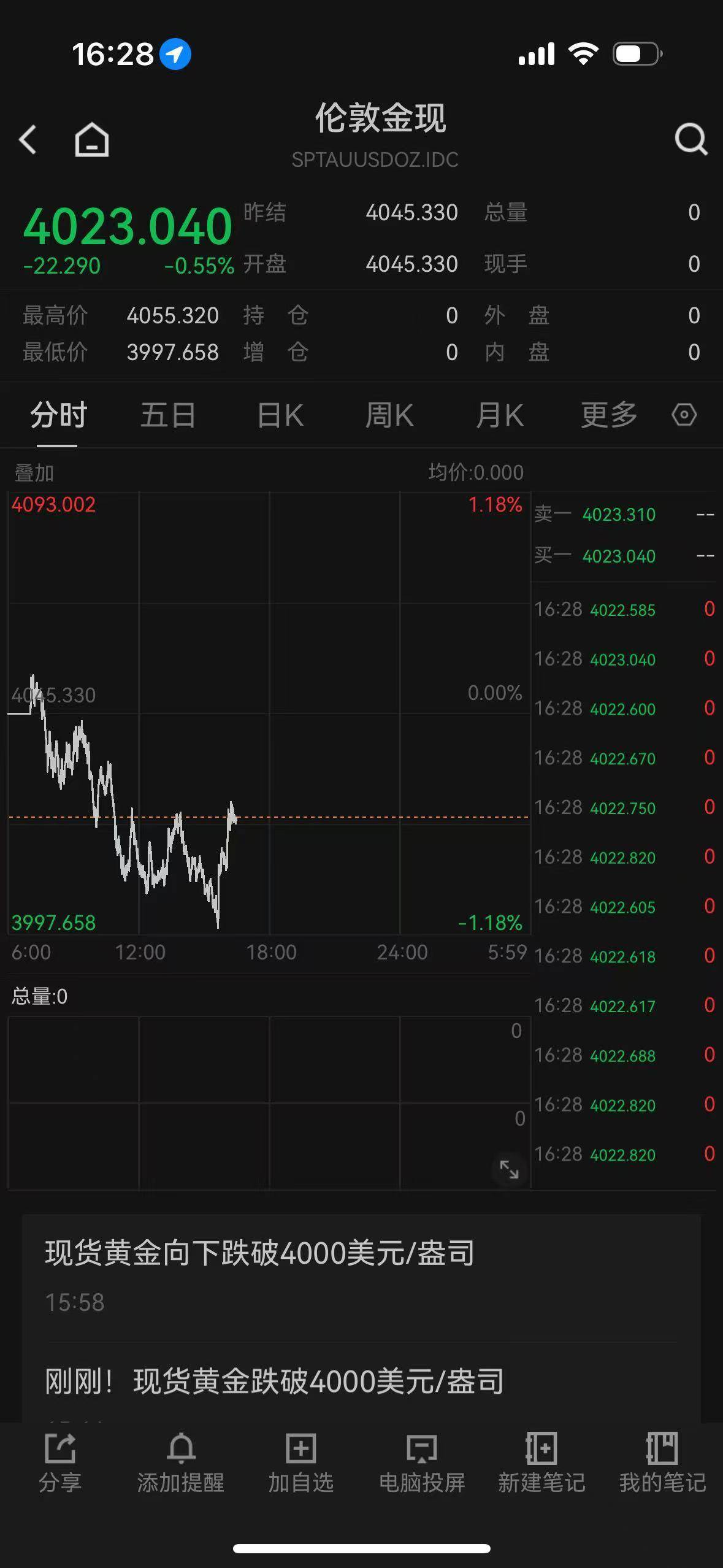
现货白银也是连跌四个交易日,11月18日,伦敦现货白银跌破50美元/盎司。 潮新闻客户端 记者 吴恩慧 在上周猛冲到4200美元/盎司上方后,黄金又跌回4000美元/盎司。 由于美元升值以及市场对美联储12月降息的预期进一步降温,现货黄金连续调整。11月18日下午,伦敦现货黄金一度跌破4000美元/盎司,日内跌幅超1%。 这已是现货黄金连续第四个交易日下跌。 | 16:28 9 | | | ·II 令 □· | | --- | --- | --- | --- | | G | 伦敦金现 | | | | | SPTAUUSDOZ.IDC | | | | 4023.040 " | 4045.330 总量 | | | | -22.290 -0.55% 开盘 | 4045.330 现手 | | | | 最高价 | 4055.320 持 仓 0 外 盘 | | | | 最低价 | 3997.658 增 仓 0 内 空 | | | | 分时 | 五日 日K 月K | | ■名 | | 叠加 | | 均价:0.000 | | | 4093.002 | | | 1.18% 卖ー 4023.310 | | | | | 4023. ...
港股异动 | 内险股集体走低 多股跌幅超3% 险企净投资收益率仍呈现趋势性下滑
智通财经网· 2025-11-18 06:17
Core Viewpoint - The insurance sector in China is experiencing a collective decline in stock prices, with major companies like China Life and New China Life seeing significant drops in their share values. This trend is influenced by recent regulatory data indicating changes in investment strategies and market conditions [1]. Group 1: Stock Performance - China Pacific Insurance (01339) fell by 4.59%, trading at 7.07 HKD - New China Life (01336) decreased by 4.48%, trading at 48.62 HKD - China Life (02628) dropped by 3.48%, trading at 26.04 HKD - China Property & Casualty Insurance (02328) declined by 3.05%, trading at 18.42 HKD [1]. Group 2: Regulatory Data - As of the end of Q3, the total stock investment balance for life and property insurance companies reached 3.62 trillion CNY, showing an increase in both scale and proportion compared to the end of Q2 - The bond allocation ratio for life insurance companies has decreased quarter-on-quarter - Both life and property insurance companies have seen a decline in the scale and proportion of bank deposit allocations [1]. Group 3: Analyst Insights - Liu Xinqi, Chief Analyst of Non-Bank Financials at Guotai Junan Securities, notes that the net investment yield for insurance companies is on a downward trend due to a low interest rate environment and narrowing credit spreads - There is a pressing need for insurance companies to shift their asset allocation strategies from passive to active management - The focus should be on flexibly seizing market opportunities and continuously optimizing asset allocation structures to achieve stable investment returns [1].

波折中寻机!申万宏源黄伟平:2026年债券策略投资展望 重点在2-3季度
Xin Lang Zheng Quan· 2025-11-18 05:23
Group 1 - The core viewpoint of the article emphasizes the shift in the bond market's core contradictions from credit contraction to asset allocation rebalancing, with a focus on the expected differences in 2025 [1] - The bond market's logic for 2025 is driven by expected differences in funding, Sino-U.S. relations, asset allocation, and central bank bond purchases [1] - The current stage of the bond market is characterized by a new focus on "prices + capital flows," with the real estate sector's impact on the economy expected to revert to levels seen around 2015 [1] Group 2 - The debt resolution plan, structured as "6+4+2," is projected to progress to a range of 46%-70% by 2026, alleviating asset scarcity pressures [1] - The logic of redistributing household wealth is gaining attention in the market [1] Group 3 - The main supports for the economy in 2025 are expected to be external demand, production driven by manufacturing, and fiscal expansion of social credit [4] - The focus areas for 2026 include modern industrial systems, technological self-reliance, and building a strong domestic market [5] - The nominal GDP growth rate for 2026 is anticipated to increase due to base effect and inflation improvement, with a fiscal deficit likely to expand moderately to support stable growth and high-quality development [5] Group 4 - The most critical variable for the bond market in 2026 will be the impact of prices throughout the year, particularly in the second and third quarters [6] - Continuous inflation is expected to create a prolonged headwind for the bond market, especially in the second and third quarters, with a focus on the rate of inflation recovery [6]

长期限大额存单,去哪了?
Jin Rong Shi Bao· 2025-11-18 05:17
Core Viewpoint - The recent announcement by Tongyu Mengyin Village Bank regarding the adjustment of deposit interest rates indicates a potential shift in the banking industry towards reducing long-term deposit products, reflecting a broader trend in response to narrowing net interest margins [1][7]. Group 1: Deposit Rate Adjustments - Tongyu Mengyin Village Bank will cancel the 5-year fixed deposit product starting from November 5, 2025 [1]. - Many banks, including the six major state-owned banks, still offer 5-year fixed deposit products, suggesting that the trend may not be widespread yet [2]. - The availability of 5-year large certificates of deposit (CDs) has significantly decreased, indicating a shift in investor preferences and bank offerings [3][5]. Group 2: Market Demand and Supply - The demand for long-term deposit products, such as 5-year large CDs, has diminished compared to previous years when they were highly sought after [4]. - Currently, major banks do not offer 5-year large CDs, with the longest available term being 2 years at a low annualized interest rate of 1.40% [5]. Group 3: Banking Profitability and Strategy - The reduction in long-term deposit products and lower interest rates is primarily driven by banks' need to address the pressure from narrowing net interest margins [7]. - The traditional banking profit model of earning from interest rate spreads is evolving, with banks focusing on lower-cost funding and diversifying income sources through wealth management and intermediary services [7]. Group 4: Investment Strategies - Investors are encouraged to consider alternative investment products, such as savings-type insurance, and to adopt a tiered asset allocation strategy based on their risk tolerance and liquidity needs [8][9]. - Recommendations for investors include prioritizing short to medium-term deposits or government bonds, while also considering low-volatility financial products and equities for those with higher risk tolerance [9].
在波动的市场中,看细水长流
Zhong Guo Zheng Quan Bao· 2025-11-18 04:22
Core Viewpoint - The current market environment, characterized by declining risk-free interest rates and fluctuating equity markets, has led investors to seek investment tools that can withstand market volatility while providing stable returns. The mixed bond secondary fund index has shown strong resilience, particularly in years when the CSI 300 index yielded negative returns, making it appealing to investors looking for balanced risk and return [1][2]. Group 1: Product Characteristics - The Huatai-PineBridge Dual Enjoyment Bond Fund is positioned as a low-volatility product, with at least 80% of its assets allocated to the bond market and 0-20% to equity assets. This allocation allows for sufficient stability while providing opportunities for enhanced returns through diversified sources [1][3]. - The fund aims to optimize the balance between risk and return through scientific asset allocation and leverages the company's overall research advantages to achieve commendable performance [1][2]. Group 2: Management Team - The fund is managed by three experienced fund managers: Song Peng, who has 13 years of investment management experience and a strong understanding of the bond market; Sun Dan, who has a solid background in convertible bonds; and Ru Yihan, who specializes in fixed-income asset management [3]. - The collaboration among the fund managers enhances the management of the portfolio, focusing on strict credit rating systems and individual bond selection to mitigate credit risk while ensuring diversified equity investments [3]. Group 3: Target Investor Profile - The Huatai-PineBridge Dual Enjoyment Bond Fund is particularly suitable for investors seeking stable asset appreciation without significant fluctuations. It can serve as a core allocation within a diversified investment portfolio that includes stocks, bonds, and cash [4]. - The fund aims to provide a reliable investment option in uncertain markets, focusing on controlling drawdowns while striving for long-term stable growth through diversified asset allocation [4].
中金公司:当前A股未见顶 2026年超配中国股票与黄金丨每日研选
Shang Hai Zheng Quan Bao· 2025-11-18 02:26
Core Viewpoint - The Chinese stock market and gold are expected to maintain an upward trend in 2026, driven by the AI technology wave and macroeconomic factors, despite potential risks from liquidity and policy changes [1][2]. Group 1: Chinese Stock Market Analysis - The Chinese stock market experiences more frequent cycles of upward and downward movements compared to the US market, making the identification of market tops more critical [1]. - Current economic conditions indicate that China is in a recovery phase with low inflation and stable growth, suggesting no immediate need for policy tightening [1]. - The profitability growth of the CSI 300 index is recovering from low levels, with a forward P/E ratio of 12.6, which is below historical market peak valuations [1]. - Concerns about liquidity are present, but there are no clear signals indicating a market peak based on economic and policy factors [1]. Group 2: Gold Market Analysis - Gold's market top is easier to predict than that of stocks, largely due to its strong correlation with Federal Reserve policies [2]. - The outlook for gold in 2026 will depend on four key factors: economic growth shifts, tightening policies, high valuations, and geopolitical shocks [2][4]. - Long-term trends suggest a structural increase in gold valuations due to declining dollar credibility and geopolitical uncertainties, with potential for gold prices to exceed $5,000 per ounce if current trends continue [4]. Group 3: Asset Allocation Recommendations - The company recommends an overweight position in Chinese stocks and gold for the first half of 2026, while maintaining standard allocations in US stocks and bonds, and adjusting commodities to standard allocation [4]. - The macro liquidity environment is expected to remain generally loose, supporting the market, while the AI industry trend will continue to bolster A-shares [4]. - For bonds, the risk-reward ratio is declining relative to other assets, suggesting a downgrade from standard to low allocation, focusing on short to medium duration, high coupon varieties [5].
