地缘风险溢价

Search documents
能源日报-20251016
Guo Tou Qi Huo· 2025-10-16 13:46
Report Industry Investment Ratings - Crude oil: ★★★, indicating a clearer bullish trend with relatively appropriate investment opportunities currently [1] - Fuel oil: ★★★, suggesting a clearer bullish trend with relatively appropriate investment opportunities currently [1] - Low - sulfur fuel oil: White star, meaning the short - term long/short trend is in a relatively balanced state, and the current market is less operable, suggesting to wait and see [1] - Asphalt: ★★★, showing a clearer bullish trend with relatively appropriate investment opportunities currently [1] - Liquefied petroleum gas: ★★★, indicating a clearer bullish trend with relatively appropriate investment opportunities currently [1] Core Viewpoints - The oil market is under pressure due to the unresolved Sino - US trade game and the expected increase in market looseness in the fourth quarter. However, geopolitical factors may bring risk premiums [1]. - The fuel oil market fluctuates with crude oil due to geopolitical news. High - sulfur fuel oil has short - term support but medium - term pressure, and low - sulfur fuel oil has a weak fundamental situation [1]. - The asphalt supply - demand is in a tight - balance pattern, with a small inventory build - up expected by the end of 2025, and the support from fundamentals is expected to weaken in the second half of Q4 [2]. - The LPG main contract has risen, with changes in Saudi CP forecasts, US propane exports, and inventory levels. The demand in the traditional peak season is expected to increase but has not significantly improved yet [2]. Summary by Related Catalogs Crude Oil - Overnight international oil prices fluctuated, and the SC11 contract rose 0.02%. The Sino - US trade game and the expected market looseness in the fourth quarter put pressure on the oil market. Last week, US API crude oil inventories increased by 7.36 million barrels more than expected. The medium - term bearish view on crude oil remains unchanged, but geopolitical factors may increase risk premiums [1]. Fuel Oil & Low - sulfur Fuel Oil - Multiple geopolitical news has affected the market, causing fuel oil to fluctuate with crude oil. High - sulfur fuel oil has short - term support from European port strikes and Russian refinery attacks, but faces medium - term pressure due to the end of the Middle East power - generation and refining peak season and potential suppression of shipping fuel demand. Strategies can focus on shorting high - sulfur cracking spreads and expanding the high - low sulfur spread after geopolitical situations become clear. Low - sulfur fuel oil is suppressed by abundant overseas supply and loose domestic quotas, with a weak fundamental situation [1]. Asphalt - The latest data shows that factory and social inventories have decreased compared to the beginning of the week, and commercial inventories have decreased by 40,000 tons compared to last week. The asphalt supply - demand is in a tight - balance pattern, with a small inventory build - up expected by the end of 2025. The support from fundamentals is expected to weaken in the second half of Q4. The cost increase has driven the BU futures price up, but the spot price is still weak, and the basis has weakened [2]. Liquefied Petroleum Gas - The LPG main contract rose about 3% today. Saudi's latest November CP forecast has increased the propane and butane prices. US propane exports have decreased, and the arrival volume is low. Refinery inventories have slightly increased, and port inventories have decreased. In the traditional peak season, the demand for combustion is expected to increase, but the actual demand has not significantly improved. The futures price has gradually recovered from the low level [2].
原油成品油早报-20251014
Yong An Qi Huo· 2025-10-14 01:30
Report Industry Investment Rating No information provided in the given content. Core Viewpoints of the Report - This week, oil prices declined as the first - stage cease - fire agreement in the Gaza region was reached, causing the geopolitical risk premium in the Middle East to recede. The macro - sentiment worsened, and Brent crude dropped to $62 per barrel with a daily decline of over 4%. [5] - Fundamentally, crude oil supply continued to be released. OPEC confirmed a 137,000 - barrel - per - day production increase in November, and the market expected a similar increase in December. Since September, OPEC+ net crude oil exports and Russian crude oil exports have increased month - on - month. [5] - Recently, global floating storage of crude oil has increased significantly. In the week of October 3rd, the U.S. EIA commercial crude oil inventory increased by 3.715 million barrels, U.S. production rose again, and gasoline and diesel inventories decreased. Global refinery profits declined with the drop in diesel cracking, and short - term cracking pressure exists. [5] - Next week, the Dangote refinery in West Africa is expected to resume operations, and global gasoline supply will recover. [5] - Considering the sanctions on refinery raw material supply, the Q4 refinery start - up expectations for local refineries are slightly lowered. Under the baseline scenario, there will be an excess of over 2 million barrels per day in Q4 2025 and an expected excess of 1.8 - 2.5 million barrels per day in 2026. The absolute price center in Q4 is expected to fall to $55 - 60 per barrel. [5] Summary by Directory 1. Daily News - Trump stated that if Iran is willing to talk, he is ready to lift sanctions on Iran. He believes that Iran is frustrated and needs help, and sanctions are too harsh. He hopes to lift sanctions and achieve peace. [3] - Due to drone attacks on Russian refineries, Russian refined oil maritime exports in September decreased by 17.1% month - on - month to 7.58 million tons. Exports through the Baltic ports decreased by 15.4% to 4.36 million tons, and those through the Black Sea and Azov Sea ports decreased by 23.2% to 2.52 million tons. [3] - Saudi Aramco CEO Amin Nasser said that global oil demand is expected to remain strong in 2025 and 2026, increasing by about 1.2 - 1.4 million barrels per day. He is confident in demand growth due to the population and living standards in developing economies. Saudi Aramco's maximum production capacity is 12 million barrels per day, and the oil extraction cost is $2 per barrel. [4] 2. Regional Fundamentals - From September 19th to 25th, the operating rate of major refineries decreased, while that of Shandong local refineries increased. Domestic gasoline production decreased, diesel production increased, gasoline inventory increased, and diesel inventory decreased. The comprehensive profit of major refineries fluctuated downward, and that of local refineries decreased month - on - month. [4] 3. Weekly Views - This week, oil prices fell due to the cease - fire in the Gaza region and worsened macro - sentiment. Brent crude dropped by over 4% in a single day. [5] - In terms of supply, OPEC will increase production by 137,000 barrels per day in November and is expected to do the same in December. Since September, OPEC+ and Russian crude oil exports have increased. Global floating storage and U.S. commercial crude oil inventory have increased, and U.S. production has risen. [5] - Refinery profits have declined with diesel cracking. Near - term European diesel inventory is high after active restocking, and short - term cracking is under pressure. Next week, the Dangote refinery's resumption will restore global gasoline supply. [5] - The U.S. has imposed new sanctions on Iran, affecting Rizhao Port and local refineries. The impact needs evaluation, and Q4 local refinery start - up expectations are slightly lowered. [5] - Crude oil is expected to have an excess of over 2 million barrels per day in Q4 2025 and 1.8 - 2.5 million barrels per day in 2026. The absolute price center in Q4 is expected to be $55 - 60 per barrel. [5] 4. EIA Report - In the week of October 3rd, U.S. crude oil exports decreased by 161,000 barrels per day to 3.59 million barrels per day. [16] - U.S. domestic crude oil production increased by 124,000 barrels to 13.629 million barrels per day. [16] - Excluding strategic reserves, commercial crude oil inventory increased by 3.715 million barrels to 420 million barrels, a 0.89% increase. [16] - The four - week average supply of U.S. refined oil products was 20.897 million barrels per day, a 1.68% increase year - on - year. [16] - U.S. Strategic Petroleum Reserve (SPR) inventory increased by 285,000 barrels to 407 million barrels, a 0.07% increase. [16] - Excluding strategic reserves, U.S. commercial crude oil imports were 6.403 million barrels per day, an increase of 570,000 barrels per day from the previous week. [16]
能源日报-20251013
Guo Tou Qi Huo· 2025-10-13 13:51
Report Industry Investment Ratings - Crude oil: ★☆☆, indicating a bearish bias with limited trading opportunities on the market [1] - Fuel oil: ★☆☆, suggesting a bearish inclination with poor market operability [1] - Low-sulfur fuel oil: ★☆☆, showing a bearish tendency and low market maneuverability [1] - Asphalt: ★☆☆, representing a bearish bias and weak market operability [1] - Liquefied petroleum gas: ★☆☆, meaning a bearish trend and limited market operability [1] Core Viewpoints - The global oil inventory has increased by 4.3% since the second half of the year, with crude oil inventory rising by 3.9% (mainly in transit and floating storage) and refined oil inventory increasing by 5.1%. The inventory accumulation rate has accelerated compared to the first half of the year. The average price of Brent crude oil is expected to drop from $67 per barrel in the third quarter to $62 per barrel in the fourth quarter. The medium-term strategy is to sell at high prices. The short-term strategy of combining crude oil short positions with out-of-the-money call options can be temporarily closed for profit [2] - The threat of tariff hikes by Trump over the weekend led to a decline in the prices of risk assets including crude oil. Fuel oil prices followed the decline. In the short term, high-sulfur fuel oil is supported by the damaged production capacity of Russian refineries, while low-sulfur fuel oil has a weak fundamental situation due to abundant overseas supply and loose domestic quotas [3] - The national asphalt production plan for October increased by 350,000 tons year-on-year and decreased slightly by 4,000 tons month-on-month. The supply pressure is weaker than expected. The asphalt supply and demand remain in a tight balance. The crack spread has rebounded significantly compared to before the holiday [3] - Under the background of OPEC+ production increase, the supply pressure of overseas associated gas has intensified. The reduction of Saudi CP price in October exceeded market expectations. The market sentiment is cautious, and the downstream enterprises mainly purchase for rigid demand. The actual demand on the combustion end has not significantly increased [3] Summary by Related Catalogs Crude Oil - Since the second half of the year, the global oil inventory has increased by 4.3%, with crude oil inventory rising by 3.9% (mainly in transit and floating storage) and refined oil inventory increasing by 5.1%. The inventory accumulation rate has accelerated compared to the first half of the year [2] - In the fourth quarter, the bearish pressure from OPEC+ production increase and seasonal weakening of oil demand continues. New risk aversion sentiment has emerged due to the US government shutdown and the resurgence of the Sino-US trade war. Supply may be tightened temporarily due to the attacks on Russian energy facilities and the risk of sanctions on Russia and Iran. The ceasefire agreement in Gaza is a new attempt at global geopolitical reconciliation [2] - The average price of Brent crude oil is expected to drop from $67 per barrel in the third quarter to $62 per barrel in the fourth quarter. The medium-term strategy is to sell at high prices. The short-term strategy of combining crude oil short positions with out-of-the-money call options can be temporarily closed for profit [2] Fuel Oil & Low-Sulfur Fuel Oil - The threat of tariff hikes by Trump over the weekend led to a decline in the prices of risk assets including crude oil. Fuel oil prices followed the decline due to factors such as the weakening of geopolitical risk premium and OPEC+ production increase [3] - In the short term, high-sulfur fuel oil is supported by the damaged production capacity of Russian refineries, while low-sulfur fuel oil has a weak fundamental situation due to abundant overseas supply (including the unstable supply from the RFCC unit of Nigeria's Dangote refinery) and loose domestic quotas [3] Asphalt - The national asphalt production plan for October increased by 350,000 tons year-on-year and decreased slightly by 4,000 tons month-on-month. The supply pressure is weaker than expected [3] - In late September, the shipment volume of 54 national asphalt sample enterprises returned to a year-on-year growth of 8%. The latest data shows that the factory inventory has increased month-on-month, the social inventory has decreased month-on-month, and the overall inventory level has slightly increased month-on-month [3] - The asphalt supply and demand remain in a tight balance. The crack spread has rebounded significantly compared to before the holiday [3] Liquefied Petroleum Gas - Under the background of OPEC+ production increase, the supply pressure of overseas associated gas has intensified. The reduction of Saudi CP price in October exceeded market expectations [3] - The market sentiment is cautious, and the downstream enterprises mainly purchase for rigid demand. The actual demand on the combustion end has not significantly increased [3]
原油成品油早报-20251013
Yong An Qi Huo· 2025-10-13 02:34
Group 1: Report Industry Investment Rating - No relevant content Group 2: Core Viewpoints of the Report - This week, oil prices declined as the first - stage cease - fire agreement in the Gaza region was reached, and the geopolitical risk premium in the Middle East was reversed. Trump reignited the trade war, worsening the macro - sentiment, causing Brent crude to fall to $62 per barrel with a daily decline of over 4%. Fundamentally, crude oil supply continued to be released, with OPEC confirming a production increase of 137,000 barrels per day in November and a market expectation of a further increase in December. Global floating crude oil storage increased significantly. The EIA reported a commercial crude inventory build in the US. Global refinery profits declined with the fall in diesel cracking. The Dangote refinery in West Africa is expected to resume next week, restoring global gasoline supply. Considering the sanctions on Iran and the impact on refinery raw material supply, the fourth - quarter refinery start - up expectations are slightly lowered. Overall, there will be an oversupply of over 2 million barrels per day in the fourth quarter and 1.8 - 2.5 million barrels per day in 2026. The absolute price center in the fourth quarter is expected to fall to $55 - 60 per barrel [5] Group 3: Summary by Relevant Catalogs 1. Oil Price Data - From September 26 to October 10, WTI decreased by $2.61, BRENT by $2.49, and DUBAI by $1.68. SC decreased by 9.10, and OMAN by $2.75. Domestic gasoline increased by 20.00, and domestic diesel decreased by 35.00. Japanese naphtha decreased by 7.50, and Singapore fuel oil 380CST had a slight change. HH natural gas increased by 0.130, and BFO decreased by $1.33 [3] 2. Daily News - The UK media reported that the US has been assisting Ukraine in attacking Russian energy facilities, with no responses from the US, Russia, or Ukraine. The Iranian foreign minister doubts the US's ability to fulfill its commitments. A Hamas official said the group is ready to give up the governance of the Gaza Strip. There is a cease - fire agreement in Gaza. The US Treasury Secretary said India will adjust its energy structure towards US oil, and the US Treasury has sanctioned over 50 entities related to Iranian oil [3][4] 3. Regional Fundamentals - The EIA report shows that in the week of October 3, US crude exports decreased by 161,000 barrels per day, domestic production increased by 124,000 barrels per day, commercial crude inventory (excluding strategic reserves) increased by 3.715 million barrels (0.89% increase), and the strategic petroleum reserve inventory increased by 285,000 barrels (0.07% increase). The four - week average supply of US crude products increased by 1.68% year - on - year. From September 12 - 18, the main refinery operating rate fluctuated slightly, and the Shandong local refinery operating rate increased slightly. Domestic gasoline and diesel production and inventory both increased [4] 4. Weekly Viewpoints - Oil prices dropped this week due to the cease - fire in the Gaza region and a worsening macro - environment. Crude oil supply is increasing, and global floating storage has risen. The EIA reported a commercial crude inventory build in the US. Global refinery profits are falling. The Dangote refinery in West Africa is expected to resume next week. The sanctions on Iran may affect refinery raw material supply, and the fourth - quarter refinery start - up expectations are slightly lowered. There will be an oversupply in the fourth quarter and 2026, and the fourth - quarter price center is expected to decline [5]
油价或迎年内第八次降价
Sou Hu Cai Jing· 2025-10-13 01:52
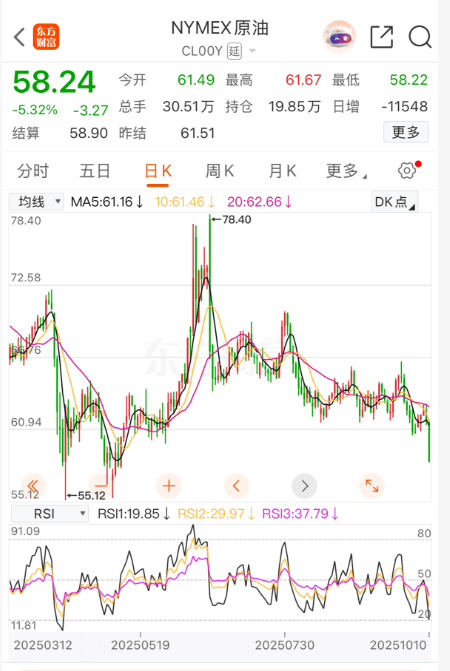
Core Viewpoint - The oil prices are set to decrease in October following a significant drop in international oil prices, with domestic gasoline and diesel prices expected to be lowered by approximately 75 yuan per ton, translating to a reduction of around 0.07 yuan per liter [1][2] Group 1: Oil Price Adjustments - The first oil price adjustment in October is anticipated to result in a decrease after two previous months of price stability [1] - As of October 11, the average price of reference crude oil was $64.30 per barrel, with a change rate of -1.37% [1] - The international oil prices experienced a sharp decline on October 10, with New York crude futures dropping 5.32% to $58.24 per barrel, marking a five-month low [1] Group 2: Factors Influencing Oil Prices - The decline in oil prices is attributed to several factors, including threats from the U.S. President to raise tariffs, which heightened concerns over worsening international trade tensions [2] - OPEC has been increasing supply to the market over the past few months, altering the supply-demand dynamics [2] - A significant shift in the Middle East situation, particularly the ceasefire agreement between Israel and Hamas, is expected to reduce geopolitical risk premiums and improve oil supply expectations [2] Group 3: Domestic Oil Price Trends - Since the last domestic oil price adjustment on August 26, there have been no changes for over a month and a half, with two adjustments postponed [2] - Year-to-date, domestic oil prices have experienced "six increases, seven decreases, and six suspensions," resulting in a net effect where the price of 92-octane gasoline in Zhejiang Province has decreased by 0.32 yuan per liter [2]
油价调整通知
中国能源报· 2025-10-12 11:42
Core Viewpoint - The article discusses the upcoming adjustment of oil prices in October, indicating a shift from previous stability to a decrease in prices due to recent market conditions and geopolitical factors [1][4]. Price Adjustment Summary - The first oil price adjustment for October is set for October 13, with a projected decrease of 75 yuan per ton for gasoline and diesel, translating to a reduction of approximately 0.07 yuan per liter [1]. - As of October 11, the average price of reference crude oil was 64.30 USD per barrel, with a change rate of -1.37% [1]. - The international oil prices experienced significant drops on October 10, with New York crude futures falling by 5.32% to 58.24 USD per barrel, marking a five-month low, and Brent crude futures dropping by 4.8% to 62.09 USD per barrel [1][4]. Market Influences - The decline in oil prices is attributed to several factors, including threats from the U.S. President to raise tariffs, ongoing increases in supply from OPEC, and a de-escalation of geopolitical tensions in the Middle East following a ceasefire agreement between Israel and Hamas [4]. - Domestic oil prices have not been adjusted since August 26, with two previous adjustments being suspended, leading to a total of six increases, seven decreases, and six suspensions in price changes this year [4].


油价连续2次搁浅调整,明天或将迎来下调
Sou Hu Cai Jing· 2025-10-12 07:39
Core Viewpoint - The oil prices are set to decrease in October following a significant drop in international oil prices, marking a shift from previous stability in September [1][4]. Group 1: Oil Price Trends - On October 10, international oil prices experienced a sharp decline, with New York crude futures falling by 5.32% to $58.24 per barrel, the lowest in five months, and Brent crude futures dropping by 4.8% to $62.09 per barrel [1][4]. - Year-to-date, New York crude futures have decreased by 18.8%, while Brent crude futures have fallen by 16.81% [1][4]. Group 2: Factors Influencing Oil Prices - The decline in oil prices is attributed to several factors, including threats from the U.S. President to significantly increase tariffs, raising concerns about worsening international trade tensions [4]. - Additionally, OPEC has been increasing supply to the market, altering the supply-demand dynamics [4]. - A significant geopolitical shift in the Middle East, particularly the ceasefire agreement between Israel and Hamas, is expected to reduce geopolitical risk premiums and improve oil supply expectations [4]. Group 3: Domestic Oil Price Adjustments - Since the last domestic oil price adjustment on August 26, there have been no changes for over a month, with two adjustments being shelved during this period [4]. - Domestic oil prices have experienced "six increases, seven decreases, and six suspensions" this year, resulting in a net effect where the price of 92-octane gasoline in Zhejiang Province has decreased by 0.32 yuan per liter [4].
金价、油价,都跌了
Sou Hu Cai Jing· 2025-10-10 05:46
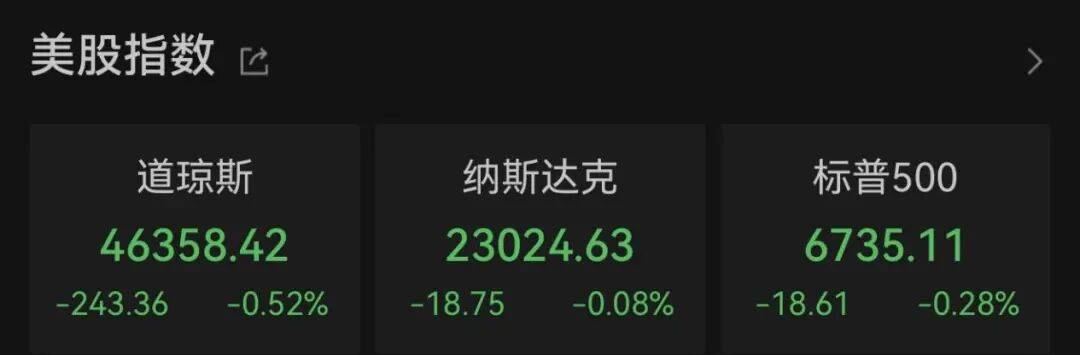
Company Performance - PepsiCo and Delta Air Lines reported their Q3 earnings for FY2025, with both companies exceeding revenue and earnings per share expectations, leading to stock price increases of over 4% on Thursday [3] - Delta Air Lines experienced significant revenue growth and anticipates a notable improvement in revenue outlook [3] - Ferrari's stock plummeted by 15.41% after the company announced a long-term net revenue target for 2030 that fell short of expectations, alongside a slow pace in its electrification strategy [3] Market Reactions - The Dow Jones Industrial Average fell by 0.52%, the S&P 500 decreased by 0.28%, and the Nasdaq Composite saw a slight decline of 0.08% as investors took profits following recent record highs [1] - European stock indices showed mixed results, with the UK market down by 0.41%, France down by 0.23%, and Germany slightly up by 0.06% [6] - HSBC announced a significant premium acquisition of all remaining shares from minority shareholders of Hang Seng Bank, resulting in a 5.39% drop in HSBC's stock price, impacting the European banking sector [3] Commodity Prices - International oil prices fell, with light crude oil futures for November settling at $61.51 per barrel, down 1.66%, and Brent crude for December at $65.22 per barrel, down 1.55% [6] - Gold prices also declined, with December gold futures closing at $3972.6 per ounce, a drop of 2.41%, as geopolitical tensions eased and the US dollar strengthened [6]
广发期货《能源化工》日报-20250924
Guang Fa Qi Huo· 2025-09-24 06:12
Report Industry Investment Ratings No relevant content provided. Core Views Polyolefin - LLDPE and PP: Recently, PP production has declined due to significant losses in PDH and externally - sourced propylene routes, leading to increased unplanned maintenance and decreased inventory. PE maintenance has reached a peak, and the start - up rate is gradually rising. This week, the inventory of the upper and middle reaches has decreased, and there are more import offers from North America. Currently, there is a large inventory accumulation pressure on the 01 contract, which limits the upside space [2]. Methanol - The market is trading high inventory and fast loading in Iran. Coastal inventory has reached a record high, market sentiment has deteriorated, prices have weakened, and the basis has slightly weakened. In terms of supply and demand, inland supply is at a high level year - on - year. Although unplanned maintenance has increased recently, some devices are expected to resume production in mid - September. The inland inventory pattern is relatively healthy, which supports prices. On the demand side, affected by the off - season of traditional downstream industries, demand is weak. Port arrivals are still high, inventory accumulation is significant, and trading has weakened. In terms of valuation, upstream profits are neutral, MTO profits are strengthening, and traditional downstream profits are slightly strengthening, with the overall valuation being neutral. The port is continuously accumulating inventory significantly, and the import volume in September remains high. The futures price fluctuates between trading the current high inventory and weak basis and the expected overseas gas restriction in the distant future. Attention should be paid to the inventory inflection point [5]. Pure Benzene and Styrene - Pure Benzene: Recently, some pure benzene devices have restarted or produced products, and some maintenance plans have been postponed, so the supply is expected to remain at a relatively high level. On the demand side, most downstream products of pure benzene are still in a loss state, and some second - tier downstream products have high inventory. In September and October, both planned and unplanned production cuts in downstream styrene devices have reduced the demand support. The supply - demand expectation for pure benzene in September is still relatively loose, and the price driving force is weak. In the short term, the price is affected by geopolitical and macro - factors. - Styrene: Driven by the peak - season demand and pre - National - Day stocking of some factories, the overall demand for styrene downstream is okay, but the increase is limited. On the supply side, under the pressure of inventory and industry profits, more devices have shut down or reduced production. Some devices have reduced production due to accidents, and the export expectation of styrene has increased due to overseas device maintenance, so the supply is expected to decrease. Port inventory has accumulated, which may put pressure on the styrene price. In the short term, styrene may be affected by the oil price, geopolitical situation, and the alleviation of concerns about marginal supply increase [10]. Crude Oil - Overnight oil prices rose. The main trading logic is that the market's concerns about the current supply surplus have eased, and the geopolitical risk premium has resurfaced. Specifically, the oil export agreement of the Iraqi Kurds has reached a deadlock, eliminating about 230,000 barrels per day of new supply, which is the key trigger for the rebound after the previous continuous decline in oil prices and also provides support for the near - month spread. At the same time, Ukraine's attack on Russian refineries and the tough stance of NATO have magnified the supply interruption risk of refined oil products, pushed up the cracking spread, and affected the oil price from the sentiment and cost aspects. Overall, although the IEA report and other macro - factors still point to a supply surplus, in the short term, geopolitical factors have become the main pricing factor in the market, temporarily overriding the bearish expectation of potential inventory increase. In the short term, oil prices are expected to move within a range. It is recommended to mainly conduct high - selling and low - buying operations, with the operating range of WTI at [60, 66], Brent at [64, 69], and SC at [471, 502]. For options, wait for opportunities to widen the spread after the volatility increases [21][22]. Urea - The urea futures price has been weakly oscillating recently. The main logic is sufficient supply and insufficient demand support. Specifically, the daily industry output remains at a high level of over 200,000 tons, and new production capacity is about to be released, increasing the supply pressure. At the same time, agricultural demand has entered the off - season, and industrial demand has weakened due to the decline in the compound fertilizer start - up rate. Although there are some export port - collection orders, the overall impact is limited. The lack of market confidence and continuous inventory accumulation further suppress the futures price, and there is a lack of substantial positive driving factors [25]. PX, PTA, Ethylene Glycol, Short - fiber, and Bottle - chip - PX: Recently, the short - process capacity utilization at home and abroad has increased, and the maintenance of some domestic PX devices has been postponed. In addition, multiple PTA devices have maintenance plans. The supply - demand expectation for PX in the fourth quarter is further weakened. However, it may be supported by oil prices in the short term. - PTA: Due to the continuously low processing fees of PTA, the commissioning of new PTA devices has been postponed, and multiple PTA devices have maintenance plans. The spot basis has been continuously weak. In terms of absolute price, it is affected by the situation in Ukraine's attack on Russian oil facilities. - Ethylene Glycol: The supply - demand situation is gradually weakening. In the short term, the import expectation in September is not high, and the basis is oscillating at a high level. In the long term, the supply - demand expectation for ethylene glycol in the fourth quarter is weak, mainly due to the start - up of new devices and the seasonal decline in demand in the fourth quarter, and ethylene glycol will enter an inventory accumulation cycle. - Short - fiber: The short - term supply - demand pattern is weak. Recently, the short - fiber supply has remained at a high level. On the demand side, although it is the peak season, new orders are limited, and the peak season this year is not very prosperous. The short - fiber price has support at the low level, and the processing fee oscillates between 800 - 1100, with limited upward and downward driving forces. - Bottle - chip: Recently, some bottle - chip devices have restarted while some have shut down, and the overall production reduction intensity remains basically unchanged. With the downstream's low - price replenishment demand, the absolute price and processing fee of bottle - chip are supported, and the inventory has decreased. However, the upward space is limited, and attention should be paid to whether the production reduction of bottle - chip devices will further increase and the downstream follow - up situation [28]. Chlor - alkali (Caustic Soda and PVC) - Caustic Soda: The futures price continued to weaken yesterday. This week, the supply has increased, and the start - up rate of sample enterprises has increased. On the downstream side, the continuous decline in domestic and overseas alumina prices has continuously narrowed the profit margin of domestic alumina enterprises, and the support for the spot price is weak. Affected by the decline in the purchase price of the main downstream in Shandong and the cautious downstream purchasing, the inventory in the North China region has increased. In the East China region, the enterprises under maintenance and load - reduction have not resumed, the supply is tight, and the non - aluminum demand has followed up as a rigid demand, so the inventory has decreased. This week, in the Shandong market, due to the approaching National Day holiday, the short - term local caustic soda inventory needs time to be released. With the current high supply and the poor unloading of the main downstream, there is a possibility of further price cuts. It was previously recommended to take short positions, and the short positions can be held. - PVC: The futures price weakened yesterday, and the fundamental supply - demand contradiction is still difficult to resolve. On the supply side, many enterprises will end their maintenance next week, and the production is expected to increase. On the demand side, the start - up rate of downstream products has increased limitedly, and some have completed their inventory replenishment, so they are resistant to high prices and have average purchasing enthusiasm. On the cost side, the price of raw material calcium carbide continues to rise, and the ethylene price remains stable, providing bottom - line support for costs. It is expected that PVC will stop falling and stabilize during the peak season from September to October. Attention should be paid to the downstream demand performance [36]. Summary by Directory Polyolefin - **Prices and Spreads**: On September 23, compared with September 22, L2601 and L2509 closed down 0.35% and 0.50% respectively; PP2601 and PP2509 closed down 0.45% and 0.35% respectively. The spread between L2509 - 2601 decreased by 11.11%, and the spread between PP2509 - 2601 increased by 17.95%. The spot price of East China PP fiber decreased by 0.44%, and the spot price of North China LDPE film decreased by 0.28% [2]. - **Start - up Rates**: The PE device start - up rate increased by 2.97% to 80.4%, and the downstream weighted start - up rate increased by 1.78% to 42.9%. The PP device start - up rate decreased by 2.5% to 74.9%, the PP powder start - up rate increased by 4.1% to 37.5%, and the downstream weighted start - up rate increased by 1.2% to 51.5% [2]. - **Inventory**: PE enterprise inventory increased by 5.57% to 45.1 (unit not specified), and social inventory decreased by 2.45% to 54.7 million tons. PP enterprise inventory increased by 8.06% to 58.2 (unit not specified), and trader inventory increased by 14.74% to 19.3 million tons [2]. Methanol - **Prices and Spreads**: On September 23, compared with September 22, MA2601 closed down 0.21%, MA2509 closed up 0.17%, the MA91 spread increased by 60.00%, the太仓 basis decreased by 16.37%, the spot price of Inner Mongolia's northern line increased by 0.73%, the spot price of Luoyang, Henan decreased by 0.22%, and the spot price of Taicang port decreased by 0.44% [4]. - **Inventory**: Methanol enterprise inventory decreased by 0.61% to 34.048%, port inventory increased by 0.48% to 155.8 million tons, and social inventory increased by 0.28% to 189.8% [4]. - **Start - up Rates**: The upstream domestic enterprise start - up rate decreased by 0.12% to 72.66%, the overseas enterprise start - up rate in Shanghai decreased by 4.94% to 68.6%, the northwest enterprise sales - to - production ratio increased by 13.46% to 116%, the downstream acetic acid start - up rate decreased by 3.41% to 82.3%, and the downstream MTBE start - up rate increased by 1.37% to 63.8% [4][5]. Pure Benzene and Styrene - **Upstream Prices and Spreads**: On September 23, compared with September 22, Brent crude oil (November) increased by 1.6% to 67.63 dollars/barrel, WTI crude oil (October) increased by 1.2% to 63.41 dollars/barrel, CFR Japan naphtha increased by 0.4% to 596 dollars/ton, CFR Northeast Asia ethylene remained unchanged at 845 dollars/ton, CFR China pure benzene decreased by 0.7% to 723 dollars/ton, the spread between pure benzene and naphtha decreased by 5.6% to 125 dollars/ton, and the spread between ethylene and naphtha decreased by 1.0% to 247 dollars/ton [9]. - **Styrene - related Prices and Spreads**: The spot price of styrene in East China decreased by 1.0% to 6860 dollars/ton, EB2511 futures decreased by 0.8% to 6870 dollars/ton, the EB basis (10) increased by 33.3% to 24 dollars/ton, the EB10 - EB11 spread decreased by 112.5% to - 34 dollars/ton, the EB cash flow (non - integrated) decreased by 20.3% to - 337 dollars/ton, and the EB cash flow (integrated) decreased by 19.0% to - 552 dollars/ton [9]. - **Downstream Cash Flows**: The cash flow of phenol decreased by 7.6% to - 272 dollars/ton, the cash flow of caprolactam (single product) decreased by 4.7% to - 1885 dollars/ton, the cash flow of aniline increased by 14.0% to 514 dollars/ton, the EPS cash flow decreased by 13.6% to 190 dollars/ton, the PS cash flow decreased by 100.0% to - 60 dollars/ton, and the ABS cash flow increased by 247.8% to 34 dollars/ton [10]. - **Inventory**: The pure benzene inventory in Jiangsu ports decreased by 20.1% to 10.70 million tons, and the styrene inventory in Jiangsu ports increased by 17.3% to 18.65 million tons [10]. - **Industrial Chain Start - up Rates**: The domestic pure benzene start - up rate decreased by 1.2% to 78.4%, the domestic hydro - benzene start - up rate increased by 9.1% to 59.6%, the phenol start - up rate increased by 3.0% to 71.0%, the caprolactam start - up rate increased by 2.8% to 88.7%, the aniline start - up rate increased by 9.9% to 72.0%, the styrene start - up rate decreased by 2.1% to 73.4%, the downstream PS start - up rate decreased by 1.1% to 61.2%, the downstream EPS start - up rate increased by 1.2% to 61.7%, and the downstream ABS start - up rate decreased by 0.3% to 69.8% [10]. Crude Oil - **Prices and Spreads**: On September 24, compared with September 23, Brent crude oil increased by 1.59% to 67.63 dollars/barrel, WTI crude oil increased by 0.54% to 63.75 dollars/barrel, SC crude oil decreased by 1.55% to 483.60 dollars/barrel. The Brent M1 - M3 spread decreased by 33.82% to 1.37 dollars, the WTI M1 - M3 spread decreased by 49.65% to 0.72 dollars, and the SC M1 - M3 spread decreased by 33.33% to 1.80 dollars [21]. - **Refined Oil Prices and Spreads**: NYM RBOB increased by 0.46% to 200.82 dollars, NYM ULSD increased by 0.85% to 234.78 dollars, ICE Gasoil increased by 2.43% to 705.75 dollars, the RBOB M1 - M3 spread decreased by 27.94% to 7.61 dollars, the ULSD M1 - M3 spread decreased by 130.40% to - 0.76 dollars, and the Gasoil M1 - M3 spread decreased by 44.95% to 15.00 dollars [21]. - **Refined Oil Cracking Spreads**: The cracking spread of US gasoline increased by 1.10% to 20.59 dollars/barrel, the cracking spread of European gasoline increased by 1.15% to 18.86 dollars/barrel, the cracking spread of Singapore gasoline increased by 6.11% to 11.12 dollars/barrel, the cracking spread of US diesel increased by 0.14% to 33.19 dollars/barrel, the cracking spread of Singapore diesel increased by 0.86% to 18.74 dollars/barrel, the cracking spread of US jet fuel decreased by 8.80% to 24.13 dollars/barrel, and the cracking spread of Singapore jet fuel increased by 0.85% to 17.74 dollars/barrel [21]. Urea - **Prices**: The synthetic ammonia (Shandong) price increased by 0.91% to 2220 dollars/ton. The spot prices of small - particle urea in Shandong, Shanxi, and Guangdong decreased by 0.62%, 0.67%, and 0.56% respectively [25]. - **Spreads**: The Shandong - Henan spread decreased by 10 dollars to - 10 dollars/ton, the Guangdong - Henan spread decreased by 6% to 160 dollars/ton, the Shandong basis decreased by 20.00% to - 48 dollars/ton [25]. - **Downstream Products**: The prices of melamine (Shandong), compound fertilizer
邓正红能源软实力:地缘风险溢价推高国际油价 金融制裁正重塑石油市场新逻辑
Sou Hu Cai Jing· 2025-09-13 03:56
Core Insights - The article discusses the impact of Ukraine's drone attacks on Russian oil ports and the geopolitical risks that are driving up oil prices, with a premium of $7 to $9 per barrel attributed to market perceptions of energy power redistribution [1][3]. Group 1: Oil Price Dynamics - The drone attacks have increased the risk of disruptions to Russian oil supply, countering pressures from oversupply and weak U.S. demand, leading to a rise in oil prices [1][2]. - As of September 12, 2023, WTI crude oil settled at $62.69 per barrel, up $0.32 (0.51%), while Brent crude oil settled at $66.99 per barrel, up $0.62 (0.93%) [1][2]. Group 2: Geopolitical Tensions - Peace negotiations between Russia and Ukraine have been paused, with significant disagreements remaining, which may lead to further Western sanctions against Russia [2]. - The drone strike on the Primorsk port, a major oil export terminal, has halted oil loading operations, raising concerns about a potential supply gap of 1 million barrels per day [2][3]. Group 3: Market Reactions and Predictions - The market anticipates that strong sanctions could overshadow potential oversupply, with the U.S. Treasury suggesting tariffs on countries purchasing Russian oil [2][3]. - The geopolitical risk premium is reflected in the current oil pricing, with a geopolitical conflict index value of 3.2, indicating a theoretical price premium of 32% [4]. Group 4: Strategic Responses - Russia is reducing its ESPO blend oil loading from 4.2 million tons in August to 4 million tons in September, a decrease of 4.8%, as part of a strategy to maintain price stability [2][4]. - The Russian Central Bank's SPFS settlement system now handles 46% of energy trade, partially mitigating the impact of SWIFT sanctions, which has reduced the effectiveness of Western financial sanctions by approximately 17 percentage points [4].