收益率曲线

Search documents
全线反弹
Wind万得· 2025-05-12 22:35
Core Viewpoint - The U.S. stock market experienced a strong rebound, with major indices posting their best single-day performance in nearly a month, attributed to positive developments in international trade negotiations and reduced fears of a global economic recession [1][7]. Market Performance - The Dow Jones Industrial Average surged by 1,160.72 points, or 2.81%, closing at 42,410.10 points [2] - The S&P 500 index rose by 3.26%, closing at 5,844.19 points, with a cumulative rebound of over 20% since mid-April [1][2] - The Nasdaq Composite Index showed the strongest performance, increasing by 4.35% to 18,708.34 points [1][2] Sector Performance - Technology stocks led the market rally, particularly those closely linked to global manufacturing and supply chains, with electric vehicle leaders rising nearly 7% [6] - A major consumer electronics company and an AI chip giant recorded gains of 6% and 5%, respectively [6] - Retail and hardware companies, reliant on overseas procurement and sales channels, also saw significant rebounds, with a major electronics retailer and a large PC manufacturer rising nearly 8% [6] Trade Negotiations Impact - The recent trade negotiations between the U.S. and China resulted in a "temporary" reduction in tariffs, interpreted as a significant positive development for the market [5][12] - The U.S. committed to canceling 91% of tariffs on Chinese goods and modifying 34% of reciprocal tariffs, while China reciprocated with similar reductions [12] Economic Outlook - The progress in trade negotiations has significantly lowered recession expectations, prompting funds previously in risk-averse positions to flow back into risk assets [7] - U.S. Treasury yields rose as the market became less eager for short-term interest rate cuts [7] Investor Sentiment - The market's positive reaction was driven by tariff adjustments that exceeded market expectations, leading to a rapid recovery in risk appetite [6] - Defensive sectors, such as beverages, tobacco, and telecommunications, experienced declines as riskier assets gained favor [8] Future Considerations - Ongoing trade negotiations will remain a key variable influencing market dynamics in the coming weeks, with uncertainty still present regarding the durability of any agreements reached [8] - Analysts suggest that recent trade developments could provide support for mid-term market trends [8]


固收 “双降”后的债市行情怎么看?
2025-05-12 15:16
双降之后,债市行情从短端开始修复,收益率曲线进入兑现阶段。长端调整幅 度较大,主要受协议签订后整体风险偏好显著修复的影响。从宏观角度看,债 市逻辑变化较大。4 月份外部冲击明显加强导致收益率下行约十个 BP 左右。5 月初降息落地后政策利率调降十个 BP,对长端定价有同等幅度的估值下行。然 而协议达成超预期,中间有三个月缓冲期,这期间可能出现强劲出口变化、国 内需求端边际强化及价格端变化,带来短期宏观趋势逻辑明显变化。 摘要 • 政策利率下调 10BP 后,长端利率面临不确定性,三个月缓冲期内出口、 需求和价格可能出现变化,导致长端利率近期或维持震荡调整,难以找到 明确主线。 • 期限利差压缩至 20BP 以下,表明长端行情变动可能性小,应关注短端修 复。降准及货币政策组合拳使得流动性乐观,资金价格中枢预计移至 1.4- 1.5 附近,或阶段性突破 1.4。 • 大规模结构性货币政策(如再贷款)超预期,央行或迎来中长期流动性投 放高峰,资金价格可能向下偏离政策利率,类似于 2020 年以来的超常规 宽松。 • 存款利率调降对银行流动性有影响,但受结构性货币政策支撑,当前流动 性略偏松。银行投放高峰期,新价格证 ...
每日机构分析:5月12日
Xin Hua Cai Jing· 2025-05-12 09:43
Group 1: Euro and Currency Analysis - The euro is expected to appreciate in the long term, with analysts suggesting that this structural change may last longer than anticipated [1] - Deutsche Bank has revised its forecast for the euro to rise to 1.20 against the dollar by December and further to 1.30 by the end of 2027 [1] Group 2: Japanese Investment Trends - In April, Japanese pension funds purchased a record amount of foreign stocks, totaling 2.76 trillion yen (approximately 189 billion USD) [2] - Japanese investors net bought 2.12 trillion yen of U.S. stocks in March, marking the highest level since 2005 [2] Group 3: U.S. Treasury Yield Outlook - Goldman Sachs maintains a core view that short-term U.S. Treasury yields will decline, but warns of potential upward pressure on yields if economic data does not support rate cut expectations [2] - Citigroup suggests that the recent rise in global short-term bond yields may be losing momentum, with several factors potentially hindering the bond market [2] Group 4: Gold Price Forecast - JPMorgan predicts that gold prices could reach 6,000 USD per ounce by 2029, representing an 80% increase from current levels of approximately 3,300 USD [3] - The forecast is driven by a combination of U.S. policy changes leading to asset reallocations towards gold and limited increases in gold supply [3] Group 5: India-Pakistan Market Dynamics - The recent ceasefire agreement between India and Pakistan is viewed positively, with expectations of a rebound in risk assets for both countries [3] - A technical analysis indicates that if the USD/INR exchange rate breaks below the 200-day moving average support level of approximately 85.03, it would signal a positive trend [3]

信用债久期策略:信用债拉久期吗?
SINOLINK SECURITIES· 2025-05-12 04:35
Group 1: Monetary Policy Impact - The central bank unexpectedly advanced the timing of interest rate cuts and reserve requirement ratio reductions, implementing a package of ten monetary policy measures to address global economic uncertainties and trade tensions[12] - The 7-day reverse repurchase rate was lowered by 10 basis points to 1.4%, contributing to a decline in short-term bond yields[12] - The yield on 1-year government bonds has dropped to 1.4%, while the 10-year government bond yield stabilized around 1.63%[12] Group 2: Market Behavior and Trends - Despite a significant decline in yields, buying interest in medium and short-term bonds remains restrained, with trading volumes not reflecting the expected demand[15] - The proportion of credit bonds yielding below 2.2% has risen to 77%, indicating a lack of attractive investment opportunities in the current market[36] - The trading volume of 3-year and shorter credit bonds has decreased, with a notable drop in weekly turnover rates[23] Group 3: Investment Strategies - Investors are advised to focus on 2-year credit bonds, particularly high-quality city investment bonds rated AA(2), to ensure a balanced yield amidst market volatility[50] - The strategy of extending duration in credit bonds is limited due to low yields and the risk of capital loss, with many investors preferring to maintain short-duration positions[6] - The yield on 4 to 5-year secondary capital bonds has fallen below the upper limit of 10-year government bonds plus 30 basis points, raising concerns about low risk-reward ratios[49]
兴业证券:25Q1货政报告显示央行“缰绳”已在松开过程中 收益率曲线下行空间或将打开
智通财经网· 2025-05-11 00:05
Core Viewpoint - The central bank's monetary policy focus has shifted towards stabilizing growth, reducing the likelihood of significant adjustments in the bond market similar to Q1 2025, while presenting opportunities for capital gains in the bond market [1] Group 1: Monetary Policy Changes - The Q1 2025 monetary policy report shows minimal changes in wording compared to Q4 2024, but clear shifts in the central bank's stance are evident [1] - The main narrative for the bond market moving forward is expected to be "increased external pressure → prioritization of stable growth → reduction in money market and deposit rates → downward shift in bond yield curve" [1] - Two significant changes in monetary policy tools were noted: the suspension of government bond purchases on January 10 and the modification of MLF operations on March 24 to fixed quantity, interest rate bidding, and multi-price bidding [1][2] Group 2: Government Bond Operations - The central bank's suspension of government bond purchases is described as "temporary," with plans to resume based on market supply and demand conditions [2] - This suspension reduces the interest rate risk associated with holding government bonds, suggesting a likelihood of resuming purchases if rates rise significantly for macroprudential reasons [2] Group 3: MLF Operation Reform - The central bank has clarified that MLF will transition from a policy interest rate tool back to a liquidity provision tool [3] - The recent announcement on May 7 regarding reserve requirement ratio cuts and new structural tools indicates a shift towards a more accommodative monetary policy stance [3] Group 4: Insights from the Q1 2025 Monetary Policy Report - The Q1 2025 report introduced six sections instead of the usual four, providing additional insights into policy assessments [4] - Section 4 emphasizes the need for improved management of interest rate risks for investors, indicating significant macroprudential influences on monetary policy execution and bond market operations [4] - Section 5 highlights that China's government debt is supported by assets, suggesting substantial room for fiscal policy expansion, with monetary policy actively complementing fiscal measures [4] - Section 6 addresses the imbalance between strong supply and weak demand in the real economy, indicating that future monetary policy will likely focus on boosting effective demand, particularly in consumer spending and service sectors [4]

深度|木头姐:从滚动衰退到牛市?以AI为核心的技术发展已进入黄金时期,市场或进入超预期增长与低通胀并存的新常态
Sou Hu Cai Jing· 2025-05-10 05:38
Group 1 - The article discusses the phenomenon of "rolling recession," highlighting that the labor market is experiencing a "hoarding" effect where companies are reluctant to lay off employees until profits are significantly impacted [1] - It emphasizes that the labor shortage post-pandemic has led to cautious hiring practices among companies, and if predictions about deflation hold true, profit margins will narrow, accelerating the trend of capital replacing labor [1] - The article expresses optimism about the future market trajectory, suggesting that it is gradually overcoming three major pressures: interest rates, market concentration, and valuation issues, which could provide potential upside space for unexpected events [2][79] Group 2 - The article notes that despite fears surrounding automation and AI leading to job losses, historically, technological advancements have created more job opportunities in the long run [2] - It highlights that the government sector is experiencing a decline for the first time in 30 years, which could impact overall economic growth and employment [2][9] - The article presents a view that significant innovations will expand and achieve over tenfold market value growth in the next five years, contrasting with limited growth in traditional market sectors [2][56] Group 3 - The article discusses the impact of rising interest rates on various sectors, indicating that housing sales have dropped by 39% from peak to trough and have not yet recovered [18] - It mentions that the automotive market is also facing challenges, with sales expected to decline to between 14 million and 15 million units due to ongoing tariff policies and economic uncertainty [20] - The manufacturing sector is reported to be in a recession, with a diffusion index indicating continuous contraction since the significant interest rate hikes [23] Group 4 - The article highlights a significant drop in small business optimism, with the index falling to levels lower than during the pandemic, primarily due to tightening credit conditions and policy uncertainties [29] - It points out that consumer confidence has simultaneously declined across all income levels, with low-income consumers experiencing the most significant drop, even below levels seen during the 2008-2009 financial crisis [33] - The article indicates that the yield curve is currently in a negative state, which historically signals impending recessions, and suggests that the economy is in a rolling recession phase [39] Group 5 - The article presents a comparison of real inflation rates with the U.S. CPI, indicating a downward trend in real inflation, which is expected to continue [45] - It discusses the challenges faced by innovative strategies in the market, including rising interest rates and increased market concentration, but suggests that these challenges may soon dissipate [47] - The article concludes with a perspective that the market may enter a new normal with interest rates fluctuating between 2.5% and 5%, accompanied by lower-than-expected inflation levels [59]
深度|木头姐:从滚动衰退到牛市?以AI为核心的技术发展已进入黄金时期,市场或进入超预期增长与低通胀并存的新常态
Z Potentials· 2025-05-10 04:39
Core Viewpoint - The article discusses the phenomenon of "rolling recession" and its implications for the labor market, automation, and economic outlook, emphasizing the cautious hiring practices of companies and the potential for increased automation to replace labor as profit margins shrink [2][11][20]. Group 1: Labor Market and Employment - The labor shortage post-pandemic has led companies to be more cautious in hiring, resulting in a phenomenon of labor "hoarding" [2]. - Companies are unlikely to lay off workers until their profits are significantly impacted, which is already occurring for some [2]. - The article suggests that if deflation becomes a significant theme, companies will accelerate the trend of replacing labor with capital [2]. Group 2: Automation and AI - The article addresses fears surrounding automation and AI, noting that while some jobs may be replaced in the short term, historically, technological advancements have created more jobs in the long run [3]. - The example of agricultural automation is cited, where initial job displacement was followed by increased productivity and job creation [3]. Group 3: Economic Outlook and Taxation - The article presents a perspective on tax policy through the lens of the Laffer Curve, suggesting that optimal tax rates can maximize government revenue [8][9]. - It highlights that despite discussions of recession, sectors like high-end consumption and government spending, which have supported economic growth, are now showing signs of decline [8][11]. - The article expresses optimism about the market's future, suggesting it is gradually overcoming pressures from interest rates, market concentration, and valuation issues [8][11]. Group 4: Rolling Recession and Monetary Policy - The article defines "rolling recession" and discusses its current state, indicating that real GDP has begun to decline, with negative growth reported in the first quarter [11][20]. - It notes that the Federal Reserve's aggressive interest rate hikes have led to stagnation in housing sales and manufacturing, contributing to the recession [21][27]. - The article emphasizes that consumer confidence has plummeted across all income levels, with low-income consumers particularly affected [38][39]. Group 5: Market Dynamics and Future Trends - The article predicts that truly disruptive innovations will see significant market value growth over the next five years, while traditional market segments may experience limited growth [8][61]. - It discusses the potential for a new market environment characterized by fluctuating interest rates and lower-than-expected inflation, drawing parallels to historical economic conditions [64][66]. - The article concludes with a positive outlook for the market, suggesting that it is moving towards a productivity-driven recovery that could end the current rolling recession [8][11].
新债王:美股怎么能不跌?金价会到4000美元
华尔街见闻· 2025-05-08 10:25
Core Viewpoint - The current market uncertainty is primarily driven by economic weakness and rising long-term interest rates, alongside increasing unemployment and abnormal yield curve changes [1][2][4]. Economic Indicators - Unemployment rates are rising and are above both the 36-month and 12-month moving averages, which typically indicate a recession [2][4]. - Long-term U.S. Treasury yields are increasing despite economic weakness, with daily interest payments on debt reaching $4 billion [2][11]. - The yield curve, specifically the 2-year to 10-year spread, has been inverted for a long time but has recently turned positive, which usually signals economic issues [4][10]. Investment Insights - Investors are favoring more liquid assets over long-term bonds, anticipating a steepening yield curve [5][11]. - The demand for gold is increasing due to concerns over geopolitical instability, tariffs, and existing massive debt, positioning gold as a true monetary asset [6][12]. - Gundlach predicts that gold prices could rise to $4,000, indicating a long-term bullish trend [7][8][12]. Market Predictions - The S&P 500 index is expected to have significant downside potential, with a support level projected around 4,600 points [3][8][13]. - The spread between low-quality junk bonds (CCC-rated) and higher-rated bonds (BB-rated) has widened significantly, exceeding the 200-day moving average, which is a negative signal for the market [4][11].

新债王:美股怎么能不跌?金价会到4000美元
Hua Er Jie Jian Wen· 2025-05-08 06:38
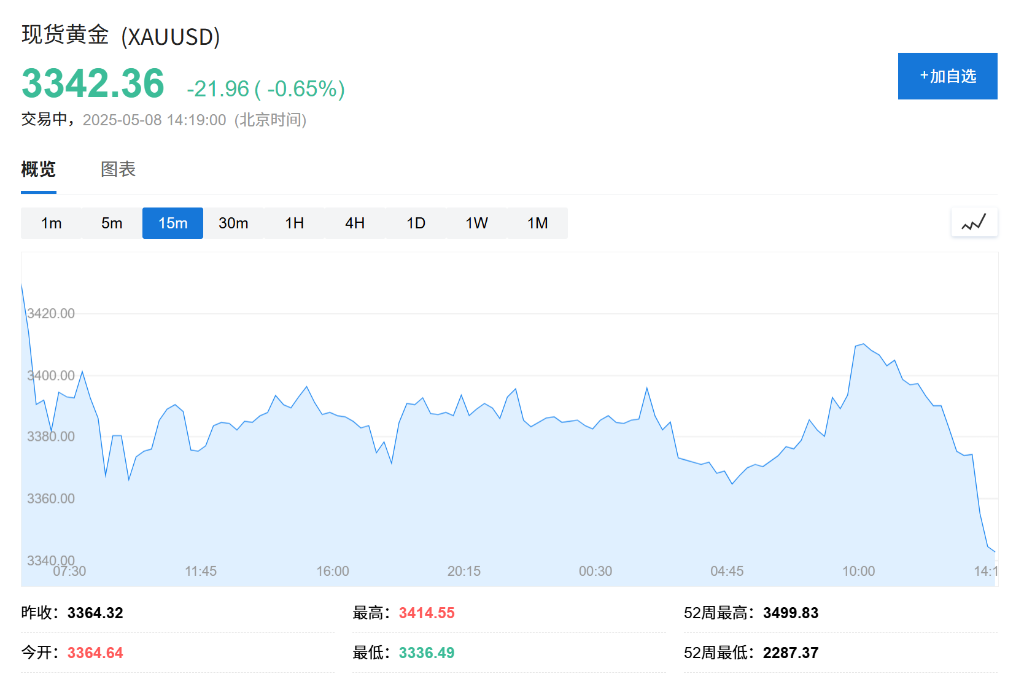
Group 1 - Jeffrey Gundlach expresses concerns about market uncertainty due to economic weakness and rising long-term interest rates, alongside increasing unemployment rates [1][2][6] - Unemployment rates are above both the 36-month and 12-month moving averages, which typically indicate a recession [2][6] - Long-term U.S. Treasury yields are rising despite economic weakness, with daily interest payments on debt reaching $4 billion [1][7] Group 2 - Gundlach predicts that gold could rise to $4,000, driven by geopolitical tensions, tariffs, and existing high debt levels, viewing gold as a true monetary asset [1][2][10] - The current spot price of gold is approximately $3,342.36 per ounce, indicating a potential increase of 19.68% to reach Gundlach's target [2] - The S&P 500 index support level is projected to drop from 5,600 to around 4,600, suggesting significant downside potential [1][5][11] Group 3 - The yield spread between low-quality junk bonds (CCC-rated) and higher-rated bonds (BB-rated) has widened beyond its 200-day moving average, signaling potential economic issues [2][8] - Investors are favoring more liquid assets over long-term bonds, anticipating a steepening yield curve [2][8] - The market is currently characterized as risk-averse, with gold showing stability amidst volatility in risk assets and some bond markets [9]
对冲基金开出天价薪资“抢人才”,日元利率交易将有大行情?
智通财经网· 2025-05-08 02:18
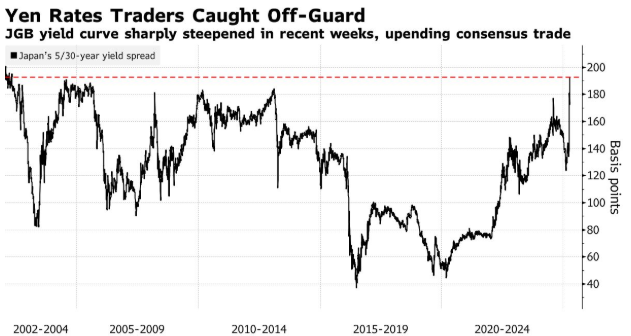
Core Insights - The demand for skilled yen currency traders has surged due to significant market volatility, prompting banks and hedge funds to aggressively recruit experienced professionals [1][6] - Major financial institutions are offering lucrative compensation packages, with some traders receiving bonuses upwards of $30 million to join new firms [1][3] - The recent hiring spree builds on a trend that began before the Bank of Japan started raising interest rates last year, indicating a sustained interest in yen trading expertise [1][3] Group 1: Market Dynamics - The yen currency market has experienced its largest fluctuations in years, leading to widespread losses among market participants [1][6] - As of mid-March, market participants were betting on a flattening yield curve due to continued interest rate hikes by the Bank of Japan, but recent developments have caused the curve to steepen dramatically [6][10] - The yield premium between Japan's 30-year and 5-year government bonds has reached its highest level since May 2002, reflecting increased investor caution [6] Group 2: Talent Acquisition - Hedge funds are actively seeking to hire traders who were displaced during the market turmoil in August, indicating a willingness to give second chances to experienced professionals [4] - Notable recent hires include Masahiko Maihara from Deutsche Bank to Capula Investment and Shumei Kameyama from Barclays to Dymon Asia Capital, both firms with extensive experience in yen-related derivatives [3] - The competition for talent is so intense that some firms are willing to pay significant sums to attract top traders, highlighting the scarcity of qualified candidates in the market [1][3] Group 3: Future Outlook - There are indications that further market turbulence may occur, particularly due to uncertainties surrounding U.S. tariff policies and potential capital flows into Japan [9] - Increased long-term bond yields are expected to drive Japanese investors, such as life insurance companies and pension funds, to consider domestic bonds over U.S. options [10] - The ongoing geopolitical dynamics and inflationary pressures are likely to create more trading opportunities in the Japanese market, as noted by industry experts [10]