
超长期特别国债

Search documents
以旧换新与国补资金使用进展:政策托底下的社零观察
Ge Long Hui· 2025-09-24 00:27
Core Insights - The article discusses the implementation of China's fiscal policy through the issuance of long-term special bonds to support the "old-for-new" policy, which aims to stimulate consumption and upgrade consumer goods [1][6] Special Bonds and Fund Allocation - In 2025, the government plans to issue 1.3 trillion yuan in special long-term bonds, with 300 billion yuan specifically allocated for the "old-for-new" policy [2] - The Ministry of Finance has been distributing funds in batches since the beginning of the year, with a total of 2.3 trillion yuan allocated by the end of Q3, ensuring support for peak consumption periods like "Double 11" and "Double 12" [2] Policy Implementation Status - The rapid consumption of national subsidy funds in the first half of the year led to a surge in the "old-for-new" policy, although some regions faced funding shortages and temporary suspensions [3] - Local governments have implemented measures such as scheduled, limited, and lottery-based distribution to manage fund allocation effectively [3] Structural Effects and Consumption Boost - The scope and standards of the "old-for-new" policy have expanded, now covering 12 categories of household appliances and including digital products like smartphones and tablets [4] - From January to May, retail sales growth was maintained at 5.0%, significantly higher than the same period last year, indicating the rapid and effective transmission of policy stimuli [4] Marginal Effects and Future Outlook - Since June, retail sales growth has slowed due to rapid fund consumption and high base effects from the previous year, with growth rates dropping to 4.8%, 3.7%, and 3.4% from June to August [5] - Despite the diminishing marginal effects of subsidies, retail sales are expected to maintain moderate growth in the second half of the year, supported by the final batch of funds and the year-end consumption peak [5] Summary - The "old-for-new" policy in 2025 has achieved its goals of "funds in place, effects visible, and structural optimization," effectively stimulating durable goods consumption and promoting a shift towards greener and smarter consumption [6] - The sustainability of consumption recovery in the long term will depend on improvements in household income and consumer confidence, indicating that while the subsidy policy provides temporary support, a transition to genuine consumption growth requires stable income and employment [6]
充分释放宏观政策综合效应
Jing Ji Ri Bao· 2025-09-20 22:11
Core Viewpoint - The combination of proactive fiscal policy and moderately loose monetary policy is aimed at enhancing people's livelihoods, promoting consumption, and boosting economic growth, as emphasized in recent central government meetings [1][6]. Fiscal Policy and Investment - As of the end of August, the government has allocated approximately 420 billion yuan, which has driven sales of various goods exceeding 2.9 trillion yuan [2]. - The third batch of 690 billion yuan for consumer goods replacement has been fully allocated, with plans for a fourth batch in October, completing the annual target of 300 billion yuan [2]. - The Ministry of Finance has arranged 1.5 trillion yuan in special long-term bonds over the past two years to support effective investment [2][4]. Monetary Policy and Financial Support - The M2 money supply reached 331.98 trillion yuan by the end of August, with a year-on-year growth of 8.8%, which is 2.5 percentage points higher than the same period last year [5]. - The total social financing increased by 26.56 trillion yuan in the first eight months, which is 4.66 trillion yuan more than the previous year [5]. - Structural monetary policy tools have been implemented to support key areas such as technology innovation, consumption expansion, and small and micro enterprises [6][7]. Economic Outlook - The macroeconomic policies are expected to maintain continuity and stability, with a focus on promoting high-quality economic development and addressing deep-seated issues [6]. - The issuance of special refinancing bonds has provided strong financial support for resolving hidden debts, with 1.9 trillion yuan issued for this purpose by the end of August [5].
2万亿超长期特别国债显效,还本付息责任仍待明确
Di Yi Cai Jing· 2025-09-18 12:42
Core Insights - The issuance of ultra-long special government bonds in China has exceeded 2 trillion yuan, aimed at supporting key national strategies and projects, with a significant impact on expanding domestic demand [2][8] - There is a need for improved management and clarity regarding the repayment responsibilities and funding sources for these bonds, as highlighted in the recent supervisory report [1][4] Group 1: Issuance and Purpose - The ultra-long special government bonds are designed for specific policies and projects, with a total issuance plan of 2.3 trillion yuan, of which 93% has already been issued [2][4] - The bonds are categorized into 20-year, 30-year, and 50-year terms, and are not included in the fiscal deficit, being managed under government fund budgets [2][3] Group 2: Financial Impact and Utilization - As of July 2023, the funds allocated from these bonds have driven sales in various sectors, exceeding 1.7 trillion yuan [3] - The funds are primarily transferred to local governments, with a significant portion of the 2024 issuance allocated for local use [4][6] Group 3: Repayment Responsibilities - The central government is legally responsible for the repayment of these bonds, but the actual economic responsibility may be shared with local governments due to the transfer payment mechanism [5][6] - The report emphasizes the need to clarify the economic responsibilities and funding sources for repayment, suggesting that local governments may not have sufficient motivation to assist in repayment [6][7] Group 4: Recommendations for Improvement - The report recommends enhancing the management of ultra-long special government bonds, including better integration with budgetary investments and clearer repayment mechanisms [7][8] - It suggests that the design of responsibilities and efficiency in fund usage should be reinforced through institutional reforms [7]
财政部:更好发挥超长期特别国债作用,自上而下谋划重大项目
2 1 Shi Ji Jing Ji Bao Dao· 2025-09-16 11:29
Core Viewpoint - The Ministry of Finance plans to issue 1 trillion yuan of ultra-long-term special government bonds in 2024, with specific allocations for infrastructure and equipment upgrades, aimed at supporting economic stability and investment growth [1][2]. Group 1: 2024 Government Bond Issuance - In 2024, China will issue 1 trillion yuan of ultra-long-term special government bonds, with 700 billion yuan allocated for "two heavy" construction projects and 300 billion yuan for "two new" initiatives [1]. - The "two heavy" projects focus on infrastructure such as railways, highways, and agricultural development, while the "two new" initiatives support large-scale equipment updates and consumer goods replacement [1]. Group 2: 2025 Government Bond Issuance - In 2025, the issuance will increase to 1.3 trillion yuan, with 800 billion yuan for "two heavy" projects and 500 billion yuan for "two new" initiatives [1]. - Key areas for the 2025 bonds include ecological restoration, major transportation infrastructure, and urban underground pipeline projects [1]. Group 3: Management and Oversight - The report emphasizes the importance of project management and fund supervision for the ultra-long-term special government bonds, ensuring accountability from project departments [2]. - A market-oriented approach will be adopted for bond issuance, balancing monthly issuance volumes to align with project progress and mitigate market pressure [2]. Group 4: Future Plans - Future efforts will focus on enhancing the role of ultra-long-term special government bonds by improving information sharing and planning for major projects [2]. - There will be a thorough evaluation of the "two new" policy implementation and a commitment to optimize policy arrangements [2].
三部门:利用超长期特别国债支持能源电力设备更新
Zhong Guo Zheng Quan Bao· 2025-09-12 20:20
Core Viewpoint - The "Power Equipment Industry Stabilization Growth Work Plan (2025-2026)" aims to support large-scale equipment updates in the energy sector using special long-term government bonds, guiding the industry towards high-quality development [1][2]. Group 1: Industry Growth Targets - The plan sets a target for traditional power equipment revenue growth to maintain an average annual increase of around 6% from 2025 to 2026, while ensuring stable growth in renewable energy equipment revenue [1]. - It aims to keep the production of power generation equipment within a reasonable range and increase the export volume of renewable energy equipment during the same period [1]. - The plan targets an average annual revenue growth of 7% for national advanced manufacturing clusters in the power equipment sector and around 10% for leading enterprises from 2025 to 2026 [1]. Group 2: Support Measures - The plan outlines four support measures, including organizational support, scheduling analysis, fiscal and tax support, and promotional guidance [2]. - It emphasizes fiscal support through tax incentives for R&D expenses and resource utilization, as well as encouraging financial institutions to provide innovative financial services to eligible power equipment companies [2]. Group 3: Technological and Environmental Initiatives - The plan promotes the integration of new information technologies with power equipment, enhancing the intelligence level of distribution busbars and accelerating the application of "5G + industrial internet" in the sector [2]. - It encourages the recycling of renewable energy equipment and the remanufacturing of high-value products like generators and gearboxes [2]. Group 4: Demand Expansion Strategies - The plan aims to stabilize demand for power equipment by leveraging major energy projects and accelerating the construction of large onshore wind and solar bases [3]. - It promotes the orderly development of offshore wind power and distributed development of wind and solar energy, while also advancing coal power upgrades and the elimination of outdated capacity [3]. - The plan includes the development of hydropower and nuclear power projects, optimizing the national power system design [3].
完整版|2025年超长期特别国债、地方专项债、中央预算内资金对比全解析
Sou Hu Cai Jing· 2025-09-12 12:42
Core Viewpoint - Local government special bonds, ultra-long-term special treasury bonds, and central budgetary funds are the three core funding sources for promoting major projects, each with distinct characteristics and requirements for application and approval processes. Funding Source Comparison Ultra-Long-Term Special Treasury Bonds - Support areas include national strategic directions, regional coordinated development, food production enhancement, technological self-reliance, and ecological safety projects. Specific investment focuses on technology research, green infrastructure, and public welfare systems [1]. Local Government Special Bonds - Key support directions include traditional infrastructure, energy projects, municipal infrastructure, social services, and new infrastructure projects. The core requirement is that projects must generate stable government revenue to cover bond principal and interest, with a coverage ratio of at least 1.2 [2]. Central Budgetary Investment - Focuses on public welfare projects, rural development, major infrastructure, social services, and ecological civilization projects. The requirement is for projects to be purely public welfare with significant social benefits but not necessarily economic returns [3]. Application Requirements and Processes Special Treasury Bonds Application Process - The application process involves several steps, including notification from the state, project selection by provincial departments, preparation of application materials, and approval by national departments. A new feature for 2025 is the establishment of a separate application channel with a "report and review" mechanism [4]. Special Bonds Application Process - Applications are conducted throughout the year with three batch submissions. The process includes project planning, inclusion in national and local project databases, and joint reviews by provincial departments [6]. Central Budgetary Investment Application Process - Applications are typically submitted in two batches each year. The process includes notification from the National Development and Reform Commission, preparation of materials, initial reviews by local departments, and final approval by national authorities. In 2025, an online approval platform will be fully implemented [7]. Application Considerations - Applications for special treasury bonds must align with policy requirements, ensure sufficient preparatory work, and avoid overlap with central budgetary investments [8]. - Projects must be new or under construction, with new projects expected to start by the end of 2025, and existing projects must be nearing completion [9]. - Projects should not include prohibited content such as real estate development or performance projects [10]. - A clear funding plan must be presented to ensure complete funding closure for the project [10]. Successful Case Studies Special Treasury Bonds - A project for high-standard farmland construction received 800 million yuan in special treasury bonds, aligning with national food security strategies [78]. Special Bonds - A smart parking project with a total investment of 500 million yuan successfully issued 300 million yuan in special bonds, demonstrating a clear revenue model [78]. Central Budgetary Investment - A new compulsory education school project received 50 million yuan in central budgetary investment, addressing urgent educational needs [78]. Choosing Funding Channels - Projects with stable revenue should consider special bonds, while those with no revenue but strategic importance should look at special treasury bonds. Purely public welfare projects should apply for budgetary investments [79]. - For large projects, a combination of funding sources may be beneficial, such as using budgetary investment for public welfare components and special bonds for revenue-generating parts [79]. 2025 Application Recommendations - Stay updated on national policy trends, prepare project materials in advance, and enhance communication with supervisory departments to improve application success rates [79].

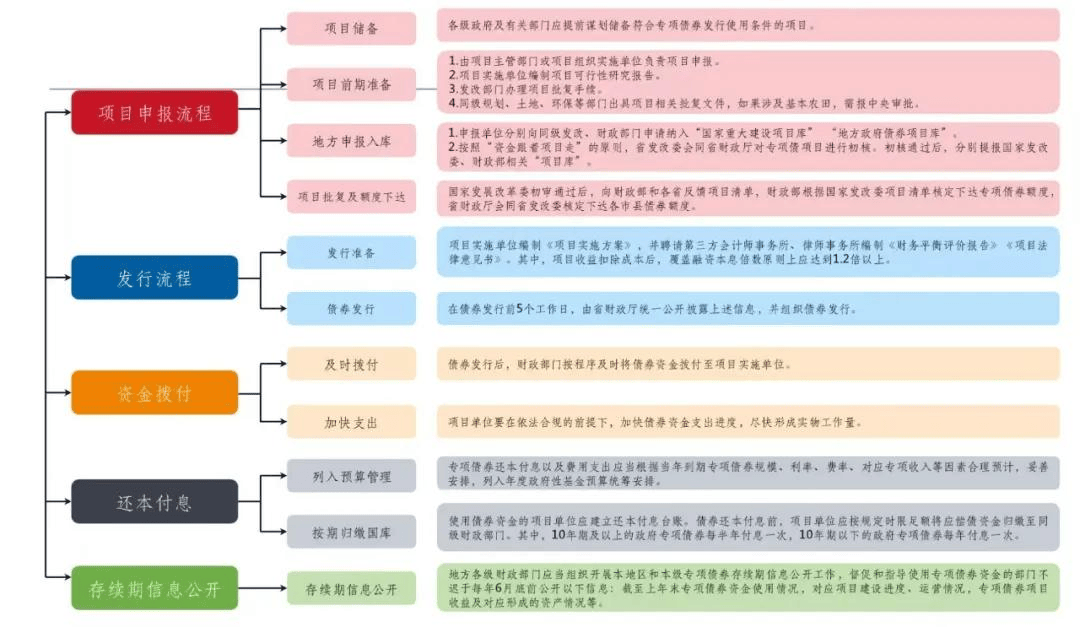
财政部:这两年安排超长期特别国债1.5万亿元推动“两重”建设
Bei Jing Shang Bao· 2025-09-12 09:18
Group 1 - The Ministry of Finance has arranged a total of 1.5 trillion yuan in special long-term bonds over the past two years to promote "dual heavy" construction [1] - In the past five years, a total of 19.4 trillion yuan in local government special bonds has been allocated to support 150,000 construction projects [1] - The central budget has invested 3.3 trillion yuan to support infrastructure construction in areas such as water conservancy and transportation, effectively leveraging government investment to stimulate social investment [1]
财政部部长蓝佛安:我国财政政策空间进一步打开
Sou Hu Cai Jing· 2025-09-12 08:48
Core Viewpoint - The Chinese government has significantly increased its fiscal policy measures since the start of the 14th Five-Year Plan, focusing on both short-term economic stabilization and long-term development goals [1][2]. Group 1: Fiscal Policy Measures - The deficit rate has risen from 2.7% to 3.8% since the beginning of the 14th Five-Year Plan, with a further increase to 4% this year [1]. - A total of 19.4 trillion yuan in new local government special bonds has been allocated [1]. - Over 1 trillion yuan in new tax reductions and deferred tax payments have been implemented, expanding fiscal policy space [1]. Group 2: Policy Tools and Focus - The fiscal policy toolbox has become more diverse, utilizing government bonds, tax incentives, fiscal subsidies, and special funds to enhance the multiplier effect of policies [1]. - The government has creatively issued ultra-long special bonds to support comprehensive domestic demand expansion [1]. - Fiscal measures are increasingly targeted at addressing economic bottlenecks, such as a one-time allocation of 6 trillion yuan for replacing existing hidden debts, alleviating local debt repayment pressures [1]. Group 3: Future Fiscal Policy Outlook - The government plans to maintain a balance between risk prevention and development promotion, ensuring that there is still ample room for future fiscal policy actions [2]. - Continuous policy stability and flexibility will be prioritized, with an emphasis on proactive measures and timely adjustments based on economic conditions [2].
蓝佛安:这两年安排超长期特别国债1.5万亿元推动“两重”建设
Zheng Quan Shi Bao Wang· 2025-09-12 07:35
Group 1 - The Ministry of Finance announced the arrangement of 1.5 trillion yuan in special long-term bonds over the past two years to promote "dual heavy" construction [1] - A total of 19.4 trillion yuan in local government special bonds has been allocated over the past five years, supporting 150,000 construction projects [1] - Central budgetary investment of 3.3 trillion yuan has been arranged to support infrastructure construction in areas such as water conservancy and transportation, effectively leveraging government investment to stimulate social investment [1]
人大常委会|透过预算执行报告 看财政政策如何更加积极
Xin Hua She· 2025-09-10 15:47
Group 1 - The core viewpoint of the report emphasizes the implementation of a more proactive fiscal policy to ensure stable budget execution and financial operations [1][2] - The report outlines the intention to accelerate budget execution, improve fund utilization efficiency, and ensure fund security [1] - Key areas of focus include supporting employment and foreign trade, fostering new growth drivers, enhancing public welfare, and mitigating risks in critical sectors [1] Group 2 - The strategy will prioritize strengthening domestic circulation and implementing flexible macro policies to address uncertainties while ensuring high-quality development [2] - The government aims to maintain policy continuity and stability while enhancing flexibility and predictability in economic management [2]