
生物医药

Search documents
A股翻倍股冲到269只!近六成被公募基金重仓
Di Yi Cai Jing· 2025-08-12 11:51
Group 1: Market Overview - The A-share market has shown strong performance with the Shanghai Composite Index returning to 3600 points and reaching a year-to-date high of 3669.04 points, reflecting a 9.37% increase year-to-date [2] - As of August 12, 269 stocks have doubled in price this year, nearly doubling from 136 stocks at the end of the second quarter [2] - The most concentrated sectors for doubling stocks are machinery equipment and biomedicine, with 49 and 43 stocks respectively [2] Group 2: Fund Performance - Nearly 60% of the doubling stocks are heavily held by funds, with 156 stocks being held by funds as of the end of the second quarter [6] - The telecommunications, electronics, and biomedicine sectors are the top three industries in terms of fund holdings, each exceeding 10 billion in market value [6] - The stock "Shutai Shen" has seen significant fund interest, with 19 fund managers holding it in 50 funds by the end of the second quarter, reflecting a substantial increase in holdings [6] Group 3: Investor Behavior - Despite the recovery in the equity market, investors are increasingly anxious, often redeeming funds as soon as they break even, indicating a "cash out at break-even" mentality [1][7] - Behavioral finance issues such as loss aversion and short-termism are influencing investor decisions, leading to a focus on asset allocation and holding periods rather than short-term market fluctuations [7] - The current market environment favors dividend-paying assets due to declining deposit rates, creating a demand for such investments [7] Group 4: Sector Insights - The market is seeing a strong interest in high-dividend sectors such as banking, electricity, and energy, as well as advanced manufacturing and biomedicine [1] - The innovation drug sector is gaining traction, supported by favorable policies and the acceleration of research and development among leading pharmaceutical companies [8] - The AI sector is also highlighted as a key area of focus for future investments, reflecting the growing importance of technology in the market [8]


最新GDP公布!全国GDP百强城市洗牌:广州第5,哈尔滨58,威海86
Sou Hu Cai Jing· 2025-08-11 22:46
Core Insights - The latest ranking of China's top 100 cities by GDP highlights the dynamic evolution of regional economic development, with 17 cities showing growth rates below the national average, indicating deep-seated challenges of regional imbalance [1] - The competition among "mid-tier cities" is intensifying, with cities like Jinhua and Ningbo showing significant growth, while resource-based cities like Yulin and Ordos are experiencing negative growth due to industrial restructuring [1][10] - Technological innovation is identified as a key variable in reshaping urban comparative advantages and determining future city rankings [1] Economic Performance - The total economic output of the country surpassed 66 trillion yuan in the first half of the year, providing a macroeconomic backdrop for the rankings [1] - Shanghai, Beijing, and Shenzhen remain the top three cities, each surpassing 1.8 trillion yuan in GDP, while the Yangtze River Delta and Pearl River Delta city clusters continue to lead the top ten [1] - Notable growth rates include Jinhua's remarkable 17.29% increase, making it one of the biggest dark horses, and Ningbo's 7.96% growth, surpassing Tianjin [1][10] City-Specific Highlights - Harbin returned to the top 60 with an 8.4% growth rate, driven by the success of its ice and snow economy and strategic emerging industries contributing 35% to industrial added value [2] - Weihai achieved an 8.21% growth rate, reflecting the rise of its "blue economy," with significant developments in the medical device sector and cross-border e-commerce [4] - Guangzhou, as a core engine of the Guangdong-Hong Kong-Macao Greater Bay Area, reported a GDP of 1,508.1 billion yuan with a growth rate of 5.48%, largely due to the explosive growth of the new energy vehicle industry [6] Growth Rates and Rankings - The top cities by GDP for the first half of the year include: - Shanghai: 26,222.15 billion yuan, 4.61% growth [7] - Beijing: 25,029.2 billion yuan, 5.5% growth [7] - Shenzhen: 18,322.26 billion yuan, 5.9% growth [7] - Guangzhou: 15,080.99 billion yuan, 5.48% growth [6] - Jinhua: 3,456.11 billion yuan, 17.29% growth [10] - Other cities with notable growth rates exceeding 10% include Jinhua and Jingzhou, indicating emerging development models worth studying [13]


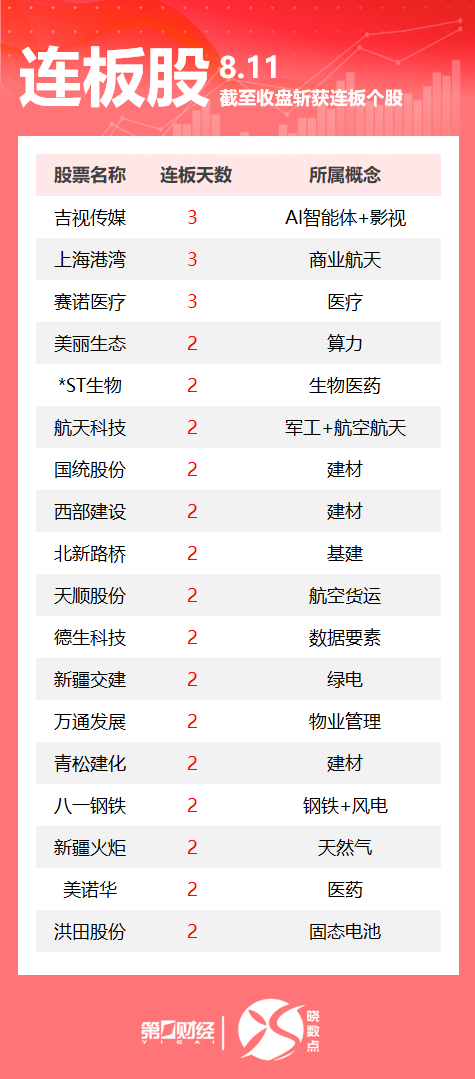
连板股追踪丨A股今日共85只个股涨停 建材板块多股连板
Di Yi Cai Jing· 2025-08-11 08:43
Group 1 - The core viewpoint of the news highlights the performance of various stocks in the A-share market, particularly focusing on those that achieved consecutive trading limits, indicating strong investor interest and market momentum [1] - On August 11, a total of 85 stocks in the A-share market reached their daily limit up, showcasing a significant bullish trend [1] - Notable stocks with consecutive trading limits include Jishi Media with 3 consecutive limits, and several construction-related stocks such as Guotong Co., Xibu Construction, and Qingsong Jianhua, each achieving 2 consecutive limits [1] Group 2 - The stocks that achieved consecutive limits are categorized by their respective concepts, with Jishi Media linked to AI and film, while Guotong Co. and Xibu Construction are associated with the building materials sector [1] - The detailed list of stocks with consecutive limits includes: Jishi Media (3 days), Guotong Co. (2 days), Xibu Construction (2 days), and Qingsong Jianhua (2 days), among others [1] - The construction sector shows a notable presence in the list of stocks with consecutive limits, indicating potential growth and investor confidence in this industry [1]


本周十大投资交易全揭秘,腾讯等 7000 万美元投乌兹别克斯坦公司!|每周十大股权投资
Sou Hu Cai Jing· 2025-08-11 07:52
Group 1 - OpenAI completed a strategic investment round raising $8.3 billion, equivalent to 53.95 billion RMB, to enhance its research and innovation in the AI sector [1] - Inner Mongolia Zhongguang Nuclear announced a strategic investment round raising 11.8 billion RMB, with participation from major firms like China Communications Construction and State Energy Investment [2] - Capitolis secured $56 million, equivalent to 364 million RMB, to expand its stock and foreign exchange business, with investments from Morgan Stanley, JPMorgan, and others [3] Group 2 - MannKind raised $500 million, equivalent to 3.25 billion RMB, from Blackstone to accelerate the development of diabetes treatment products [4] - Uzum completed a Series A funding round of $70 million, equivalent to 4.55 billion RMB, to enhance its digital service ecosystem with investments from Tencent and FinSight Ventures [5][6] - New Sound Semiconductor received a strategic investment of 269 million RMB to strengthen its R&D capabilities in the semiconductor field [7] Group 3 - VITADynamic completed an angel round financing of 300 million RMB, with a post-investment valuation of 1.8 billion RMB, to innovate in the robotics sector [8] - Minghui Pharmaceutical secured $131 million in a Pre-IPO round to expedite product development in oncology and immunology [9] - Fundamental Research Labs raised $33 million in Series A funding to enhance its AI agent technology for gaming [10] - 180 Life Sciences Corp. obtained $425 million in strategic investment to accelerate drug development and clinical projects [11]

南向资金年内净流入破9000亿港元,恒生科技指数ETF(513180)近两周“吸金”近36亿元
Sou Hu Cai Jing· 2025-08-11 03:09
Group 1 - The Hong Kong stock market showed a mixed performance with major indices opening high but closing lower, while cryptocurrency stocks and lithium battery concept stocks experienced significant gains [1] - Southbound capital inflow reached a record high of 900.8 billion HKD as of August 8, indicating strong market interest and investment in the technology sector [1] - The Hang Seng Technology Index ETF (513180) has seen continuous net inflows for 10 trading days, totaling approximately 3.58 billion HKD during this period [1] Group 2 - Recent expectations of a Federal Reserve interest rate cut have improved overseas liquidity, which is likely to benefit the Hong Kong stock market, particularly the technology sector [2] - The Hang Seng Technology Index is currently considered undervalued and is highly sensitive to changes in the US-China interest rate differential, making it poised to benefit from a more accommodative liquidity environment [2] - The index is characterized by high elasticity and growth potential, suggesting that it could experience strong upward momentum if market conditions improve [2]
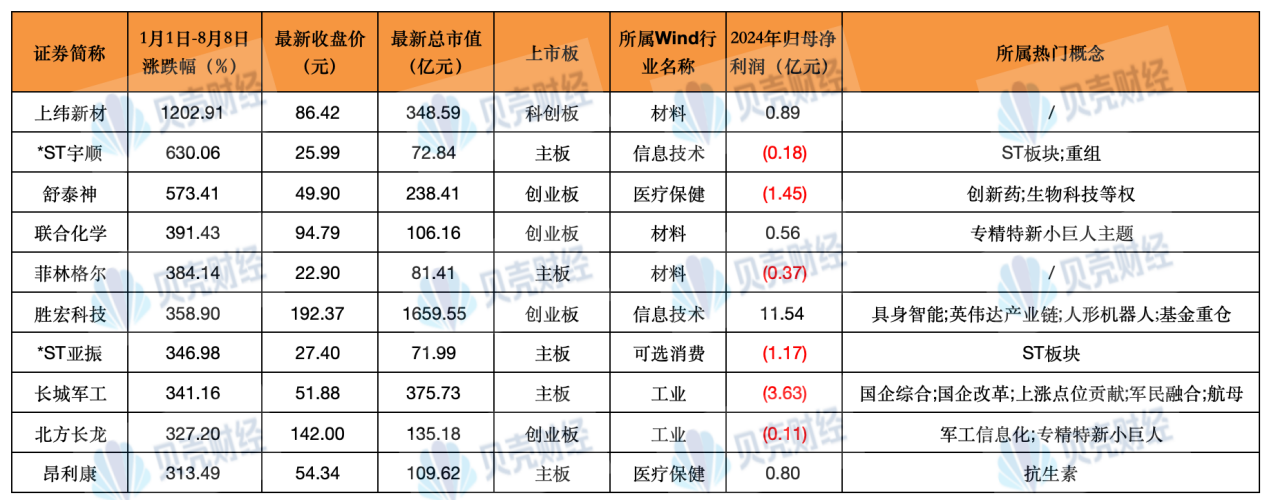
翻倍股掀热浪!1个月新增超100只,六成市值不足百亿
Bei Ke Cai Jing· 2025-08-11 01:35
Core Viewpoint - The A-share market has shown a strong upward trend in the second half of the year, with the Shanghai Composite Index surpassing 3600 points and a significant increase in the number of doubling stocks, indicating a potential investment opportunity in the market [1][5]. Group 1: Market Performance - As of August 8, the Shanghai Composite Index closed at 3635.13 points, reaching a year-to-date high, with the ChiNext Index rising by 9.86% and the Shenzhen Component Index and Shanghai Composite Index increasing by 7.23% and 6.16%, respectively [5]. - The number of doubling stocks reached 253, an increase of 117 stocks compared to the end of June [2][6]. Group 2: Characteristics of Doubling Stocks - Doubling stocks are primarily small and mid-cap stocks, with a market capitalization concentrated below 10 billion yuan, and over 60% of these stocks have a market value between 1 billion and 10 billion yuan [3][11]. - Among the doubling stocks, 176 are profitable, but only six companies are projected to have a net profit exceeding 1 billion yuan in 2024 [9][10]. Group 3: Industry and Sector Analysis - The industrial sector leads with 73 doubling stocks, followed by information technology with 49 and healthcare with 45 [8]. - Notable concepts driving the performance of these stocks include DeepSeek, restructuring, and biomedicine [13]. Group 4: Fund Involvement and Performance - Many doubling stocks are heavily weighted in public funds, particularly in the healthcare and technology sectors, which have seen significant fund inflows [16]. - For instance, the number of funds holding shares in Shuotai Shen increased to 50 by the end of the second quarter, with a market value of 1.229 billion yuan [17].
投资策略周报:勿质疑本轮A股行情的上行趋势与市场空间-20250810
HUAXI Securities· 2025-08-10 15:27
Market Review - The A-share market saw a broad increase, with the Shanghai Composite Index surpassing 3600 points, reaching a new high for the year. Key sectors leading the gains included defense, non-ferrous metals, and machinery, while pharmaceuticals, computers, retail, and social services experienced declines [1][2] - The trading volume in the A-share market decreased compared to the previous week, but margin trading activity remained high, with the margin balance exceeding 2 trillion yuan for the first time in ten years [1][2] Market Outlook - The current A-share market trend is expected to continue its upward trajectory, supported by various sources of incremental capital, including insurance, pension funds, public and private equity funds, as well as individual investors. The M1-M2 growth rate gap has been narrowing, indicating increased liquidity and a slight recovery in consumer and investment sentiment [2][4] - The upcoming "15th Five-Year Plan" is anticipated to be a focal point, with technology and growth sectors expected to be the main policy themes for an extended period. Key areas of interest include new technologies such as domestic computing power, robotics, and solid-state batteries, as well as opportunities in undervalued state-owned enterprises [2][4] Economic Indicators - The U.S. Federal Reserve's dovish stance has opened up more room for monetary easing both domestically and internationally. Market expectations for a rate cut in September have risen significantly, with a probability of 89% according to CME FedWatch [4][20] - China's export growth has consistently exceeded market expectations, with a year-on-year increase of 7.2% in July, driven by strong exports to Africa and ASEAN, which offset declines in exports to the U.S. [4][20] Investment Strategy - The report suggests focusing on sectors that align with new technologies and growth directions, particularly in the context of the "15th Five-Year Plan." Areas such as artificial intelligence, robotics, integrated circuits, and biomedicine are highlighted as potential investment opportunities [2][4] - The report emphasizes the importance of individual investors' risk appetite, which has been on the rise, as evidenced by the recent increase in margin trading activity and the overall positive sentiment in the equity market [2][4]

港股月报:港股流动性望进一步改善-20250810
Huachuang Securities· 2025-08-10 01:43
Group 1 - The Hong Kong stock market has shown strong performance since the beginning of the year, with the Hang Seng Index rising 23.5%, reaching a nearly four-year high. Key sectors include Technology AI, New Consumption, Biomedicine, and High Dividend stocks [1][12][13] - The market is expected to benefit from the easing of monetary policies in both the US and China, with anticipated interest rate cuts by the Federal Reserve, which could enhance liquidity in the Hong Kong market [2][24] - The earnings forecast for Hong Kong stocks in 2025 has been slightly revised downwards, particularly for the Hang Seng Technology Index, which saw a significant reduction of 9.9% [3][30] Group 2 - In the past month, the Hong Kong stock market has generally risen, with small and mid-cap stocks outperforming large-cap stocks. The Hang Seng Index increased by 4.2%, while the Hang Seng Technology Index rose by 6.1% [4][35] - There has been a substantial inflow of southbound funds into the non-bank and pharmaceutical sectors, with a total net inflow of 135.6 billion HKD in July alone [5][39] - A selected portfolio of "golden stocks" for August includes companies such as 康耐特光学 (Kangnate Optical), 泡泡玛特 (Pop Mart), and 信达生物 (Sinopharm), reflecting a focus on growth potential in various sectors [7][50]
调仓调研双管齐下 基金经理挖掘市场新机遇
Zhong Guo Zheng Quan Bao· 2025-08-08 07:17
Group 1 - Several A-share listed companies, including Northern Long Dragon, Goodway, Maipu Medical, and Nengke Technology, have disclosed their latest top ten shareholders due to buyback activities, revealing significant adjustments by well-known fund managers like Li Wenbin, Zheng Chengran, and Ge Lan [1][2][3] - Fund managers have notably increased their holdings in multiple stocks, with Li Wenbin's funds increasing positions in Northern Long Dragon, and Zheng Chengran's fund significantly adding to its stake in Goodway [2][3] - Institutional investors are actively conducting research to identify more investment opportunities, with Bosera Fund, Huaxia Fund, and Harvest Fund leading in the number of research trips this year [1][4] Group 2 - The top fund companies by research frequency since the beginning of 2025 include Bosera Fund (945 times), Huaxia Fund (867 times), and Harvest Fund (769 times), indicating a strong interest in market opportunities [4] - Notable fund managers have participated in recent company research meetings, focusing on topics such as capital expenditure outlook and technology iteration [4] - Companies like Yihua, Zhongke Chuangda, and Hongjing Optoelectronics have been the most frequently researched by fund companies in June [4] Group 3 - Overall, the market is expected to maintain an upward trend in the medium to long term, supported by improvements in the Chinese economy and advancements in industries such as artificial intelligence, high-end manufacturing, and biomedicine [1][5] - The A-share market's valuation is currently near the central level since 2010, with potential for further valuation recovery as policies take effect and economic resilience is demonstrated [5] - The innovative drug sector is experiencing heightened activity, with several companies announcing large orders, indicating a positive outlook for the sector [6]
新产品净值频频变动 基金经理坚信“入场时点”来临
Zhong Guo Zheng Quan Bao· 2025-08-08 07:17
Group 1 - Multiple newly established active equity funds have begun building positions, indicating that fund managers are actively entering the market [1][2] - Several funds have announced early closure of their fundraising periods, suggesting that managers aim to seize favorable entry points in the current market [1][4] - The recent performance of innovative pharmaceutical sectors has led to significant gains for funds heavily invested in this area [2][3] Group 2 - The A-share market is expected to maintain an upward trend, supported by a recovery in corporate performance and external factors becoming less disruptive [5][6] - Key sectors to watch include artificial intelligence, high-end manufacturing, and biomedicine, which are showing signs of progress and improvement [6] - The overall sentiment towards the mid-term market outlook remains optimistic, with a focus on structural opportunities and potential outperformers in traditional and new consumer sectors [6]