
关税政策

Search documents
美国财长贝森特:我将前往最高法院,强调关税的重要性
Hua Er Jie Jian Wen· 2025-11-04 02:58
Core Points - The Trump administration is defending its tariff policy as the U.S. Supreme Court prepares for a crucial hearing regarding the president's authority to impose tariffs under the International Emergency Economic Powers Act (IEEPA) [1][2] - Treasury Secretary Mnuchin announced he will personally attend the Supreme Court hearing to emphasize the importance of tariffs [1] - The Supreme Court will hear two cases that challenge the legality of the tariffs, which could have significant implications for Trump's economic agenda [2] Summary by Sections - **Legal Context** - The Supreme Court will consolidate the cases Learning Resources, Inc. v. Trump and Trump v. V.O.S. Selections, focusing on whether the president has the authority to implement extensive tariff measures under the IEEPA and if this violates constitutional separation of powers [1][2] - **Implications of the Court's Decision** - A ruling against the government could potentially halve the current average effective tariff rate and require the government to refund billions of dollars in collected tariffs, which may destabilize existing trade agreements [2]
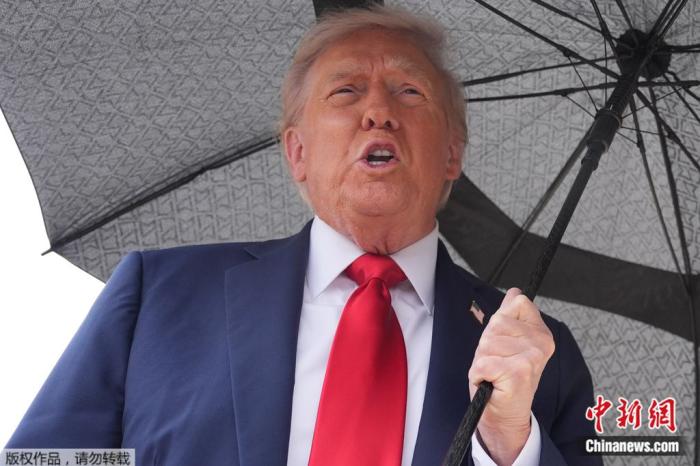
美最高法院将听取关税辩论 特朗普:不会出席
Zhong Guo Xin Wen Wang· 2025-11-04 02:55
Core Points - The U.S. Supreme Court will review President Trump's comprehensive tariff policy on November 5, with Trump stating he will not attend the debate [1][4] - The case will determine the fate of many of Trump's tariff policies, which are defended under the International Emergency Economic Powers Act (IEEPA) [4][5] - This is the first time a U.S. president has imposed tariffs under this law, making the Supreme Court's decision unprecedented [5] Group 1 - The main issue at stake is whether Trump can use emergency powers to justify global tariffs, representing an unprecedented expansion of executive power [4][5] - The Supreme Court currently has a conservative majority of 6 to 3, which has previously supported Trump in significant cases [7] - Regardless of the court's ruling, it is anticipated that Trump's tariffs will not easily disappear due to the established multi-path tariff system [6][8] Group 2 - The IEEPA has been the legal basis for Trump's tariffs, similar to the law used by Nixon in 1971 to impose a temporary 10% tariff [4][5] - The ongoing tariff policies have disrupted supply chains for U.S. manufacturers, as highlighted by the experience of OTC Industrial Technologies [8]

美豆农:政府不稳定关税政策带来持续压力
Yang Shi Xin Wen· 2025-11-04 02:24
Core Insights - Iowa's agricultural sector, particularly soybean production, is under pressure due to unstable U.S. government tariff policies [1][2] - The U.S. Department of Agriculture forecasts a 3% decrease in soybean planting area for 2025, with an estimated production of 117 million tons and exports dropping significantly to 49.6 million tons [1] - The trade relationship between the U.S. and China is crucial for stabilizing the agricultural market and improving farmers' incomes [2] Summary by Sections Agricultural Production - Iowa's soybean farmers are experiencing lower prices and insufficient market orders, leading to challenges in sales [1] - The USDA projects a significant decline in soybean exports to China, with only 5.93 million tons expected by August 2025, compared to 26.8 million tons in the same period of 2024 [1] Market Dynamics - Farmers are adjusting their planting strategies based on market conditions, but the unpredictability of tariff policies complicates their decisions [1] - Some farmers are opting to store their harvested soybeans in hopes of better prices, while others are forced to sell at lower prices due to cash flow issues [2] Trade Relations - The ongoing trade tensions and uncertainties are affecting the normalization of trade, which is critical for U.S. farmers [2] - Strengthening U.S.-China relations is seen as beneficial not only for the agricultural sector but also for the global economy [2]
广发早知道:汇总版-20251104
Guang Fa Qi Huo· 2025-11-04 02:08
1. Report Industry Investment Rating No relevant content provided. 2. Core Viewpoints of the Report - The A - share market showed a shrinking - volume rebound on Monday, with pro - cyclical sectors performing well. The four major stock index futures contracts had narrow - range fluctuations, and the basis of the main contracts was adjusted. Domestic policy is expected to support the PMI index, while overseas, there are differences among Fed officials on interest rate cuts. Different futures varieties have different market trends and investment suggestions based on their respective fundamentals and news[3][4][5]. 3. Summaries by Relevant Catalogs Financial Derivatives - Financial Futures 3.1.1. Stock Index Futures - **Market Conditions**: On Monday, A - share major indices opened lower and closed higher with shrinking volume. The Shanghai Composite Index rose 0.55% to 3976.52 points. Pro - cyclical sectors such as forestry, oil and gas, and coal performed well, while industrial sectors such as precious metals, basic metals, and automobiles declined. The four major stock index futures contracts all had narrow - range fluctuations, with IF2512 and IH2512 down 0.04% and 0.00% respectively, IC2512 down 0.34%, and IM2512 up 0.01%. The basis of the four major contracts was adjusted[3][4]. - **News**: China's October S&P manufacturing PMI was 50.6, showing a slowdown in the expansion. Overseas, US Treasury Secretary suggested interest rate cuts if inflation drops. The probability of the Fed cutting interest rates by 25 basis points in December has dropped to about 63%[4][5]. - **Investment Suggestions**: Try to sell out - of - the - money put options at the support level or construct a bull call spread with put options to capture the subsequent upside space[5]. 3.1.2. Treasury Futures - **Market Performance**: Treasury futures closed mostly lower, with the 30 - year main contract down 0.11%, the 10 - year main contract up 0.01%, the 5 - year main contract down 0.01%, and the 2 - year main contract down 0.03%. The yields of major inter - bank interest - rate bonds were mixed[6]. - **Funding**: The central bank conducted 783 billion yuan of 7 - day reverse repurchase operations on November 3, with a net withdrawal of 259 billion yuan. The inter - bank market funds were loose, and short - term interest rates are expected to remain low[6][7]. - **Investment Suggestions**: In November, the bond market may enter a waiting stage. It is recommended to go long on dips for the 10 - year Treasury bond active bond 250016.IB in the range of 1.75% - 1.85%. Pay attention to the positive arbitrage strategy opportunities due to the rise of IRR[7]. Financial Derivatives - Precious Metals - **Market Review**: There are differences among Fed officials on interest rate cuts. The US October ISM manufacturing PMI was 48.7, lower than expected. The US government shutdown has affected the economy, and the gold tax policy has led to price adjustments by some enterprises. The precious metals market continued to fluctuate in a narrow range[8][9]. - **Outlook**: In the short term, the precious metals market will enter an oscillation stage with falling volatility. The international gold price may operate in the range of 3995 - 4070 US dollars (910 - 935 yuan), and it is recommended to conduct volatility operations or sell out - of - the - money gold put options at high prices. Silver prices will oscillate in the range of 47 - 50 US dollars (11000 - 11700 yuan)[9][11]. - **Funding**: The recent rise and fall of gold and silver prices have led to an outflow of ETF funds, and investors' short - term attitudes tend to be cautious[11]. Financial Derivatives - Container Shipping Index (European Line) - **Spot Quotations**: As of November 4, the freight quotations for Shanghai - Europe basic ports in the next 6 weeks varied among different shipping companies[12]. - **Container Shipping Index**: As of November 3, the SCFIS European line index was 1208.71 points, down 7.92% month - on - month; the US - West route index was 1267.15 points, up 14.43% month - on - month. As of October 31, the SCFI composite index was 1550.7 points, up 10% month - on - month[12]. - **Fundamentals**: As of November 4, the global container shipping capacity exceeded 33.35 million TEU, a year - on - year increase of 7.34%. The eurozone's October composite PMI was 52.2, and the US October manufacturing PMI was 48.7[12]. - **Logic and Suggestions**: The market is expected to oscillate, and it is recommended to go long on the December contract on dips[13]. Commodity Futures - Non - ferrous Metals 3.4.1. Copper - **Spot**: As of November 3, the average price of SMM electrolytic copper was 86840 yuan/ton, down 730 yuan/ton from the previous trading day. The downstream procurement volume increased slightly as copper prices declined[13]. - **Macro**: The Fed cut interest rates by 25BP in October, but the subsequent rate - cut rhythm may slow down. The US - China economic and trade consultation reached a consensus, and the US Supreme Court will hear the Trump tariff case[14]. - **Supply**: The copper concentrate spot TC was at a low level. In October, the SMM Chinese electrolytic copper output decreased by 2.94 million tons month - on - month, and it is expected to decrease by 0.4 million tons in November[14][15]. - **Demand**: The downstream demand for copper has strong resilience. Although there is a fear of high prices, more purchase orders will be released when prices fall[15]. - **Inventory**: LME copper inventories decreased, while domestic social inventories and COMEX copper inventories increased[16]. - **Logic and Suggestions**: After the positive expectations of interest rate cuts and tariffs are fulfilled, the short - term driving force is weak. The main contract should focus on the support level of 86000 - 86500 yuan/ton, and the short - term view is oscillation[17]. 3.4.2. Alumina - **Spot**: On November 3, the SMM alumina spot prices in different regions showed different trends, with a general loosening of prices due to a gradually loose supply pattern and stable demand from the electrolytic aluminum industry[17]. - **Supply**: In October 2025, China's metallurgical - grade alumina output increased month - on - month and year - on - year. The operating capacity decreased slightly, and it is expected that the supply surplus pattern will continue in November, but the situation may improve[18]. - **Inventory**: Alumina inventories in ports, factories, and electrolytic aluminum plants all increased in October, and the total registered volume of alumina warehouse receipts also increased[18]. - **Logic and Suggestions**: The alumina price is expected to maintain a weak oscillation, with the main contract reference range of 2750 - 2900 yuan/ton. It is necessary to pay attention to the supply recovery progress of Guinea bauxite and other factors[19][20]. 3.4.3. Aluminum - **Spot**: On November 3, the SMM A00 aluminum spot average price was 21440 yuan/ton, up 160 yuan/ton from the previous day[20]. - **Supply**: In September 2025, domestic electrolytic aluminum production increased slightly year - on - year but decreased month - on - month. The aluminum - water ratio increased, and it is expected that the daily output of aluminum ingots will continue to increase slightly in October[20]. - **Demand**: Downstream industries entered the traditional peak season, but the weekly start - up rate of processing products declined[20]. - **Inventory**: Domestic social aluminum ingot inventories increased slightly, while LME inventories decreased[21]. - **Logic and Suggestions**: The aluminum price is expected to fluctuate widely in the short term, with the main contract reference range of 20800 - 21600 yuan/ton. Pay attention to the subsequent inventory changes and LME de - stocking intensity[22]. 3.4.4. Aluminum Alloy - **Spot**: On November 3, the SMM aluminum alloy ADC12 spot average price was 21400 yuan/ton, up 100 yuan/ton from the previous day[23]. - **Supply**: In September, domestic recycled aluminum alloy ingot production increased, and it is expected that the start - up rate will remain flat in October[23]. - **Demand**: The demand showed a mild recovery, but the terminal demand transmission was not smooth, and high prices inhibited downstream procurement[23][24]. - **Inventory**: Social inventories increased slightly, and the total registered volume of casting aluminum alloy warehouse receipts increased[24]. - **Logic and Suggestions**: The ADC12 price is expected to maintain a strong - side oscillation, with the main contract reference range of 20400 - 21000 yuan/ton. Consider participating in the long AD01 and short AL01 arbitrage when the spread is above 550[25]. 3.4.5. Zinc - **Spot**: On November 3, the SMM 0 zinc ingot average price was 22350 yuan/ton, up 70 yuan/ton from the previous day. Downstream procurement was mainly for rigid demand[25]. - **Supply**: The zinc ore processing fee decreased, and the smelting profit was compressed, which limited the subsequent output increase. The supply of the zinc industry chain has changed from loose to tight[26]. - **Demand**: The demand did not exceed expectations, with domestic demand stronger than overseas. The inventory of the three primary processing industries showed a decrease in raw material inventory and an increase in finished - product inventory[27]. - **Inventory**: Domestic social inventories and LME inventories both decreased[27]. - **Logic and Suggestions**: The zinc price is expected to oscillate strongly in the short term, with the main contract reference range of 22300 - 23000 yuan/ton[28]. 3.4.6. Tin - **Spot**: On November 3, the SMM 1 tin price was 285400 yuan/ton, up 1000 yuan/ton from the previous day. The market trading was light[28]. - **Supply**: In September, domestic tin ore imports decreased month - on - month, and the tin ingot import volume returned to normal. The tin ingot export volume increased[29][30]. - **Demand and Inventory**: In September, the solder start - up rate increased slightly, but the demand in traditional consumer electronics and other fields was weak. LME inventories decreased, while social inventories decreased slightly[31]. - **Logic and Suggestions**: The tin price is expected to oscillate widely. Adopt the strategy of buying on dips and pay attention to the supply recovery in Myanmar in the fourth quarter[32]. 3.4.7. Nickel - **Spot**: As of November 3, the SMM1 electrolytic nickel average price was 122000 yuan/ton, up 50 yuan/ton from the previous day[32]. - **Supply**: The refined nickel production was at a high level, and the monthly production was expected to continue to increase slightly[33]. - **Demand**: The demand from electroplating and stainless steel was general, while the demand from alloys was relatively good. The demand for nickel sulfate was supported in the short term but faced challenges in the medium term[33]. - **Inventory**: Both domestic and overseas inventories increased[33]. - **Logic and Suggestions**: The nickel price is expected to oscillate in the range of 118000 - 126000 yuan/ton, and pay attention to macro - expectations and Indonesian industrial policies[34][35]. 3.4.8. Stainless Steel - **Spot**: As of November 3, the prices of 304 cold - rolled stainless steel in Wuxi and Foshan decreased, and the basis decreased[35]. - **Raw Materials**: The nickel ore price was firm, while the nickel - iron price decreased, and the cost support of raw materials declined[35]. - **Supply**: In September and October, domestic stainless steel production increased[36]. - **Inventory**: Social inventories decreased slightly, and the number of warehouse receipts decreased[36]. - **Logic and Suggestions**: The stainless - steel price is expected to oscillate weakly, with the main contract reference range of 12500 - 13000 yuan/ton. Pay attention to macro - expectations and steel - mill supply[37][38]. 3.4.9. Lithium Carbonate - **Spot**: As of November 3, the SMM battery - grade lithium carbonate spot average price was 81000 yuan/ton, up 450 yuan/ton from the previous day. The market spot circulation was tight, but most downstream enterprises still chose to wait and see[38]. - **Supply**: In October, the lithium carbonate production increased, but the weekly production decreased slightly recently, mainly due to the decline in lithium - spodumene - extracted lithium carbonate production[39]. - **Demand**: The demand was generally optimistic, with an expected increase in the production of lithium - iron and ternary materials. Pay attention to the marginal change in downstream orders after November[39]. - **Inventory**: The overall inventory decreased in all links last week[40]. - **Logic and Suggestions**: The lithium carbonate price is expected to oscillate widely, with the main contract reference range of 80000 - 85000 yuan/ton[41][42]. Commodity Futures - Black Metals 3.5.1. Steel - **Spot**: The spot price of steel was weak, with the rebar basis strengthening and the hot - rolled coil basis weakening[42]. - **Cost and Profit**: The cost of iron elements had weak support, while the cost of carbon elements had support. The profit ranking was billet > hot - rolled coil > rebar > cold - rolled coil[42]. - **Supply**: From January to September, the iron - element output increased by 5% year - on - year. In October, the increase narrowed. Affected by environmental protection restrictions in Tangshan, the molten iron output decreased, but the five - major steel products output increased slightly[42]. - **Demand**: The domestic demand expectation was still weak, while the export remained at a high level. The apparent demand of the five - major steel products increased, and the inventory pressure was relieved[42][43]. - **Inventory**: The inventory of the five - major steel products decreased, and it is expected that the inventory center will continue to decline month - on - month[43]. - **Viewpoint and Suggestions**: The steel price is expected to oscillate in the range of 3000 - 3200 yuan/ton for rebar and 3200 - 3400 yuan/ton for hot - rolled coils. Consider holding the long - coking - coal and short - hot - rolled - coil arbitrage[44][45]. 3.5.2. Iron Ore - **Spot**: As of November 3, the prices of mainstream iron ore powders were stable or decreased[46]. - **Futures**: As of November 3, the iron ore futures prices decreased, and the 1 - 5 spread weakened[46]. - **Basis**: The best - delivery product was Carajás fines, and the basis of different iron ore varieties was calculated[46]. - **Demand**: As of October 30, the daily molten iron output, blast - furnace operating rate, and other indicators decreased, and the steel - mill profitability declined[46]. - **Supply**: As of November 3, the global iron ore shipment decreased week - on - week, while the arrival volume at 45 ports increased significantly[47]. - **Inventory**: As of October 30, the port inventory increased, the daily port - clearing volume increased, and the steel - mill iron - ore inventory decreased[47]. - **Viewpoint and Suggestions**: The iron ore price is expected to be weak. Consider shorting the 2601 contract on rallies, with the reference range of 760 - 810 yuan/ton, and recommend the 1 - 5 positive arbitrage[48]. 3.5.3. Coking Coal - **Futures and Spot**: As of November 3, the coking coal futures prices oscillated and declined, while the spot prices in Shanxi and Mongolia were strong[49]. - **Supply**: As of October 30, the production capacity utilization rate of sample coal mines in Fenwei increased slightly, while that in Ganglian decreased slightly. The coal inventories in mines decreased[49][50][51]. - **Demand**: As of October 30, the coke production of coking plants and steel mills increased slightly, while the molten iron output decreased[51]. - **Inventory**: As of October 30, the total coking - coal inventory decreased slightly, with mines, ports, and washing plants de - stocking, and coking plants and steel mills increasing inventory[52]. - **Viewpoint and Suggestions**: The coking - coal price is expected to
美联储理事库克:通胀可能居高不下 12月未必降息
Sou Hu Cai Jing· 2025-11-03 23:59
Core Insights - Federal Reserve Governor Lisa Cook anticipates persistent high inflation in the U.S. over the next year due to the impact of tariff policies on the economy [1][3] - The uncertainty surrounding tariffs is affecting corporate pricing strategies, with some companies reducing inventory at lower prices before cost increases [3] - The recent 25 basis point interest rate cut by the Federal Reserve is seen as appropriate, but the balance between rising inflation risks and a weakening labor market is a concern [5] Group 1 - Cook indicated that tariffs are increasing costs for U.S. businesses, which may keep inflation elevated in the coming year [3] - She noted that interactions with business leaders suggest that the impact of tariffs on consumer prices has not fully materialized [3] - Cook is prepared to take strong action if the effects of tariffs are larger or more prolonged than expected [3] Group 2 - The ongoing federal government shutdown is expected to exert pressure on economic activity this quarter and may have spillover effects on the private sector [3] - The Federal Reserve's decision to cut rates again reflects a belief that the downside risks to employment outweigh the upside risks to inflation [5] - Cook emphasized that future monetary policy is not on a predetermined path, leaving the December rate decision uncertain [5]

RingCentral(RNG) - 2025 Q3 - Earnings Call Transcript
2025-11-03 23:00
Financial Data and Key Metrics Changes - The company's consolidated revenue for the third quarter was $138 million, a 7% increase compared to the previous year [11] - The gross margin for the third quarter was 38.3%, down from 40.4% in the same quarter last year [12] - Net income for the quarter was $2.7 million, up from $1.6 million in the previous quarter but down from $5.4 million in the same quarter last year [15] Business Segment Performance - Branded Products segment revenue was $85 million, down from $93 million year-over-year, attributed to order timing and lower sales volume [11][12] - Healthcare Apparel segment revenue declined by 5% to $32 million due to lower volume amid market uncertainty [12][9] - Contact Center revenue increased by 9% to $23 million, driven by new customer conversions despite existing customer losses [12][10] Market Data and Key Metrics Changes - The company noted a significant level of uncertainty among customers across all segments, impacting order sizes and timing [5][6] - The macroeconomic environment, including trade policies and inflation, continues to influence customer behavior and purchasing decisions [6][20] Company Strategy and Industry Competition - The company is focused on expanding market share in a fragmented market by recruiting more sales representatives and leveraging software automation [8] - Cost management has been emphasized, with SG&A expenses reduced by 7% or $3.9 million [6][14] - The company is actively seeking acquisition opportunities, particularly in the branded products sector, where competition is high [42][46] Management's Comments on Operating Environment and Future Outlook - Management expressed cautious optimism about future growth as market conditions normalize, with a strong pipeline of new business opportunities [17][12] - The full-year revenue outlook has been adjusted to a range of $560 million to $570 million, indicating slight growth year-over-year at the high end [16] Other Important Information - The company maintains a strong balance sheet with $17 million in cash and equivalents, providing over $100 million in liquidity for growth plans [16] - The company has a share repurchase authorization with approximately $12 million available as of September 30 [16] Q&A Session Summary Question: Can you describe the environment for Branded Products? - Management indicated that the market has been challenged due to tariff-related volatility and macroeconomic uncertainty, but recent positive tariff announcements may help stabilize the situation [20] Question: What is the status of inventory management? - The company has been opportunistic in sourcing inventory from lower tariff jurisdictions and has communicated with clients about inventory strategies based on market conditions [23][26] Question: What is the impact of losing a client in the contact center segment? - The loss of a client had an annualized impact of about $2 million, but management sees potential for growth in the pipeline despite current challenges [28][29] Question: How is pricing power being managed? - The company has been able to pass through cost increases to customers in the Branded Products segment and has initiated price increases in the Healthcare segment to offset tariff impacts [33][35] Question: What are the expectations for revenue growth in the fourth quarter? - Revenue growth is expected to be primarily driven by the Branded Products segment, with strong bookings and a robust pipeline [37][41] Question: What are the acquisition opportunities currently? - The company sees a rich environment for acquisitions, particularly in the branded products sector, and is actively evaluating potential deals [42][46]

受生产放缓与需求乏力拖累 美国制造业连续八个月萎缩
Zhi Tong Cai Jing· 2025-11-03 16:01
Group 1 - U.S. manufacturing activity continued to contract in October, marking the eighth consecutive month of decline, driven by slowing production and weak demand [1][2] - The ISM manufacturing PMI index fell by 0.4 points to 48.7, remaining below the neutral line of 50, with most of the year spent in a narrow range [1] - The manufacturing output index dropped by 2.8 points to 48.2, entering contraction territory for the second time in three months [1] Group 2 - The ISM employment index has contracted for nine consecutive months, showing slight improvement from September but still within the contraction zone [1] - Twelve manufacturing sectors contracted in October, with textiles, apparel, and furniture performing the worst, while only six sectors, including basic metals and transportation equipment, recorded growth [2] - New orders shrank for the second consecutive month, although the rate of contraction slowed compared to September, and backlogged orders continued to decrease [2] Group 3 - Manufacturers faced multiple pressures from trade policy uncertainty, supply chain adjustments, and weak customer demand [2] - Inventory levels for manufacturers saw the largest decline in a year, while customer inventories remained low, theoretically providing space for future order rebounds, though short-term demand remains weak [2] - Analysts expect limited recovery momentum in manufacturing due to fluctuating tariff policies, global manufacturing slowdown, and cautious U.S. corporate capital spending, with a continued low outlook for the fourth quarter [2]
经济学家打脸现场!特朗普关税成为何沦为“纸老虎”?
Jin Shi Shu Ju· 2025-11-03 13:27
Core Insights - Concerns about inflation and recession due to tariffs have been overstated, as the U.S. economy continues to grow despite the implementation of significant tariffs [1] - Actual tariff revenue is expected to be significantly lower than initial forecasts, indicating that the impact of tariffs on businesses and consumers is less severe than anticipated [1][2] Group 1: Tariff Impact on Economy - The inflation rate in September was 3%, which, while above the Federal Reserve's 2% target, reflects a moderate impact from tariffs primarily affecting furniture and clothing prices [1] - The U.S. Treasury's customs and excise tax revenue is projected to reach $34 billion in October, leading to an annual estimate of $400 billion, which is much lower than the $500 billion to $1 trillion forecasted by the Treasury Secretary [1][2] Group 2: Corporate Strategies - Companies are diversifying their production lines to countries with lower tariffs, such as Vietnam, Mexico, and Turkey, which has contributed to a lower effective tax rate of approximately 12.5% compared to the nominal rate of 17% [2] - Businesses are stockpiling inventory before tariffs take effect to mitigate costs, with some companies utilizing bonded warehouses to defer tax payments [2] Group 3: Consumer Cost Absorption - U.S. consumers are currently bearing 50%-70% of the tariff costs, with companies absorbing the remainder due to higher profit margins post-pandemic [3] - Retailers can maintain profit margins at 2010s levels even if they absorb 30% of the tariff costs, indicating resilience in pricing strategies [4] Group 4: Industry-Specific Insights - In the automotive sector, manufacturers are estimated to absorb about 80% of the tariff costs, passing only 20% onto consumers, which reflects a cautious approach to pricing amid rising costs [4] - Apparel brands like Aritzia are facing significant tariffs but still maintain sufficient profitability to manage the impact, with pricing strategies not solely based on tariff costs [5]
周大福因关税新政上调部分黄金产品价格
Mei Ri Jing Ji Xin Wen· 2025-11-03 11:01
Core Viewpoint - Chow Tai Fook Jewelry has announced a price increase on certain gold products due to additional costs arising from recent gold-related tax policies, effective from November 3 [1] Group 1: Company Actions - Chow Tai Fook Jewelry will adjust the retail prices of some gold products in response to the new tax policies [1] - The price increase will align with the cost increases brought about by the new tax regulations [1] Group 2: Industry Impact - The new tax policies have introduced extra costs for gold procurement and production within the industry [1] - The company is evaluating the impact of these policies on its business and product pricing [1]


《有色》日报-20251103
Guang Fa Qi Huo· 2025-11-03 07:10
1. Report Industry Investment Rating No relevant content provided. 2. Report's Core Viewpoints Copper - After the interest rate cut and tariff implementation, the market may enter a macro "vacuum period" in November. The next macro nodes are the December FOMC meeting, the domestic Politburo meeting, and the Central Economic Work Conference. The copper supply shortage supports the price, and downstream demand has strong resilience. In the long - term, the supply - demand contradiction will support the upward movement of the copper price's bottom center, but short - term sharp increases may suppress demand. The main contract should focus on the 86000 - 86500 support level [2]. Aluminum - In October, the alumina futures price was under pressure, and it is expected to remain weakly volatile in November. The electrolytic aluminum market was strong in October, and it is expected to maintain a high - level volatile pattern in November with limited upside potential. Although high aluminum prices have inhibited some consumption and exports, the overall macro environment is positive [4]. Aluminum Alloy - In October, the cast aluminum alloy futures followed the aluminum price and was strong. The supply of scrap aluminum is tight, and the demand is in the peak season but with a mediocre performance. It is expected that the ADC12 price will remain strongly volatile in November, with an operating range of 20200 - 21000 yuan/ton [5]. Zinc - The supply of zinc is gradually shifting from the zinc ore end to the zinc ingot end. The smelting profit is compressed, and the subsequent supply increase may be limited. The demand is not outstanding, but the low overseas inventory may cause a short squeeze on LME zinc, supporting the price. The zinc price is expected to be strongly volatile in the short - term and may remain range - bound [11]. Tin - The supply of tin ore is tight, and the demand is weak. Due to Powell's hawkish remarks on the December interest rate cut, the tin price may decline in the short - term. Considering the strong fundamentals, a strategy of buying on dips is recommended. The future trend depends on the macro situation and the supply recovery in Myanmar [13]. Nickel - The nickel futures market fluctuates within a range. The production of refined nickel is high, and the price of nickel ore is firm. The price of ferronickel is under pressure, and the demand for stainless steel is weak. The market is expected to continue to fluctuate, and attention should be paid to the 2026 RKAB approval in Indonesia [14]. Stainless Steel - The stainless steel market is volatile, with supply pressure and insufficient demand improvement. The price of nickel ore is firm, and the price of ferronickel is under pressure. The supply of 300 - series stainless steel remains high, and the demand is weak. The market is expected to continue to adjust in the short - term [17]. Lithium Carbonate - The lithium carbonate futures were strong last week, but there was news of potential supply increases, which affected the market sentiment. The fundamentals are currently strong, with a slight decrease in production and an improvement in demand. It is expected that the price will fluctuate widely in November, with a reference range of 78000 - 87000 yuan/ton [20]. 3. Summary by Related Catalogs Copper Price and Basis - SMM 1 electrolytic copper price was 87570 yuan/ton, down 0.56% from the previous day. The electrolytic copper production in October was 109.16 million tons, down 2.62% month - on - month [2]. Fundamental Data - The import volume of electrolytic copper in September was 33.43 million tons, up 26.50% month - on - month. The inventory of various types showed different changes, such as SHFE inventory increasing by 10.83% week - on - week [2]. Aluminum Price and Spreads - SMM A00 aluminum price was 21280 yuan/ton, up 0.38% from the previous day. The alumina production in October was 778.53 million tons, up 2.39% month - on - month [4]. Fundamental Data - The electrolytic aluminum production in October was 374.21 million tons, up 3.52% month - on - month. The full - scale market inventory of alumina increased by 31.27 million tons to 437.55 million tons as of October 30 [4]. Aluminum Alloy Price and Spreads - SMM Southwest ADC12 price was 21400 yuan/ton, up 0.47% from the previous day. The production of recycled aluminum alloy ingots in September was 66.10 million tons, up 7.48% month - on - month [5]. Fundamental Data - The production of primary aluminum alloy ingots in September was 28.30 million tons, up 4.43% month - on - month. The operating rate of recycled aluminum alloy enterprises increased [5]. Zinc Price and Spreads - SMM 0 zinc ingot price was 22280 yuan/ton, up 0.13% from the previous day. The refined zinc production in October was 61.72 million tons, up 2.85% month - on - month [11]. Fundamental Data - The import volume of refined zinc in September was 2.27 million tons, down 11.61% month - on - month. The LME inventory increased by 1.15% [11]. Tin Spot Price and Basis - SMM 1 tin price was 284400 yuan/ton, up 0.14% from the previous day. The domestic tin ore import in September decreased by 15.13% month - on - month [13]. Fundamental Data - The SMM refined tin production in September was 10510 tons, down 31.71% month - on - month. The inventory of SHEF increased by 2.65% week - on - week [13]. Nickel Price and Basis - SMM 1 electrolytic nickel price was 121950 yuan/ton, down 0.20% from the previous day. The production of Chinese refined nickel increased by 1.26% month - on - month [14]. Supply and Inventory - The SHFE inventory increased by 1.87% week - on - week, and the social inventory decreased by 1.43% [14]. Stainless Steel Price and Basis - The price of 304/2B (Wuxi Hongwang 2.0 coil) was 12900 yuan/ton, down 0.39% from the previous day. The production of Chinese 300 - series stainless steel crude steel decreased by 0.99% month - on - month [17]. Fundamental Data - The stainless steel import volume increased by 2.70% month - on - month, and the export volume decreased by 6.55% [17]. Lithium Carbonate Price and Basis - The SMM battery - grade lithium carbonate average price was 80220 yuan/ton, up 0.69% from the previous day. The lithium carbonate production in October was 92260 tons, up 5.73% month - on - month [20]. Fundamental Data - The lithium carbonate demand in September was 116801 tons, up 12.28% month - on - month. The total inventory of lithium carbonate increased by 0.38% [20].