
地缘政治

Search documents
原油月报:等待地缘高点-20260104
Wu Kuang Qi Huo· 2026-01-04 13:10
Report Summary 1. Investment Rating The report does not provide an investment rating for the industry. 2. Core Viewpoints - In early 2026, geopolitical issues in Latin America resurfaced, potentially causing minor impacts on crude oil prices. The narrowing oscillation of crude oil prices in December 2025 is expected to continue. [15] - The US Energy Department released previously postponed data, showing a seasonal decline in refinery operations but still stronger than in previous periods, and a slight increase in Cushing inventories. Russian exports have recovered after falling from their peak in September. [15] - At the macro - political level, the final value of the US GDP in the third quarter of 2025 exceeded expectations, and the combination of a "strong economy + interest - rate cut cycle" continued. Politically, the US military raided and captured Maduro, but domestic oil and gas facilities were not damaged. In Yemen, conflicts between Saudi - and UAE - supported factions have raised concerns about their relationship, but it is unlikely to affect OPEC+ production coordination. [15] - Given that most of the inventory is at sea and concentrated in the Asia - Pacific region, the upward potential of oil prices due to geopolitical situations is limited. However, the valuations of heavy oil and asphalt will significantly benefit. It is recommended to go long on the cracking spreads of heavy oil and asphalt during the window when the sea - borne inventory is not fully released. [15][17] 3. Section Summaries 3.1 Monthly Assessment & Strategy Recommendation - **Market Review**: In December 2025, crude oil prices showed a narrowing oscillation. At the beginning of 2026, geopolitical issues in Latin America flared up again, which may have a minor impact on crude oil prices. [15] - **Supply - Demand Changes**: US refinery operations declined seasonally but were still stronger than before, and Cushing inventories increased slightly. Russian exports recovered after the September peak. [15] - **Macro - Political Situation**: The US GDP in Q3 2025 exceeded expectations, and the "strong economy + interest - rate cut cycle" persisted. Geopolitical events included the capture of Maduro and conflicts in Yemen, but OPEC+ production coordination is expected to remain stable. [15] - **Viewpoint Summary**: Limited upward potential for oil prices due to sea - borne inventory, but heavy oil and asphalt valuations will benefit. Long heavy oil and asphalt cracking spreads during the inventory release window. [15][17] 3.2 Macro & Geopolitical - **Short - Term High - Frequency Macro Indicators**: The report presents relationships between indicators such as the US ISM manufacturing PMI, the Citigroup G10 economic surprise index, the US 10 - year inflation expectation, and the US long - short - term spread with WTI oil prices. [48] - **Medium - Term Macro Forecast Indicators**: It includes the euro - area investment confidence index, the US investment confidence index, US GDP growth rate forecasts, and global major country GDP growth rate forecasts. [55][56] - **Geopolitical Indicators**: The Middle - East geopolitical risk index and the high - frequency export statistics of sensitive oil - producing countries (Iran, Libya, Venezuela, and Russia) are shown, along with their relationships with WTI oil prices. [63] 3.3 Oil Product Spreads - **Forward Curve**: It shows the WTI crude oil forward curve, the near - far structure of various crude oils, the WTI M1/M4 monthly spread, and the WTI M1 price. [67] - **Inter - regional Spreads**: Spreads such as Brent/WTI, Brent/Dubai, INE/WTI, and MRBN/WTI are presented. [71][73] - **Product Spreads**: It includes the LGO diesel forward curve, the near - far structure of refined products, and spreads like RB/HO and LGO/RB. [79] - **Cracking Spreads**: Cracking spreads of gasoline, diesel, high - sulfur fuel oil, and low - sulfur fuel oil in Singapore, Europe, and the US are analyzed. [85][88][91] 3.4 Crude Oil Supply - **OPEC & OPEC+ Supply**: It details the results of OPEC's past meetings, the production and quota situations of OPEC and OPEC+ countries, and the supply and export forecasts of OPEC 12 member countries and major OPEC+ members. [97][99][103] - **US Supply**: The US government has made various policies regarding oil, such as budget cuts for the SPR, potential sanctions adjustments, and plans to increase local production. The report also shows data on US oil wells, rigs, production, and exports. [128][130][132] - **Other Supply**: It includes the production forecasts of countries like Canada, Norway, and Brazil, as well as China's crude oil production. [137] 3.5 Crude Oil Demand - **US Demand**: It covers direct demand from refineries (including crude oil input, refinery capacity utilization, and parking capacity) and imports/exports, as well as derived demand for gasoline, diesel, fuel oil, aviation kerosene, and refined product imports/exports. Micro - demand indicators such as bank car loans, railway traffic, and aviation security passenger flow are also presented. [144][147][150] - **Chinese Demand**: It includes direct demand (crude oil input, imports, and refinery operations) and derived demand for gasoline, diesel, and refined product exports. Micro - demand indicators such as new - energy vehicle penetration and population migration are also shown. [166][172][174] - **European Demand**: It includes direct demand from refineries (refinery operations, crude oil input, and profits) and imports, as well as derived demand for refined products. [185][187][190] - **Indian Demand**: It shows India's crude oil input, refinery operating rate, imports, and demand forecasts. [195] - **Other Demand**: It includes the average daily speeds of different types of oil tankers and oil - transportation quality models. [199][203] 3.6 Crude Oil Inventory - **US Inventory**: It includes commercial crude oil inventories, Cushing inventories, and inventories of gasoline, diesel, fuel oil, and aviation kerosene, as well as their available - days data. [209][211][213] - **Chinese Inventory**: It includes crude oil port inventories and inventories of gasoline and diesel, as well as their production - sales ratios. [218][221][224] - **European Inventory**: It includes ARA inventories and inventories of 16 European countries for various refined products and crude oil. [229][234][237] - **Singapore Inventory**: It shows inventories of gasoline, diesel, fuel oil, and total refined products. [241] - **Fujairah Inventory**: It includes inventories of gasoline, diesel, fuel oil, and total refined products at the port. [246] - **Maritime Inventory**: It includes floating storage of refined products (gasoline, diesel, fuel oil, and kerosene), heavy and light oils, and crude oil, as well as the relationship between VLCC and Suezmax floating storage and WTI oil prices. [251][255][259] 3.7 Meteorological Disasters - It presents storm models in the US Gulf of Mexico and the Middle - East straits, as well as wildfire probability models in Canada and rainstorm & thunderstorm data in the US Gulf of Mexico. [264][270] 3.8 Alternative Data - It includes data on crude oil maritime in - transit supply, oil - transportation demand models, shipping fees in the Arabian Sea, and the probability of the Strait of Hormuz being blocked according to media polls, along with their relationships with WTI oil prices. [276]
原油周报:地缘扰动支撑,油价震荡微涨-20260104
Xinda Securities· 2026-01-04 12:03
Investment Rating - The industry investment rating is "Positive" [1] Core Views - International oil prices experienced slight increases due to geopolitical tensions in Venezuela and Ukraine, with Brent and WTI prices at $60.75 and $57.32 per barrel respectively as of January 2, 2026 [2][9] - The oil and petrochemical sector showed a strong performance, with a 3.92% increase in the sector index compared to a slight decline in the broader market [10] - The report highlights the increase in U.S. crude oil production and refinery processing rates, indicating a robust demand environment [57][62] Summary by Sections Oil Price Review - As of January 2, 2026, Brent crude futures settled at $60.75 per barrel, up $0.51 (+0.85%) from the previous week, while WTI crude futures rose to $57.32 per barrel, an increase of $0.58 (+1.02%) [31] - The geopolitical situation, particularly in Venezuela and Ukraine, is influencing market dynamics, balancing risks of supply surplus against geopolitical tensions [2][9] Offshore Drilling Services - The number of global offshore self-elevating drilling rigs increased to 375, with notable additions in Africa, Europe, and North America [40] - Floating drilling platforms also saw a rise, totaling 131, with increases in Africa and South America [40] Crude Oil Supply - U.S. crude oil production reached 13.827 million barrels per day, reflecting a slight increase of 0.2 million barrels from the previous week [57] - The active rig count in the U.S. rose to 412, indicating ongoing exploration and production activities [57] Crude Oil Demand - U.S. refinery crude processing averaged 16.847 million barrels per day, with a utilization rate of 94.70%, showing a slight increase in operational efficiency [62] - The report notes stable refinery operation rates in China, with major refineries operating at 75.11% capacity [62] Crude Oil Inventory - As of December 26, 2025, total U.S. crude oil inventories stood at 836 million barrels, a decrease of 1.686 million barrels (-0.20%) from the previous week [75] - Strategic reserves increased slightly, while commercial inventories saw a notable decline [75] Finished Oil Products - In North America, average prices for diesel, gasoline, and jet fuel were reported at $89.37, $71.66, and $80.18 per barrel respectively, with corresponding price differentials to crude oil [99]
兴证王涵|委内瑞拉事件电话会纪要
王涵论宏观· 2026-01-04 11:56
Core Viewpoint - The article discusses the recent U.S. military action in Venezuela, highlighting its unexpected tactical success and implications for both domestic and international politics, particularly under the pressures faced by Trump [2][10][12]. Group 1: U.S. Military Action in Venezuela - The U.S. operation in Venezuela achieved tactical results that exceeded market expectations, potentially causing significant short-term market disruptions [7][10]. - The action is seen as a strategic retreat maneuver by the U.S., attempting to regain control amid rising internal and external pressures on Trump [4][10][24]. - The dual objectives of the operation include securing Venezuela's oil resources to support the U.S. welfare system and stabilizing the oil dollar system [12][14]. Group 2: Implications for Global Geopolitics - The U.S. intervention may lead to increased geopolitical risks, particularly affecting Europe, the Middle East, South Asia, and East Asia, as it challenges the sanctity of national sovereignty [15][19]. - The potential for regional instability is heightened, with implications for U.S. allies and adversaries alike, as the action could provoke responses from major powers like China and Russia [15][19]. Group 3: Impact on China - The direct impact of the Venezuelan situation on the Chinese economy is limited, with bilateral trade around $5 billion and oil imports from Venezuela constituting less than 5% of China's total [3][17]. - However, indirect risks are present, particularly regarding the U.S. strategy of using Venezuela as a warning to other nations, which could affect China's global initiatives [17]. Group 4: Market Reactions - Oil prices are expected to experience short-term pressure but may trend upward in the long term due to concerns over U.S. control of energy sources [18]. - The U.S. dollar may strengthen in the short term due to increased investor confidence but could face long-term challenges as U.S. actions disrupt global order [18]. - Gold prices may be pressured in the short term but are likely to rise in the long term due to escalating geopolitical risks [18].


地缘冲突利好原油?专家:短期将推高油价,长期降低油价
2 1 Shi Ji Jing Ji Bao Dao· 2026-01-04 11:01
市场分析认为,美国对委内瑞拉发动袭击,叠加近期国际地缘政治事件频发,将推动原油市场波动加 剧。 对于后市,经济学家盘和林向记者表示:"短期将推高油价,长期降低油价,因为美国石油资本进入会 拉高未来委内瑞拉石油出口产能。" 国金证券石油化工团队认为,当前原油价格仍在地缘冲突与供需过剩的矛盾中博弈,主要支撑来自地缘 因素。地缘冲突引发的原油价格上涨都将是一时性的,中期将进一步加剧原油过剩的压力。如委内瑞拉 冲突结束,委内瑞拉产量可能修复至110万桶/天以上。 0:00 据新华社消息,美军1月3日凌晨对委内瑞拉发动大规模军事打击,抓走委内瑞拉总统马杜罗,并将其强 行带往美国。美国总统特朗普当天公开宣称,美国将"管理"委内瑞拉,并宣布美国大型石油企业将进入 委内瑞拉,投资数以十亿计美元,"维修"石油基础设施并创造收益。 据新华社报道,委内瑞拉已探明石油储量3000亿桶,约占全球已探明储量的17%,居世界首位。 ...
北美观察丨封锁不够 还要抓人 美国押解马杜罗的政治算计
Yang Shi Xin Wen· 2026-01-04 10:10
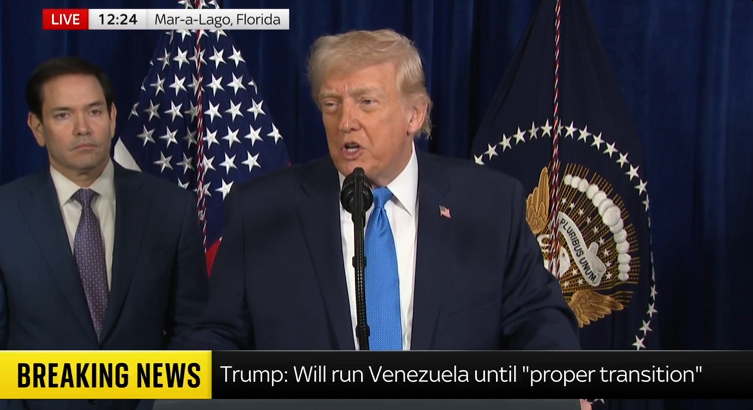
当地时间1月3日,美国总统特朗普宣布美军在委内瑞拉发动突袭行动,抓走委内瑞拉总统尼古拉斯·马杜罗及其妻子,并称两人将赴纽约面临刑事指控;他 同时宣称美国将"暂时运行"委内瑞拉。 当地时间1月3日晚,载有马杜罗的飞机抵达美国纽约一处军事基地,马杜罗正在走下舷梯。 美联社报道,美国发动闪电军事打击抓获马杜罗及妻子,并将他们押送美国接受审判。 为何数周封锁仍不够:历时五年的"终极一跳" 这一行动从公开信息拼图看,叠加了复杂的政治与经济算盘:边境与治安叙事的动员、对"让美国再次伟大"期待的回应,以及最难绕开的石油利益与产业接 管的算计。 回看美委关系,会发现这一行动并非临时起意,而是多年来 "司法追捕—经济扼喉—军事施压"链条的最后一环。 福克斯报道,马杜罗已被押至纽约,预计周一接受传讯。 早在2020年,纽约南区联邦地区法院就以"毒品恐怖主义""向美国大量输送可卡因""与拉美武装、涉毒网络合作"立案起诉,2025年又以"恐怖网络/涉恐"问题 重新包装、将悬赏提高到5000万美元。 过去数周,美国在加勒比和委内瑞拉近海继续有节奏地升级行动,一方面财政部制裁"规避制裁的油商和油轮",另一方面海军和海岸警卫队频繁对疑似运 ...

油价短期或有支撑,关注美委局势升级和OPEC+增产态度
Ping An Securities· 2026-01-04 09:39
石油石化 2026 年 1 月 4 日 石油石化周报 油价短期或有支撑,关注美委局势升级和 OPEC+增产态度 强于大市(维持) 行情走势图 -30% -20% -10% 0% 10% 20% 30% 40% 50% 24-01 24-03 24-05 24-07 24-09 24-11 25-01 25-03 25-05 25-07 25-09 25-11 沪深300 石油石化 基础化工 证券分析师 核心观点: 行 业 报 告 行 业 报 告 行 业 深 度 报 行 业 深 度 报 行 业 周 报 证 券 研 究 报 告 告 告 陈潇榕 投资咨询资格编号 S1060523110001 chenxiaorong186@pingan.com.cn 马书蕾 投资咨询资格编号 S1060524070002 mashulei362@pingan.com.cn 石油石化:美委地缘局势升级,叠加市场预期 OPEC+将维持暂停增 产立场,或对油价形成一定支撑。据 ifind 数据,2025 年 12 月 26 日 -2026 年 1 月 2 日,WTI 原油期货收盘价上涨 0.62%,布伦特油期货 价保持不变。地缘政治方面 ...
有色金属周报:海外地缘政治升级,金属战略资源属性定价或再抬升-20260104
Ping An Securities· 2026-01-04 09:05
Investment Rating - The industry investment rating is "Outperform the Market" (maintained) [1][54]. Core Views - Geopolitical tensions are escalating, which may enhance the strategic resource pricing of metals. The gold market is expected to maintain its safe-haven appeal due to ongoing geopolitical uncertainties and the unresolved U.S. debt issue, leading to a potential long-term increase in gold prices [4]. - Industrial metals are anticipated to see an upward trend in pricing due to increased financial attributes and tightening supply conditions, particularly for copper and aluminum [5][6]. Summary by Sections 1. Nonferrous Metal Index Trends - As of December 31, 2025, the nonferrous metal index closed at 9342.49 points, up 0.4% month-on-month. The precious metal index decreased by 2.2%, while the industrial metal index increased by 2.1% [10]. 2. Precious Metals 2.1 Gold - As of December 31, the COMEX gold futures contract was priced at $4341.9 per ounce, down 4.8% month-on-month. The SPDR Gold ETF holdings decreased by 0.6% to 1065 tons. The report suggests that the recent price drop is a short-term adjustment in a longer-term upward trend for gold prices [4]. 3. Industrial Metals 3.1 Copper - The SHFE copper futures contract was priced at 98,240 RMB per ton as of December 31, down 0.49% month-on-month. Domestic copper social inventory reached 238,900 tons, while LME copper inventory was at 145,000 tons. The report indicates a tightening supply expectation for copper, with a potential upward revaluation of copper prices in the medium term [6]. 3.2 Aluminum - The SHFE aluminum futures contract rose by 2.3% to 22,925 RMB per ton as of December 31. Domestic aluminum social inventory was 684,000 tons, with LME aluminum inventory at 509,300 tons. The report anticipates that aluminum prices will maintain a high-level fluctuation due to a supportive macro environment [6]. 3.3 Tin - The SHFE tin futures contract fell by 4.6% to 322,900 RMB per ton as of December 31. Domestic tin social inventory was 8,520 tons, and LME tin inventory was 5,415 tons. Supply concerns due to geopolitical issues in the Congo and regulatory tightening in Indonesia are expected to keep the tin market tight [6]. 4. Investment Recommendations - The report recommends focusing on the following sectors: - **Gold**: Continued geopolitical uncertainty supports gold's safe-haven status. Recommended stock: Chifeng Jilong Gold Mining. - **Copper**: Domestic demand recovery and tightening supply conditions suggest a positive outlook. Recommended stock: Luoyang Molybdenum. - **Aluminum**: Strong demand against weak supply conditions may drive aluminum prices higher. Recommended stock: Tianshan Aluminum [7][51].
委内瑞拉,一个世纪的资源争夺与宿命
Feng Huang Wang Cai Jing· 2026-01-04 07:02
Core Viewpoint - The military intervention by the U.S. in Venezuela is a culmination of over a century of conflict over oil resources, highlighting the strategic importance of Venezuela's vast oil reserves, which are the largest in the world [1][3][19]. Group 1: Oil Wealth and Historical Context - Venezuela has proven oil reserves of approximately 300 billion barrels, accounting for 17% of the global total, surpassing Saudi Arabia and the U.S. [3][5]. - The oil boom in the mid-20th century did not benefit the general population, leading to significant wealth disparity, with profits primarily flowing to international oil companies and a small elite [5]. - The "Bolivarian Revolution" initiated by Hugo Chávez in 1999 aimed to nationalize the oil industry, reclaiming resource sovereignty through reforms such as the Hydrocarbons Law of 2001, which mandated majority ownership by the state oil company PDVSA in joint ventures [5][7]. Group 2: U.S. Response and Geopolitical Tensions - U.S. interests were threatened by Venezuela's nationalization efforts, leading to sanctions and support for opposition movements, including a failed coup in 2002 [9][11]. - Following Chávez's death in 2013, Nicolás Maduro continued the nationalization policies, but U.S. relations deteriorated, especially after the 2018 elections, which the U.S. did not recognize [11][13]. - In 2025, the U.S. escalated its approach from economic sanctions to military threats, including a $50 million bounty on Maduro, reflecting the strategic importance of Venezuelan oil to U.S. interests [13][18]. Group 3: Impact on Global Oil Market - The military intervention is expected to disrupt Venezuela's oil exports, which have already plummeted from a peak of 3.5 million barrels per day to around 1 million barrels per day, representing only 0.8% of global production [13][19]. - Despite the geopolitical tensions, the global oil market is currently characterized by oversupply, with the International Energy Agency projecting a supply increase of 3 million barrels per day in 2025, which may mitigate the impact of Venezuela's supply disruption [20][22]. - The U.S. military control over Venezuelan oil resources could weaken OPEC+'s influence in the global oil market, potentially altering production coordination among oil-producing nations [22]. Group 4: Broader Economic Implications - The geopolitical turmoil is likely to create volatility in oil prices, with potential short-term spikes due to supply concerns, while long-term price pressures may remain limited due to existing supply surpluses [19][20]. - The military actions may also affect precious metals and shipping markets, with increased risk aversion likely driving up gold prices, which have already seen significant gains in 2025 [23][24]. - The situation may lead to increased logistics costs for energy and commodities due to military blockades, impacting supply chains and market dynamics [24].
委内瑞拉,一个世纪的资源争夺与宿命
凤凰网财经· 2026-01-04 06:55
Group 1 - Venezuela possesses approximately 300 billion barrels of proven oil reserves, accounting for 17% of the global total, making it the largest in the world, surpassing Saudi Arabia and far exceeding the United States [3]. - The oil industry has historically been a double-edged sword for Venezuela, leading to significant wealth but also to social inequality and external intervention [1][6]. - The "Bolivarian Revolution" initiated by Hugo Chávez in 1999 aimed to reclaim oil sovereignty through nationalization, mandating that the state-owned PDVSA hold at least 51% in joint ventures [6][8]. Group 2 - U.S. military intervention in Venezuela is a culmination of over a century of resource competition, with oil interests at the core of U.S.-Venezuela relations [1][11]. - Following Chávez's death in 2013, Nicolás Maduro continued the nationalization policies, but U.S. sanctions intensified, leading to a significant decline in Venezuela's oil production capacity from 3.5 million barrels per day to around 1 million barrels per day [15][12]. - The U.S. has a strategic dependency on Venezuelan heavy crude oil, which is essential for its refining industry, despite imposing sanctions [18]. Group 3 - The recent military actions by the U.S. have sparked geopolitical tensions across the Western Hemisphere, with various countries condemning the intervention and calling for diplomatic solutions [23]. - The interruption of Venezuelan oil exports could lead to increased volatility in global oil prices, particularly for heavy crude, as the market adjusts to potential supply disruptions [23][24]. - Long-term, the global oil market is currently characterized by oversupply, which may limit the upward pressure on prices despite geopolitical risks [24][25].
1月美储或暂停降息国际银动荡
Jin Tou Wang· 2026-01-04 06:35
Group 1 - The core viewpoint of the article indicates that international silver prices are influenced by liquidity conditions and global monetary policy, with recent fluctuations observed due to market dynamics [1][2] - The latest data from CME's FedWatchTool shows an 85.1% probability that the Federal Reserve will maintain interest rates, reflecting market expectations based on the December FOMC meeting minutes [2] - Analysts suggest that the Fed may prioritize liquidity management tools over immediate interest rate adjustments, given the current labor market conditions and inflation concerns [2] Group 2 - The recent international silver price closed at $72.62 per ounce, marking a 1.91% increase, with a high of $74.54 and a low of $71.27 observed [1] - Short-term support for silver prices is identified at $71.54, with potential testing of the upward channel's lower boundary around $70.00 if prices decline [3] - A breakthrough above the current upward channel could lead silver prices towards the historical high of $85.87 reached on December 29 [2]