
关税政策

Search documents
集运日报:中美关税情况好转,符合日报反弹预期,不建议加仓,可考虑部分止盈,专注11月运价情况。-20251103
Xin Shi Ji Qi Huo· 2025-11-03 07:09
Report Industry Investment Rating - Not provided Core Viewpoints of the Report - The improvement in Sino-US tariff situation meets the daily report's rebound expectation, but it is not recommended to increase positions. Instead, partial profit-taking can be considered, and attention should be paid to the freight rates in November [1] - The tariff issue has shown a marginal effect, and the current core is the trend of spot freight rates. The main contract may be in the process of bottoming out, and it is recommended to participate with a light position or wait and see [3] - Although the mutual reduction of Sino-US tariffs is beneficial to the market to some extent, the freight rates in November may not reach the previously announced increase, suppressing the upward movement of the market. Under the game between long and short positions, the market is generally in a weak and volatile state. Attention should be paid to tariff policies, the Middle East situation, and spot freight rates [3] Summary According to Related Catalogs SCFIS, NCFI Freight Rate Index - On October 27, the Shanghai Export Container Settlement Freight Rate Index (SCFIS) for the European route was 1312.71 points, a 15.1% increase from the previous period; the SCFIS for the US West route was 1107.32 points, a 28.2% increase from the previous period [2] - On October 31, the Ningbo Export Container Freight Rate Index (NCFI) (composite index) was 1100.32 points, a 12.60% increase from the previous period; the NCFI for the European route was 965.62 points, a 17.43% increase from the previous period; the NCFI for the US West route was 1452.82 points, a 12.30% increase from the previous period [2] - On October 31, the Shanghai Export Container Freight Rate Index (SCFI) announced price was 1550.70 points, a 147.24-point increase from the previous period; the SCFI European route price was 1344 USD/TEU, a 7.87% increase from the previous period; the SCFI US West route was 2647 USD/FEU, a 22.94% increase from the previous period [2] - On October 31, the China Export Container Freight Rate Index (CCFI) (composite index) was 1021.39 points, a 2.9% increase from the previous period; the CCFI for the European route was 1323.81 points, a 2.4% increase from the previous period; the CCFI for the US West route was 772.67 points, a 4.9% increase from the previous period [2] Economic Data - In October, the Manufacturing Purchasing Managers' Index (PMI) was 49.0%, a 0.8-percentage-point decrease from the previous month, indicating a decline in the manufacturing prosperity level. The Composite PMI Output Index was 50.0%, a 0.6-percentage-point decrease from the previous month, indicating that the overall production and business activities of Chinese enterprises were stable [3] - The preliminary value of the Eurozone's October manufacturing PMI was 45.9, with an expected value of 45.1 and a previous value of 45; the preliminary value of the service industry PMI was 51.2, with an expected value of 51.5 and a previous value of 51.4; the preliminary value of the composite PMI was 49.7, with an expected value of 49.7 and a previous value of 49.6. The Eurozone's October Sentix Investor Confidence Index had a previous value of -9.2 and a predicted value of -8.5 [2] - The preliminary value of the US October S&P Global service industry PMI was 55.2, with an expected value of 53.5 and a previous value of 54.2; the preliminary value of the manufacturing PMI was 52.2, with an expected value of 52 and a previous value of 52; the preliminary value of the composite PMI was 54.8, with an expected value of 53.1 and a previous value of 53.9 [3] Futures Market - On October 31, the main contract 2512 closed at 1804.0, with a decline of 2.54%, a trading volume of 59,500 lots, and an open interest of 31,400 lots, an increase of 1251 lots from the previous day [3] - The short-term strategy suggests that the main contract remains weak while the far-month contracts are strong, which is in line with the bottoming-out judgment. Risk-takers who were advised to build positions in the EC2512 contract below 1500 (with a profit margin of over 300 points) can consider partial profit-taking. Attention should be paid to the subsequent market trend, and it is not recommended to hold losing positions. Stop-loss should be set [4] - The arbitrage strategy suggests that under the background of international turmoil, each contract still follows the seasonal logic with large fluctuations. It is recommended to wait and see or try with a light position [4] - The long-term strategy suggests taking profits when each contract rises and waiting for the callback to stabilize before judging the subsequent direction [4] - The daily limit for the 2508 - 2606 contracts has been adjusted to 18% [4] - The company's margin for the 2508 - 2606 contracts has been adjusted to 28% [4] - The daily opening limit for all 2508 - 2606 contracts is 100 lots [4] Tariff Policy - The US will cancel the so-called "fentanyl tariff" of 10% imposed on Chinese goods (including those from the Hong Kong Special Administrative Region and the Macao Special Administrative Region), and the 24% reciprocal tariff on Chinese goods will continue to be suspended for one year. China will adjust its countermeasures accordingly, and the two sides have agreed to continue to extend some tariff exclusion measures [5]
奥巴马现身竞选集会抨击美政府
Xin Jing Bao· 2025-11-03 06:25
Core Points - Former President Obama criticized the U.S. government as "lawless" during a campaign rally in Virginia, supporting the Democratic gubernatorial candidate [1] - Obama expressed that the current atmosphere in America feels like Halloween every day, filled with tricks [1] - He condemned Trump's tariff policies and the deployment of the National Guard to U.S. cities [1] - Obama also criticized Congressional Republicans for failing to check Trump's overreaching actions, despite being aware of them [1]
有色金属基础周报:宏观情绪降温,有色金属整体回归震荡-20251103
Chang Jiang Qi Huo· 2025-11-03 06:12
1. Report Industry Investment Rating No relevant content provided. 2. Core Views of the Report - Copper prices reached a record high this week and then declined. Although the long - term demand outlook for copper is optimistic due to factors such as tight copper concentrate supply and increasing demand from computing power construction, short - term high prices are suppressing downstream demand. It is expected that copper prices will remain in a high - level oscillation in the short term, with the main contract of Shanghai Copper operating in the range of 85,000 - 89,000. It is recommended to exit long positions at high levels or conduct short - term trading within the range [2]. - Aluminum prices are in a high - level upward oscillation. However, as the rainy season in Guinea ends and alumina prices weaken, there is downward pressure on ore prices. The operating capacity of alumina has decreased, and the inventory has increased. The operating capacity of electrolytic aluminum has increased slightly. It is recommended to reduce positions and take profits at high levels for aluminum - related products [2]. - Zinc prices are in a relatively strong oscillation. Although the processing fees of zinc ore have decreased, the production enthusiasm of smelters is high, and the output of refined zinc is expected to remain at a high level. Terminal consumption is weak, and inventory is at a high level. It is expected that Shanghai Zinc will maintain an oscillation, with the main contract operating in the range of 21,800 - 23,000, and it is recommended to conduct range trading [2]. - Lead prices are in a sideways oscillation. Supply is decreasing, but downstream procurement is cautious due to high prices. Considering the strong production and consumption demand and the temporary truce in the Sino - US trade war, lead prices may continue to rise after consolidation. It is recommended to go long at low levels within the range of 17,100 - 17,800 [2]. - Nickel prices are in an intra - range oscillation and decline. The cost of the nickel industry is relatively stable, but the nickel market remains in a surplus situation, with continuous inventory accumulation. It is recommended to hold short positions at high levels, with the main contract of Shanghai Nickel operating in the range of 119,000 - 123,000; for stainless steel, it is also recommended to hold short positions at high levels, with the main contract operating in the range of 12,400 - 12,900 [3]. - Tin prices are in a high - level oscillation and overall upward trend. Although tin ore supply is expected to improve, downstream consumption is weak. It is recommended to conduct range trading, with the reference operating range of the Shanghai Tin 12 contract being 275,000 - 295,000, and it is necessary to continue to pay attention to supply resumption and downstream demand recovery [3]. - Industrial silicon prices are in an oscillatory adjustment. The production and inventory of industrial silicon and related products such as polysilicon and organic silicon have changed. It is recommended to conduct range trading or wait and see, and pay attention to the implementation of the polysilicon storage platform and production reduction [3]. - Lithium carbonate prices are in a wide - range oscillation. The supply and demand are in a tight balance, and downstream demand is strong. It is recommended to trade cautiously and pay attention to the progress of mining certificates in Yichun and the resumption of production of the Ningde Jianxiawo lithium mine [3]. 3. Summary by Relevant Catalogs 3.1 Macro - From October 27th to November 2nd, important economic data were released. China's industrial enterprise profits in September increased by 21.6% year - on - year, and the profits of high - tech manufacturing and equipment manufacturing showed good growth. The Sino - US leaders held a meeting, and the Sino - US economic and trade teams reached a consensus on tariff and export control measures. China's official manufacturing PMI in October dropped to 49, while the non - manufacturing index rose to 50.1. The Federal Reserve cut interest rates by 25 basis points, and the eurozone's GDP in the third quarter increased by 0.2% quarter - on - quarter, exceeding expectations. The US Senate passed a resolution to terminate Trump's comprehensive tariff policy, but it is expected to face difficulties in the House of Representatives [11][12][13][14][15][16][17]. 3.2 Copper - Price trend: Reached a record high and then declined, expected to be in a high - level oscillation in the short term [2]. - Fundamental factors: Supply of copper concentrate is tight, but short - term high prices are suppressing downstream demand, and inventory is accumulating [2]. - Investment advice: Exit long positions at high levels or conduct short - term trading within the range [2]. 3.3 Aluminum - Price trend: High - level upward oscillation, with the oscillation range broken through [46]. - Fundamental factors: The rainy season in Guinea ends, alumina prices weaken, the operating capacity of alumina decreases, and the inventory increases. The operating capacity of electrolytic aluminum increases slightly, and downstream demand is affected by the transition from peak to off - peak season [2]. - Investment advice: Reduce positions and take profits at high levels [2]. 3.4 Zinc - Price trend: Relatively strong oscillation [2]. - Fundamental factors: Zinc ore processing fees have decreased, smelter production enthusiasm is high, terminal consumption is weak, and inventory is at a high level [2]. - Investment advice: Conduct range trading [2]. 3.5 Lead - Price trend: Sideways oscillation [2]. - Fundamental factors: Supply is decreasing, downstream procurement is cautious due to high prices, but production and consumption demand are strong [2]. - Investment advice: Go long at low levels within the range [2]. 3.6 Nickel - Price trend: Intra - range oscillation and decline [3]. - Fundamental factors: The cost of the nickel industry is relatively stable, but the nickel market is in a surplus situation, with continuous inventory accumulation [3]. - Investment advice: Hold short positions at high levels [3]. 3.7 Tin - Price trend: High - level oscillation and overall upward trend [3]. - Fundamental factors: Tin ore supply is expected to improve, but downstream consumption is weak [3]. - Investment advice: Conduct range trading [3]. 3.8 Industrial Silicon - Price trend: Oscillatory adjustment [3]. - Fundamental factors: The production and inventory of industrial silicon and related products have changed, and the production of polysilicon is expected to decrease in November [3]. - Investment advice: Conduct range trading or wait and see [3]. 3.9 Lithium Carbonate - Price trend: Wide - range oscillation [3]. - Fundamental factors: Supply and demand are in a tight balance, downstream demand is strong, and there are uncertainties in mining certificates [3]. - Investment advice: Trade cautiously [3].
超涨后或有回调,考虑多单逢高止盈
Chang Jiang Qi Huo· 2025-11-03 06:02
Report Investment Rating - No investment rating for the industry is provided in the report. Core Viewpoints - After the over - increase, there may be a correction. It is recommended to consider taking profits on long positions when the price rises to a high level in November and maintain the strategy of going long on AD and short on AL [1][79]. Summaries According to the Table of Contents 1. Market Review - In October, the overall trend of the Shanghai aluminum market was a high - opening after the holiday, followed by a decline and then a gradual strengthening. After the double - festivals, the external precious metals and non - ferrous metals performed well, and aluminum followed the upward trend. However, due to a series of events such as China's export control on rare earths, anti - monopoly investigations, and tariff announcements, the aluminum price fluctuated. Later, with positive factors like the release of the 15th Five - Year Plan summary, Fed rate cuts, and Sino - US economic and trade consultations, the aluminum price gradually strengthened [5][6]. 2. Macro and Aluminum Fundamental Analysis - **Overseas Macro Indicators**: The Federal Reserve has had a series of interest rate decisions including rate cuts and rate holds in 2024 - 2025, and an expected rate cut in December 2025. The European Central Bank has also adjusted its interest rates, with multiple rate cuts and rate holds. A series of macro - economic data such as the US federal funds rate, PCE price index, and euro - zone HICP are presented [12][14]. - **Domestic Macro Indicators**: Domestic GDP growth, social financing scale, PMI, exchange rates, CPI, PPI, and other data are shown. In September, China's exports and imports increased significantly year - on - year. The Sino - US economic and trade consultations in Kuala Lumpur reached a series of consensus, and the external tariff environment is temporarily stable. It is expected that exports will strengthen month - on - month in November [19][25]. 3. Aluminum Raw Materials - **Domestic Bauxite**: The supply of domestic bauxite is tightening. Due to strengthened safety supervision and environmental inspections in Shanxi and Henan, combined with the rainy season, bauxite mining activities are restricted. Although the price of domestic bauxite is firm, it will face pressure with the increase in imported bauxite after the end of the rainy season in Guinea [28]. - **Imported Bauxite**: In September 2025, the import volume of bauxite decreased month - on - month but increased year - on - year. Guinea is the largest supplier. After the end of the rainy season in Guinea, the bauxite supply is expected to increase, and the price of imported bauxite is expected to decline [31]. 4. Alumina - At the end of October, the built - in production capacity of alumina remained unchanged month - on - month, while the operating capacity decreased. The domestic spot weighted index of alumina declined. Newly - put - into - production capacity in the first half of the year has entered a stable production state, but some small - scale and high - cost alumina enterprises in inland areas are facing losses and production cuts. In November, alumina is expected to fluctuate at the bottom, and one can try to go long lightly near 2700 or sell out - of - the - money put options [34]. 5. Electrolytic Aluminum - **Production Capacity**: As of the end of October, the built - in production capacity of electrolytic aluminum remained unchanged month - on - month, and the operating capacity decreased slightly. The decrease was mainly due to the technical transformation of some electrolytic cells in Shanxi Shuozhou Energy. The remaining new production capacity expected to be put into operation this year is 110,000 tons. The operating capacity of electrolytic aluminum is expected to increase slightly in November, but the new production capacity is very limited [38]. - **Imports**: In September 2025, the import volume of primary aluminum increased both month - on - month and year - on - year. Russia and Indonesia are the main suppliers. In October, the loss of aluminum imports widened. In November, the London aluminum is expected to correct after over - increase, and the import of electrolytic aluminum is expected to increase [41]. - **Cost and Profit**: The main costs of electrolytic aluminum are electricity, alumina, and pre - baked anodes. In October, the average cost of electrolytic aluminum decreased by 140 yuan/ton to 14,980 yuan/ton, mainly due to the decline in alumina prices [43]. 6. Downstream Demand for Aluminum - **Automobile**: In September, automobile production and sales increased both month - on - month and year - on - year, and the export of automobiles reached a new high. With the implementation of the 69 - billion - yuan special treasury bond for consumer goods replacement and the peak season of automobile production and sales, the demand for aluminum in the automobile industry is expected to continue to grow [51]. - **Real Estate**: From January to September, real estate development investment, construction area, new construction area, and other indicators declined year - on - year. Although some cities have introduced real - estate relaxation policies, the market is still weak, and this weak trend is expected to continue in November [55]. - **Infrastructure**: In September, the issuance of new local bonds decreased. The issuance progress of new local special bonds in the first nine months was relatively fast, which is expected to drive infrastructure investment. However, the high proportion of special bonds used for debt repayment will have a squeezing effect on infrastructure investment. Although the growth rate of infrastructure investment has slowed down recently, power grid investment has increased significantly, and the future demand for aluminum in infrastructure is still optimistic [58]. - **Home Appliances**: In September, the production and sales of home appliances were stable, and the export performance was stronger than the seasonal average. However, the production schedule of the three major white - goods in November decreased month - on - month, and the demand for aluminum in the home - appliance industry is expected to decrease [61]. - **Photovoltaic**: In September, the newly - added photovoltaic installed capacity decreased year - on - year but increased month - on - month. With the release of provincial mechanism electricity prices and the start of some centralized photovoltaic projects, the photovoltaic installed capacity is expected to continue to improve at a low level in November [66]. - **Aluminum Products Export**: In September, the export of aluminum products decreased both month - on - month and year - on - year. The import of aluminum products also decreased. In November, the London aluminum is expected to correct after over - increase, and the net export of aluminum products is expected to decline month - on - month [69]. 7. Inventory - The inventory depletion in October was satisfactory [70].
苹果发虎威,避免关税影响实现增长
日经中文网· 2025-11-03 03:01
Core Viewpoint - Apple's revenue for the July to September period increased by 8% year-on-year, reaching $102.466 billion, with net profit rising by 86% to $27.466 billion, indicating strong performance amid a favorable political environment and successful new product launches [4][6]. Group 1: Financial Performance - For the July to September quarter, Apple's revenue grew by 8% compared to the same period last year, totaling $102.466 billion, while net profit surged by 86% to $27.466 billion [4]. - The revenue forecast for the October to December quarter is expected to increase by 10% to 12% year-on-year [4]. Group 2: Trade Relations and Tariffs - Apple's lobbying efforts with the Trump administration have begun to yield results, particularly regarding the easing of tariffs related to iPhones due to the recent US-China agreement [2][6]. - The reduction of tariffs on Chinese imports from 20% to 10% is viewed positively by Apple, as it will help lower costs, with an estimated tariff cost of $1.4 billion for the October to December period [5][6]. Group 3: Product Strategy - The iPhone 17, launched in September, maintained its starting price at $799, while increasing the base storage from 128GB to 256GB, effectively providing better value [8]. - Apple's strategy to avoid price increases for iPhones is linked to shifting production to India, which helps mitigate tariff impacts [9]. Group 4: Political Engagement - Apple's increased production in the US has helped alleviate criticism from the Trump administration, with plans to invest an additional $100 billion in US manufacturing over the next four years [11]. - The US government is actively engaging with Japan regarding the upcoming "smartphone new law," which could impact American companies, with Apple's lobbying efforts being a significant factor [12][14].



特朗普胜选周年美股涨18% AI狂欢取代减税成市场“主引擎“
Zhi Tong Cai Jing· 2025-11-03 01:45
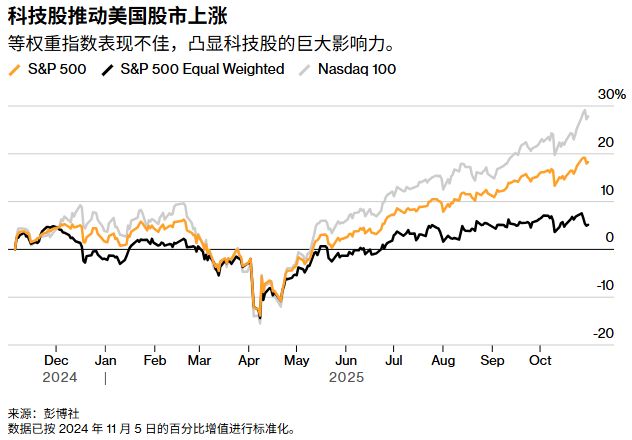
Core Viewpoint - The stock market has surged 18% since Donald Trump's election victory, reaching a historical high, driven primarily by the AI boom rather than the anticipated tax cuts and deregulation [1][5]. Group 1: Market Performance - The S&P 500 index has recorded six consecutive months of gains, with significant contributions from large tech companies, which accounted for over half of the market's increase [1]. - Excluding market-cap weighted versions, the equal-weighted S&P 500 has only risen 5.2%, and the median stock has seen a mere 1.2% increase [1]. - The current market performance ranks eighth among the past eighty years of presidential election year performances, trailing behind previous administrations [8]. Group 2: Impact of AI - The AI surge has led to significant market capitalization milestones, with Nvidia becoming the first company to surpass $5 trillion, while Apple and Google crossed the $4 trillion mark [4]. - Investors perceive AI as entering a "leap to a higher stage," prompting a shift in investment strategies towards AI-related companies [4]. Group 3: Trade Policy and Market Volatility - Trump's aggressive trade policy has introduced unprecedented uncertainty, with a policy uncertainty index reaching its highest level since 1900 [1]. - The volatility in the market has been exacerbated by Trump's public pressure on the Federal Reserve and attempts to influence its officials [4]. Group 4: Sector Performance - Consumer stocks have shown weakness, with notable declines in companies like Chipotle, and the consumer staples sector has faced profit margin erosion due to tariffs [8]. - The materials sector has performed the worst, down 8%, as companies face higher costs for imported chemical materials [8]. Group 5: Investor Sentiment and Risks - Despite the AI-driven optimism, concerns about potential market bubbles persist, and the impact of tariffs on consumers may increase in the future [9]. - Investors are currently navigating dual risks: high valuations that may correct and the fear of missing out on further AI stock gains [9].


决定特朗普关税命运的诉讼--周三开启庭审,原告是一家小玩具厂商,大公司却不见踪影
Hua Er Jie Jian Wen· 2025-11-03 00:19
Core Points - A legal challenge initiated by small toy manufacturers is set to bring Trump's tariff policy to the U.S. Supreme Court for a final decision, with potential implications for over $100 billion in tariff refunds if the ruling is unfavorable to Trump [1] - The case centers on whether the President exceeded his statutory authority in implementing tariffs, with the Supreme Court hearing arguments from both sides [1][4] - The plaintiffs, led by toy manufacturer Rick Woldenberg, argue that the unpredictable tariff policies have severely impacted their businesses, with Woldenberg's companies facing an estimated $20 million to $30 million in tariffs this year, compared to $2.3 million last year [2] Small Businesses' Struggles - Rick Woldenberg's companies have experienced significant financial strain due to the fluctuating tariff policies, exemplified by a specific product that had to be rushed to avoid new tariffs on imports from India [2] - The absence of large corporations in the lawsuit contrasts sharply with the active participation of small businesses, highlighting a "small business versus government" dynamic [3] Legal Dispute Over Presidential Authority - The core legal issue revolves around the boundaries of presidential power, with the Trump administration citing the International Emergency Economic Powers Act (IEEPA) as justification for imposing tariffs [4] - Opponents argue that the U.S. Constitution grants Congress the power to levy taxes, and that tariffs are essentially a form of taxation that requires congressional authorization [5] Government's Defense and Contingency Plans - The White House defends the tariff policy, claiming it has led to trade agreements that benefit American workers and industries [5] - In anticipation of a potential loss, the White House is reportedly preparing backup plans to maintain tariffs through other legal mechanisms, although this case does not directly affect tariffs on steel, aluminum, and automobiles imposed under different laws [5]
今年假日季,美国消费者或将为关税多付286亿美元
智通财经网· 2025-11-02 23:13
Core Insights - The new tariff policies implemented by Trump are expected to increase U.S. consumer spending by hundreds of billions during the holiday season, with an estimated total cost increase of $40.6 billion for consumers and retailers combined [1][2] Group 1: Consumer Impact - Consumers are projected to bear approximately $28.6 billion of the additional costs, resulting in an average increase of $132 per shopper [1] - This additional expenditure may lead many families to reduce their gift spending or incur more debt, creating tangible financial pressure [1] Group 2: Retailer Expectations - Retail analysts anticipate a decline in holiday season sales due to the increased costs from tariffs, with many consumers facing a "harsh reality" of either reducing gift quantities or absorbing higher costs [2] - Despite the overall sales decline, demand for electronics and clothing remains strong, although price increases may limit options for some consumers [2] Group 3: Product-Specific Cost Increases - Electronics consumers are expected to experience the highest impact, with an average additional expenditure of $186 per person, followed by clothing and accessories at $82, personal care and toys at $14, and food and candy at $12 [2]

【环时深度】集聚国内情绪,变成外交冲突,反关税广告为何搅动美加
Huan Qiu Shi Bao· 2025-11-02 22:52
Core Viewpoint - The article discusses the recent tensions between Canada and the U.S. stemming from an advertisement funded by Ontario criticizing U.S. tariff policies, which has led to increased trade tensions and a potential escalation in tariffs on Canadian goods [1][2][3]. Group 1: Advertisement and Its Impact - Ontario's government funded a $75 million CAD (approximately $53.53 million USD) advertisement featuring edited clips of former U.S. President Reagan's speech, criticizing current U.S. tariff policies [2][6]. - The advertisement was launched during a high-profile event, the World Series, to maximize viewership and impact, but it drew significant backlash from U.S. officials, including President Trump [2][3]. - Following the backlash, Ontario's Premier Doug Ford announced the suspension of the advertisement to restore constructive dialogue with the U.S. [3][6]. Group 2: Economic Implications - Ontario is significantly affected by U.S. tariff policies, with bilateral trade expected to exceed $370 billion USD in 2024, and approximately 20% of Ontario's exports facing U.S. tariffs [6][11]. - The imposition of additional tariffs could lead to a 0.5% decline in Ontario's GDP and the loss of approximately 68,000 jobs, particularly impacting the manufacturing and automotive sectors [6][11]. Group 3: Political Context - The advertisement has garnered cross-party support in Canada, reflecting a broader sentiment against U.S. trade policies, with various political leaders expressing understanding of the need to challenge U.S. tariffs [4][6]. - Premier Ford's strong stance against U.S. tariffs is seen as a reflection of his dissatisfaction with the federal government's approach to trade negotiations with the U.S. [7][11]. Group 4: Broader Trade Relations - The article highlights the ongoing strategy of the Canadian government to diversify trade relationships and reduce reliance on the U.S., with exports to the U.S. decreasing from approximately 76% to 68% [10][11]. - Experts suggest that the recent tariff increases and trade negotiations could impact U.S. consumer prices, particularly in sectors reliant on Canadian imports, such as automotive manufacturing [11].
How Trump’s Tariffs Crashed the Crypto Market — What It Means for You
Yahoo Finance· 2025-11-02 16:24
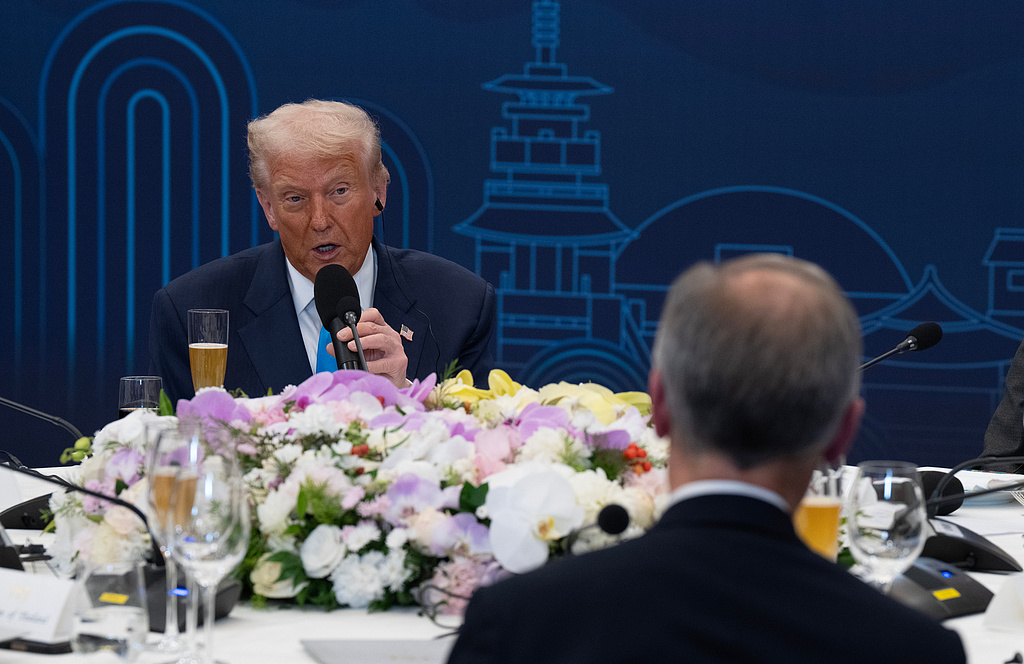
Core Insights - The cryptocurrency market experienced a significant crash due to President Trump's threat of imposing a 100% tariff on imports from China, leading to a panic sell-off among investors [1][2] - The sell-off resulted in the largest liquidation event in crypto history, with a total liquidation of $19.13 billion, causing the market capitalization to drop from $4.1 trillion to $3.6 trillion [2][3] Market Reaction - Following the crash, the cryptocurrency market began to recover quickly, with reports indicating progress in trade relations between the U.S. and China, which led to a surge of 3%-5% in crypto markets [4] - The volatility of cryptocurrency is highlighted as a key characteristic, with investors often viewing it as a riskier asset during times of economic uncertainty [5][6] Investor Behavior - Many crypto traders were highly leveraged, which exacerbated the sell-off as leveraged investors faced catastrophic losses when prices dropped [3] - The event serves as a reminder for investors about the rapid price fluctuations in the crypto market, especially during periods of global economic instability [6]