健康化

Search documents
超8成中国家庭必选海天!连续11年入选“中国消费者十大首选品牌”
Zhong Guo Jin Rong Xin Xi Wang· 2025-08-22 02:06
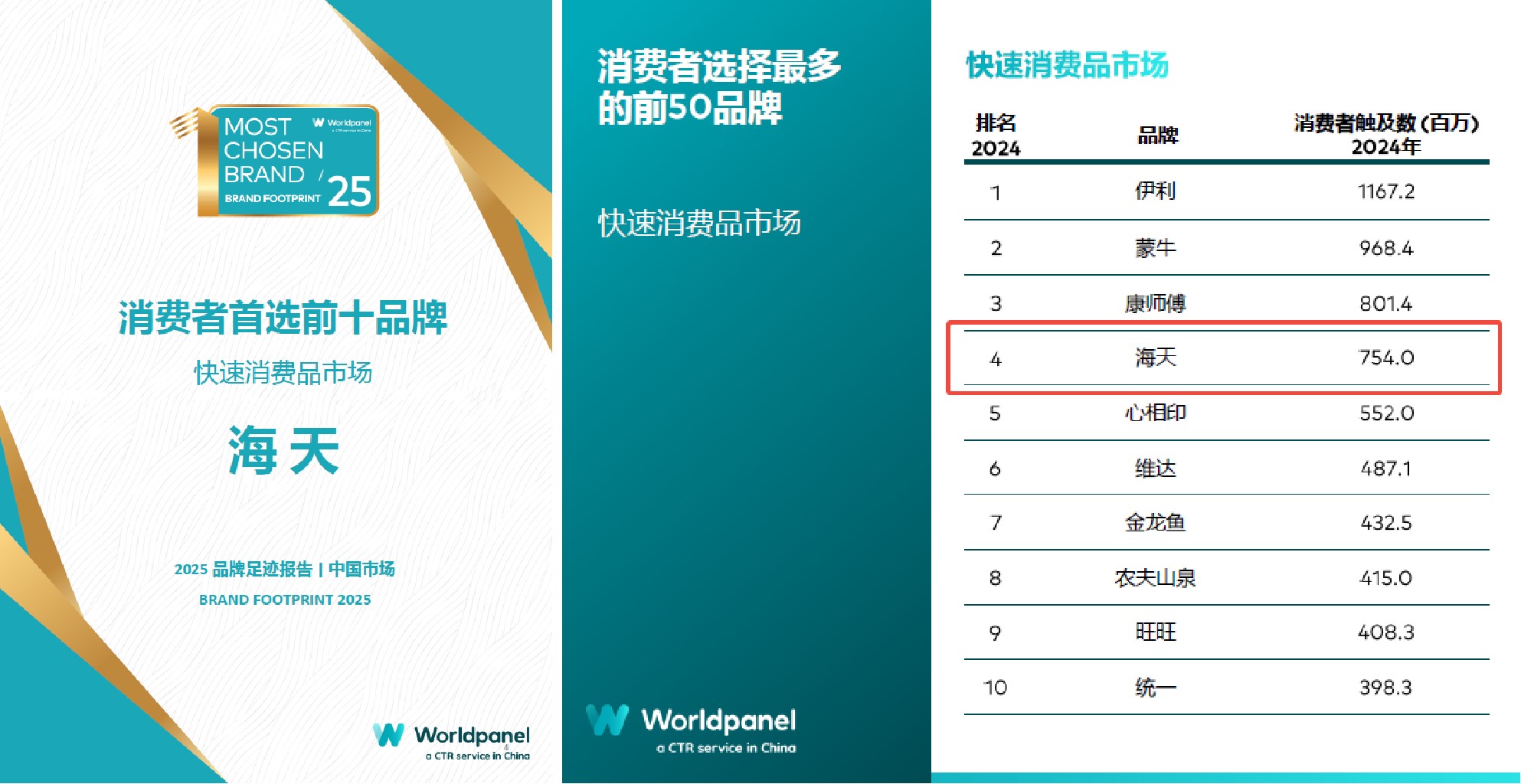
Core Insights - Haitai Foods has been recognized as one of China's top ten consumer brands, ranking fourth overall and maintaining its position as the leading brand in the condiment industry for 11 consecutive years [1] - The company's consumer reach has grown to 754 million, an increase of 21.6 million from the previous year, with a high penetration rate of over 80% for three consecutive years, significantly surpassing the industry average [1] Group 1: Product Innovation and Market Trends - Haitai Foods has introduced over 1,200 health-oriented products, including organic, reduced salt and sugar, iron-fortified, and gluten-free options, aligning with modern health trends while preserving traditional flavors [3] - The company has expanded its product offerings in convenient cooking and flavor segments, launching various specialty condiments to meet diverse culinary needs [3] Group 2: Brand Development and Consumer Engagement - Haitai Foods is focused on building a brand that combines deep heritage with modern appeal, emphasizing the core value of "inheriting authentic Chinese flavors" [4] - The company has engaged in innovative marketing strategies, including collaborations with popular entertainment figures and interactive consumer events, to enhance brand connection and visibility [4] - Industry observers note that Haitai's success is attributed to its ability to adapt to evolving kitchen needs while maintaining quality through traditional craftsmanship [4]


东吴证券:软饮料业百亿大单品迭出 健康化、功能化成发展共识
Zhi Tong Cai Jing· 2025-08-22 01:48
Core Insights - The Chinese soft drink industry has undergone three major development stages: dominance of carbonated drinks, diversified growth, and structural growth [1][2] - The current competitive landscape is intense, with traditional leaders maintaining advantages while emerging segments are also making significant breakthroughs [2][3] - Future trends indicate a shift towards health-oriented and functional products, with high growth potential in bottled water, sugar-free tea, and energy drinks [3][4] Historical Overview - The industry initially saw the dominance of carbonated drinks until the mid-1990s, led by international giants like Coca-Cola and Pepsi [1] - From 1995 to 2014, the market diversified with local brands emerging and consumer demand for various categories increasing [1] - Since 2015, the rise of the middle class has led to differentiated consumption demands, with bottled water and functional drinks continuing to grow [1] Current Landscape - Major players are leveraging "big product iteration and scene penetration" to build competitive advantages, with significant single products emerging in various segments [2] - Key players in bottled water include Nongfu Spring and Master Kong, with respective market sizes of 16 billion and 12.1 billion [2] - The energy drink segment is led by brands like Red Bull and Dongpeng, with market sizes of 20 billion and 13.3 billion respectively [2] Future Trends - The bottled water packaging rate in China is expected to rise from 14.4% in 2023 to 18.9% by 2028, indicating a clear long-term growth trajectory [3] - The sugar-free tea segment is seeing significant growth, with brands like Dongfang Shuye achieving over 10 billion in market size [3] - Energy drinks are expanding into Southeast Asia, with local partnerships being crucial for market penetration [3] Investment Recommendations - Companies like Dongpeng Beverage and Nongfu Spring are recommended for their strong positions in high-growth segments [4] - The focus is on companies that can adapt to health and functional trends while maintaining strong single product capabilities [4] - Attention is also drawn to potential investments in China Resources Beverage and IFBH due to their emerging market presence [4]


软饮料行业深度:后来居上,中国软饮料巨头的平台化之路
Soochow Securities· 2025-08-21 15:34
Investment Rating - The report maintains an "Add" rating for the soft drink industry [1] Core Insights - The Chinese soft drink industry has evolved through three main stages: the dominance of carbonated drinks, diversified growth, and structural growth driven by the rise of the middle class and differentiated consumer demands [11][23] - Leading companies in the soft drink sector are innovating and creating billion-yuan products, establishing competitive advantages through product iteration and market penetration strategies [30][33] - The future of the industry is expected to focus on health and functionality, with high growth potential in categories such as bottled water, sugar-free tea, energy drinks, and emerging segments like electrolyte water and coconut water [36][41] Summary by Sections Historical Overview - The soft drink industry in China has transitioned from a carbonated drink-dominated phase (before the mid-1990s) to a diversified growth phase (1995-2014), and currently to a structural growth phase (2015-present) [11][23] - The market saw significant growth in various segments, with carbonated drinks holding over 50% market share until the mid-1990s, followed by a surge in demand for juices, tea drinks, bottled water, and plant-based beverages [11][18] Current Landscape - The competition in the soft drink industry is intense, with traditional leaders maintaining advantages while new entrants are breaking through in emerging segments [30] - Key segments such as bottled water, tea drinks, and energy drinks are expected to sustain good growth rates, with the top three companies in each segment holding significant market shares [32][33] Future Outlook - The report identifies health and functionality as the main trends driving the industry forward, with specific growth opportunities in bottled water, sugar-free tea, energy drinks, and new categories like electrolyte water and coconut water [36][41] - The bottled water segment is projected to see an increase in packaging rates from 14.4% in 2023 to 18.9% by 2028, indicating a long-term growth trajectory [41][60] - The sugar-free tea segment is expected to grow significantly, with current penetration rates still low compared to markets like Japan [66][70] Investment Recommendations - The report recommends investing in companies like Dongpeng Beverage and Nongfu Spring, while also keeping an eye on China Resources Beverage and IFBH, as they are well-positioned in high-growth segments [1][36]
3年少卖40亿包,方便面行业遇冷!康师傅增利不增收,经销商半年关店3409家!
Jin Rong Jie· 2025-08-20 10:21
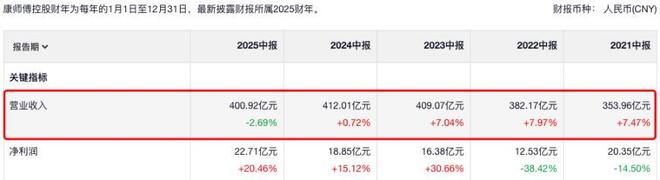
Core Viewpoint - Master Kong's revenue declined by 2.7% in the first half of 2025, indicating a situation of "profit growth without revenue growth," with both instant noodle and beverage businesses experiencing a downturn, prompting the company and competitors to seek innovation, with health-oriented products becoming a new direction [1][2]. Financial Performance - In the first half of 2025, Master Kong reported revenue of 40.092 billion yuan, a decrease of 1.109 billion yuan compared to the same period last year, marking a 2.7% decline, the first revenue drop in five years [2][3]. - Instant noodle revenue was 13.465 billion yuan, down 2.5% year-on-year, selling 349 million yuan less than in 2024 [2][4]. - Beverage revenue was 26.359 billion yuan, a decrease of 2.6%, accounting for 65.7% of total revenue [4]. - Net profit for the first half of 2025 was 2.271 billion yuan, an increase of 20.46% year-on-year, but this was partly due to non-recurring income, which, if excluded, would reduce the net profit growth rate to around 17% [3][4]. Market Trends - The instant noodle market is experiencing its coldest winter in 20 years, with consumption dropping by 4 billion packs from 2020 to 2023, and expected to fall to 43.8 billion packs in 2024 [2]. - The rise of new consumer preferences for healthier and more convenient food options is impacting traditional instant noodle sales, with a significant increase in pre-prepared meals and self-heating hot pot products [5][6]. Competitive Landscape - Master Kong's performance is lagging behind its competitor, Uni-President, which achieved double-digit growth in both revenue and profit in the same period [4]. - The company has adjusted its pricing strategy, increasing the suggested retail price of its instant noodles, which has led to a rise in gross margin by 0.7 percentage points to 27.8% [7][8]. Distribution Network - Master Kong's distribution network has contracted, with a reduction of 12.6% in the number of distributors by the end of 2024, and a further decrease in the first half of 2025 [7][8]. - The company is focusing on optimizing its distribution strategy to enhance profitability, targeting higher-quality distributors [8]. Innovation and Future Direction - To adapt to changing consumer preferences, Master Kong is introducing healthier product lines, including non-fried noodles and premium offerings [9]. - The rise of health-conscious consumers presents an opportunity for innovation in the instant noodle sector, with a growing market for health-oriented instant noodle products [9][10].

多元化消费需求背后:零食品类创新趋势洞察
3 6 Ke· 2025-08-20 04:05
Core Insights - The snack and baking industry is undergoing a significant transformation from a "shallow water" phase to a "deep water" phase, driven by rising health awareness, the emergence of Generation Z as a key consumer group, and the potential of lower-tier markets [1][3] - The competition logic in the industry is being restructured, shifting from a focus on taste innovation and channel distribution to a new competitive dimension of "product innovation + scenario exploration + value delivery" [1][3] Group 1: Opportunities in Brand Innovation - The snack industry is transitioning from a focus on taste to category innovation as the core competitive advantage, utilizing cross-industry integration, category reshaping, and scenario expansion to influence consumer behavior [4][5] - The rise of national policies promoting consumption and health, along with cultural confidence and social experiences among young consumers, is driving the industry towards a new "snack+" development model [6][12] Group 2: Key Trends in Snack Innovation - Health consciousness is becoming a primary concern for consumers, leading to a demand for snacks with beneficial ingredients and minimal additives [8][21] - Emotional satisfaction is increasingly important, with consumers seeking snacks that provide convenience, emotional comfort, and nutritional benefits [27][28] - The popularity of new Chinese-style snacks, characterized by cultural elements and local specialties, is on the rise [30] - Functional snacks that offer additional benefits, such as sleep aid or protein enhancement, are gaining traction [32] - The trend of flexible meals is emerging, with consumers increasingly using snacks as meal replacements [33] Group 3: Driving Forces Behind Snack Innovation - Rising disposable income and a willingness to spend on health, quality, and emotional experiences are fueling innovation in the snack sector [12][13] - The potential of lower-tier markets is significant, with brands like Wei Long and Da Li Foods achieving substantial growth in these areas [13][14] - The emergence of discount snack stores is creating new retail channels that enhance consumer experience and drive innovation [16][17] - Personalized consumption habits are promoting the development of functional and customized snack products [17][18] Group 4: Future Outlook - The snack industry is evolving from merely satisfying hunger to providing functional solutions for daily life, with a focus on cultural communication and scientific backing in product development [34]
高端厨电新势力火星人以创新驱动行业前行
Xin Lang Cai Jing· 2025-08-15 07:45
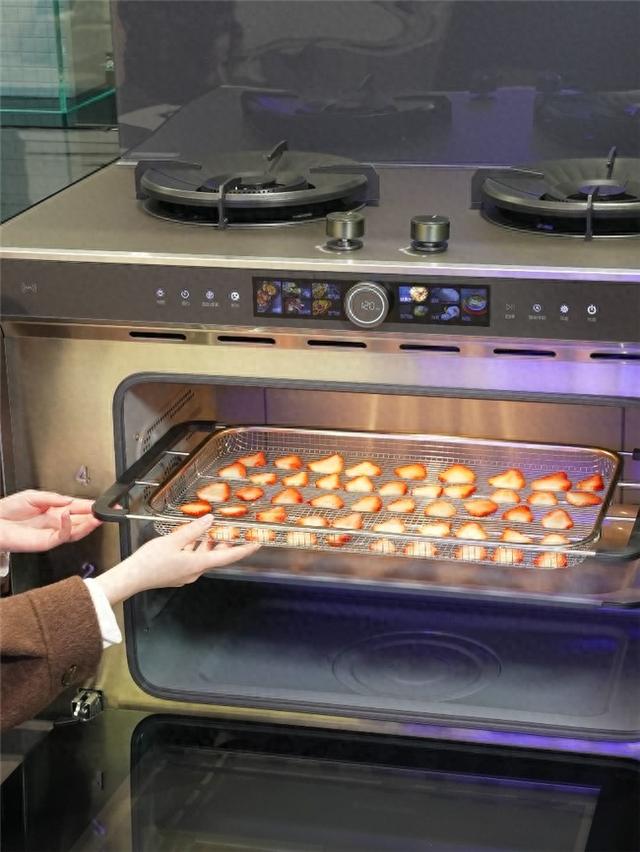
Group 1 - The kitchen is evolving from a simple cooking space to an important area for emotional connection and relaxation, leading to increased demand for high-quality kitchen appliances [2] - Mars has positioned itself as a leading brand in high-end kitchen appliances, focusing on integrated stoves and dishwashers [2][7] - The Mars Q60 integrated stove features unique technology for oil fume control, combining low air intake design with high airflow hardware [2] Group 2 - The Q60 integrated stove integrates multiple cooking functions such as steaming, baking, frying, and stewing into one device, catering to modern cooking needs [2] - The oil fume handling technology of the Q60 is inspired by the feeding patterns of whales, effectively capturing and removing oil fumes from cooking [2] - The Mars D75 integrated dishwasher addresses the need for large capacity cleaning and high-temperature sterilization, accommodating up to 109 standard dishes [5] Group 3 - The D75 dishwasher features a flat-layer design and is capable of deep cleaning fruits and vegetables, utilizing 16 directional spray nozzles for gentle yet effective cleaning [5] - The kitchen appliance industry is trending towards high-end and smart solutions, with Mars gaining a competitive advantage in this evolving market [7] - The Q60 integrated stove and D75 integrated dishwasher have become trusted companions for many households, enhancing the overall kitchen experience [7]
冰茶市场百亿新局 健康化趋势引发行业变革
Yang Guang Wang· 2025-08-06 07:17
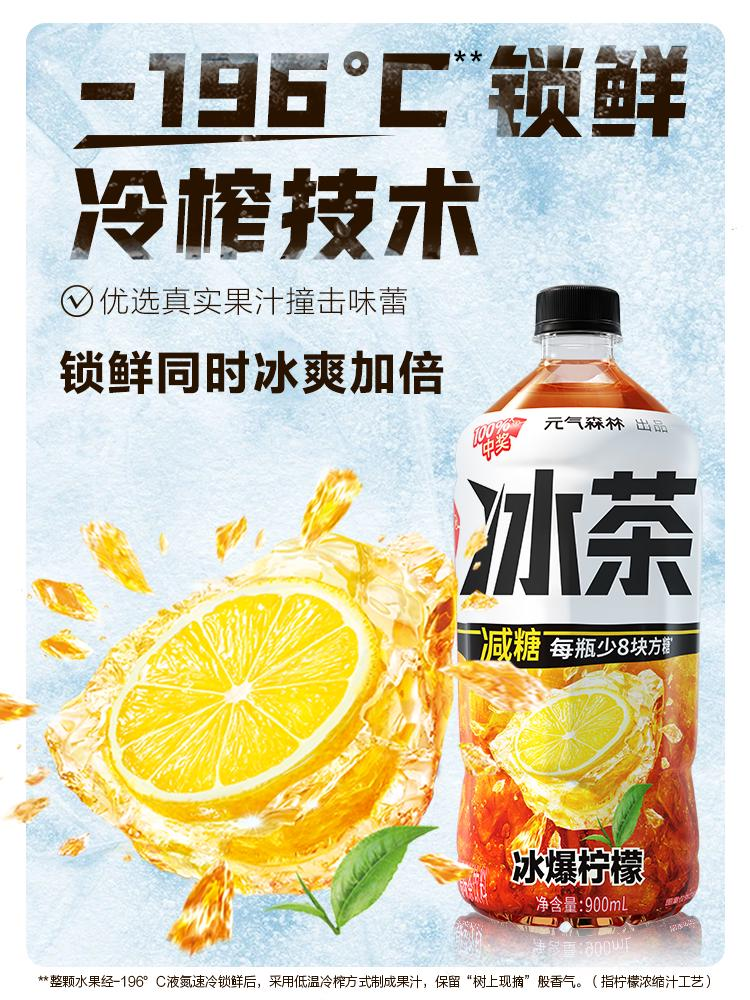
Core Insights - The ice tea market is evolving from a brand-centric approach to a category-focused one, with various brands like Yuanqi Forest and Nongfu Spring entering the market to redefine product standards through differentiated technology [1][2][3] - Health consciousness among consumers is driving the trend towards reduced sugar content in beverages, with 71.4% of consumers prioritizing "sugar-free/reduced sugar" labels when purchasing iced tea [2][3] - The global iced tea market is projected to grow from $53.3 billion in 2023 to over $100 billion by 2033, with a compound annual growth rate of 6.7% [6][9] Industry Trends - The Chinese government has initiated health promotion policies focusing on reducing sugar, salt, and oil in food, signaling a shift towards healthier beverage options [2][3] - Traditional brands like Master Kong and Uni-President leverage established distribution networks, while new brands utilize innovative technologies and health-focused marketing to capture younger consumers [6][9] - The competition in the iced tea market is intensifying, with both established and emerging brands striving to balance health benefits with taste, as consumer preferences shift towards lower sugar options [4][5][10] Consumer Preferences - Taste remains a critical factor in consumer purchasing decisions, with sweetness, tea flavor, and aroma being the top three attributes valued by iced tea drinkers [4][5] - Younger consumers (ages 18-25) exhibit higher loyalty and repurchase rates for iced tea, particularly valuing a rich and balanced flavor profile [4][5] - Brands are responding to consumer demand for reduced sugar without compromising taste, with innovations such as Yuanqi Forest's use of liquid nitrogen freezing technology to enhance flavor [5][9] Competitive Landscape - New brands are differentiating themselves through unique formulations and health claims, such as Hao Wang Shui's electrolyte-infused iced tea targeting fitness enthusiasts [9][10] - Yuanqi Forest has reported a 53.9% year-on-year sales growth in its iced tea category, indicating strong market acceptance and brand recognition [9][10] - The market is characterized by a clear segmentation, with traditional brands maintaining a stronghold through extensive distribution while new entrants challenge them with innovative products [6][9]

好想你:聚焦产品升级与渠道革新,稳固行业领先地位
Zheng Quan Shi Bao· 2025-08-05 12:52
Core Viewpoint - The leisure food industry is accelerating its transformation towards health and functionality, with the leading red date company, Haoxiangni, implementing a product and customer-centric development strategy to address market challenges and drive sustainable growth [1][2]. Group 1: Business Strategy - Haoxiangni is enhancing operational performance through both "increasing revenue" and "cost-saving" measures, focusing on consolidating specialty stores and e-commerce advantages while expanding into high-potential new channels like Sam's Club [1]. - The company plans to deepen joint marketing and data sharing with leading channels to improve terminal sales efficiency [1]. - Cost-saving initiatives include precise raw material procurement, centralized bidding, and refined production management, leading to improved production efficiency [1]. Group 2: Product Innovation - Functional innovation is a key investment direction, with increased R&D efforts resulting in the launch of low GI "Black Gold Dates" and red date eight-treasure tea [2]. - Freeze-drying technology is widely applied in products like red date and tremella soup, quickly capturing market share due to convenience and nutritional retention [2]. - Product designs are closely aligned with modern lifestyle scenarios, such as ready-to-drink red date astragalus water and portable star product "Red Small Pie" date kernel pie, facilitating the transition of red dates from traditional health supplements to everyday health companions [2]. Group 3: Supply Chain Optimization - Haoxiangni implements a "three guarantees, one reduction, one innovation" strategy (guaranteeing quality, supply, safety, reducing costs, and innovating models) to enhance efficiency across the entire supply chain [2]. - The procurement side focuses on refined classification to lower costs, while the production side introduces smart equipment to increase per capita output [2]. - Digital construction is integrated throughout the business process, enabling real-time sales data monitoring and dynamic production planning adjustments, improving inventory turnover rates [2]. Group 4: Brand Building and Shareholder Returns - The company emphasizes brand building with the core proposition "Oriental Date Gift, Central Plains Affection," enhancing brand cultural connection and emotional resonance through thematic content and award-winning documentaries [2]. - Haoxiangni continues its tradition of high dividends, with a projected dividend yield exceeding 10% in 2024 and cumulative dividends reaching 611 million yuan [2]. Group 5: Future Outlook - Looking ahead, Haoxiangni will continue to promote the "four unwavering principles" and "ten" operational strategies, focusing on multi-dimensional upgrades in products, channels, and supply chains to solidify its advantages across the entire industry chain [3]. - The company aims to establish a foundation for achieving its long-term goals of a 10 billion yuan market value, 10 billion yuan in revenue, and a century-long brand [3].

日清食品(01475):基本盘稳固,海外转型驱动新增长
NORTHEAST SECURITIES· 2025-07-30 08:27
Investment Rating - The report initiates coverage with a "Buy" rating for the company [4]. Core Views - The company has a solid foundation in the instant noodle market, with a strong position in the high-end segment, and is leveraging overseas expansion for new growth [1][2]. - The company is experiencing a recovery in revenue and profit, driven by continuous product innovation and effective marketing strategies [2][3]. - The financial outlook is positive, with expected earnings per share (EPS) growth from 0.27 to 0.34 HKD from 2025 to 2027, indicating a resilient business model [3]. Summary by Sections Company Overview - The company has been a pioneer in the instant noodle industry since its establishment in 1984, defining global standards and leading the high-quality instant meal trend [1][17]. - It has a concentrated ownership structure, with the majority shareholder holding 72.05% of the shares, ensuring efficient strategic decision-making [24]. Financial Performance - The company’s revenue is projected to be 38.12 billion HKD in 2024, with a net profit of 2.07 billion HKD, reflecting stable profitability [1][3]. - The gross margin is expected to increase to 34.42% in 2024, with a recent recovery in the net profit margin to 10.45% [1][3]. - The company has maintained a stable expense ratio, indicating efficient operational management [2][30]. Industry Analysis - The instant noodle market in China has seen a slowdown in growth, with the market size reaching approximately 1240.14 billion HKD in 2024, but still presents opportunities for innovation and high-end transformation [2][46]. - The frozen food sector is entering a high-growth phase, with the market size expected to reach 2130.9 billion HKD by 2025, driven by evolving consumer preferences and improved logistics [2][46]. Investment Highlights - The core instant noodle business remains robust, while other food segments provide additional growth momentum [2][4]. - The company is effectively controlling costs and maintaining a strong cash flow, supporting consistent dividend payouts [2][3]. - The company is strategically exiting underperforming markets and focusing on Southeast Asia and Australia for expansion [21][24].
味甘传统茶 盛夏新赛道
Bei Jing Wan Bao· 2025-07-30 08:12
Core Insights - The tea beverage market in China is experiencing intense competition as it approaches structural upgrades by 2025, driven by the popularity of ready-to-drink tea among young consumers [1][3] - Major brands are innovating and diversifying their product offerings to cater to health-conscious consumers, marking a shift from traditional tea consumption to modern interpretations [6][7] Market Trends - The ready-to-drink tea market is growing rapidly, with brands like Bawang Chaji achieving significant sales milestones, such as over 600 million cups sold by 2024 [3][5] - Health-conscious trends are becoming mainstream, with brands like Bawang Chaji and Heytea implementing transparency initiatives and health standards to meet consumer demands for lower sugar options [6][8] Brand Strategies - Leading brands are building competitive advantages through unique product offerings: Bawang Chaji focuses on "original leaf fresh milk tea," while Heytea emphasizes innovative flavor combinations [5][6] - Brands are expanding their product lines to include healthier options, with Bawang Chaji launching a "nutrition selection" system and Heytea introducing a health standard for their beverages [6][7] Global Expansion - Major tea brands are increasingly looking to international markets, with Bawang Chaji opening 169 overseas stores by early 2025 and achieving impressive sales in new locations [8][9] - The cultural aspect of tea is being leveraged in global markets, with store designs reflecting Chinese cultural elements to attract local consumers [9] Innovation in Traditional Tea - Traditional tea companies are revitalizing their offerings through product innovation, such as Xiaoguan Tea entering the bottled tea market and Wu Yutai launching cross-category products [10][11] - Wu Yutai's introduction of Jasmine Flower Tea Craft Beer exemplifies the blending of traditional tea culture with modern consumer preferences [11][12]