
行业自律

Search documents
光伏上游"深蹲起跳": 硅料和玻璃价格双双大涨,自律限产打出盈利底?
Hua Er Jie Jian Wen· 2025-09-02 03:03
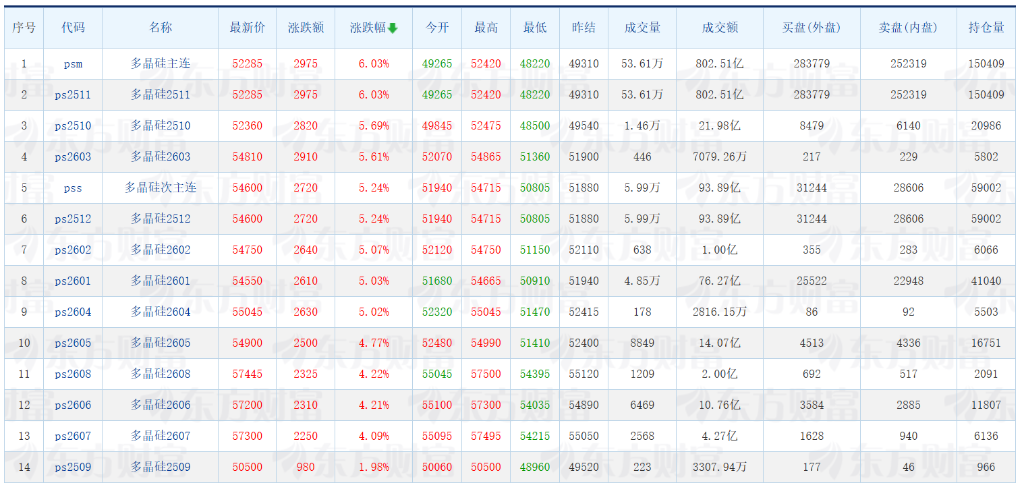
Core Viewpoint - The photovoltaic industry is experiencing a positive shift in supply and demand dynamics, leading to significant price increases in key materials like polysilicon and glass, which is expected to enhance profitability for related companies [1][2][4]. Group 1: Polysilicon Market - On September 1, the main contract for polysilicon futures surged over 6%, with leading companies raising their spot prices, reflecting a strong market response [1][2]. - The mainstream price for rod silicon reached 55 yuan per kilogram, while granular silicon was priced at 49 yuan per kilogram, driven by industry self-discipline agreements aimed at avoiding price wars [2]. - The industry anticipates polysilicon prices to stabilize between 60,000 yuan and 80,000 yuan per ton, with inventory levels expected to decline [2]. Group 2: Glass Market - The price of photovoltaic glass has also seen a notable increase, with the benchmark price for 2.0mm single-layer coated glass rising to 13 yuan per square meter, up by 2 yuan from July [3]. - As of late August, the inventory of photovoltaic glass was reported at 24.02 days, indicating a healthy reduction in stock levels [3]. - If current price levels are maintained, leading manufacturers are expected to achieve profitability, while smaller firms are nearing breakeven points [3]. Group 3: Industry Outlook - The simultaneous rise in polysilicon and glass prices indicates a temporary improvement in the supply-demand balance within the photovoltaic industry [4]. - Increased operational rates among downstream silicon wafer companies and a seasonal demand boost in the third quarter are contributing to accelerated inventory consumption [4]. - Despite recent improvements, the overall profitability of the industry remains low, with companies experiencing losses for seven consecutive quarters prior to Q4 2023 [4].
TCL科技20250901
2025-09-02 00:42
Summary of TCL Technology Conference Call Company Overview - **Company**: TCL Technology - **Key Subsidiaries**: Huaxing Optoelectronics, TCL Zhonghuan Financial Performance - **Revenue**: 2025 H1 revenue reached 85.6 billion, a year-on-year increase of 6.7% [2][7] - **Net Profit**: Net profit improved to 30 million, compared to a loss of 470 million in the same period last year [2][7] - **Net Profit Attributable to Parent**: 1.88 billion, significantly up from 1 billion year-on-year [2][8] - **Huaxing Optoelectronics**: Revenue grew by 15.4% to 46.1 billion, with net profit increasing by 19.2 billion [2][8] - **TCL Zhonghuan**: Revenue decreased by 17% to 13.4 billion, with a net loss of 4.8 billion, a 52% decline [2][8] Business Segments Display Panel Business - **Market Position**: Huaxing holds the largest market share in the 55-inch and above segment and leads in the gaming monitor market [2][14] - **Product Performance**: - Mid-size revenue grew by 43% due to T9 full production and IT product shipments [2][13] - Large-size revenue increased by 8%, maintaining stable market prices [2][13] - Small-size shipments increased significantly, but revenue growth was not notable [2][13] - **Acquisition**: Completed acquisition of LG Display's Guangzhou assets (T11 line), with smooth operations and a yield rate above 95% [2][15] Semiconductor Business - **Performance**: TCL Zhonghuan's semiconductor silicon wafer business revenue grew by 38.2%, maintaining a leading position in the domestic market [2][4] - **Challenges**: Despite a revenue decline, operational improvements led to a 37% quarter-on-quarter net profit improvement [2][4] Solar Industry - **Market Impact**: The solar sector faced challenges due to policy changes and market fluctuations, but losses narrowed in H1 [2][6] - **Strategic Focus**: Emphasis on cost management and operational efficiency to address price volatility and oversupply [2][6] Future Outlook - **Display Market**: Anticipated panel industry utilization rates to reach 83%-85% in Q4 2025, with positive demand driven by upcoming sports events [3][38] - **OLED Strategy**: Continued focus on high-end OLED products and expansion into IT and automotive sectors [3][12] - **Global Strategy**: TCL Zhonghuan plans to enhance global strategies, particularly in the Philippines and the Middle East, while optimizing cost management [3][23] Key Trends and Innovations - **Technology Advancements**: Progress in next-generation display technologies, including MLED and printed OLED, with mass production breakthroughs [3][12][35] - **Market Dynamics**: The global display industry is expected to see structural demand growth, particularly in high-refresh-rate and large-size products [3][19] Additional Insights - **Cash Flow**: Strong cash flow performance with 27.27 billion in H1, significantly improved year-on-year [2][8] - **Debt Management**: Healthy capital structure with a debt ratio of 67.7% and a focus on reducing interest-bearing liabilities [2][8] - **Dividend Policy**: The company maintains a stable dividend policy, with a historical average payout ratio of 37-38% [3][33] This summary encapsulates the key points from the TCL Technology conference call, highlighting financial performance, business segments, future outlook, and strategic initiatives.


光伏上游“深蹲起跳”:硅料和玻璃价格双双大涨,自律限产打出盈利底?
Hua Er Jie Jian Wen· 2025-09-01 11:59
Core Viewpoint - The prices of polysilicon and solar glass in the photovoltaic industry chain have significantly increased, indicating a positive change in the supply-demand dynamics of the industry [1][5]. Group 1: Polysilicon Price Surge - On September 1, the main contract for polysilicon futures rose over 6%, with leading companies adjusting their spot prices accordingly [1][2]. - The mainstream price for rod silicon has risen to 55 yuan per kilogram, while granular silicon is priced at 49 yuan per kilogram, driven by industry self-discipline agreements [3]. - The China Photovoltaic Industry Association has led major companies to sign self-discipline agreements to avoid vicious price competition and control capacity release [3]. Group 2: Solar Glass Price Increase - Solar glass prices have also seen a notable increase, with the benchmark price for 2.0mm single-layer coated glass rising to 13 yuan per square meter, up by 2 yuan from July [4]. - As of late August, solar glass inventory has decreased to 24.02 days, indicating a healthy level [4]. Group 3: Supply-Demand Dynamics - The simultaneous rise in polysilicon and glass prices reflects a phase of improvement in the supply-demand structure of the photovoltaic industry [5]. - The operating rate of downstream silicon wafer companies has increased, driven by the peak demand season for photovoltaic installations in the third quarter [5]. - The expected policies for industry self-discipline and capacity reduction are fostering optimism in the market regarding future price stability and potential increases [5].


有色金属日报-20250829
Guo Tou Qi Huo· 2025-08-29 12:46
Report Industry Investment Ratings - Copper: The rating is not clearly interpretable from the Chinese - like symbols provided. Analysis indicates potential resistance at integer levels [1]. - Aluminum: The rating is not clearly interpretable. It is expected to be in short - term oscillation with resistance at the 21,000 yuan area [2]. - Alumina: The rating is not clearly interpretable. It is in a weak oscillation, testing the 3000 - yuan support level [2]. - Casting Aluminum Alloy: The rating is not clearly interpretable. It follows the movement of Shanghai Aluminum [2]. - Zinc: The rating is not clearly interpretable. There is a mid - line idea of short - selling on rebounds [3]. - Lead: The rating is not clearly interpretable. In the short - term, it is seen as oscillating [5]. - Nickel and Stainless Steel: The rating is not clearly interpretable. Technically, nickel has a rebound intention, but the fundamental is weak, suggesting looking for short positions [6]. - Tin: The rating is not clearly interpretable. It is recommended to hold previous long positions and wait for profit realization, with caution when chasing up above 275,000 yuan [7]. - Lithium Carbonate: The rating is not clearly interpretable. It is in a relatively strong oscillation [8]. - Industrial Silicon: The rating is not clearly interpretable. There is a risk in going long, with the current focus on the 8300 - yuan/ton support level [9]. - Polysilicon: The rating is not clearly interpretable. It is expected to maintain an oscillating trend [10]. Core View The report analyzes the market conditions of various non - ferrous metals. It takes into account factors such as inventory changes, supply - demand relationships, and policy expectations. Different metals show different trends, including oscillation, potential rebounds, or weakening trends. For example, some metals have clear resistance or support levels, and the market sentiment and trading volume also vary among different metals [1][2][3][5][6][7][8][9][10]. Summary by Metal Copper - On Friday, Shanghai copper increased its positions, and the afternoon session expanded the rebound amplitude. The spot copper price was 79,390 yuan, and the Shanghai copper premium widened to 250 yuan. Attention was paid to the US monthly PCE indicator at night, and the resistance at integer levels was strong [1]. Aluminum, Alumina, and Aluminum Alloy - Shanghai aluminum had a narrow - range fluctuation, with spot discounts remaining in various regions. Downstream开工seasonally increased, and inventory was likely to be low this year. However, the inventory accumulation point was not clear, and it was expected to oscillate in the short - term, with resistance at the 21,000 - yuan area. Casting aluminum alloy followed Shanghai aluminum, with the Baotai spot price at 20,300 yuan. The supply of scrap aluminum was tight, and the expected tax policy adjustment increased enterprise costs, with the potential for the cross - variety price difference between spot and Shanghai aluminum to narrow further. Alumina's operating capacity was at a historical high, with increasing industry inventory and Shanghai Futures Exchange warehouse receipts. Supply surplus was emerging, and the spot index in various regions was declining. It was in a weak oscillation, testing the 3000 - yuan support level, and short - term long positions could be considered if the futures discount widened [2]. Zinc - SMM zinc social inventory rose to 144,500 tons, and LME zinc inventory was as low as 58,000 tons, with the cancelled warrant ratio at 25%. The domestic downstream consumption was in the off - season, and there were concerns about pre - consumption. In September, attention was paid to whether the consumption would be weak during the peak season. The increase in the mine end was being realized, and there was still room to short - sell mine profits on the futures market. The mid - line idea of short - selling on rebounds remained unchanged [3]. Lead - LME lead had high inventory, suppressing the lead price. Factors such as pre - consumption, tariff impact, and lithium substitution for lead led to insufficient expected demand growth and lack of rebound momentum. Due to smelter production cuts and transportation restrictions, SMM lead social inventory decreased to 67,100 tons. The raw material shortage situation remained unchanged, and the cost provided support. The downward adjustment space was limited, and in the short - term, the directional signal was weak, with continuous capital outflows. The consumption expectation was difficult to improve fundamentally, and in September, attention was paid to the implementation of smelter maintenance [5]. Nickel and Stainless Steel - Shanghai nickel rebounded, but the market trading was dull. Traders had a strong intention to support prices, and the premium range of mainstream electrolytic nickel remained at - 100 - 300 yuan/ton this week. Affected by the decline in the futures price, the downstream procurement volume increased this week. Pure nickel inventory decreased by 1000 tons to 41,000 tons, nickel - iron inventory remained at 33,000 tons for nearly a month and a half, and stainless - steel inventory remained unchanged at 934,000 tons, but the overall level was still high. Attention was paid to the end of the de - stocking. Technically, nickel had a rebound intention, but the fundamental was weak, and short positions were to be sought [6]. Tin - Shanghai tin increased its positions and rose sharply. Tin announced maintenance as expected. Overseas A1 semiconductor investment remained prosperous, with low LME tin inventory and high premiums. The domestic spot tin price was raised to 272,900 yuan, with a real - time discount of 350 yuan to the delivery month. Attention was paid to social inventory. Caution was needed when chasing up above 275,000 yuan, and attention was paid to capital changes. The tin price might test 280,000 - 282,000 yuan. Previous long positions were to be held, waiting for profit realization [7]. Lithium Carbonate - The lithium carbonate futures price adjusted downward, and market trading declined. Some miners sold goods when the futures price rose, and there were sporadic auctions. After the futures price dived, there was phased reluctance to sell. Downstream continuously adjusted their psychological price levels, and the replenishment behavior was generally cautious. The total market inventory slightly decreased by 700 tons to 142,000 tons, smelter inventory decreased by 3000 tons to 47,000 tons, downstream inventory increased by nearly 3000 tons to 52,000 tons. After the price dropped rapidly, downstream took the opportunity to buy goods, and trader inventory decreased by 1000 tons to 43,000 tons. The speculation sentiment in the mid - stream decreased, and the transfer of goods was mainly from the upstream to the downstream. The latest Australian ore quotation was 925 US dollars, and the ore - end quotation slightly adjusted downward, matching the lithium price fluctuation. The mid - stream production decreased by 5% week - on - week. During the adjustment of the lithium carbonate futures price, the market focus was on the expectation of the 930 deadline after downstream shutdowns, which was difficult to verify in the short - term, and the fundamental had limited guidance on the price. Overall, it was in a relatively strong oscillation, and risk control was needed [8]. Industrial Silicon - The industrial silicon futures price was approaching the lower limit of the oscillation range. In terms of fundamentals, both supply and demand increased in August, and the restarted production capacity in Xinjiang released output. In September, due to industry self - discipline, the production schedule of polysilicon was expected to decline significantly, and the large - scale production cuts in Sichuan and Yunnan might be postponed until after the dry season in September. It was expected that the supply - demand contradiction of industrial silicon would intensify this month, and the spot price had been continuously adjusting downward recently. The futures market was currently focusing on the 8300 - yuan/ton support level. Next week, the policy expectation of polysilicon might ferment, but the fundamental support was weak, and the risk of going long was to be vigilant [9]. Polysilicon - The polysilicon futures closed up in an oscillating manner at around 49,500 yuan/ton. The weekly inventory data of polysilicon decreased rapidly, and downstream trading volume increased, mainly due to industry self - discipline. The production schedule of polysilicon in September was expected to decline significantly. Next week, the "anti - involution" policy expectation might ferment again, but before more details were disclosed, it was expected to maintain an oscillating trend [10].
国盛证券:协会发布磷酸铁锂发展倡议书 持续助推行业价格稳定
智通财经网· 2025-08-29 07:48
Core Viewpoint - The lithium iron phosphate (LFP) industry is facing low capacity utilization and continuous losses among most companies due to significant capacity expansion and volatile lithium resource prices. The China Chemical and Physical Power Industry Association has released a draft proposal to maintain the healthy and orderly development of the LFP materials industry, which aims to stabilize prices and promote profitability [1]. Group 1: Industry Challenges - The LFP demand has been rising due to the booming new energy vehicle and energy storage industries, with China's LFP material capacity accounting for over 95% of global capacity by mid-2025 [1]. - The industry is experiencing low capacity utilization rates, with many companies reporting ongoing losses due to the drastic expansion of capacity and fluctuations in lithium prices [1]. Group 2: Association's Proposal - The proposal includes four key recommendations: 1. Resist malicious price competition and maintain market order by establishing a "LFP product cost price index" to provide objective pricing references [2]. 2. Build a healthy supply chain ecosystem to collaboratively address raw material price volatility through long-term agreements and futures market references [2]. 3. Strengthen capacity self-discipline management and improve industry access mechanisms by controlling capacity utilization rates and clearing inefficient capacity [2]. 4. Shift competition focus from price to technology development, product performance, manufacturing processes, and service systems [2]. Group 3: Market Performance - By mid-2025, LFP battery installation in China accounted for over 81% of total installations, with a year-on-year increase of 67% [3]. - The cumulative installation volume of LFP batteries reached 244.0 GWh, representing a 73.0% year-on-year growth, while LFP cathode shipments totaled 1.632 million tons, up 66.6% year-on-year [3]. - Hunan Youneng led the market with a 30% share and a production of 400,000 tons, while other companies like Wanrun New Energy and Defang Nano held market shares between 5% and 10% [3].

机构:看好汽车行业投资机会
Zheng Quan Shi Bao Wang· 2025-08-28 00:54
Group 1 - The retail sales of passenger cars in China reached 1.285 million units from August 1 to 24, representing a 3% increase year-on-year and month-on-month, with cumulative retail sales for the year at 14.031 million units, up 10% year-on-year [1] - Guohai Securities anticipates that the vehicle replacement policy will catalyze passenger car sales in 2024, with continued support for automotive consumption in 2025, highlighting investment opportunities in the automotive sector [1] - Key areas of focus include: 1) The rise of domestic brands entering a new phase of high-end development, benefiting companies with quality offerings priced above 300,000 yuan; 2) The "affordability" of advanced driving technology is expected to significantly increase its penetration rate, benefiting leading automakers and related components; 3) A complex export environment, with optimism for quality component companies experiencing upward operational cycles; 4) In the commercial vehicle sector, demand for heavy trucks is at a three-year low but is expected to recover in 2025, while the bus sector is anticipated to see continued growth in both domestic and export demand [1] Group 2 - Founder Securities notes that a strong cycle of new product launches from leading automakers is likely to accelerate the restructuring of market segments [2] - The "anti-involution" policy and industry self-discipline are driving continuous optimization of the industry operating environment, with July's overall discount in the automotive market stabilizing at 25%, indicating initial effects of policy regulation [2] - As July is traditionally a slow season for automotive consumption, the upcoming peak season combined with new product launches from top automakers is expected to lead to a recovery in industry demand, pushing the sector into an upward cycle of prosperity, with the current dynamic PE of the passenger car sector at the 39th percentile over the past five years, indicating room for valuation recovery [2]
金隅集团(02009.HK)中期营业收入455.66亿元 同比增加0.01%
Ge Long Hui· 2025-08-27 13:08
Core Viewpoint - The company reported a slight increase in revenue but a significant increase in net loss for the first half of 2025 compared to the same period in 2024, indicating ongoing financial challenges despite operational improvements in certain segments [1]. Financial Performance - Revenue for the six months ending June 30, 2025, was approximately RMB 45.566 billion, an increase of 0.01% compared to the mid-year of 2024 [1]. - The net loss attributable to shareholders was approximately RMB 1.496 billion, representing an increase of 85.4% compared to the same period in 2024 [1]. - Basic loss per share attributable to shareholders (excluding other equity instruments) was approximately RMB 0.19, an increase of about RMB 0.07 or 58.3% from RMB 0.12 in the mid-year of 2024 [1]. Operational Highlights - The cement business focused on lean operations, achieving a reduction in cement production costs by RMB 19 per ton year-on-year [1]. - The average price of cement clinker increased by RMB 9 per ton year-on-year, contributing to a significant reduction in losses [1]. - The concrete business saw a year-on-year increase in production and sales volume by 23%, with sales to strategic customers increasing to 33%, doubling compared to the previous year [1]. - The new materials business improved its integrated marketing mechanism, enhancing the "product + solution + service" system, with sales revenue from strategic customers increasing by 5.8% year-on-year [1].
上半年光伏产业困境依旧 行业深度调整或仍未结束
Xin Hua Cai Jing· 2025-08-27 07:18
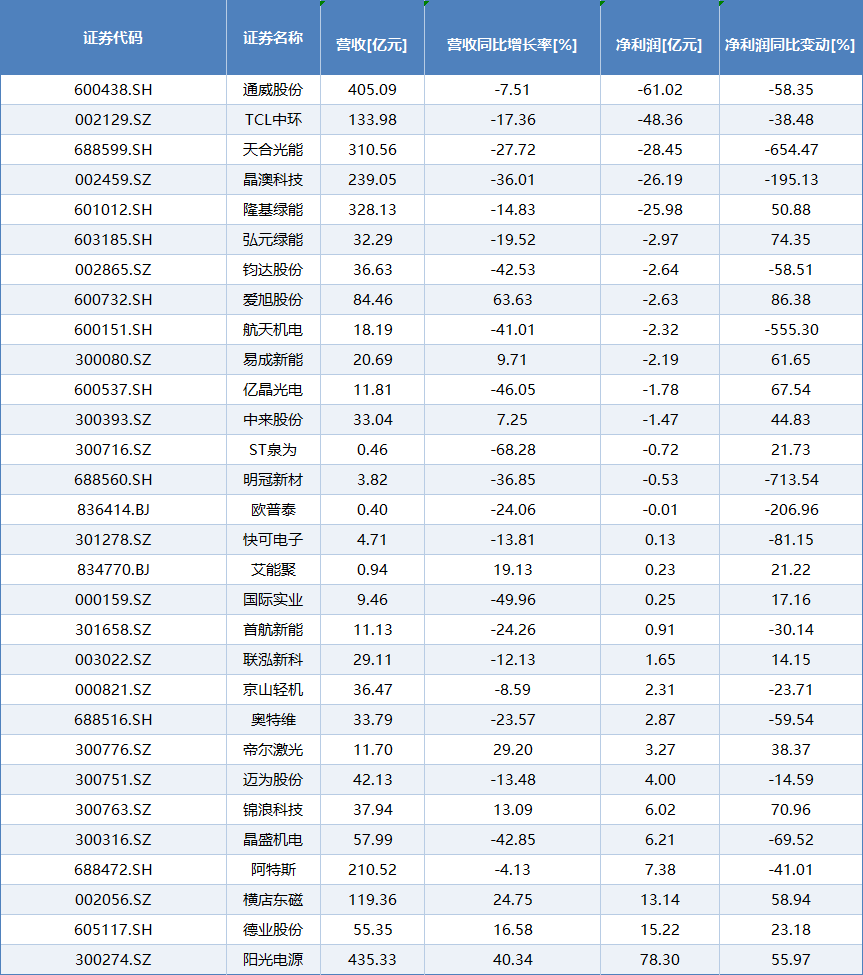
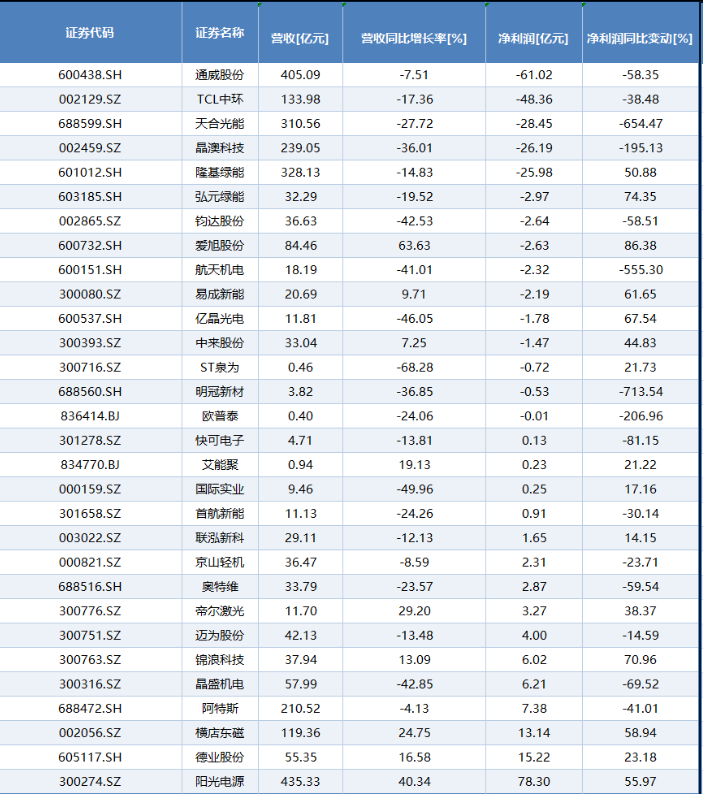
Core Viewpoint - The photovoltaic industry continues to face significant challenges, with many companies reporting losses in their 2025 semi-annual reports, indicating that the industry's deep adjustment may not be over yet [1][3][6]. Industry Performance - As of August 26, 30 listed photovoltaic companies have released their 2025 semi-annual reports, with 20 companies experiencing a year-on-year decline in revenue and 15 companies reporting net losses [3][4]. - Notable companies such as Longi Green Energy reported a revenue decline of 14.83% and a net loss of 2.569 billion yuan, while Tongwei reported a revenue decline of 7.51% and a net loss of 4.955 billion yuan [3][4]. Market Dynamics - The industry has seen some positive effects from self-regulation efforts initiated in the second half of last year, with prices for polysilicon and silicon wafers stabilizing [8]. - However, the pace of inventory reduction remains below expectations, and the overall market demand is showing signs of slowing down due to the end of the "rush installation" trend [8][9]. Demand and Supply Challenges - The demand side is expected to face negative impacts from demand exhaustion as the "rush installation" trend subsides [6][8]. - The industry is experiencing a significant decline in production growth rates, with battery cell and module production growth dropping below 15% [8]. International Market Uncertainties - The global photovoltaic market is slowing down, with traditional overseas markets shrinking and emerging markets like Latin America and the Middle East growing but not significantly impacting overall growth [9][10]. - Recent changes in U.S. clean energy policies have raised concerns among companies about expanding into international markets [10]. Technological Innovation - Companies are increasingly relying on technological innovation to navigate the industry's challenges, with some focusing on next-generation photovoltaic technologies like perovskite [11][12]. - However, the current low profit margins and intense competition in the crystalline silicon market are hindering the promotion and application of new technologies [12]. Regulatory and Market Support - Industry insiders emphasize the need for stronger regulatory measures to address issues like "virtual power" and "lowering quality control," which are detrimental to innovation [12]. - There is a call for government intervention to facilitate market consolidation and support the exit of outdated production capacities [12].
上半年光伏产业困境依旧,行业深度调整或仍未结束
Xin Hua Cai Jing· 2025-08-27 07:09
Group 1 - The core issue facing the photovoltaic industry is ongoing losses, with many leading companies reporting significant declines in revenue and net profit for the first half of 2025 [1][2][4] - As of August 26, 2025, 30 listed photovoltaic companies have released their semi-annual reports, with 20 companies experiencing a year-on-year revenue decline and 15 companies reporting net losses [2][3] - Notable losses include Longi Green Energy with a revenue decline of 14.83% and a net loss of 2.569 billion yuan, Tongwei with a revenue decline of 7.51% and a net loss of 4.955 billion yuan, and JA Solar with a revenue decline of 36.01% and a net loss of 2.58 billion yuan [2][3] Group 2 - Despite some leading companies showing signs of reduced losses, the industry is still undergoing deep adjustments, with a potential negative impact from demand exhaustion in the second half of the year [4][5] - The photovoltaic industry has seen some stabilization in prices for polysilicon and silicon wafers due to self-regulation efforts, but the pace of inventory reduction remains below expectations [5][6] - The industry faces challenges from a lack of mandatory self-regulation, especially during critical times for companies, leading to concerns about pricing strategies and market share [6][7] Group 3 - As the domestic photovoltaic market approaches saturation, companies are increasingly looking for growth opportunities overseas, but external uncertainties are causing hesitation [7][8] - Recent changes in U.S. clean energy policies have raised concerns among companies about the feasibility of expanding into international markets, particularly in Southeast Asia and the Middle East [7][8] - The ongoing geopolitical tensions and trade policies are reshaping supply chains and complicating international collaborations in photovoltaic technology [8][9] Group 4 - Companies are exploring new technologies such as perovskite solar cells and advanced silicon products (TOPCon, HJT, BC) to overcome current industry challenges, but consensus on the best technological path is lacking [9][10] - The low profit margins in the industry are hindering innovation in supporting sectors, and the competitive pressure from leading companies is affecting smaller firms' ability to invest in new technologies [9][10] - There is a call for stronger government regulation to address issues like false power ratings and quality control, which are seen as critical for fostering innovation and ensuring market stability [10]
优必选牵头两项人形机器人国家技术标准,光伏反内卷会议再召开| 投研报告
Zhong Guo Neng Yuan Wang· 2025-08-27 01:34
Group 1: Industry Developments - UBTECH has led the establishment of two national technical standards for humanoid robots, focusing on "Positioning and Navigation" and "Human-Machine Interaction" [1][2] - NVIDIA and Foxconn are collaborating to manufacture a humanoid robot, with the first model expected to be unveiled in November [2] Group 2: Solar Industry Initiatives - The China Photovoltaic Industry Association (CPIA) has proposed initiatives to strengthen industry self-discipline and maintain fair competition in the solar market [3] - A meeting was held by six departments to address low-price competition and promote the orderly exit of outdated production capacity in the solar industry [4] Group 3: Pricing Trends - The average price of polysilicon remains stable at 44.0 CNY/kg, with a total of six companies signing contracts this week [5] - Prices for silicon wafers and battery cells have also remained stable, with specific prices reported for various types of products [6][7] Group 4: Investment Recommendations - Companies recommended for investment include Aiko Solar and LONGi Green Energy in the BC technology direction, and Daqo New Energy and First Solar in the supply-side improvement direction [8] - Humanoid robot-related stocks to watch include UBTECH, Zhongdali, and Yijiahe among others [9]
