
货币宽松政策

Search documents
欧洲央行料将暂缓降息 静观特朗普关税影响
news flash· 2025-07-24 04:35
Core Viewpoint - The European Central Bank (ECB) is expected to maintain interest rates at 2% during its upcoming decision, marking the first pause in over a year as policymakers assess the impact of Trump's tariff policies on inflation [1] Group 1: Interest Rate Decision - The ECB is anticipated to keep the deposit rate unchanged at 2% based on a survey where all but two economists predict this outcome [1] - Most economists expect a 25 basis point rate cut in September, coinciding with potential trade agreement developments between the US and Europe [1] Group 2: Economic Outlook and Divergence in Policy - ECB officials generally agree on pausing the monetary easing cycle that has lasted for a year, but there are differing views on future policy directions [1] - Some officials express concern that inflation may fall below the 2% target again, advocating for further easing, while others warn that increased fiscal spending could lead to higher prices in the future [1]
日本央行副行长内田真一:只有当日本央行成功退出宽松政策时,才能判断我们的货币宽松措施对日本经济产生了积极影响。
news flash· 2025-07-23 01:43
Core Viewpoint - The Deputy Governor of the Bank of Japan, Shinichi Uchida, stated that the positive impact of the monetary easing measures on the Japanese economy can only be assessed once the Bank successfully exits its easing policy [1] Group 1 - The Bank of Japan's current monetary easing policy is under scrutiny regarding its effectiveness on the economy [1] - A successful exit from the easing policy is deemed necessary for evaluating the measures' impact [1]
30%关税,对欧盟意味着什么?
Hua Er Jie Jian Wen· 2025-07-15 07:48
Core Viewpoint - The announcement of a 30% tariff on products from Mexico and the EU by the U.S. is expected to lead to significant economic repercussions, including potential retaliation from the EU and a deeper economic slowdown in the Eurozone [1][2][3]. Economic Impact - A 30% tariff, combined with a 10% retaliatory tariff from the EU, could shrink Eurozone economic output by 0.7% [1][3]. - The European Central Bank (ECB) may lower its policy interest rate to 1% by the first quarter of 2026, down from the current 2% [1][3]. - Germany, as a key exporter, could face losses exceeding €200 billion due to tariffs ranging from 20% to 50% by 2028 [3]. Market Reactions - The threat of tariffs has increased risk exposure across asset classes, with European stocks potentially facing double-digit declines [4]. - The euro may experience downward pressure if high tariffs are imposed, affecting its macroeconomic outlook [4]. - Bond markets are reflecting heightened risk aversion, with predictions that short-term euro interest rates could drop below 1.5% and 10-year German bond yields may fall below 2.5% [4]. Negotiation Dynamics - As the August 1 deadline approaches, there is a complex negotiation landscape, with the possibility of temporary agreements but a higher likelihood of tariff increases [5]. - Internal divisions within the EU exist regarding the response to U.S. tariffs, with some countries advocating for caution while others push for a stronger stance [5]. - The ongoing trade uncertainty may delay the Federal Reserve's interest rate cuts, which could serve as an unexpected leverage point for the EU in negotiations [5].


东吴增鑫宝货币市场基金2025年第2季度报告
Zheng Quan Zhi Xing· 2025-07-15 02:43
Group 1 - The fund aims to achieve investment returns higher than the performance benchmark while strictly controlling investment risks and maintaining high liquidity [2][3] - The fund's total share at the end of the reporting period is 5,713,043,677.31 shares [2] - The fund is classified as a low-risk money market fund, with expected risks and returns lower than equity, mixed, and bond funds [2] Group 2 - The fund's net value yield for the past three months is 0.3051% for Class A, 0.3652% for Class B, and 0.3051% for Class D, with the performance benchmark yield being 0.3366% [10][11] - The fund's net value yield for the past six months is 0.5852% for Class A, 0.7050% for Class B, and 0.5853% for Class D, with the performance benchmark yield being 0.6695% [10][11] - The fund's net value yield for the past year is 1.2747% for Class A, 1.5172% for Class B, and 1.2743% for Class D, with the performance benchmark yield being 1.3500% [10][11] Group 3 - The fund's investment strategy involves active management of the asset portfolio based on in-depth research of macroeconomic trends, monetary policy changes, and market supply-demand conditions [2] - The fund's financial indicators for the reporting period include a total asset allocation of 70.71% in bonds and asset-backed securities [13] - The fund has not experienced any significant deviations from its investment strategy or any violations of legal regulations during the reporting period [9][10]

加密货币市场迎来最新突破 机构资金涌入区块链XBIT引领行业变革?
Sou Hu Cai Jing· 2025-07-12 15:48
Core Viewpoint - The global financial market is experiencing a significant recovery, with the cryptocurrency sector emerging as a standout performer, driven by multiple factors including rising Bitcoin prices and institutional investments [1][3]. Market Performance - The cryptocurrency market has shown a broad upward trend, with Bitcoin prices surpassing $118,500, marking a more than 9% increase from earlier in the week and approximately 6% from historical highs [3]. - Coinbase's stock rose by 9% this week, accumulating a 50% increase year-to-date, while MicroStrategy's stock surged by 12%, reflecting a 45% year-to-date gain [3]. - Bitcoin miners have also performed well, with MARA Holdings increasing by 12%, and CleanSpark and Riot Platforms rising by 8% and 7%, respectively [3]. Institutional Investment - Institutional investors are a key driving force behind the current market rally, with Bernstein raising Coinbase's target price to $510 and maintaining an "outperform" rating [4]. - MicroStrategy has transformed into a Bitcoin "treasury," holding nearly 600,000 Bitcoins valued at approximately $70 billion, which has positively influenced its stock performance [4]. - The strong performance of Bitcoin miners indicates growing interest from traditional capital in the cryptocurrency infrastructure sector [4]. Macro Policy Environment - Changes in macroeconomic policies, including expectations for interest rate cuts by the Federal Reserve, are providing strong support for the cryptocurrency market [6]. - Former President Trump's public statements have acted as a catalyst for market optimism, emphasizing the potential for cryptocurrencies to thrive [6]. - Despite geopolitical risks, investor optimism regarding monetary easing continues to drive capital inflows into crypto assets [6]. Long-term Market Drivers - Three core factors are expected to support the market in the medium to long term: accelerated institutional participation, clearer regulatory frameworks in the U.S., and ongoing technological innovations in the cryptocurrency space [6]. - The current phase of the cryptocurrency market is characterized as an "institutional bull" market, with increasing integration into global asset allocation [9]. - Decentralized trading platforms are gaining traction, offering features like no KYC, self-custody of private keys, and automated market-making models, which enhance user control and transaction transparency [9].
降息门槛之争撕裂欧洲央行 鸽派警告“增长拖累通胀” 鹰派驳斥“经济韧性犹存”
智通财经网· 2025-07-11 12:07
Core Views - There is a divergence in views among European Central Bank (ECB) officials regarding interest rate policy, with some advocating for further rate cuts if economic growth underperforms and inflation declines excessively, while others believe current rates are appropriate and only a significant deviation in inflation would warrant a cut [1][2][4]. Group 1: Interest Rate Policy - Fabio Panetta, a member of the ECB's governing council, suggests that if economic growth is weaker than expected, leading to a significant drop in inflation, the ECB should consider further rate cuts [2]. - Panetta emphasizes the need for a flexible and pragmatic approach to monetary policy, indicating that decisions will be based on existing information and its impact on inflation forecasts [2][3]. - Isabel Schnabel, a member of the ECB's executive board, argues that the current interest rates are suitable and that the threshold for further rate cuts is high, only to be considered if inflation significantly deviates from targets [4][5]. Group 2: Economic Conditions and Risks - Schnabel asserts that the economy shows resilience despite uncertainties, and the current inflation trajectory aligns with expectations, negating immediate concerns for further rate cuts [5][6]. - There are concerns among some policymakers regarding the potential impact of ongoing trade tensions with the United States, which could affect economic activity and inflation [6]. - The ECB plans to maintain interest rates at their current levels in the upcoming meeting, with most officials preferring to observe economic trends before making further decisions [5][6]. Group 3: Banking Sector and Technology Investment - Panetta highlights the importance of technology investment in the banking sector, noting that such investments have increased by approximately 2 percentage points over the past decade [2]. - He also points out the risks associated with new technologies, prompting the Italian central bank to enhance oversight of financial intermediaries and their suppliers [3]. - Issues identified include low participation from corporate entities, incomplete IT asset inventories, and inadequate access controls for sensitive data [3].
基金公司下半年投资策略,来了!
中国基金报· 2025-07-03 01:22
Core Viewpoint - The public fund industry is optimistic about the A-share market in the second half of 2025, focusing on sectors such as technology, innovative pharmaceuticals, and new consumption [1][2]. Economic Outlook - A series of domestic policies aimed at stabilizing growth are expected to support a moderate economic recovery, enhancing liquidity and providing strong support for A-shares and Hong Kong stocks [3]. - The market is anticipated to show a trend of oscillating upward, with improved supply-demand structures across various industries [3]. Investment Strategies - Investment strategies should focus on structural opportunities and emerging sectors, with an emphasis on safety and strategic industries supported by policies [6][7]. - The approach of "digging deep for Alpha while waiting for Beta" is recommended to navigate the market [7]. Sector Focus - Key sectors to watch include technology, innovative pharmaceuticals, and new consumption, which are seen as essential for China's development path [5][6]. - The AI and cloud computing sectors are highlighted as areas of significant opportunity, with a strong alignment between market pricing and fundamentals [7][8]. Specific Industry Insights - The innovative pharmaceutical sector is compared to the semiconductor industry, characterized by substantial market potential and policy support, making it a long-term investment opportunity [8]. - The military industry is expected to experience an upward phase due to the "14th Five-Year Plan" and the centenary of the army, providing additional growth signals [8]. - The domestic IP operation market is evolving, with companies establishing comprehensive industry chain layouts, indicating potential for overseas expansion [8].

贺博生:7.2黄金晚间小非农数据如何布局,原油暴涨空单如何解套
Sou Hu Cai Jing· 2025-07-02 10:29
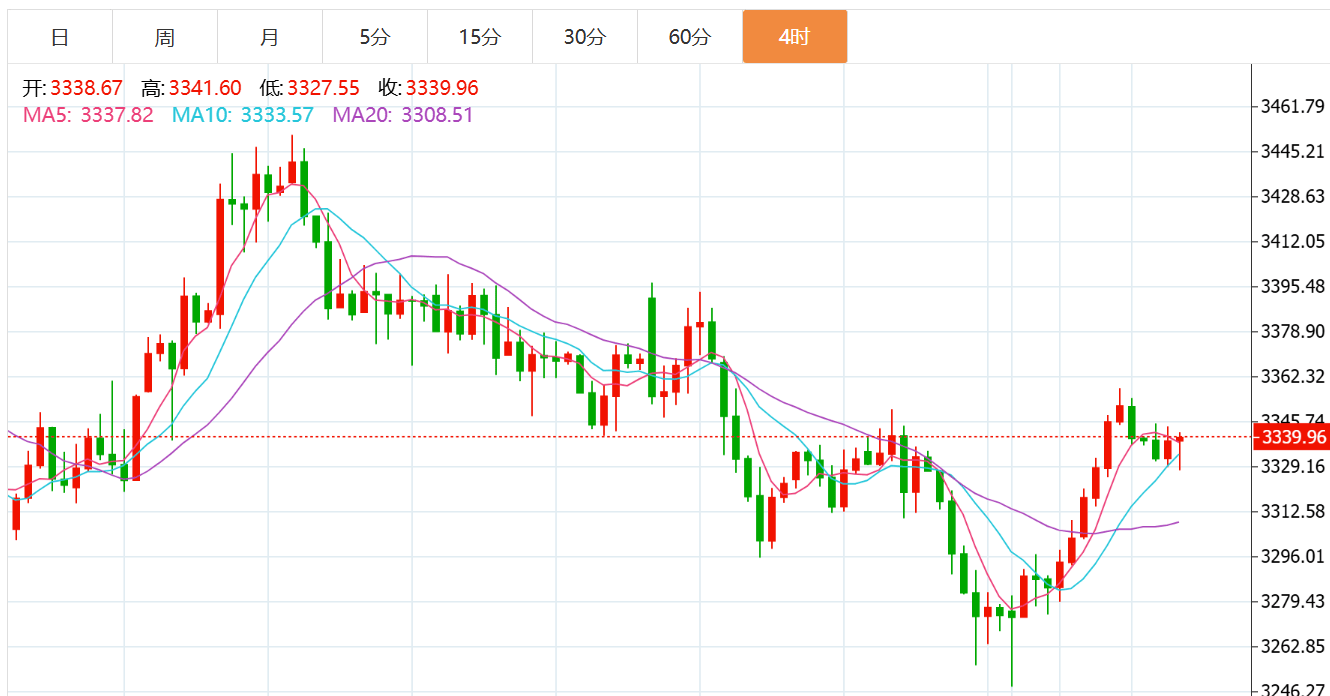
Group 1: Gold Market Analysis - The current gold price is around $3340 per ounce, with a significant increase of 1.1% on the previous day, closing at $3338.70 per ounce after a rise of $35.99 [1] - The market is anticipating the ADP employment data, which is expected to influence gold prices significantly [1] - The Federal Reserve Chairman Jerome Powell indicated that more economic data is needed before initiating monetary easing, but did not rule out the possibility of a rate cut in July, which could enhance gold's appeal as it does not yield interest [1] Group 2: Technical Analysis of Gold - The recent upward trend in gold prices suggests a potential short-selling opportunity, as the market has seen a significant number of short positions being liquidated [2] - The critical resistance level for gold is identified at $3358, while a support level is noted at $3326, with a potential downward movement towards $3300 if the support is breached [4] Group 3: Oil Market Analysis - Current oil prices are stable, with WTI at $65.42 per barrel and Brent at $67.09 per barrel, reflecting a cautious balance among multiple market factors [5] - The market is closely monitoring OPEC+ supply plans and U.S. economic data, which are pivotal in shaping oil price movements [5] - The upcoming OPEC+ meeting on July 6 and potential Fed rate cuts are key variables that could influence future oil prices [5] Group 4: Technical Analysis of Oil - The medium-term outlook for oil remains bullish, with a potential upward test towards $78, although short-term momentum indicators suggest a high-level consolidation phase [6] - The recommended trading strategy for oil includes buying on dips and selling on rebounds, with resistance levels at $68.0-$69.0 and support levels at $64.5-$63.5 [6]
若鲍威尔怂了、美联储提前降息,对市场意味着什么?
华尔街见闻· 2025-07-02 10:27
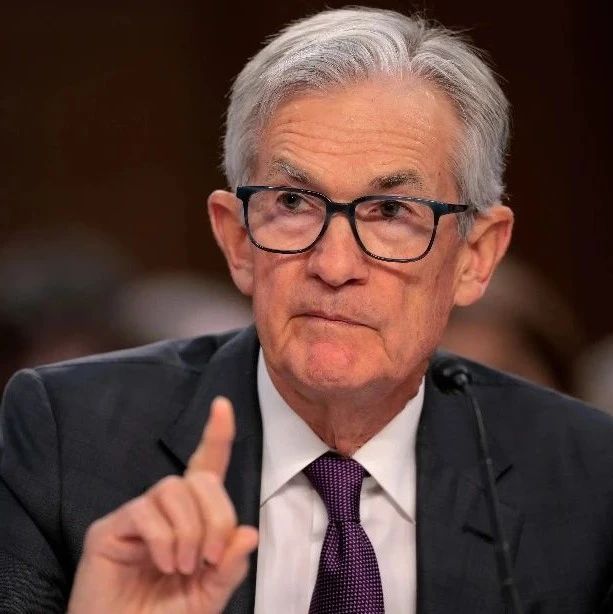
Core Viewpoint - Goldman Sachs analyst Vickie Chang's report analyzes four scenarios in which the Federal Reserve may implement monetary easing earlier than expected, highlighting that a decline in U.S. Treasury yields and a weaker dollar will be the main trends across all scenarios [1][2]. Scenario Summaries Scenario 1: Downward Inflation Risk Drives Rate Cuts - If inflation data continues to exceed expectations or if the Fed believes the impact of tariffs is temporary, the market will lower the 2-year Treasury yield by 25 basis points [4]. - Market reactions include rising stock prices, declining bond yields, a steeper yield curve, and a broadly weaker dollar [5][6]. Scenario 2: Declining Growth Expectations Drive Rate Cuts - A 50 basis point downward adjustment in U.S. economic growth expectations will fully drive the rate cut [7]. - This scenario may occur due to further deterioration in labor market and economic activity data, especially if the market doubts the limited damage from tariffs [8]. - In this case, both stock prices and bond yields will decline, with a slightly weaker dollar overall [9][10]. Scenario 3: Dovish Policy + Downward Growth Expectations - This scenario combines dovish policy impacts with negative growth shocks, pricing in both Fed easing and downward growth expectations [11][12]. - The U.S. stock market will see slight declines, with bond yields dropping more than in the previous scenarios, a steeper yield curve, and a broadly weaker dollar [13]. Scenario 4: Dovish Policy + Upward Growth Expectations - In this scenario, the market prices in Fed easing while also raising U.S. economic growth expectations by 50 basis points [14]. - Risk assets perform strongly, with significant stock market gains, slight declines in bond yields, and a moderately weaker dollar, particularly against cyclical currencies [15]. Consistent Trends Across Scenarios - Across all scenarios, a decline in yields, a weaker dollar, and an increase in gold prices are consistent trends [16]. - The direction of the stock market is highly dependent on accurate assessments of growth expectations, as is the strength of risk currencies against the dollar [16][17]. Market Pricing and Future Outlook - The market has begun to price in Fed easing, and if data supports this, the trend may continue [18]. - Current market pricing for growth is slightly above the one-year forecast, but there is still potential for upward movement if the focus shifts to 2026 growth outlooks [18]. - If growth conditions remain stable, a dovish shift from the Fed could benefit risk assets, although current growth expectations appear relatively full compared to April [19].

【黄金期货收评】美国经济数据疲软 沪金日内上涨0.70%
Jin Tou Wang· 2025-07-02 08:23
Group 1 - The Shanghai gold spot price on July 2 was quoted at 770.6 yuan per gram, showing a discount of 5.44 yuan per gram compared to the futures main price of 776.04 yuan per gram [1] - The latest closing price for Shanghai gold futures was 776.04 yuan per gram, with a daily increase of 0.70% and a trading volume of 202,457 contracts [1] - Economic data from the U.S. showed mixed results, with job vacancies unexpectedly increasing by 374,000 to 7.769 million, exceeding market expectations, while hiring numbers fell by 112,000 to 5.503 million [1] Group 2 - The ISM manufacturing PMI indicated a continued low performance in the manufacturing sector, reflecting the impact of trade policies on the real economy [1] - The uncertainty surrounding tariff policies has led to supply chain bottlenecks, with businesses adopting a cautious approach to long-term procurement decisions [1] - Institutional views suggest that the recent drop in the dollar to a near three-year low has allowed precious metals to continue their rebound, although there was a slight pullback following the release of U.S. economic data [2]