新能源

Search documents
国产“工业黄金”实现规模化供应
Ke Ji Ri Bao· 2026-01-25 23:46
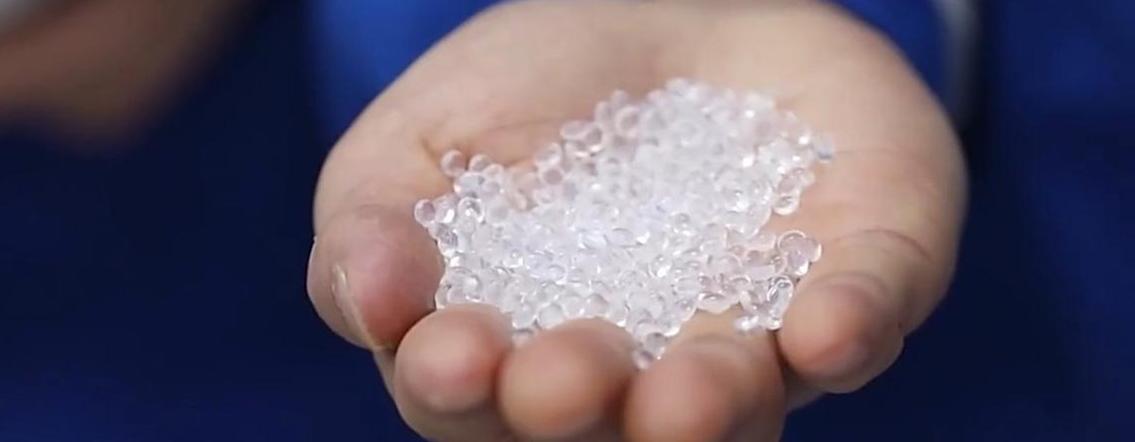
Core Insights - China National Petroleum Corporation's Dushanzi Petrochemical Company has made significant progress in the domestic production of POE (polyolefin elastomer), with plans to produce nearly 60,000 tons of POE products by 2025, marking the industrialization and large-scale supply of a domestically developed gas-phase polymerization process [1][4] - The domestic reliance on imported POE is currently around 95%, highlighting the urgent need for domestic alternatives to support strategic emerging industries such as photovoltaics and new energy vehicles [3][4] Group 1 - POE is recognized for its combination of plastic processability and rubber elasticity, making it essential in high-end applications like photovoltaic modules and lightweight automotive components [3] - The gas-phase process developed by Dushanzi Petrochemical is more environmentally friendly, with energy consumption approximately 60% lower than the traditional solution method, and it produces lower volatile organic compounds [3][4] - The core indicators of the main product UL0588 have reached international advanced levels, with improved weather resistance, moisture barrier properties, and longevity compared to imported alternatives [3][4] Group 2 - Since 2015, Dushanzi Petrochemical has focused on high-end polyolefin research, achieving industrialization in related fields, which laid a solid foundation for POE production [4] - The company has completed a full set of POE technology process packages and is promoting this technology internally within China National Petroleum, aiming to accelerate the formation of an industrial cluster effect [4] - By the end of 2026, the total production capacity of POE by China National Petroleum is expected to exceed 300,000 tons, providing crucial support for the supply chain security of new energy and other emerging industries [4]


【科创之声】3.9万亿元投入厚蓄硬核实力
Sou Hu Cai Jing· 2026-01-25 23:23
39262亿元研发经费、2.8%投入强度,国家统计局近日公布的2025年数据,标注出中国科技发展的新里 程碑——研发经费总量稳居世界第二,研发投入强度首次超越OECD国家平均水平。这3.9万亿元的硬核 投入,展现了中国坚持创新驱动的战略定力,更是中国从科技大国迈向科技强国的坚实底气。 研发投入的持续攀升,是政策引领、市场驱动、主体发力同频共振的必然结果。 要完善成果转化机制。需构建研发成果从高校院所进入产业市场的高效衔接通道,避免技术成果沉睡在 书架上。 创新硬指标不断刷新。我国创新指数跻身全球前十,有效发明专利拥有量突破500万件,PCT国际专利 申请量连续6年领跑全球。 产业升级速度持续提升。2025年,规模以上装备制造业、高技术制造业增加值占规模以上工业增加值的 比重分别达到36.8%和17.1%。智能制造工程扎实推进,智能工厂数量稳步增加,工业互联网融合应用 全面覆盖41个工业大类行业。 新质生产力培育步伐加快。我国在人工智能、量子计算、新能源等领域实现关键突破,部分技术达到国 际领先水平。2025年,人工智能企业数量超过6000家,核心产业规模预计突破1.2万亿元。 尽管成绩斐然,但我国研发经费的投 ...
必须坚持统筹发展和安全
Xin Lang Cai Jing· 2026-01-25 21:22
Group 1 - The core viewpoint emphasizes the need for a unified leadership by the Communist Party of China to ensure coordinated development and security during the 14th Five-Year Plan period, highlighting the importance of strategic planning and maintaining a long-term vision [2][3][8] - The article outlines the necessity of accurately grasping development opportunities and effectively responding to risks and challenges, particularly in the context of achieving socialist modernization [3][4][5] Group 2 - It is crucial to leverage the advantages of China's economic strength, technological capabilities, and comprehensive national power to capitalize on the new round of technological and industrial revolutions, particularly in emerging fields like artificial intelligence and renewable energy [4][5] - The article stresses the importance of a strategic approach to development, focusing on high-quality growth and addressing major contradictions and strategic layouts during the 14th Five-Year Plan period [6][7] Group 3 - The integration of development and security is presented as a dual driving force, with a call for a comprehensive approach that incorporates national security into all aspects of economic and social development [8]
贵州科学城全力打造 全国创新链接关键节点
Xin Lang Cai Jing· 2026-01-25 21:22
Group 1 - The core objective of the "Guizhou Science City Innovation-Driven High-Quality Development Plan (2026-2030)" is to enhance innovation systems, major technological infrastructure, key core technology breakthroughs, and the optimization of the innovation ecosystem, positioning Guizhou Science City as a critical node for national innovation links [1][3] - Guizhou Science City will focus on the integration of industry, talent, education, and technology, implementing a collaborative innovation mechanism through events like technology innovation exchange weeks and industry-education integration meetings [1][2] - The plan emphasizes the transformation of various industrial parks in Guizhou into innovation parks, promoting collaboration with regional industrial parks to facilitate the industrialization of major technological achievements [2] Group 2 - Guizhou Science City aims to connect with national and global innovation hubs, particularly in fields such as new energy, new materials, integrated circuits, biomedicine, and artificial intelligence, establishing strategic partnerships with other significant science cities [2] - The initiative supports the establishment of regional R&D centers and technology transfer bases, enhancing the level of open innovation and integrating into national strategic areas like the Guangdong-Hong Kong-Macao Greater Bay Area [2] - The overarching goal is to serve national high-level technological self-reliance and support the high-quality development of Guiyang and Guian [3]
从“人找岗位”到“岗位找人”
Xin Lang Cai Jing· 2026-01-25 19:17
Core Insights - The integration of AI in job seeking is enhancing efficiency and convenience for graduates, exemplified by the AI job application machine that generates resumes and conducts mock interviews [1] - The "Future Employment - National Employment Service for College Graduates" initiative by the Ministry of Human Resources and Social Security is actively engaging graduates through high-frequency events and quality services [2] Group 1: Employment Services and Initiatives - The initiative has conducted 1,158 recruitment events focusing on key industries such as digital economy, advanced manufacturing, and artificial intelligence, covering major regions like the Beijing-Tianjin-Hebei area and the Yangtze River Delta [3] - Local governments are innovating talent attraction methods tailored to regional industry needs, with notable success in Dongguan, where a recruitment event attracted 156 resumes, over half from master's degree holders [3] - Various cities are piloting the integration of human resources services with manufacturing, fostering specialized recruitment agencies and enhancing talent attraction [3] Group 2: AI and Technology in Job Seeking - The shift from traditional job searching to a model where jobs seek candidates is being facilitated by digital technologies, with 572 live-streamed job events organized [4] - Cities like Beijing and Shanghai are implementing AI tools such as employment officers and mock interview stations to provide personalized and precise employment services [4] - Innovative activities like immersive job training camps and simulated interviews are being introduced to help graduates with career planning and job readiness [4] Group 3: Job Market Safety and Regulations - To protect graduates' rights, job fairs and online platforms are disseminating warnings about job scams, enhancing awareness of fraudulent practices [5] - A notable case involved a scam that defrauded over 400 graduates of more than 80 million yuan, highlighting the need for stringent market regulation [6] - Local authorities are intensifying oversight of recruitment processes to ensure the authenticity and legality of job postings, creating a safer job-seeking environment for graduates [6]
抢占投资风口 险资密集落子私募基金
Bei Jing Shang Bao· 2026-01-25 17:18
Core Viewpoint - Insurance capital is increasingly flowing into the primary market, driven by the dual forces of regulatory policies promoting long-term investments and a low-interest-rate environment, with a focus on strategic emerging industries such as artificial intelligence and renewable energy [1][4]. Group 1: Investment Activities - On January 23, China Life announced an investment of 4 billion yuan to establish the Huizhi Yangtze River Delta (Shanghai) Private Fund Partnership, focusing on artificial intelligence and related applications [3]. - China Life also plans to establish the Beijing Guoshou Pension Industry Equity Investment Fund Phase II, concentrating on the pension industry [3]. - Since 2025, there has been a surge in insurance capital entering the private investment market, with significant funds being allocated to sectors like renewable energy and healthcare [4]. Group 2: Investment Trends - The investment strategy of insurance capital continues to emphasize hard technology sectors, including new energy, automotive, and biomedicine [5]. - Insurance capital is focusing on sectors that align with national long-term strategic directions, characterized by high growth potential and technological barriers, which can provide stable long-term returns [6]. - Future trends for insurance private equity funds are expected to include broader investment areas, deeper collaboration models, and a greater emphasis on industry-specific research capabilities [6].


煤炭行业周报:地产政策多部门联动稳预期,非电需求有望修复-20260125
GUOTAI HAITONG SECURITIES· 2026-01-25 13:38
Investment Rating - The report rates the coal industry as "Overweight" [5] Core Insights - The coal sector has confirmed a cyclical bottom in Q2 2025, with a reversal in supply-demand dynamics and sufficient release of downward risks [2] - The report anticipates a recovery in non-electric coal demand due to supportive real estate policies and a rebound in the post-cycle industrial chain [5] - The total electricity consumption in 2025 is projected to reach 10.3682 trillion kWh, representing a year-on-year growth of 5.0% [5] - The coal sector is expected to enter a new upward cycle starting in 2026, driven by increasing electricity demand from new energy and AI sectors [5] Summary by Sections Coal Price Tracking - As of January 23, 2026, the price of Q5500 coal at Huanghua Port is 696 CNY/ton, down 11 CNY/ton (-1.6%) from the previous week [8][9] - The price of Q5000 coal at Huanghua Port is 613 CNY/ton, also down 10 CNY/ton (-1.6%) [8][9] - Domestic coal prices are showing mixed trends, with some regions experiencing price increases while others see declines [7] Coking Coal Data Tracking - As of January 23, 2026, the price of main coking coal at Jingtang Port (Shanxi origin) is 1780 CNY/ton, up 30 CNY/ton (1.7%) from the previous week [5][39] - The price of coking coal at Lianyungang (Shanxi origin) is 1930 CNY/ton, up 36 CNY/ton (1.9%) [5][39] - The overall coking coal price in domestic markets has increased compared to the previous week, while overseas prices have generally decreased [46] Inventory and Supply Dynamics - As of January 23, 2026, the inventory at Qinhuangdao is 5.82 million tons, an increase of 320,000 tons (5.8%) from the previous week [23] - The total inventory at major northern ports is 35.29 million tons, down 468,000 tons (-1.3%) [23] - The overall supply of coal is expected to remain stable, with domestic production and imports continuing to decline [5] Market Performance - The coal sector outperformed the broader market, with a 1.44% increase compared to a 0.84% rise in the Shanghai Composite Index [69] - Notable gainers include Dayou Energy (up 14.24%) and Anyuan Coal Industry (up 13.06%) [69]
川恒股份(002895):受益于行业高景气的磷化工一体化企业
HTSC· 2026-01-25 13:35
Investment Rating - The report initiates coverage on Chuanheng Co., Ltd. with a "Buy" rating, assigning a target price of RMB 50.73 based on a 19x PE for 2026 [1][8][6]. Core Insights - Chuanheng Co., Ltd. is a leading player in the domestic phosphate chemical industry, possessing a nominal phosphate rock capacity of 3.3 million tons. The company's self-owned phosphate mines contribute to its high gross margin in the industry. The global phosphate supply-demand balance is expected to remain tight in the next 1-2 years, benefiting the company. Additionally, the anticipated growth in demand for new energy is expected to enhance the company's revenues from products such as iron phosphate, ammonium phosphate, and phosphoric acid [1][15][19]. - The company is projected to achieve a net profit of RMB 1.31 billion, RMB 1.62 billion, and RMB 1.8 billion for the years 2025-2027, representing year-on-year growth rates of 37%, 24%, and 11%, respectively [6][12]. Summary by Sections Phosphate Industry Outlook - The global expansion of phosphate rock production is slow due to limited new supply and stringent regulations in China. The demand for phosphate fertilizers is expected to grow by 3% annually starting in 2024, driven by the expansion of arable land and increasing demand for new energy [2][14]. - The report estimates a global phosphate supply-demand gap of approximately 1.78 million tons, 0.95 million tons, and 1.21 million tons for the years 2025-2027, indicating a continued tight supply situation [2][15]. New Energy Demand - The demand for phosphate chemical products related to new energy is anticipated to recover, particularly for iron phosphate and industrial-grade ammonium phosphate, as the industry shows signs of improvement due to rising storage and power battery demands [3][16]. Financial Performance and Valuation - The company has entered a growth phase, with a significant increase in net profit expected. The debt ratio has improved, and the dividend payout ratio has increased to around 70%, with projected dividend yields of 3.7%, 4.5%, and 5.0% for 2025-2027 [17][33]. - The report highlights that the company’s gross margin is among the highest in the industry, supported by its strong export capabilities and the non-fertilizer use of its phosphate products [4][28]. Market Perspective - The report contrasts its views with market concerns regarding the sustainability of tight phosphate supply. It argues that the demand for phosphate fertilizers remains robust, and the regulatory environment will continue to support high phosphate prices [5][18].

今夜利好!A股公司,最新公告!
证券时报· 2026-01-25 12:57
Core Viewpoint - The article discusses the earnings forecasts of several A-share listed companies for the year 2025, highlighting significant expected growth in net profits for companies like XianDao Intelligent and SiTeWei, driven by strong demand in the global battery market and advancements in technology [2][5]. Group 1: XianDao Intelligent - XianDao Intelligent (300450) expects a net profit attributable to shareholders of 1.5 billion to 1.8 billion yuan, representing a year-on-year growth of 424.29% to 529.15% [2][3]. - The company attributes this growth to a recovering global power battery market and strong demand in the energy storage sector, which has led to a rapid increase in order volume and improved operational performance [3][4]. - XianDao is enhancing its core competitiveness through increased R&D in new technologies and products, focusing on solid-state batteries and digital transformation to improve operational efficiency and cash flow management [4]. Group 2: SiTeWei - SiTeWei (688213) forecasts a net profit of approximately 976 million to 1.031 billion yuan for 2025, with a year-on-year increase of 149% to 162% [5]. - The company has deepened collaborations in the smartphone sector, leading to significant revenue growth from high-end camera products and advancements in automotive electronics and smart security applications [6][7]. - SiTeWei's product lineup expansion and increased competitiveness have contributed to steady revenue growth, with a notable rise in the shipment of new products [7]. Group 3: Other Companies - Zhongwei Semiconductor (688380) anticipates a net profit of around 284 million yuan for 2025, reflecting a growth of approximately 107.55% [6]. - JuXin Technology (688049) expects a net profit of 204 million yuan, marking a year-on-year increase of 91.40%, driven by the successful launch of AI audio chips and expansion into new markets [7][8].



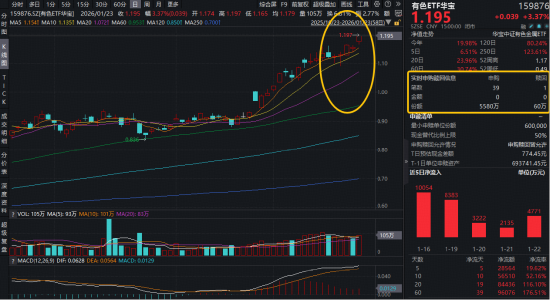
金价续创历史新高!有色ETF华宝(159876)大涨3.37%,获资金净申购5520万份!机构:金价上涨逻辑依然坚实
Xin Lang Cai Jing· 2026-01-25 11:49
周五(1月23日)有色金属板块延续猛烈攻势,华峰铝业、白银有色、铜陵有色3股涨停,板块热门ETF ——有色ETF华宝(159876)场内涨幅最高上探3.55%,收涨3.37%,ETF放量突破上市高点,全天获资 金净申购5520万份! 消息面上,地缘政治风险反复,格陵兰岛问题并未完全解决,伊朗方面或新添事端,避险情绪升温,助 推金价不断破新高。国际金价大幅飙升,现货黄金一举站上4950美元/盎司关口,刷新历史最高纪录。 国内多家知名金饰品牌报价刷新至1500元/克。 东方金诚认为,中长期来看,金价上涨逻辑依然坚实:一是美国财政风险仍将对金价构成主要支撑;二 是全球央行黄金配置意愿仍较强也成为影响金价的核心因素;三是美国2026年仍在降息周期之中;四是 全球地缘政治风险升级加大市场避险需求。* 展望后市,国信期货指出,有色金属的强势表现,源于宏观金融政策与供需结构性变化叠加推动。尤其 是在AI、新能源等新兴需求崛起之下,国内启动"反内卷"政策规范行业竞争,有色金属在供应侧刚性限 制及需求弹性刺激之下,整体表现领跑A股31个一级子行业,并有望在后市延续亮眼表现。* 【有色风口已至,"超级周期"势不可挡】 有色ETF ...